
Updated August 2026
The best dehumidifier for RV storage depends on whether you need a disposable moisture absorber, a rechargeable cordless dehumidifier, or small desiccant packs for cabinets and equipment compartments. For an RV stored without dependable power or regular tank emptying, passive calcium-chloride buckets, hanging bags, and renewable silica-gel units are usually more practical than a small powered appliance.
This guide compares nine RV-friendly options for managing condensation, musty odors, and excess moisture while a camper, travel trailer, or motorhome is parked. These products can support routine RV storage moisture control, but they cannot repair roof leaks, plumbing leaks, damaged seals, wet insulation, or standing water.
Important terminology
Most products below are passive moisture absorbers or renewable desiccants rather than powered compressor dehumidifiers. They absorb a limited amount of moisture from the surrounding air and work best in enclosed, stationary spaces. A serious or continuing humidity problem may require leak repair, better ventilation, or a safely drained powered dehumidifier.
Quick Verdict
- Best Overall for Stationary RV Storage: Camco Moisture Absorber Bucket
- Best Reusable Option: Eva-Dry E-500 Renewable Dehumidifier 2-Pack
- Best Multipack of Large Buckets: Vacplus 2-Pound Moisture Absorber Buckets
- Best Large Reusable Desiccant Bags: Wisedry 500-Gram Silica Gel 2-Pack
- Best for Cabinets and Small Compartments: Eva-Dry E-333 or FURWEY Silica Gel Packs
- Best Hanging Option: Vacplus Moisture Absorber Bags
How These Products Were Selected
The products were compared for direct RV-storage relevance, no-power operation, placement flexibility, maintenance needs, spill risk, reusable versus disposable construction, and suitability for whole interior zones or small compartments. No product should be treated as a substitute for leak repair or professional water-damage remediation.
Quick Comparison of RV Storage Moisture Absorbers
| Product | Format | Best Placement | Maintenance or Caution | Check Details |
|---|---|---|---|---|
| Camco Moisture Absorber Bucket | Disposable bucket | Main area of a stationary RV or camper | Keep level, inspect regularly, and replace after saturation | Check Amazon |
| Eva-Dry E-500 2-Pack | Renewable silica-gel units | Two enclosed RV zones or smaller interiors | Remove and plug in each unit when its indicator shows saturation | Check Amazon |
| Vacplus 2-Pound Buckets, 4-Pack | Disposable buckets | Several zones in a larger stationary RV | Secure upright and budget for replacement containers | Check Amazon |
| Wisedry 500-Gram Bags, 2-Pack | Reusable silica-gel bags | Windows, seating areas, and larger storage compartments | Reactivate only by an approved method on the product instructions | Check Amazon |
| Eva-Dry E-333 | Renewable compact unit | Closets, bathrooms, cabinets, and storage bays | Limited capacity; recharge after the indicator changes | Check Amazon |
| Vacplus Hanging Bags, 5-Pack | Disposable hanging bags | Wardrobes and tall lockers | Use only while stationary and remove before travel | Check Amazon |
| CLEVAST Boxes, 6-Pack | Disposable compact boxes | Kitchen, bathroom, and under-seat cabinets | Keep upright and replace when the crystals are spent | Check Amazon |
| FURWEY 100-Gram Packs, 6-Pack | Reusable silica-gel packs | Drawers, tool storage, electronics, and small bins | Several packs may be needed; reactivate exactly as directed | Check Amazon |
| DampRid Fresh Scent 3-Pack | Scented hanging bags | Musty wardrobes and clothing storage | Fragrance may not suit everyone; remove before travel | Check Amazon |
Spill safety: Calcium-chloride buckets and hanging bags eventually collect liquid or form a concentrated solution. Keep them upright and away from children, pets, electronics, fabrics, food, and metal surfaces. Remove all liquid-filled products before driving or towing the RV.
Camco Moisture Absorber Bucket for RV Storage
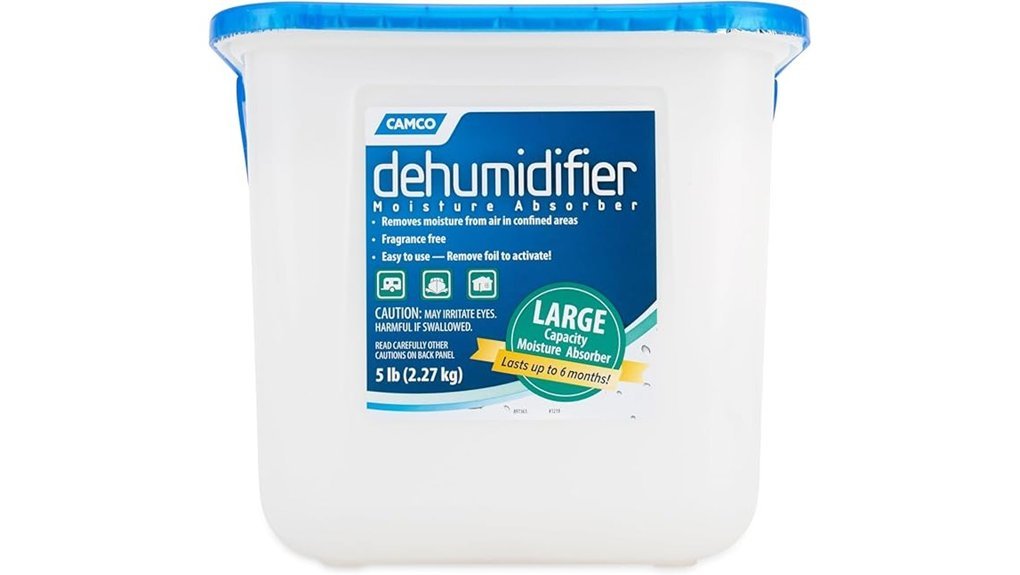
The Camco Moisture Absorber Bucket is the most directly matched option in this guide because the linked product is intended for confined storage areas that include RVs and campers. Its passive design requires no outlet, battery, drain hose, or powered collection tank. Place it on a stable, level surface while the RV is stationary, inspect it regularly, and replace it after the moisture-absorbing material is spent.
Best For: Owners who want a simple, fragrance-free absorber for the main area of a stationary camper or motorhome.
Why You’ll Like It: The bucket offers more material than a small cabinet pack and does not depend on shore power during storage.
Who Should Avoid It: Owners who cannot inspect the RV periodically or who are dealing with leaks, wet carpet, standing water, or severe whole-interior humidity.
Pros:
- Specifically positioned for RV, camper, boat, closet, and storage use.
- Fragrance-free format avoids adding perfume to a closed interior.
- No cords, batteries, drainage plumbing, or setup tools are required.
Cons:
- Single-use product that requires replacement after saturation.
- Large bucket needs a stable, protected floor or shelf position.
- Does not provide a humidity setting or measurable daily removal rate.
Eva-Dry E-500 Renewable Dehumidifier 2-Pack
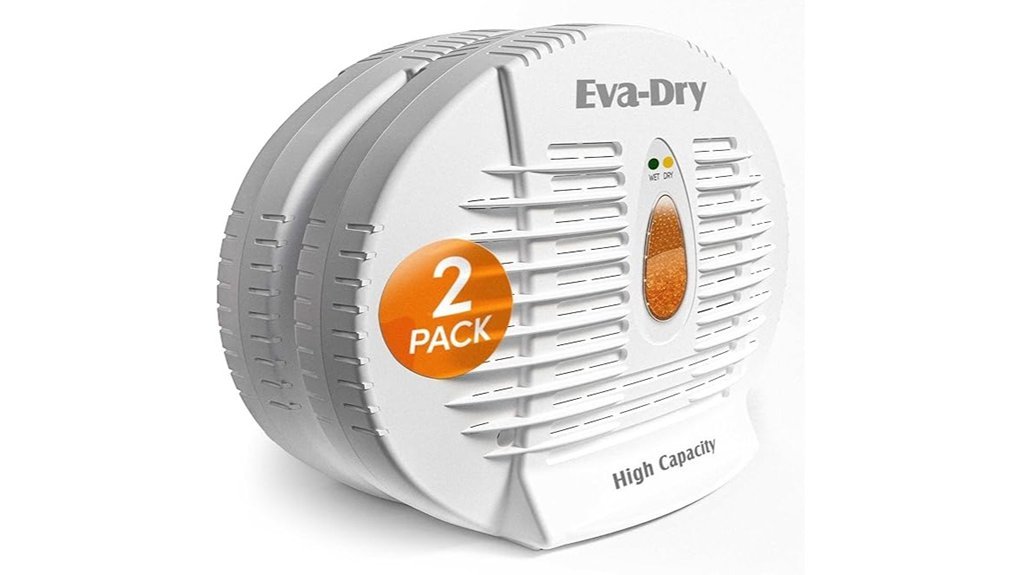
The Eva-Dry E-500 2-Pack is a practical choice for buyers who prefer a renewable silica-gel dehumidifier instead of disposable tubs. Each unit operates silently and without a cord while absorbing moisture. The manufacturer markets each E-500 for enclosed spaces up to 500 cubic feet, but actual RV performance depends on airflow, temperature, humidity, and the number of closed compartments.
Best For: Covering two separate RV zones, such as the living area and bedroom, or rotating units between closets and storage bays.
Why You’ll Like It: The two-unit format provides flexible placement, while the visible indicator helps show when each unit needs renewal.
Who Should Avoid It: Anyone expecting two small cordless units to dry wet materials, correct a leak, or match the output of a continuously drained powered dehumidifier.
Pros:
- Cordless and silent during normal moisture absorption.
- Reusable construction reduces dependence on disposable refill products.
- Two units can be placed in separate areas with limited airflow.
Cons:
- Each unit must be removed and plugged in when its indicator shows saturation.
- Coverage claims apply to enclosed volume and should not be treated as whole-RV guarantees.
- Recharge power requirements should be checked before use outside North America.
Vacplus 2-Pound Moisture Absorber Buckets, 4-Pack
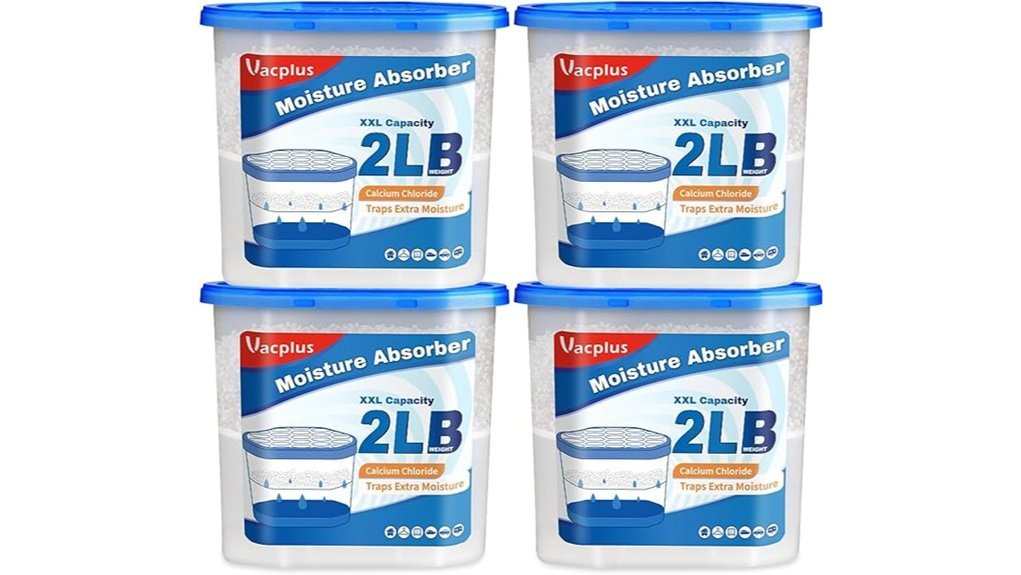
Vacplus Moisture Absorber Buckets suit owners who want several large passive containers for separate areas of a stored vehicle. The linked listing is a fragrance-free four-pack, allowing one bucket to be placed near the kitchen, bathroom, sleeping area, or another known condensation zone. Every container must stay upright and protected from accidental contact.
Best For: Larger travel trailers and motorhomes that need distributed moisture control in several open interior zones.
Why You’ll Like It: Four separate buckets can address moisture where it develops instead of depending on one absorber in the center of the RV.
Who Should Avoid It: Buyers who want a rechargeable solution, have little stable floor space, or cannot check the containers during storage.
Pros:
- Passive operation requires no outlet or battery.
- Transparent collection area makes routine inspection easier.
- Fragrance-free design suits closed interiors and scent-sensitive owners.
Cons:
- All four containers must remain upright and secure.
- Spent units create recurring replacement cost and waste.
- Absorption rate changes with ambient humidity, temperature, and airflow.
Wisedry 500-Gram Rechargeable Silica Gel Bags, 2-Pack
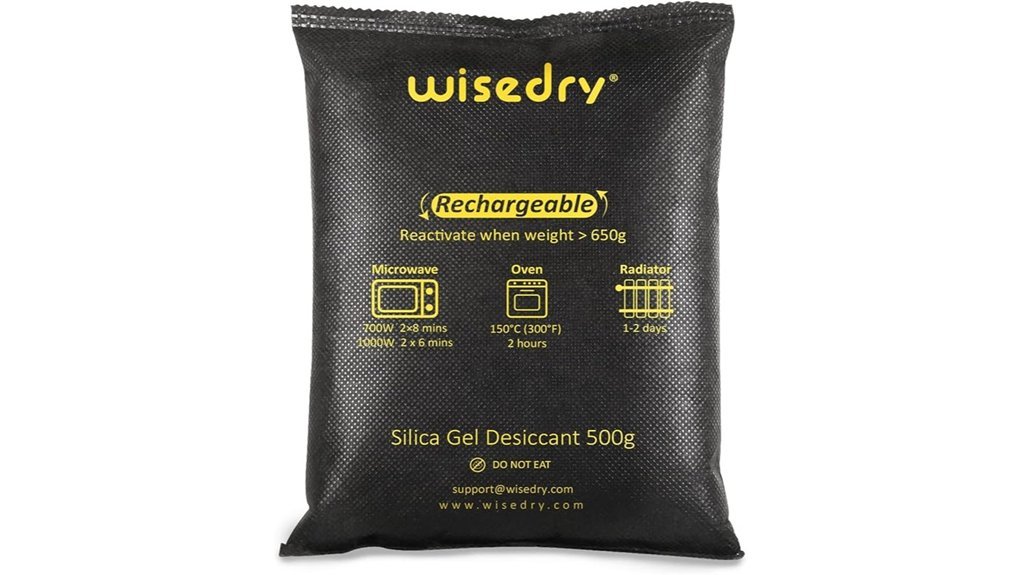
The Wisedry Rechargeable Silica Gel Dehumidifier Pack contains two 500-gram desiccant bags for enclosed storage areas. Their soft, reservoir-free design makes them easier to position near windows, under seating, or inside storage compartments where a rigid bucket would be awkward. Reactivate them only by a method and setting specifically approved on the product label.
Best For: Owners who want larger reusable desiccant bags for seasonal RV storage and localized condensation zones.
Why You’ll Like It: The two flexible bags provide more placement freedom than hard plastic containers and do not produce a liquid reservoir that must remain upright.
Who Should Avoid It: Buyers who do not have a suitable reactivation method or who want a maintenance-free disposable product.
Pros:
- Two reusable 500-gram silica-gel bags.
- Flexible shape works near windows, seating, and irregular storage areas.
- No open liquid collection chamber.
Cons:
- Requires periodic removal and controlled reactivation.
- Larger bags take more storage space than small desiccant sachets.
- Cannot repair leaks or dry soaked upholstery and building materials.
Eva-Dry Wireless Mini Dehumidifier, White E-333
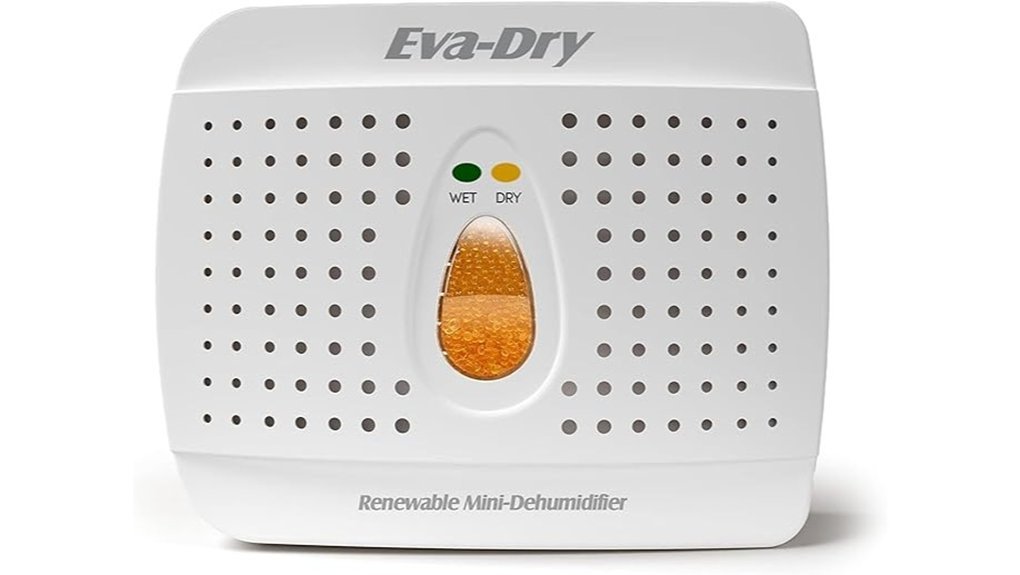
The Eva-Dry Wireless Mini Dehumidifier E-333 is a compact renewable unit marketed for enclosed spaces up to 333 cubic feet. Its indicator beads change color when renewal is needed, and the unit can be placed or hung without a cord while absorbing moisture. It is better suited to an RV closet, bathroom, cabinet, or storage bay than to an entire large motorhome.
Best For: Small compartments where a liquid-collecting bucket or hanging bag would be inconvenient.
Why You’ll Like It: It is compact, silent during use, easy to relocate, and does not produce a reservoir of salty liquid.
Who Should Avoid It: Buyers who need high-output whole-interior moisture removal in a very damp climate.
Pros:
- No batteries or power cord are needed while it is absorbing moisture.
- Visible indicator helps simplify the maintenance schedule.
- Compact body works in closets, cabinets, and narrow storage areas.
Cons:
- Limited capacity compared with a large bucket or powered appliance.
- Requires periodic plug-in renewal outside its storage position.
- Several units may be needed in an RV with many closed compartments.
Vacplus Hanging Moisture Absorbers, 5-Pack

Vacplus Hanging Moisture Absorbers use calcium chloride to draw moisture into a lower collection section. Their hanging format is useful in RV wardrobes and tall lockers where a bucket would consume shelf or floor space. The RV should remain stationary while the bags are installed, and each bag should hang freely without pressing against fabrics or stored valuables.
Best For: Vertical moisture control in closets, wardrobes, and narrow storage lockers.
Why You’ll Like It: The five-pack uses otherwise wasted hanging space and makes collected liquid easy to see during inspections.
Who Should Avoid It: Anyone who may move or tow the RV without first removing the filled bags.
Pros:
- Space-saving hanging design.
- Unscented format avoids adding fragrance to clothing storage.
- Five bags can cover several separate enclosed areas.
Cons:
- Single-use bags require replacement after the crystals dissolve.
- Collected liquid can spill if a bag is punctured, squeezed, or mishandled.
- Not a suitable choice while the RV is moving.
CLEVAST Moisture Absorber Boxes, 6-Pack
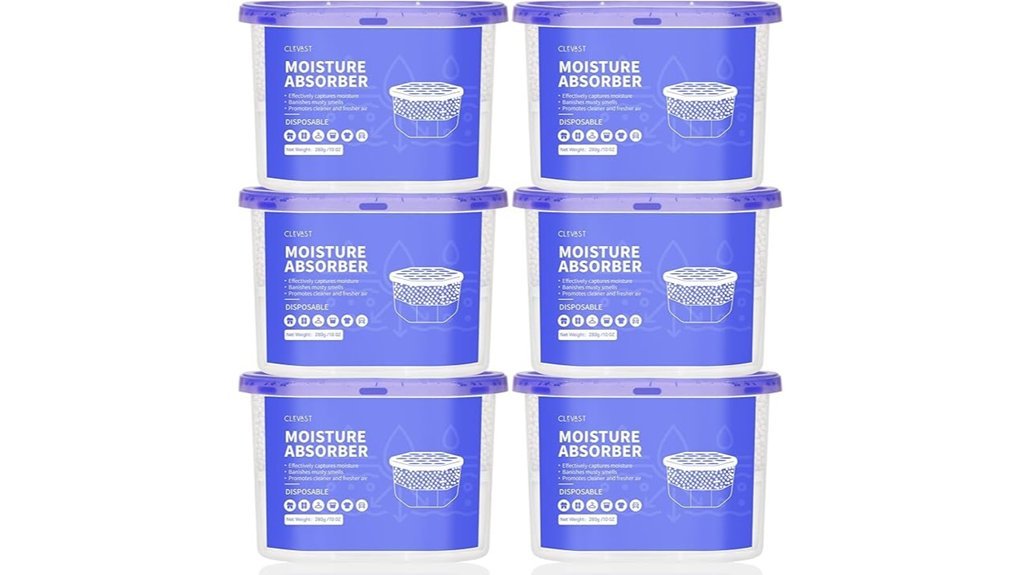
CLEVAST Moisture Absorber Boxes are compact calcium-chloride containers that can be distributed through an RV’s kitchen cabinets, bathroom storage, wardrobes, and under-seat compartments. The linked product is a six-pack of fragrance-free boxes. Their useful life cannot be predicted precisely because temperature, humidity, air exchange, and placement differ widely between stored RVs.
Best For: Buyers who want several small disposable absorbers for separate cabinets and storage zones.
Why You’ll Like It: Six compact boxes make targeted placement easy without occupying as much space as large buckets.
Who Should Avoid It: Owners who prefer a reusable product or need high-output moisture removal from the full RV interior.
Pros:
- Compact size fits many RV cabinets and shelves.
- Fragrance-free formula suits kitchens and closed interiors.
- Six boxes support distributed moisture control.
Cons:
- Boxes are disposable rather than rechargeable.
- Each container must stay upright and protected from tipping.
- Replacement frequency may increase during humid weather.
FURWEY Rechargeable Silica Gel Desiccant Packs, 6-Pack
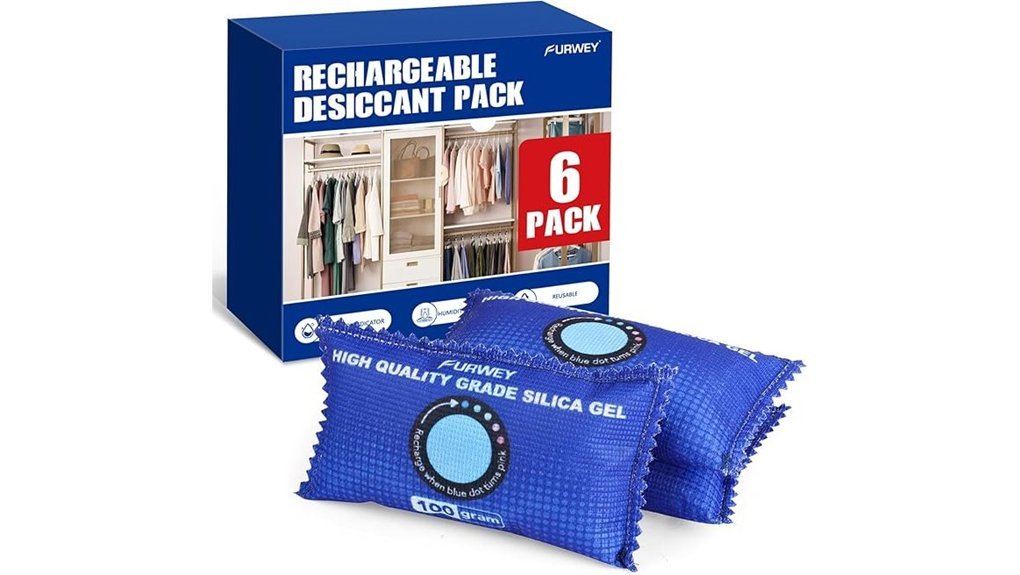
FURWEY Rechargeable Silica Gel Desiccant Packs are intended for localized moisture protection rather than full-RV humidity control. The linked set contains six 100-gram color-indicating packs that can be placed in drawers, cupboards, tool storage, electronics cabinets, or other compact spaces. Follow the exact reactivation method and temperature limits printed on the packaging.
Best For: Protecting small compartments and stored gear from localized dampness.
Why You’ll Like It: Six small reusable packs offer more placement flexibility than one large container.
Who Should Avoid It: Buyers expecting small desiccant packs to manage humidity throughout an open motorhome or travel trailer.
Pros:
- Reusable silica-gel construction.
- Color indicator helps show when maintenance is needed.
- Small format works around tools, electronics, and stored equipment.
Cons:
- Each pack has limited localized coverage.
- Reactivation must follow the product instructions carefully.
- Several packs may be required in one large compartment.
DampRid Fresh Scent Hanging Moisture Absorber, 3-Pack
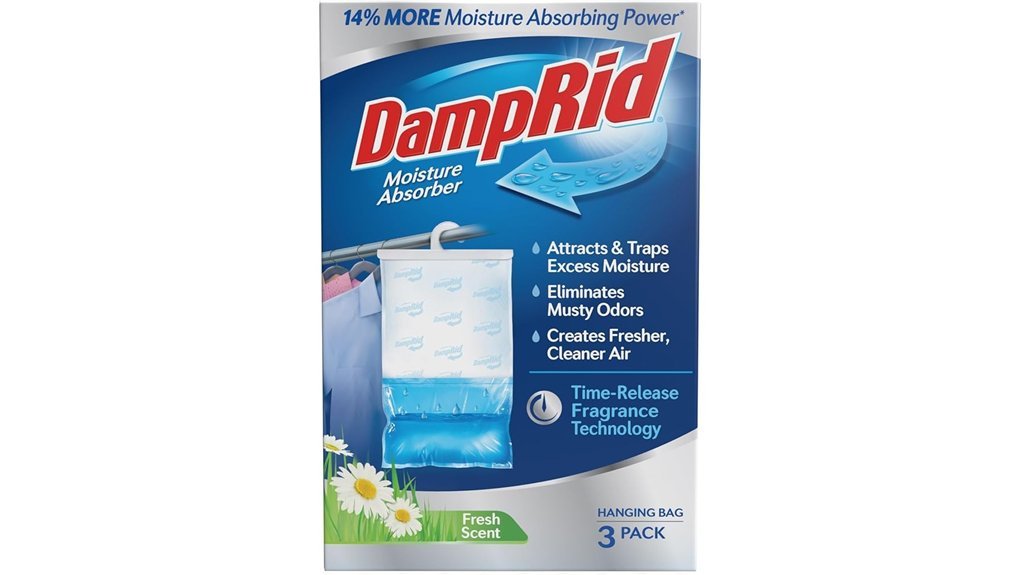
DampRid Fresh Scent Hanging Moisture Absorbers combine passive moisture collection with added fragrance. They are best used in an RV wardrobe or clothing-storage area while the vehicle is parked. The clear lower section provides a visual replacement cue, but every bag should be held upright during removal and taken down before driving or towing.
Best For: Stored RV wardrobes where the owner wants both passive moisture absorption and a noticeable fragrance.
Why You’ll Like It: The hanging design saves shelf space and can make a closed clothing area smell fresher.
Who Should Avoid It: Scent-sensitive users, households with children or pets that can reach the bags, and owners who may move the RV unexpectedly.
Pros:
- Hanging format suits wardrobes and narrow clothing-storage areas.
- Visible collection section makes inspection easier.
- Three-pack can serve more than one closet or locker.
Cons:
- Fragrance may be too strong for some people.
- Single-use bags require replacement.
- Filled bags must be handled upright and removed before travel.
Factors to Consider for RV Storage Moisture Control
An RV storage dehumidifier or moisture absorber should match the vehicle’s size, storage climate, access to power, number of closed compartments, and inspection schedule. The most important decision is whether you need passive support for routine storage or powered dehumidification for a continuing humidity problem.
Passive, Rechargeable, or Powered?
Passive calcium-chloride absorbers work without electricity but eventually require disposal and replacement. Rechargeable silica-gel units reduce disposable waste and avoid liquid reservoirs, but they must be removed and reactivated. A powered dehumidifier may be appropriate only when the RV has dependable electricity, safe placement, suitable operating temperatures, and a reliable continuous drain or frequent tank-inspection plan.
A small powered unit with only a collection tank is a poor choice for long unattended storage if nobody can empty it, confirm that it restarted after an outage, or inspect it for freezing and drainage problems.
RV Size, Interior Volume, and Moisture Load
Do not rely only on room-size or coverage marketing. RVs contain wardrobes, under-bed compartments, bathrooms, cabinets, and exterior storage bays with restricted airflow. A larger RV may need several absorbers placed in different zones. If moisture comes from a roof leak, plumbing leak, damaged window seal, wet carpet, or exterior water intrusion, repair and dry the source before adding more absorbers.
Spill and Placement Safety
Liquid-collecting buckets and hanging bags must remain upright, stable, and protected from contact. Keep them away from children, pets, food, electronics, fabrics, and metal surfaces. Remove liquid-filled bags and unsecured buckets before driving or towing. Solid rechargeable desiccants are often easier to use in drawers and equipment cabinets where a liquid reservoir would create unnecessary risk.
Temperature and Condensation
Condensation can form when humid air contacts cold windows, walls, pipes, or metal framing. Place absorbers near known condensation zones without blocking vents or pressing products against fabrics. In freezing or very cold conditions, check the instructions for every passive or powered product because absorption speed, drainage, and appliance performance may change with temperature.
Monitoring and Maintenance
Use a separate digital hygrometer so you can measure relative humidity rather than relying on odor or touch. Check disposable products for collected liquid, inspect color indicators on reusable units, and look for window condensation, stains, swollen panels, soft wall material, or musty odors. Begin with weekly inspections and adjust the interval only after you understand how quickly moisture develops in your specific RV.
Cost and Long-Term Value
Disposable buckets and hanging bags usually cost less initially but create continuing replacement expenses. Renewable units cost more upfront but may offer better long-term value when they are reactivated correctly. The best product is the one you can position safely and inspect, replace, or renew consistently throughout the storage period.
Before You Store the RV
- Repair roof, window, plumbing, slide-out, and exterior-seal leaks first.
- Dry carpets, upholstery, shower areas, sinks, and storage bays completely.
- Empty, clean, dry, and prop open the refrigerator and freezer doors.
- Follow the RV manufacturer’s winterization instructions where freezing is possible.
- Leave interior doors and cabinet doors open when safe to improve air movement.
- Place buckets on stable surfaces and hang bags where they cannot touch stored items.
- Add a hygrometer and schedule regular storage inspections.
- Remove all liquid-filled products before moving the RV.
Frequently Asked Questions
How Do I Determine the Right Size Dehumidifier for My RV?
Start with the RV’s interior volume, storage climate, moisture history, and number of closed compartments. Passive absorbers do not use the same standardized pint-per-day sizing system as compressor dehumidifiers. A larger RV may need several units in separate zones. If humidity remains high despite correct placement, investigate leaks and consider a safely drained powered system instead of adding unlimited passive products.
Can I Use a Dehumidifier While My RV Is in Storage?
Yes. Passive buckets, hanging bags, and renewable cordless units are commonly used while an RV is stationary. A powered dehumidifier should be used only with dependable electricity, safe clearances, suitable operating temperatures, and a plan for continuous drainage or frequent tank checks.
What Humidity Level Is Ideal for RV Storage?
A practical goal is to keep relative humidity below 60%, with approximately 30% to 50% serving as a commonly recommended indoor range. Avoid driving humidity unnecessarily low, and respond to visible condensation even when the hygrometer reading appears acceptable. The U.S. Environmental Protection Agency provides additional moisture and humidity guidance.
How Often Should I Check Moisture Absorbers in My RV?
Check them weekly when storage begins, after heavy rain, and when temperatures change sharply. Once you know how quickly each product fills or saturates, adjust the inspection schedule. Do not assume a product will last for a fixed number of days in every climate.
Are Passive Moisture Absorbers Enough for RV Storage?
They may be enough for routine moisture management in a dry, well-sealed RV. They are not a remedy for roof leaks, wet insulation, soaked carpet, plumbing failures, severe humidity, or standing water. Persistent dampness calls for source repair, thorough drying, better airflow, or a properly installed powered dehumidification system.
Where Should I Place Moisture Absorbers in an RV?
Prioritize the bathroom, kitchen, wardrobes, under-bed storage, exterior-wall cabinets, window areas, and locations where condensation has appeared before. Use several smaller products when closed doors restrict air movement. Keep liquid-forming products level and away from electronics, fabrics, food, children, and pets.
Can I Leave Hanging Moisture Absorbers Installed While Towing?
No. Remove hanging bags and other unsecured liquid-collecting products before driving or towing. Vehicle movement can cause a filled bag to swing, tear, leak, or contact clothing and stored equipment. Reinstall it only after the RV is parked and stable.
Final Recommendation
For most stationary RV storage situations, the Camco Moisture Absorber Bucket is the clearest all-around match because it requires no power, is fragrance-free, and is specifically positioned for RV and camper storage. Choose the Eva-Dry E-500 2-Pack when reusability and spill avoidance matter more, or select the Vacplus four-pack when you need several larger disposable buckets in separate zones.
For localized spaces, the Wisedry bags work well near seating and windows, while the Eva-Dry E-333 and FURWEY packs are better suited to cabinets, drawers, tool storage, and equipment compartments. Hanging Vacplus or DampRid bags are useful in wardrobes, but they should be used only while the RV is stationary.
Whichever format you choose, pair it with a hygrometer, regular inspections, thorough drying, and prompt leak repair. Moisture absorbers can support RV storage humidity control, but they cannot correct water intrusion or replace proper maintenance.


[…] works best in closets, storage bins, RVs, boats, shipping containers, and small basement corners with trapped […]