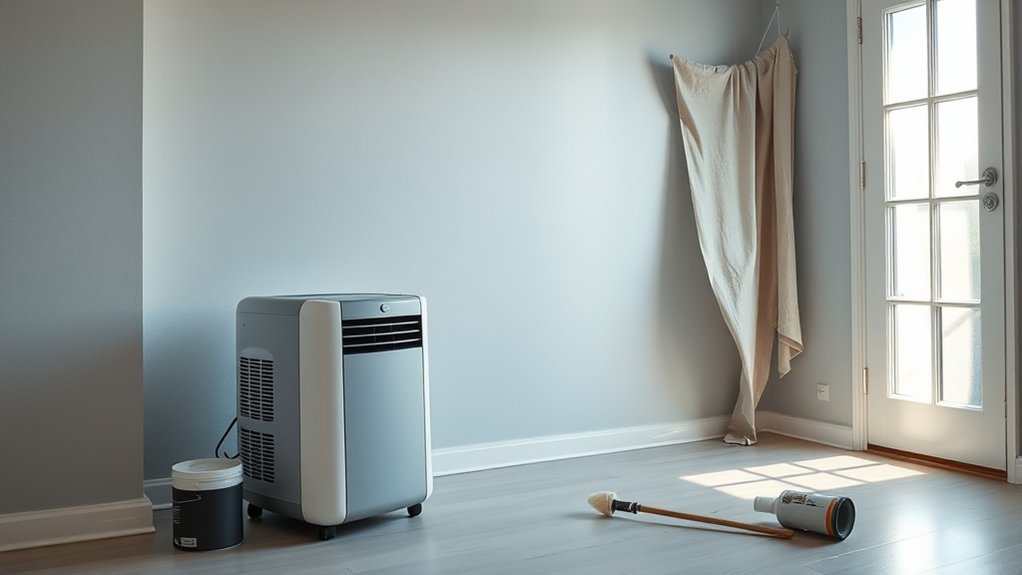
A dehumidifier can help fresh paint dry faster when the room is humid, especially with water-based wall paint. The goal is not to make the room extremely dry. It is to keep temperature, relative humidity, and airflow steady while following the paint label’s dry, recoat, and cure times.
Quick Answer
Yes. A dehumidifier can speed paint drying when excess humidity is slowing evaporation. Use a hygrometer, aim for a moderate setting near 45% to 50% relative humidity unless the paint label says otherwise, add gentle airflow, and wait the full listed recoat time. A dehumidifier does not replace ventilation for paint fumes.
Key Takeaways
- A dehumidifier helps most when indoor humidity is high and the paint is water-based.
- Use the paint label or technical data sheet as the final authority for temperature, humidity, dry time, and recoat time.
- Keep airflow gentle and indirect so dust does not land in wet paint.
- Ventilate for fumes even when you are also using a dehumidifier.
- Dry-to-touch, recoat-ready, and fully cured are different stages.
At a Glance
| Time Required | About 15–30 minutes to set up; paint drying and curing time depends on the product |
| Difficulty | Easy |
| Tools Needed | Dehumidifier with humidistat, hygrometer, clean fan, and safe outdoor ventilation |
| Cost | Usually limited to electricity if you already own the equipment |
Can a Dehumidifier Dry Paint Faster?
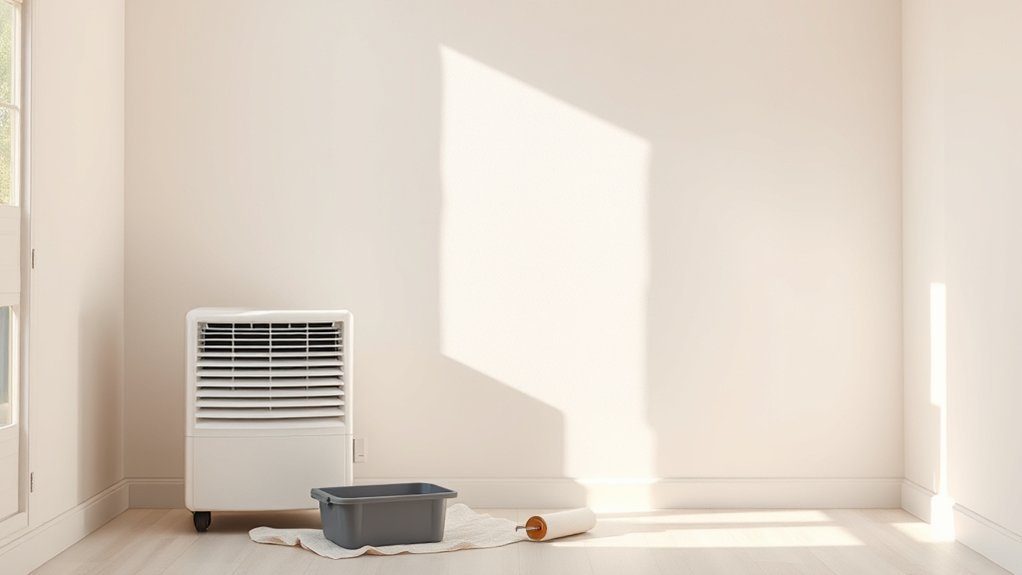
Yes. Paint manufacturers including Sherwin-Williams and Benjamin Moore recommend controlling humidity as one way to shorten drying time in a damp room. Lowering excess relative humidity gives water in latex or acrylic paint more room to evaporate.
The benefit is greatest when humidity is the main cause of slow drying. A dehumidifier will not fix paint applied too thickly, a wet or contaminated wall, an incompatible primer, low temperature, or a product that naturally needs a long recoat or cure time.
Note: “Dry to the touch” only means the surface no longer feels wet. “Recoat time” is when another coat may be applied, while “full cure” is when the coating reaches its intended hardness and durability.
When a Dehumidifier Helps Most
A dehumidifier is most useful in a basement, closed room, rainy climate, or other space where relative humidity remains high. It is particularly helpful for water-based architectural paints because those products release water as they dry. Oil-based and alkyd coatings also respond to room conditions, but their curing process is more dependent on oxidation and product chemistry.
Best Humidity Range
There is no single humidity number that fits every coating. The product label or technical data sheet should come first. As a practical indoor target, about 45% to 50% relative humidity is often a useful starting point when a room is damp. This also sits within the 30% to 50% range ENERGY STAR describes as generally suitable for buildings.
| Room Humidity | Likely Effect | What to Do |
|---|---|---|
| About 40%–50% | A practical range for many indoor painting jobs | Hold conditions steady and follow the label |
| About 50%–60% | Paint may dry more slowly as humidity rises | Use gentle dehumidification if needed |
| Above 60% | Longer dry time and a greater chance of lingering tackiness | Lower humidity before and during the job when the label permits |
| Below the label’s recommended range | Open time and leveling may be reduced for some coatings | Raise the setpoint and avoid direct heat or strong airflow |
Measure conditions with a separate hygrometer if the dehumidifier’s display is far from the painted surface. Do not assume that a room feels dry enough.
Indoor Painting Conditions
Run the dehumidifier before painting if the room starts out damp. During drying, set the humidistat to maintain a moderate level rather than continuous maximum operation. Keep doors and windows closed when outside air is more humid than indoor air, because bringing in damp air makes the dehumidifier work against a constant moisture source.
Ventilation is still necessary for fumes. When outdoor conditions allow, use controlled cross-ventilation or a securely placed exhaust fan that moves air outdoors. A dehumidifier removes water vapor; it does not remove all volatile organic compounds or replace fresh-air ventilation.
When a Dehumidifier Hurts the Finish
A dehumidifier used at a moderate setpoint is unlikely to harm a normal wall-paint finish. Problems are more likely when several drying forces are pushed too far at once, such as very low humidity, high heat, strong direct airflow, or an overly thin or thick film. These conditions can shorten the paint’s open time and reduce its ability to level, leaving lap marks, brush marks, or a rough surface.
Cracking, peeling, and bubbling are not reliable signs of “too much dehumidifier” by themselves. They can also result from moisture behind the wall, poor surface preparation, incompatible coatings, excessive film thickness, or painting before plaster and patching materials are dry.
Warning: Do not aim a heat gun, infrared lamp, unvented fuel heater, or high-speed fan at wet paint. Concentrated heat can affect color and film formation, while strong airflow can carry dust onto the surface.
Ideal Temperature and Humidity for Paint Drying
For many common interior wall paints, a comfortable room near 60°F to 80°F with moderate humidity provides workable drying conditions. However, exact limits vary. Some products permit application near 50°F, while specialty coatings may require a narrower range. Check the container and technical data sheet before painting.
Temperature, humidity, airflow, coating thickness, and the surface all affect paint dry time. The label’s recoat time is more reliable than a generic clock.
- Keep the room temperature stable while the paint dries.
- Lower excessive humidity instead of trying to create extremely dry air.
- Use clean, gentle airflow across the room rather than blasting the wall.
- Do not open windows when outside air is wetter than the room.
- Allow extra time when conditions are cooler or more humid than the label’s test conditions.
Why Thin Coats Dry Better
Paint applied at the manufacturer’s recommended film thickness usually dries and levels more predictably than a heavy coat. A thick coat holds more liquid, takes longer to dry through, and may sag or remain soft under a surface that feels dry.
Less Moisture Per Coat
With water-based paint, a properly applied coat contains less water to release than an overloaded coat. That lets the coating dry more evenly and reduces the chance of drips, runs, and soft paint beneath the surface.
- Load the brush or roller evenly.
- Spread paint to the coverage rate listed on the label.
- Do not keep rolling paint after it begins to set.
- Wait the full listed recoat time.
- Add another coat instead of trying to force one coat to cover too heavily.
Faster Surface Drying
Thin, even coats expose more of the film to moving air and usually reach the touch-dry stage sooner. The dehumidifier supports this process by controlling excess room moisture, while a fan moves humid air away from the surface. Neither tool makes it safe to ignore the recoat time.
Smoother Even Finish
A consistent film gives the paint time to flow and level before it sets. Avoid stretching the paint too thin, because insufficient film build can also cause poor hide and visible roller marks. The best result comes from matching the applicator, coverage rate, and coat thickness to the manufacturer’s directions.
- Use the recommended roller nap or brush.
- Keep a wet edge while working.
- Finish each section with light, consistent strokes.
- Stop reworking areas that have started to dry.
- Inspect under side lighting before applying the next coat.
Choose the Right Paint Type
Water-based acrylic and latex wall paints generally reach the touch-dry and recoat stages faster than traditional oil-based or alkyd coatings. That does not mean every water-based product is fast or every oil-based product is slow. Formulation, sheen, colorant, film thickness, and room conditions all matter.
| Paint Type | Typical Drying Behavior | Dehumidifier Effect |
|---|---|---|
| Water-based acrylic or latex | Often dries and recoats relatively quickly | Most helpful when high humidity is slowing water evaporation |
| Traditional oil-based or alkyd | Usually needs more time and cures through oxidation | May help room conditions but does not bypass the product’s chemistry |
| Waterborne alkyd | May feel dry before it reaches full hardness | Use only as part of stable label-approved conditions |
| Specialty primer, epoxy, or floor coating | Dry and recoat windows vary widely | Follow the technical data sheet exactly |
Benjamin Moore’s product guidance gives a useful example of why generic timing can mislead: one popular interior paint may be ready to recoat in one to two hours yet still need about 14 days to reach full cure.
Recommended Products

CONVENIENT SIZE - This Apple Barrel Acrylic Paint comes in a versatile 2 oz size that is great for basecoating, stenciling, and so much more

IMPROVES PAINT FLOW & LEVELING: Floetrol latex paint additive conditions acrylic and latex paint so it flows smoothly, self-levels, and dries to a professional finish without thinning.

Use for a variety of indoor and outdoor project surfaces including wood, metal, plaster, masonry or unglazed ceramic
Keep Surfaces Dry Before Painting
Paint should not be used to hide an active leak, damp wall, condensation problem, or mold. Clean the surface, remove grease and loose material, allow washed areas and patching compounds to dry, and use the primer recommended for the substrate.
New plaster does not have one universal waiting period. Sherwin-Williams says new plaster typically needs about 30 days to cure, although an approved masonry primer may be used after at least seven days under specified warm, moderate-humidity conditions. Other plaster systems and manufacturers give different times. Follow the plaster supplier and paint manufacturer rather than relying on a fixed four-to-six-week rule.
- Confirm that repaired areas are dry through, not only dry on the surface.
- Correct leaks and condensation before coating the wall.
- Remove dust after sanding with the method appropriate for the surface.
- Prime porous drywall, plaster, masonry, and patched areas as directed.
- Do not paint over visible mold or a persistently damp substrate.
Warning: Sanding, scraping, or cutting painted surfaces in a U.S. home built before 1978 can create hazardous lead dust. Review the EPA’s lead-safe renovation guidance before disturbing old paint.
Use Fans for Better Airflow
Fans speed evaporation by replacing the moisture-rich air next to the wet coating with drier room air. They work best with humidity control, but the airflow should stay gentle enough to avoid rippling the surface or moving debris.
Recommended Products

Floor fan: Genesis 20” high velocity box fan can conveniently rest on any flat surface, making it appropriate for use all around the home.

Powerful blower fan: This all-in-one blower fan meets your daily drying, cooling and ventilating needs and delivers strong concentrated airflow for multiple applications.

MADE FOR: A more efficient drying and cooling process
Fan Placement Tips
Clean the blades and surrounding floor before starting the fan. Place a freestanding fan several feet from the painted surface and aim it across the room or at an indirect angle. For ventilation, a securely mounted box fan can exhaust air outdoors when weather and electrical safety permit.
- Use low or medium speed.
- Keep the fan out of walkways and away from wet tools.
- Do not point strong airflow directly at glossy wet paint.
- Open windows only when outdoor air is suitable and not excessively humid.
- Keep children and pets away from cords, wet paint, and equipment.
Circulation Speeds Drying
Air movement helps prevent a stagnant humid layer from forming over the coating. In a larger room, two gently positioned fans may give more even circulation than one high-speed fan. Clean the room first, because airflow can lift dust and hair and deposit them in the finish.
Safe Ways to Speed Up Drying
Use this sequence to improve drying without guessing:
- Read the label and technical data sheet. Note the approved temperature and humidity range, coverage rate, touch-dry time, recoat time, and full-cure guidance.
- Measure the room. Check temperature and relative humidity near the work area with a hygrometer.
- Prepare a dry surface. Correct leaks, clean contamination, let patching dry, and apply the correct primer.
- Control fumes. Follow label precautions and provide outdoor exhaust or cross-ventilation. The EPA advises increasing ventilation when using products that emit VOCs.
- Set moderate humidity. If the room is damp, run the dehumidifier before, during, and after painting as needed to hold a steady label-approved level.
- Add gentle airflow. Use a clean fan several feet away and avoid direct heat.
- Wait for the product. Apply the next coat only after the listed recoat interval, adding time when conditions are cool or humid.
Pro Tip: Let the dehumidifier’s humidistat cycle the compressor on and off. A steady target is more useful than choosing an arbitrary number of operating hours.
Recommended Products

【The Undisputed Champion — Industry-Leading Dehumidifier Brand】Choose AEOCKY, getting double market validation. According to data independently verified by Stackline, a leading third-party data analytics company, AEOCKY was an industry‑leading dehumidifier brand on Amazon U.S. in 2025. Meanwhile, it stands as a technology-leading rotary desiccant dehumidifier brand on Amazon. This isn’t just an appliance—it’s a complete humidity-control solution for small spaces. Skip low-performance alternatives and trust a brand recognized by the market.
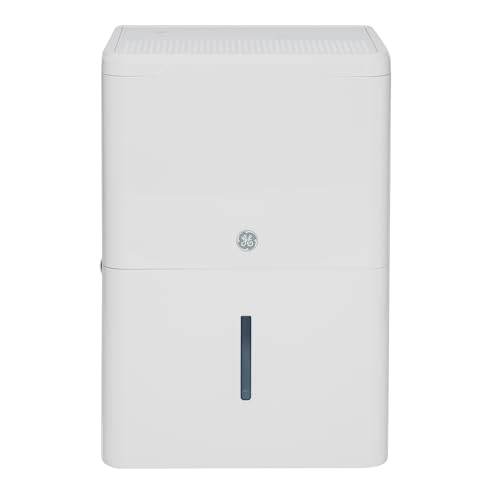
This small dehumidifier for bedroom, bathroom, basement use removes up to 25 pints of moisture per day. Perfect as a room dehumidifier for humid spaces up to 1,500 sq ft.

【ENERGY STAR Certified & Powerful Moisture Removal】Covers up to 6,000 sq.ft. and removes up to 100 pints/day (95°F, 90%RH) or 60 pints/day (86°F, 80%RH). This ENERGY STAR dehumidifier with a high-efficiency compressor delivers reliable humidity control for basements, bedrooms, bathrooms, garages, and offices while helping reduce energy consumption.
Troubleshooting Slow or Uneven Drying
| Problem | Possible Cause | Next Step |
|---|---|---|
| Paint stays tacky | High humidity, low temperature, thick film, contamination, or incompatible layers | Stabilize conditions, wait longer, and contact the paint maker if tackiness continues |
| Bubbles or blisters | Moisture, heat, poor adhesion, or coating over a damp surface | Find the moisture source before sanding and repainting |
| Brush or roller marks | Paint set too quickly, wrong applicator, overworking, or poor film build | Let it cure, sand if the label permits, and recoat under steadier conditions |
| Peeling after drying | Weak surface, contamination, trapped moisture, or missing primer | Remove failed coating and correct the preparation problem |
What Professional Painters Recommend
Professional results come from controlling the whole system rather than relying on one appliance. Use a dehumidifier when humidity is genuinely high, maintain safe ventilation, apply the specified film thickness, and respect the recoat interval. There is no general requirement to wait before switching on a dehumidifier; paint manufacturers specifically recommend humidity control on damp days.
The safest rule is simple: do not force the room beyond the paint’s listed conditions. Moderate humidity, stable temperature, clean indirect airflow, and patience through the cure period protect the finish better than extreme heat or maximum dehumidification.
Frequently Asked Questions
Will a dehumidifier help dry paint?
Yes, especially when high humidity is slowing a water-based paint. Set a moderate relative-humidity target, use gentle airflow, and follow the product’s recoat time. It will not correct a wet wall, thick coat, or incompatible coating system.
Should you use a dehumidifier if you have COPD?
A dehumidifier may help when high humidity worsens symptoms, but it is not automatically right for every person with COPD. The American Lung Association lists high humidity, strong odors, chemicals, and fumes as possible triggers. Keep the unit clean, avoid overly dry air, ventilate paint fumes, stay out of freshly painted rooms when possible, and ask your clinician about your personal humidity target.
Is two hours enough to let paint dry?
Sometimes, but not always. Some interior acrylic paints list a one-to-two-hour recoat time under specified conditions, while alkyds, primers, darker colors, thick coats, and cool or humid rooms may need longer. Use the label rather than a universal four-to-six-hour rule.
How many hours a day should you run a dehumidifier?
There is no fixed daily number. Set the humidistat to the chosen relative humidity and let the unit cycle automatically. Runtime changes with room size, starting humidity, moisture entering the space, temperature, and the dehumidifier’s capacity.
Should windows be open while a dehumidifier dries paint?
Not when outdoor air is more humid than the room, because the unit will keep pulling in new moisture. However, you still need safe ventilation for fumes. Use controlled cross-ventilation or exhaust to the outdoors when conditions permit, and follow the paint label’s safety directions.
Can you use a heater or heat gun to dry paint faster?
Avoid concentrated heat. A stable, comfortably warm room is safer than aiming a heater, heat lamp, or heat gun at the coating. Direct heat can change color, shorten open time, and cause uneven film formation.
Conclusion
Yes, a dehumidifier can help paint dry faster when indoor humidity is high. Use it to maintain moderate, steady conditions rather than to make the air extremely dry. Pair it with safe ventilation, clean indirect airflow, a dry prepared surface, and coats applied at the recommended thickness. Most importantly, follow the specific paint label for application, recoat, and cure times.
Sources
- Sherwin-Williams: How to Make Paint Dry Faster — supports humidity control, dehumidifier use, and indirect fan placement.
- Benjamin Moore: How to Make Paint Dry Faster — supports managing temperature, humidity, airflow, and avoiding concentrated heat.
- Benjamin Moore FAQ — supports product-specific dry, recoat, and cure times and differences among paint types.
- ENERGY STAR: Dehumidifiers — supports humidistat operation and general indoor relative-humidity guidance.
- U.S. EPA: Volatile Organic Compounds’ Impact on Indoor Air Quality — supports ventilation and label precautions while painting.
- U.S. EPA: Renovation, Repair and Painting Program for Consumers — supports lead-safe preparation in pre-1978 housing.