Affiliate disclosure: This article contains Amazon affiliate links. If you buy through a qualifying link, we may earn a commission at no additional cost to you.
Choosing the best crawl space dehumidifier is not only about picking the largest PPD number. Many brands advertise a maximum rating measured in hot, nearly saturated air, while the lower AHAM rating is usually more useful for comparing day-to-day performance. For most residential crawl spaces, drainage layout, actual moisture load, dimensions, airflow, and low-temperature operation matter just as much as headline capacity.
Quick Verdict
Best overall for a small crawl space: Abestorm Guardian SN35P because it combines compact dimensions with pump and gravity drainage. Best for a larger residential crawl space: ALORAIR Galaxy 60. Best heavy-duty option: Moiswell Defender XP235, but it is oversized for many homes.
Important: Treat listed square-foot coverage as a starting point, not a guarantee. A leaky, vented, wet, or unencapsulated crawl space can require more capacity than a sealed space of the same size.
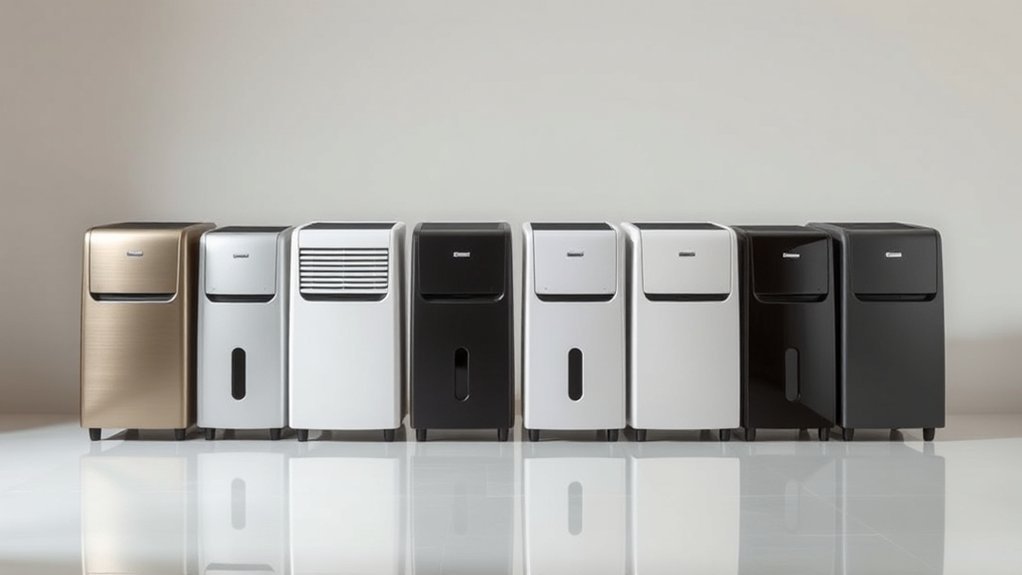
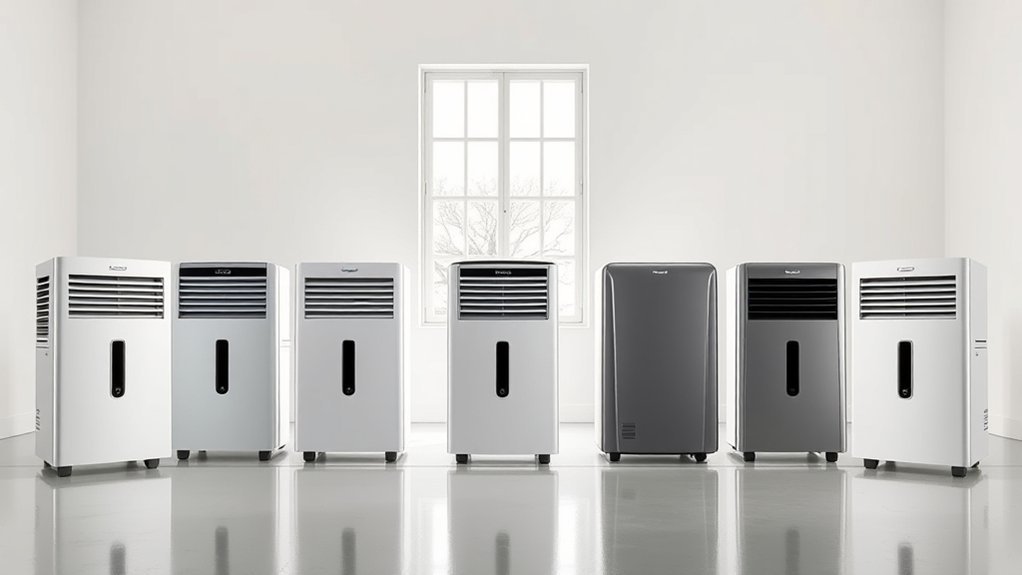
Quick Comparison of the Best Crawl Space Dehumidifiers
| Product | Max PPD | AHAM PPD | Listed Coverage | Drainage | Amazon |
|---|---|---|---|---|---|
| Abestorm Guardian SN35P Crawl Space Dehumidifier with Pump Best Overall for Small Crawl Spaces |
70 PPD | 35 PPD | Up to 1,000 sq. ft. | Built-in pump or gravity drain | Check on Amazon |
| ALORAIR 70 PPD Crawl Space Dehumidifier Best Compact Gravity-Drain Pick |
70 PPD | 35 PPD | Up to 1,000 sq. ft. | Continuous gravity drain | Check on Amazon |
| CADPXS 125 Pint Commercial Crawl Space Dehumidifier Best Mid-Size Gravity-Drain Pick |
125 PPD | 55 PPD | Up to 1,300 sq. ft. | Continuous gravity drain | Check on Amazon |
| ARGENDON Sandidry 55C 120 Pint Dehumidifier with Pump Best Mid-Size Pump Pick |
120 PPD | 55 PPD | Up to 1,300 sq. ft. | Built-in pump or gravity drain | Check on Amazon |
| ALORAIR Galaxy 60 145 Pint Crawl Space Dehumidifier Best for Large Residential Crawl Spaces |
145 PPD | 60 PPD | Up to 1,800 sq. ft. | Continuous gravity drain | Check on Amazon |
| COSTWAY 124 PPD Commercial Dehumidifier for Crawl Spaces Best for Convenient Controls |
124 PPD | Not confirmed | Up to 1,300 sq. ft. | Continuous gravity drain | Check on Amazon |
| CREWORKS 130 PPD Crawl Space Dehumidifier Best Detachable Display |
130 PPD | 60 PPD | 500–1,440 sq. ft. | Gravity drain; pump setup varies by variant | Check on Amazon |
| Aiusevo AS600 75 Pint Crawl Space Dehumidifier with Pump Best Compact High-Airflow Pick |
75 PPD | Not confirmed | Up to 5,200 sq. ft. listed | Built-in pump or gravity drain | Check on Amazon |
| Airzentti 155 Pint Commercial Dehumidifier with Pump Best Large-Area Pump Model |
155 PPD | 70 PPD | Up to 7,500 sq. ft. listed | Built-in pump or gravity drain | Check on Amazon |
| Moiswell Defender XP235 Commercial Dehumidifier with Pump Best Heavy-Duty Commercial Pick |
235 PPD | 100 PPD | Up to 8,000 sq. ft. listed | Built-in pump with drain hose | Check on Amazon |
PPD note: “Max PPD” commonly reflects saturated test conditions such as 95°F and 90% RH. AHAM figures are measured under less extreme conditions and are generally more useful for side-by-side comparison. “Not confirmed” means the source listing did not clearly provide an AHAM figure.
Abestorm Guardian SN35P Crawl Space Dehumidifier with Pump
Best Overall for Small Crawl Spaces
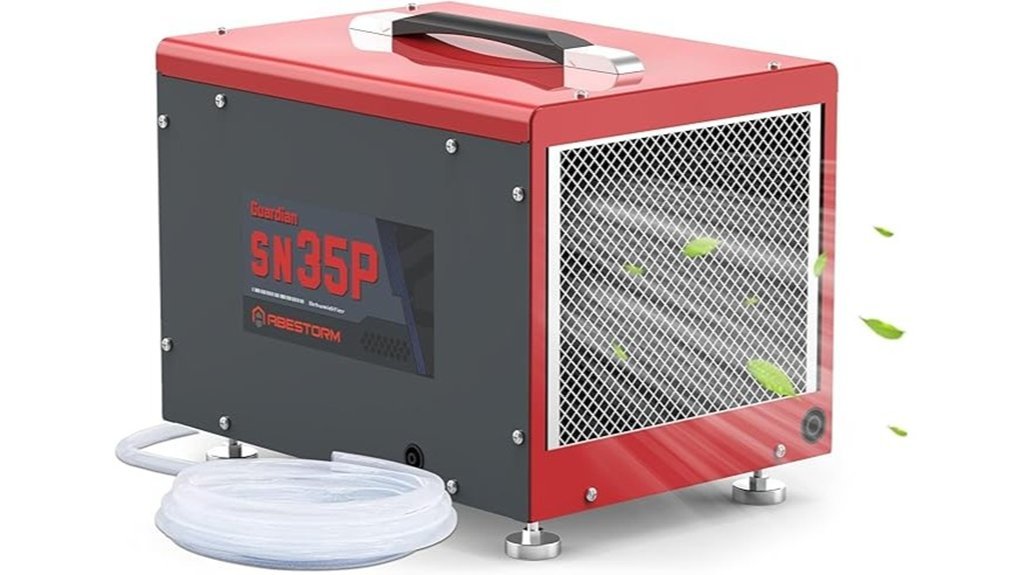
The Abestorm Guardian SN35P is a compact option for homeowners who need automatic drainage without giving up much floor space. Its headline 70-pint rating is a saturation-condition figure; the more realistic AHAM rating is about 35 pints per day. The unit is manufacturer-listed for spaces up to 1,000 square feet and uses roughly 130 CFM of airflow.
Best For: Encapsulated crawl spaces where the drain is above or away from the unit.
Why You’ll Like It: The built-in condensate pump can move water to a higher or more distant discharge point, while the gravity-drain option keeps installation flexible. Auto defrost and automatic restart are useful in a crawl space that is not checked every day.
Who Should Avoid It: Skip it if your crawl space is substantially larger than the listed coverage area or if you only need a simple gravity-drain model.
Pros:
- Compact body is easier to position in a low-clearance crawl space.
- Two drainage methods reduce installation limitations.
- Automatic humidity control, defrost, and restart support set-and-monitor use.
Cons:
- The 70-PPD headline rating is not the same as its AHAM performance.
- A pump adds components that may need cleaning or service.
- Confirm access-opening dimensions before ordering.
ALORAIR 70 PPD Crawl Space Dehumidifier
Best Compact Gravity-Drain Pick
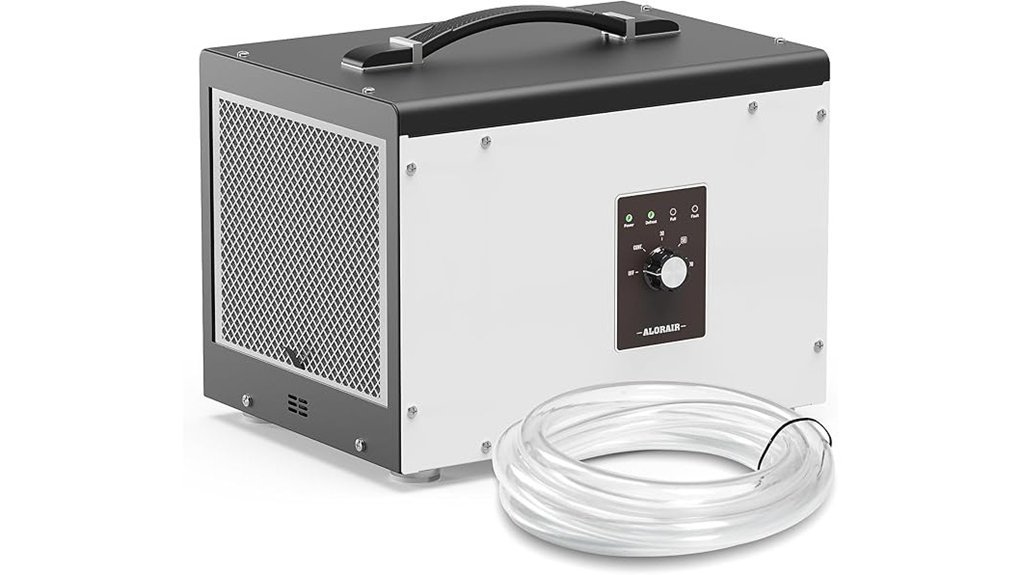
This ALORAIR 70 PPD model is a compact crawl-space dehumidifier with continuous gravity drainage, auto defrost, memory restart, and adjustable humidity control. Its listed output is 70 pints per day at saturation and about 35 pints per day under AHAM conditions, with manufacturer-listed coverage up to 1,000 square feet.
Best For: Small to medium crawl spaces with a nearby lower drain or sump.
Why You’ll Like It: It keeps the design simple by using gravity drainage rather than an internal pump. That can be a good fit when the dehumidifier can sit above a floor drain or sump and the hose can maintain a steady downward slope.
Who Should Avoid It: Choose a pump-equipped model instead if condensate must travel uphill, through a window, or to a distant drain.
Pros:
- Compact horizontal design fits many crawl-space layouts.
- Gravity drainage avoids manual bucket emptying.
- Auto defrost helps maintain operation in cooler conditions.
Cons:
- No built-in pump for upward drainage.
- The maximum PPD number can overstate normal-condition output.
- Warranty wording can differ by seller, so verify the current terms.
CADPXS 125 Pint Commercial Crawl Space Dehumidifier
Best Mid-Size Gravity-Drain Pick
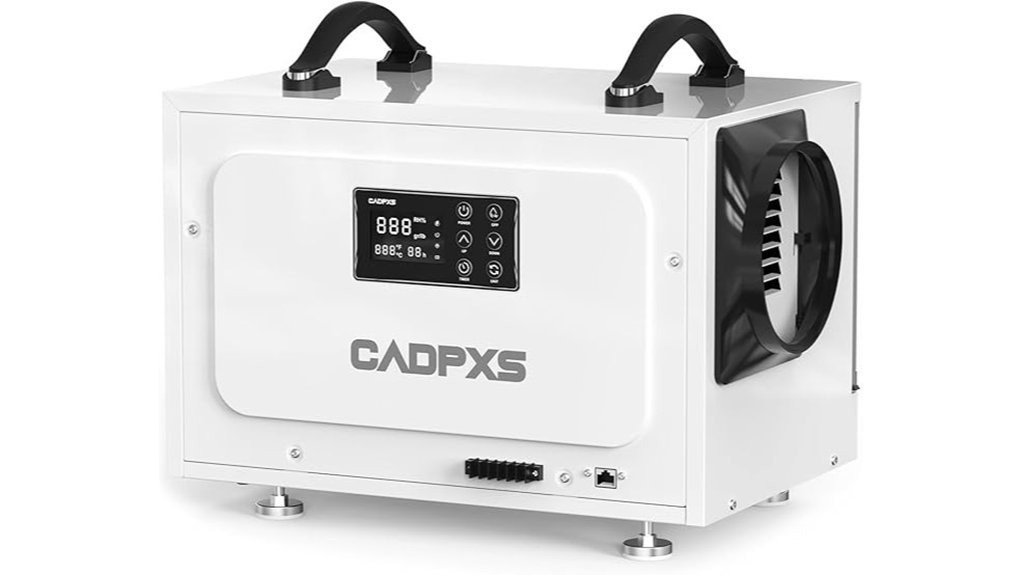
The CADPXS 125-pint model steps up capacity for crawl spaces and basements that need more moisture removal than a compact 70-pint unit. The listing reports up to 125 PPD at saturation, about 55 PPD at AHAM, and coverage up to 1,300 square feet.
Best For: Medium crawl spaces with a dependable lower drain point.
Why You’ll Like It: Its continuous gravity-drain setup is straightforward, and the compact commercial-style cabinet is designed for crawl spaces, basements, and water-damage applications. Auto defrost and memory restart reduce the need for frequent manual resets.
Who Should Avoid It: It is not the best installation when the drain sits higher than the unit. The exact ASIN is presented as a gravity-drain version, so do not assume a pump is included.
Pros:
- Higher AHAM capacity than the 70-PPD compact models.
- Continuous drainage supports unattended moisture control.
- Commercial-style design suits demanding damp areas.
Cons:
- Gravity drainage requires a continuously descending hose route.
- Smart-home compatibility was not verified for this ASIN.
- The unit is heavier than most 70-PPD crawl-space models.
ARGENDON Sandidry 55C 120 Pint Dehumidifier with Pump
Best Mid-Size Pump Pick
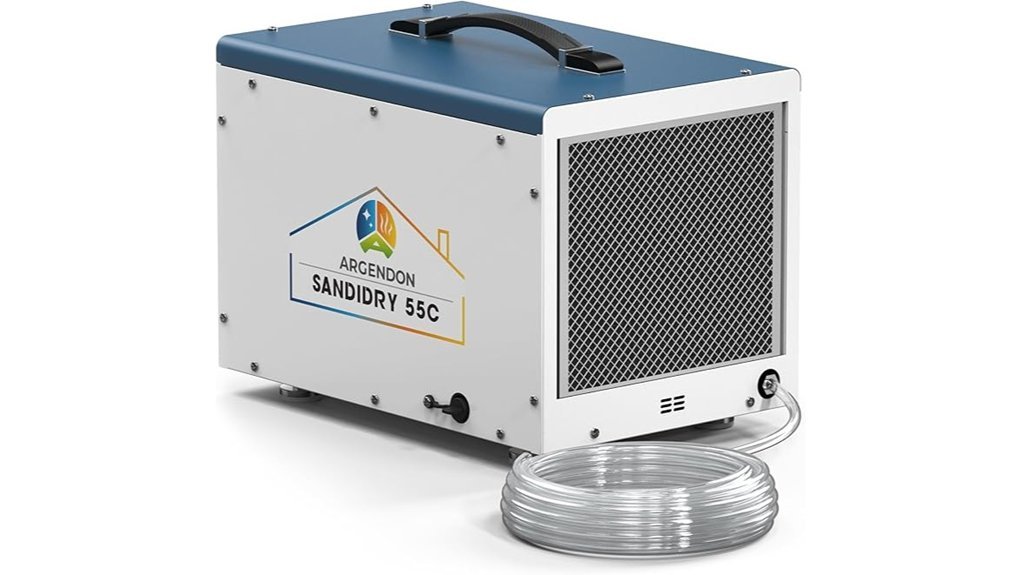
The ARGENDON Sandidry 55C combines a manufacturer-listed 120 PPD maximum rating with about 55 PPD at AHAM. It is designed for spaces up to 1,300 square feet and includes both a gravity hose and a built-in pump for more flexible condensate routing.
Best For: Medium crawl spaces that need flexible upward or horizontal drainage.
Why You’ll Like It: The pump can move water to a higher discharge point, while the gravity option gives you a simpler backup installation. Adjustable humidity control, auto restart, and low-temperature defrost make it practical for long-term crawl-space use.
Who Should Avoid It: A lower-capacity gravity-only model may be more economical when the crawl space is small and a floor drain is already available.
Pros:
- Two drainage options suit more installation layouts.
- Useful mid-range AHAM capacity for many residential crawl spaces.
- Manufacturer lists a limited five-year warranty.
Cons:
- More complex than a gravity-only unit.
- Requires enough clearance for airflow and hose routing.
- The MERV-1 filter is mainly for protecting the machine, not fine-particle air cleaning.
ALORAIR Galaxy 60 145 Pint Crawl Space Dehumidifier
Best for Large Residential Crawl Spaces
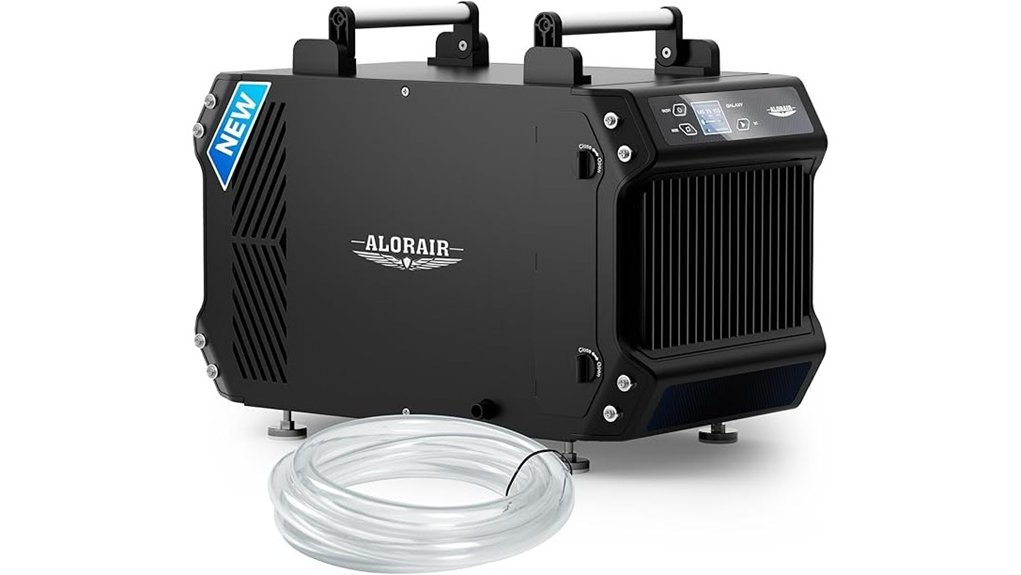
The ALORAIR Galaxy 60 is aimed at larger crawl spaces and basements. Its 145-PPD figure is measured at saturated conditions, while the manufacturer lists about 60 PPD at AHAM and coverage up to 1,800 square feet.
Best For: Larger encapsulated crawl spaces with a nearby sump or floor drain.
Why You’ll Like It: The corrosion-protection treatment, automatic defrost, restart function, and compact horizontal cabinet are useful for long-term installation in a damp, low-clearance area. The manufacturer also lists a six-year limited warranty, with terms that should be checked before purchase.
Who Should Avoid It: This version uses gravity drainage. Choose a pump version when there is no lower drain point.
Pros:
- Balanced capacity for larger residential crawl spaces.
- Auto defrost and restart support unattended operation.
- Compact commercial-style form compared with upright room units.
Cons:
- No built-in pump on the gravity-drain Galaxy 60 version.
- The 145-PPD headline should not be compared directly with AHAM ratings.
- May be oversized for a small, well-sealed crawl space.
COSTWAY 124 PPD Commercial Dehumidifier for Crawl Spaces
Best for Convenient Controls
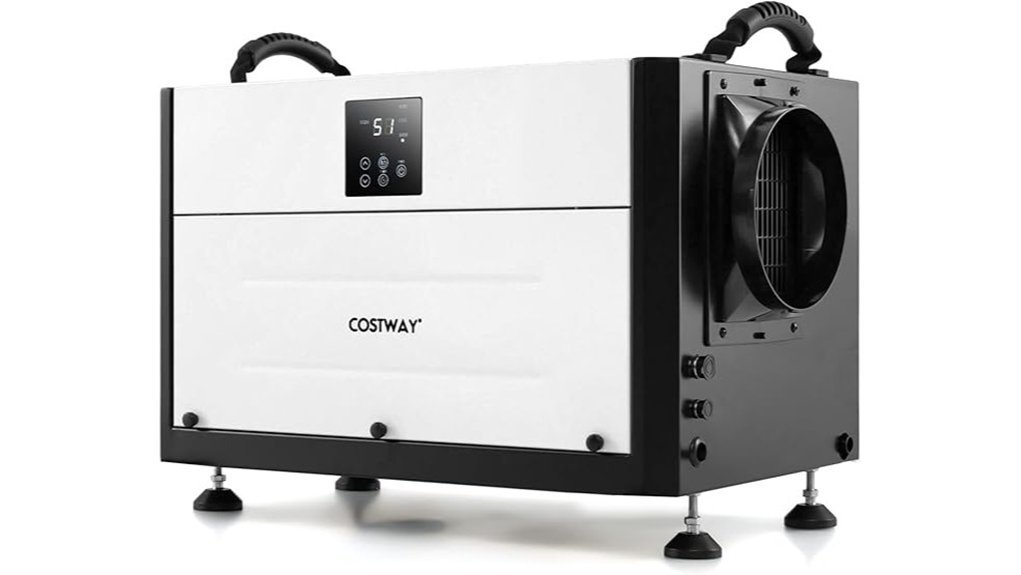
The COSTWAY commercial crawl-space dehumidifier is manufacturer-listed at up to 124 PPD under high-temperature, high-humidity test conditions and for areas up to 1,300 square feet. It adds a remote control, adjustable humidity settings, a 24-hour timer, three modes, washable filter, and auto defrost.
Best For: Users who value a remote control, timer, and multiple operating modes.
Why You’ll Like It: The controls are easier to reach than crawling to the unit for every adjustment. Its compact cabinet and gravity-drain design work well when the unit can be positioned near a lower drain.
Who Should Avoid It: Do not choose this model when your installation requires pumped drainage. A pump is not included.
Pros:
- Remote control and timer improve day-to-day convenience.
- Multiple modes provide more control over operation.
- Washable filter can reduce routine replacement costs.
Cons:
- No built-in condensate pump.
- AHAM-rated capacity was not clearly confirmed.
- At roughly 79.5 pounds, installation may require two people.
CREWORKS 130 PPD Crawl Space Dehumidifier
Best Detachable Display
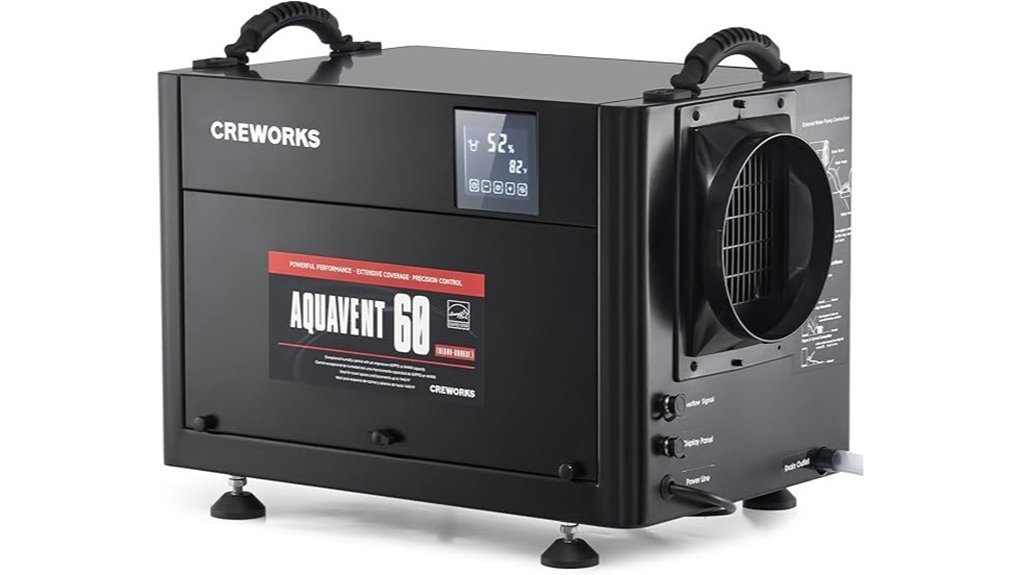
The CREWORKS 130 PPD model is rated at about 60 PPD under AHAM conditions and up to 130 PPD at saturation. It is intended for roughly 500 to 1,440 square feet and offers manual, continuous, and night modes plus a detachable display panel.
Best For: Crawl spaces where a remote-mounted display would simplify monitoring.
Why You’ll Like It: The display can be positioned away from the machine, helping you check humidity and change settings without reaching deep into the crawl space. Auto defrost, an overflow alarm, and a washable filter support routine operation.
Who Should Avoid It: Confirm the exact package before buying. CREWORKS sells pump and non-pump variants, and the included drainage hardware can differ.
Pros:
- Detachable control panel improves accessibility.
- 60-PPD AHAM capacity suits many medium crawl spaces.
- Multiple modes and a 1–24 hour timer add flexibility.
Cons:
- Pump inclusion varies by listing or selected variant.
- Heavier than compact 70-PPD units.
- Manufacturer warranty information may be shorter than some competing models.
Aiusevo AS600 75 Pint Crawl Space Dehumidifier with Pump
Best Compact High-Airflow Pick
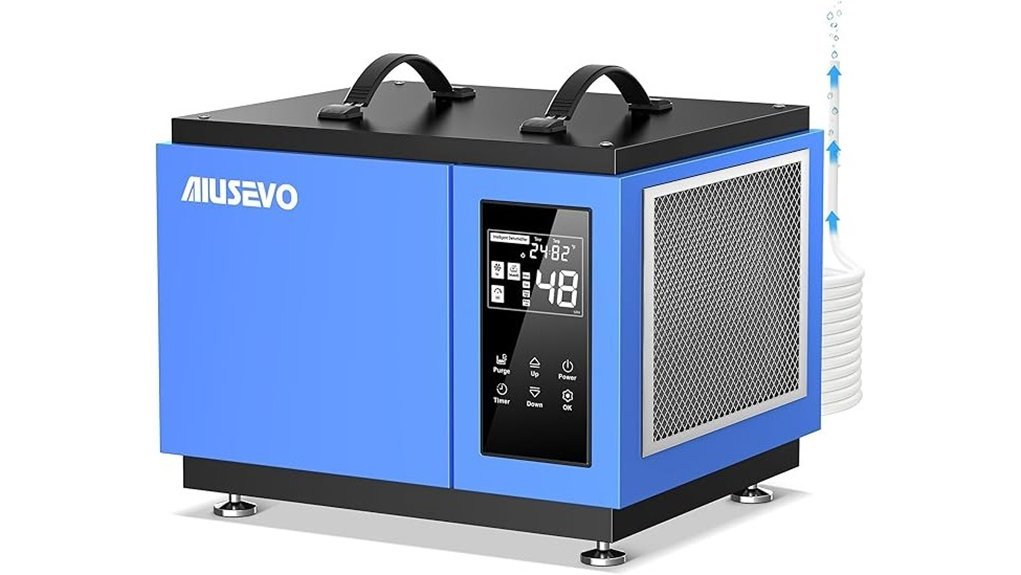
The Aiusevo AS600 is a compact crawl-space model with a manufacturer-listed maximum of 75 PPD at 95°F and 90% RH, 200 CFM airflow, and pump or gravity drainage. The listing also advertises coverage up to 5,200 square feet, but that number should be treated cautiously because real performance depends heavily on temperature, humidity, air sealing, and moisture load.
Best For: Buyers who need a compact cabinet, high listed airflow, and flexible drainage.
Why You’ll Like It: The 16.5-by-13.7-by-12.5-inch listed dimensions can help it fit through tight openings, and the touchscreen provides humidity, timer, temperature, auto-restart, and fault-code information.
Who Should Avoid It: Do not size this unit from the 5,200-square-foot marketing figure alone. Confirm the AHAM capacity or consult an installer for a large or very wet crawl space.
Pros:
- Compact listed dimensions suit low-clearance installations.
- Pump and gravity drainage provide setup flexibility.
- Touchscreen and error display simplify monitoring.
Cons:
- AHAM-rated PPD was not clearly verified.
- The coverage claim appears optimistic for demanding crawl spaces.
- Brand support history is less established than some long-running crawl-space specialists.
Airzentti 155 Pint Commercial Dehumidifier with Pump
Best Large-Area Pump Model
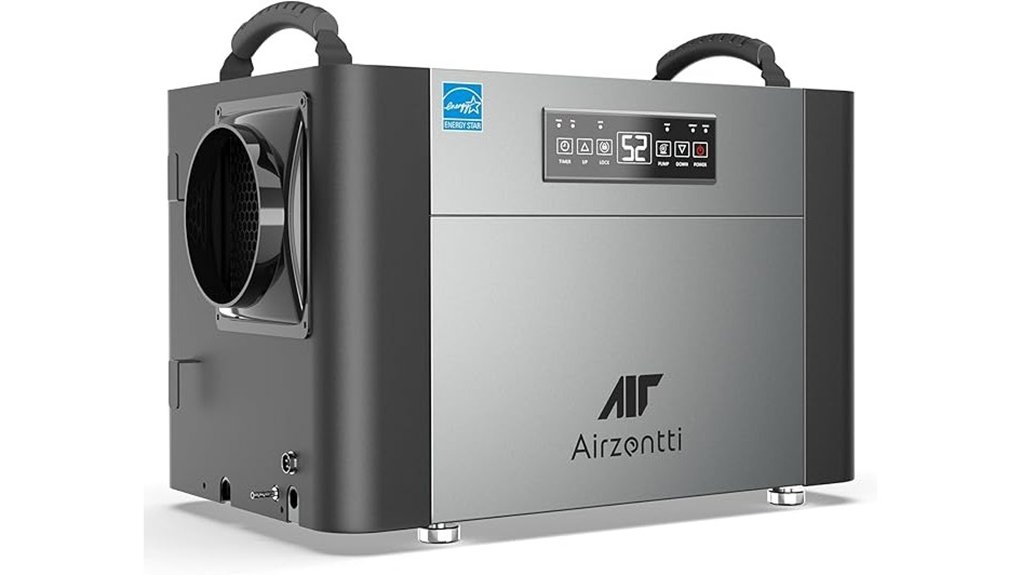
The Airzentti commercial model is rated at up to 155 PPD at saturation and about 70 PPD under AHAM conditions, with 220 CFM airflow. Its listing advertises coverage up to 7,500 square feet, which is best viewed as a broad manufacturer estimate rather than a guaranteed crawl-space sizing rule.
Best For: Large basements, crawl spaces, garages, or mixed-use areas needing pumped drainage.
Why You’ll Like It: It includes both a built-in pump and gravity drainage, along with auto defrost, humidity settings, timer control, and auto restart. That combination suits installations where the drain is not directly below the unit.
Who Should Avoid It: It can be more machine than a small residential crawl space needs. Compare the AHAM rating, power draw, dimensions, and operating cost before choosing it over a smaller model.
Pros:
- 70-PPD AHAM output provides substantial real-world capacity.
- Built-in pump supports upward drainage.
- Useful for larger or multi-purpose damp areas.
Cons:
- The 7,500-square-foot coverage claim may not reflect severe crawl-space moisture loads.
- At about 60 pounds, it is not especially easy to reposition.
- May consume more power than a correctly sized smaller unit.
Moiswell Defender XP235 Commercial Dehumidifier with Pump
Best Heavy-Duty Commercial Pick
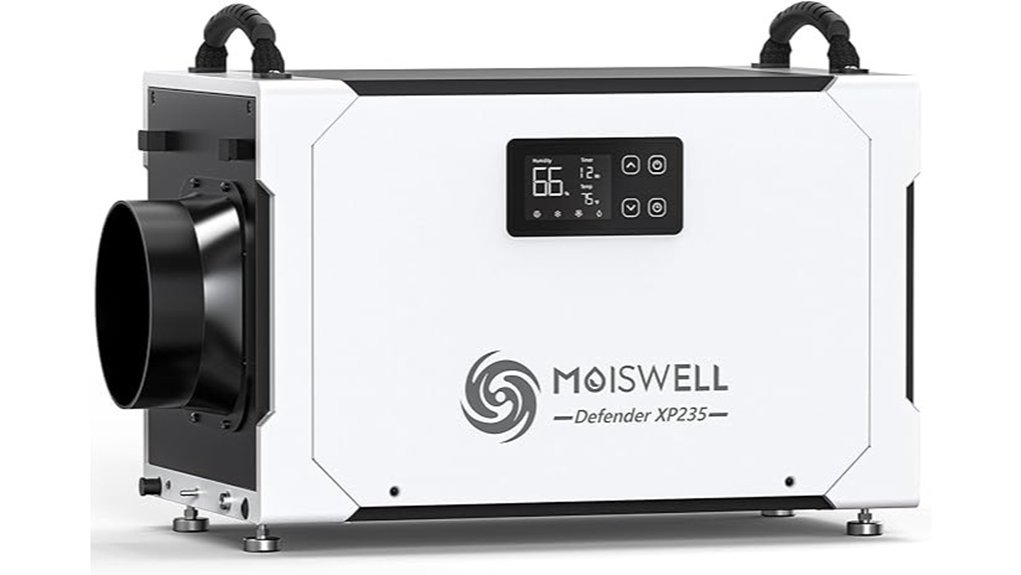
The Moiswell Defender XP235 is the highest-capacity option in this roundup, with a manufacturer-listed 235 PPD maximum and 100 PPD at AHAM. It is built for large basements, job sites, water-damage work, and other demanding environments, with advertised coverage up to 8,000 square feet.
Best For: Industrial spaces, restoration work, and exceptionally large or wet crawl-space projects.
Why You’ll Like It: A built-in pump, long drain hose, metal cabinet, auto defrost, and auto restart make it more suitable for heavy-duty use than a typical compact residential model.
Who Should Avoid It: Most ordinary residential crawl spaces do not need a 90-pound, high-power restoration-style unit. Choose it only when the moisture load and space justify the size, power demand, and installation effort.
Pros:
- Highest verified AHAM capacity in this list.
- Built-in pump supports continuous drainage.
- Durable construction suits commercial and restoration settings.
Cons:
- Very heavy and harder to install in restricted access areas.
- Higher power draw than residential-scale models.
- Likely oversized for many sealed crawl spaces.
Factors to Consider When Choosing a PPD Crawl Space Dehumidifier
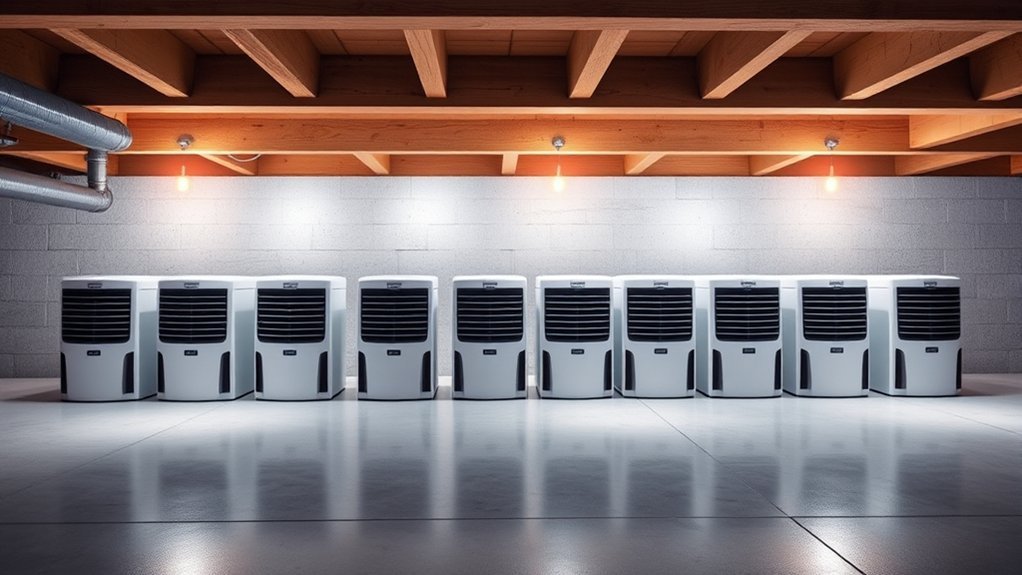
The right unit should match the crawl space, moisture source, drainage route, temperature, and access opening. Use the following checklist before relying on a manufacturer’s coverage number.
Compare AHAM Capacity, Not Just Maximum PPD
A maximum PPD rating is often measured in very warm, extremely humid air. The same machine can remove far less water under normal crawl-space conditions. When two models use different test standards, their headline numbers are not directly comparable. Give more weight to the AHAM rating when it is available, and ask the manufacturer for the test conditions when it is not.
Size for Moisture Load and Air Sealing
Measure the crawl-space floor area, but also evaluate standing water, exposed soil, open vents, foundation leaks, insulation condition, and outside-air infiltration. Encapsulation, a ground vapor barrier, drainage repairs, and sealed vents can reduce the load on the dehumidifier. A larger unit cannot permanently solve active water intrusion or plumbing leaks.
Choose Pump or Gravity Drainage
Gravity drainage is simple and dependable when the hose can run continuously downhill to a floor drain or sump. A built-in pump is more useful when water must move upward, through a window, or across a longer distance. Check the included hose length, pump lift rating, outlet position, and whether the machine automatically stops if drainage fails.
Review Efficiency at Realistic Conditions
Compare AHAM capacity, listed energy efficiency, wattage, airflow, and control behavior rather than assuming the largest machine will be cheapest to run. Auto humidity control can reduce unnecessary compressor operation. A correctly sized unit in a sealed crawl space usually operates more efficiently than an oversized machine fighting constant outdoor moisture.
Consider Noise and Vibration
Crawl-space dehumidifiers use a compressor and fan, so some sound and vibration are normal. Noise matters most when the unit sits below a bedroom, office, or living area. Install it on a stable, level surface, maintain the required airflow clearance, and use vibration isolation only when permitted by the manufacturer.
Measure the Access Opening and Installation Space
Check the unit’s width, height, depth, and weight before ordering. Confirm that it will pass through the crawl-space door and leave enough clearance around the intake, exhaust, filter, drain connection, and control panel. Also plan how the unit will be carried, leveled, suspended, or serviced after installation.
Look for Useful Controls, Not Feature Clutter
Helpful features include an adjustable humidistat, automatic restart after a power outage, auto defrost, a washable filter, timer controls, fault codes, and a remote or detachable panel. Wi-Fi can be useful in a hard-to-access crawl space, but only buy it when the exact model and app support are clearly confirmed.
Verify Warranty and Support Terms
Warranty length alone does not show how easy a claim will be. Check which parts are covered, whether labor or shipping is included, whether registration is required, and whether the pump has the same coverage as the compressor. Save the receipt, model number, serial number, and installation photos.
Before You Buy
- Repair active leaks and standing-water problems first.
- Measure the crawl-space opening and service clearances.
- Confirm whether you need gravity drainage or a pump.
- Compare AHAM PPD when available.
- Check the operating-temperature range and electrical requirements.
- Verify the exact accessories and warranty for the selected ASIN or variant.
Safety Note: Use a grounded outlet and follow the manufacturer’s installation instructions and local electrical requirements. Do not place the unit in standing water, block the air openings, or route a drain hose where it can kink, freeze, or create a trip hazard.
Frequently Asked Questions
How Do I Properly Maintain My Crawl Space Dehumidifier?
Inspect and clean the filter on the schedule in the manual, keep the intake and exhaust clear, check the drain hose for kinks or buildup, and test the pump if the unit has one. Clean dust from the cabinet, verify the target humidity, and inspect the crawl space for new leaks or standing water.
How Long Does a Crawl Space Dehumidifier Last?
There is no guaranteed lifespan. Runtime, temperature, dust, drainage problems, maintenance, electrical conditions, and build quality all affect service life. A long warranty can be helpful, but it should not be treated as a promise that the unit will last for that exact number of years.
Can I Use a Crawl Space Dehumidifier in Other Areas?
Many models can also work in basements, garages, storage rooms, workshops, or commercial spaces when the temperature, drainage, airflow, and electrical setup meet the manufacturer’s requirements. These units are usually less convenient than a portable room dehumidifier when you need a water bucket or frequent movement.
How Do I Determine the Right Size for My Crawl Space?
Start with square footage, then account for humidity level, temperature, air leakage, exposed soil, standing water, and whether the crawl space is encapsulated. Compare AHAM-rated capacity when possible. For a large, persistently wet, or structurally complicated crawl space, professional sizing is safer than using a simple pints-per-square-foot rule.
Are Crawl Space Dehumidifiers Energy-Efficient?
They can be efficient when correctly sized and used in a sealed, well-drained crawl space. Look for a clearly stated efficiency rating, automatic humidity control, appropriate AHAM capacity, and a drainage setup that allows uninterrupted operation. Fixing moisture entry is often the most important step for reducing runtime.
What Is the Difference Between AHAM and Saturation PPD?
Saturation PPD is measured in hotter and more humid test conditions, so it produces a larger number. AHAM PPD is measured in less extreme conditions and is usually a better comparison point for normal use. Always check the test conditions before deciding that one model is more powerful than another.
Should I Choose a Pump or Gravity Drain?
Choose gravity drainage when the hose can run downhill to a nearby drain or sump. Choose a pump when condensate must move uphill or across a longer distance. A pump adds flexibility, but it also adds a component that needs inspection and cleaning.
Conclusion
Final Recommendation
For a typical small encapsulated crawl space, the Abestorm Guardian SN35P offers a practical balance of compact size, AHAM capacity, and flexible drainage. The ALORAIR Galaxy 60 is a stronger fit for larger residential crawl spaces with gravity drainage. The Moiswell Defender XP235 is best reserved for commercial, restoration, or unusually demanding moisture loads.
Whichever model you choose, compare AHAM output, confirm the drain route, measure the access opening, and correct active water entry before relying on the dehumidifier.