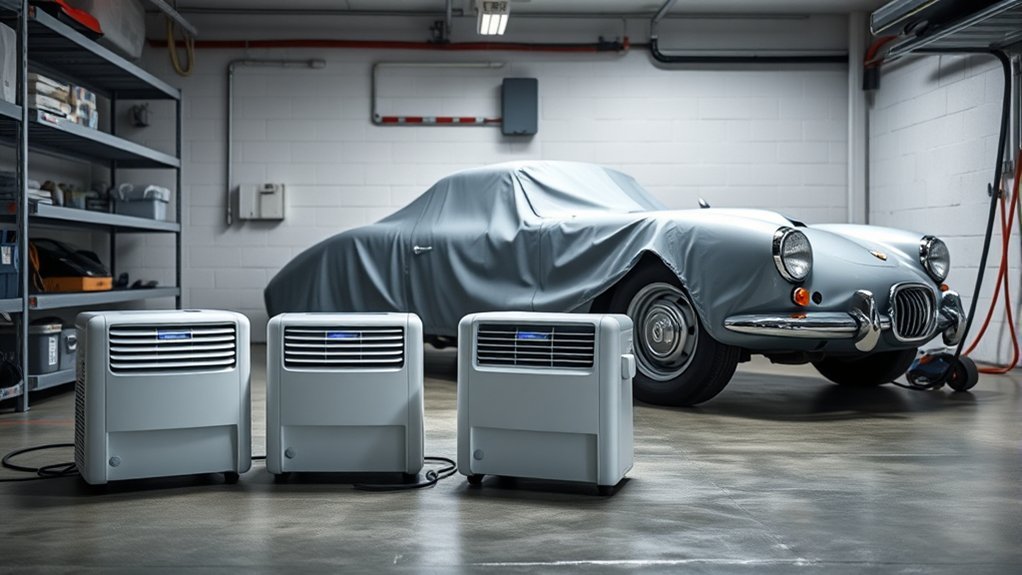
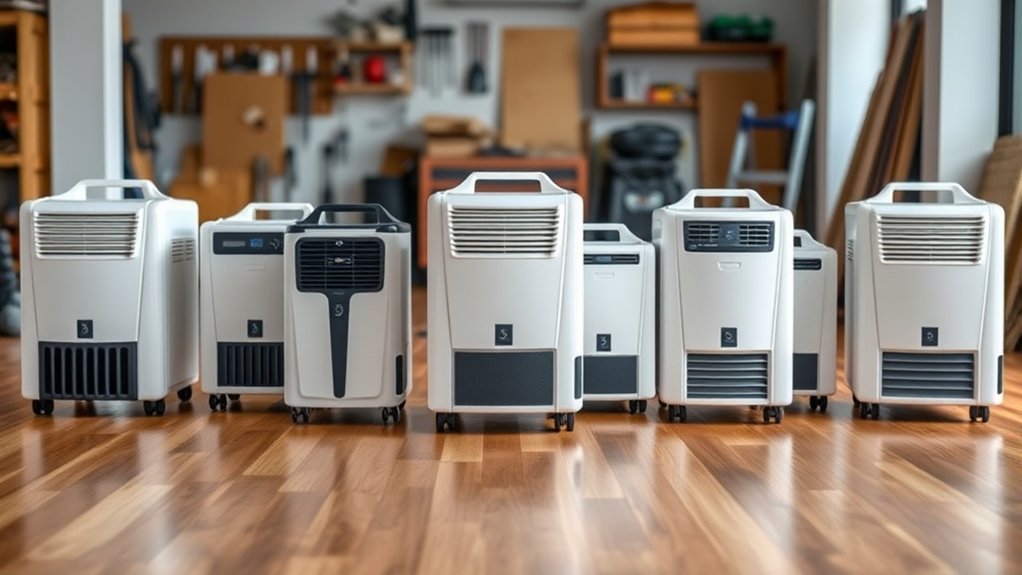
If you are looking for the best dehumidifiers for hardwood floors in 2026, focus on models that can hold room humidity steady—not just small desktop units that collect a little water. The three options below cover small-to-large spaces and include adjustable humidity control or room-scale compressor performance. The AEOCKY 50 Pint is the strongest all-around pick for larger areas, the Midea 22 Pint is a practical choice for smaller rooms, and the Waykar 34 Pint offers a balanced middle ground.
Quick Answer: Choose capacity based on the actual dampness and layout of the space, then use a separate hygrometer to confirm the result. For most homes, keeping indoor relative humidity around 30% to 50% is a useful general target, but your flooring manufacturer’s guidance should come first.
Affiliate Disclosure: This article contains Amazon affiliate links. We may earn a commission from qualifying purchases at no extra cost to you.
Quick Comparison
| Product | Best For | Listed Capacity | Listed Coverage | Main Limitation | Amazon |
|---|---|---|---|---|---|
| Midea Energy Star Dehumidifier | Smaller rooms and moderate humidity | 22 pints/day | Up to 1,500 sq. ft. | No Wi-Fi control or built-in pump | Check Amazon |
| AEOCKY 50 Pint Compressor Dehumidifier | Large rooms, open layouts, and heavier moisture loads | 50 pints/day | Up to 3,500 sq. ft. | Small bucket for its output unless hose drainage is used | Check Amazon |
| Waykar 34 Pints Energy Star Dehumidifier | Medium-size areas and buyers who want an included drain hose | Up to 34 pints/day at high-temperature, high-humidity conditions | Up to 2,000 sq. ft. | 0.66-gallon tank may fill quickly in damp spaces | Check Amazon |
Midea Energy Star Dehumidifier (22 Pint, White)
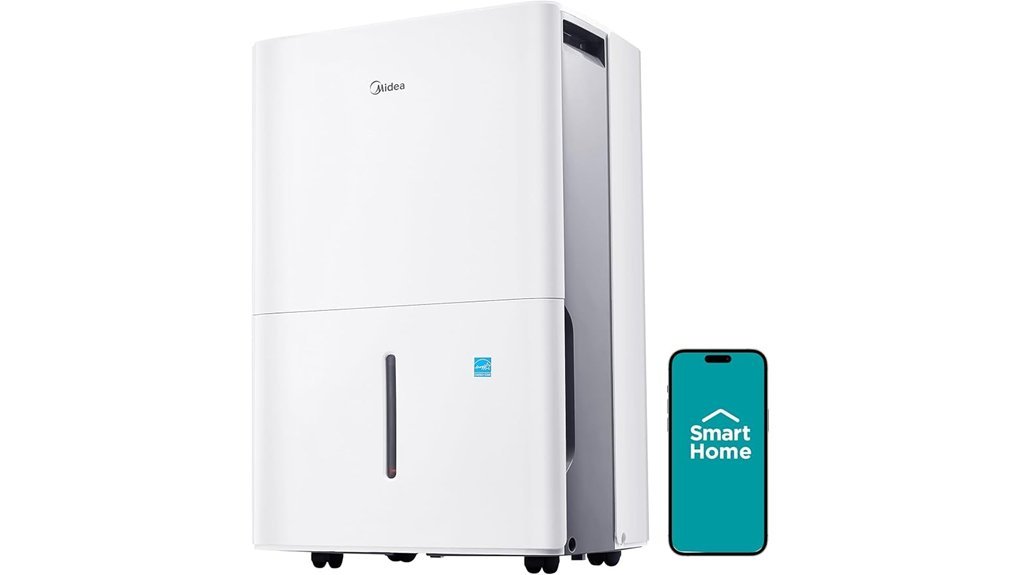
Best for smaller rooms: The Midea 22 Pint is a sensible starting point when you need steady humidity control in a bedroom, office, finished basement room, or other moderate-size area with hardwood flooring. It is listed to remove up to 22 pints of moisture per day and cover spaces up to 1,500 sq. ft.
Why you’ll like it: This model combines a built-in timer, adjustable humidity settings, a washable filter, and caster wheels for easier room-to-room movement. Its listed operating sound is about 47 dBA, which is reasonable for a compressor dehumidifier used in a living area.
Important correction: This exact model is a basic-control unit, not a Wi-Fi or voice-control model. Buyers who need app control should verify a different Midea model rather than assuming this ASIN includes smart features.
Pros:
- Appropriate capacity for smaller or moderately damp rooms.
- ENERGY STAR-certified listing with timer and adjustable humidity control.
- Four-wheel design makes it easier to reposition.
- Established manufacturer with a listed one-year warranty.
Cons:
- No built-in pump.
- No verified Wi-Fi, Alexa, or Google Assistant control for this model.
- May be undersized for very damp basements or large open floor plans.
AEOCKY 50 Pint Compressor Dehumidifier for Home
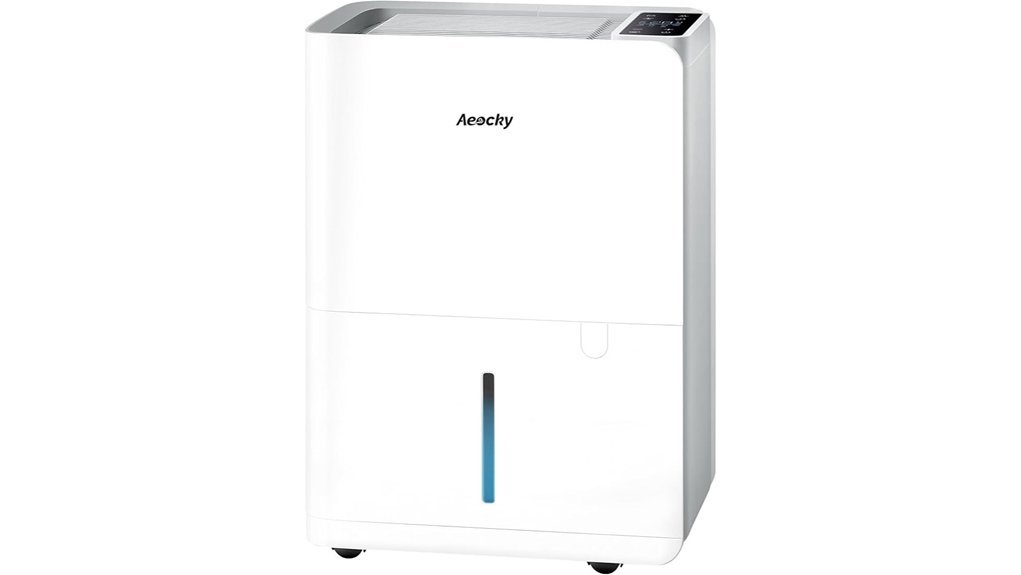
Best overall for larger areas: The AEOCKY 50 Pint is the strongest fit in this group for larger rooms, open layouts, and homes with a heavier moisture load. The listing states a capacity of 50 pints per day, coverage up to 3,500 sq. ft., and an adjustable humidistat from 40% to 80% RH.
Why you’ll like it: A drain hose is included, so you can use continuous drainage instead of relying only on the 0.8-gallon bucket. The unit also includes a timer, child lock, fan-speed control, and caster wheels. The seller lists operating noise at about 40 dB, although room acoustics and fan settings can change how loud it seems in real use.
Keep in mind: The listing’s electricity-savings estimate depends on continuous-use assumptions and local utility rates. Treat it as a seller estimate, not a guaranteed annual saving. The coverage figure is also a general marketing guide; actual performance depends on temperature, starting humidity, doors, airflow, and moisture entering the space.
Pros:
- Higher capacity is better suited to large or persistently damp areas.
- Included drain hose supports low-maintenance continuous drainage.
- Adjustable humidistat helps prevent unnecessary over-drying.
- Timer, child lock, and wheels improve everyday usability.
Cons:
- The 0.8-gallon tank can require frequent emptying if hose drainage is not used.
- No built-in condensate pump is listed.
- Energy-cost savings and noise figures are seller-provided estimates.
Waykar 34 Pints Energy Star Dehumidifier
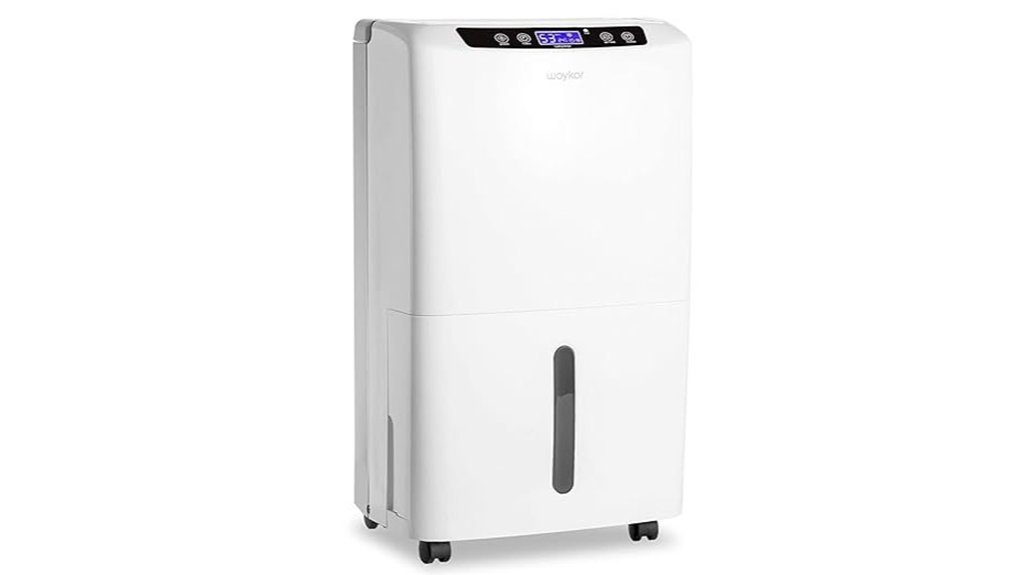
Best balanced option: The Waykar 34 Pint sits between the Midea and AEOCKY in capacity. It is listed for spaces up to 2,000 sq. ft. and can remove up to 34 pints per day under hot, very humid test conditions.
Why you’ll like it: The product includes a drain hose, removable tank, washable filter, two fan speeds, automatic defrost, and overheat protection. That combination makes it practical for homeowners who want a straightforward compressor model without moving all the way to a 50-pint class unit.
Keep in mind: The 34-pint figure is stated at 95°F and 90% RH, so daily water removal will usually be lower in cooler or less humid rooms. Its 0.66-gallon tank is also relatively small, making the included drain hose especially useful in damp areas.
Pros:
- Useful middle-ground capacity for medium-size rooms and basements.
- ENERGY STAR listing can help reduce operating waste compared with less-efficient alternatives.
- Drain hose, washable filter, and automatic defrost are included.
- Listed warranty includes one year plus an additional year after eligible registration.
Cons:
- The tank may fill quickly during humid weather.
- No exact operating-noise figure was verified for this ASIN.
- Gravity drainage requires a suitable drain below the hose outlet.
Factors to Consider When Choosing a Dehumidifier for Hardwood Floors
A dehumidifier can help limit the humidity swings that contribute to wood movement, but it should be part of a larger moisture-control plan. Fix leaks, improve drainage and ventilation, and follow the humidity range recommended by your flooring manufacturer.
Ideal Humidity Levels
A general indoor target of 30% to 50% relative humidity is useful for moisture and mold control. Hardwood flooring brands may recommend a narrower range based on the wood species, installation method, and local climate. Use a separate hygrometer in the room and avoid setting the dehumidifier so low that the floor becomes excessively dry.
Capacity and Test Conditions
Dehumidifier capacity is measured in pints of water removed per 24 hours, but numbers are not always presented under the same conditions. Some listings advertise a “maximum” figure measured in hot, very humid air, while standardized ratings use cooler conditions. Compare the stated test conditions—not only the largest pint number.
Coverage Area Requirements
Square-foot coverage is only a starting point. A closed bedroom with mild humidity needs less capacity than an open basement with seepage, laundry moisture, or outside air entering. When in doubt, a properly controlled larger unit is usually better than an undersized model that runs continuously without reaching the target humidity.
Humidistat Accuracy
Choose a model with adjustable humidity control, but verify the result with a separate hygrometer placed away from the dehumidifier’s air outlet. Built-in sensors can read differently because the air near the machine may be drier than the rest of the room.
Noise Level Considerations
Compressor dehumidifiers are more capable than mini thermoelectric units for room-scale moisture control, but they also make fan and compressor noise. For bedrooms or living rooms, compare published dBA figures when available and look for multiple fan speeds or a sleep setting.
Energy Efficiency Ratings
ENERGY STAR certification is more useful than a vague claim that a unit is “energy-saving.” Also look for an automatic humidistat, timer, and auto-restart. These features help the unit run only as needed instead of operating continuously after the target humidity is reached.
Drainage Options Available
For frequent use, continuous hose drainage is usually more convenient than emptying a bucket. Gravity drainage needs a nearby drain below the outlet. If water must travel upward to a sink or window, choose a model with a built-in pump or use a compatible external condensate pump.
Before You Buy Checklist
- Measure the room and note whether doors are usually open or closed.
- Check the starting humidity with a hygrometer.
- Identify and repair leaks or water intrusion first.
- Confirm whether a drain hose is included and where it can discharge.
- Check the manufacturer’s warranty and registration requirements.
- Confirm the flooring maker’s recommended humidity range.
Frequently Asked Questions
How Do Dehumidifiers Protect Hardwood Floors From Damage?
They reduce excess moisture and help keep indoor humidity more stable. That can limit the repeated expansion and contraction associated with large humidity swings. A dehumidifier cannot repair existing cupping, buckling, leaks, or subfloor moisture.
What Humidity Level Is Ideal for Hardwood Floors?
A general indoor range of 30% to 50% RH is a useful starting point. Follow the flooring manufacturer’s requirements when they specify a different range, especially for engineered wood, solid wood, or warranty-sensitive installations.
Can I Use a Dehumidifier in a Small Room?
Yes. Select a model with adjustable humidity control so it cycles off at the target level. A room-scale compressor model is usually a better primary moisture-control tool than a tiny decorative thermoelectric unit when hardwood protection is the goal.
How Often Should I Empty the Dehumidifier’s Water Tank?
It depends on the bucket size, room humidity, temperature, and runtime. Check the tank daily at first. For consistently damp areas, connect a drain hose where safe and supported by the manufacturer.
Are There Energy-Efficient Dehumidifiers Available for Large Spaces?
Yes. Look for current ENERGY STAR certification, a properly sized capacity, and an accurate humidistat. An oversized unit that cycles at the target humidity can be more effective than an undersized unit that runs continuously.
Will a Dehumidifier Fix Cupped or Buckled Hardwood?
Not by itself. Stop the moisture source, document the humidity and moisture readings, and allow the floor system to dry gradually. Severe movement, trapped subfloor moisture, or mold may require a flooring or water-damage professional.
Conclusion
Final Recommendation: Choose the AEOCKY 50 Pint for larger or more humid areas, the Midea 22 Pint for smaller rooms with moderate moisture, and the Waykar 34 Pint when you want a middle-ground capacity with an included drain hose.
Whichever model you select, use a separate hygrometer, follow the flooring manufacturer’s humidity guidance, and address leaks or water intrusion before relying on a dehumidifier.