Affiliate disclosure: As an Amazon Associate, we may earn from qualifying purchases at no extra cost to you.
Reviewed: August 2026. Product specifications and availability can change, so confirm the exact model details before ordering.
Choosing the best dehumidifier requires more than comparing advertised square footage. The amount of moisture in the room, operating temperature, drainage access, tank size, humidistat controls, and tested daily water-removal capacity all affect real-world performance. In this guide, the Waykar and KNKA models offer a balanced fit for medium to large rooms, while the Vellgoo targets larger spaces with heavier moisture loads. The compact BeOkay is intended for mild humidity in a small enclosed space rather than serious basement dampness.
Quick verdict
Choose the Waykar 34-Pint for the best overall balance of controls, portability, and drainage. Pick the Vellgoo 64-Pint when you need the highest seller-listed peak-condition capacity in this group. The KNKA 34-Pint is a practical choice for buyers who want dedicated humidity-control, laundry-drying, and continuous modes. Choose the BeOkay DH-A2 only for a small bedroom, bathroom, closet, or office with light moisture.
Quick Comparison of the Best Dehumidifiers
| Product | Listed Capacity | Best Use | Tank and Drainage | Amazon |
|---|---|---|---|---|
| Waykar 34-Pint Best overall balance |
Up to 34 pints/day at 95°F and 90% RH | Basements and medium to large rooms | 2.5 L tank or included hose | Check Price on Amazon |
| Vellgoo 64-Pint Best for heavier moisture |
Up to 64 pints/day at 90°F and 90% RH | Large basements, garages, and open areas | 5.5 L tank, included hose, or compatible garden hose | Check Current Amazon Availability |
| KNKA 2500 Sq. Ft. Best for flexible modes |
Up to 34 pints/day at 95°F and 90% RH | Basements, laundry areas, offices, and large rooms | 3 L tank or included hose | Check Product Details |
| BeOkay DH-A2 Best compact option |
No standardized daily removal rating verified | Very small enclosed spaces with mild moisture | 1,657 mL removable tank; no hose listed | Check Current Amazon Availability |
Capacity note: The Waykar, Vellgoo, and KNKA figures above are seller-listed maximums measured under hot, highly humid conditions. They should not automatically be treated as equivalent to a current standardized DOE capacity rating. The BeOkay tank volume describes how much water the container can hold, not how much moisture the unit removes each day.
Which model should you choose?
- Persistent basement or large-room humidity: Start with the Waykar, Vellgoo, or KNKA compressor models.
- Heavier moisture load: Consider the Vellgoo’s higher seller-listed peak-condition capacity.
- Laundry-drying mode and flexible controls: Consider the KNKA.
- Small bedroom, bathroom, closet, or office: Consider the BeOkay only when the moisture problem is mild.
Selection method: Product labels are based on the current listing information for capacity conditions, tank size, drainage, controls, intended room type, and important limitations. They are not based on hands-on testing, customer ratings, or unverified coverage claims.
Waykar 34-Pint Dehumidifier: Best Overall Balance
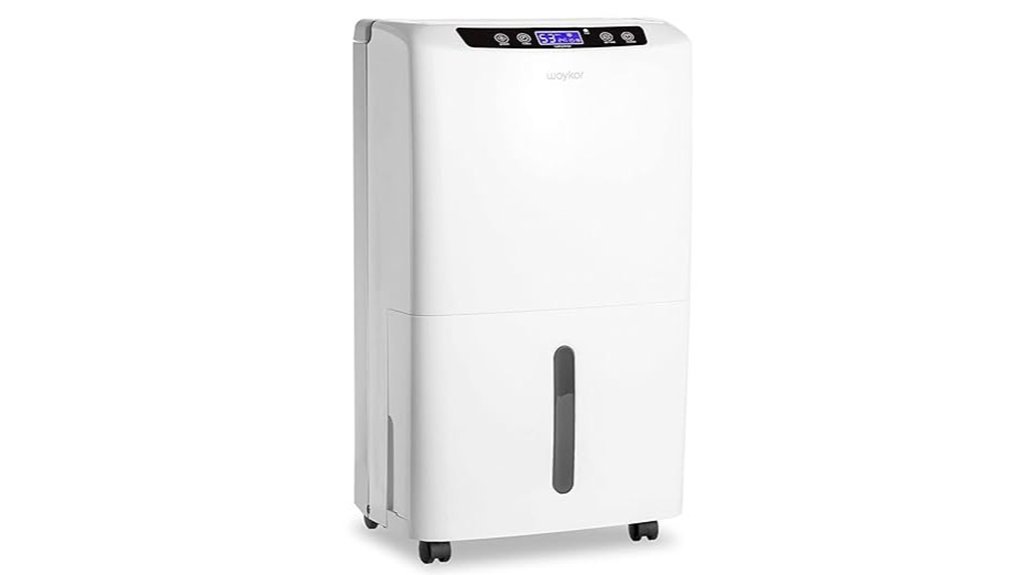
The Waykar 34-Pint Dehumidifier offers a useful balance of compressor-based moisture removal, adjustable controls, portability, and flexible drainage. Its current listing recommends it for spaces up to 2,000 sq. ft. and states that it can remove up to 34 pints per day at 95°F and 90% relative humidity.
Why you may like it: The adjustable humidistat, two fan speeds, 24-hour timer, automatic defrost, washable filter, automatic shutoff, and included drain hose make it suitable for routine use in a basement, garage, laundry room, or large living area.
Important capacity note: The 34-pint figure is a seller-listed maximum under hot, highly humid conditions. Real collection will normally be lower when the room is cooler or less humid. Compare the exact model’s current standardized capacity when available.
Certification note: The current Amazon listing presents this model as ENERGY STAR certified. If certification is important to your decision, match the exact model number on the delivered unit with the current ENERGY STAR product record.
Best For: Buyers who want a balanced full-size dehumidifier for ongoing humidity control with both tank and gravity-hose drainage.
Who Should Avoid It: Buyers who need a built-in pump to move water uphill or an ultra-compact unit for a closet or small bedside area.
Pros:
- Seller-listed maximum removal of up to 34 pints per day at 95°F and 90% RH.
- Adjustable 30%–80% humidity range, two fan speeds, and a 24-hour timer.
- Includes a removable 2.5-liter tank and a hose for continuous gravity drainage.
- Automatic defrost, automatic restart, washable filter, and full-tank shutoff.
Cons:
- The modest tank may require frequent emptying in very damp conditions.
- Gravity drainage requires a continuously downward hose path.
- The headline capacity is based on peak conditions rather than typical basement conditions.
Vellgoo 64-Pint Dehumidifier: Best for Higher Moisture Loads
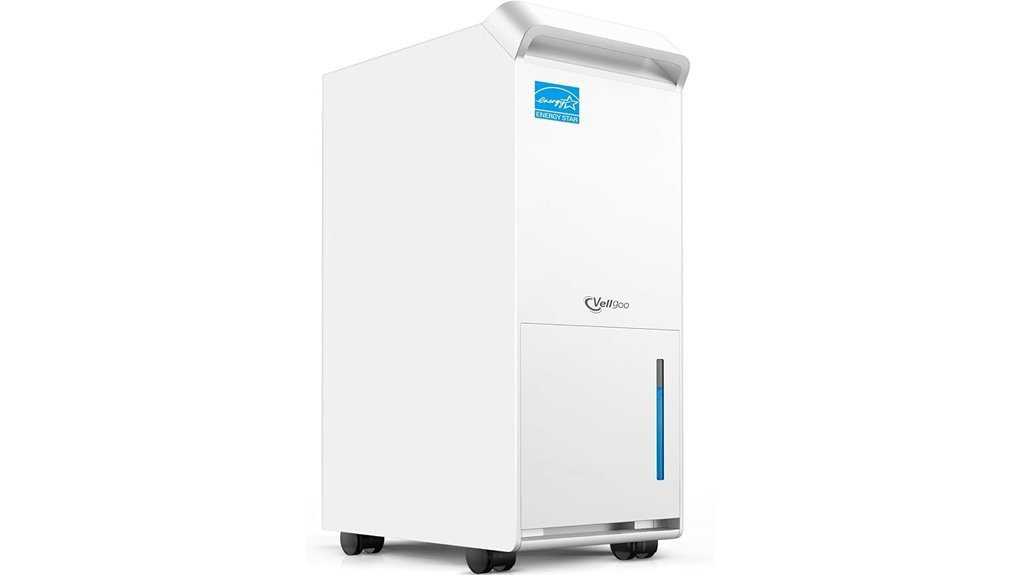
The Vellgoo 64-Pint Dehumidifier has the highest seller-listed peak-condition capacity in this comparison. The listing recommends it for spaces up to 4,000 sq. ft. and states that it can remove up to 64 pints per day at 90°F and 90% relative humidity.
Why you may like it: Its larger 5.5-liter tank, three fan speeds, 40%–80% humidity control, automatic defrost, automatic restart, caster wheels, and several gravity-drain options make it easier to use in a large basement, garage, storage room, or open living area.
Drainage advantage: You can use the removable tank, connect the included drain hose, or attach a compatible standard garden hose when the placement allows a downward gravity-drain path.
Important certification note: The listing contains both ENERGY STAR certification wording and an older ENERGY STAR Most Efficient 2024 reference. The 2024 designation is year-specific and should not be treated as a current 2026 award. Confirm the exact model’s current certification before ordering.
Best For: Larger, persistently humid spaces where higher peak-condition capacity and a larger tank are useful.
Who Should Avoid It: Buyers with limited floor space, a small bedroom, or no suitable location for tank emptying or gravity drainage.
Pros:
- Highest seller-listed maximum in this roundup at up to 64 pints per day at 90°F and 90% RH.
- Large 5.5-liter tank with included-hose and garden-hose drainage options.
- Adjustable 40%–80% humidistat range, three fan speeds, timer, and child lock.
- Automatic defrost, automatic restart, casters, and a concealed carry handle.
Cons:
- The headline capacity represents peak test conditions rather than typical room performance.
- A larger compressor unit may be more noticeable in a bedroom or quiet office.
- The listing’s older year-specific efficiency designation needs careful interpretation.
KNKA 2500 Sq. Ft. Dehumidifier: Best for Flexible Modes
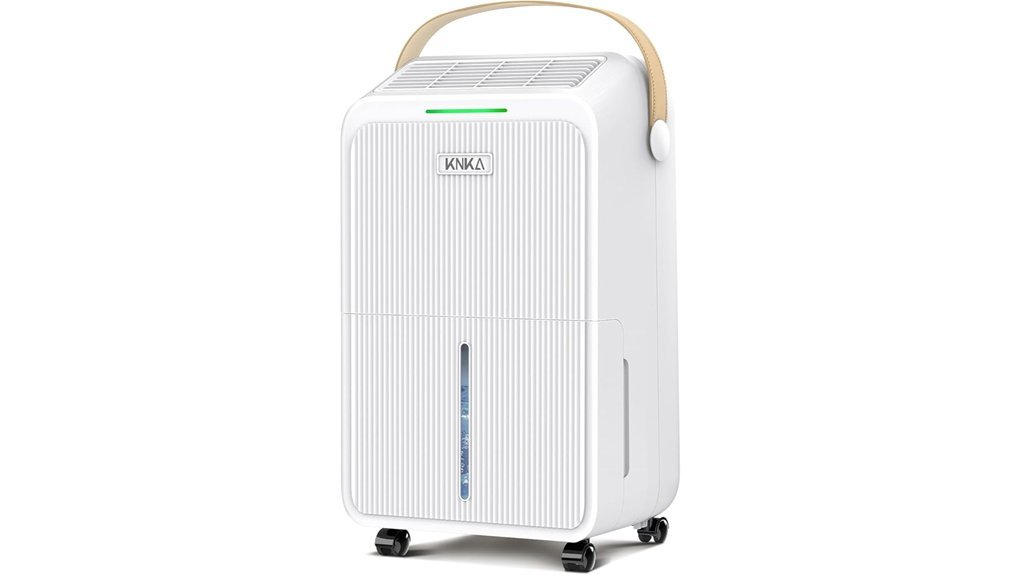
The KNKA 2500 Sq. Ft. Dehumidifier is a full-size compressor model with DEHU, DRY, and CONT operating modes. Its listing states that it can remove up to 34 pints of moisture per day at 95°F and 90% relative humidity.
Why you may like it: DEHU mode supports routine target-humidity control, DRY mode is intended to support indoor laundry drying, and CONT mode keeps the compressor running for continuous moisture removal. It also includes a 24-hour timer, child lock, automatic defrost, two fan speeds, a washable filter, casters, and a carry handle.
Drainage options: The unit has a 3-liter removable tank and includes a 3.28-foot drain hose for continuous gravity drainage. The listing also mentions an optional larger external tank sold separately, but it is not required for normal operation.
Important capacity note: The 34-pint claim is measured under peak heat and humidity. Do not rely on the 2,500-square-foot headline alone when sizing it for a cool or severely damp basement.
Best For: Buyers who want a portable mid-capacity model with separate humidity-control, clothes-drying, and continuous modes.
Who Should Avoid It: Buyers who need pumped drainage, a very small closet unit, or a confirmed standardized capacity substantially above this class.
Pros:
- Seller-listed maximum of up to 34 pints per day at 95°F and 90% RH.
- DEHU, DRY, and CONT modes with adjustable humidity and two fan speeds.
- Includes a 3-liter tank, drain hose, washable filter, timer, and child lock.
- Automatic defrost, full-tank shutoff, casters, and sleep-oriented controls.
Cons:
- The 3-liter tank may fill quickly during heavy moisture removal.
- The square-foot recommendation is less useful than capacity and room-condition data.
- The included hose depends on a downward gravity-drain route.
BeOkay DH-A2 Small Dehumidifier: Best Compact Option
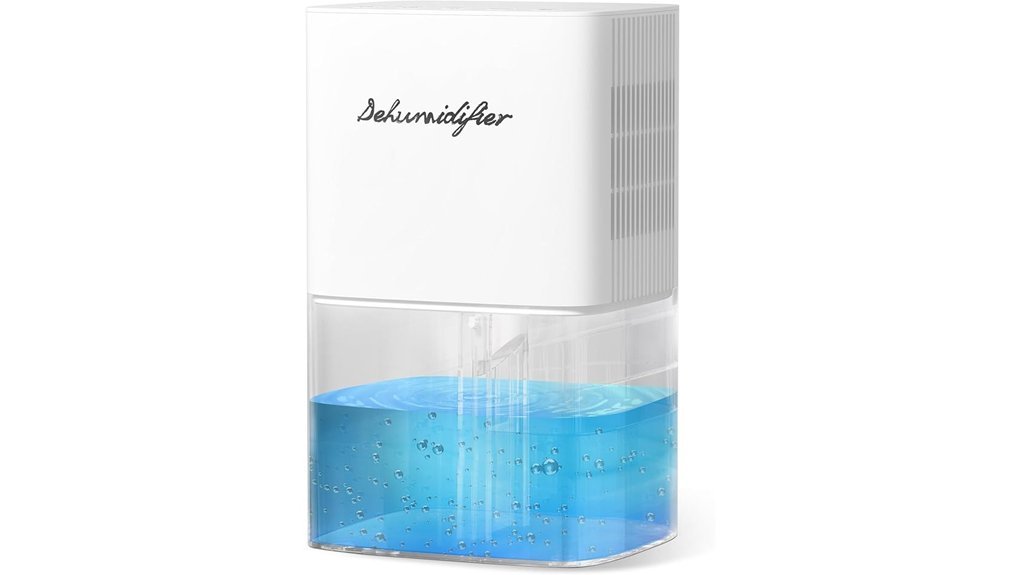
The BeOkay DH-A2 is a semiconductor mini dehumidifier with a 1,657-milliliter removable tank, three operating modes, several timer choices, automatic shutoff, automatic defrost, and adjustable ambient lighting. The seller recommends it for spaces up to 230 sq. ft.
Why you may like it: Its compact 4.96-by-5.89-by-9.53-inch body is easier to place in a small bedroom, bathroom, closet, or office than a compressor dehumidifier. The seller also lists a sleep-mode noise level below 40 dB.
Important sizing note: The 1,657-milliliter number is the tank capacity, not the amount of water removed per day. A current standardized daily extraction rating was not verified, so this model should be treated as a light-duty option rather than a replacement for a full-size compressor unit.
Best For: A very small enclosed area with mild condensation or occasional humidity where compact size and lower noise are priorities.
Who Should Avoid It: Buyers dealing with a wet basement, water seepage, large laundry loads, persistent condensation, or a large open room.
Pros:
- Compact dimensions and a removable 1,657-milliliter tank.
- Sleep, normal, and performance modes with automatic shutoff.
- Multiple timer choices, automatic defrost, and adjustable lighting.
- Seller-listed sleep-mode noise below 40 dB.
Cons:
- No current standardized daily water-removal rating was verified.
- No continuous drain hose is listed.
- Not suitable for serious basement dampness or recurring water intrusion.
- Decorative lighting does not improve dehumidification performance.
Factors to Consider When Choosing a Dehumidifier
The right dehumidifier should match the size, temperature, and dampness of the space rather than only the product’s headline coverage claim. Compare standardized daily removal capacity when available, test conditions, drainage, tank size, humidistat controls, operating temperature, and noise before buying.
Compressor vs. Mini Dehumidifier
A full-size compressor dehumidifier is usually the better choice for ongoing humidity in a basement, garage, laundry room, or large living area. A compact semiconductor model uses a different moisture-removal system and is better suited to mild humidity in a small enclosed space. Do not compare tank size or advertised square footage as though the two product classes deliver similar performance.
Daily Moisture-Removal Capacity
Capacity describes how much water a dehumidifier can remove over 24 hours under stated test conditions. Always check whether a number is a standardized DOE rating, a seller-listed peak-condition figure, or simply the tank volume. Hotter and more humid test conditions normally produce a higher collection figure than a cool basement will.
Size and Dampness of the Space
Square footage matters, but it is only one part of sizing. A cool, wet basement needs more capacity than a warm bedroom of the same size. Musty odors, visible condensation, damp walls, indoor laundry drying, and water seepage all increase the moisture load. A unit that is too small may run continuously without reaching the selected humidity.
Target Humidity and Controls
A built-in humidistat lets you choose a target relative humidity and allows the compressor to cycle as conditions change. For many homes, maintaining roughly 30%–50% relative humidity is a practical goal. Avoid setting the target lower than necessary because that can increase runtime and electricity use.
Drainage Options
A removable tank works when someone can empty it regularly. Continuous gravity drainage is more convenient near a floor drain, sink, or sump, but the hose normally needs an uninterrupted downward path. If water must travel uphill, choose a model with a built-in condensate pump rather than assuming a standard hose can lift it.
Tank Size and Automatic Shutoff
A larger tank can reduce how often it needs to be emptied, but a full tank is heavier to carry. Automatic shutoff is important because it stops collection when the tank reaches its limit or is removed. Check that the tank is easy to lift, clean, and reinstall without spilling.
Noise Level
Fan speed, compressor cycling, vibration, and room acoustics affect perceived noise. A mini unit may sound quieter but remove far less moisture. For a bedroom or office, look for a lower fan setting, sleep mode, and controls that allow display lights to be turned off.
Energy Efficiency
Electricity use depends on capacity, efficiency, temperature, humidity, and daily runtime. When energy certification matters, confirm the exact model number rather than relying only on a family name or older year-specific award. A humidistat and timer can also reduce unnecessary operation.
Operating Temperature and Automatic Defrost
Cool air contains less moisture than warm air, and low temperatures can reduce collection performance. Compressor coils may also develop frost. Check the manufacturer’s minimum operating temperature and look for automatic defrost when the unit will run in a cool basement or garage.
Maintenance and Cleaning
Clean the filter, tank, air intake, outlet, and drain hose according to the manual. A dirty filter restricts airflow, while standing water can create odors. Unplug the dehumidifier before cleaning and allow washable parts to dry before reinstalling them.
Before You Buy Checklist
- Measure the room and judge whether the moisture is mild, moderate, or severe.
- Distinguish standardized capacity, peak-condition capacity, and tank volume.
- Confirm the exact model number and any current energy certification.
- Decide whether you will empty a tank or use continuous drainage.
- Check whether a gravity hose can maintain a downward path to the drain.
- Verify the operating-temperature range for a basement or garage.
- Confirm dimensions, noise controls, warranty terms, return policy, and filter needs.
Moisture-source note: A dehumidifier can control moisture in the air, but it cannot repair a plumbing leak, foundation seepage, failed exterior drainage, or water entering through a wall or floor. Correct the moisture source whenever possible.
Frequently Asked Questions
Why Do Dehumidifier Capacity Numbers Differ?
Capacity numbers can use different test conditions. A seller may publish a maximum measured in very warm, humid air, while a standardized DOE rating uses prescribed conditions intended to support fairer comparisons. Always check the conditions attached to the number and do not confuse daily removal capacity with tank volume.
How Do Dehumidifiers Affect Indoor Air Quality?
Lowering excess humidity can make a room feel more comfortable and reduce the damp conditions that support mold growth and dust mites. A dehumidifier does not remove an existing mold problem and does not replace ventilation, filtration, cleaning, or water-damage repair.
Can I Use a Dehumidifier in a Garage?
Yes, provided the garage stays within the unit’s listed operating-temperature range and the dehumidifier is protected from direct rain, splashing, and standing water. A cool garage may require a compressor model with automatic defrost.
How Often Should I Clean My Dehumidifier?
Follow the manufacturer’s maintenance schedule. During regular use, inspect the filter, tank, intake, and drain hose frequently and clean them when dirt, dust, film, or odors appear. A dusty or continuously damp room may require more frequent cleaning.
Are Dehumidifiers Noisy When Operating?
Noise varies by fan speed, compressor design, vibration, and placement. Compact semiconductor units may be quieter but usually remove much less moisture. A full-size compressor model is more appropriate for serious dampness, although it may be more noticeable in a bedroom or office.
Do Dehumidifiers Use a Lot of Electricity?
Electricity use varies widely. A larger unit running continuously will use more power than a small unit used briefly, but it may also remove much more water and reach the target humidity sooner. Compare current efficiency information, capacity, room conditions, and expected runtime rather than judging by wattage alone.
Can a Mini Dehumidifier Handle a Basement?
Usually not when the basement is large, cool, or persistently damp. A mini dehumidifier may help with mild moisture in a small enclosed area, but a typical basement problem calls for a compressor model with a humidistat, automatic defrost, adequate capacity, and continuous drainage.
Final Recommendation
For the most balanced combination of moisture removal, controls, portability, and drainage, the Waykar 34-Pint Dehumidifier is the strongest overall choice in this group.
Choose the Vellgoo 64-Pint when you need the highest seller-listed peak-condition capacity and a larger tank. Consider the KNKA 34-Pint when its DEHU, DRY, and continuous modes better match your routine.
The BeOkay DH-A2 is a separate light-duty option for a very small enclosed space. Before ordering any model, confirm the exact model number, standardized capacity when available, drainage requirements, operating-temperature range, certification, warranty, and current Amazon availability.