Affiliate disclosure: As an Amazon Associate, we may earn from qualifying purchases. Product specifications, certification details, and availability can change, so confirm the current Amazon listing and appliance label before buying.
Drying clothes indoors can release a large amount of moisture into a closed room. A suitable dehumidifier can help control condensation and support faster evaporation, but only when its extraction capacity, airflow, drainage, and operating conditions match the laundry load. This updated 2026 review focuses on the Waykar 34 Pints Energy Star Dehumidifier, the only model from the original shortlist with the compressor-based capacity, adjustable humidistat, and continuous-drain option needed for regular indoor laundry use.
Quick verdict: The Waykar PD160B is the best match from this shortlist for a drying rack, utility room, or other enclosed laundry area. It offers automatic humidity control, two fan speeds, a removable tank, and gravity-hose drainage.
Important limitation: The seller-facing 34-pint figure is measured in very warm, highly humid conditions. The EPA ENERGY STAR product record lists a lower standardized capacity, so buyers should not assume this model will dry several heavy loads as quickly as a larger DOE-rated unit.
Capacity-rating note: The product information associated with this model describes up to 34 pints per day at 95°F and 90% relative humidity. The EPA ENERGY STAR listing for Waykar PD160B reports 9.81 pints per day under its standardized test method. These figures use different test conditions and should not be treated as directly interchangeable.
Voltage and marketplace note: The Amazon link in this review points to a U.S. listing for a 120V appliance. Check the model number, plug type, voltage, frequency, certification, warranty region, and local electrical requirements before ordering or using it outside its intended market. A plug adapter does not convert voltage.
Waykar 34 Pints Dehumidifier at a Glance
| Best For | Capacity Information | Humidity Control | Tank / Drainage | Main Limitation | Amazon |
|---|---|---|---|---|---|
| One drying rack or regular laundry moisture in an enclosed room | Seller-listed up to 34 pints/day at 95°F and 90% RH; EPA standardized listing: 9.81 pints/day | Adjustable 30%–80% RH range with automatic cycling | 0.66-gallon removable tank or gravity drain hose | May be too small for several heavy loads or a very wet, cold room | Check on Amazon |
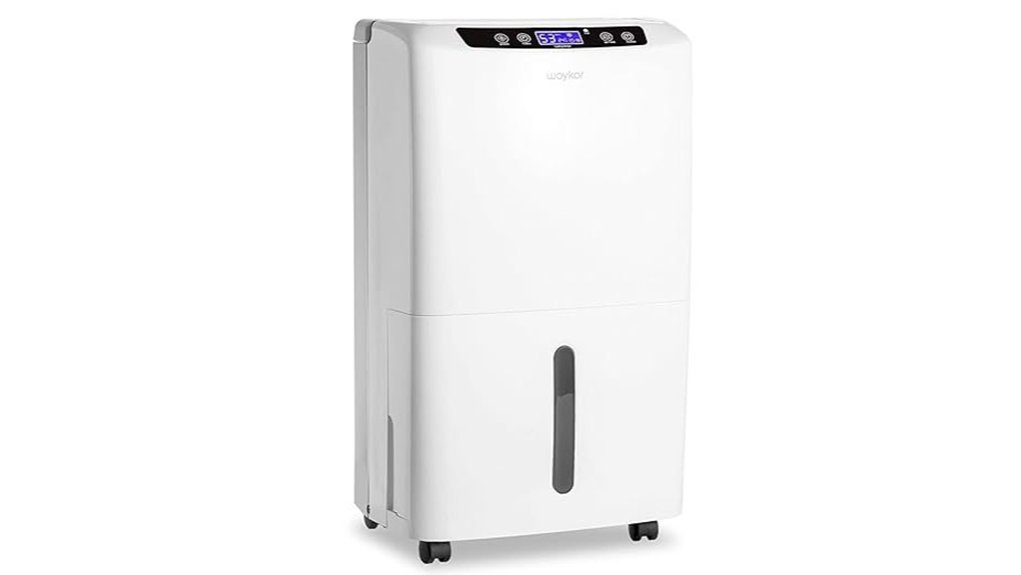
Waykar 34 Pints Energy Star Dehumidifier
Best Match in This Shortlist for Indoor Laundry
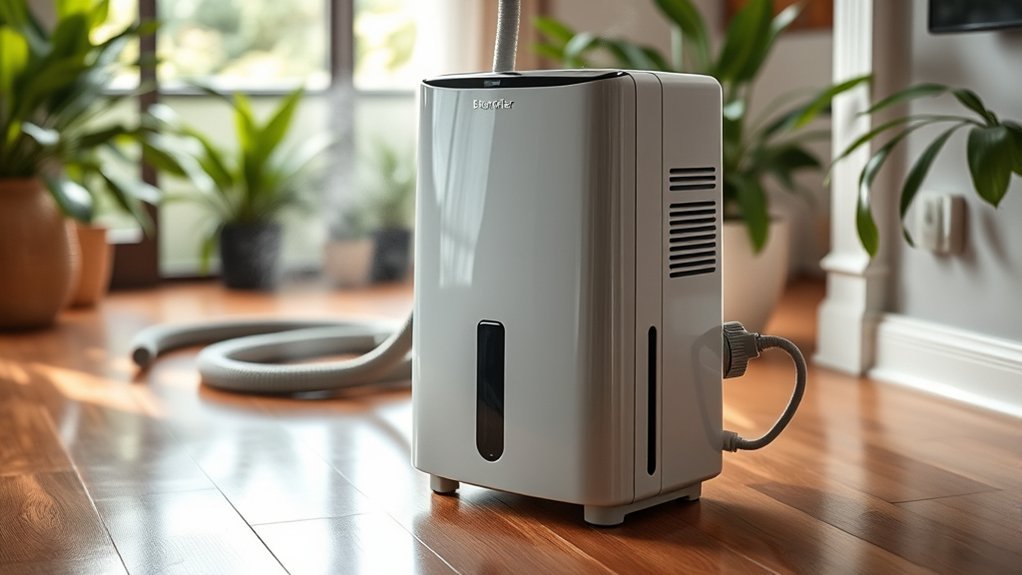
The Waykar is the strongest fit among the supplied products because it is a compressor dehumidifier with a built-in humidistat, two fan speeds, automatic defrost, a washable filter, and both manual and continuous drainage. Those features matter more for laundry drying than decorative lighting, oversized coverage claims, or tank capacity alone.
For a typical setup, place the drying rack in a reasonably warm room, leave clear space between garments, close the room to prevent humid air from spreading through the home, and position the dehumidifier so its intake and outlet are not blocked. The unit can then cycle toward the selected humidity target while collecting water in its tank or sending it through the gravity drain hose.
The drain hose is the more convenient option for repeated use, but it must run continuously downhill to a suitable drain. The unit does not include a pump, so it cannot push water upward into a sink or drain located above the outlet. When hose drainage is not practical, the 0.66-gallon tank provides a simpler setup but may require frequent emptying during wet weather or back-to-back drying sessions.
Why you’ll like it: It combines automatic humidity control, meaningful compressor-based extraction, and continuous drainage in one movable unit.
Who should buy it: Households drying one regular load at a time in a closed utility room, spare room, bathroom, or similar space with a safe drainage option.
Who should avoid it: Buyers who need pump-assisted drainage, plan to dry several heavy loads at once, have a very cold room, or cannot safely use a 120V appliance.
Pros:
- Compressor design is more suitable for laundry moisture than a small semiconductor unit.
- Adjustable humidistat helps the unit cycle automatically instead of running without a target.
- Removable tank and included gravity drain hose provide two water-removal options.
- Automatic defrost, automatic shutoff, wheels, and a washable filter support regular household use.
- EPA ENERGY STAR certification can be verified for model PD160B.
Cons:
- The seller-listed 34-pint rating is based on warmer and more humid conditions than the standardized ENERGY STAR capacity figure.
- The 0.66-gallon tank may fill quickly when the room contains a large moisture load.
- Gravity drainage requires a lower drain and a continuously downward hose path.
- It is larger and noisier than a desktop-style unit.
- The U.S. listing identifies a 120V model, so regional electrical compatibility must be checked carefully.
Why Capacity Matters for Drying Clothes Indoors
Wet clothing creates a high moisture load, especially when you are drying towels, bedding, denim, or several garments in a small room. A dehumidifier must remove moisture fast enough to prevent the room’s relative humidity from remaining high for long periods. This is why extraction capacity and test conditions are more useful than a large advertised square-foot number.
ENERGY STAR treats laundry drying as a high-load condition and recommends choosing capacity according to both room size and dampness. The Waykar can support a normal drying rack in suitable conditions, but buyers with frequent heavy loads should compare its standardized capacity with larger compressor models before ordering.
How to Use a Dehumidifier for Laundry
- Use a contained room: Close the door so the unit is drying the laundry area rather than trying to dehumidify the whole home.
- Space the clothes: Leave gaps between garments and avoid folding thick items over several layers.
- Keep airflow clear: Follow the manufacturer’s clearance instructions around the intake and outlet.
- Start near 45%–50% RH: This provides a practical target for moisture control without forcing the unit toward an unnecessarily low setting.
- Use continuous drainage when safe: Confirm that the hose slopes downward and cannot leak, kink, freeze, or create a trip hazard.
- Check heavy items before storage: Seams, waistbands, pockets, and folded areas may remain damp after lighter fabric feels dry.
- Do not cover the unit: Keep wet clothing, curtains, and other materials away from the appliance and power cord.
Practical tip: A separate hygrometer can help you compare the room humidity before, during, and after drying. It also helps reveal whether an advertised coverage claim matches the conditions in your home.
Factors to Consider When Choosing a Laundry Dehumidifier
A useful laundry dehumidifier needs more than a large room-size claim. Focus on standardized extraction capacity, room temperature, drainage, humidity control, airflow, noise, and electrical compatibility.
Compare Test Conditions, Not Just Headline Pints
Moisture-removal ratings change with temperature and relative humidity. A high figure measured in hot, saturated air will not equal performance in a cooler household room. Look for the test conditions beside every pint or litre claim and give more weight to standardized capacity data when comparing models.
Match Capacity to the Moisture Load
A few lightweight garments create less moisture than towels, bedding, jeans, or multiple wash loads. Choose more capacity when the room starts damp, the weather is cool, the space is large, or laundry is dried indoors every day. A smaller unit may still help, but it will usually need more time.
Choose an Adjustable Humidistat
A humidistat lets you select a target relative humidity and allows the dehumidifier to cycle automatically. For general indoor moisture control, a target within the 30%–50% range is commonly recommended. During laundry drying, starting near 45%–50% is practical; adjust based on condensation, drying progress, comfort, and the appliance instructions.
Check the Drainage Layout
Continuous drainage reduces tank-emptying work during long drying sessions. A gravity hose must slope downward to a safe drain. If the only drain is higher than the unit, choose a model with a built-in pump or use the tank instead. Never route a hose where leakage could damage flooring or create an electrical hazard.
Consider Room Temperature and Defrost
Compressor dehumidifiers usually remove less moisture as room temperature falls, and frost can form on the coils. Automatic defrost helps protect operation, but it does not make cold-room performance equal to warm-room performance. Check the current manual for the approved operating-temperature range.
Improve Airflow Around the Laundry
Keep the drying rack open, separate thick garments, and avoid blocking the dehumidifier. A room fan may improve circulation if it can be used safely and does not interfere with the appliance. Closing doors and windows usually helps the unit concentrate on the laundry room, but always follow the manufacturer’s placement instructions.
Plan for Noise and Placement
A compressor and fan will be more noticeable than a small semiconductor appliance. Place the unit on a stable, level surface and use a lower fan speed when noise matters. Do not place it where vibration, water splashes, wet hands, or a stretched extension cord could create a safety problem.
Verify Voltage, Plug, and Warranty
Confirm the exact model number, voltage, frequency, plug, electrical certification, and warranty region on the current listing and appliance label. A product offered through a U.S. marketplace may not be suitable for another country. Do not use a simple plug adapter as a substitute for correct voltage compatibility.
Plan for Maintenance
Clean the filter according to the manual, keep the intake and outlet clear, empty and dry the tank, and inspect the drain hose for blockage or leaks. Unplug the unit before cleaning. After transporting a compressor dehumidifier, follow the manufacturer’s required standing time before switching it on.
Before You Buy Checklist
- Confirm that the current Amazon listing still shows model PD160B and the expected included accessories.
- Measure the laundry room and note its usual temperature and humidity.
- Estimate whether you will dry one light load or several heavy loads at a time.
- Compare standardized capacity rather than relying only on the warm-condition 34-pint claim.
- Choose between manual tank emptying and gravity-hose drainage.
- Check that a lower drain is available if you plan to use the hose.
- Confirm voltage, plug, frequency, certification, warranty region, and local electrical suitability.
- Allow the clearances stated in the current manual.
Frequently Asked Questions
Can a Dehumidifier Reduce Laundry Drying Time?
Yes. A dehumidifier removes moisture from the surrounding air, allowing more water to evaporate from wet fabric. Results depend on extraction capacity, room temperature, airflow, garment spacing, starting humidity, and the amount of laundry.
Is the Waykar 34-Pint Rating a Standardized Capacity?
Not in the same sense as the EPA ENERGY STAR figure. The 34-pint claim is associated with conditions of 95°F and 90% relative humidity, while the EPA listing for PD160B reports 9.81 pints per day under a standardized test. Use the standardized figure when comparing it with other current certified models.
Is This Model Enough for Heavy Laundry?
It may be suitable for one ordinary drying rack in a closed, reasonably warm room. Several heavy loads, persistent condensation, or a cold utility room may justify a larger standardized capacity. Do not assume the advertised coverage area guarantees fast laundry drying.
What Humidity Setting Should I Use?
Start around 45%–50% relative humidity and monitor drying progress and condensation. Lowering the target may extend run time and energy use, while setting it too high may slow drying. Follow the appliance manual and keep normal indoor humidity within a sensible range.
Should I Use the Drain Hose?
Use continuous drainage when the dehumidifier will run for long periods and you have a safe drain below the outlet. The hose must maintain a downward slope. Use the tank when a suitable gravity drain is unavailable.
Does the Waykar Have a Built-In Pump?
No built-in pump is stated for this model. Its hose connection relies on gravity, so it cannot send water uphill. Choose a pump-equipped dehumidifier when the available drain is above the unit.
Can I Run It Overnight?
Use it only according to the current manual, with the unit on a stable surface, required clearances maintained, the filter clean, and drainage arranged safely. Do not cover the appliance, place wet laundry against it, or use an unsuitable extension cord.
Can I Use This Product in Any Country?
Not automatically. The linked model is listed as a 120V appliance for the U.S. market. Verify voltage, frequency, plug type, certification, and warranty coverage before purchase. A plug adapter alone does not correct a voltage mismatch.
How Do I Maintain the Dehumidifier?
Clean the washable filter on the schedule in the manual, keep the intake and outlet unobstructed, wash and dry the tank, inspect the hose, and unplug the unit before cleaning. Follow the manufacturer’s instructions after moving or storing the compressor appliance.
Conclusion
Final recommendation: Choose the Waykar 34 Pints Energy Star Dehumidifier when you need the most laundry-suitable option from this shortlist. Its compressor design, adjustable humidistat, automatic defrost, movable body, and continuous-drain connection make it more practical than a low-output compact unit.
Treat it as a sensible option for one drying rack in a suitable enclosed room, not as a guaranteed solution for every laundry load. Compare the EPA standardized 9.81-pint capacity with larger models if you regularly dry towels, bedding, or several loads, and verify the current model number and electrical specifications before ordering.