Affiliate disclosure: This article contains Amazon affiliate links. We may earn a commission from qualifying purchases at no additional cost to you.
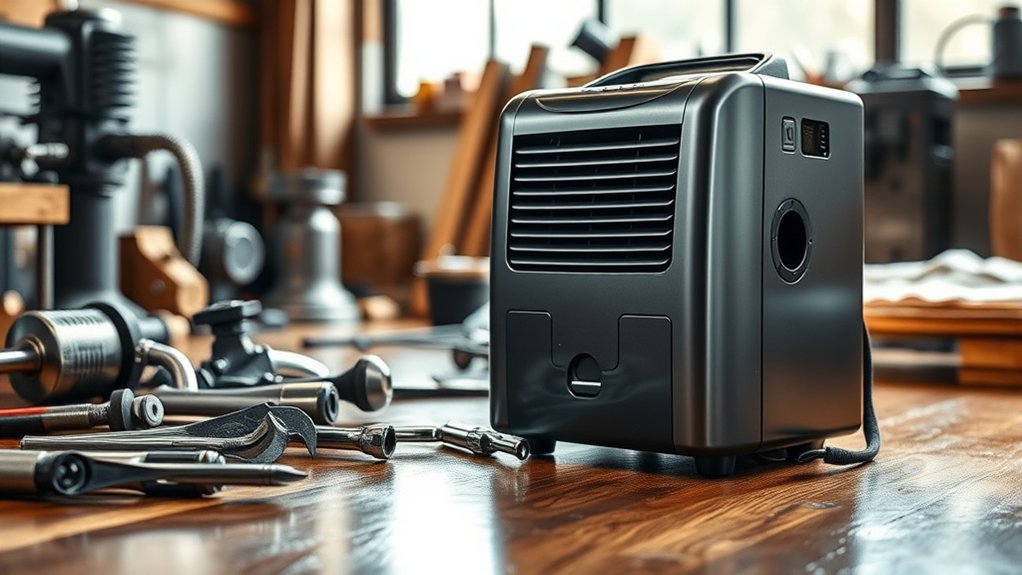
A damp garage needs more than a tiny desktop dehumidifier. For recurring condensation, musty odors, wet vehicles, or seasonal humidity, a compressor dehumidifier with an adjustable humidistat and continuous drainage is usually the more practical choice.
The three models below are rated at 30 to 35 pints per day and are best considered for enclosed, moderate-size garages with slight-to-very-damp conditions. A large garage with visible seepage, standing water, or constant outside-air exchange may need a 40- to 50-pint-or-larger unit, depending on the actual moisture load.
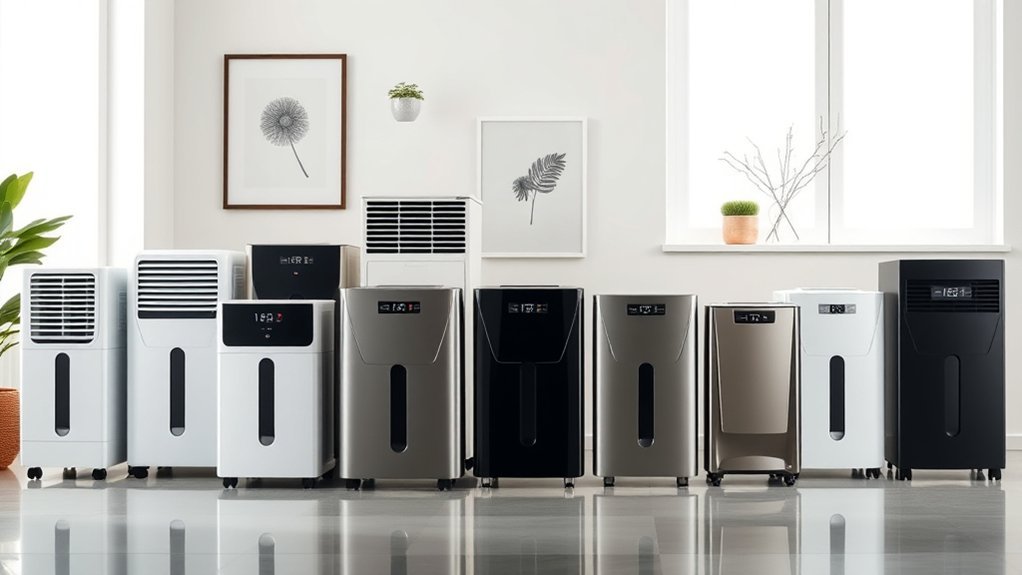
The Waykar 2000 Sq. Ft. ENERGY STAR Dehumidifier is our best overall option for buyers who want energy-conscious humidity control. The KNKA 2500 Sq. Ft. Dehumidifier has a slightly higher stated extraction rate and a larger tank, while the Tehanld 2500 Sq. Ft. Dehumidifier is a 35-pint alternative with flexible operating and drainage modes.
Quick Verdict
Choose the Waykar for the best balance of verified specifications, ENERGY STAR labeling, and everyday garage use. Choose the KNKA when you want a slightly higher stated extraction rate, a larger tank, and three operating modes. Consider the Tehanld when its seller-listed 35-pint capacity and approximately 0.8-gallon tank better match your setup. For a very wet or large garage, size by pints per day rather than the advertised coverage number.
How These Products Were Selected
Each product is a compressor-style dehumidifier with a stated capacity of at least 30 pints per day, adjustable humidity control, automatic shutoff, and a continuous-drain option. Small thermoelectric models were excluded because their extraction capacity is generally too low for a persistently damp garage. Product details were checked against available manufacturer and retailer information in August 2026; specifications and listings can change.
Quick Comparison
| Product | Best For | Stated Capacity | Marketed Coverage | Tank | Drainage | Amazon |
|---|---|---|---|---|---|---|
| Waykar ENERGY STAR Best Overall |
Moderately damp enclosed garages and energy-conscious buyers | Up to 30 pints per day at the listing’s stated conditions | Up to 2,000 sq. ft. | About 0.4 gallon | Tank or continuous gravity drain; no pump | Check Product Details |
| KNKA 2500 Sq. Ft. Best Higher-Capacity Option |
Buyers wanting a larger tank and three operating modes | Up to 34 pints per day at the listing’s stated conditions | Up to 2,500 sq. ft. | 3 liters | Tank or included gravity-drain hose; no pump confirmed | Check Current Availability |
| Tehanld 2500 Sq. Ft. Best Larger-Tank Alternative |
Buyers wanting a seller-listed 35-pint model with flexible modes | Up to 35 pints per day, seller-listed | Up to 2,500 sq. ft. | About 0.8 gallon | Tank or continuous gravity drain; no pump confirmed | Check Product Details |
Capacity and coverage figures are manufacturer or retailer ratings, not guarantees for every garage. Actual moisture removal varies with temperature, relative humidity, airflow, ceiling height, garage layout, and the amount of outside air entering the space.
Important Sizing Note
ENERGY STAR guidance generally places 20- to 30-pint units in the slightly-to-moderately damp range for spaces under 2,000 square feet, while very damp or wet conditions may require more capacity. Treat square-foot claims as a starting point and size for the moisture load.
Waykar 2000 Sq. Ft. ENERGY STAR Dehumidifier
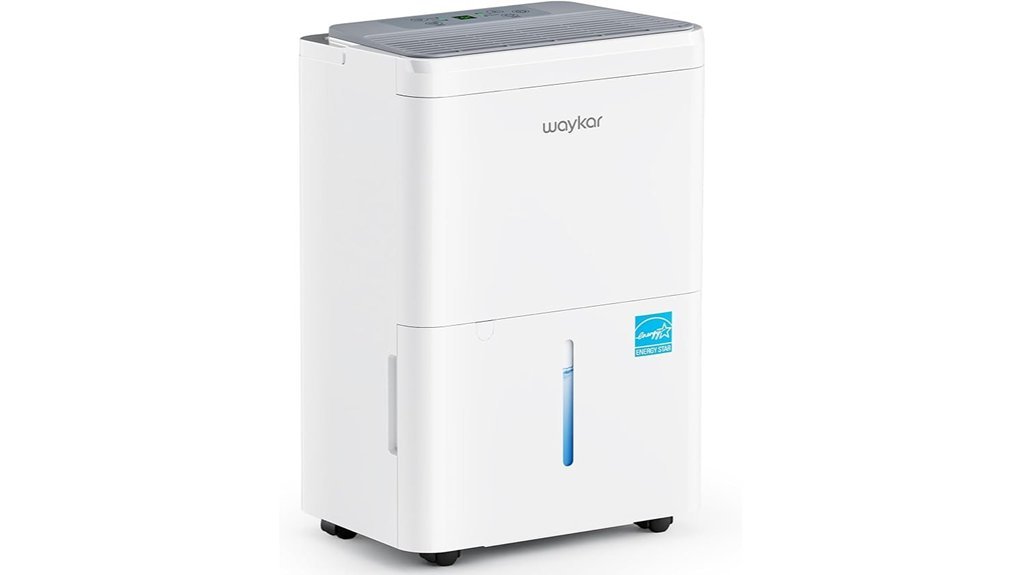
The Waykar 2000 Sq. Ft. ENERGY STAR Dehumidifier is the most balanced option in this comparison because its core specifications are available from both the brand and major retailer listings. The selected model is listed to remove up to 30 pints of moisture per day at 95°F and 90% relative humidity, with adjustable humidity control, automatic defrost, automatic shutoff, and continuous gravity drainage.
Its approximately 0.4-gallon tank is compact, so the included drain hose is especially useful during humid weather. The listing also identifies casters or wheels for easier repositioning around parked vehicles, storage, and work areas.
Why You’ll Like It
It combines ENERGY STAR labeling, automatic humidity control, a washable filter, and simple gravity drainage in a compact unit that suits regular garage use.
Best For: Enclosed, moderate-size garages with recurring humidity where the buyer values verified specifications and energy efficiency.
Who Should Avoid It: Buyers dealing with standing water, active leaks, a large open workshop, or a very wet space that needs more than a 30-pint stated capacity.
Pros:
- ENERGY STAR labeled: Built for better energy efficiency than a comparable non-certified model.
- Automatic humidity control: Cycles according to the selected humidity target.
- Flexible drainage: Supports tank collection or continuous gravity drainage.
- Automatic defrost: Helps manage coil frost as temperatures fall.
- Compact and portable: Casters or wheels simplify repositioning.
Cons:
- The 30-pint figure is stated under warm, highly humid test conditions and should not be treated as guaranteed daily removal in a cool garage.
- The approximately 0.4-gallon tank may need frequent emptying without continuous drainage.
- Performance can decline in a cold, unheated garage.
- The drain relies on gravity and must be routed downhill to a suitable outlet.
KNKA 2500 Sq. Ft. Dehumidifier with Drain Hose
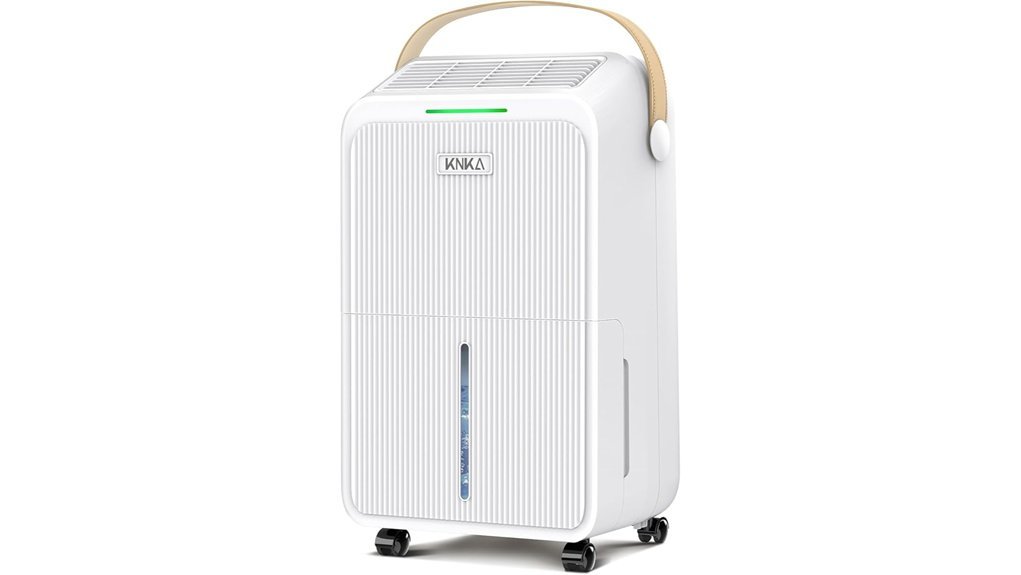
The KNKA 2500 Sq. Ft. Dehumidifier is listed to remove up to 34 pints of moisture per day at 95°F and 90% relative humidity. Its 3-liter tank, adjustable humidity control, and three operating modes make it a practical alternative when you want slightly more stated capacity than the Waykar.
You can choose DEHU mode for automatic humidity management, DRY mode for maximum moisture removal, or CONT mode for continuous operation. The included hose supports gravity drainage when a floor drain or another safe outlet sits below the hose connection.
Why You’ll Like It
The combination of a 34-pint stated extraction rate, a larger 3-liter tank, three modes, automatic defrost, and continuous drainage gives buyers more operating flexibility.
Best For: Enclosed garages and utility spaces where a larger tank and flexible modes matter more than ENERGY STAR certification.
Who Should Avoid It: Buyers who need a built-in condensate pump, independently verified low-temperature performance, or enough capacity for a large, very wet garage.
Pros:
- Higher stated capacity: Listed to remove up to 34 pints per day under the stated warm, humid conditions.
- Three operating modes: Offers automatic dehumidifying, drying, and continuous operation.
- Larger tank: The 3-liter tank reduces emptying frequency compared with smaller buckets.
- Continuous drainage: Includes a hose for longer unattended operation.
- Maintenance features: Includes a removable tank and washable filter.
Cons:
- The 2,500-square-foot claim is a marketed maximum and does not guarantee performance in a damp garage of that size.
- Continuous drainage requires a properly sloped hose and a lower drain point.
- A built-in condensate pump is not confirmed.
- Actual extraction can fall as garage temperature and humidity decrease.
Tehanld 2500 Sq. Ft. 35-Pint Dehumidifier
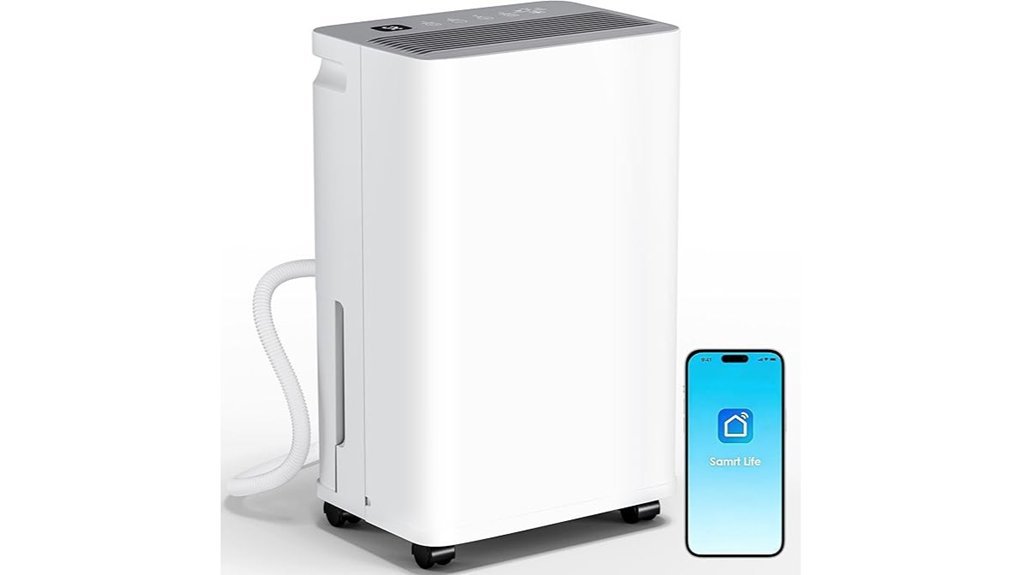
The Tehanld 2500 Sq. Ft. Dehumidifier is seller-listed to remove up to 35 pints of moisture per day. Available product information also lists automatic humidity management, drying and continuous modes, a timer, automatic shutoff, automatic defrost, and a continuous-drain option.
Its approximately 0.8-gallon tank is the largest in this comparison, which can reduce emptying frequency when a permanent drain is unavailable. Wheels and a carrying handle are also listed for moving the unit between a garage, basement, laundry area, or workshop.
Why You’ll Like It
It has the highest seller-stated extraction rate and largest listed tank in this three-product comparison.
Best For: Buyers who want a larger tank and are comfortable confirming the current Amazon listing, operating range, warranty, and included accessories before ordering.
Who Should Avoid It: Buyers who require a built-in drain pump, clearly documented ENERGY STAR certification, or extensive manufacturer documentation.
Pros:
- 35-pint seller-stated capacity: The highest stated daily extraction figure in this comparison.
- Larger water tank: The approximately 0.8-gallon tank may reduce manual emptying.
- Multiple operating modes: Listed with automatic humidity control, drying, and continuous operation.
- Automatic defrost: Helps manage frost during cooler operation.
- Portable design: Wheels and a handle are listed for easier relocation.
Cons:
- The available specifications are less independently documented than those for the Waykar and KNKA.
- The advertised 2,500-square-foot coverage should not replace capacity-based sizing.
- Gravity drainage requires a lower drain point and a hose without upward bends.
- Built-in pump drainage and smart-home integration are not confirmed for this exact ASIN.
Factors to Consider When Choosing a Dehumidifier for a High Moisture Garage
The right garage dehumidifier depends on more than square footage. Measure the humidity, identify where the water is coming from, check the lowest garage temperature, and decide how the collected water will drain before choosing a model.
Measure the Garage and Humidity Level
Start with the garage’s floor area, ceiling height, and current relative humidity. A basic hygrometer can show whether the space is occasionally humid or remains above 60% for long periods.
Square-foot ratings are useful for comparing products, but they are not guarantees. A drafty garage with wet vehicles and a frequently opened door can create a much heavier moisture load than a sealed room of the same size.
Compare Pints per Day, Not Just Coverage
Pints per day is one of the most useful comparison figures because it describes how much water the unit can remove under specified test conditions. The three products retained in this article have stated ratings from 30 to 35 pints per day, but the listings use warm, highly humid conditions that may not match a cool garage.
ENERGY STAR sizing guidance recommends considering both room size and moisture severity. A 30- to 35-pint unit can be reasonable for many moderate-size garages, but a large or visibly wet garage may need 40 to 50 pints per day or more.
Consider Low-Temperature Performance
Garages can become much colder than living areas. Compressor dehumidifiers may remove less moisture as temperatures fall, and ice can form on the coils. Automatic defrost helps, but it does not make a compressor model equally effective at every temperature.
Cold-Garage Note
Check the product’s minimum operating temperature before buying. A very cold, unheated garage may require a dehumidifier specifically designed for low-temperature operation.
Plan the Drainage Route
Manual drainage requires you to empty the tank whenever it fills. This may be manageable during mild weather but inconvenient during humid periods.
Continuous drainage is usually better for a persistently damp garage. However, the hose must generally run downhill from the unit to a floor drain, sink, or safe discharge point. Avoid kinks, upward loops, and freezing locations. None of the reviewed products should be assumed to pump water upward.
Choose a Realistic Humidity Target
A practical target for many garages is approximately 45% to 50% relative humidity. The U.S. Environmental Protection Agency recommends keeping indoor humidity below 60%, ideally between 30% and 50%. Setting the unit unnecessarily low can increase energy use without solving an active water source.
Humidity near exterior walls or cold metal surfaces may be higher than the reading beside the dehumidifier, so watch for condensation as well as the display.
Look for Energy-Saving Controls
An adjustable humidistat allows the dehumidifier to cycle instead of running continuously after the target level is reached. ENERGY STAR certification, automatic operation, timers, washable filters, and correct sizing can also reduce unnecessary power use.
A severely undersized unit may run almost constantly without reaching the selected humidity level. Match the unit to the actual moisture load rather than choosing by coverage claims alone, and compare the current model number if a listing offers several capacities on the same page.
Check Maintenance and Portability
Garage dust can collect quickly on a dehumidifier filter. Choose a model with an accessible washable filter and inspect it regularly. Also leave adequate clearance around the air inlet and outlet.
Wheels and handles are useful if the unit must be moved around parked vehicles, tools, storage shelves, or seasonal equipment.
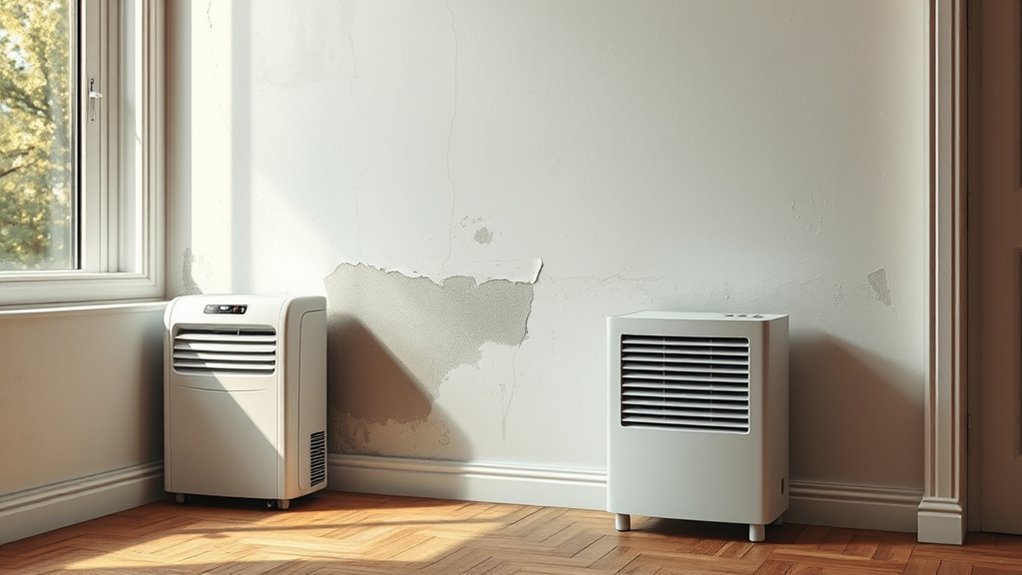
Fix the Source of Moisture
A dehumidifier manages moisture in the air, but it cannot repair a roof leak, foundation seepage, damaged weather seals, blocked drainage, or water entering beneath the garage door.
Before You Buy
- Measure relative humidity with a hygrometer.
- Check for roof, wall, plumbing, or foundation leaks.
- Confirm the garage’s lowest seasonal temperature.
- Identify a safe drainage location.
- Measure the available floor space and electrical-cord reach.
- Confirm that the outlet is grounded and suitable for the appliance.
- Check the manual before using any extension cord or power strip.
- Verify the exact model, tank size, drain hose, warranty, and operating-temperature range on the current listing.
Frequently Asked Questions
What Size Dehumidifier Do I Need for a Garage?
For a damp enclosed garage, begin by comparing pints-per-day capacity, floor area, ceiling height, temperature, and current humidity. A 30–35-pint compressor unit may suit many moderate-size garages, but severe water intrusion, a large workshop, or frequent outside-air exchange may require more capacity.
Are 30- to 35-Pint Dehumidifiers Enough for a High-Moisture Garage?
They can be enough for many enclosed, moderate-size garages, especially when humidity is high but there is no active seepage or standing water. For a garage over 2,000 square feet, a space that feels wet, or a garage with frequent door opening and wet vehicles, compare 40- to 50-pint-or-larger models before buying.
What Humidity Level Should I Maintain in My Garage?
A target around 45% to 50% relative humidity is practical for many garages. Keeping the level below 60% can help reduce condensation and conditions favorable to mold, but there is usually no benefit to making the space excessively dry.
Can a Dehumidifier Stop Mold in a Garage?
A dehumidifier can reduce the moisture that supports mold growth, but it does not remove established mold or fix the source of water. Clean existing contamination safely and repair leaks, seepage, or drainage problems at the same time.
Should I Use Continuous Drainage?
Continuous drainage is convenient when the garage remains humid for long periods. Route the hose downhill to a safe drain and check it regularly for kinks, clogs, leaks, or freezing. Use the tank when a suitable gravity drain is unavailable.
Can I Run a Garage Dehumidifier Continuously?
Continuous mode can help during initial drying or unusually humid weather. For normal operation, an adjustable humidistat is usually more efficient because it cycles the compressor after the selected humidity level is reached.
Do I Need a Dehumidifier in Winter?
It depends on the humidity and temperature. A garage may still develop condensation during winter, especially when snow-covered or wet vehicles are parked inside. However, compressor dehumidifiers become less effective in cold conditions, so check the model’s operating-temperature range before using it in an unheated garage.
How Often Should I Clean the Filter?
Inspect the filter regularly and clean it according to the manufacturer’s instructions. Garages containing sawdust, road dust, pet hair, or workshop debris may require more frequent cleaning than a normal living area.
Conclusion
The Waykar 2000 Sq. Ft. ENERGY STAR Dehumidifier is the strongest overall choice because it offers the clearest combination of verified specifications, automatic humidity control, gravity drainage, and energy efficiency. The KNKA 2500 Sq. Ft. Dehumidifier is a better fit when you prefer a larger 3-liter tank, three modes, and a slightly higher stated extraction rate. The Tehanld 2500 Sq. Ft. Dehumidifier remains a useful larger-tank alternative, but its current specifications should be confirmed carefully before purchase.
Whichever model you choose, do not rely on the coverage number alone. Measure garage humidity, account for the lowest operating temperature, plan the drainage route, and repair any active source of water. For a large or visibly wet garage, compare higher-capacity models rather than expecting a 30- to 35-pint unit to solve the entire moisture problem.
Final Recommendation
For an enclosed, moderately damp garage, start with the Waykar. Choose the KNKA when tank size and flexible modes matter more. Move to a higher-capacity class when the garage is large, very wet, or frequently open to humid outdoor air.