Affiliate disclosure: This article contains Amazon affiliate links. We may earn a commission from qualifying purchases at no extra cost to you.
For an 800 sq. ft. room, basement, or open living area, a compressor dehumidifier is usually a better fit than a small thermoelectric unit. The strongest choice in this guide is the Midea Cube 20 Pint because it has a current 20-pint capacity rating, smart control, a large collection bucket, and continuous drainage. The KNKA PD22SC-12 is an alternative for buyers who prefer a conventional upright design, multiple operating modes, and an included drain hose, although its advertised capacity uses hot and humid test conditions.
Quick verdict
Best overall: Midea Cube 20 Pint. Its verified 20-pint rating falls within the usual starting range for a slightly to moderately damp space under 2,000 sq. ft. Choose the KNKA if you prefer a lighter upright body and dedicated dehumidifying, clothes-drying, and continuous modes, but remember that its 34-pint claim was measured at 95°F and 90% relative humidity rather than confirmed current DOE test conditions.
| Product | Best For | Capacity Basis | Key Strength | Important Limitation | Amazon |
|---|---|---|---|---|---|
| Midea Cube 20 Pint | Most moderately damp 800 sq. ft. rooms | Confirmed current 20-pint rating | Smart controls, 12-liter bucket, included drain hose | Weighs about 33 pounds and has no built-in pump | Check Details |
| KNKA PD22SC-12 | Upright placement and clothes-drying modes | Up to 34 pints at 95°F and 90% RH; current DOE capacity not confirmed | Three modes, drain hose, wheels, washable filter | Not directly comparable with a standardized 34-pint model | Check Details |
How these products were compared
The main factors were moisture-removal capacity, test conditions, drainage options, tank size, portability, automatic defrost, control features, warranty information, and whether the product is a credible primary dehumidifier for an area around 800 sq. ft. Advertised coverage alone was not treated as a reliable sizing method.
Midea Cube 20 Pint Dehumidifier with Smart Control
Best Overall
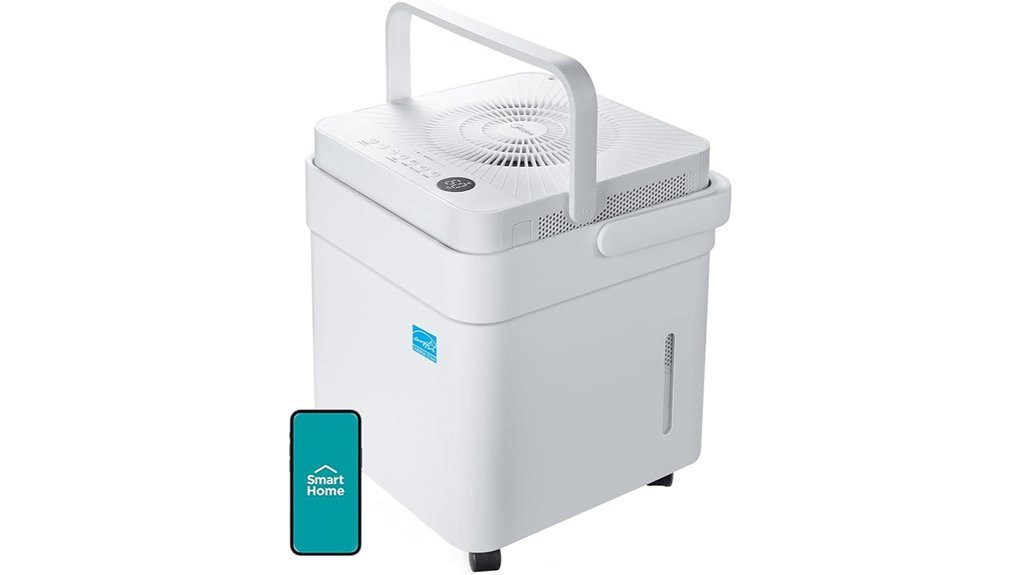
The Midea Cube 20 Pint is the most straightforward match for many moderately damp 800 sq. ft. spaces. Model MAD20S1QWT has a current capacity of 20 pints per day, and Midea advertises coverage up to 1,500 sq. ft. The unusual lift-and-twist design provides a 12-liter collection bucket, while the included hose supports continuous gravity drainage when a suitable drain is nearby.
Problem It Solves: This model is designed for buyers who need more moisture removal than a small thermoelectric appliance can provide but do not want a large 35- or 50-pint machine. Its large bucket also reduces how often it must be emptied during intermittent use.
Why You’ll Like It: You can monitor and adjust settings through the SmartHome app or compatible Alexa and Google Assistant devices. The washable filter, automatic defrost, wheels, built-in handle, and nested storage design make routine use and storage easier.
Who Should Buy This: Homeowners who want a verified 20-pint compressor model for a living room, moderately damp basement, bedroom suite, finished lower level, or connected area around 800 sq. ft.
Who Should Avoid This: Buyers who need a built-in condensate pump, an ultra-light appliance, or enough output for standing water, active seepage, indoor laundry drying, or consistently severe humidity.
Important Buying Note: The appliance weighs about 33 pounds before water collects in the bucket. It is easier to move while empty, and continuous drainage may be more practical than carrying a full 12-liter tank.
Pros:
- Verified 20-pint capacity is easier to compare with current dehumidifier sizing guidance.
- Smartphone and voice control support remote monitoring and adjustment.
- Large 12-liter bucket can reduce routine emptying.
- Included hose supports continuous gravity drainage.
- Automatic defrost helps protect performance in cooler conditions.
Cons:
- The unit weighs approximately 33 pounds before water is collected.
- It does not include a built-in condensate pump.
- The wide cube design may use more floor space than a narrow upright model.
- Smart setup may take extra time for users who prefer basic manual controls.
- The listed limited warranty is one year.
KNKA PD22SC-12 Dehumidifier with Drain Hose
Best Upright Alternative
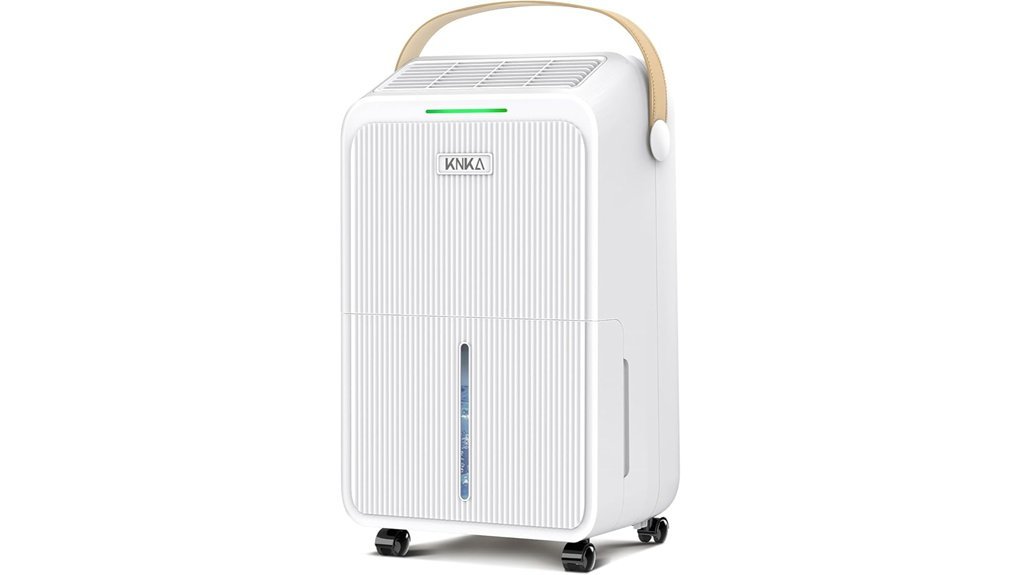
The KNKA PD22SC-12 is a conventional compressor dehumidifier with a 3-liter tank, included drain hose, two fan speeds, and DEHU, DRY, and CONT operating modes. The manufacturer advertises removal of up to 34 pints per day at 95°F and 90% relative humidity.
Capacity caution: The KNKA’s 34-pint figure was measured in unusually hot and humid conditions. A current DOE-standard capacity was not confirmed, so do not assume it will remove the same amount of water as a standardized 34-pint model in an average basement.
Problem It Solves: This model gives buyers a narrower upright alternative with a small removable tank, gravity drainage, and dedicated settings for normal dehumidification, clothes drying, and continuous operation.
Why You’ll Like It: Automatic humidity control, automatic defrost, a washable filter, child lock, wheels, a digital display, and continuous drainage make it practical for basements, laundry rooms, bathrooms, and other areas where moisture changes throughout the day.
Who Should Buy This: Buyers who want a portable upright design, simple controls, a drain hose, and a dedicated laundry-drying mode. It may be suitable for an 800 sq. ft. area with moderate moisture, but buyers should judge performance using measured indoor humidity rather than the coverage claim alone.
Who Should Avoid This: Buyers who require app control, a built-in pump, confirmed ENERGY STAR certification, or independently verified DOE-standard capacity before purchase.
Important Buying Note: The 3-liter tank is much smaller than the Midea’s bucket. Plan to use the included hose when the appliance will operate for long periods.
Pros:
- DEHU, DRY, and CONT modes support normal humidity control, laundry drying, and continuous use.
- Included hose and removable tank provide two drainage choices.
- Two fan speeds allow some control over airflow and noise.
- Wheels and a washable filter improve routine handling and maintenance.
- Automatic defrost and automatic shutoff add useful operating protection.
Cons:
- The 34-pint claim uses 95°F and 90% relative humidity test conditions.
- A current standardized DOE capacity was not confirmed.
- The 3-liter tank may need frequent emptying during heavy use.
- No verified ENERGY STAR listing was confirmed for this exact model.
- The listed manufacturer warranty is one year.
Factors to Consider When Choosing a Dehumidifier for 800 Sq Ft
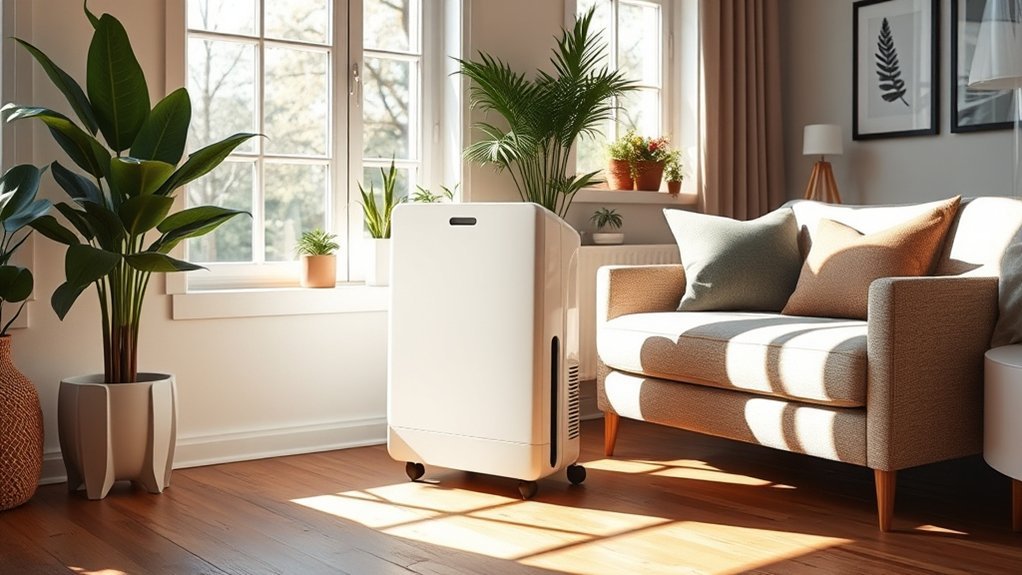
Square footage is only the starting point. The best dehumidifier for an 800 sq. ft. space also depends on starting humidity, temperature, ceiling height, air circulation, insulation, water intrusion, laundry drying, and whether doors to nearby rooms remain open.
1. Moisture Removal Capacity
For a slightly to moderately damp room under 2,000 sq. ft., a current 20- to 30-pint-per-day model is a sensible starting range. A very damp space may require approximately 25 to 40 pints per day, while a wet space, active laundry area, or room with seepage may require approximately 30 to 50 pints per day.
Use a current standardized capacity whenever possible. Some product listings publish larger removal figures measured at 95°F and 90% relative humidity, where warm air contains much more moisture. Those figures should not be compared directly with current ratings measured under cooler DOE conditions.
2. Energy Efficiency Rating
Look for an ENERGY STAR-certified model and compare the Integrated Energy Factor when it is available. A higher IEF means the unit removes more water per unit of electricity under the applicable test procedure.
Efficiency should not replace adequate capacity. An undersized unit may run for long periods without reaching the target humidity, reducing the practical benefit of its lower power consumption. Avoid fixed dollar-savings promises because actual cost depends on electricity rates, humidity, runtime, temperature, and the appliance being replaced.
3. Noise and Placement
Compressors and fans create audible noise, especially at higher fan speeds. For bedrooms, offices, or television rooms, check the manufacturer’s published noise information and recent owner feedback for the exact model.
Leave the clearance required by the manual, keep the intake and exhaust unobstructed, and close exterior doors and windows while the unit operates. Interior doors can remain open when the goal is to control humidity across connected rooms, provided the dehumidifier has enough capacity for the combined area.
4. Tank Size and Drainage
A larger bucket reduces emptying frequency but becomes heavier when full. For long daily runtimes, a gravity drain hose is often more useful than a large tank.
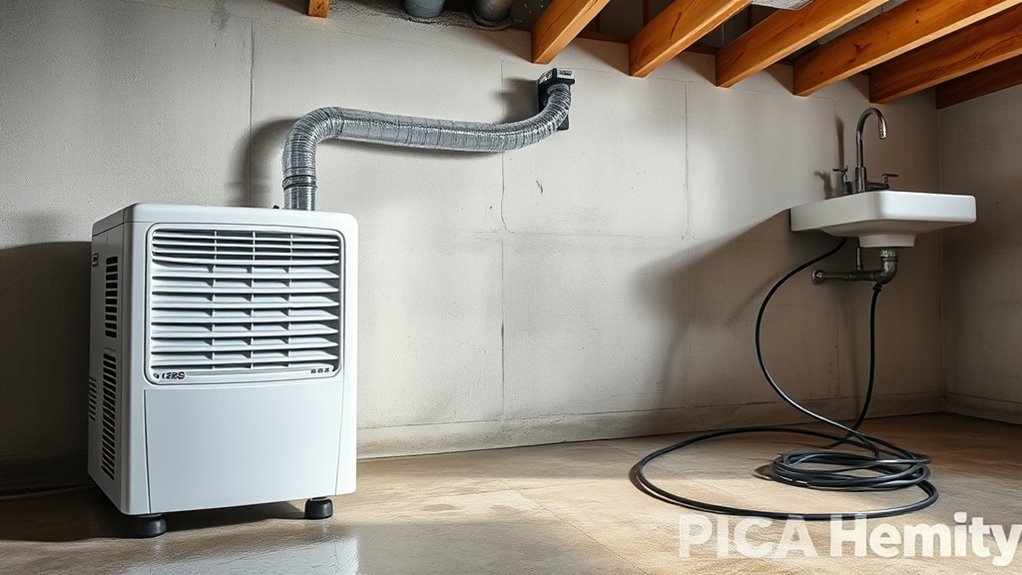
Confirm that the drain point is lower than the hose outlet, maintain a continuous downward slope, and keep the hose free of kinks. A gravity hose cannot move water upward. Choose a model with a built-in condensate pump when the water must reach a sink, window, or drain above the appliance.
5. Operating Temperature
Compressor dehumidifiers usually remove less moisture as room temperature falls. Frost may form on the coils in a cool basement, causing the appliance to pause while it defrosts. Choose a model with automatic defrost and follow the exact minimum operating-temperature instructions in its manual.
6. Humidistat and Controls
A built-in humidistat allows the appliance to cycle on and off around a selected relative-humidity level. Smart control can be useful when the dehumidifier operates in a basement or another area that is not checked frequently, but it does not improve the machine’s underlying moisture-removal capacity.
Use a separate hygrometer to confirm room humidity. Built-in sensors can read differently depending on airflow, placement, and how close they are to the appliance’s intake.
7. Warranty and Support
Check the warranty for the exact model number rather than relying only on the brand name. Review the coverage period, registration requirements, return policy, replacement process, and availability of filters, tanks, hoses, and other parts.
Before You Buy
- Measure the full connected area and note whether interior doors stay open or closed.
- Use a hygrometer to record normal relative humidity at different times of day.
- Choose capacity according to dampness level, not square-foot coverage alone.
- Confirm whether the capacity uses current standardized conditions or 95°F and 90% RH.
- Check tank size, hose length, drain height, and whether a pump is required.
- Review appliance weight and how far it must be carried.
- Confirm the exact model number, warranty terms, and current recall information.
- Plan for filter cleaning, bucket washing, hose inspection, and access to a grounded outlet.
Safety note: Do not use a dehumidifier as a substitute for repairing plumbing leaks, foundation seepage, drainage problems, or other water intrusion. Keep the appliance, plug, cord, and drain hose away from unsafe electrical connections, and follow all grounding, clearance, cleaning, and operating instructions in the product manual.
Frequently Asked Questions
What Size Dehumidifier Do I Need for 800 Square Feet?
A current 20- to 30-pint model is a sensible starting range for a slightly to moderately damp 800 sq. ft. space. Choose more capacity for very damp conditions, indoor laundry drying, seepage, high ceilings, poor air circulation, or frequently opened exterior doors.
Is a 20-Pint Dehumidifier Enough for 800 Square Feet?
It can be enough for a slightly to moderately damp, enclosed 800 sq. ft. space. It may be undersized for standing water, active leaks, severe basement moisture, or a large connected layout with open doors. Monitor the room with a hygrometer and consider a higher standardized capacity if the appliance runs continuously without reaching the selected humidity.
Why Do Some Dehumidifiers Have Different Pint Ratings?
Moisture-removal output changes with temperature and relative humidity. A product tested at 95°F and 90% RH can produce a much larger headline number than the same type of appliance tested under cooler current DOE conditions. Compare products only when their ratings use the same test procedure.
What Humidity Level Is Best?
A practical target for many homes is about 40% to 50% relative humidity. Conditions, climate, comfort, and condensation risk vary, but prolonged humidity above the recommended range can create a more favorable environment for mold and dust mites.
Can a Small Thermoelectric Dehumidifier Handle 800 Square Feet?
Usually not as the primary dehumidifier. Models that remove only a small amount of water per day are better suited to enclosed closets, cabinets, small bathrooms, or individual RV sections. A compressor model with a meaningful daily capacity is more appropriate for a full 800 sq. ft. room or connected area.
Should I Use the Tank or a Drain Hose?
Use the tank when you need flexible placement and do not mind checking and emptying it. Use a gravity drain hose for longer unattended operation, provided the hose slopes continuously downward to a safe drain. Choose a pump-equipped model when water must travel upward.
Does a Drain Hose Mean the Dehumidifier Has a Pump?
No. Most included hoses depend on gravity and require a lower drain. A built-in pump actively pushes collected water upward or across a longer distance. The Midea Cube 20 Pint and KNKA PD22SC-12 reviewed here do not have confirmed built-in pumps.
How Do I Maintain a Dehumidifier?
Clean the reusable filter at the interval listed in the manual, wash and dry the bucket, inspect the drain hose, keep the air inlet clear, and check accessible surfaces for dust. Unplug the unit before cleaning or moving it, and do not open sealed refrigeration components.
Will a Dehumidifier Remove Allergens?
A dehumidifier controls moisture but is not a substitute for an air purifier. Lower humidity can make conditions less favorable for mold and dust mites, while airborne particles generally require appropriate filtration, cleaning, ventilation, and source control.
Conclusion
For most slightly to moderately damp 800 sq. ft. rooms, the Midea Cube 20 Pint is the clearest all-around choice. Its verified capacity, large bucket, app control, automatic defrost, and included continuous-drain hose directly address common buyer needs.
The KNKA PD22SC-12 is a useful alternative for buyers who prefer an upright design, a smaller body, and dedicated drying modes. However, its 34-pint claim uses 95°F and 90% relative humidity conditions, so buyers should not treat it as directly equivalent to a current standardized 34-pint model.
Whichever model you choose, match it to measured humidity and actual water load rather than advertised square-foot coverage alone. Repair leaks first, use gravity drainage correctly, and confirm the exact model specifications before ordering.
Final recommendation
Choose the Midea Cube 20 Pint for the most dependable capacity comparison, smart control, and a large bucket. Consider the KNKA only when its upright design and operating modes matter more than having a confirmed standardized capacity.