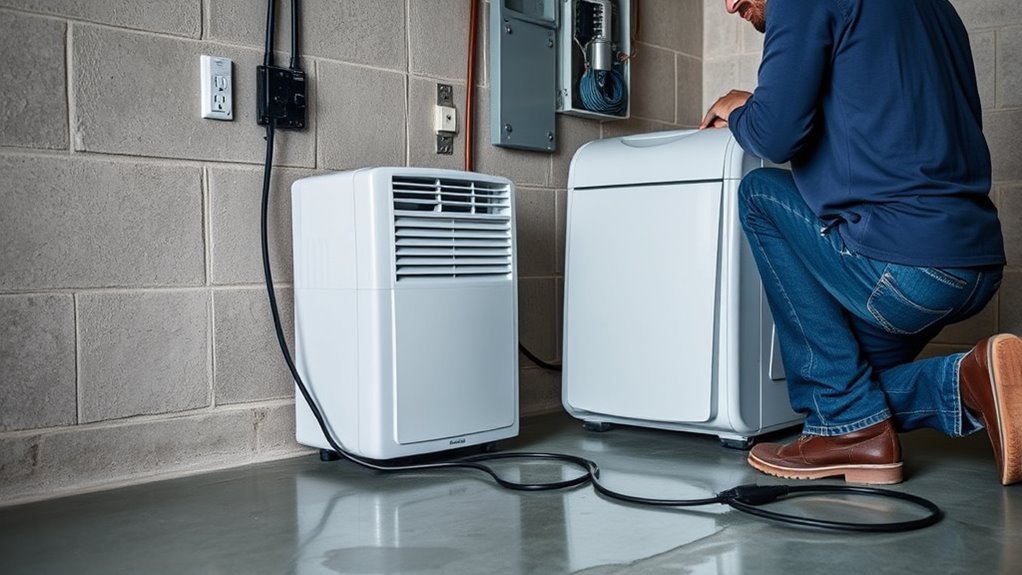
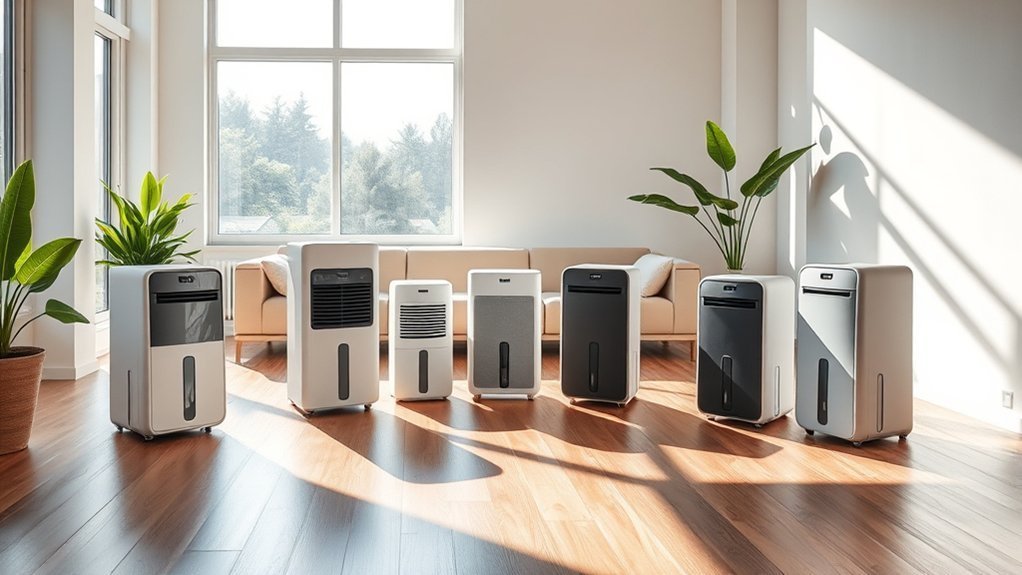
Choosing the right dehumidifier in 2026 depends on where the moisture problem is happening. A basement, crawl space, warehouse, restoration job, grow room, bathroom, and large living area can require very different moisture-removal capacity, drainage, portability, noise, and energy-use features. This guide compares residential and commercial dehumidifiers for serious moisture control, including built-in pump models, gravity-drain models, compact crawl-space units, and high-capacity restoration machines. Pay close attention to how each pint rating is measured because maximum or saturation ratings can be much higher than AHAM or other standard-condition ratings.
By Editorial Team · Reviewed for accuracy · Last updated August 2026
Affiliate disclosure: This article contains Amazon affiliate links. If you buy through these links, we may earn a commission at no extra cost to you.
Quick Verdict: Best Dehumidifiers for Residential and Commercial Use
If you need heavy-duty drying for restoration work or large commercial spaces, start with a commercial LGR-style unit and compare its standard-condition capacity, not only the largest headline pint number. For everyday home moisture control, a residential model with automatic humidity control can be easier to place and operate. For crawl spaces or basements without a convenient floor drain, a built-in condensate pump can make drainage much easier.
|
Best For |
Product |
Drainage Style |
Key Reason to Consider |
Check Price |
|---|---|---|---|---|
|
Heavy-duty restoration |
MOUNTO 310 Pints Commercial Dehumidifier with Pump |
Built-in pump |
Up to 310 PPD at saturation and 165 PPD at AHAM conditions, with a rugged restoration-focused design |
|
|
Commercial mobility |
Moiswell 200 Pints Commercial Dehumidifier with Pump |
Built-in pump |
Up to 200 PPD maximum and 90 PPD AHAM, plus wheels, handles, and pump drainage |
|
|
Compact crawl spaces |
MOISWELL 70 Pints Commercial Dehumidifier with Pump |
Built-in pump |
Compact body, automatic defrost, pump drainage, and easier placement in tight spaces |
|
|
Large basements and commercial areas |
Moiswell VP190 190 Pints Commercial Dehumidifier with Pump |
Built-in pump |
Up to 190 PPD maximum and 90 PPD AHAM with continuous pump drainage |
|
|
Large home use |
DECIUU Max 100 Pint Dehumidifier with Pump |
Pump, hose, and tank options |
Residential-friendly controls, three fan speeds, and flexible drainage options |
|
|
Gravity-drain commercial use |
VEVOR 125 Pints Commercial Dehumidifier |
Drain hose, no built-in pump |
125 PPD at saturation and 60 PPD AHAM for spaces with a suitable downward drain route |
|
|
Energy-aware home use |
AEOCKY 4500 Sq.Ft Energy Star Dehumidifier with Pump |
Pump and drain hose |
Residential 80-pint model with automatic operation and flexible drainage |
|
|
Industrial-style basement drying |
MOUNTO 180 Pints Industrial Dehumidifier with Pump |
Built-in pump |
Up to 180 PPD under hot, very humid conditions with a rugged portable frame |
|
|
Crawl spaces and basements |
HBN Crawl Space Dehumidifier with Pump and Timer |
Built-in pump and drain hose |
125 PPD at 95°F/90% RH and 60 PPD AHAM, plus timer and automatic defrost |
|
|
Compact gravity-drain commercial use |
ALORAIR Commercial Dehumidifier 113 Pint for Basements |
Gravity drain hose |
113 PPD at saturation and 53 PPD AHAM in a compact crawl-space-style body |
Quick buying note: A dehumidifier works best after you fix active leaks, standing water, poor drainage, or other ongoing moisture sources. For most homes, keep indoor relative humidity below 60% and ideally around 30% to 50% when practical.
Do not compare headline pint numbers alone. A manufacturer may advertise maximum moisture removal at saturation or at very hot, humid conditions, while AHAM or other standard-condition ratings can be much lower and more useful for comparing everyday performance.
Before You Buy a Residential or Commercial Dehumidifier
- Compare capacity under the same test conditions: Maximum, saturation, AHAM, and other ratings are not automatically interchangeable. Use comparable ratings whenever possible.
- Match the unit to the moisture load: A mildly damp bedroom does not need the same equipment as a wet crawl space, flooded basement, warehouse, or restoration job.
- Choose the right drainage setup: A built-in pump is valuable when condensate must travel upward or to a drain that is not below the machine. Gravity drainage needs a continuously downward hose route.
- Check dimensions before crawl-space installation: Measure the access opening, available floor area, hose route, and required service clearance before ordering.
- Think about portability: Heavy commercial units may provide much more drying capacity, but wheels, handles, stairs, storage space, and floor access matter if the machine will be moved often.
- Consider noise and location: Restoration-grade airflow can be useful in garages and job sites but intrusive near bedrooms, offices, and finished living areas.
- Verify current warranty, included accessories, and seller support: Listing details and purchasing options can change, so check the current Amazon page before buying.
How We Chose These Dehumidifiers
We focused on products that match common high-moisture use cases, including basements, crawl spaces, garages, warehouses, restoration jobs, storage rooms, and larger home areas. The main comparison points are moisture-removal capacity, the test conditions behind that capacity, drainage flexibility, built-in pump availability, portability, automatic defrost, controls, and whether the product clearly fits its intended environment.
We did not treat the largest headline pint number as an automatic winner. A compact pump model can be more useful in a tight crawl space, while a heavier LGR commercial unit can make more sense for water-damage restoration and large open areas. Residential buyers should also consider noise, physical size, drainage convenience, and energy use instead of buying only by maximum capacity.
MOUNTO 310 Pints Commercial Dehumidifier with Pump
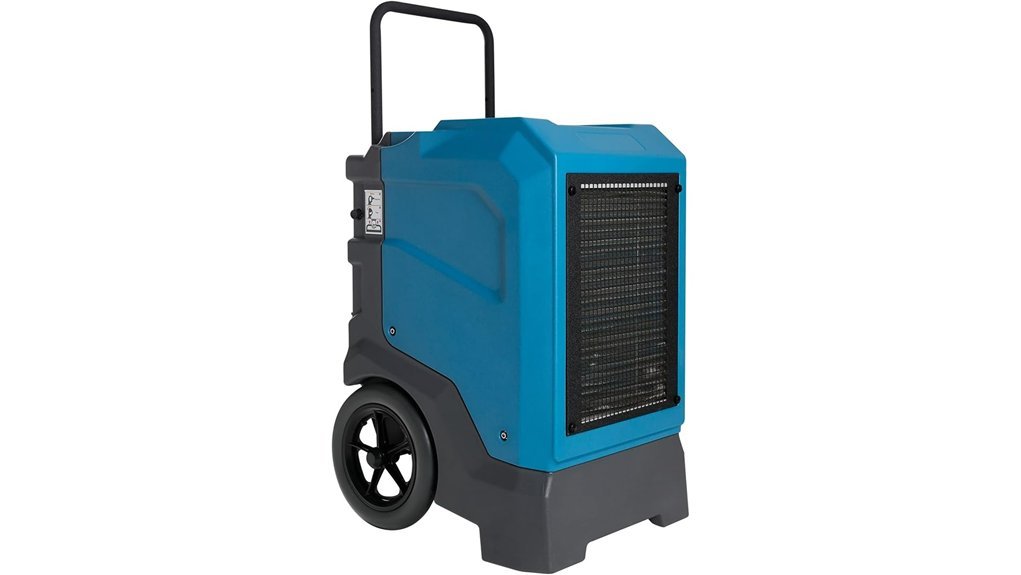
Best For: Heavy-duty restoration, large basements, garages, commercial spaces, and jobs where high standard-condition drying capacity matters.
The MOUNTO 310 Pints Commercial Dehumidifier with Pump is a restoration-focused LGR-style machine built for demanding moisture removal. Its listing separates the capacity into up to 310 pints per day at saturation and 165 pints per day at AHAM conditions, which is much more useful than treating the 310-pint headline as an everyday rating.
The unit also uses a built-in condensate pump and portable commercial frame. That combination is useful for long drying sessions where manually emptying a tank would interrupt operation and where the drain point may not be directly below the machine.
Why You’ll Like It: Among these picks, it offers one of the strongest verified AHAM figures, making it easier to evaluate for serious structural drying and restoration work.
Who Should Avoid It: Buyers dealing with mild bedroom humidity, small finished rooms, or occasional seasonal dampness will usually be better served by a smaller residential machine.
Pros:
- Up to 310 PPD at saturation and 165 PPD at AHAM conditions.
- Built-in condensate pump supports continuous drainage.
- Commercial wheels and rugged housing suit repeated job-site use.
Cons:
- Large and heavy compared with residential models.
- More machine than most small rooms need.
- Current purchasing options should be checked before ordering.
Moiswell 200 Pints Commercial Dehumidifier with Pump
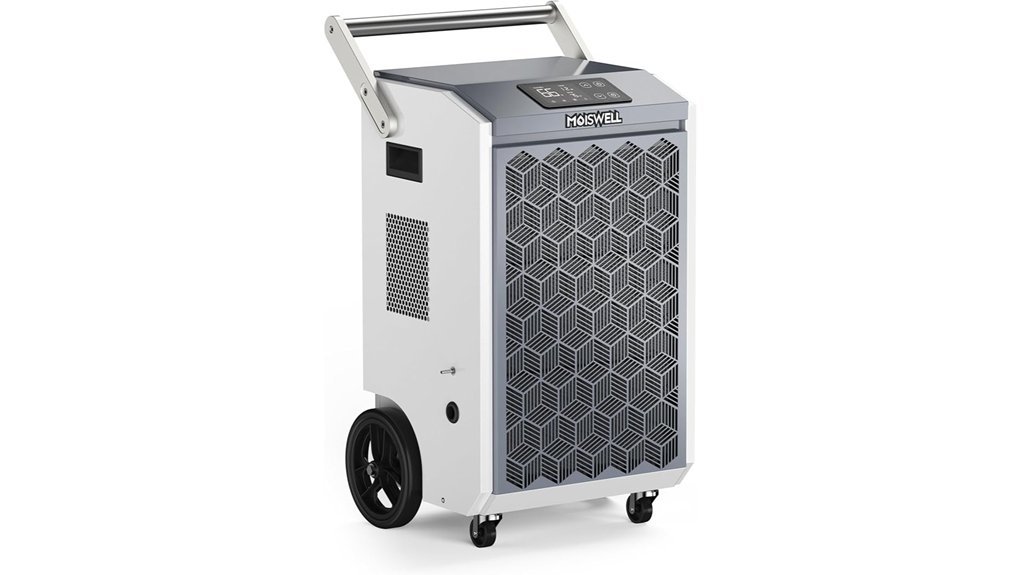
Best For: Large basements, garages, warehouses, job sites, workshops, and commercial areas where pump drainage and mobility matter.
The Moiswell 200 Pints Commercial Dehumidifier with Pump is designed for high-moisture environments but its two capacity numbers need to be understood correctly. The listing describes removal of up to 200 pints per day while also specifying a 90-pint AHAM rating. For comparison against other commercial machines, the AHAM figure is usually the more useful number when the other product also publishes an AHAM rating.
The built-in pump is a major convenience benefit. The listing describes a 16.4-foot pump/drain-hose arrangement, which can make installation easier when gravity drainage is not practical. Large wheels and a detachable-handle design also make this model more suitable for moving around unfinished floors or work areas than a fixed crawl-space unit.
Why You’ll Like It: It combines meaningful commercial drying capacity with pump drainage and mobility instead of focusing on capacity alone.
Who Should Avoid It: It is probably excessive for a small bedroom, bathroom, or lightly damp finished living area.
Pros:
- 200 PPD maximum rating with a 90 PPD AHAM figure.
- Built-in pump reduces dependence on downward gravity drainage.
- Large wheels and handles improve job-site portability.
Cons:
- Bulkier than typical home dehumidifiers.
- Higher-capacity operation can mean greater energy consumption than smaller units.
- Current seller, accessories, warranty, and purchasing options should be confirmed before ordering.
MOISWELL 70 Pints Commercial Dehumidifier with Pump
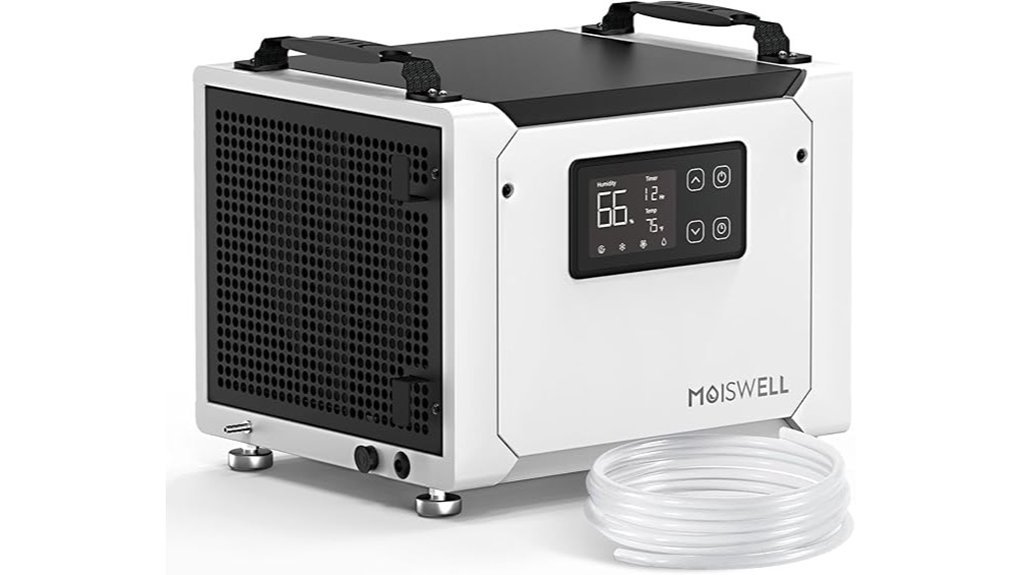
Best For: Crawl spaces, smaller basements, utility areas, and buyers who want pump drainage in a compact commercial-style machine.
The MOISWELL 70 Pints Commercial Dehumidifier with Pump is a much more compact option than the larger restoration machines above. The listing describes a built-in pump, automatic defrost, adjustable humidity control, automatic shutoff, a portable metal body, and a footprint that is easier to fit into confined areas.
Capacity note: The current listing uses a 70-pint capacity label but separately shows a lower dehumidification-capacity figure in its technical details. Because those figures are not presented under clearly comparable test conditions, do not assume this model delivers 70 pints per day under AHAM conditions. Confirm the current test-condition rating if exact capacity is important to your installation.
Why You’ll Like It: Its main advantage is not maximum drying power. It is the combination of compact placement, automatic defrost, and built-in pump drainage.
Who Should Avoid It: Buyers handling major water-damage restoration or very large open commercial areas should consider one of the higher-capacity machines.
Pros:
- Compact footprint compared with larger commercial models.
- Built-in pump simplifies many basement and crawl-space drain routes.
- Automatic defrost and adjustable humidity control support unattended operation.
Cons:
- Not intended to compete with large restoration machines for maximum drying capacity.
- The listing’s capacity fields use figures that should not be compared without checking test conditions.
- Access dimensions and drain-hose placement still need to be measured before installation.
Moiswell VP190 190 Pints Commercial Dehumidifier with Pump
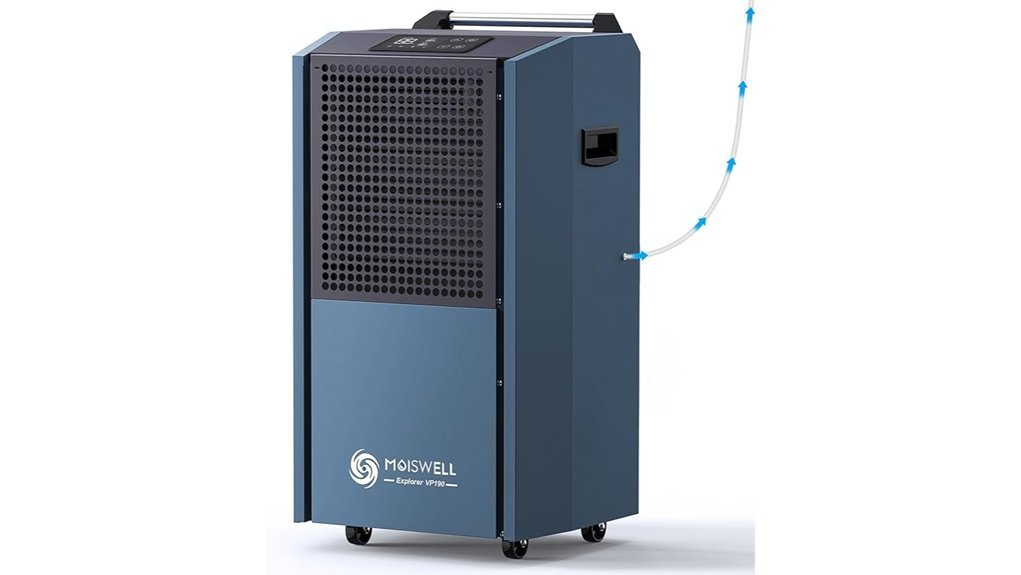
Best For: Large basements, warehouses, grow rooms, garages, restoration work, and high-humidity commercial spaces.
The Moiswell VP190 is designed for buyers who need commercial drying performance and automatic condensate removal. Its listing identifies up to 190 pints per day of maximum water removal and 90 pints per day under AHAM conditions. That distinction makes the VP190 easier to compare fairly against other commercial dehumidifiers.
The built-in pump is particularly useful when the drain location is above the unit or when gravity drainage cannot be routed continuously downward. The rugged metal design also makes more sense for repeated commercial or unfinished-space use than for a quiet finished bedroom.
Why You’ll Like It: It balances a 90 PPD AHAM rating with built-in pump drainage in a commercial-style body.
Who Should Avoid It: Buyers who prioritize a small footprint, bedroom-friendly operation, or smart-home features should compare residential models instead.
Pros:
- Up to 190 PPD maximum and 90 PPD AHAM.
- Built-in condensate pump supports hands-free drainage.
- Commercial metal construction suits demanding environments.
Cons:
- May be excessive for small rooms or light seasonal humidity.
- Requires adequate floor space and unrestricted airflow.
- Buyers wanting app-based controls should confirm current functionality before purchase.
DECIUU Max 100 Pint Dehumidifier with Pump
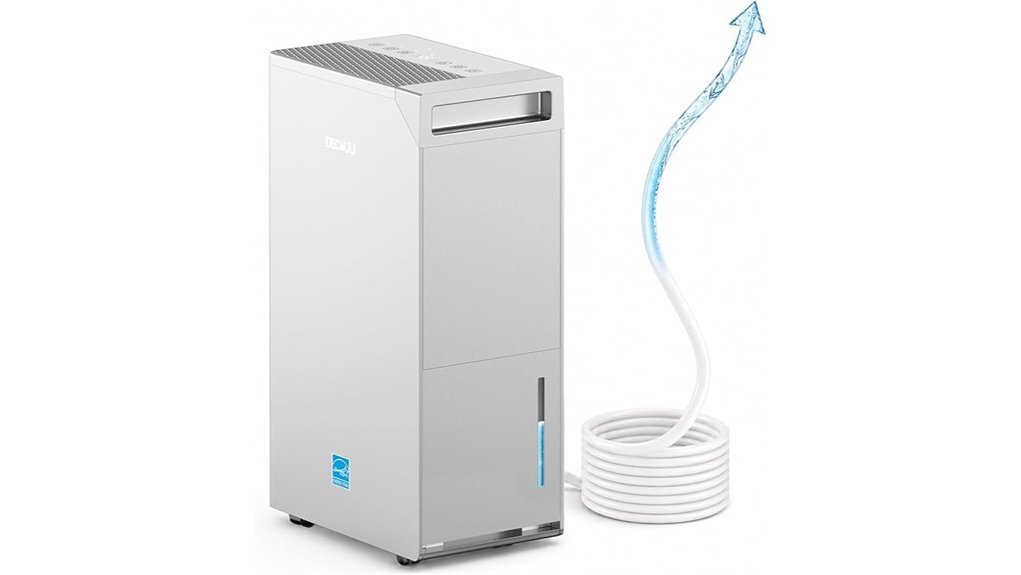
Best For: Large homes, basements, garages, laundry areas, and buyers who want residential controls with built-in pump drainage.
The DECIUU Max 100 Pint Dehumidifier with Pump is one of the more residential-friendly choices in this guide. The current listing describes adjustable humidity control, automatic defrost and restart, a built-in pump, continuous drainage, timer settings, three fan speeds, and a 1.45-gallon tank.
The main benefit is drainage flexibility. You can use the pump when condensate needs to move to a higher drain location, use continuous hose drainage when gravity is practical, or rely on the tank when neither permanent drain option is convenient.
Capacity note: Treat the 100-pint figure as the listing’s headline capacity and compare test conditions before ranking it against commercial machines that publish separate AHAM numbers.
Why You’ll Like It: It combines strong home-oriented moisture control with a built-in pump and everyday controls without requiring a restoration-style chassis.
Who Should Avoid It: Professional restoration contractors dealing with severe water intrusion will generally want equipment with clearly stated commercial AHAM performance and a more rugged frame.
Pros:
- Built-in pump, continuous hose drainage, and manual tank operation provide flexible setup.
- Three fan speeds, timer, humidity control, automatic restart, and automatic defrost improve everyday usability.
- More residential-friendly dimensions than the largest commercial machines.
Cons:
- Headline capacity should not be compared directly with another product’s AHAM figure.
- The 1.45-gallon tank is much smaller than the headline daily capacity, so continuous drainage is preferable in very damp spaces.
- Filters and drainage components still require routine maintenance.
VEVOR 125 Pints Commercial Dehumidifier
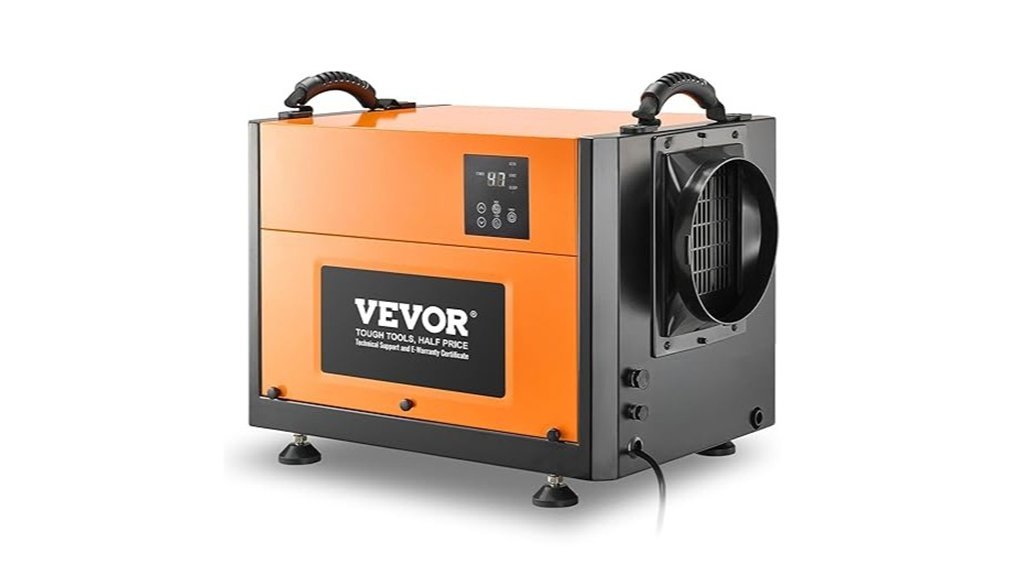
Best For: Crawl spaces, basements, storage areas, workshops, and commercial spaces with a suitable gravity-drain route.
The VEVOR 125 Pints Commercial Dehumidifier in this article is the 125-pint without pump variation. Its specifications identify 125 pints per day at saturation and 60 pints per day under AHAM conditions. That 60 PPD AHAM figure is the more appropriate number when comparing it with other products that also publish AHAM capacity.
The listing describes a galvanized-steel body, approximately 232.4 CFM airflow, automatic defrost, and a drain hose. Because this exact variation does not include a built-in condensate pump, your drainage route is one of the most important buying considerations.
Why You’ll Like It: It provides a compact commercial-style design and continuous hose drainage without paying for an internal pump you may not need.
Who Should Avoid It: If condensate must travel upward to a sink, window, or elevated drain, choose a built-in pump model or an appropriate external pumping solution instead.
Pros:
- 125 PPD saturation and 60 PPD AHAM ratings are clearly distinguished.
- Galvanized-steel commercial-style construction.
- Continuous drain-hose operation reduces manual water handling.
Cons:
- This exact variation does not include a built-in condensate pump.
- Gravity drainage requires a suitable downward hose route.
- Commercial airflow may be more noticeable than a quiet residential model.
AEOCKY 4500 Sq.Ft Energy Star Dehumidifier with Pump
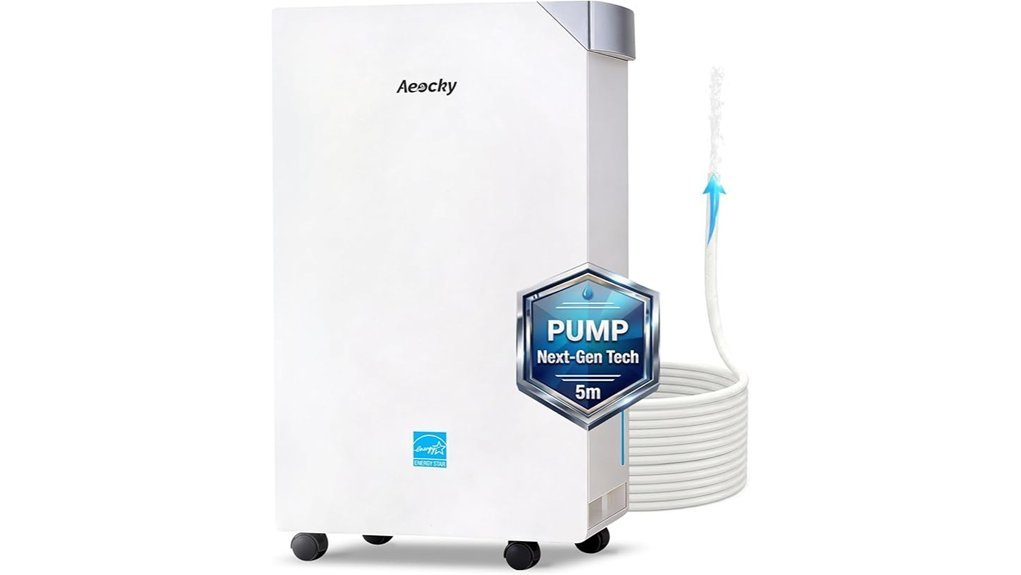
Best For: Homeowners who want a residential dehumidifier for large rooms, basements, bedrooms, bathrooms, or garages with automatic humidity control and flexible drainage.
The AEOCKY 4500 Sq.Ft Energy Star Dehumidifier with Pump is a home-oriented option for buyers who prioritize automatic operation, simpler placement, and drainage flexibility. The current listing identifies the LEO model with an 80-pint capacity, 1.45-gallon tank, residential-use classification, automatic operation, drain hose, and pump-equipped product configuration.
The 4,500-square-foot figure should be treated as manufacturer coverage guidance rather than a guarantee for every room of that size. Moisture load, air leakage, ceiling height, temperature, and the severity of the water problem all affect whether a dehumidifier can maintain the target humidity.
Why You’ll Like It: It is easier to integrate into everyday home moisture control than a large wheeled restoration unit while still offering pump-based drainage.
Who Should Avoid It: Buyers performing professional flood restoration or repeated structural drying should choose equipment designed specifically for that duty.
Pros:
- Residential-focused 80-pint model with automatic operation.
- Pump-equipped configuration and drain hose add placement flexibility.
- 1.45-gallon tank provides a manual collection option when continuous drainage is not used.
Cons:
- Not built like a large commercial restoration machine.
- Coverage claims depend heavily on real moisture conditions.
- Confirm the exact current model, pump configuration, certification details, and warranty terms before ordering.
MOUNTO 180 Pints Industrial Dehumidifier with Pump
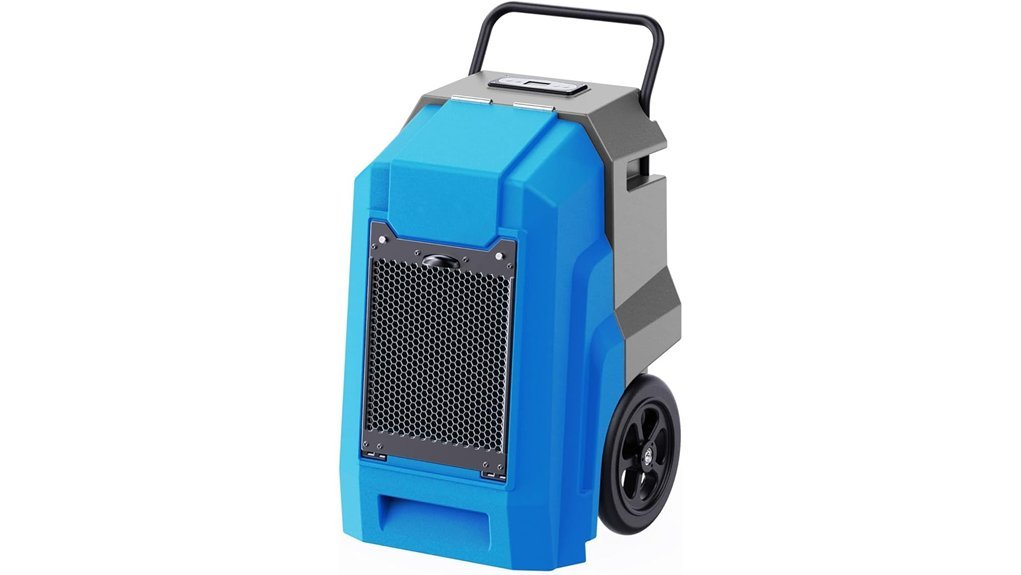
Best For: Industrial-style basement drying, garages, storage areas, workshops, job sites, and users who want more rugged equipment than a residential dehumidifier.
If you need powerful moisture control without moving to the MOUNTO 310 class, the MOUNTO 180 Pints Industrial Dehumidifier with Pump is a useful middle-ground option. The current listing describes moisture removal of up to 180 pints per day under 95°F and 90% RH conditions, so that headline number should be understood as a hot, very humid test-condition rating rather than automatically assumed to be an AHAM rating.
The built-in pump, wheels, and commercial frame make this model better suited to repeated drying jobs than a conventional tank-first home appliance. It can make sense in a garage, storage area, job site, or damp basement where a small residential model would run almost continuously.
Why You’ll Like It: It offers restoration-style mobility and pump drainage in a capacity class below the largest MOUNTO model in this guide.
Who Should Avoid It: Small-room buyers who value quiet operation and a compact footprint should choose a residential unit.
Pros:
- Up to 180 PPD under 95°F/90% RH conditions.
- Built-in pump supports continuous drainage.
- Wheels and commercial-style construction improve portability for repeated use.
Cons:
- The headline 180-pint figure is not presented as an AHAM rating on the current US listing.
- Large size and weight make it less convenient for finished living spaces.
- Current purchasing options should be checked before ordering.
HBN Crawl Space Dehumidifier with Pump and Timer
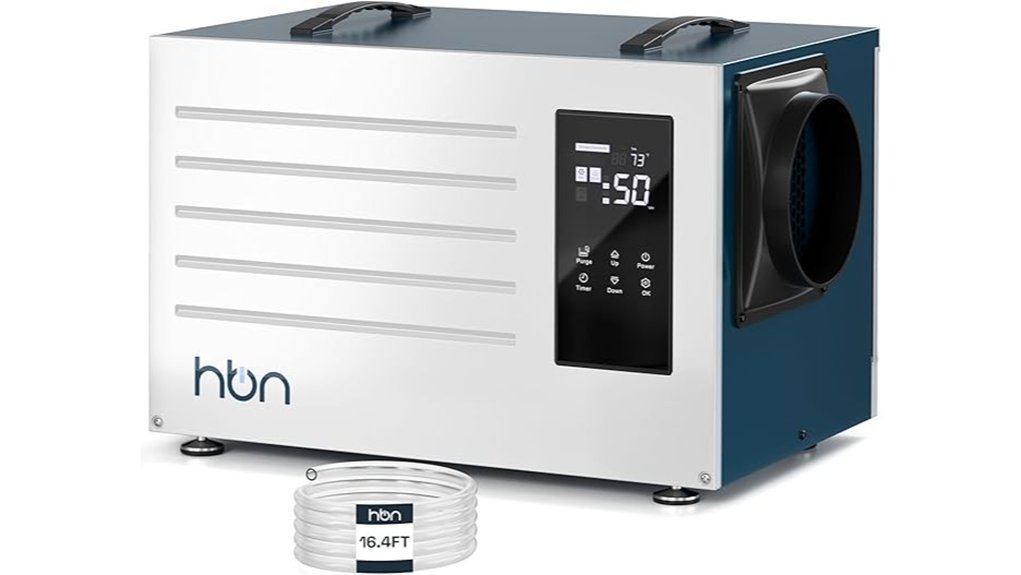
Best For: Crawl spaces, basements, storage areas, and commercial spaces that benefit from a built-in pump, automatic defrost, and timer controls.
The HBN Crawl Space Dehumidifier is designed for damp, confined, or lower-clearance areas where tank emptying would be inconvenient. Its listing distinguishes between up to 125 pints per day at 95°F and 90% RH and 60 pints per day under AHAM conditions. That makes the 60 PPD figure more useful when comparing it with other AHAM-rated models.
The listing also describes a built-in pump, digital controls, timer, and automatic defrost. Its compact commercial-style dimensions make it easier to consider for a crawl space than a tall wheeled restoration unit, but you should still measure the access opening before ordering.
Why You’ll Like It: You get a verified AHAM figure, built-in pump, timer, and defrost system in a crawl-space-oriented format.
Who Should Avoid It: Buyers with very small access openings should measure carefully, while buyers with extreme restoration needs may want a higher-AHAM-capacity machine.
Pros:
- 125 PPD at 95°F/90% RH and 60 PPD AHAM.
- Built-in pump reduces dependence on gravity drainage.
- Timer, digital controls, and automatic defrost support unattended use.
Cons:
- Size and weight can still complicate crawl-space installation.
- Coverage figures should not replace an assessment of the actual moisture load.
- Drain line, filter, and pump components need routine inspection.
ALORAIR Commercial Dehumidifier 113 Pint for Basements
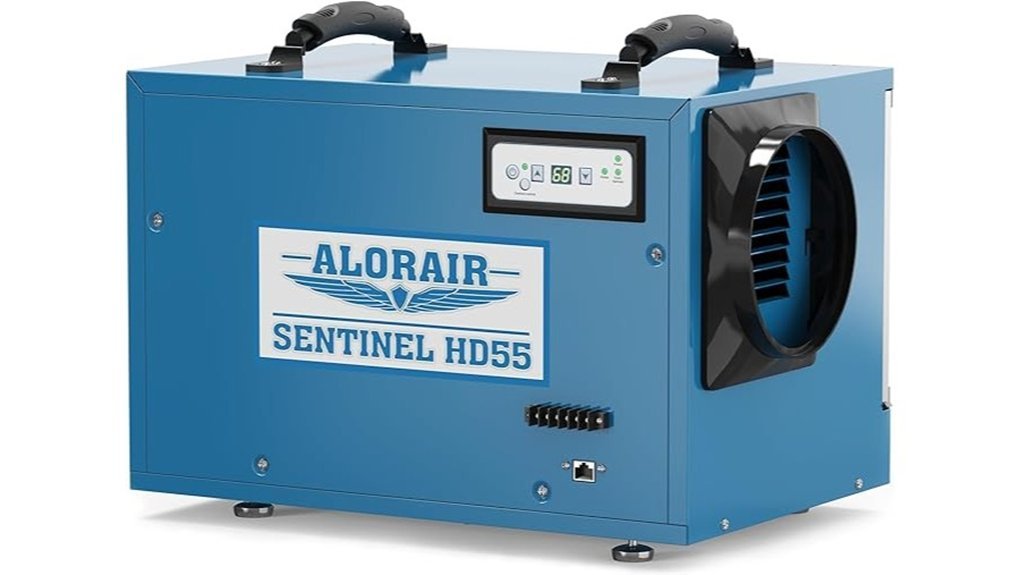
Best For: Basements, crawl spaces, offices, storage rooms, and commercial areas where compact size and gravity drainage are appropriate.
The ALORAIR Commercial Dehumidifier 113 Pint is a compact commercial-style machine whose listing distinguishes between 113 pints per day at saturation and 53 pints per day at AHAM conditions. It is designed to provide commercial-style moisture control without the tall wheeled chassis of a large restoration unit.
The current listing describes automatic defrost, a metal outer casing, approximately 120 CFM airflow, and gravity drainage. Because it does not provide the same drainage convenience as a built-in-pump model, the drain layout should be decided before installation.
Why You’ll Like It: It offers a clearly stated 53 PPD AHAM rating in a compact form that can fit crawl spaces and basements more easily than large restoration machines.
Who Should Avoid It: If water must be pumped upward, choose a pump-equipped model instead of relying on gravity drainage.
Pros:
- 113 PPD saturation and 53 PPD AHAM ratings are clearly distinguished.
- Compact commercial-style metal body.
- Automatic defrost supports operation in cooler damp spaces.
Cons:
- Gravity drainage requires a suitable downward drain path.
- Not the highest-capacity choice for large restoration projects.
- Current warranty terms and purchasing options should be confirmed on the listing.
Factors to Consider When Choosing Residential and Commercial Dehumidifiers
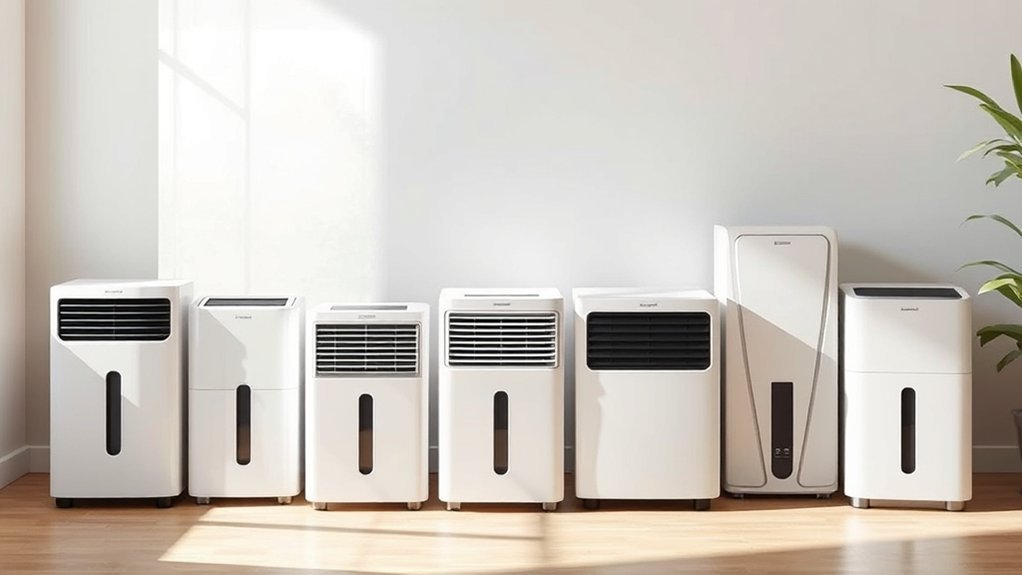
When choosing a dehumidifier, focus on comparable moisture-removal capacity, coverage guidance, drainage method, energy use, portability, noise, controls, temperature range, and build quality. A commercial restoration unit may remove moisture faster under demanding conditions, while a residential model may be easier to place, quieter, and more practical for everyday home humidity control.
Dehumidification Capacity and Test Conditions
Choosing the right dehumidifier starts with dehumidification capacity, but the number only makes sense when you know how it was measured. Some commercial models advertise saturation or 95°F/90% RH capacity while also publishing a substantially lower AHAM rating. Compare AHAM-to-AHAM or like-for-like test conditions whenever possible instead of ranking machines solely by the largest number printed in the product title.
Coverage Area Specifications
Coverage area can help narrow your choices, but it should not be used alone. A 4,500-, 5,000-, or 7,500-square-foot marketing claim does not guarantee that the machine can solve every moisture problem in a space of that size. Ceiling height, air leakage, standing water, groundwater intrusion, ventilation, room temperature, humidity level, and how connected the rooms are can all change performance.
Pump vs. Gravity Drainage
Effective moisture control depends heavily on what happens to the collected condensate. A built-in pump is useful when water must move upward or when the drain cannot be placed below the dehumidifier. Gravity drainage is simpler but needs the hose to maintain a downward slope. Manual tanks are convenient for occasional home use but can require frequent emptying in persistently damp spaces.
Energy Efficiency Ratings
Energy use matters because dehumidifiers can run for many hours at a time. Check wattage, ENERGY STAR certification where applicable, and automatic humidity controls that allow the compressor to cycle instead of running unnecessarily. Efficiency is particularly important for basements, crawl spaces, laundry rooms, and other locations where a dehumidifier may operate for long periods.
Portability, Dimensions, and Access
Large commercial dehumidifiers can be heavy, so wheels and handles make a real difference on job sites. Crawl-space models trade large wheels for a lower, more compact body. Before ordering a crawl-space machine, measure the access opening as well as the final installation area. Leave enough clearance for airflow, filter servicing, drain-hose routing, and electrical access.
Control Features and Usability
Useful controls include an adjustable humidistat, timer, automatic restart, memory function, automatic defrost, washable or replaceable filters, clear status displays, and drainage alerts. These features are especially valuable in basements, crawl spaces, rental properties, storage areas, and commercial rooms that are not checked constantly.
Noise Level Considerations
Noise usually matters more in bedrooms, finished basements, offices, and living areas than on restoration sites. High airflow and rugged commercial fans can be appropriate in a warehouse or garage but intrusive near sleeping or working areas. If noise is important, check the current decibel specification and operating modes before buying.
Durability and Build Quality
For repeated commercial or crawl-space use, look for sturdy housing, corrosion-resistant components, reliable drainage hardware, accessible filters, automatic defrost, and a design that allows routine servicing. Also check current warranty terms and seller support because coverage can differ by model, seller, or listing.
At-a-Glance Buying Guide
- Choose a built-in pump model if condensate must move upward or the drain is difficult to reach with a continuously downward hose.
- Choose gravity drainage if you have a suitable lower drain and the hose can slope downward the entire way.
- Choose a residential model when everyday home comfort, simpler controls, smaller size, and living-space placement are priorities.
- Choose a commercial or LGR model for restoration jobs, repeated heavy use, warehouses, garages, and severe moisture loads.
- Choose a compact crawl-space unit when access is tight and you need automatic operation with minimal checking.
- Compare AHAM-to-AHAM when possible instead of assuming maximum or saturation pint ratings are directly comparable.
Frequently Asked Questions
How Do I Determine the Right Size Dehumidifier for My Space?
Start with the room or building area, then consider how severe the moisture problem is. A mildly damp bedroom needs much less drying capacity than a wet crawl space, flooded basement, warehouse, or restoration site. Also compare capacities measured under similar test conditions. A saturation rating should not be treated as equivalent to an AHAM rating.
What Humidity Level Should I Set My Dehumidifier To?
For most homes, roughly 30% to 50% relative humidity is a useful target range when practical, and indoor humidity should generally remain below 60%. A setting around 40% to 50% often provides a practical balance between moisture control and comfort. Avoid running the space drier than necessary.
Is a Built-In Pump Worth It on a Dehumidifier?
A built-in pump is especially useful if condensate must move upward, if the drain is farther away, or if you do not have a floor drain below the machine. If a drain is already lower than the dehumidifier and the hose can maintain a downward slope, gravity drainage may be simpler and perfectly adequate.
What Is the Difference Between Saturation and AHAM Pint Ratings?
A saturation or hot/high-humidity rating measures water removal under conditions that can allow the machine to extract much more moisture than it would in a typical basement. An AHAM-style rating uses standardized conditions that can make comparison between models easier. When two products publish AHAM figures, compare those figures rather than comparing one product’s AHAM number with another product’s saturation number.
What Maintenance Is Required for Commercial Dehumidifiers?
Clean or replace filters according to the manufacturer schedule, inspect the drain hose, check the condensate pump if included, keep the intake and exhaust unobstructed, remove dust from accessible components as directed, and inspect the unit for drainage problems. Commercial and restoration units may need more frequent inspection because they often operate around dust, debris, and high moisture loads.
Are Dehumidifiers Energy-Efficient for Long-Term Use?
Efficiency varies by model, capacity, room conditions, and how long the compressor runs. For long-term use, look for ENERGY STAR information where applicable, an appropriately sized machine, automatic humidity control, and clearly stated energy-use specifications. A unit that is too small may run continuously, while unnecessarily oversized equipment may cost more and take up more space than needed.
Can I Use a Residential Dehumidifier in a Commercial Setting?
A residential dehumidifier can work in a small office, lightly damp storage room, or other modest commercial space, but it is usually not the first choice for warehouses, restoration jobs, repeated structural drying, or severe moisture problems. Commercial units typically prioritize higher airflow, stronger housings, drainage flexibility, and longer-duty operation.
Can a Dehumidifier Fix Flooding or Active Water Leaks?
No. A dehumidifier removes moisture from the air and helps dry materials, but it does not repair plumbing leaks, groundwater intrusion, roof leaks, failed drainage systems, or other active water sources. Stop the water source and remove standing water safely before relying on dehumidification as part of the drying process.
What Features Should I Look for in a Dehumidifier?
Look for capacity measured under clearly stated conditions, appropriate coverage guidance, a drainage method that fits your space, automatic humidity control, defrost protection, accessible filters, manageable noise, sturdy construction, and service or warranty terms appropriate for your expected use. For crawl spaces, dimensions and drain routing are just as important as the pint number.
Final Recommendation
For serious restoration work, the MOUNTO 310 stands out because its listing provides a 165 PPD AHAM figure in addition to the much higher saturation rating. The Moiswell 200 and Moiswell VP190 both publish 90 PPD AHAM figures and add built-in pump drainage, making them easier to compare for demanding commercial environments.
For crawl spaces, choose by access size and drain layout. The HBN 125 combines a 60 PPD AHAM rating with a built-in pump, while the VEVOR 125 provides a 60 PPD AHAM rating but uses drain-hose/gravity drainage on this exact variation. The compact MOISWELL 70 is worth considering when physical size and pump drainage matter more than maximum drying power.
For everyday residential moisture control, the DECIUU Max 100 Pint and AEOCKY 4500 Sq.Ft models provide more home-oriented controls and placement options. Choose based on comparable capacity, actual moisture conditions, room size, noise tolerance, and drain route rather than buying solely by the largest headline pint number.
Conclusion
The best dehumidifier depends on both the moisture load and the drainage setup. High-capacity commercial units make sense for restoration work, warehouses, garages, and severe basement moisture, while residential machines are usually easier to live with in finished spaces. Crawl-space buyers should pay particular attention to dimensions, defrost capability, filter access, and whether the unit uses a built-in pump or gravity drainage. Most importantly, compare capacity figures measured under similar conditions. A large saturation number can look impressive, but a verified AHAM or other standardized rating often gives you a clearer picture when comparing one dehumidifier with another.