Choosing a dehumidifier for a sealed grow room is not the same as choosing one for a bedroom or basement. Plants release moisture every day, lights and HVAC equipment change room temperature, and a sealed setup can build humidity quickly. The best choice is a unit with enough real moisture-removal capacity, dependable humidity control, continuous drainage, and safe clearance for airflow.
For most small grow tents, the MARS HYDRO 18L/Day Compressor Dehumidifier offers the clearest grow-specific fit. The AC Infinity HYDRONE 7 is the better precision option for growers who want humidity and VPD-based control. For a larger sealed room with a heavy moisture load, the Waykar 80 Pints Energy Star Dehumidifier offers the highest advertised extraction capacity in this list.
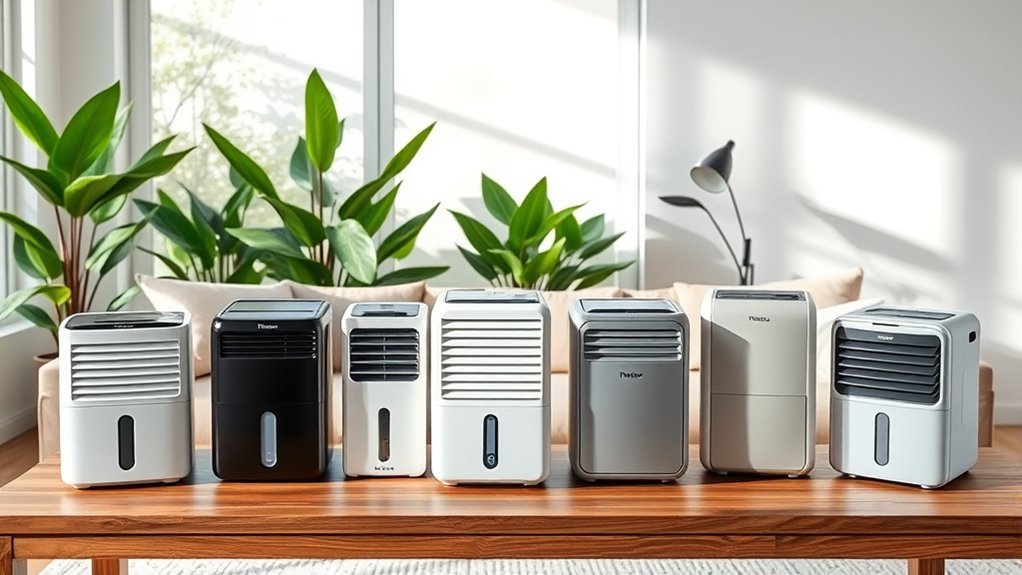
Quick Comparison
| Product | Best For | Advertised Extraction | Key Advantage | Amazon |
|---|---|---|---|---|
| MARS HYDRO 18L/Day | Grow tents up to about 5 x 5 ft | Up to 18 L or about 38 pints/day | Grow-specific sensor, ducting, and drainage | Check Price |
| AC Infinity HYDRONE 7 | Precision humidity and VPD control | Up to 8 L real-world draw rate | Ten drying levels and dual duct ports | Check Price |
| Waykar 80 Pints | Large rooms and heavy moisture loads | Up to 80 pints/day at high-heat, high-RH conditions | High capacity, auto swing, and continuous drain | Check Price |
| PLUSCENT 32 Pint | Small to medium sealed rooms | Up to 32 pints/day | Three modes, timer, and drain hose | Check Price |
| AIRVIP 34 Pints | Compact compressor performance | Up to 34 pints/day at warm, humid conditions | Small footprint and gravity drainage | Check Price |
| Midea 22 Pint EasyDry | Small rooms and known-brand support | 22 pints/day | Simple controls, timer, and wheels | Check Price |
| AIUSEVO 21 Pint | Budget small-room humidity control | Up to 21 pints/day at 95°F and 90% RH | Three operating modes and drain hose | Check Price |
| Glowells 21 Pints | Compact rooms where easy movement matters | Up to 21 pints/day at warm, humid conditions | Portable design and continuous drainage | Check Price |
MARS HYDRO 18L/Day Compressor Dehumidifier
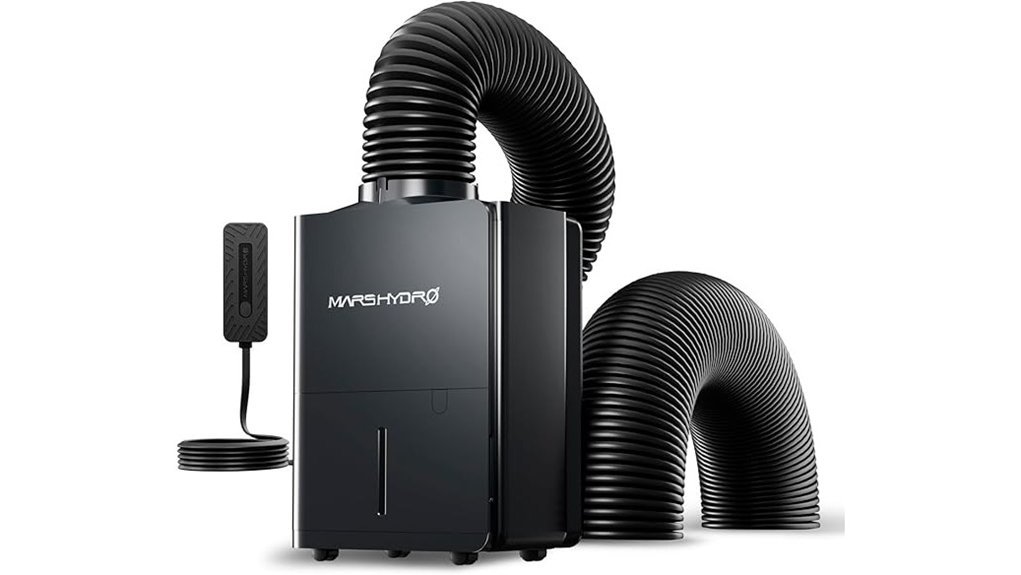
The MARS HYDRO 18L/Day Compressor Dehumidifier is the most direct match for a sealed grow-tent setup in this list. It is designed around grow-room airflow rather than general household comfort. The unit can remove up to about 18 liters or 38 pints of moisture per day, and the manufacturer recommends it for grow tents up to roughly 5 x 5 feet, depending on temperature, humidity, and plant load.
A wired temperature and humidity sensor helps the unit respond to conditions near the canopy. It also includes ducting connections and a drain pipe, which can make closed-loop airflow and continuous drainage easier to arrange. This is useful when plants transpire heavily during late vegetative growth or flowering.
Best For: Growers who want a purpose-built compressor dehumidifier for a small or medium grow tent.
Why You’ll Like It:
- Grow-specific design with sensor-based humidity control.
- High advertised extraction for a compact tent-oriented unit.
- Ducting and drainage accessories support cleaner sealed-room installation.
Consider Before Buying:
- Actual extraction changes with room temperature and relative humidity.
- The unit adds heat to the room, so confirm that your cooling system can handle the extra load.
- Large rooms or high plant counts may need more capacity than one unit can provide.
AC Infinity HYDRONE 7 Smart Plant Dehumidifier
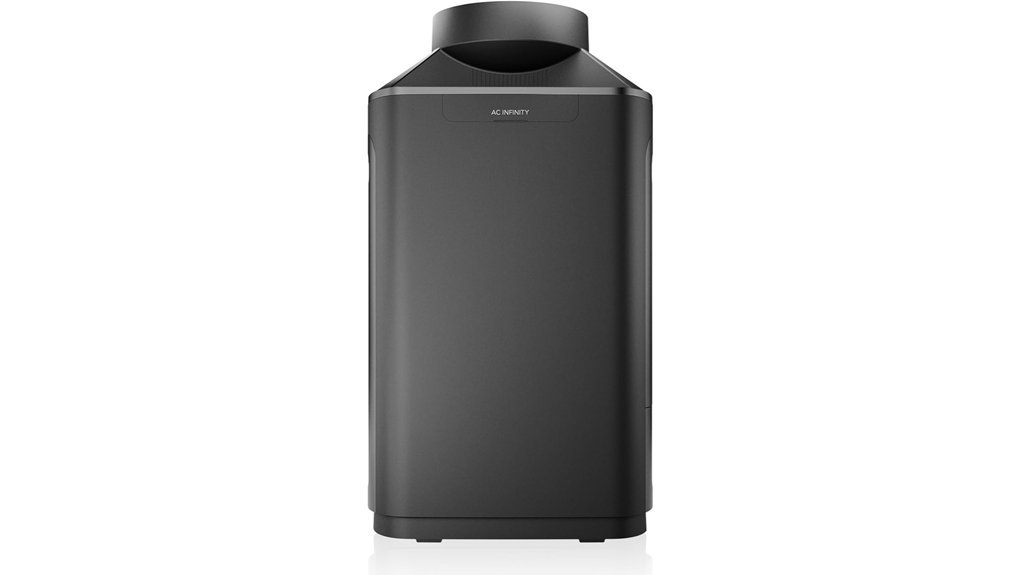
The AC Infinity HYDRONE 7 is built for growers who care about both relative humidity and vapor pressure deficit. Its onboard controller uses a corded sensor, ten drying levels, and automatic output adjustments to hold a selected humidity or VPD target more steadily than a basic on-off household dehumidifier.
AC Infinity rates the HYDRONE 7 for about four to six plants and lists a real-world moisture draw rate of up to 8 liters under suitable conditions. That figure is not directly comparable with standard compressor pint ratings. The two 6-inch duct ports support either an internal placement or a closed-loop ducting layout, and the 2-liter reservoir can be bypassed with the included gravity drain hose.
Best For: Growers who want fine control, low-RH capability, ducting flexibility, and integration with a wider grow-control system.
Why You’ll Like It:
- Humidity and VPD programming with a remote sensor.
- Ten output levels for more gradual control.
- Dual duct ports make it easier to manage heat and airflow.
Consider Before Buying:
- The 2-liter tank is small, so continuous drainage is strongly preferred.
- Power use changes with output level and can add noticeable heat to a sealed room.
- Size it by plant moisture load, not by a simple square-foot claim.
Waykar 80 Pints Energy Star Dehumidifier for Home
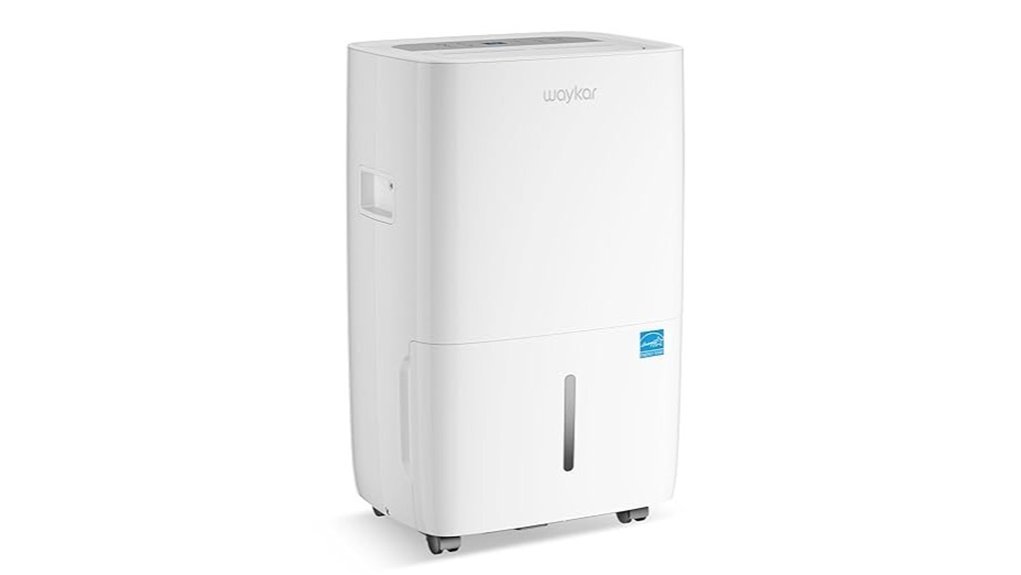
The Waykar 80 Pints Energy Star Dehumidifier is the strongest high-capacity option in this roundup. Its 80-pint figure is based on hot, very humid test conditions, so real daily collection will be lower in cooler or drier rooms. Even so, the larger compressor, adjustable humidistat, auto-defrost, and gravity-drain support make it a more realistic choice for a large sealed room than a small countertop unit.
The 90-degree auto-swing outlet can help distribute dry air, but a separate circulation fan is still useful around a dense canopy. Continuous drainage is important because a sealed room can fill the bucket quickly during high-transpiration periods.
Best For: Larger grow rooms, high plant counts, or rooms where humidity rises quickly after irrigation and lights-off.
Why You’ll Like It:
- Highest advertised moisture-removal capacity in this list.
- Adjustable humidity control, auto-defrost, and automatic restart features.
- Gravity drainage reduces the need for frequent bucket emptying.
Consider Before Buying:
- The 80-pint claim is not a standard-room result and should not be compared directly with every other rating.
- A larger compressor creates more heat and electrical load.
- Confirm drainage slope and circuit capacity before unattended operation.
PLUSCENT 32 Pint Dehumidifier for Home
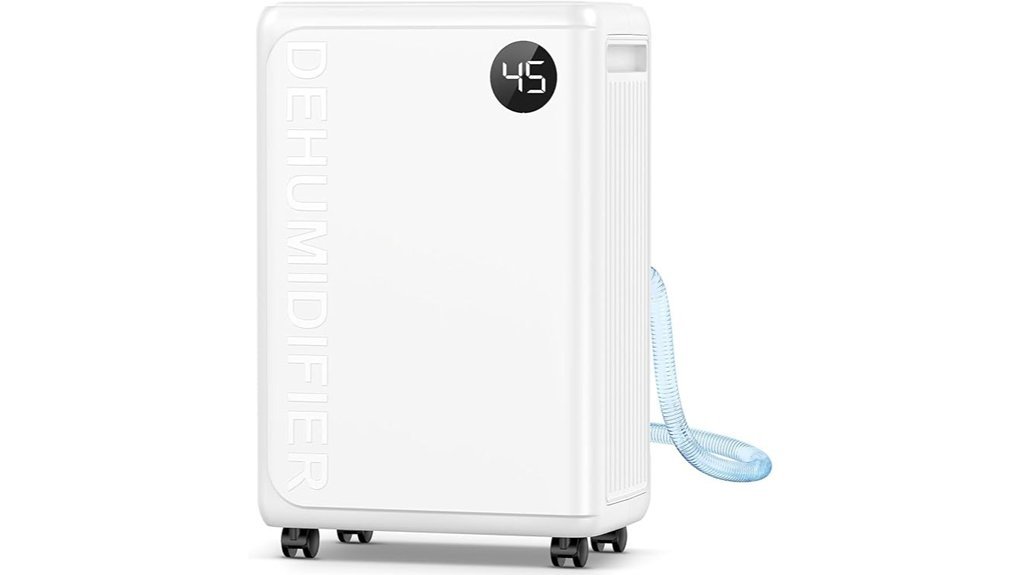
The PLUSCENT 32 Pint Dehumidifier offers a practical mix of compressor capacity, adjustable humidity control, and continuous drainage. It includes DEHU, CONT, and DRY modes, a 24-hour timer, auto restart, auto defrost, a 2-liter removable tank, and a drain hose connection.
Its advertised 2,500-square-foot coverage is a household room-size guide, not a grow-room guarantee. In a sealed setup, use the 32-pint daily rating as a starting point and compare it with how much water your plants receive and how quickly humidity rises after lights-off.
Best For: Small to medium sealed rooms that need a movable compressor unit without advanced grow-controller features.
Why You’ll Like It:
- Useful operating modes for automatic or continuous drying.
- Drain hose support makes longer runtimes easier.
- Casters and a handle allow flexible placement.
Consider Before Buying:
- The 2-liter bucket can fill quickly if a drain hose is not used.
- Seller-stated coverage should not replace moisture-load calculations.
- It lacks dedicated VPD control and grow-system integration.
34 Pints Energy Efficient Dehumidifier for Home
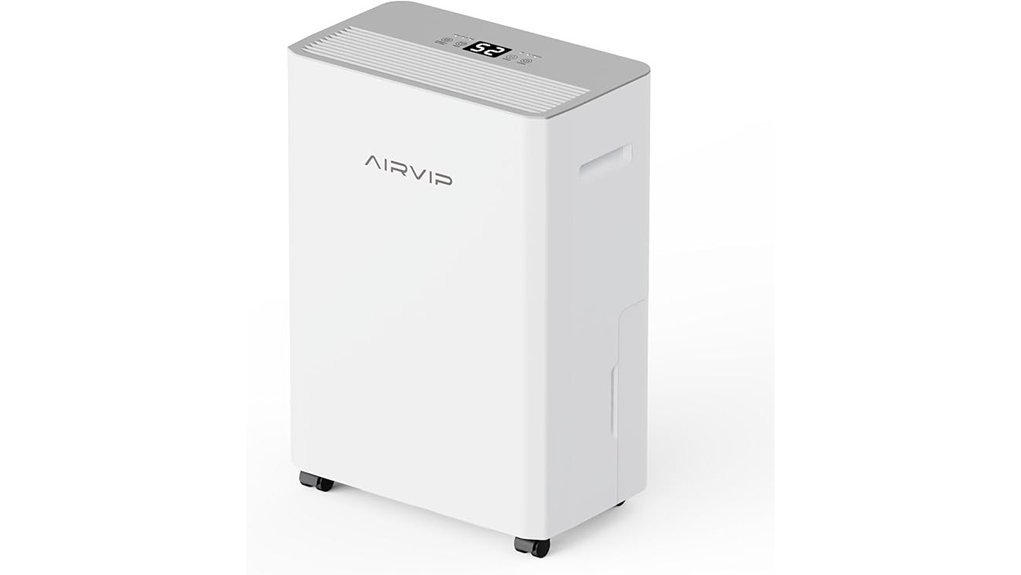
The AIRVIP 34 Pints Dehumidifier is a compact compressor model with a 2.5-liter tank, a gravity drain hose, adjustable humidity control, and continuous, comfort, and manual modes. Its advertised maximum of 34 pints per day is measured under warm, high-humidity conditions, so normal grow-room output may be lower.
The small footprint can help where floor space is limited, but the air inlet and outlet still need open clearance. The included drain hose is a major advantage for a sealed room because manual tank emptying can interrupt humidity control.
Best For: Small or medium rooms where a compact body and continuous drainage matter more than app control.
Why You’ll Like It:
- Compact compressor design with caster wheels and a handle.
- Adjustable setpoint and automatic cycling.
- Drain hose supports longer unattended runs.
Consider Before Buying:
- Claims such as higher efficiency and very fast defrosting are seller-provided and may vary in real use.
- The small tank is not ideal without a nearby drain.
- Brand support and replacement-part access are less established than with major appliance brands.
Midea 22 Pint Energy Star Dehumidifier (White)
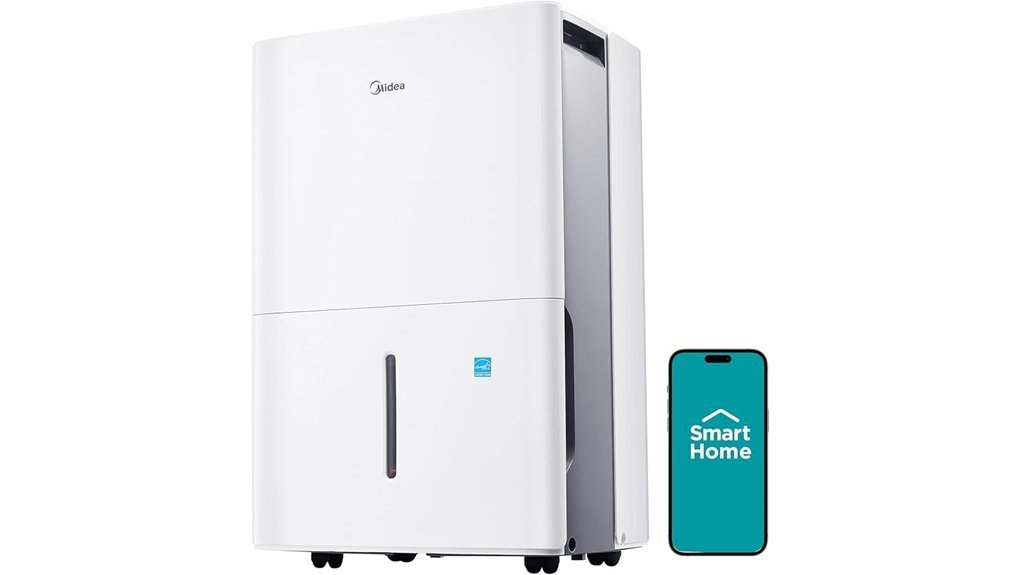
The Midea 22 Pint EasyDry is a straightforward compressor dehumidifier for smaller spaces. Midea lists a 22-pint daily capacity and room coverage up to 1,500 square feet for normal household use. It has a built-in timer, wheels, automatic operation, and a one-year warranty.
This exact model does not include smart or Wi-Fi control, so growers who need remote alerts or app-based automation should choose another option. Its main strengths are simple controls and support from an established appliance brand.
Best For: Small sealed rooms where simple operation and known-brand support are more important than advanced grow controls.
Why You’ll Like It:
- Clear 22-pint capacity from the manufacturer.
- Built-in timer and wheels for easy setup.
- Simple controls reduce the learning curve.
Consider Before Buying:
- No Wi-Fi or smart control on this model.
- No built-in pump, so continuous drainage depends on gravity.
- Capacity may be too low for dense canopies or high irrigation volume.
Dehumidifier for Basement and Large Rooms (1500 Sq. ft)
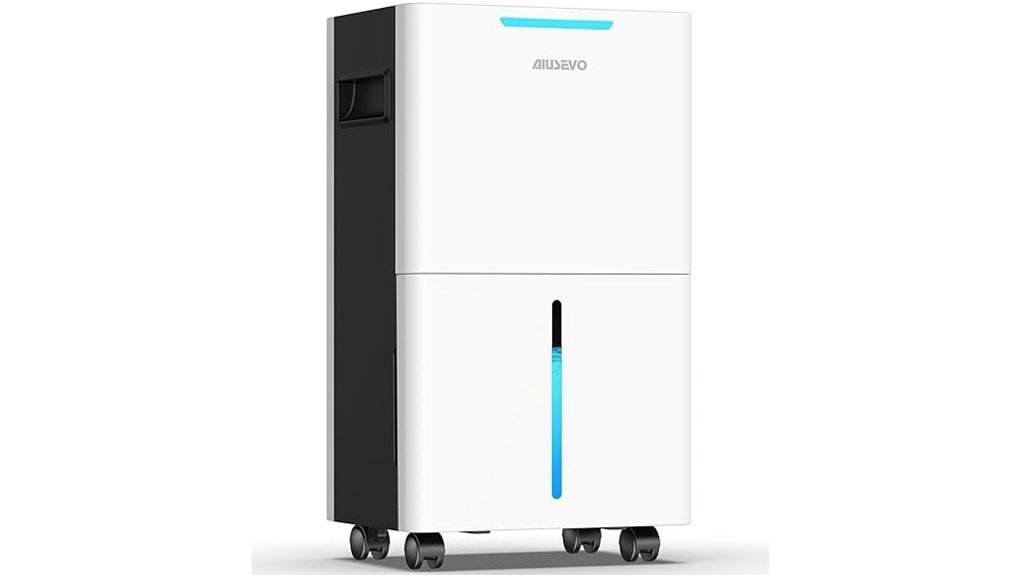
This AIUSEVO compressor dehumidifier is advertised to remove up to 21 pints of moisture per day at 95°F and 90% relative humidity. It offers DEHU, DRY, and CONT modes, adjustable humidity settings, a 24-hour timer, a 2-liter tank, and an included drain hose.
It can be considered for a small sealed room with a modest plant load, but the 1,500-square-foot seller coverage should not be treated as a grow-room sizing promise. Monitor humidity with a separate hygrometer during the first few light and dark cycles to confirm that it can keep up.
Best For: Budget-focused growers with a small room, low plant count, and easy access to a gravity drain.
Why You’ll Like It:
- Three operating modes and adjustable fan settings.
- Drain hose reduces bucket maintenance.
- Portable wheels and handles simplify placement.
Consider Before Buying:
- The 21-pint figure comes from hot, saturated test conditions.
- Brand documentation and long-term support are limited.
- It may struggle with a dense canopy or a strong lights-off humidity spike.
Glowells 21 Pints Dehumidifier for Home and RV
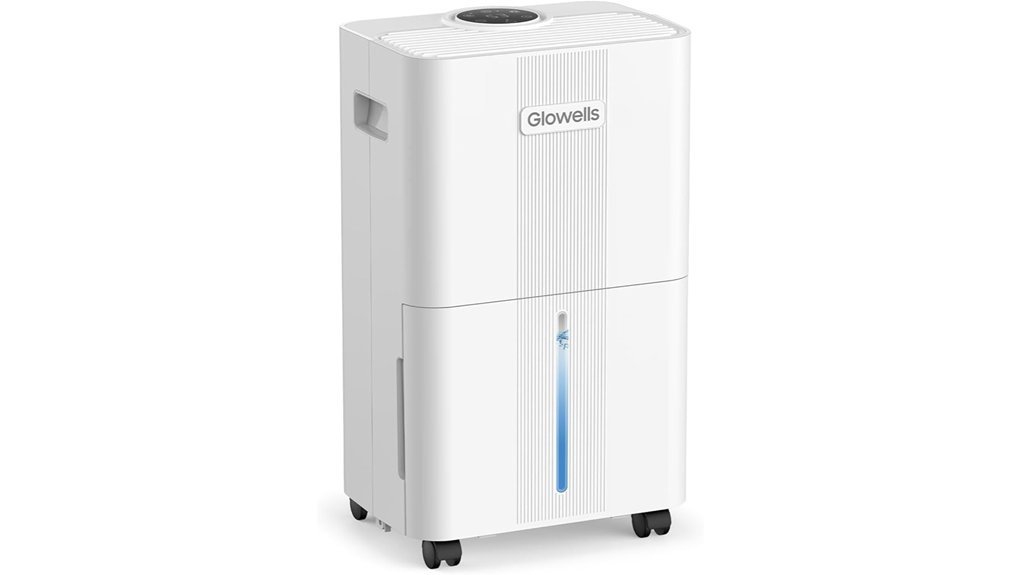
The Glowells 21 Pints Dehumidifier is another compact compressor option for small rooms. It offers adjustable humidity control, three operating modes, a 24-hour timer, a 2-liter tank, caster wheels, and an included drain hose for continuous operation.
Its moisture-removal rating is based on warm, humid conditions, so it is best treated as an entry-level option rather than a high-capacity grow-room machine. It makes the most sense where the plant count is low and the unit can drain continuously.
Best For: Small grow spaces where portability and basic continuous drainage are the main priorities.
Why You’ll Like It:
- Compact shape with wheels and a carry handle.
- Adjustable humidity and multiple operation modes.
- Drain hose supports hands-off water removal.
Consider Before Buying:
- The 2-liter tank may fill quickly without a drain connection.
- Seller coverage figures are not reliable grow-room sizing data.
- It lacks VPD control, remote alerts, and grow-system integration.
Factors to Consider When Choosing a Dehumidifier for a Sealed Grow Room
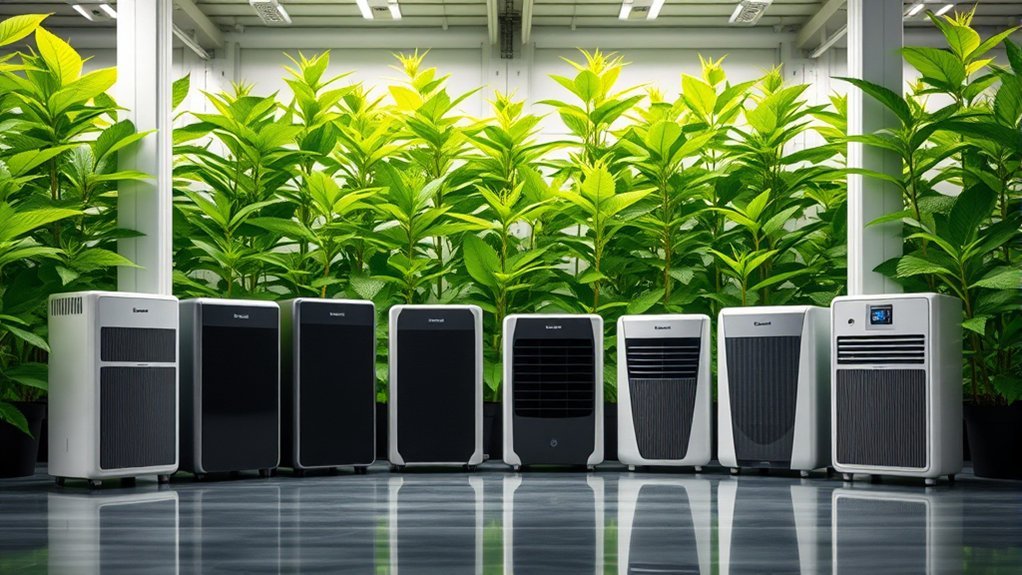
A sealed grow room needs stable moisture control through both the light and dark periods. The right machine should match the room’s actual water load, drain reliably, and work with your cooling and circulation system.
Size by Moisture Load, Not Only Square Feet
Square-foot labels are written for general household conditions. A better starting point is the amount of water added through irrigation and the amount that plants return to the air. Track how quickly relative humidity rises after watering and after the lights turn off. Choose enough capacity to lower humidity without forcing the unit to run at maximum output all day.
Compare Test Conditions
Daily pint or liter ratings are only useful when the test conditions are known. A unit rated at 95°F and 90% RH may collect much less water at 75°F and 55% RH. Do not assume an advertised 80-pint model is more than three times stronger than a 22-pint model unless both ratings use the same test standard.
Humidity and VPD Control
Different crops and growth stages need different humidity targets. A basic humidistat may be enough for a simple room, while a VPD-aware controller can provide finer control near the canopy. Use an independent sensor at plant height to confirm the dehumidifier’s built-in reading.
Continuous Drainage
Continuous drainage is one of the most important features in a sealed grow room. A full bucket shuts many units off, which can cause a fast humidity spike. Keep a gravity hose sloped downward with no kinks, or choose a pump-based drainage setup when the drain is above the unit.
Heat and Electrical Load
Compressor and desiccant dehumidifiers release heat into the room. That heat may increase air-conditioning demand and change VPD. Check the unit’s wattage, circuit load, plug condition, and required clearance. Avoid overloaded extension cords and keep water lines away from electrical connections.
Airflow and Placement
Leave open space around the intake and exhaust. Do not aim hot exhaust directly at one section of the canopy. Use circulation fans to mix the air, and place the humidity sensor away from a wet floor, direct mist, or the dry exhaust stream.
Automatic Restart and Maintenance
Auto restart is useful after a power interruption, but confirm that the unit returns to the correct humidity setting. Clean the filter on schedule, inspect the drain hose, and check the bucket switch. A dirty filter reduces airflow and can lower moisture-removal performance.
Frequently Asked Questions
What Size Dehumidifier Do I Need for a Sealed Grow Room?
Start with plant count, irrigation volume, room temperature, and the highest humidity reading during lights-off. A small tent may be served by a compact grow-specific or 20-to-35-pint compressor model, while a larger room or dense canopy may need a higher-capacity unit. Always confirm performance with an independent hygrometer.
How Often Should I Empty the Dehumidifier’s Water Tank?
In an active grow room, a small tank may fill in hours rather than days. Continuous drainage is the better setup. When using the bucket, check it at least daily until you know the room’s collection rate.
Can I Use a Dehumidifier During Flowering Stages?
Yes. Flowering plants can release a large amount of moisture, especially after watering and during the dark period. Set the target for your crop and growth stage, and avoid dropping humidity so low that plants show stress.
What Are the Signs of Over-Dehumidification in Plants?
Possible signs include unusually fast media drying, curled or crisp leaf edges, wilting despite adequate root moisture, and a VPD reading above the crop’s target range. Check temperature and root-zone conditions before assuming low humidity is the only cause.
Is It Safe to Run a Dehumidifier Overnight?
Many units are designed for extended operation, but safe use depends on correct placement, a sound electrical circuit, clear airflow, and reliable drainage. Test the full setup while you are present before relying on overnight or unattended use.
Should the Dehumidifier Run During Lights-Off?
Often yes, because room temperature drops and relative humidity can rise after the lights turn off. An automatic humidistat or controller is better than a fixed timer because it responds to the actual humidity spike.
How Do I Maintain My Dehumidifier for Optimal Performance?
Clean the filter, keep the intake and exhaust clear, inspect the drain hose for algae or kinks, wipe the tank, and confirm the humidity sensor with a separate meter. Also check that the unit restarts correctly after a power interruption.
Conclusion
The MARS HYDRO 18L/Day Compressor Dehumidifier is the best overall choice here for a typical sealed grow tent because it combines strong moisture removal with grow-specific sensing, ducting, and drainage. The AC Infinity HYDRONE 7 is the better choice for growers who want finer humidity and VPD control. For a larger room with a high moisture load, the Waykar 80 Pints provides the most headroom.
Whichever model you choose, size it by actual moisture load rather than square-foot marketing. Plan for continuous drainage, added heat, electrical demand, and lights-off humidity. A separate hygrometer at canopy height will help you confirm that the room stays stable through the full grow cycle.