Affiliate disclosure: This article contains Amazon affiliate links. We may earn a commission from qualifying purchases at no additional cost to you.
The best dehumidifier for a small grow room is usually a compressor model with an adjustable humidistat and continuous drainage. For most compact tents, the VIVOSUN AeroDrain D12 is the strongest overall match because it is designed around grow-space monitoring and remote control. The SPIDER FARMER 32-Pint Plant Dehumidifier is a practical alternative when you want ducted placement to limit heat inside the tent. The GoGuess 21-Pint Dehumidifier offers useful controls and quieter operation, while the Aiusevo AS280 is a straightforward value option for a small room with a moderate moisture load.
Quick Verdict
- Best Overall: VIVOSUN AeroDrain D12 for smart grow-tent control, sensor monitoring, and continuous drainage.
- Best for External or Ducted Placement: SPIDER FARMER 32-Pint Plant Dehumidifier for keeping more compressor heat away from the canopy.
- Best Quiet-Control Option: GoGuess 21-Pint Dehumidifier for sleep mode, a humidity display, and continuous drainage.
- Best Value: Aiusevo AS280 for straightforward humidity control in a small grow room without app connectivity.
Important sizing note: Do not choose a grow-room dehumidifier by advertised square footage alone. Plant count, irrigation, ventilation, room temperature, canopy density, and drying activity can create far more moisture than a normal bedroom or basement. Dehumidification ratings are also measured under specific temperature and humidity conditions, so real-world water removal may be lower.
Quick Comparison of the Best Small Grow Room Dehumidifiers
| Product | Best For | Claimed Maximum Capacity | Drainage | Main Limitation | Amazon |
|---|---|---|---|---|---|
| VIVOSUN AeroDrain D12 | Smart grow tents and automated environments | Up to 12 L/day under specified warm, humid test conditions | Tank or continuous drain | Higher cost and added heat from compressor operation | Check Price on Amazon |
| SPIDER FARMER 32-Pint Plant Dehumidifier | Ducted or outside-tent placement | Up to 32 pints/day under specified high-humidity test conditions | Tank or continuous drain | May be more capacity and equipment than a very small tent needs | Check Price on Amazon |
| GoGuess 21-Pint Dehumidifier | Small rooms where lower-noise operation and simple controls matter | Up to 21 pints/day at 95°F and 90% RH | 2.3 L tank or continuous drain | General-purpose design and modest capacity at normal room conditions | Check Price on Amazon |
| Aiusevo AS280 | Budget-conscious small rooms with moderate moisture | Up to 21 pints/day at 95°F and 90% RH | 2 L tank or continuous drain | General-purpose design without grow-system integration | Check Price on Amazon |
VIVOSUN AeroDrain D12 Smart Dehumidifier for Grow Tents
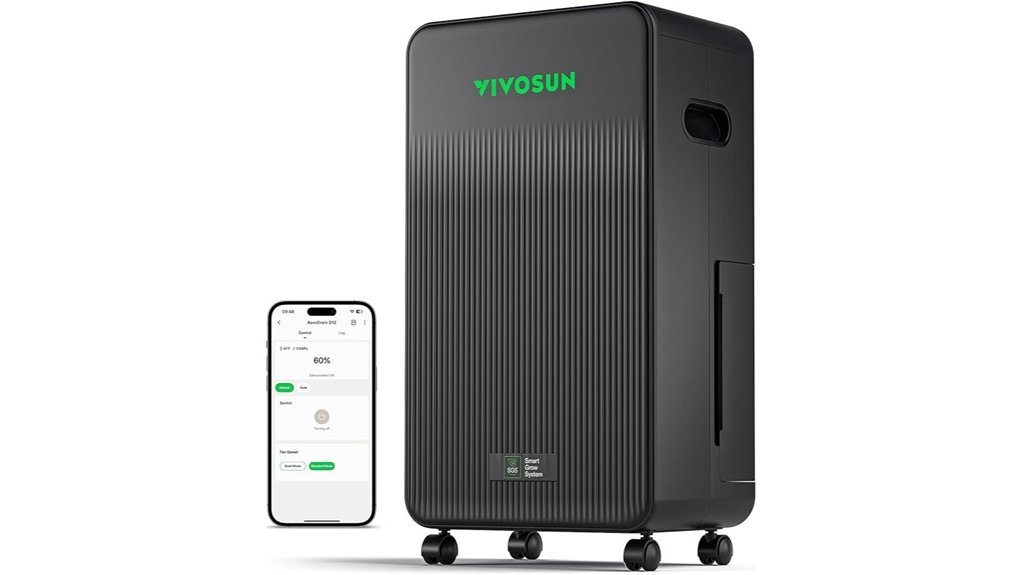
The VIVOSUN AeroDrain D12 is the most purpose-built option in this guide. Its compressor system, external temperature and humidity probe, app control, and integration with the VIVOSUN grow ecosystem make it easier to manage changing humidity through vegetative growth, flowering, and drying. The manufacturer rates it for up to 12 liters of moisture removal per day under warm, humid test conditions, but actual performance will vary with room conditions.
Why You’ll Like It
- Grow-focused sensing: The remote probe can be positioned near canopy height instead of relying only on air at the machine.
- Remote control: App connectivity helps you check conditions and adjust settings without repeatedly opening the tent.
- Flexible drainage: Use the tank for temporary operation or connect a drain line for longer, less hands-on cycles.
- Useful automation: Automatic shutoff and restart support more consistent operation when conditions change.
Best For: Growers who want a smart, purpose-built dehumidifier for a compact grow tent or small controlled room.
Who Should Avoid It: Buyers who only need occasional moisture control in a lightly humid propagation cabinet may not need its capacity or smart features.
Pros:
- Designed specifically for grow-space humidity management.
- High-precision probe and app-based monitoring improve control.
- Tank and continuous-drain options support different room layouts.
- Built-in handles and caster wheels simplify repositioning.
Cons:
- Costs more than a basic home dehumidifier.
- The compressor adds heat, so ventilation and placement still matter.
- Maximum extraction figures are based on warm, humid test conditions and should not be treated as guaranteed daily output.
SPIDER FARMER 32-Pint Plant Dehumidifier
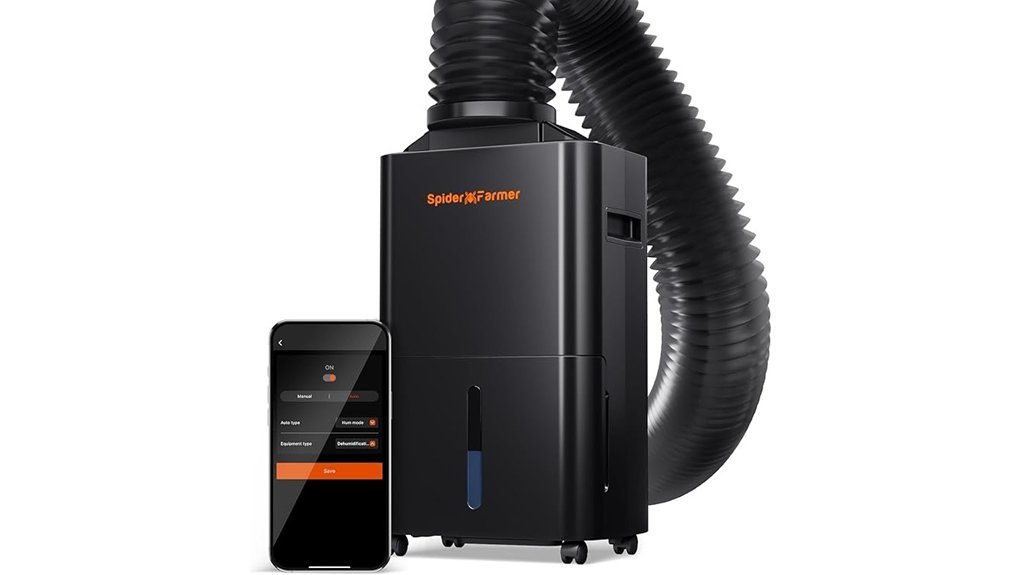
The SPIDER FARMER Plant Dehumidifier is a strong fit when compressor heat is a major concern. Its duct-compatible layout can help you place the main unit outside the grow tent while directing airflow where it is needed. The product is rated for up to 32 pints per day under specified high-temperature, high-humidity conditions and offers adjustable humidity control, multiple operating modes, a timer, and continuous drainage.
Why You’ll Like It
- Heat-management flexibility: External or ducted placement can reduce the amount of equipment sitting beside the plants.
- Adjustable humidistat: Set a target range instead of running the machine continuously without feedback.
- Continuous drainage: A drain connection is valuable during late flower or drying, when water collection can increase quickly.
- Portable design: Rotating wheels make it easier to reposition as the room layout changes.
Best For: Small to medium grow tents where duct routing or outside-tent placement is practical.
Who Should Avoid It: Growers with a tiny enclosure, minimal moisture load, or no safe route for warm exhaust air may find it unnecessarily large.
Pros:
- Grow-oriented duct design can help manage compressor heat.
- Adjustable humidity settings support different plant stages.
- Multiple modes, timer controls, and continuous drainage improve convenience.
- Washable filter reduces routine consumable costs.
Cons:
- The original product name is sometimes presented with inconsistent pint figures, so confirm the current listing and rating label before ordering.
- Duct setup takes more planning than a basic freestanding unit.
- Fan and compressor sound may be noticeable in a quiet room.
GoGuess 21-Pint Dehumidifier
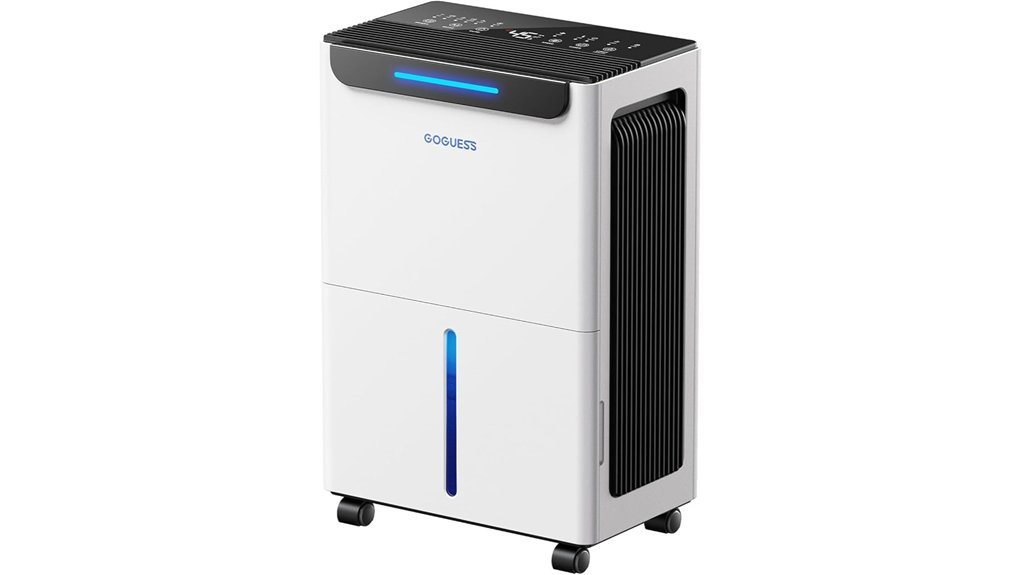
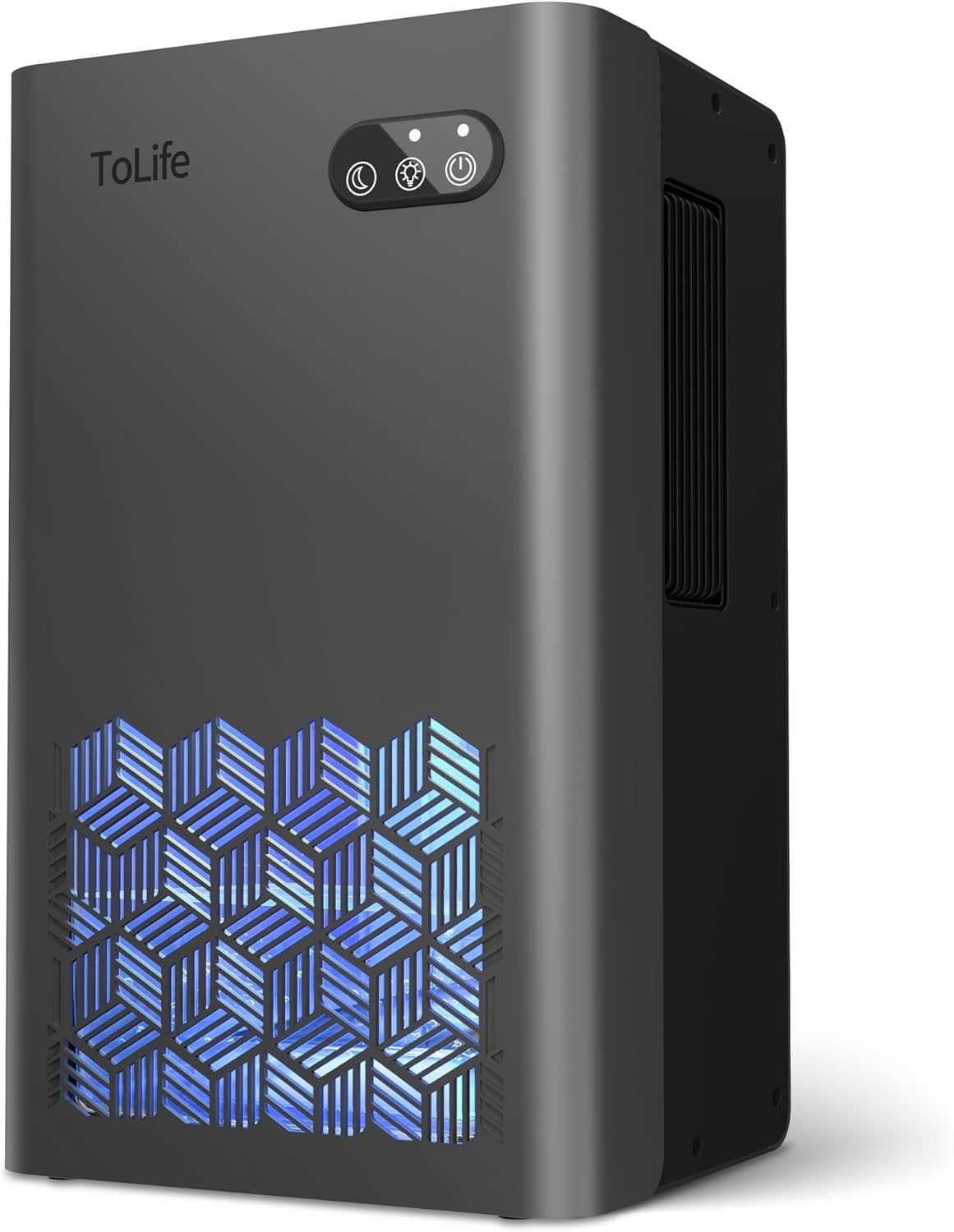
The GoGuess 21-Pint Dehumidifier is a general-purpose compressor model that can suit a small grow room with a moderate moisture load. Its 21-pint daily rating is measured at 95°F and 90% relative humidity, so output will be lower in cooler or less humid conditions. It provides DEHU, TURBO, and SLEEP modes, an adjustable humidity setting, a 24-hour timer, a 2.3-liter tank, and continuous drainage.
Why You’ll Like It
- Useful operating modes: DEHU mode maintains a selected target, TURBO increases airflow, and SLEEP reduces fan noise.
- At-a-glance monitoring: The humidity display and color indicator make room conditions easier to check.
- Continuous drainage: The included drain hose reduces interruptions when the tank would otherwise fill quickly.
- Compact compressor design: It offers substantially more practical moisture removal than mini thermoelectric units.
Best For: Small grow rooms where simple humidity control, a sleep setting, and continuous drainage are more important than app integration.
Who Should Avoid It: Growers with a heavy late-flower or drying load should measure their daily moisture production before relying on a 21-pint class unit.
Pros:
- Adjustable humidity control with three operating modes.
- Continuous drainage and automatic full-tank shutoff.
- Sleep mode is useful when the room is near a living or working area.
- Washable filter and portable format simplify routine use.
Cons:
- Not specifically designed around grow-tent sensors or automation.
- The maximum 21-pint figure is based on unusually warm, humid test conditions.
- The 2.3-liter tank may fill quickly if continuous drainage is not used.
Aiusevo AS280 21-Pint Dehumidifier
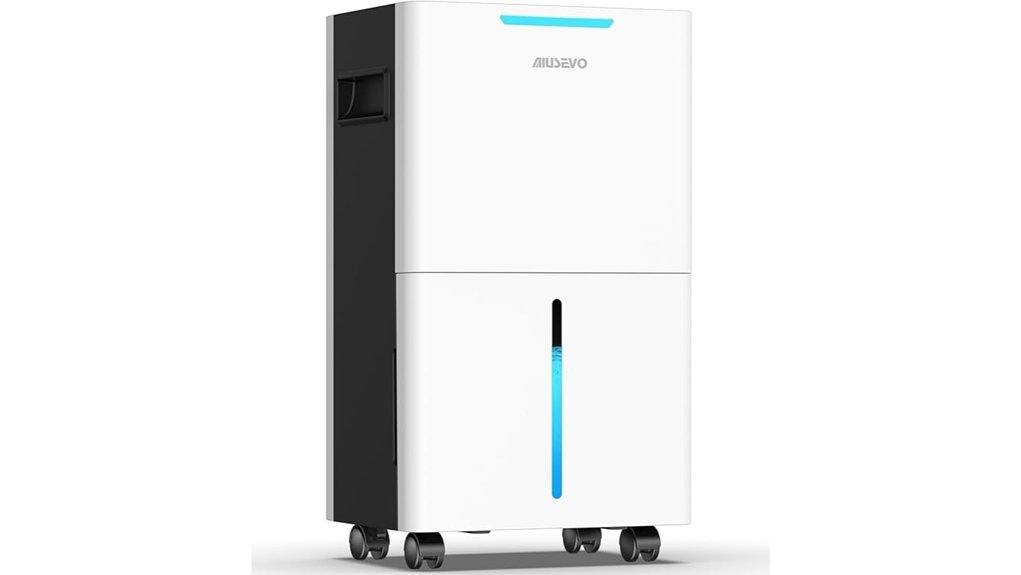
The Aiusevo AS280 is a general-purpose compressor dehumidifier that can work well in a small grow room with a moderate moisture load. It is rated to remove up to 21 pints per day at 95°F and 90% relative humidity, provides adjustable humidity control from 30% to 80%, and includes both a removable tank and a continuous-drain option. Unlike the VIVOSUN model, it does not integrate with a grow-control app, but its straightforward controls may be enough for a basic room.
Why You’ll Like It
- Simple humidity control: Set the target humidity and let the unit cycle as conditions change.
- Three operating modes: Dehumidify, drying, and continuous modes provide useful flexibility.
- Two drainage methods: The 2-liter tank works for short runs, while the included hose supports longer operation.
- Easy movement: Handles and caster wheels help with cleaning and room reconfiguration.
Best For: Budget-conscious growers with a small sealed or semi-sealed room and a moderate, measured moisture load.
Who Should Avoid It: Growers who need canopy-level sensor placement, app alerts, ducted installation, or integration with other environmental controls should choose a grow-specific model.
Pros:
- Useful balance of compressor capacity and straightforward controls.
- Adjustable target humidity and continuous mode.
- Includes a drain hose for unattended drainage.
- Washable filter and portable design simplify maintenance.
Cons:
- Not designed specifically for grow tents.
- Advertised square-foot coverage does not account for plant transpiration or irrigation load.
- The 21-pint rating is measured under unusually warm and humid test conditions, so normal-room output may be lower.
Factors to Consider When Choosing a Dehumidifier for a Small Grow Room
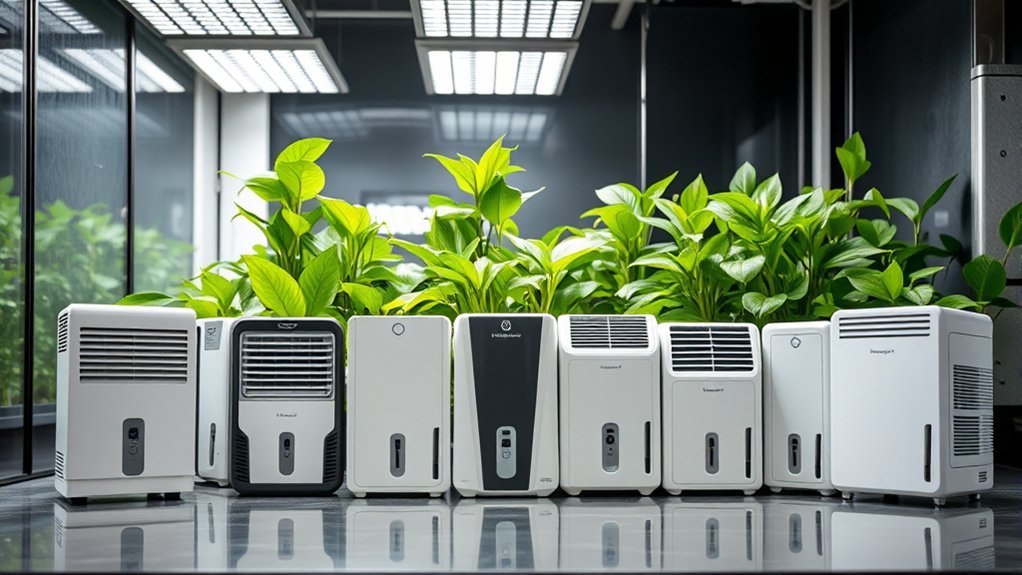
A grow room can produce much more moisture than an ordinary room of the same size. Use the following checks to compare models instead of relying only on a large square-foot number printed in a listing.
Measure the Real Moisture Load
Track how quickly relative humidity rises after watering and when the lights turn off. Plant size, irrigation volume, number of containers, airflow, outdoor humidity, and whether the room is used for drying all affect the load. When possible, measure how much water the current unit collects during a 24-hour period and choose enough extra capacity for humid days and later growth stages.
Compare Capacity at the Same Test Conditions
Pints-per-day and liters-per-day figures are only meaningful when the test temperature and relative humidity are stated. A unit rated at 95°F and 90% RH will usually collect less water at cooler, drier conditions. Compare models using the same rating conditions and leave a practical capacity margin.
Choose a Humidistat, Not Just an On-Off Switch
An adjustable humidistat lets the dehumidifier cycle around a target rather than drying the room continuously. This can reduce energy waste and help prevent overly dry air. Use a separate calibrated hygrometer near canopy height to confirm the machine’s reading.
Plan for Continuous Drainage
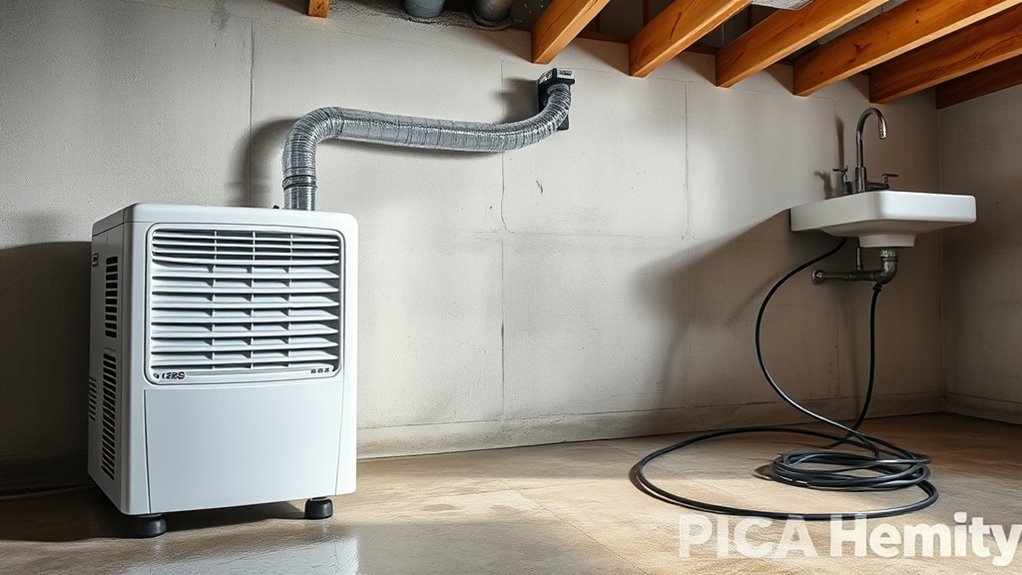
A small internal tank can fill quickly in an active grow room. Continuous drainage is usually the more practical option, provided the hose has a steady downward path to a suitable drain. Check for kinks, standing water, loose connections, and algae buildup during routine maintenance.
Account for Heat and Airflow
Compressor dehumidifiers release heat into the surrounding space. Leave the manufacturer’s recommended clearance around the intake and exhaust, avoid blowing hot air directly at leaves, and include the dehumidifier’s heat load when sizing ventilation or cooling. Duct-compatible models can be useful when the main unit can safely sit outside the tent.
Consider Nighttime and Late-Stage Humidity
Relative humidity often rises when lights turn off and air temperature drops. Dense canopies and drying plant material may also increase demand. A timer alone is not enough if humidity changes unpredictably, so prioritize automatic humidity control and verify conditions at the wettest time of the cycle.
Noise, Energy, and Maintenance
Compare rated power, fan settings, compressor cycling, filter access, and drain setup. Clean the filter on the manufacturer’s schedule and keep the air path clear. A slightly larger unit that cycles efficiently may be more practical than an undersized model that runs continuously, but excessive oversizing can cause short cycling and uneven control.
Safety note: Keep plugs, extension connections, and power strips away from irrigation water and floor runoff. Use a grounded outlet that matches the product label, do not block the air intake or exhaust, and follow the manufacturer’s placement, drainage, and electrical instructions.
Before You Buy Checklist
- Measure the grow room or tent, but size primarily for moisture load rather than floor area.
- Confirm the capacity rating and the temperature and humidity conditions used for that rating.
- Choose an adjustable humidistat and verify it with a separate hygrometer.
- Confirm that continuous drainage will reach a suitable drain without an uphill run.
- Plan where compressor heat and exhaust air will go.
- Check voltage, clearance, operating-temperature range, and filter access.
- Confirm the current product title, model number, and included accessories on Amazon before ordering.
Frequently Asked Questions
What Humidity Should a Small Grow Room Have?
There is no single correct setting for every crop or growth stage. Seedlings and young plants may tolerate higher humidity than dense flowering canopies or drying material. Follow crop-specific guidance, watch for condensation, and use a reliable hygrometer near canopy height instead of relying only on the dehumidifier display.
How Many Pints per Day Do I Need?
Start with the room’s measured moisture load. If an existing unit collects several pints per day and still cannot hold the target humidity, you need more usable capacity, better airflow, less moisture entering the room, or a combination of these. Leave extra capacity for late-stage growth, wet weather, and lights-off periods.
Can a Mini Thermoelectric Dehumidifier Handle a Grow Tent?
Usually not when the tent contains actively transpiring plants. Small thermoelectric models may help in a lightly humid storage box, seed cabinet, or other low-load enclosure, but their water-removal rate is generally much lower than a compressor dehumidifier. Compare actual daily capacity before buying.
Should the Dehumidifier Go Inside or Outside the Grow Tent?
Either placement can work. Inside placement gives direct moisture control but adds heat and uses floor space. Outside placement can reduce heat near the plants, but it requires a suitable duct or air-exchange layout. Keep the humidity sensor near the canopy and avoid directing dry, warm exhaust at foliage.
Is Continuous Drainage Worth It?
Yes, especially during humid periods or drying. It reduces the chance that a full tank will stop the unit. The drain must flow reliably, and the hose should be checked regularly for kinks, leaks, clogs, and standing water.
Will a Dehumidifier Heat the Grow Room?
Yes. A compressor dehumidifier returns heat to the room while it removes moisture. The temperature increase depends on the unit, room size, operating time, ventilation, and other equipment. Include that heat when planning cooling and airflow.
How Often Should I Clean the Filter?
Follow the product manual and inspect the filter more often in dusty rooms. A clogged filter reduces airflow and can lower water-removal performance. Also clean the tank, drain hose, intake, and exhaust area as part of routine grow-room sanitation.
Final Recommendation
Choose the VIVOSUN AeroDrain D12 when you want the best overall combination of grow-focused sensing, app control, and drainage flexibility. Choose the SPIDER FARMER 32-Pint Plant Dehumidifier when ducted or outside-tent placement is the priority. Choose the GoGuess 21-Pint Dehumidifier when sleep mode and simple controls matter, or the Aiusevo AS280 when you want a straightforward value model for a moderate moisture load.
Whichever model you select, confirm the current listing, size it for the room’s real moisture production, provide continuous drainage when possible, and monitor both humidity and temperature at canopy height.