For an 800-square-foot apartment, the best dehumidifier is usually a compressor model in the 20- to mid-30-pint range, not a tiny thermoelectric unit with a large marketing coverage claim. The Midea 22-Pint model is the best-balanced choice for normal apartment humidity, while the VEAGASO 34-Pint and PLUSCENT 32-Pint models provide more moisture-removal headroom for very damp rooms, laundry drying, or persistent condensation.
Quick Answer: Choose the Midea 22-Pint Dehumidifier for a typical 800 sq. ft. apartment with mild to moderate dampness. Choose the VEAGASO 34-Pint when humidity is more severe or you want an included drain hose. The PLUSCENT 32-Pint is a practical alternative when laundry-drying mode, low advertised operating noise, and simple mobility matter.
Important: Coverage numbers are marketing limits, not a guarantee that one machine will dry every closed room equally. Apartment layout, open doors, temperature, air circulation, and starting humidity all affect performance.
Key Takeaways
- Best overall: Midea 22-Pint for balanced capacity, established support, simple controls, and apartment-friendly sizing.
- Best for very damp apartments: VEAGASO 34-Pint for stronger moisture removal, three operating modes, and an included gravity-drain hose.
- Best for laundry drying: PLUSCENT 32-Pint for its dedicated DRY mode, touch controls, timer, wheels, and continuous-drain option.
- Avoid undersizing: Mini semiconductor models that remove roughly 1 liter per day are better for closets, bathrooms, or other small enclosed areas—not an entire 800 sq. ft. apartment.
Quick Comparison
| Model | Advertised Capacity | Best Use | Drainage | Main Limitation | Check Details |
|---|---|---|---|---|---|
| Midea 1,500 Sq. Ft. | 22 pints/day | Typical 800 sq. ft. apartment | Tank or gravity drain | Drain hose is not included | Check Amazon |
| VEAGASO 2,500 Sq. Ft. | 34 pints/day | Very damp apartments and laundry areas | 2L tank or included hose | Small tank for its capacity | Check Amazon |
| PLUSCENT 2,500 Sq. Ft. | 32 pints/day | Laundry drying and flexible daily use | 2L tank or included hose | Newer brand with less established support history | Check Availability |
Midea 1,500 Sq. Ft. 22-Pint Dehumidifier — Best Overall
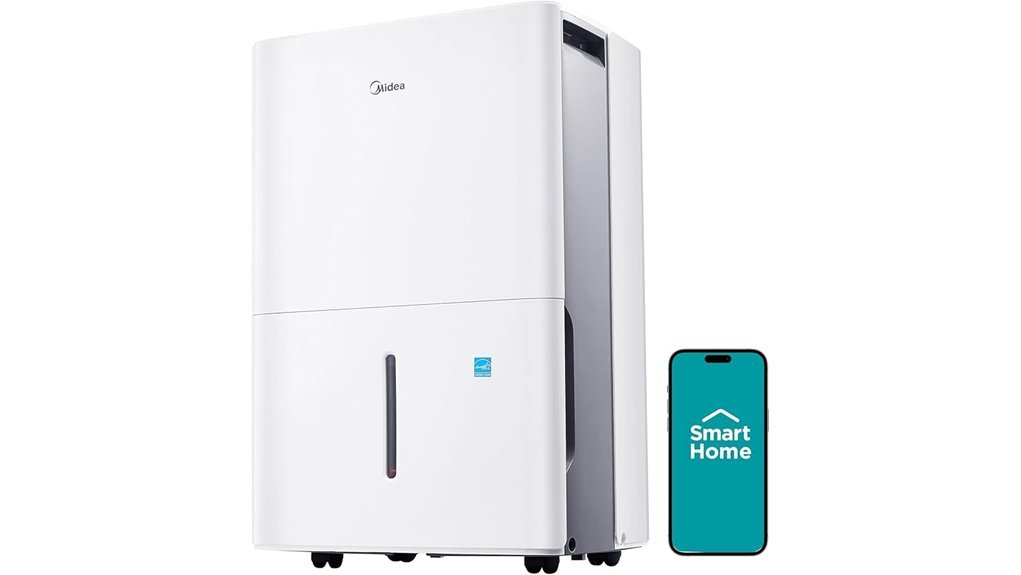
The Midea 22-Pint model is the most sensible starting point for many 800-square-foot apartments. Its capacity is closer to what a mildly or moderately damp apartment usually needs, so it offers a better balance of moisture removal, footprint, and electricity use than oversized 80-pint models. It is designed for spaces up to 1,500 sq. ft., has four wheels for easier movement, and includes a timer for scheduled operation.
This exact model is a straightforward dehumidifier rather than an app-controlled unit. That simplicity can be a benefit for buyers who want dependable humidity control without pairing an account, Wi-Fi network, or voice assistant. Use the built-in humidistat, place the unit in the most open central area available, and leave interior doors open when practical so humid air can circulate toward the machine.
Best For: Renters and apartment owners dealing with musty air, window condensation, moderate summer humidity, or damp bedrooms and living areas.
Who Should Avoid It: Buyers with active leaks, standing water, extremely wet conditions, or a need to drain upward to a sink. This model uses gravity drainage and does not have a built-in pump.
Pros:
- 22-pint daily capacity is well matched to many small and medium living spaces.
- Four-wheel design makes room-to-room movement easier.
- Timer, washable filter, auto shutoff, and auto-restart improve everyday convenience.
- One-year manufacturer warranty provides a clear basic support period.
Cons:
- No smart control on this exact model.
- A drain hose must be purchased separately for continuous drainage.
- At roughly 32 pounds, it is portable on its wheels but not especially light to carry.
- A compressor dehumidifier will still create noticeable fan and compressor sound in a quiet bedroom.
VEAGASO 2,500 Sq. Ft. 34-Pint Dehumidifier — Best for Very Damp Apartments
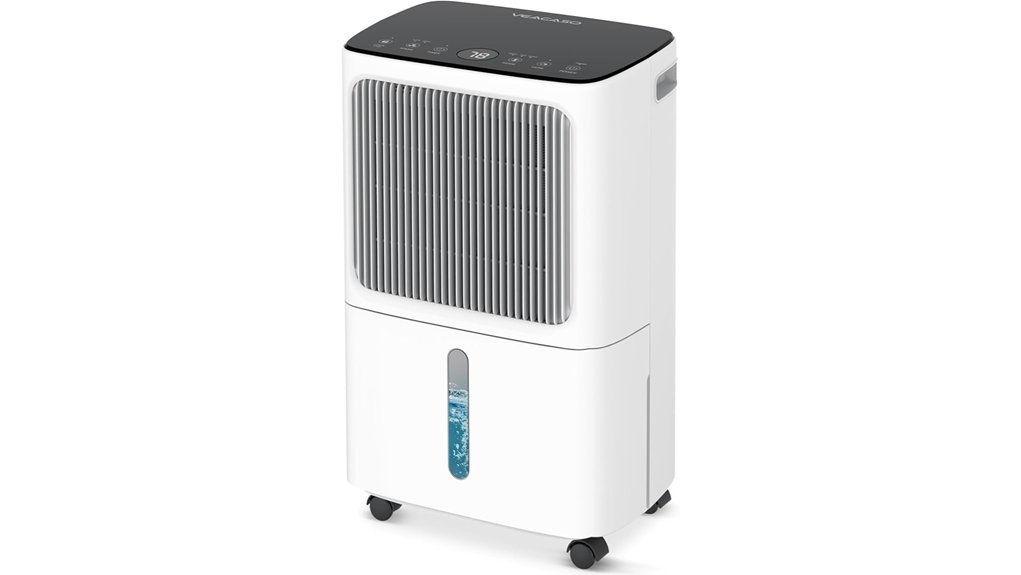
The VEAGASO VG380 offers more moisture-removal headroom than the Midea, making it a stronger fit for an 800-square-foot apartment that regularly feels very damp. Its advertised 34-pint daily capacity, adjustable humidity control, automatic defrost, 24-hour timer, and three operating modes give it useful flexibility for living rooms, bedrooms, bathrooms, and indoor laundry areas.
The DEHU mode is for normal humidity control, DRY mode increases airflow for damp laundry, and CONT mode keeps the unit running for heavy moisture loads. The included gravity-drain hose is an important convenience because the 2-liter tank can fill quickly in humid weather. Continuous drainage works best when the hose slopes downward without kinks to a floor drain or another suitable low drain point.
Best For: Very damp apartments, open living areas, laundry drying, or households that routinely collect a large amount of water.
Who Should Avoid It: Light sleepers who plan to place the unit beside the bed, or renters who have no practical downward drain location and do not want to empty a small tank frequently.
Pros:
- 34-pint advertised daily capacity gives useful headroom for severe humidity.
- DEHU, DRY, and CONT modes cover everyday dehumidifying and laundry needs.
- Includes a gravity-drain hose for continuous operation.
- Real-time humidity display, timer, washable filter, handle, and caster wheels improve usability.
Cons:
- The 2-liter tank is small compared with the unit’s moisture-removal capacity.
- Continuous drainage depends on gravity; it cannot push water upward.
- The advertised coverage area should not be treated as a guarantee for multiple closed rooms.
- Higher-capacity operation may be more noticeable in a quiet apartment.
PLUSCENT 32-Pint Dehumidifier — Best for Laundry Drying
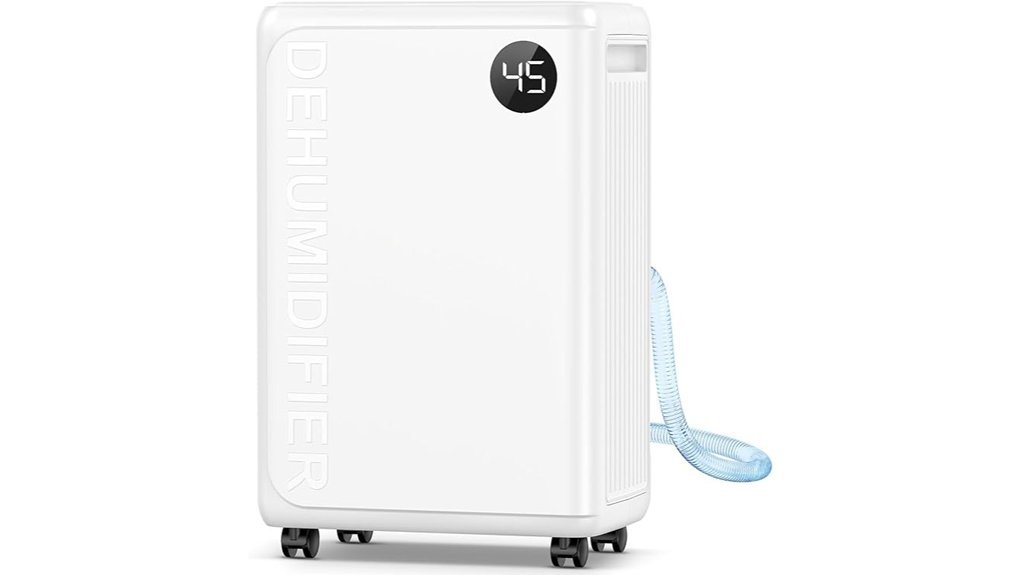
The PLUSCENT 32-Pint Dehumidifier is another compressor-based option with enough advertised capacity for a damp 800-square-foot apartment. Its three modes—DEHU, CONT, and DRY—make it especially useful for buyers who want one machine for general humidity control and faster indoor laundry drying. The touch panel, 24-hour timer, auto defrost, auto restart, washable filter, wheels, and handles support easy daily operation.
The listing states that its maximum 32-pint removal figure is measured in hot, highly humid test conditions, so real-world collection will usually be lower in a cooler apartment. That is normal for portable dehumidifiers and is why the unit should be judged by how well it reaches and maintains your target humidity—not by how fast it fills the tank on one day.
Best For: Buyers who want a flexible mid-capacity machine for bedrooms, living areas, bathrooms, or indoor clothes drying.
Who Should Avoid It: Buyers who prioritize a long-established appliance brand, extensive service coverage, or a large bucket that can run for long periods without drainage.
Pros:
- 32-pint advertised capacity is suitable for many damp apartment conditions.
- DRY mode can help remove moisture released by indoor laundry.
- Includes a gravity-drain hose and a 2-liter tank with auto-stop protection.
- Touch controls, timer, auto restart, child lock, wheels, and handles add convenience.
Cons:
- The 2-liter tank may require frequent emptying without continuous drainage.
- The maximum capacity is based on hot, humid test conditions.
- Brand support and long-term parts availability are less established than with major appliance brands.
- Amazon offer availability can change, so confirm the seller, return policy, and warranty before ordering.
Factors to Consider When Choosing a Dehumidifier for an 800 Square Feet Apartment
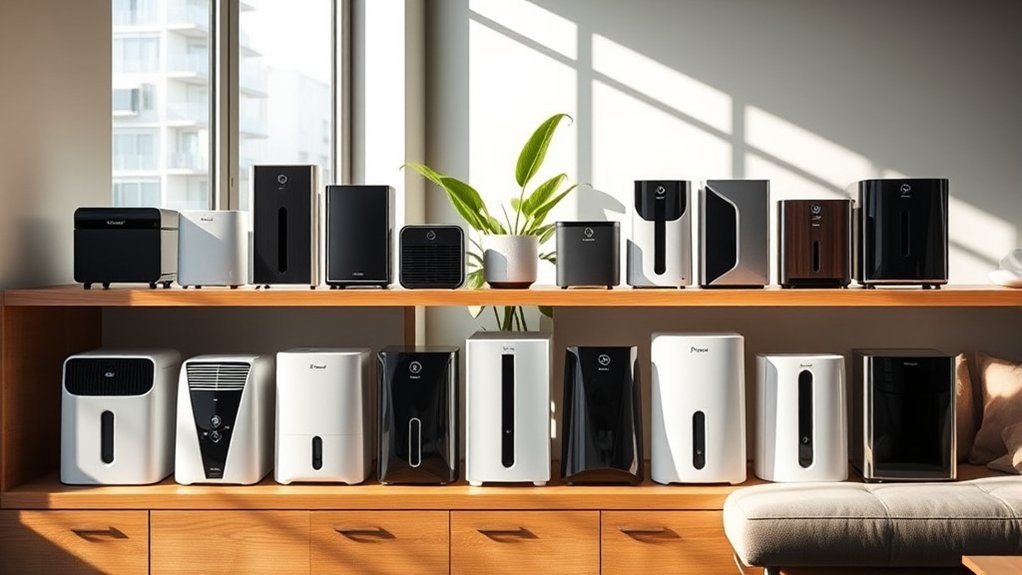
The right dehumidifier depends on more than the apartment’s floor area. Starting humidity, temperature, room layout, drainage access, noise tolerance, and how often you dry laundry indoors can change the capacity you need. Use the following checklist to choose between the three remaining models.
Choose Capacity by Dampness, Not Marketing Coverage
A 20- to 30-pint compressor model is often a practical starting point for a small or medium space that feels slightly or moderately damp. A 30- to 40-pint model gives more headroom when the apartment feels consistently damp, shows frequent condensation, or collects water quickly. An advertised “2,500 sq. ft.” coverage number does not mean the unit is automatically too large; the daily pint rating is the more useful comparison.
For a typical 800 sq. ft. apartment, the Midea 22-Pint is the balanced choice. Move to the VEAGASO 34-Pint or PLUSCENT 32-Pint when moisture is heavier, the floor plan is open, or indoor laundry adds a regular humidity load.
Compressor vs. Thermoelectric Dehumidifiers
Compressor dehumidifiers use a refrigerated coil and are the better fit for controlling humidity across an apartment. Small thermoelectric or semiconductor models are quieter and lighter, but many remove only around 1 liter—or roughly 2 pints—per day under favorable conditions. That can help in a closet, small bathroom, cabinet, or RV, but it is not comparable to a 22- to 34-pint compressor unit.
Apartment Layout and Airflow
One portable unit works best in an open floor plan. Closed bedroom and bathroom doors restrict airflow, so humidity can remain higher in rooms far from the machine. Place the dehumidifier in a central open area, leave several inches around the air intake and exhaust, and open interior doors when possible. A small circulating fan can also help move humid air toward the unit.
Drainage Options
Manual tank emptying is simple but can become tiring during humid weather. Continuous gravity drainage is more convenient when you have a floor drain, low shower drain, or another approved drain point below the outlet. The hose must slope downward continuously. None of the three recommended models has a built-in pump, so they cannot send water uphill to a higher sink.
Noise and Placement
Compressor dehumidifiers create both fan noise and a low compressor hum. Advertised decibel figures are useful for comparison, but room acoustics and fan speed affect what you hear. Place the machine on a level floor, keep it away from vibrating furniture, and use a lower fan speed at night when available. For a studio apartment, consider running the unit more aggressively during the day and allowing it to cycle by humidistat overnight.
Tank Size and Maintenance
A small tank is not a sign of weak moisture removal, but it does mean more frequent emptying. Clean the washable filter on the schedule in the manual, keep the intake free of pet hair and dust, and inspect the drain hose for kinks or buildup. After moving a compressor dehumidifier, keep it upright and follow the manufacturer’s waiting instructions before restarting it.
Energy Efficiency and Run Time
A properly sized unit with an accurate humidistat can cycle off after reaching the target, while an undersized unit may run constantly without controlling the whole space. Set a reasonable humidity target instead of forcing the machine to run continuously. In many apartments, a setting around 45% to 50% provides a comfortable balance without making the air excessively dry.
Before You Buy Checklist
- Measure the open area the machine will actually serve.
- Check whether the apartment is mildly damp, very damp, or wet.
- Confirm that the electrical outlet is grounded and easy to reach without an extension cord.
- Decide whether you will empty the tank or use gravity drainage.
- Measure the path to the drain and confirm the hose can slope downward.
- Check the product’s current seller, return terms, warranty, and included accessories.
- Verify that you have enough clearance around the intake and exhaust.
Frequently Asked Questions
What Size Dehumidifier Do I Need for an 800-Square-Foot Apartment?
A 20- to 30-pint compressor dehumidifier is a strong starting point for mild or moderate dampness. Consider a 30- to 40-pint model when the apartment is consistently damp, has frequent window condensation, or includes indoor laundry drying. Choose by daily pint capacity and moisture severity rather than the largest advertised coverage number.
Can One Dehumidifier Handle the Whole Apartment?
It can work well in an open layout, but closed doors and narrow hallways reduce airflow. Put the unit in a central location and leave interior doors open when practical. Separate closed rooms may need more operating time, fan-assisted circulation, or a second small unit for spot control.
How Often Should I Empty the Dehumidifier Tank?
Empty it whenever the full-tank indicator appears. During humid weather, a 2-liter tank may fill more than once per day. Continuous gravity drainage is the easiest option for unattended use when a suitable low drain is available.
What Is the Ideal Humidity Level for My Apartment?
A common target is between 30% and 50% relative humidity, with many people finding approximately 45% to 50% comfortable. Avoid setting the unit lower than necessary because that can increase run time and electricity use.
Are Mini “1,000 Square Foot” Dehumidifiers Good for an Entire Apartment?
Usually not. Many mini units use thermoelectric technology and remove only a small fraction of the water collected by a 22- to 34-pint compressor model. They are more appropriate for a closet, small bathroom, cabinet, or another enclosed spot with a light moisture problem.
Does a Dehumidifier Remove Mold?
No. A dehumidifier can reduce the moisture that supports future mold growth, but it does not remove existing mold or repair a leak. Fix the moisture source and clean or remediate affected materials using appropriate guidance.
Should I Run a Dehumidifier All Day?
It may run for long periods when first started or during very humid weather. After the apartment reaches the selected humidity, the humidistat should allow the compressor to cycle. Continuous mode is better reserved for unusually heavy moisture, laundry drying, or supervised drying after a water event.
Can I Use an Extension Cord?
Use a properly grounded wall outlet and follow the manufacturer’s electrical instructions. Portable dehumidifiers draw substantial power, so ordinary household extension cords can overheat or create a voltage-drop risk.
Final Recommendation
Choose the Midea 22-Pint for the best overall balance in a typical 800-square-foot apartment. It is appropriately sized for moderate humidity, easy to move, and supported by a major appliance brand.
Choose the VEAGASO 34-Pint when the apartment is consistently very damp, you dry laundry indoors, or you want an included drain hose and stronger capacity.
Choose the PLUSCENT 32-Pint when flexible modes, laundry drying, and low advertised operating noise are priorities—but confirm the current Amazon seller, warranty, and return terms before purchase.
The best result will come from choosing the right pint capacity, placing the unit where air can circulate, and addressing leaks or ventilation problems that keep adding moisture. For most readers, the Midea is the safest starting point; the two 32- to 34-pint models are better when humidity is severe enough to justify extra capacity.