Affiliate disclosure: As an Amazon Associate, we may earn from qualifying purchases at no extra cost to you.
By Editorial Team · Reviewed for accuracy · Last updated July 7, 2026
Best Dehumidifiers for 700 Square Feet: Quick Picks
If you need the best dehumidifier for 700 square feet, start with the room’s dampness level, not only the advertised coverage number. For a lightly damp 700 sq. ft. room, a 30- to 39-pint compressor dehumidifier is the safer main pick. For a very wet basement, choose a larger compressor unit with continuous drainage. A 95 oz semiconductor model can help in a bathroom, closet, RV, or bedroom corner, but it should not be your only moisture-control plan for a damp 700 sq. ft. basement.
For most 700 sq. ft. homes, the SEMKAP 32-pint model is the strongest fit in this list because it has compressor-based moisture removal and a drain hose. Choose a compact 95 oz model only when you value low noise, portability, and small-room maintenance more than fast moisture removal.
| Pick | Best for | Moisture capacity signal | Drainage | Watch-out |
|---|---|---|---|---|
| SEMKAP 2500 Sq.Ft Dehumidifier | Best overall for damp 700 sq. ft. rooms | 32 pints/day at 95°F, 90% RH | Tank or drain hose | 2.5L tank can fill fast |
| 2500 Sq.Ft Smart Humidity Control Dehumidifier | Smart control on a budget | 32 pints/day listed | Tank or gravity drain | Brand/model should be confirmed in CMS |
| Glowells 21-Pint Dehumidifier | Moderate humidity and bedrooms | 21-pint class | Tank or hose | May be undersized for very wet basements |
| GoGuess 1600 Sq.ft Dehumidifier | Mid-size rooms with mode control | 21 pints/day at 95°F, 90% RH | Tank or hose | Lower capacity than 32-pint options |
| OWAAE / ToLife / OKYUK 95 oz models | Quiet bedrooms, bathrooms, closets, RVs | Small semiconductor category | Manual tank | Not ideal as a full-room 700 sq. ft. basement solution |
| AEOCKY 4500 Sq.Ft Energy Star Dehumidifier | Large, high-humidity rooms | Max 80-pint marketing rating | Tank or drain hose | Oversized for many 700 sq. ft. rooms |
Quiet Dehumidifier for Home with 95oz Tank
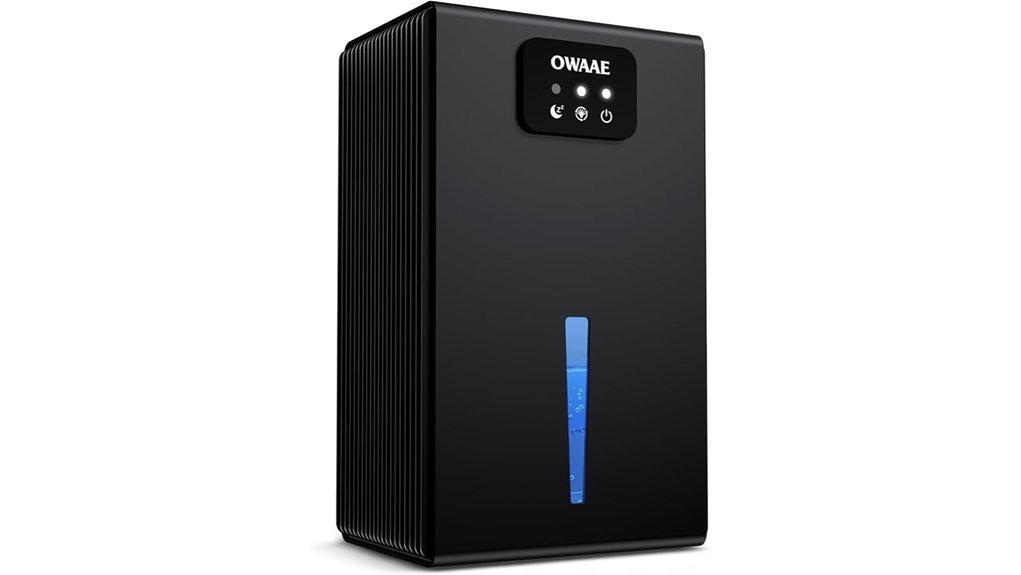
The OWAAE TZ-C4S is best treated as a quiet maintenance dehumidifier for a bedroom, bathroom, closet, nursery, RV, or other enclosed area. Its listing presents it as a 95 oz tank model with sleep mode, auto shut-off, and coverage up to 1,000 sq. ft., but that coverage claim should not be confused with a true 30-pint compressor rating. For a full 700 sq. ft. damp basement, choose one of the compressor models below instead.
Best For: You want a lightweight, quiet unit for light moisture control near where you sleep or store clothes.
Pros:
- Quiet-first design: Sleep mode makes more sense for bedrooms than for wet basements.
- Portable size: The compact body and built-in handle make room-to-room use easier.
- Overflow protection: Auto shut-off helps prevent spills when the tank is full.
Cons:
- Not a primary 700 sq. ft. basement pick: Small semiconductor units remove moisture more slowly than compressor models.
- Daily extraction needs verification: The 1-liter/day claim should be checked against the current product label or manual.
- Manual tank care: You still need to empty and clean the tank regularly.
One-line verdict: Pick this for quiet small-room maintenance, not heavy humidity removal across a full 700 sq. ft. space.
SEMKAP 2500 Sq.Ft Dehumidifier with Drain Hose
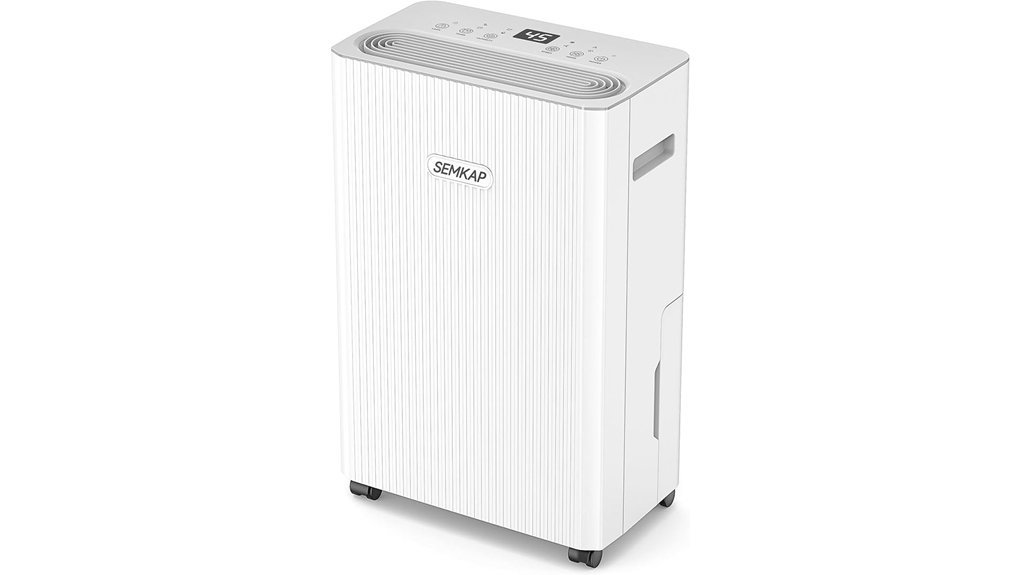
The SEMKAP 2500 Sq.Ft Dehumidifier is the most practical main pick for a damp 700 sq. ft. room in this roundup. Its listing says it removes up to 32 pints per day at 95°F and 90% RH, which puts it in the right class for many 600–800 sq. ft. spaces that smell musty or feel damp. The drain hose also matters because a 700 sq. ft. basement can fill a small tank quickly during humid weather.
Best For: You need real compressor-based moisture removal for a basement, laundry area, office, living room, or larger bedroom.
Pros:
- Good capacity fit: The 32-pint rating is a stronger match for 700 sq. ft. than a mini 95 oz unit.
- Continuous drainage: The included hose helps reduce daily tank emptying.
- Humidity control: Adjustable settings let you target a practical comfort range instead of running blindly.
Cons:
- Marketing test condition: The 32-pint claim is listed at hot, humid test conditions, so real output may be lower in normal rooms.
- Tank size: The 2.5L tank may need frequent emptying if you skip the hose.
- Drain placement: Gravity drainage needs a downward hose path to a floor drain, sink, or shower.
One-line verdict: Choose this first if your 700 sq. ft. space has noticeable dampness and you want less maintenance.
ToLife Dehumidifier for Home with LED Light
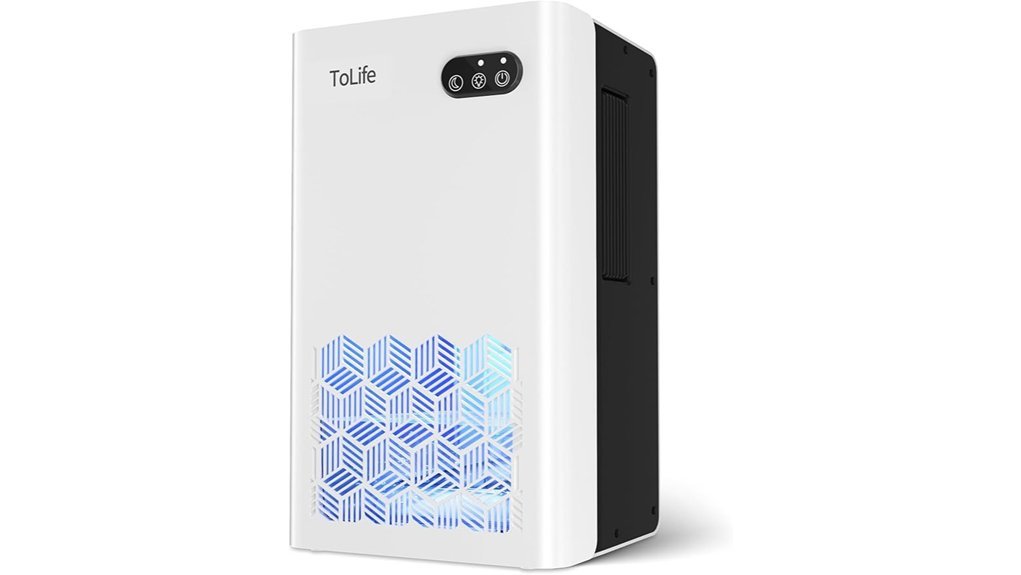
The ToLife TZ-C2 is a compact 95 oz dehumidifier with auto shut-off, sleep mode, and seven-color LED lighting. It fits best in a bedroom, bathroom, closet, small basement corner, or RV where you want quiet, low-effort moisture control. Use it to control mild dampness near a problem area, not as the only dehumidifier for a wet 700 sq. ft. basement.
Best For: You want a portable mini dehumidifier that can double as a soft night light.
Pros:
- Bedroom-friendly features: Sleep mode and LED lighting suit nighttime use.
- Simple controls: Auto shut-off makes it easy for renters, dorm rooms, and guest rooms.
- Compact tank: The 95 oz tank is larger than many mini units.
Cons:
- Not a full-space workhorse: It lacks the pint-per-day power of a compressor dehumidifier.
- Coverage claim needs context: Advertised square footage can overstate performance in damp, open rooms.
- Manual emptying: It is less convenient than a hose-drain model for daily basement use.
One-line verdict: Buy this for quiet comfort and ambiance in smaller enclosed areas, not for heavy-duty drying.
OKYUK 95 oz Dehumidifier for Home and Bedroom
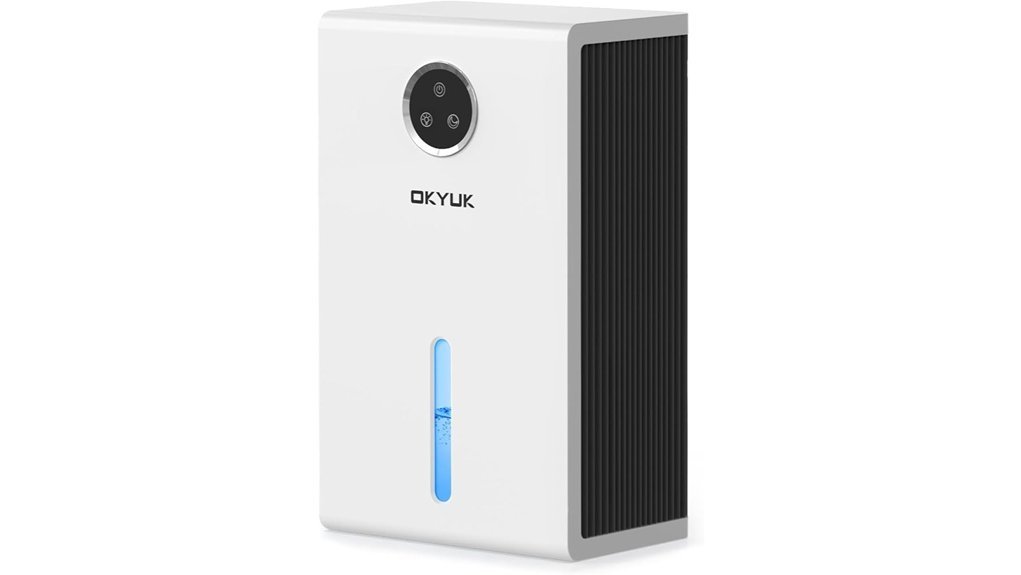
The OKYUK 95 oz dehumidifier is another small-space moisture-control option for bedrooms, bathrooms, closets, and RVs. Its listing says it can absorb up to 49 oz of moisture per day at 77°F and 85% RH, which is useful context: that is far below a 30-pint compressor model. For a 700 sq. ft. room, use it only when humidity is mild or localized.
Best For: You need a quiet compact unit for localized dampness, not whole-basement drying.
Pros:
- Clear extraction claim: The 49 oz/day test condition gives buyers a better sense of scale.
- Quiet operation: Sleep mode suits bedrooms and offices.
- Simple safety: Auto shut-off reduces spill risk when the tank fills.
Cons:
- Limited practical coverage: It works best in closed, smaller areas even if the listing claims wider coverage.
- No drain hose: Manual emptying limits long unattended use.
- No advanced humidistat: It is less precise than compressor models with humidity targets.
One-line verdict: A sensible mini pick for quiet spot control, but not the top choice for a 700 sq. ft. damp basement.
2500 Sq.Ft Dehumidifier with Smart Humidity Control
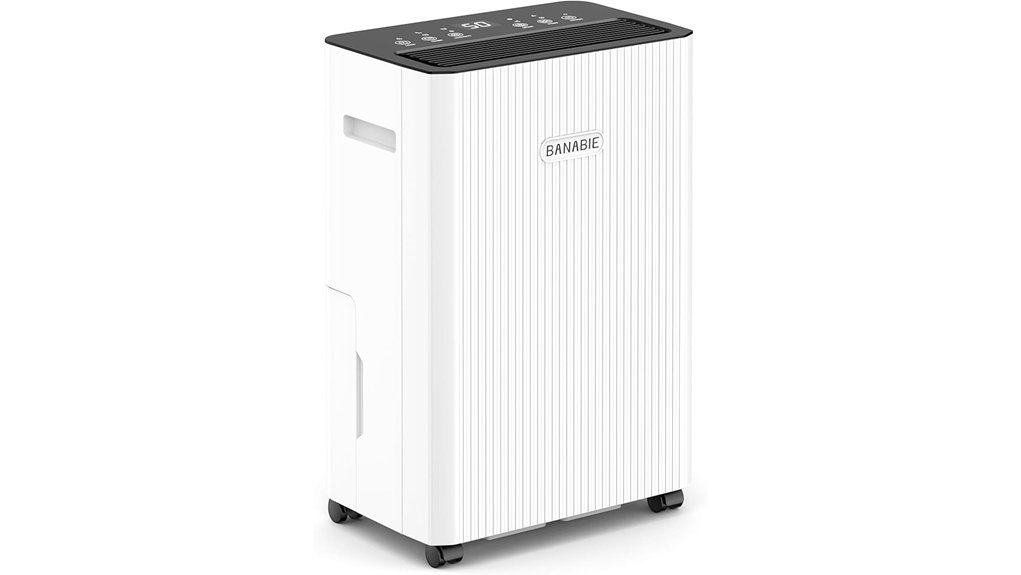
This 2,500 sq. ft. smart humidity-control model is listed as a 32-pint compressor dehumidifier with a drain hose, 24-hour timer, and portable design. That makes it a stronger 700 sq. ft. candidate than mini semiconductor units when you need steady room-wide drying. Confirm the current brand and model name in the CMS before publishing because the article heading does not identify the product clearly.
Best For: You want a compressor model with humidity control but do not need a pump.
Pros:
- Better capacity class: A 32-pint rating is more appropriate for damp 700 sq. ft. rooms.
- Auto and continuous modes: These help match output to room conditions.
- Drain hose support: Continuous drainage reduces interruptions.
Cons:
- Unclear product identity: The current H2 lacks a brand, so users may not know what they are comparing.
- Gravity drain limitation: It needs a lower drain point unless a pump is included.
- Tank maintenance: The 2.5L tank is small for high-humidity days.
One-line verdict: A good 700 sq. ft. shortlist pick once the brand/model is confirmed on-page.
Small Dehumidifier for Home with Auto Shut-Off
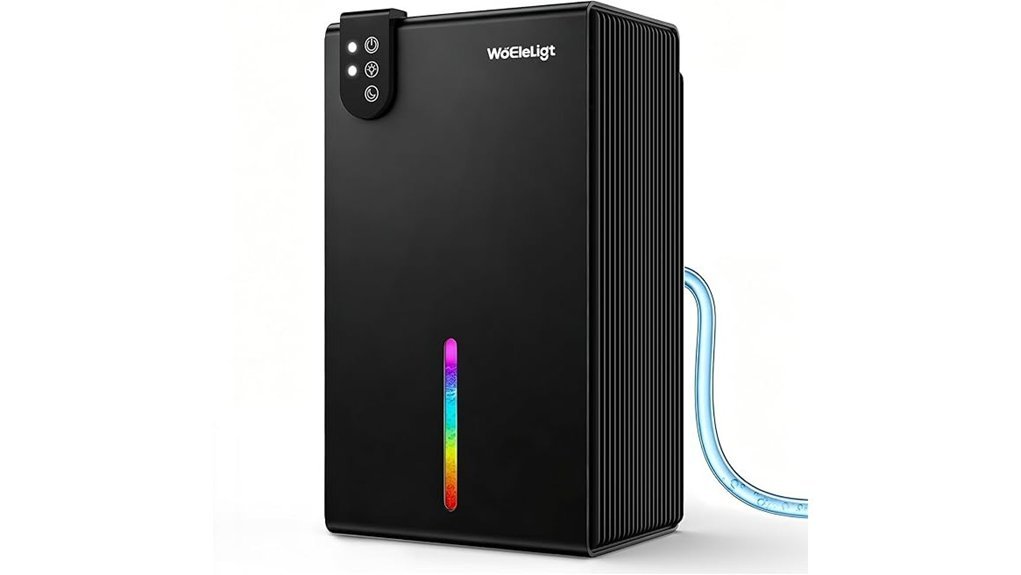
This 98 oz small dehumidifier is designed around portability, auto shut-off, and quiet operation. Its listing highlights upgraded dual-core semiconductor technology and use in closed rooms up to 1,000 sq. ft. For a real 700 sq. ft. moisture problem, treat it as a secondary comfort unit for a bedroom, bathroom, closet, or RV, not as a substitute for a compressor dehumidifier.
Best For: You want a small dehumidifier with a larger mini-unit tank and simple overflow protection.
Pros:
- Compact 98 oz tank: Useful for small rooms where a large wheeled unit feels excessive.
- Quiet sleep mode: Better for bedrooms than loud compressor operation.
- Simple setup: No hose or drain placement is required.
Cons:
- Not enough for severe dampness: Semiconductor units dry slowly compared with compressor units.
- Closed-room dependence: Performance drops when doors stay open or moisture keeps entering.
- Manual emptying: The tank still needs regular cleaning and draining.
One-line verdict: A portable small-room helper, not the best main dehumidifier for a damp 700 sq. ft. area.
Dehumidifier for Basement and Home (800 sq ft)
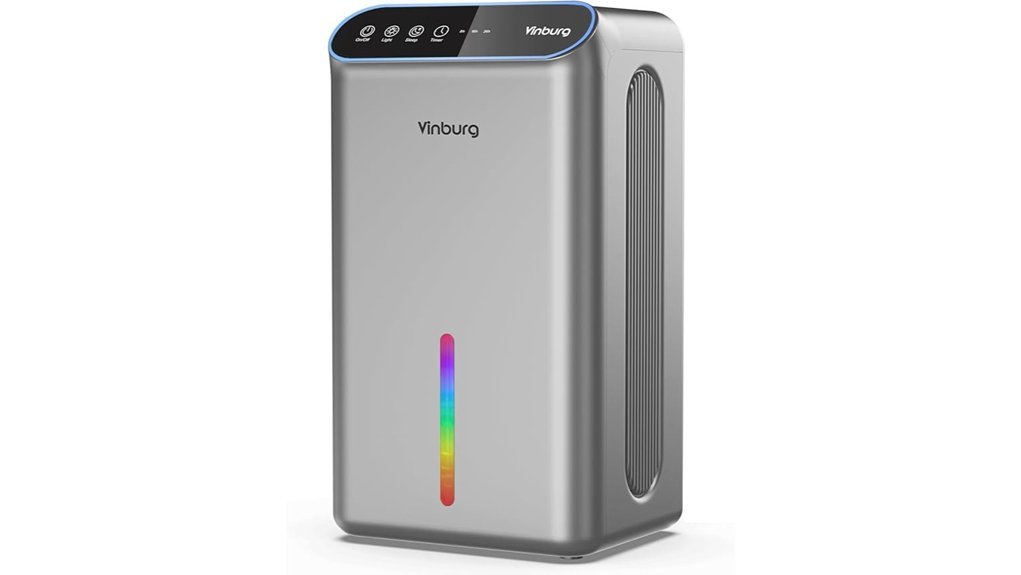
This 85 oz dehumidifier is marketed for spaces up to 800 sq. ft. and includes auto shut-off, quiet operation, timer settings, LED lighting, and a fragrance diffuser. It is most useful when your goal is comfort in a small enclosed room. If your 700 sq. ft. area has musty air, wet walls, or regular condensation, step up to a compressor model with a drain hose.
Best For: You want a compact unit for a bedroom, bathroom, closet, RV, or lightly damp basement corner.
Pros:
- Small and easy to place: The compact body works where a wheeled compressor model would be awkward.
- Low-noise focus: The listing emphasizes operation below 30 dB.
- Comfort extras: Timer, LED light, and diffuser features make it more bedroom-friendly.
Cons:
- Not a wet-basement solution: The 85 oz tank and mini design limit sustained drying power.
- Frequent tank checks: Small tanks need attention during humid weather.
- Fragrance is optional: Do not use scent to mask a moisture or mold source.
One-line verdict: Choose this for light-duty comfort, not for solving a persistent 700 sq. ft. dampness problem.
1600 Sq.ft Dehumidifier for Home and Basement
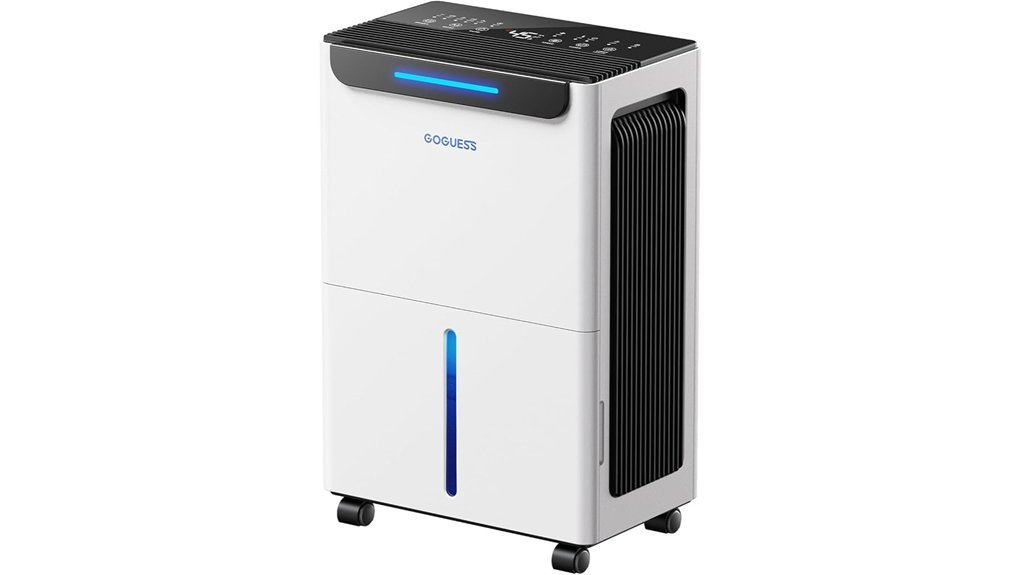
The GoGuess YC3 is a 21-pint compressor dehumidifier listed for spaces up to 1,600 sq. ft. It offers multiple modes, a drain hose, a 2.3L tank, and a real-time humidity display. For a 700 sq. ft. room, it makes sense when humidity is moderate rather than severe. If the basement gets wet after rain, a 32-pint or larger model will give you more breathing room.
Best For: You want a quieter compressor model with modes and hose drainage for moderate humidity.
Pros:
- Useful mode selection: Auto, turbo, and sleep-style operation give you more control.
- Drainage flexibility: Manual tank or continuous hose setup supports different rooms.
- Humidity display: Real-time readings help you avoid guessing.
Cons:
- Lower capacity class: 21 pints/day may be light for a wet 700 sq. ft. basement.
- Small tank: The 2.3L tank can fill quickly in humid weather.
- Marketing conditions: The 21-pint figure is listed at 95°F and 90% RH, so normal-room output may be lower.
One-line verdict: A reasonable mid-capacity pick for moderate humidity, but not the strongest wet-basement option.
Glowells 21-Pint Dehumidifier with Smart Humidity Control
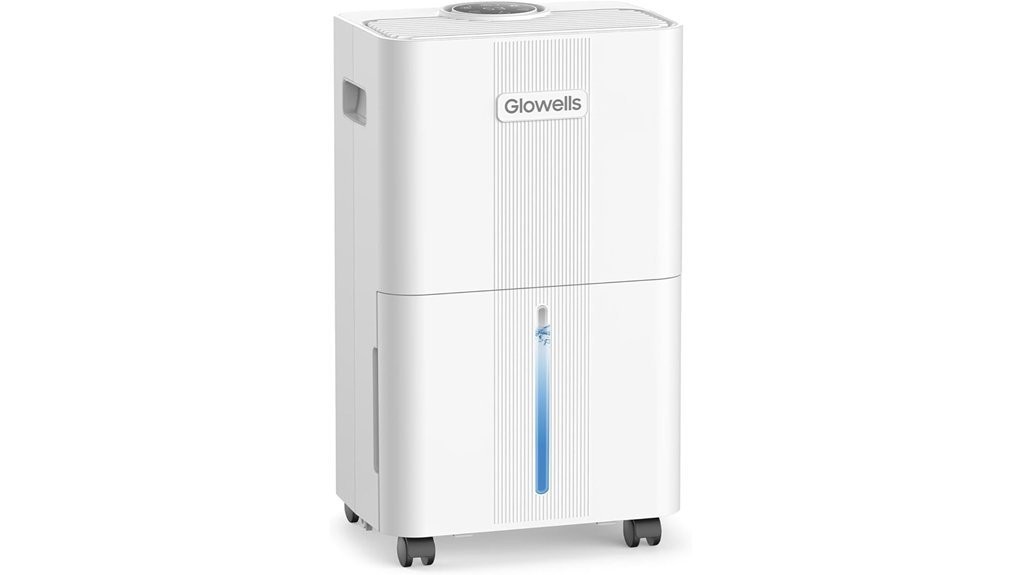
The Glowells 21-pint dehumidifier is best for moderately damp rooms where you want a humidistat, hose drainage, and quieter operation than many larger models. It is a better fit than a mini unit for a 700 sq. ft. room, but it may still be undersized for a basement with water seepage, musty odors, or frequent condensation. Confirm the current ASIN’s exact capacity, tank size, and warranty before publishing.
Best For: You want smart humidity control for moderate dampness in a bedroom, office, or finished basement.
Pros:
- Humidity target control: Adjustable humidity is more useful than simple on/off operation.
- Continuous drainage option: Hose drainage can reduce maintenance.
- Movable design: Handle and caster-style mobility help when rotating rooms.
Cons:
- Capacity uncertainty: The current product details need a final ASIN-level check.
- May be too small for wet basements: 21-pint class models dry more slowly than 32- or 50-pint units.
- Hose setup matters: Continuous drainage only works well when the hose drains downhill.
One-line verdict: A good moderate-humidity option after final spec verification.
AEOCKY 4500 Sq.Ft Energy Star Dehumidifier
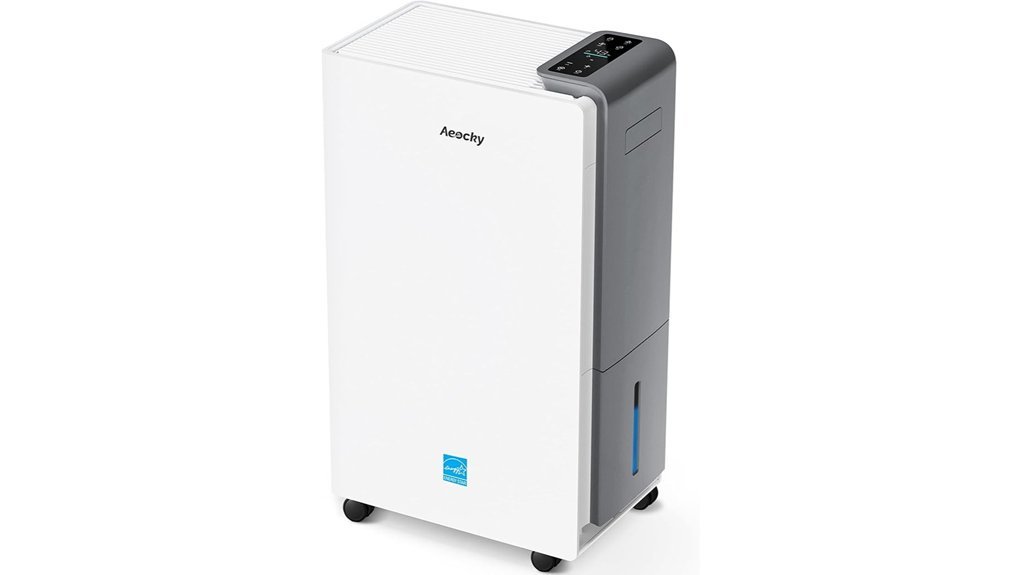
The AEOCKY 4500 Sq.Ft Energy Star Dehumidifier is the largest-space option in this list. Its Amazon listing markets it as a max 80-pint/day smart compressor dehumidifier with a drain hose and a 1.45-gallon tank. For a 700 sq. ft. room, that can be useful if the space is very humid, but it may be more machine than you need for a lightly damp bedroom or office.
Best For: You have a large, humid basement or want extra capacity beyond the minimum 700 sq. ft. requirement.
Pros:
- High-capacity positioning: Better suited to wet or open areas than mini dehumidifiers.
- Energy-conscious choice: ENERGY STAR certification is valuable when the unit runs often.
- Larger tank: A 1.45-gallon tank gives more runtime than compact models.
Cons:
- Capacity label needs context: Max-pint marketing ratings may differ from DOE/ENERGY STAR test-condition ratings.
- Heavier body: Large compressor models are less convenient to carry.
- Possible overkill: For mild humidity in 700 sq. ft., a 30- to 39-pint model may be enough.
One-line verdict: Choose this when your 700 sq. ft. room is very damp or part of a larger open basement.
Factors to Consider When Choosing a Dehumidifier for 700 Square Feet
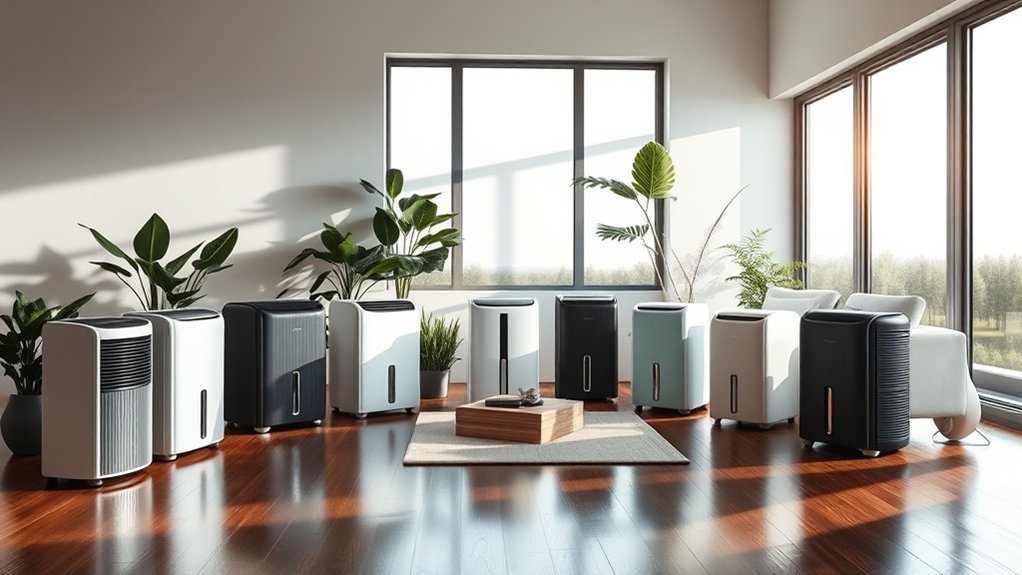
A 700 sq. ft. room sits in the middle ground: too large for most mini units if the whole room is damp, but not always large enough to require a huge 80-pint machine. Use these factors to match the unit to the actual moisture problem.
How much coverage do you really need?
Do not choose only by the largest square-foot number on the box. A small 95 oz unit may claim 1,000 sq. ft., but it can still remove far less water per day than a compressor model. For an open 700 sq. ft. basement, prioritize pints per day, drain setup, and humidistat control. For a closed bathroom, closet, or RV, a compact semiconductor unit can be enough.
What pint capacity is right for 700 square feet?
For a slightly damp 600–800 sq. ft. space, a medium-capacity unit in the 30- to 39-pint/day class is a practical starting point. Choose more capacity if the room is very wet, has laundry moisture, has seepage, or sits in a humid climate. When a listing gives capacity at 95°F and 90% RH, expect lower removal in cooler or less humid rooms.
How quiet should it be?
Bedrooms, nurseries, and home offices need a lower noise target than garages or basements. Mini semiconductor units often sound quieter, but they also remove less moisture. Compressor models can be louder, yet they dry faster. If noise matters, compare the listed decibel rating, fan speeds, and sleep mode, then place the unit away from the bed or desk when possible.
Do you need continuous drainage?
Choose continuous drainage if the unit will run every day or if your room stays humid after rain. A hose saves time and prevents the unit from stopping when the tank fills. Gravity drainage needs the hose to slope downward, so check where the nearest floor drain, sink, shower, or utility drain sits before you buy.
Why does ENERGY STAR matter?
ENERGY STAR certified dehumidifiers use more efficient coils, compressors, and fans to remove moisture with less electricity than similarly sized conventional units. This matters most in basements, laundry rooms, and humid climates where the dehumidifier runs for many hours. You can learn more from ENERGY STAR’s dehumidifier guidance.
What humidity level should you target?
The U.S. EPA recommends keeping indoor relative humidity below 60% and ideally between 30% and 50% when possible. For everyday comfort, many homes do well around 40% to 50%. Use a separate hygrometer if the built-in display seems inaccurate. You can review the EPA guidance here: EPA mold and moisture guide.
How portable should the unit be?
If you move the unit between rooms, look for side handles, caster wheels, and a tank you can remove without spilling. Mini units are easier to lift, but wheeled compressor units are better for large areas. For a 700 sq. ft. basement, portability matters less than drain access and capacity.
Which safety features matter most?
Look for auto shut-off, full-tank alerts, auto restart, auto defrost, child lock, and overload protection. Auto defrost matters in cooler basements, garages, and crawl-space-adjacent rooms because frost can reduce performance. Keep the intake and exhaust clear so the unit does not overheat.
Which operating modes are useful?
Auto mode is the most useful setting for daily comfort because it runs the unit only when humidity rises above your target. Continuous mode helps after leaks, storms, or laundry drying. Sleep mode lowers noise at night. Dry-clothes mode can help in laundry rooms, but it should not replace ventilation when moisture is heavy.
Frequently Asked Questions
What size dehumidifier do I need for 700 square feet?
For a 700 square foot room, choose a compressor dehumidifier around 30 to 39 pints per day if the space is slightly damp or musty. Step up to a larger 50-pint class unit if the basement is very wet, has seepage, or needs faster drying.
Is a 95 oz mini dehumidifier enough for 700 square feet?
A 95 oz mini dehumidifier can help a bathroom, closet, RV, bedroom corner, or lightly damp enclosed area. It is usually not the best primary choice for a full 700 square foot damp basement because it removes moisture much more slowly than a compressor unit.
Should I choose a drain hose for a 700 square foot basement?
Yes, choose a drain hose if the room stays humid for long periods or the unit will run daily. Continuous drainage reduces tank emptying and helps the unit work without interruption, as long as the hose slopes toward a drain.
What’s the ideal humidity level for my home?
A practical target is usually 40% to 50% relative humidity. Indoor humidity should generally stay below 60%, and many homes feel comfortable around 45% to 55% depending on season and climate.
Can I use a dehumidifier in a garage?
Yes, you can use a dehumidifier in a garage if the temperature stays within the unit’s operating range. For cool garages, look for auto-defrost or a model designed for lower-temperature spaces.
Are ENERGY STAR dehumidifiers worth it?
ENERGY STAR certified dehumidifiers are worth considering for frequent use because they remove moisture with less electricity than similarly sized conventional units. They matter most in basements or humid rooms where the unit runs for many hours.
How loud are dehumidifiers when operating?
Small semiconductor dehumidifiers often run quietly, while compressor models can be more noticeable. For bedrooms, look for sleep mode and a listed noise level under about 40 dB. For basements, capacity and drainage usually matter more than the lowest noise number.
Conclusion
The best dehumidifier for 700 square feet depends on whether you are drying a whole damp room or controlling moisture in one small zone. For most 700 sq. ft. rooms, start with a 30- to 39-pint compressor dehumidifier with a drain hose and humidistat. Choose a compact 95 oz model only for quiet small-room maintenance. If your basement is very wet, step up to a larger compressor unit and fix the moisture source rather than relying on a mini dehumidifier.