Updated August 2026.
For a 750-square-foot room, basement, apartment, or finished lower level, a compressor dehumidifier with an adjustable humidistat, automatic shutoff, auto defrost, and continuous drainage is usually the most practical choice. Capacity should be matched to the room’s actual moisture level rather than the largest advertised square-foot number.
Among the three options retained in this guide, the PLUSCENT 32 Pint offers the best balance for typical seasonal dampness, while the Glowells 21 Pint is better suited to moderately damp living spaces. The higher-capacity Yaufey is worth considering when the area is unusually wet, connected to adjoining rooms, or used for indoor laundry drying.
Quick Comparison
| Product | Best For | Seller-Advertised Output | Tank | Drainage | Amazon |
|---|---|---|---|---|---|
| PLUSCENT 32 Pint Best Overall |
Typical seasonal dampness in a 750 sq. ft. room or basement | Up to 32 pints/day at seller-stated 95°F and 90% RH conditions | 2 liters | Tank or gravity drain hose | Check Price |
| Glowells 21 Pint Best for Moderate Humidity |
Bedrooms, living areas, and lighter moisture loads | Up to 21 pints/day at seller-stated 90°F and 90% RH conditions | 2 liters | Tank or gravity drain hose | Check Price |
| Yaufey 80 Pint High-Moisture Alternative |
Very damp basements, open layouts, and heavier moisture loads | Up to 80 pints/day at 95°F/90% RH; 60 pints/day at 86°F/80% RH | 1.06 gallons | Tank or gravity drain hose | Check Price |
Important capacity note: The figures above are seller-advertised outputs under the disclosed warm, humid conditions. They should not automatically be treated as equivalent to current DOE-rated pint capacities, which use cooler standardized test conditions. Compare models using the same rating standard and verify the capacity printed on the exact product label.
Glowells 21 Pints Dehumidifier with Drain Hose
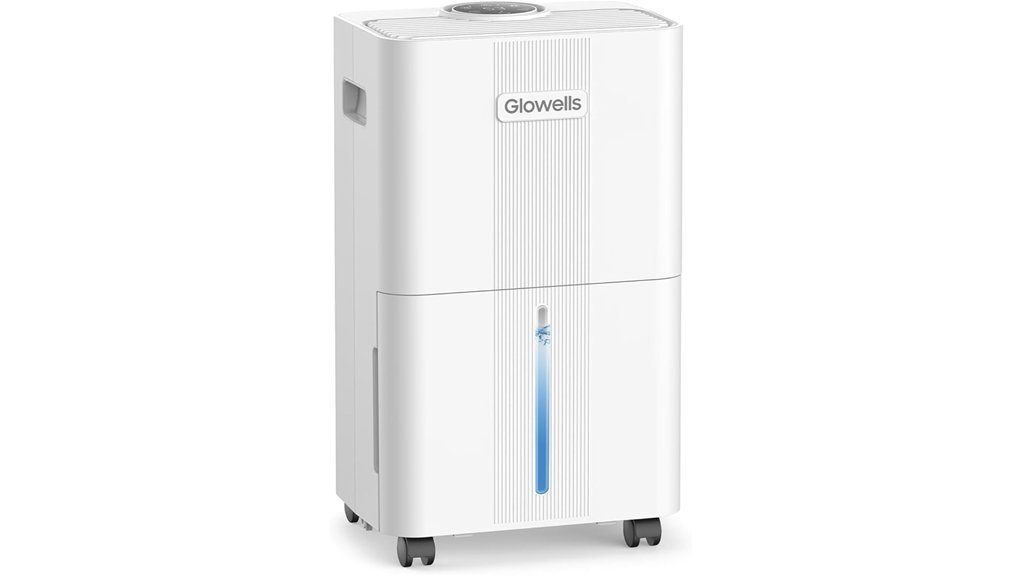
Best for: Moderately damp bedrooms, living rooms, bathrooms, apartments, and finished basements where a compact compressor unit is preferred.
The Glowells 21 Pint is the smallest compressor model in this guide. The seller advertises moisture removal of up to 21 pints per day at approximately 90°F and 90% relative humidity. Because that is a warm, highly humid test condition, buyers should not assume that the unit will collect 21 pints every day in a cooler basement.
For an enclosed 750-square-foot room with mild to moderate seasonal dampness, its smaller capacity may be sufficient. It is less appropriate for active seepage, persistently wet walls, or a basement that remains above the target humidity despite continuous operation.
The product listing describes adjustable humidity control, three operating modes, an included drain hose, castors, and a side handle. It is also marketed for quieter operation, although a dependable model-specific decibel rating was not confirmed. Actual sound will depend on fan speed, compressor cycling, floor stability, placement, and room acoustics.
Why You’ll Like It
- Practical for moderate dampness: A sensible starting point when the room does not have a severe moisture problem.
- Compact placement: Castors and a carrying handle make it easier to reposition than a larger high-capacity appliance.
- Automatic control: The humidistat can help the compressor cycle around the selected humidity target.
- Two drainage choices: Use the removable tank or connect the hose to a suitable lower drain.
Who Should Avoid It
Choose a higher-capacity model if the area has wall or floor seepage, frequent indoor laundry drying, open access to adjoining rooms, or humidity that remains very high for long periods. Water intrusion should be repaired rather than managed only with a portable dehumidifier.
Pros:
- Better matched to many moderately damp 750-square-foot living areas.
- Compact body with castors and a side handle.
- Adjustable humidity control and multiple operating modes.
- Supports tank collection and continuous gravity drainage.
Cons:
- May be undersized for a very wet basement or connected floor plan.
- The 2-liter tank may fill quickly during humid weather.
- No dependable model-specific noise measurement was confirmed.
- Warranty and return terms should be verified on the current listing before purchase.
PLUSCENT 32 Pint Dehumidifier for Home
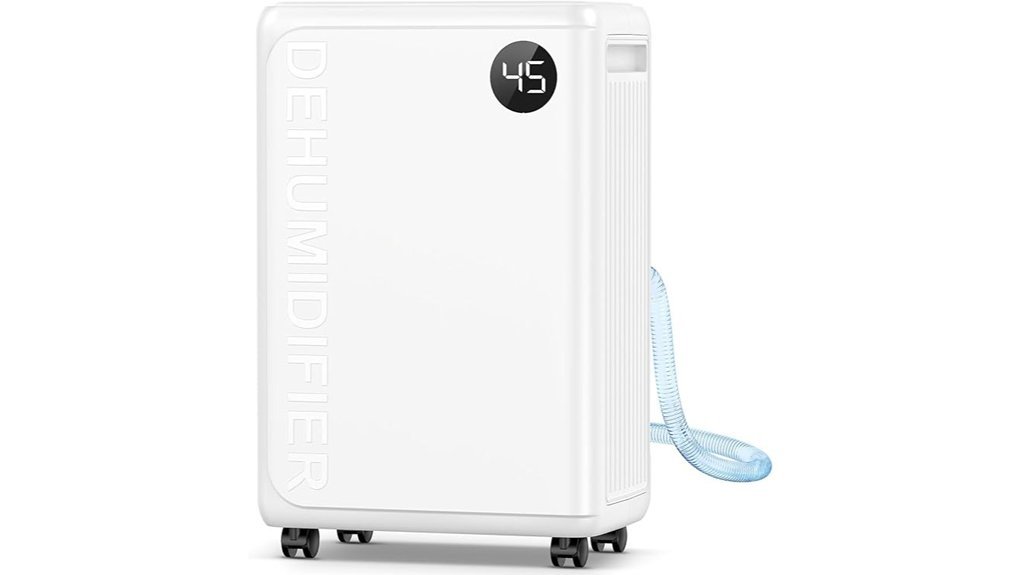
Best for: Most buyers who need balanced humidity control in a 750-square-foot basement, apartment, bedroom suite, or multipurpose room.
The PLUSCENT PD10 is the strongest all-around match in this roundup. Its seller-advertised output of up to 32 pints per day is measured under approximately 95°F and 90% relative humidity conditions. That figure should not be confused with a standardized DOE capacity, but it still positions the model between the smaller Glowells and the much larger Yaufey.
This middle-ground capacity is useful when humidity changes with the season or when the space includes a bathroom, laundry area, or limited ventilation. It gives buyers more reserve than the 21-pint option without immediately moving to a larger appliance intended for heavier moisture loads.
The listing describes three operating modes for normal dehumidification, continuous operation, and clothes drying. It also includes adjustable humidity control, a 24-hour timer, automatic shutoff, auto defrost, a child lock, a washable filter, and rolling castors. Its 2-liter tank is relatively compact, so continuous drainage is the more convenient setup for long basement run times.
Why You’ll Like It
- Best overall balance: It bridges the gap between a compact moderate-humidity model and an oversized high-capacity unit.
- Useful automatic controls: The humidistat, timer, auto shutoff, and auto-defrost functions reduce routine adjustment.
- Three operating modes: Standard, continuous, and clothes-drying settings support different household needs.
- Easy to position: Castors and a compact footprint help with room placement.
Who Should Avoid It
It may be more capacity than necessary for a small bedroom with only occasional humidity. It may also be insufficient for extensive water intrusion, standing water, or an open basement with a continuously high moisture load. Repair plumbing leaks, foundation seepage, and drainage problems before relying on any dehumidifier.
Pros:
- Well-balanced choice: Suitable for a broad range of moderately to very damp 750-square-foot spaces.
- User-friendly controls: Touch panel, timer, humidistat, child lock, and three modes.
- Flexible drainage: Supports tank collection or continuous gravity drainage.
- Cold-coil protection: Auto defrost can help manage normal frost formation in cooler conditions.
Cons:
- The 2-liter tank may require frequent emptying without a drain hose.
- Compressor and fan noise may remain noticeable in a silent bedroom.
- The advertised 32-pint figure is based on warmer, wetter conditions than the current DOE test.
- Large seller-provided coverage figures should not replace sizing based on actual humidity.
Yaufey 80 Pint Dehumidifier for Home
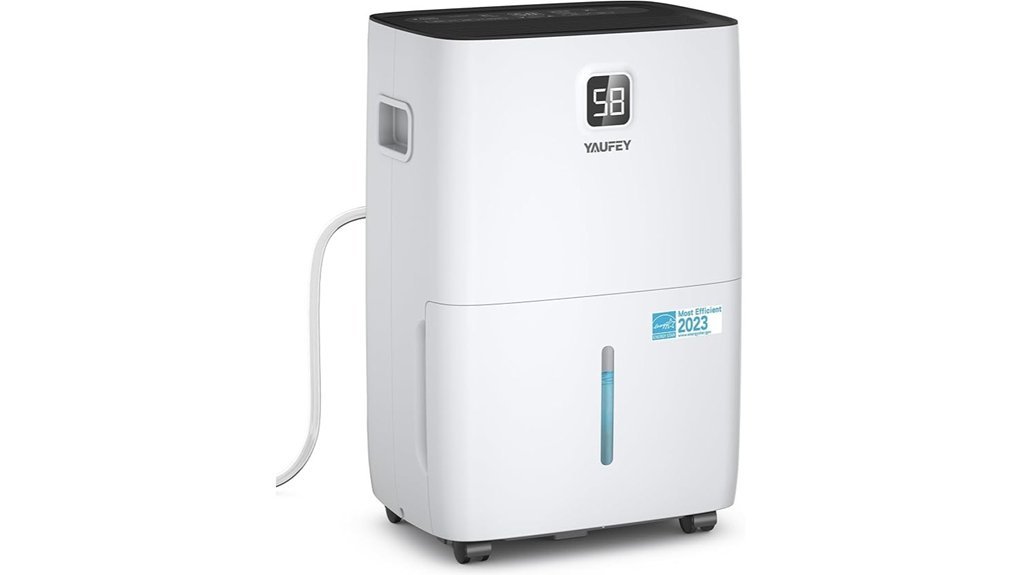
Best for: Very damp basements, open floor plans, frequent indoor laundry drying, and buyers who need more reserve capacity than a typical enclosed 750-square-foot room requires.
The Yaufey JD025Q-80 is the high-moisture alternative in this guide. Its seller advertises removal of up to 80 pints per day at 95°F and 90% relative humidity, or approximately 60 pints per day at 86°F and 80% relative humidity. Those figures describe performance in warm, very humid conditions and should not be compared directly with current DOE-rated pint capacities.
For a normally damp 750-square-foot room, this model is likely larger than necessary. It makes more sense when the room connects to other areas, experiences a heavy seasonal moisture load, or needs additional capacity for laundry drying. A larger unit may lower humidity faster during initial drying, but it will still require suitable airflow, correct placement, and an appropriate target setting.
The listing describes adjustable humidity control from 30% to 80%, multiple modes, a timer, automatic shutoff, auto defrost, a reusable filter, rolling castors, tank collection, and continuous hose drainage. The 1.06-gallon tank is larger than the tanks on the two smaller products, although it can still fill quickly under a heavy moisture load.
Why You’ll Like It
- Extra capacity for difficult spaces: Better suited to open layouts and unusually high moisture loads.
- Larger water tank: The 1.06-gallon reservoir provides more collection capacity when a drain is unavailable.
- Automatic humidity management: The humidistat and timer support less hands-on operation.
- Continuous drainage: The included hose connection is useful for extended basement use.
Who Should Avoid It
Choose a smaller model if the room is enclosed, only mildly damp, short on floor space, or used as a quiet bedroom. Buyers should also avoid selecting it solely because of the advertised 5,000-square-foot coverage or 80-pint wording.
Pros:
- Suitable for demanding basement conditions and connected spaces.
- Higher seller-advertised output than the other retained models.
- Large tank, adjustable humidistat, timer, and multiple modes.
- Supports both manual collection and continuous gravity drainage.
Cons:
- Oversized for many enclosed 750-square-foot rooms.
- The 1.06-gallon tank may still need frequent emptying under a heavy load.
- The advertised output is not directly equivalent to a current DOE-rated 80-pint capacity.
- The exact model’s current ENERGY STAR status should be independently verified.
Factors to Consider When Choosing a Dehumidifier for 750 Square Feet
Square-foot coverage is only a starting point. The right dehumidifier also depends on the room’s normal relative humidity, temperature, airflow, ceiling height, air leakage, open doorways, laundry use, and any ongoing source of water.
Match Standardized Capacity to Dampness
For spaces below 2,000 square feet, ENERGY STAR guidance recommends approximately 20 to 30 pints per day for slightly to moderately damp conditions, 25 to 40 pints for very damp conditions, and 30 to 50 pints for wet conditions. These ranges refer to standardized capacity ratings.
A properly rated model near the lower end may work in a moderately damp 750-square-foot living area. A higher standardized capacity may be appropriate when the room smells consistently musty, develops damp spots, supports laundry drying, or has a heavy seasonal moisture load.
Review ENERGY STAR dehumidifier sizing guidance before choosing a capacity.
Compare Ratings on the Same Test Standard
A seller may describe a unit as removing 21, 32, or 80 pints per day under warm, saturated conditions. Another label may show a lower number measured under the current DOE test. Both figures may refer to the same appliance under different conditions.
Before comparing two models, look for the exact test temperature, relative humidity, DOE-rated capacity, model number, and product label. Avoid assuming that the largest marketing number identifies the most suitable or efficient unit.
Treat Coverage Claims Carefully
A large square-foot rating does not guarantee strong performance in every room. Coverage numbers do not fully describe moisture-removal speed, air leakage, room temperature, ceiling height, or water intrusion. Compare standardized pints per day, actual humidity conditions, tank size, and drainage needs rather than selecting by coverage alone.
Check the Exact Efficiency Certification
When energy use matters, verify the exact brand and model number in the official ENERGY STAR Product Finder. Similar-looking products, rebranded units, and models from the same manufacturer can have different standardized capacities and efficiency ratings.
Search the official ENERGY STAR dehumidifier database.
Consider Noise and Placement
Compressor dehumidifiers produce both fan noise and compressor cycling sounds. Place the appliance on a firm, level surface with the manufacturer-recommended clearance around its air intake and exhaust.
For a bedroom or office, compare a verified decibel rating when available and review the manual for sleep-mode behavior. Vibration, fan tone, flooring, wall distance, and room acoustics can make two units with similar specifications sound different.
Plan the Drainage Route
A small tank can fill quickly during humid weather. Continuous gravity drainage is convenient, but the hose must run downhill without sharp bends to a suitable drain. A standard gravity-drain model cannot push water upward.
If the drain is above the appliance, choose a model with a built-in pump or use a separate compatible condensate pump. Confirm that the hose connection is secure before leaving the unit unattended.
Check Operating Temperature
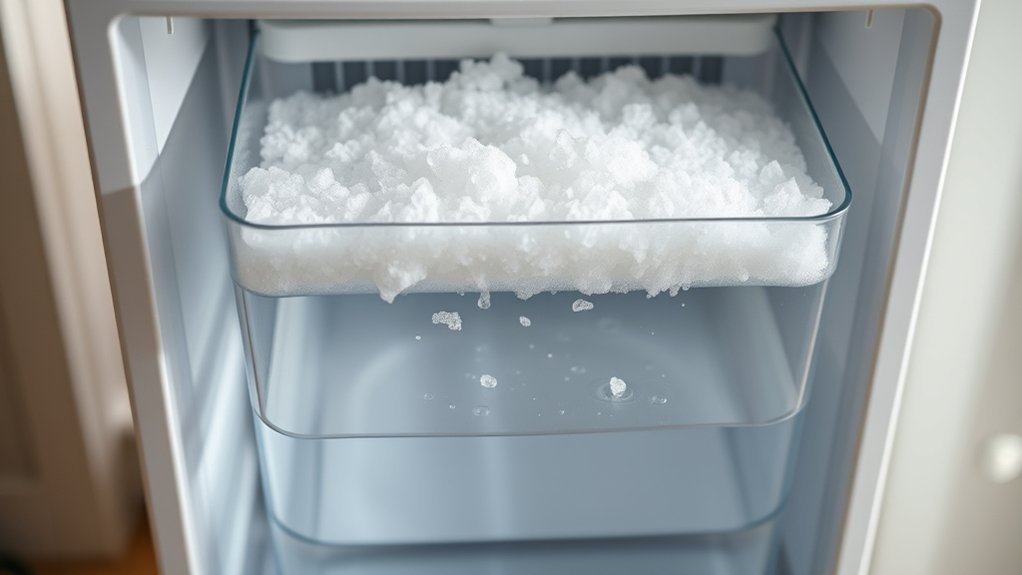
Cool basement air contains less removable moisture and can cause frost to form on a compressor dehumidifier’s coils. Auto defrost helps the appliance manage normal frost formation, but it does not make every model suitable for an unheated or near-freezing room.
Check the manufacturer’s minimum operating temperature and follow its clearance and storage instructions.
Compare Tank Size and Maintenance
Tank size affects how often the unit must be emptied, but it does not indicate how quickly the appliance removes moisture. A small tank paired with a drain hose may be more convenient than a large tank that must be carried across the room.
Choose a model with an accessible washable filter, removable tank, full-tank shutoff, and an easy-to-clean grille. Follow the manual’s filter-cleaning schedule to protect airflow and performance.
Before You Buy
- Measure the actual area and note whether doors remain open to adjoining rooms.
- Use a separate hygrometer to check the room’s normal relative humidity.
- Identify whether the space is mildly damp, very damp, or actively wet.
- Compare capacities measured under the same test conditions.
- Look for the current DOE-rated capacity on the exact product label.
- Confirm that the unit has a humidistat, full-tank shutoff, and auto defrost.
- Check the tank size and decide how often you are willing to empty it.
- Plan the complete drain-hose route before relying on continuous drainage.
- Verify the exact model number, warranty, return terms, and certification status.
- Check current safety or recall information for the exact model before use.
- Repair leaks, seepage, and drainage problems instead of relying on a dehumidifier as the only solution.
Frequently Asked Questions
What Size Dehumidifier Do I Need for 750 Square Feet?
A current DOE-rated capacity of approximately 20 to 30 pints per day is a practical starting point for a slightly to moderately damp 750-square-foot room. Consider roughly 25 to 40 standardized pints for very damp conditions and 30 to 50 for wet conditions.
Do not apply those ranges directly to seller-advertised capacities measured at 90°F to 95°F and 90% relative humidity. Check the exact product label and compare capacities measured under the same standard.
Are Seller-Listed Pint Ratings Directly Comparable?
Not always. One seller may state output under hot, nearly saturated conditions, while another product may display its current DOE rating. A warmer and more humid test normally allows the machine to collect more water. Compare the test conditions and standardized product label rather than relying only on the largest pint number.
How Do I Maintain My Dehumidifier for Optimal Performance?
Clean or rinse the filter according to the manual, keep the intake and exhaust clear, empty and wash the tank regularly, and inspect the drain hose for clogs or standing water. Unplug the appliance before cleaning and allow washable parts to dry before reinstalling them.
Can a Dehumidifier Help Reduce Mold and Dust-Mite Conditions?
Lower indoor humidity can make conditions less favorable for mold growth and dust mites, but a dehumidifier is not an air purifier and does not remove all airborne particles. Existing mold should be cleaned safely, and the water source that allowed it to grow should be corrected.
How Long Does a Dehumidifier Last?
Service life varies with construction quality, operating hours, room temperature, airflow, maintenance, and compressor cycling. Regular filter cleaning, correct sizing, suitable placement, and reliable drainage can reduce unnecessary strain. Compare warranty coverage rather than relying on one universal lifespan estimate.
Are Dehumidifiers Noisy When Operating?
All compressor dehumidifiers make some fan and compressor noise. A lower verified decibel rating may help, but room acoustics and vibration affect how loud the unit seems. For bedroom use, place it on a stable surface and avoid positioning it directly beside the bed.
How Often Should I Empty the Water Tank?
Empty the tank whenever its full indicator activates. During humid weather, a 2-liter tank may fill more than once per day. Continuous gravity drainage is normally more convenient for a persistently damp basement when the hose can run safely downhill to a suitable drain.
Should I Run a Dehumidifier Continuously?
Continuous operation may be useful during the initial drying period. After the room reaches the target humidity, use the humidistat so the compressor cycles as needed. Many households aim for approximately 40% to 50% relative humidity, although the appropriate setting depends on temperature, condensation risk, and personal comfort.
Can a Dehumidifier Fix a Wet Basement?
No. A dehumidifier can remove moisture from the air, but it cannot repair a plumbing leak, foundation crack, failed sump pump, poor exterior drainage, or groundwater intrusion. Correct the water source first and use the dehumidifier as part of the moisture-control plan.
Conclusion
For most 750-square-foot spaces, the PLUSCENT 32 Pint is the best-balanced choice because it offers more reserve capacity than the smaller model without immediately moving to an oversized high-capacity appliance. Its humidistat, three operating modes, auto defrost, and hose drainage make it suitable for a broad range of everyday basement and living-space conditions.
The Glowells 21 Pint is a sensible alternative for moderate humidity, compact placement, and lighter moisture loads. Choose the Yaufey when the room is very damp, connected to other spaces, or exposed to a heavier moisture source—but verify its standardized capacity and exact certification before ordering.