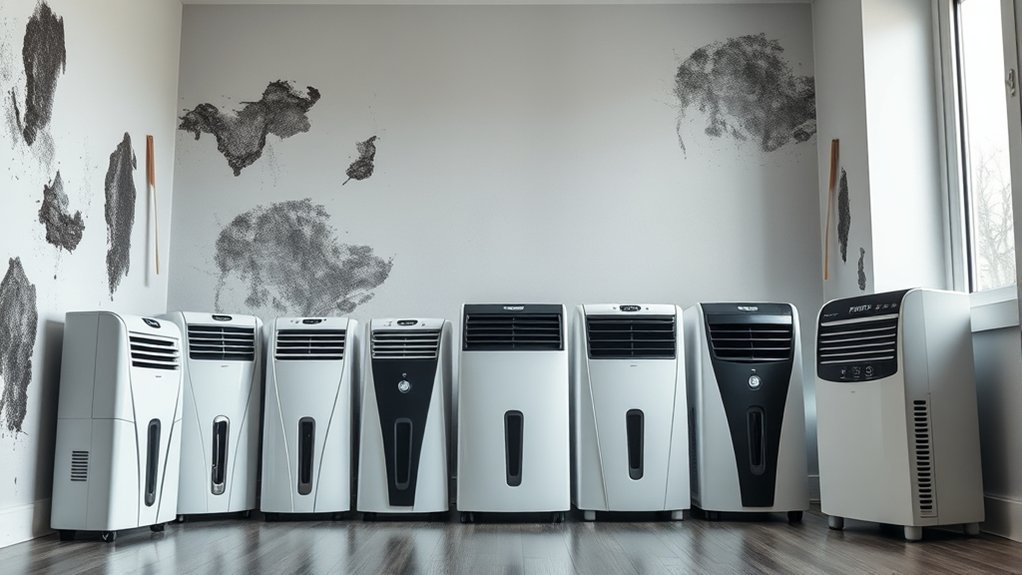
If you’re searching for the best commercial dehumidifiers in Canada for 2026, focus on moisture-removal capacity, drainage setup, build quality, airflow, and whether the unit fits your actual space. The models below include high-capacity options for basements, warehouses, crawl spaces, offices, job sites, and restoration work, with useful features such as built-in pumps, continuous drainage, digital humidity controls, and automatic defrost. This guide keeps the choices easy to compare so you can pick a dehumidifier that matches your space, humidity level, and drainage needs.
Quick Verdict: Best Commercial Dehumidifiers in Canada
For large commercial spaces, start with capacity and drainage. A built-in pump is helpful when the drain point is above the unit or far from the machine. For crawl spaces, look for compact size, strong airflow, and auto-defrost. For warehouses or restoration-style drying, higher pint ratings and rugged construction matter more.
- Best high-capacity option: MOUNTO 310 Pints Commercial Dehumidifier with Pump
- Best for large basements and warehouses: Airzentti ACD155P-PG100(B)
- Best heavy-duty steel build: VEVOR 125 Pints Commercial Dehumidifier
- Best crawl space pick: HBN 125 Pints Crawl Space Dehumidifier with Pump
- Best compact commercial option: ALORAIR Sentinel HD55
| Product | Best For | Capacity | Key Advantage |
|---|---|---|---|
| Airzentti ACD155P-PG100(B) | Large offices, basements, warehouses | 155 pints/day | Built-in pump and wide coverage |
| VEVOR 125 Pints Commercial Dehumidifier | Basements and commercial rooms | 125 pints/day | Heavy-duty galvanized steel body |
| MOUNTO 310 Pints Commercial Dehumidifier | Heavy-duty drying and restoration use | 310 pints/day | Very high moisture removal capacity |
| HBN 125 Pints Crawl Space Dehumidifier | Crawl spaces and large damp areas | 125 pints/day | Dual drainage and remote control |
| ALORAIR Commercial Dehumidifier with Pump | Commercial and industrial spaces | 180 PPD at saturation | Pump drainage and portable design |
| ALORAIR Sentinel HD55 | Crawl spaces, basements, warehouses | 113 pints/day | Compact body and automatic drainage |
| Airecoler GT-X5 | Crawl spaces, basements, warehouses | 125 pints/day | Low-clearance placement and strong airflow |
Affiliate note: This article contains Amazon affiliate links. If you buy through these links, the site may earn a commission at no extra cost to you. Product details can change, so always confirm the latest specifications, warranty terms, voltage requirements, and installation needs on Amazon before purchasing.
Commercial Dehumidifier with Pump and Drain Hose
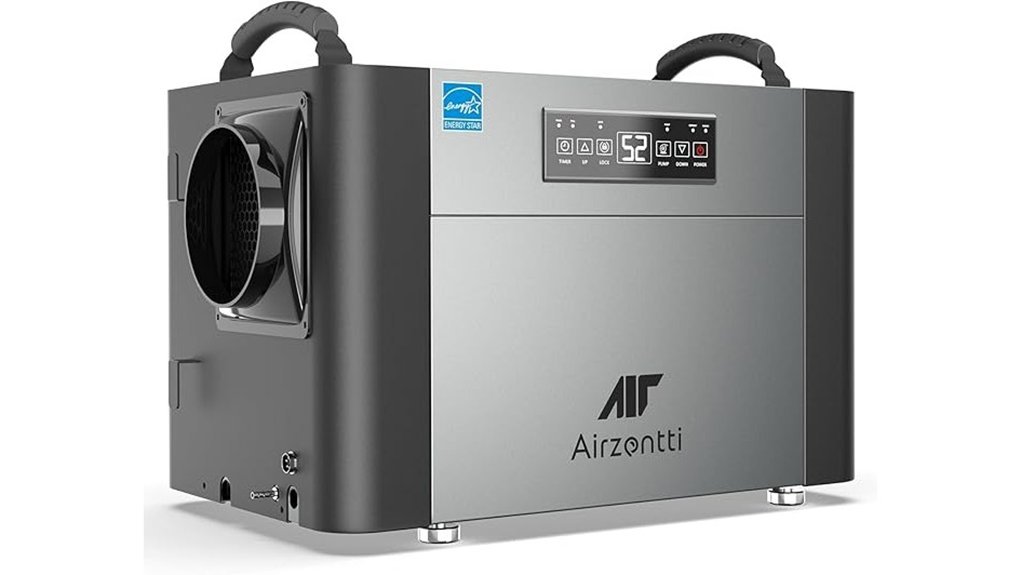
When it comes to managing humidity in large commercial spaces, the Airzentti ACD155P-PG100(B) stands out as a strong all-around choice. With a capacity of 155 pints per day, it is designed for large areas up to 7,500 square feet. That makes it useful for basements, warehouses, storage areas, offices, and other damp spaces where a smaller residential unit may struggle.
The biggest advantage is the built-in pump and drain hose, which allow water to be moved up to 16.4 feet away. This is especially helpful when you cannot rely on simple gravity drainage. You also get an easy-to-use control panel, humidity settings, and a timer, so you can set the machine around your space instead of constantly checking it.
Best For: The Airzentti ACD155P-PG100(B) is ideal for commercial spaces such as warehouses, basements, and large offices needing effective humidity control.
Why You’ll Like It: It combines high moisture removal, pump drainage, and a large coverage rating in one unit. If your space needs steady humidity control without frequent water-bucket emptying, this is the kind of setup to look for.
Who Should Buy This: Choose this model if you need a powerful dehumidifier for a large damp area and want pump-assisted drainage.
Who Should Avoid This: Avoid it if you only need a small dehumidifier for a bedroom, closet, or compact residential room.
Pros:
- High capacity: Removes up to 155 pints of moisture per day, suitable for large areas up to 7,500 sq. ft.
- Built-in pump: Facilitates easy drainage of water up to 16.4 feet away, reducing manual effort.
- Energy efficient: Energy Star certified, promoting sustainability while delivering powerful performance.
Cons:
- Weight: At 60 lbs, it may be cumbersome for some users to move.
- Size: Dimensions might be too large for smaller spaces or residential use.
- Wattage: Consumes 860 watts, which may lead to higher electricity bills if used extensively.
VEVOR 125 Pints Commercial Dehumidifier with Drain Hose
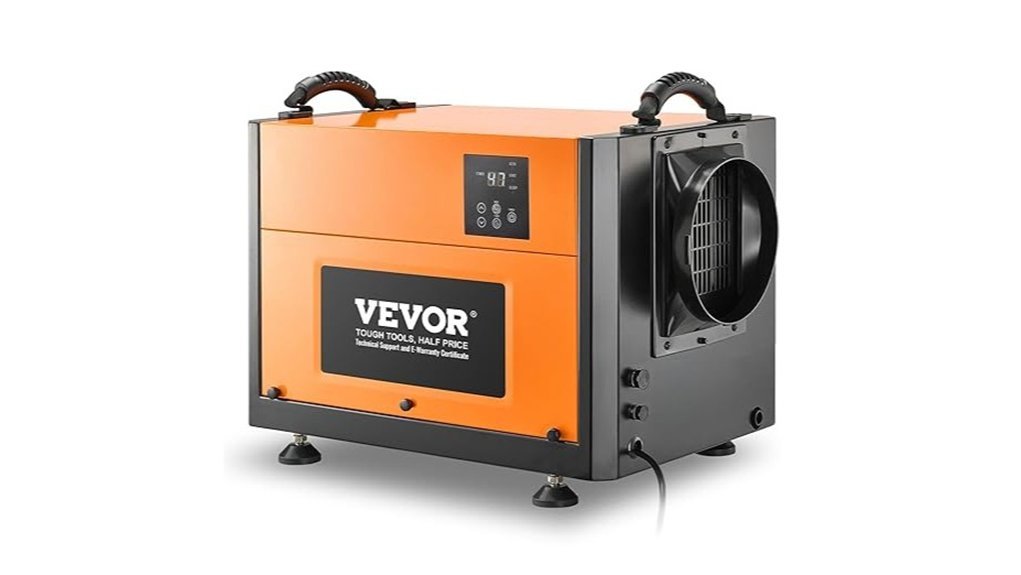
The VEVOR 125 Pints Commercial Dehumidifier is a practical choice for homeowners and businesses that need stronger moisture control than a standard household unit can provide. With a capacity to extract up to 125 pints per day, it covers areas up to 1,300 sq. ft., making it suitable for basements, workrooms, storage rooms, and small commercial areas.
Its heavy-duty galvanized steel design is a key selling point for buyers who care about durability. The premium compressor and pure copper condenser support efficient performance, while the user-friendly LED indicators and multiple operating modes, including Auto and Sleep, make daily operation easier. The included 6.56 ft PVC drain hose supports automatic drainage, helping reduce water buildup and manual maintenance.
Best For: Homeowners and businesses seeking effective moisture control in spaces up to 1,300 sq. ft.
Why You’ll Like It: The steel construction gives it a more rugged feel than many plastic-bodied options, and the drain hose helps keep the setup simple for continuous use.
Who Should Buy This: Choose this model if you want a commercial-style unit for a basement, shop, garage, or business space where durability matters.
Who Should Avoid This: Avoid it if you need a very quiet unit for a bedroom or a lightweight model that will be moved often.
Pros:
- High capacity: Extracts up to 125 pints of moisture per day, ensuring efficient dehumidification.
- Durable construction: Made from heavy-duty galvanized steel, providing long-lasting performance.
- Multiple operating modes: Offers versatility with options like Auto, Dry, and Sleep for tailored moisture management.
Cons:
- Weight: At 60.41 pounds, it may be cumbersome to move for some users.
- Noise level: The compressor may produce noticeable noise during operation in quiet environments.
- Initial cost: Higher upfront cost compared to smaller, less powerful dehumidifiers.
MOUNTO 310 Pints Commercial Dehumidifier with Pump
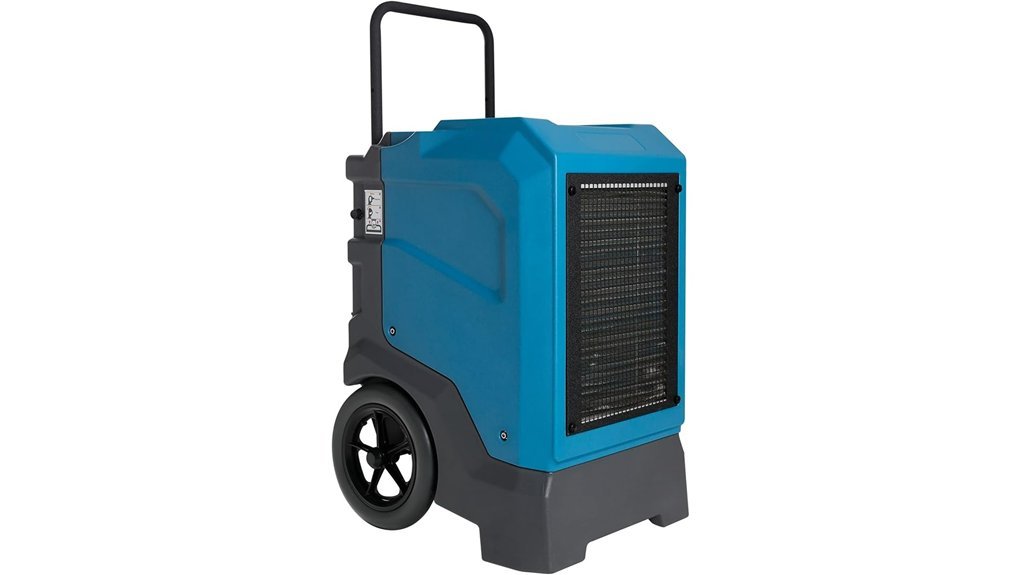
For buyers who need serious moisture control, the MOUNTO 310 Pints Commercial Dehumidifier is the strongest-capacity option in this list. It removes up to 310 pints per day and is built for heavy-duty use in demanding spaces such as basements, offices, restoration areas, warehouses, and other large damp environments.
This portable powerhouse features a built-in pump for continuous drainage and covers areas up to 5,000 square feet. Its automatic restart function helps after power interruptions, while digital controls and an automatic humidistat make it easier to monitor and adjust humidity levels. The 10.5A power consumption and 2.9 L/Kwh performance make it a serious machine, so it is best for buyers who truly need high output.
Best For: Those requiring efficient and powerful moisture control in large spaces, such as water damage restoration professionals and commercial facilities.
Why You’ll Like It: It is built for tough drying jobs. If smaller 100 to 150 pint units are not enough for your space, this model gives you much more moisture-removal capacity.
Who Should Buy This: Choose this model for large damp spaces, restoration work, or demanding commercial use where high capacity is the priority.
Who Should Avoid This: Avoid it if you only need normal basement humidity control or you do not have room for a larger, heavier unit.
Pros:
- High Capacity: Removes up to 310 pints of moisture per day, making it ideal for heavy-duty applications.
- Built-In Pump: Features a condensate pump for continuous drainage, enhancing convenience during operation.
- User-Friendly Controls: Digital display with automatic humidistat simplifies monitoring and adjusting settings.
Cons:
- Weight: At 125 pounds, it may be cumbersome to move for some users.
- Power Consumption: Requires a significant 10.5A of power, which may not be suitable for all environments.
- Size: Its dimensions (22D x 23W x 35H inches) may limit placement options in smaller spaces.
HBN 125 Pints Crawl Space Dehumidifier with Pump
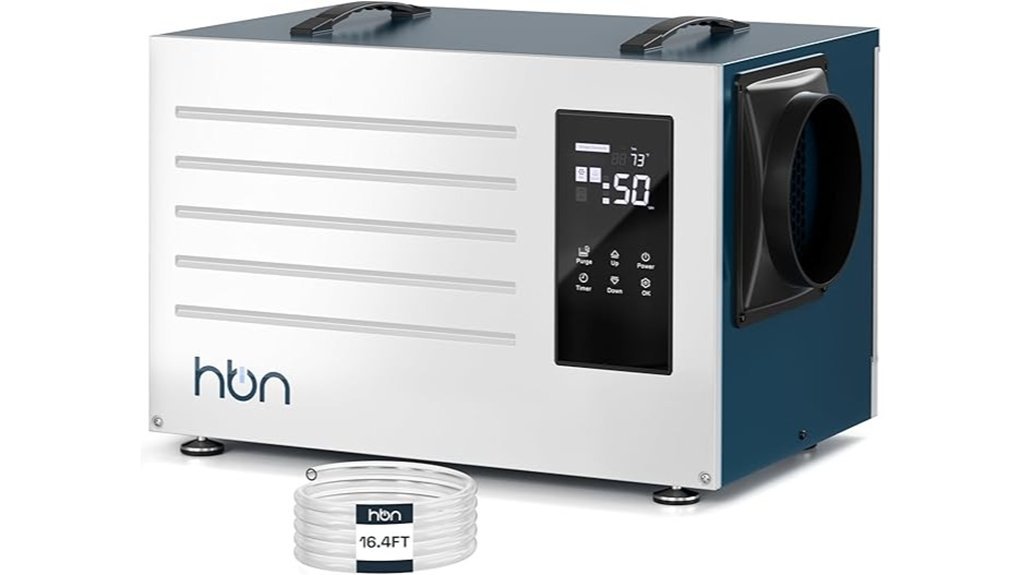
Struggling with excess moisture in your crawl space? The HBN 125 Pints Crawl Space Dehumidifier with Pump is designed for spaces where humidity can build up quietly and cause musty smells, condensation, and moisture problems. With a capacity of 125 pints per day, it effectively covers areas up to 5,900 sq. ft.
Its dual drainage system gives you flexibility, allowing either gravity drainage or an auto-pump that can lift water up to 16.4 ft. This matters because crawl spaces and basements often do not have a simple floor drain in the right place. You’ll also appreciate the touchscreen control panel and remote option, which make adjustments easier when the unit is installed in a hard-to-reach area. Automatic defrost and a built-in sensor help with steady humidity control.
Best For: Homeowners or businesses seeking an efficient solution for managing excess moisture in crawl spaces or large areas.
Why You’ll Like It: It is especially useful when access is awkward. Remote control, pump drainage, and automatic features reduce the need to crawl in and adjust the unit often.
Who Should Buy This: Choose this model if you need moisture control in a crawl space, basement, or large enclosed area with flexible drainage needs.
Who Should Avoid This: Avoid it if you need a simple plug-in unit for a small room or if your space has very limited clearance.
Pros:
- High Capacity: Dehumidifies up to 125 pints per day, making it suitable for large spaces up to 5,900 sq. ft.
- Dual Drainage Options: Offers flexible drainage solutions with both gravity and auto-pump systems.
- User-Friendly Controls: Features a touchscreen panel and remote control for convenient operation.
Cons:
- Size: May be bulky for smaller crawl spaces or tight areas.
- Weight Information Not Specified: Lack of weight details may be a concern for some users regarding portability.
- Limited Warranty Periods: The 1-year full warranty may not be as extensive as some competitors.
ALORAIR Commercial Dehumidifier with Pump (180 PPD)
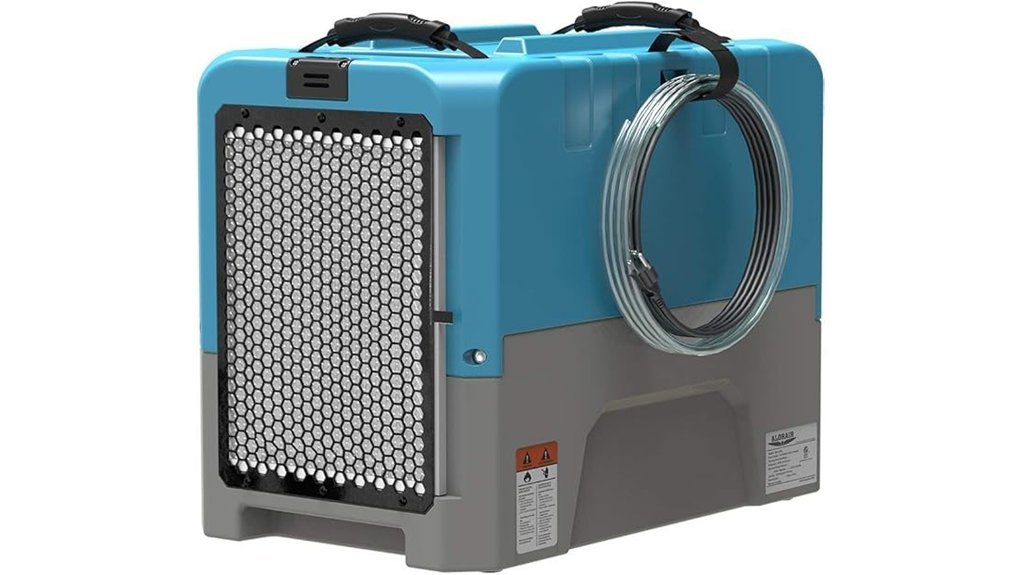
Looking for a powerful dehumidifier with a more portable commercial design? The ALORAIR Commercial Dehumidifier with Pump offers a capacity of up to 180 PPD at saturation and is designed for spaces up to 2,300 square feet. It is a good middle-ground choice for buyers who want strong drying performance but do not want the size and weight of the largest industrial units.
Its compact design, weighing 64.3 pounds, includes two handles for easier transport. With plug-and-go functionality, automatic condensate drainage, and high airflow of 210 CFM, it is built for faster drying in commercial or industrial spaces. Adjustable humidity settings and an advanced auto-defrost system help support efficient operation. It is also backed by a limited 6-year warranty and has ETL certification listed in the article.
Best For: Those needing an efficient, high-capacity dehumidifier for commercial or industrial spaces up to 2,300 square feet.
Why You’ll Like It: It balances capacity, portability, and automatic drainage. The handles are useful if you need to move the unit between rooms or job areas.
Who Should Buy This: Choose this model if you need a commercial dehumidifier for basements, job sites, storage areas, or medium-sized industrial spaces.
Who Should Avoid This: Avoid it if your building is much larger than the stated coverage area or if you need the highest-capacity restoration unit possible.
Pros:
- High capacity of 180 PPD at saturation, ideal for large areas.
- Built-in pump for automatic condensate drainage, reducing maintenance efforts.
- Compact and portable design with easy transport handles.
Cons:
- Weighs 64.3 pounds, which may be cumbersome for some users.
- Higher initial investment compared to smaller residential dehumidifiers.
- Limited to spaces up to 2,300 square feet, which may not suit larger facilities.
ALORAIR 113 Pint Commercial Dehumidifier (Sentinel HD55)
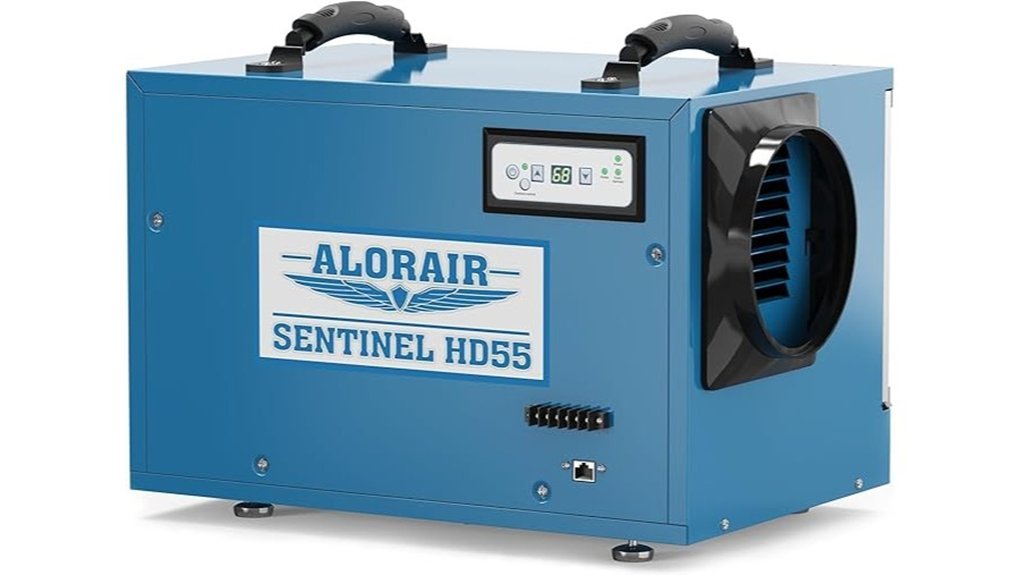
The ALORAIR 113 Pint Commercial Dehumidifier Sentinel HD55 is a compact option for managing humidity in spaces up to 1,200 sq. ft. It is especially appealing if you need commercial-style drying power but do not want a very large or heavy machine. Weighing 41.7 lbs, it is easier to transport than several other models in this list.
With a powerful airflow capacity of 120 CFM, this unit can reduce moisture in crawl spaces, basements, and warehouses. It operates continuously and features automatic drainage, so you do not need to rely on a water tank. The auto-defrost function helps reduce frost buildup, and adjustable humidity settings make it easier to target your preferred moisture level. A 6-year limited warranty adds extra confidence for buyers who want long-term support.
Best For: The ALORAIR 113 Pint Commercial Dehumidifier is best for individuals and businesses seeking effective humidity control in medium-sized spaces such as crawl spaces, basements, and warehouses.
Why You’ll Like It: It is one of the easier commercial options to place in tighter spaces. If you care about compact size and continuous drainage, this model is worth considering.
Who Should Buy This: Choose this model for medium-size crawl spaces, basements, or storage areas where compact design matters.
Who Should Avoid This: Avoid it if you need coverage for a much larger commercial facility or want a built-in pump for upward drainage.
Pros:
- High Capacity: Able to dehumidify up to 113 pints per day, ideal for large areas.
- Automatic Drainage: Eliminates the hassle of manually emptying a water tank.
- Energy Efficient: Auto defrost feature helps conserve power.
Cons:
- Weight: At 41.7 lbs, it may be less portable for some users.
- Limited Color Options: Only available in blue, which may not suit all aesthetics.
- Noise Level: The operational noise may be noticeable in quiet environments.
125 Pints Commercial Dehumidifier for Crawl Spaces
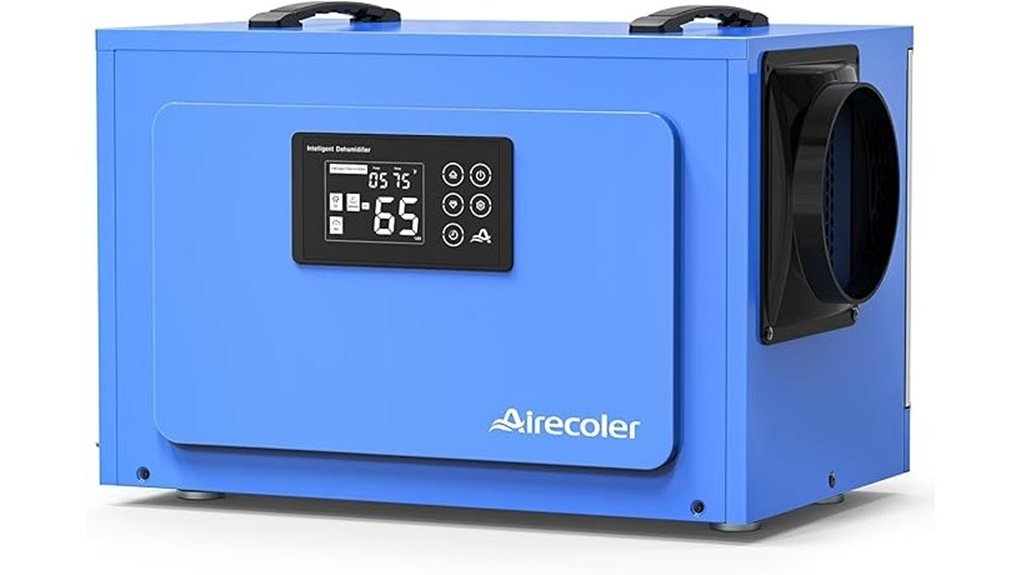
For commercial spaces like crawl spaces and basements, the Airecoler GT-X5 is a useful choice. This 125-pint dehumidifier efficiently covers areas up to 6,000 sq ft, making it suitable for larger environments where moisture can collect under floors, around foundations, or in storage spaces.
Its compact design helps it fit in low-clearance spaces, and it can be placed freestanding or suspended. With a powerful airflow capacity of 265 cubic feet per minute, it is designed to tackle humidity issues quickly. The energy-efficient R32 system helps reduce electricity costs, while user-friendly features like an intuitive control panel and continuous drainage make daily operation easier. The article also lists a 5-year warranty, which adds useful peace of mind.
Best For: Commercial spaces such as crawl spaces, basements, and warehouses seeking effective humidity control.
Why You’ll Like It: It is built around crawl-space practicality, with compact placement options, strong airflow, and continuous drainage.
Who Should Buy This: Choose this model if you need a crawl-space-ready dehumidifier with good coverage and flexible placement.
Who Should Avoid This: Avoid it if you need a lightweight room dehumidifier or a unit with a clearly stated pump lift requirement for your setup.
Pros:
- High Capacity: Removes up to 125 pints of moisture daily, ideal for large areas.
- Energy Efficient: Utilizes an R32 dehumidification system to lower electricity costs.
- User-Friendly: Intuitive control panel and continuous drainage options simplify operation.
Cons:
- Weight: At 50 pounds, it may be cumbersome to move for some users.
- Initial Cost: Higher upfront investment compared to smaller residential models.
- Noise Level: May produce noticeable sound during operation, which could be disruptive in quiet environments.
Factors to Consider When Choosing a Commercial Dehumidifier in Canada
When choosing a commercial dehumidifier in Canada, you’ll want to consider several key factors before buying. Start with coverage area, dehumidification capacity, drainage options, energy use, noise level, portability, and safety features. The right model is not always the biggest one. It is the one that matches your room size, moisture level, drainage setup, and daily usage needs.
Before You Buy Checklist
- Measure the square footage of the damp area.
- Decide whether you need gravity drainage or a built-in pump.
- Check the unit weight if you plan to move it between rooms or job sites.
- Confirm the power requirements match your location.
- Look for auto-defrost if the unit will run in cooler spaces.
- Check the warranty and support details before purchasing.
Key Specifications to Evaluate
Choosing the right commercial dehumidifier for your needs in Canada can make a significant difference in maintaining ideal humidity levels. First, consider the dehumidification capacity, measured in pints per day. Higher-capacity models are useful for very damp spaces, but they may also be larger, heavier, and more power-hungry. Next, evaluate the airflow rate in cubic feet per minute (CFM), since stronger airflow can improve moisture removal efficiency in larger areas.
Don’t overlook energy efficiency. A commercial dehumidifier may run for long periods, so power use can affect operating costs over time. Finally, assess the drainage options available. Units with built-in pumps can make drainage easier, especially in spaces where gravity drains aren’t feasible.
Coverage Area Requirements
Understanding the coverage area requirements is essential for selecting the right commercial dehumidifier in Canada. The models in this article range from compact commercial options to large-space units that claim coverage for thousands of square feet. The specific environment also matters. Spaces like basements, crawl spaces, warehouses, and restoration areas may need higher-capacity models because they often have higher moisture loads.
Pay attention to airflow capacity, measured in cubic feet per minute (CFM), because higher airflow helps move damp air through the unit more efficiently. Also consider the source of moisture. A sealed storage room with mild humidity is different from a wet basement, flood-damaged area, or poorly ventilated crawl space.
Dehumidification Capacity Needs
How do you determine the right dehumidification capacity for your commercial space? Start by looking at the capacity measured in pints per day (PPD). A 113 to 125 pint unit may work well for many crawl spaces, basements, and medium commercial areas, while a 155 to 310 pint unit is better suited for larger or more demanding spaces.
Consider the humidity levels and specific moisture sources in your environment. If the area smells musty, has visible condensation, or stays damp even with ventilation, you may need a more powerful model. Matching the dehumidifier’s capacity to your needs helps support peak performance and effective moisture control.
Drainage Options Available
When selecting a commercial dehumidifier, considering drainage options is essential for reliable performance. Many models feature built-in pumps, allowing for automatic drainage and water movement up to 16.4 feet away. This is especially useful in crawl spaces, basements, and rooms where the drain location is not below the unit.
If you prefer gravity drainage, look for units with a standard drain hose. Some dehumidifiers offer dual drainage systems, combining both gravity hoses and built-in pumps for added flexibility. Automatic drainage systems help prevent water buildup, reduce overflow risk, and make the unit easier to run for long periods.
Energy Efficiency Rating
Selecting a commercial dehumidifier with a strong energy efficiency rating can save money over time, especially if the unit runs daily. Look for models that remove more moisture per watt consumed. Choosing a dehumidifier with lower wattage can also help reduce energy use, but only if the unit is still powerful enough for your space.
Proper sizing is important. An undersized unit may run constantly without reaching the target humidity, while an oversized unit may cycle too often. For best results, match the capacity to your moisture level, square footage, and room conditions.
Portability and Design Features
Many businesses find that portability and design features are essential when choosing a commercial dehumidifier. Look for models with handles, wheels, compact dimensions, or rugged casings if you plan to move the unit between job sites or rooms. Crawl space models should be compact enough to fit in low-clearance areas, while warehouse units should be durable enough for demanding environments.
Durability is key, so consider units made from heavy-duty galvanized steel or strong molded materials. Adjustable humidity settings and digital controls improve usability, allowing you to manage moisture levels more precisely. A built-in pump and flexible drainage options can also reduce manual work.
Noise Level Considerations
Portability and design features are only part of the equation; noise level is another factor to keep in mind. Commercial dehumidifiers can produce noticeable operating sound, especially larger models with stronger compressors and airflow. If you’re using one in an office, retail area, rental space, or residential basement, check the listed noise level and user feedback before buying.
For job sites, warehouses, and restoration work, noise may be less important than capacity. For finished basements or work areas, a quieter model may be worth prioritizing.
Safety Features Included
When choosing a commercial dehumidifier, safety features should be part of your decision. Look for models with an auto defrost feature to help prevent ice buildup in cooler spaces. Water overflow protection can shut the unit down when water levels get too high, helping reduce spills and damage. A screen lock function can also help prevent accidental setting changes.
Humidity level controls let you set precise targets, helping prevent excess moisture without over-drying the space. Built-in pump systems allow automatic drainage, reducing the need for manual emptying and lowering the risk of leaks from an overflowing tank.
Pro Tip for Canadian Buyers
If the dehumidifier will run in a cool basement, garage, or crawl space, prioritize auto-defrost and continuous drainage. Cold conditions can reduce drying performance, and manual bucket emptying can become frustrating during long damp seasons.
Safety Note
Commercial dehumidifiers can be heavy and may draw more power than small residential units. Place the unit on a stable surface, keep airflow vents clear, confirm drainage is secure, and check that your electrical setup matches the product requirements before continuous operation.
Frequently Asked Questions
How Do I Maintain My Commercial Dehumidifier?
To maintain your commercial dehumidifier, regularly clean the filter, check the water reservoir or drain line, and inspect the coils for dust. Make sure the airflow path stays clear, monitor humidity levels, and schedule professional servicing when needed to keep it running efficiently.
What Size Dehumidifier Do I Need for My Space?
Choosing the right dehumidifier is like picking the right umbrella; too small, and you’ll still get wet. Measure your space’s square footage, consider how damp it is, and choose a unit with enough pints-per-day capacity for the moisture level. For larger commercial areas, crawl spaces, and wet basements, a higher-capacity model is usually a better fit.
Are Commercial Dehumidifiers Energy-Efficient?
Yes, many commercial dehumidifiers are designed to manage humidity while limiting unnecessary power use. Energy efficiency depends on the model, capacity, operating conditions, and how well the unit is matched to the space. A properly sized dehumidifier can often work more efficiently than an undersized unit that runs nonstop.
Can I Use a Dehumidifier in Winter?
Yes, you can use a dehumidifier in winter if the space has excess moisture. It can help reduce dampness, musty smells, mold risk, and condensation. However, make sure the model is suitable for lower-temperature operation and has auto-defrost if it will run in a cold basement, garage, or crawl space.
What Is the Average Lifespan of a Commercial Dehumidifier?
The average lifespan of a commercial dehumidifier is typically around 5 to 10 years, depending on usage, environment, maintenance, and build quality. Keeping filters clean, protecting airflow, and maintaining the drainage system can help extend the unit’s life.
Is a Built-In Pump Worth It?
A built-in pump is worth it if the water needs to drain upward, across a distance, or into a sink, utility drain, or higher drain point. If your dehumidifier can sit near a floor drain, gravity drainage may be enough. For crawl spaces and basements, a pump can make installation much easier.
Which Commercial Dehumidifier Is Best for Crawl Spaces?
For crawl spaces, look for a compact commercial dehumidifier with continuous drainage, auto-defrost, strong airflow, and a design that fits low-clearance areas. The HBN 125 Pints Crawl Space Dehumidifier and Airecoler GT-X5 are both positioned around crawl space use in this article.
Final Recommendation
If you want the strongest drying power, the MOUNTO 310 Pints Commercial Dehumidifier with Pump is the heavy-duty pick. If you want a balanced commercial option with pump drainage for a large space, the Airzentti ACD155P-PG100(B) is a strong choice. For crawl spaces, the HBN 125 Pints Crawl Space Dehumidifier with Pump and Airecoler GT-X5 are better aligned with low-clearance, continuous-drainage needs.
Before buying, confirm the latest specs, drainage setup, voltage, warranty, and dimensions on Amazon so the unit fits your space and installation plan.
Conclusion
In summary, choosing the right commercial dehumidifier for your needs can feel like finding a needle in a haystack. But with options like the VEVOR, MOUNTO, Airzentti, HBN, ALORAIR, and Airecoler models, you’re already on the right track. Keep your specific requirements in mind, including room size, humidity level, drainage location, noise tolerance, portability, and energy use. By picking wisely, you can create a drier, more comfortable environment and keep excess humidity from taking over your space.