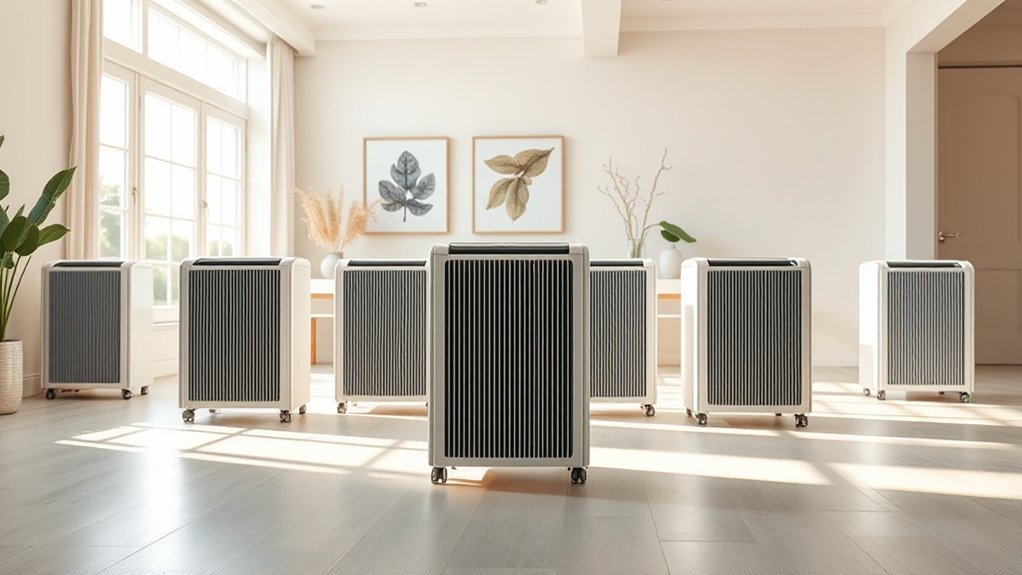
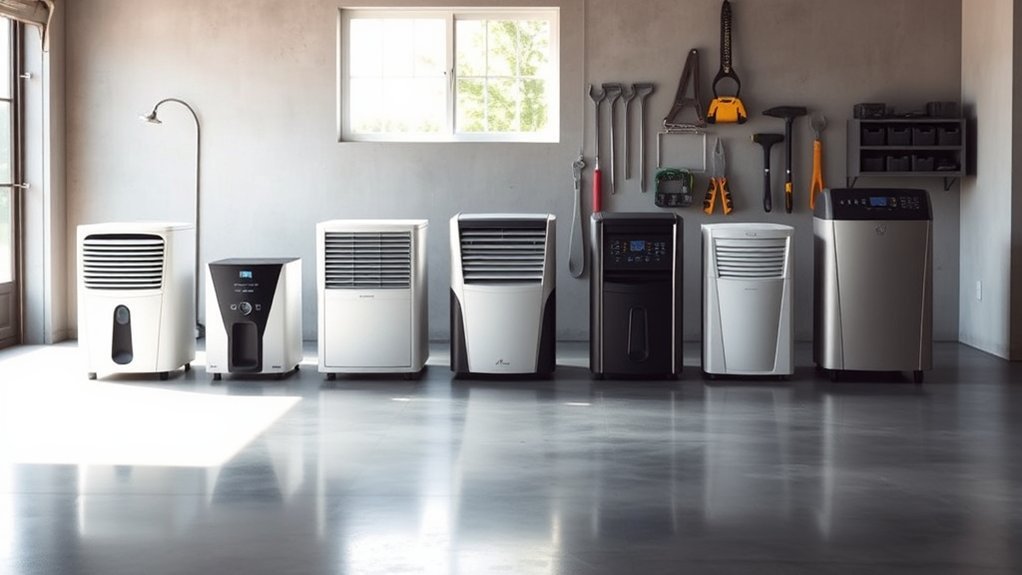
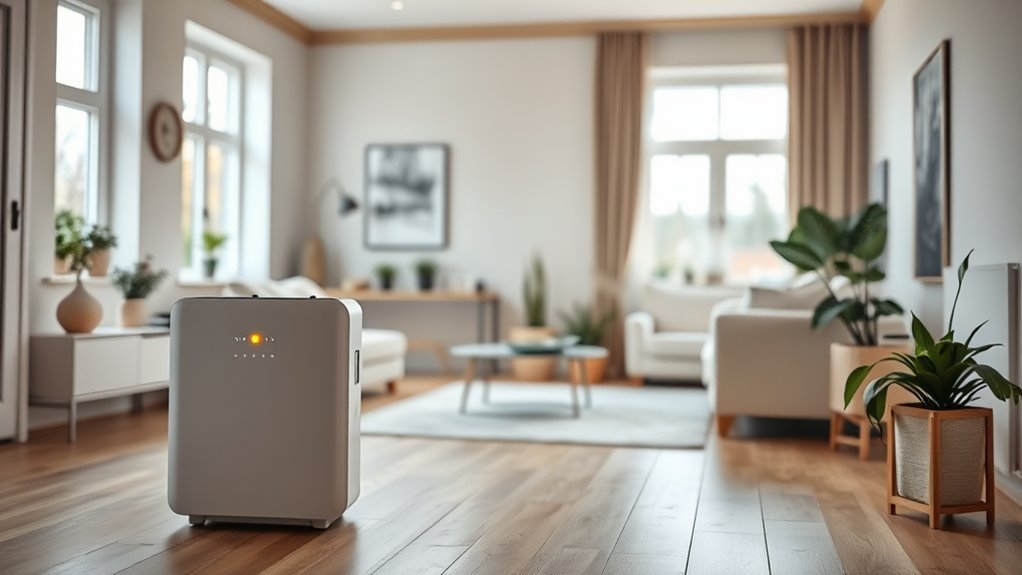
For a child’s room in 2026, choose a dehumidifier that is quiet, stable, easy to clean, and equipped with automatic shut-off. Based on the supplied feature sets, the KeepGlad 98 oz model offers the best overall controls, the Natrogix CS3 is the strongest quiet large-tank option, and the TABYIK 35 oz unit is a practical pick for a small bedroom. Compact semiconductor models are best for light humidity; they are not a substitute for repairing leaks, improving ventilation, or using a full-size compressor dehumidifier when moisture is severe.
Key Takeaways
- Do not buy by square-foot claim alone. Compare tank size, daily extraction, room temperature, and actual humidity.
- Auto shut-off is essential, but it does not replace safe placement, cord management, cleaning, and adult supervision.
- Use fragrance-free operation in a child’s room. Avoid built-in aromatherapy features and scented passive absorbers when a child is sensitive to fragrance or has breathing concerns.
- Mini thermoelectric units are light-duty. Persistent condensation, visible mold, or water intrusion needs source control and possibly a larger dehumidifier.
Quick Comparison
Coverage and moisture-removal figures are manufacturer-listed maximums and often assume warm, very humid test conditions. A compact thermoelectric model may not control a large or severely damp room even when the listing advertises high square-foot coverage.
TENKER Home Dehumidifier with 77 oz Tank and Sleep Mode
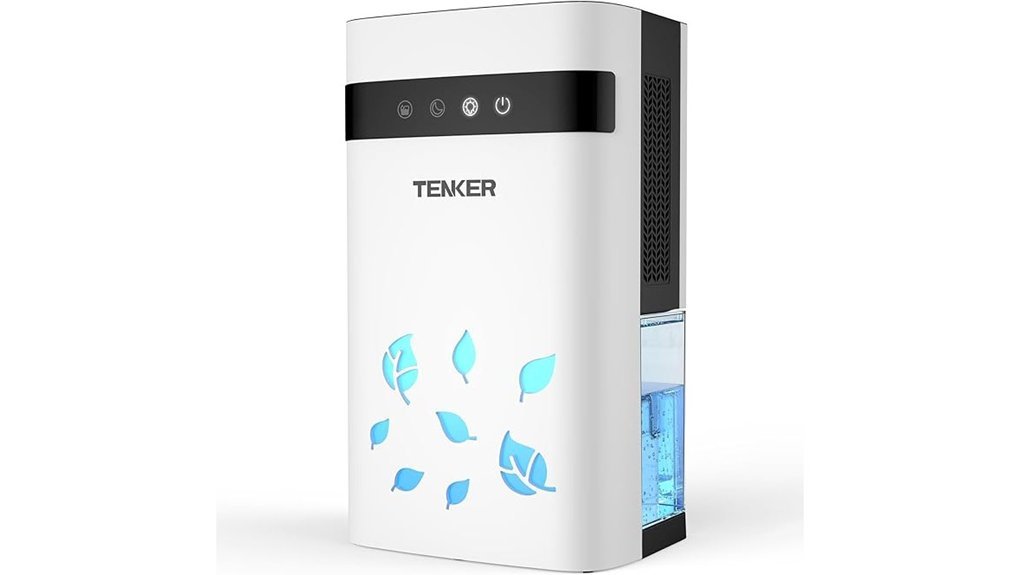
Label based on the supplied and currently verifiable feature set, not hands-on testing.
The TENKER Home Dehumidifier is a practical choice for a bedroom where low noise and simple controls matter. The listing pairs a 77 oz tank with auto shut-off, sleep mode, and a seven-color light. Its semiconductor system is intended for light to moderate moisture control in an enclosed room; the advertised 1,000 sq. ft. coverage should not be treated as equal to the capacity of a full-size compressor dehumidifier.
Best For: Parents who want a straightforward, quiet unit with a larger tank and an optional night-light effect.
Why You’ll Like It: Sleep mode is listed below 30 dB, and the full-tank shutoff reduces spill risk when the unit is used correctly.
Who Should Avoid It: Avoid it for active leaks, severe dampness, or a large open floor plan.
Pros:
- Sleep mode is listed below 30 dB.
- 77 oz tank and auto shut-off reduce frequent checks.
- Ambient light can be turned into a soft visual cue at night.
Cons:
- Manufacturer coverage claims may be optimistic in real rooms.
- Semiconductor models remove less moisture than compressor units.
- The tank can still need frequent emptying in high humidity.
BEDRED 95 oz Dehumidifier with Ambient Light
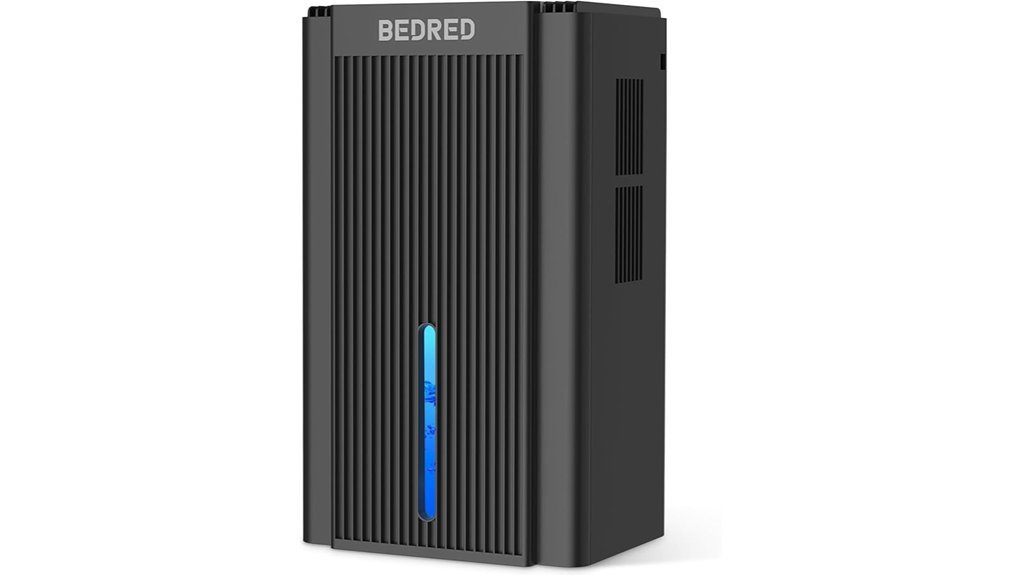
Label based on the supplied and currently verifiable feature set, not hands-on testing.
The BEDRED CT11 combines a 95 oz tank, thermoelectric moisture removal, auto shut-off, sleep mode, and a seven-color light. It is marketed for spaces up to 1,000 sq. ft., but it is better viewed as a compact room unit for light humidity rather than a substitute for a high-capacity compressor dehumidifier.
Best For: Families who want a large tank, simple operation, and a light-off sleep setting.
Why You’ll Like It: The tank capacity and automatic shutoff make day-to-day use easier, while the compact body fits a bedroom without taking much floor space.
Who Should Avoid It: Skip it when the room stays above the target humidity despite ventilation and moisture-source repairs.
Pros:
- 95 oz tank supports longer operation between emptying.
- Sleep mode and auto shut-off suit bedroom use.
- The light can be selected or turned off.
Cons:
- Advertised coverage does not guarantee whole-room performance.
- No verified built-in humidistat target is stated in the source.
- Thermoelectric performance falls in cool or very damp conditions.
Posdry VS-DH07 Mini Dehumidifier with Drain Hose
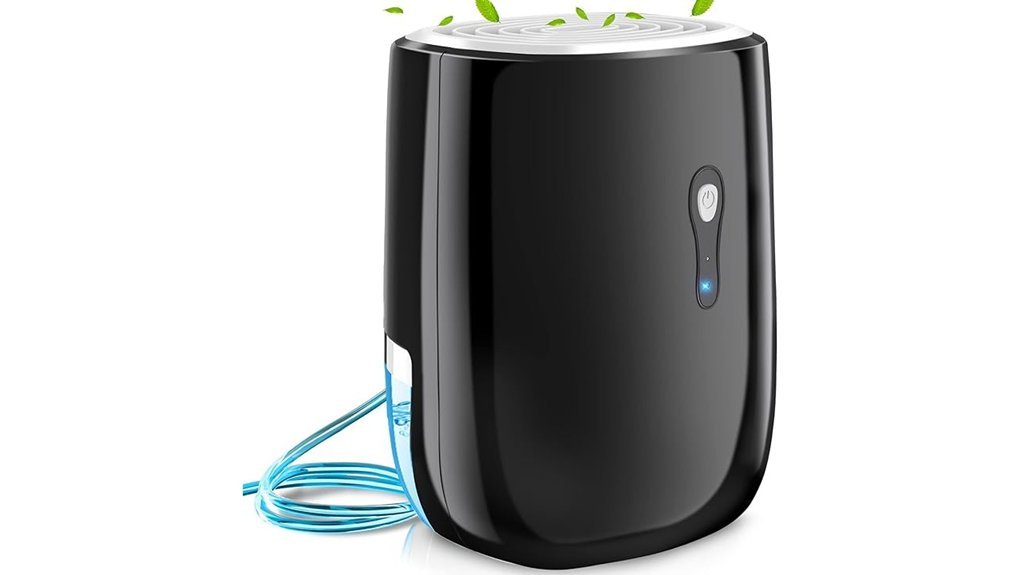
Label based on the supplied and currently verifiable feature set, not hands-on testing.
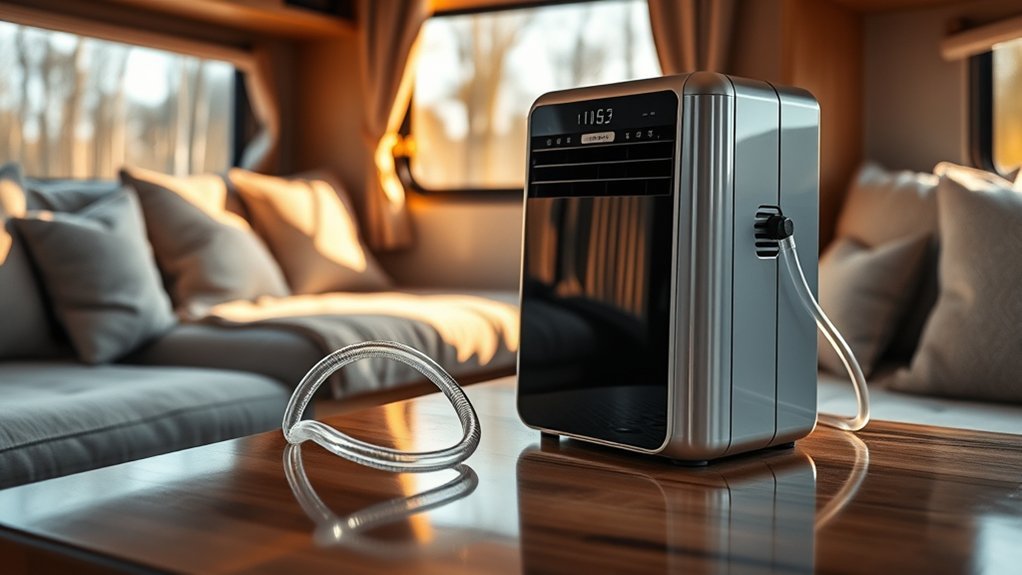
The Posdry VS-DH07 is one of the more useful compact picks when you can route a hose safely to a drain. It has an approximately 28 oz tank, a 3.28 ft drain hose, auto shut-off, and a listed extraction rate of up to 350 ml per day under favorable conditions. It is intended for small enclosed spaces rather than a full-size bedroom with a serious moisture problem.
Best For: Small bedrooms or closets where continuous drainage can be set up without creating a trip or leak hazard.
Why You’ll Like It: The drain hose can reduce manual emptying, and the compact footprint works well in tight spaces.
Who Should Avoid It: Do not run a loose hose across a child’s walking area or rely on this unit below its recommended operating temperature.
Pros:
- Includes a drain hose for continuous drainage.
- Compact body fits small rooms and closets.
- Auto shut-off and full-tank light provide basic protection.
Cons:
- The small extraction rate is for light humidity only.
- Performance drops in cooler conditions.
- Hose placement must be secure and out of reach.
SANVINDER DH-CS17 Portable Dehumidifier
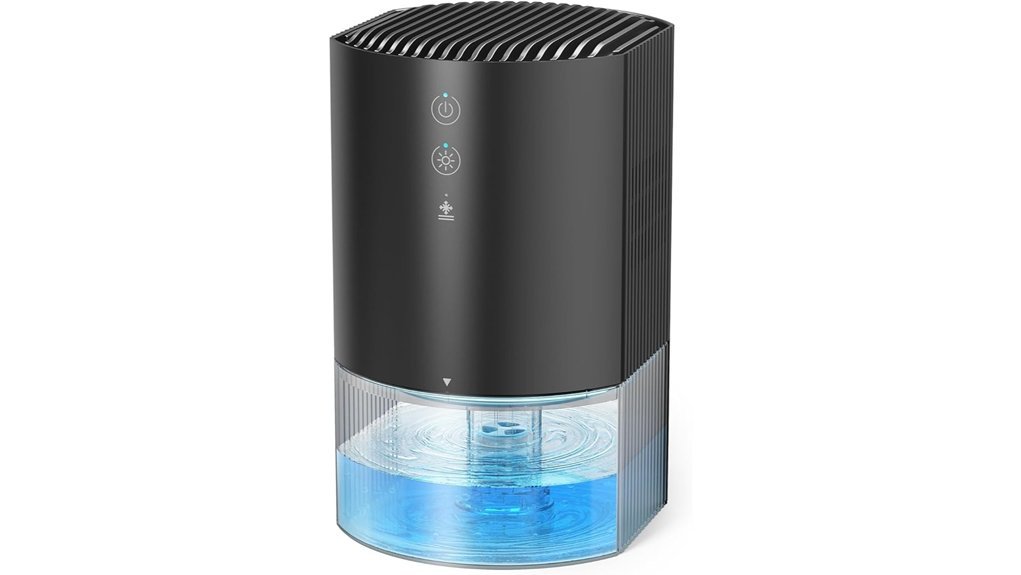
Label based on the supplied and currently verifiable feature set, not hands-on testing.
The DH-CS17 linked in the source is identified in current manuals and listings as a SANVINDER model, not “avylo.” It is a compact semiconductor dehumidifier with a roughly 33–35 oz tank, auto shut-off, colorful lighting, and a listed noise level below 25 dB. Its advertised output of up to 16 oz per day applies to warm, humid test conditions.
Best For: A small bedroom, closet, dorm room, or RV where very low operating noise matters.
Why You’ll Like It: Its low listed noise and small footprint make it easy to place away from the bed while still serving a compact room.
Who Should Avoid It: Avoid it for large rooms, cold rooms, or moisture caused by a leak.
Pros:
- Listed below 25 dB for quiet use.
- Compact tank design is easy to remove and clean.
- Auto shut-off helps prevent overflow.
Cons:
- Single-speed operation offers limited control.
- Output depends heavily on temperature and humidity.
- Not designed for heavy-duty dehumidification.
KeepGlad 98 oz Dehumidifier with Humidity Display
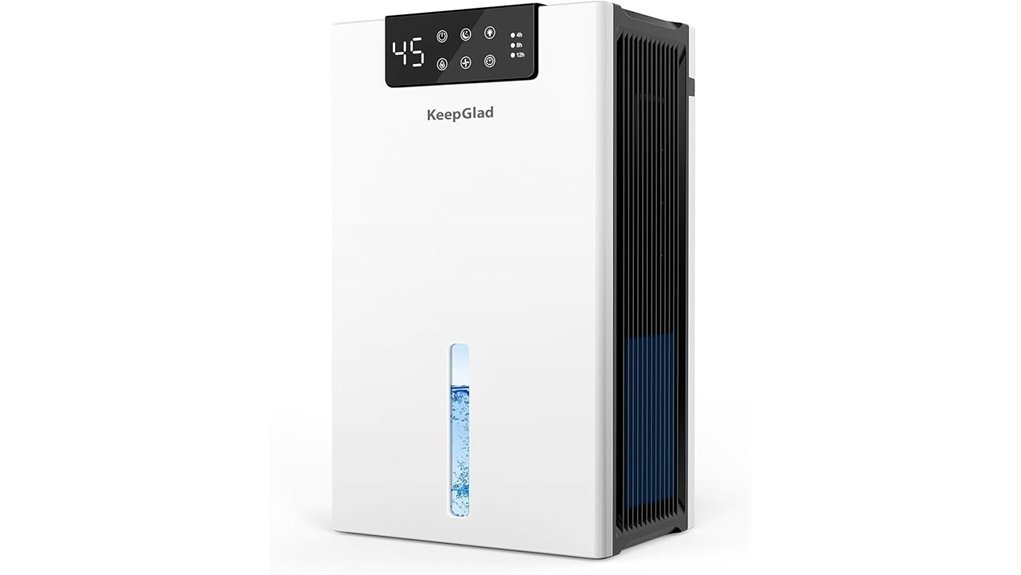
Label based on the supplied and currently verifiable feature set, not hands-on testing.
KeepGlad offers the strongest control set in this group: a 98 oz tank, humidity display, timer, washable filter, drain-hose option, three fan speeds, auto shut-off, and ambient lighting. The listing advertises coverage up to 1,000 sq. ft.; for a child’s bedroom, the more important question is whether it can hold the room near the chosen humidity range during normal use.
Best For: Parents who want a display, timer, multiple speeds, and the option to use continuous drainage.
Why You’ll Like It: The display and adjustable operation make it easier to monitor trends instead of guessing whether the room is still damp.
Who Should Avoid It: Skip it if you only need a tiny closet unit or if the hose cannot be routed safely.
Pros:
- Humidity display and timer improve day-to-day control.
- 98 oz tank, drain hose, and washable filter add convenience.
- Three speeds provide more flexibility than one-button mini units.
Cons:
- The advertised 1,000 sq. ft. figure may overstate practical performance.
- A larger feature set means more settings to childproof.
- The tank still needs cleaning even with hose drainage.
Eva-Dry EDV-1100 Petite Dehumidifier
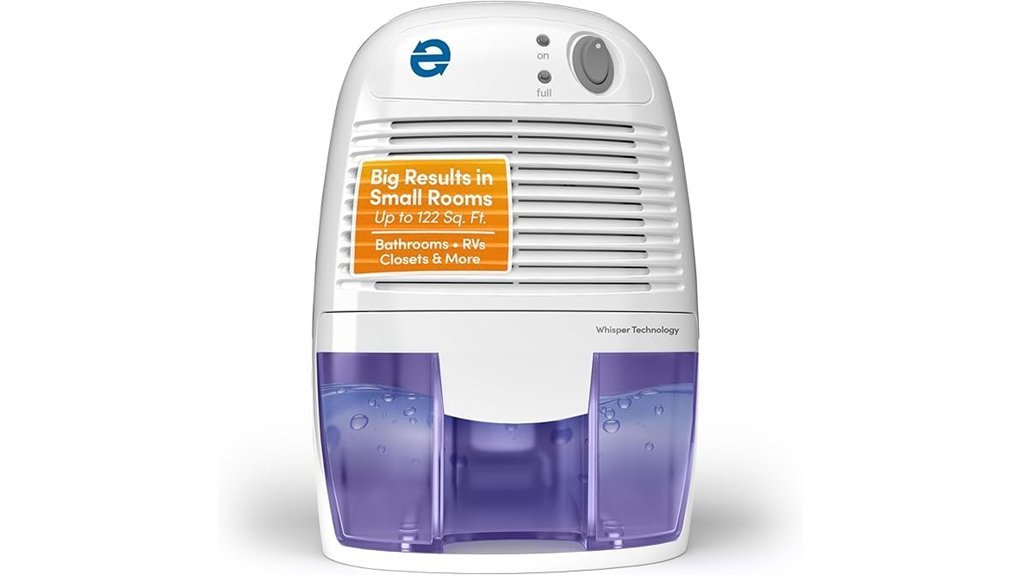
Label based on the supplied and currently verifiable feature set, not hands-on testing.
The Eva-Dry EDV-1100 is a long-running compact model with a 16 oz tank, automatic shut-off, and automatic restart. It is best for a very small room, closet, bathroom, or storage area. Published coverage figures vary, so treat it as a close-range moisture-control device rather than a whole-bedroom solution.
Best For: Very small bedrooms or enclosed spaces where a simple plug-in unit is enough.
Why You’ll Like It: It has a small footprint, familiar controls, and a removable tank that is easy to inspect.
Who Should Avoid It: Avoid it when you need fast drying, a hose connection, or precise humidity control.
Pros:
- Compact design fits shelves and tight corners.
- Auto shut-off and restart add convenience.
- Simple operation with no complicated settings.
Cons:
- Small tank requires regular checking.
- No drain-hose option.
- Limited capacity for larger or persistently damp rooms.
Natrogix CS3 Dehumidifier with 106 oz Tank
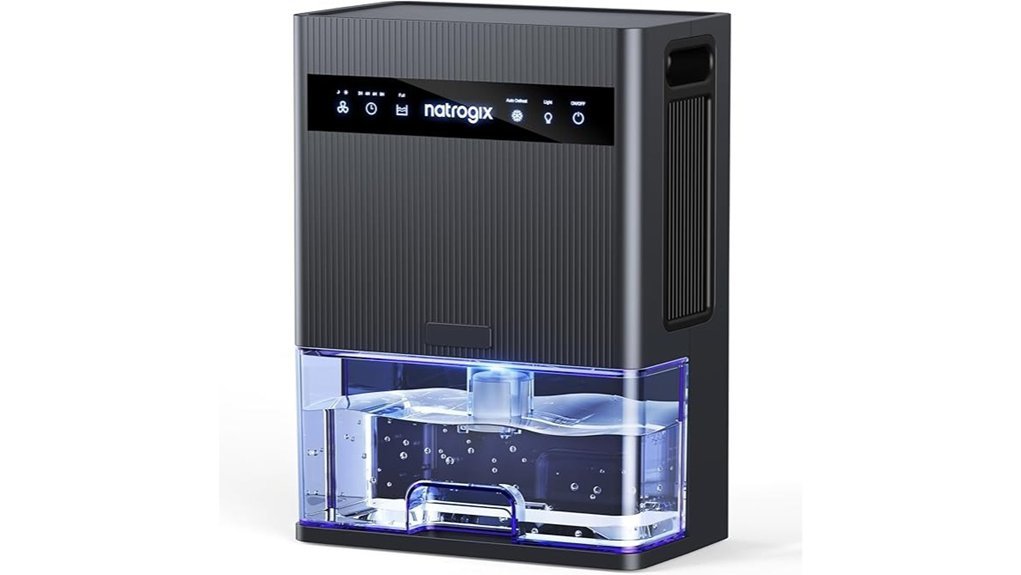
Label based on the supplied and currently verifiable feature set, not hands-on testing.
The Natrogix CS3 pairs a 106 oz tank with dual semiconductor modules, auto shut-off, smart defrost, timer settings, and a lights-off sleep mode. The manufacturer lists up to 40 oz of moisture removal per day at 86°F and 80% relative humidity, so real-world output will be lower in cooler or less humid rooms.
Best For: A medium-size bedroom where a large tank and very quiet sleep setting are priorities.
Why You’ll Like It: Its 20 dB listed sleep mode, large tank, and defrost function make it one of the more complete thermoelectric options here.
Who Should Avoid It: Do not treat the 1,000 sq. ft. marketing claim as proof it can manage severe whole-room dampness.
Pros:
- Large 106 oz tank reduces emptying frequency.
- Sleep mode is listed at 20 dB with lights off.
- Auto shut-off, timer, and smart defrost add useful safeguards.
Cons:
- Maximum output is based on hot, very humid test conditions.
- Larger than the smallest bedside units.
- Still not a replacement for a compressor dehumidifier in severe humidity.
TABYIK 35 oz Small-Room Dehumidifier
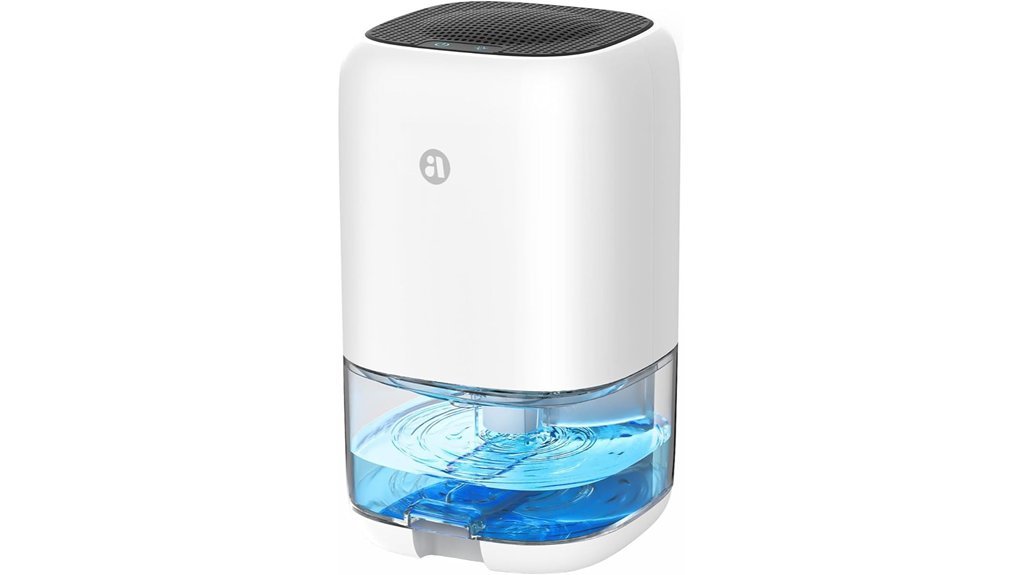
Label based on the supplied and currently verifiable feature set, not hands-on testing.
The TABYIK 35 oz model is a popular small-space option with auto shut-off, a clear tank, a carry handle, and seven-color lighting. The manufacturer markets it for rooms up to about 280 sq. ft. and lists up to 16 oz of daily collection at 86°F and 80% relative humidity.
Best For: A small child’s bedroom where compact size, low noise, and simple controls matter more than maximum output.
Why You’ll Like It: It is easy to move, easy to monitor through the clear tank, and listed at about 28 dB.
Who Should Avoid It: Avoid it for basements, water damage, or large bedrooms with persistent humidity.
Pros:
- Compact 35 oz design fits on a stable shelf or dresser.
- Auto shut-off and visible tank make maintenance easy to track.
- Low listed noise suits sleep areas.
Cons:
- Modest output compared with full-size units.
- Performance depends on warm, humid conditions.
- No humidity target control or drain hose.
BREEZOME 60 oz Dehumidifier with Timer
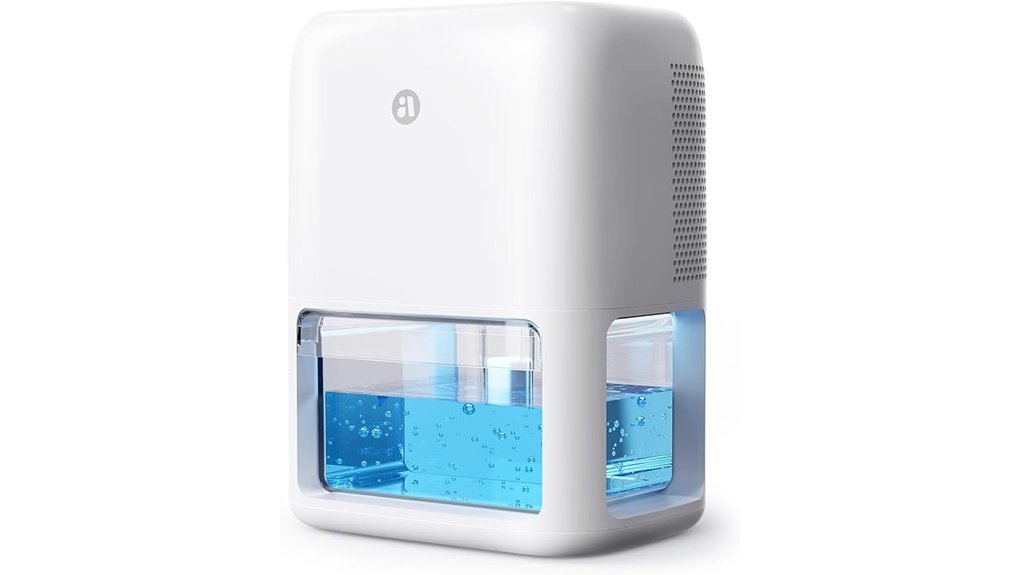
Label based on the supplied and currently verifiable feature set, not hands-on testing.
The BREEZOME 60 oz model combines dual-semiconductor moisture collection with a 12-, 24-, 36-, or 48-hour timer, sleep mode, auto shut-off, and automatic defrost. The listing states up to 700 ml per day under favorable test conditions, making it more capable than many tiny one-module units while remaining compact.
Best For: Families who want scheduled operation and a medium-size tank in a small bedroom.
Why You’ll Like It: The timer makes it easier to run the unit around sleep, school, and cleaning routines.
Who Should Avoid It: Avoid it if you need a hose connection or verified whole-room control in a large bedroom.
Pros:
- Multiple timer choices support planned use.
- 60 oz tank balances capacity and portability.
- Sleep mode, shutoff, and defrost improve convenience.
Cons:
- Tank must be emptied manually.
- Maximum output is a laboratory-style claim.
- No built-in target-humidity setting is stated.
DH-A2 58 oz Dehumidifier with Timer and Color Lights
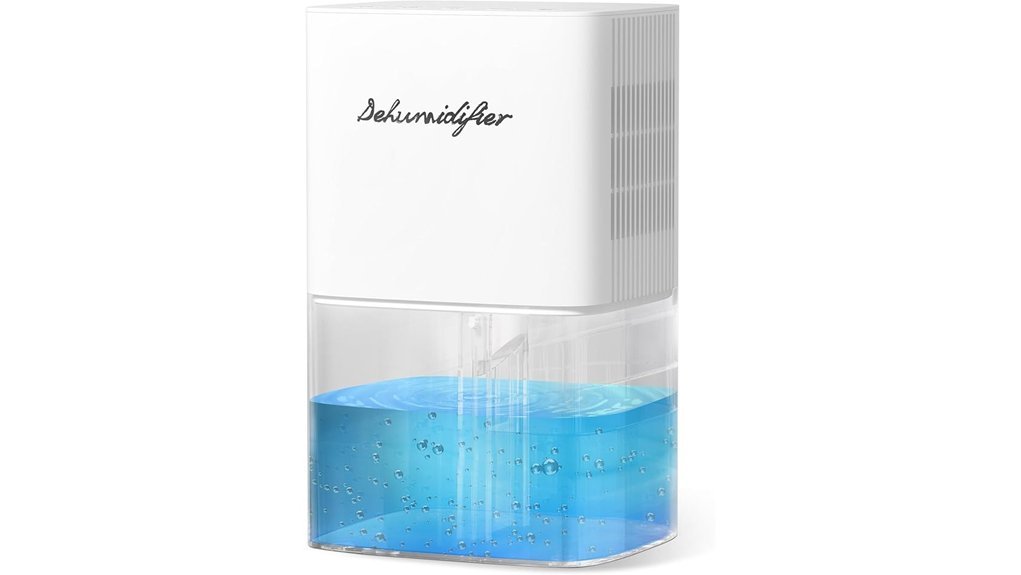
Label based on the supplied and currently verifiable feature set, not hands-on testing.
The DH-A2 has a 1,657 ml (about 58 oz) tank, three operating modes, five timer choices, ten light colors, auto shut-off, and advertised coverage around 230 sq. ft. Its listed extraction rate is about 0.3 liters per day, so it is intended for light moisture control rather than rapid drying.
Best For: A small bedroom where adjustable light and timer settings are useful.
Why You’ll Like It: The controls offer more customization than basic one-button models, including the option to choose a quieter sleep setting.
Who Should Avoid It: Skip it if the room has heavy condensation, visible mold, or a moisture source that needs repair.
Pros:
- Three modes and five timer choices offer flexible scheduling.
- Ten light colors can be selected or turned off.
- Auto shut-off provides full-tank protection.
Cons:
- 0.3 L/day is a light-duty output.
- The generic product identity offers less brand transparency.
- Coverage is limited to small rooms.
68 oz Dehumidifier with Adjustable Humidity Targets
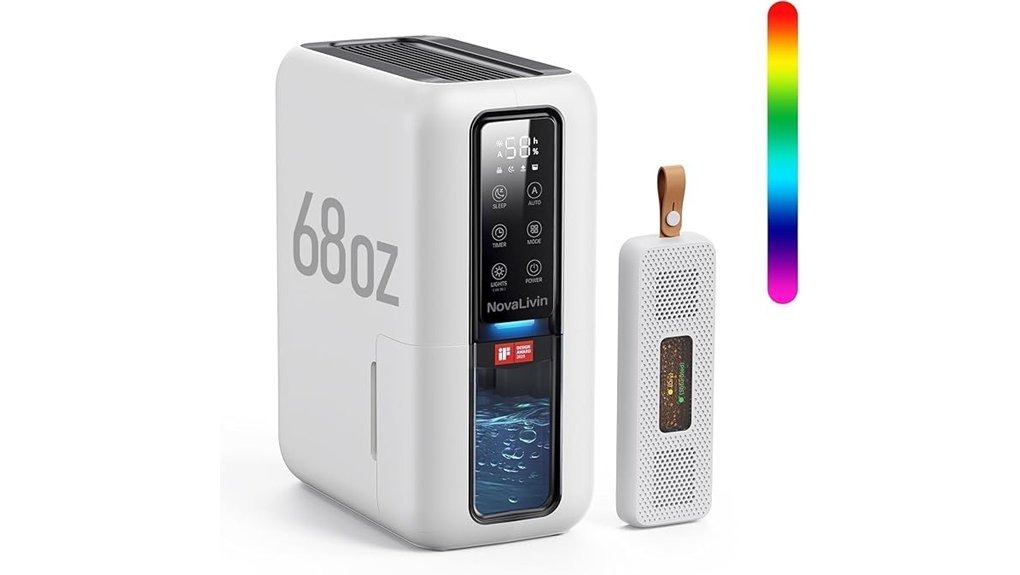
Label based on the supplied and currently verifiable feature set, not hands-on testing.
This 68 oz model stands out because it offers 40%, 50%, and 60% humidity targets, two speed levels, a 24-hour timer, dry mode, auto shut-off, and a light-off sleep setting. The listing states up to 34 oz of daily moisture removal under warm, humid conditions and practical coverage closer to a small room than a whole home.
Best For: Parents who want a selectable humidity target instead of simple on/off operation.
Why You’ll Like It: The target settings can reduce over-drying and make overnight use easier to manage when the room actually needs dehumidification.
Who Should Avoid It: Avoid using dry mode around children’s clothing or bedding unless the manual clearly explains safe placement and airflow.
Pros:
- Selectable 40%, 50%, and 60% targets improve control.
- Two speeds, timer, sleep mode, and auto shut-off add flexibility.
- 68 oz tank is larger than many mini models.
Cons:
- Brand identity is not clear in the supplied copy.
- Maximum output depends on high-humidity test conditions.
- The full-tank alarm may be noticeable at night.
Factors to Consider When Choosing a Dehumidifier for a Child’s Room
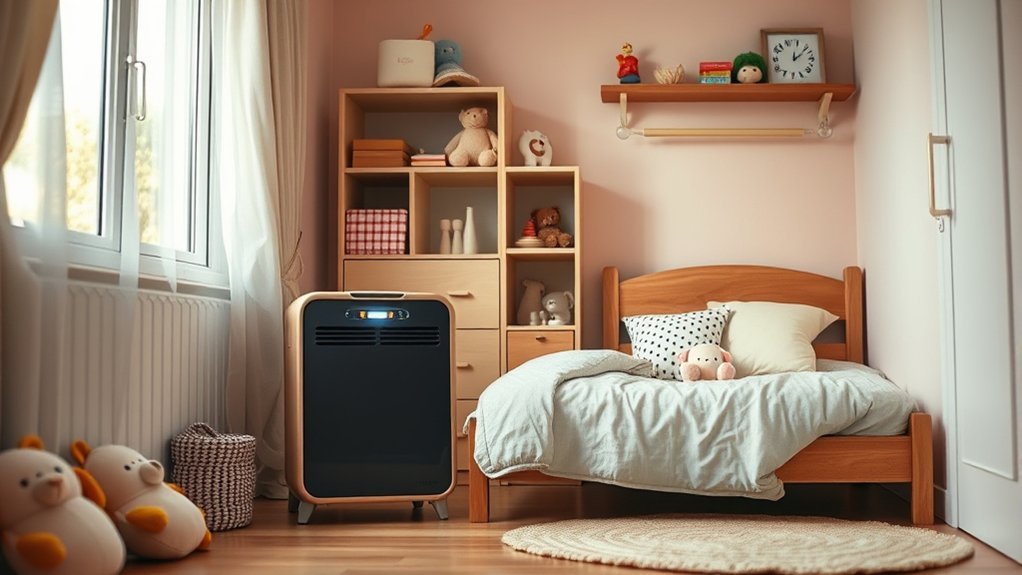
The right unit should match the room’s real humidity problem, not just the marketing headline. Start with a separate hygrometer, identify any leak or ventilation issue, and then choose a dehumidifier with enough output, safe controls, and a tank or drain setup you can maintain.
Noise Level
For sleep areas, compare the listed decibel rating in the mode you will actually use. A sleep mode around 20–35 dB is easier to live with than a louder high-speed setting, but manufacturer noise claims may be measured under ideal conditions. Place the unit several feet from the bed when the manual allows, keep air inlets clear, and turn off decorative lights if they disturb sleep.
Humidity Target and Hygrometer
A practical household target is generally 30%–50% relative humidity. Use a separate hygrometer because many mini units do not include an accurate humidistat. If the room falls below the chosen range, turn the unit down or off. If it stays high despite continuous use, the dehumidifier may be undersized or the room may have an unresolved moisture source. See the EPA indoor-air guidance for more information.
Auto Shut-Off
Auto shut-off stops collection when the tank is full or incorrectly seated, helping reduce overflow risk. Treat it as a required feature, but still inspect the tank daily during humid weather. Do not assume auto shut-off makes any electrical appliance safe for a child to touch or play with.
Tank Capacity and Drainage
A larger tank means fewer emptying trips, but it also becomes heavier when full. For a child’s room, choose a tank you can remove without spilling. A drain hose can be convenient only when it slopes continuously to a suitable drain and stays secured away from feet, toys, and curious hands.
Room Coverage and Moisture Severity
Advertised square-foot coverage is not standardized across these compact models. Daily extraction is a better comparison, but even that is often measured in warm conditions near 80% humidity. A small thermoelectric unit is best for mild dampness in an enclosed room. Use a higher-capacity compressor model for severe humidity, water damage, or a large open space.
Child-Safe Placement
Place the dehumidifier on a flat, stable, water-resistant surface where it cannot be pulled down. Keep the cord, adapter, drain hose, and collected water out of reach. Maintain the clearances required by the manual, do not cover the intake or exhaust, and avoid extension cords unless the manufacturer expressly permits them. Check the CPSC dehumidifier recall page before using an older or secondhand unit.
Cleaning and Maintenance
Empty and rinse the tank regularly, wipe it dry, and clean any filter according to the manual. Stop using the unit if you notice damaged wiring, overheating, unusual odors, leaks, or recurring frost that the defrost function does not clear. A dehumidifier should control moisture, not become a source of standing water or microbial growth.
Sleep Mode
Sleep mode may lower fan noise and switch off the display, but it can also reduce moisture-removal speed. Use it when the room is only mildly humid and confirm the result with a hygrometer. For overnight operation, follow the manufacturer’s instructions and keep the unit positioned where an adult can inspect it easily.
Night-Light Options
Color lights are optional, not a moisture-control feature. Choose a model that lets you lock one soft color or turn the light off. Avoid bright cycling lights near the bed, and do not select a dehumidifier solely because it doubles as a night light.
Frequently Asked Questions
How Often Should a Child’s Room Dehumidifier Be Cleaned?
Check the tank every day while the unit is running. Empty, rinse, and dry it as needed, and clean the filter and air openings on the schedule in the manual. Clean immediately if you notice slime, odor, dust buildup, or mold.
Can a Dehumidifier Help Reduce Dust Mites in Kids’ Rooms?
Lower humidity can make the room less favorable for dust mites and mold, but a dehumidifier is only one part of control. Keep relative humidity near 30%–50%, wash bedding regularly, fix leaks, and clean dust-holding surfaces.
What Humidity Level Should You Aim for in a Child’s Bedroom?
A general household target is 30%–50% relative humidity. Avoid over-drying the room, and speak with a pediatrician when a child has asthma, allergies, or another condition that may require individualized advice.
Should a Dehumidifier Run All Night in a Child’s Room?
It can run overnight only when the product manual permits it and the unit is correctly placed, undamaged, clean, and equipped with working auto shut-off. Use a humidity target or hygrometer so the room does not become unnecessarily dry.
Are Dehumidifiers Safe Around Toddlers and Infants?
They can be used in the room, but they are electrical appliances rather than child-safe devices. Keep the unit, cord, adapter, hose, and tank out of reach; use a stable surface; avoid scented additives; and stop use if the appliance overheats, leaks, or appears on a recall list.
Do Mini Dehumidifiers Work in Bedrooms?
They can help with light humidity in a small, enclosed bedroom. They are unlikely to solve heavy condensation, visible mold, water intrusion, or high humidity across a large room. Measure the result instead of relying only on collected water or advertised square footage.
Conclusion
The best child-room dehumidifier is the one that can hold the room near the desired humidity without creating noise, spill, cord, or maintenance problems. KeepGlad is the most complete feature match, Natrogix CS3 is the strongest quiet large-tank option, Posdry is the best fit when a safely routed drain hose is useful, and TABYIK or Eva-Dry make more sense for very small rooms. Choose by measured humidity and practical output, keep the setup out of reach, and fix the moisture source whenever dampness returns.