Affiliate disclosure: As an Amazon Associate, we may earn from qualifying purchases made through links on this page, at no extra cost to you.
Updated: August 2026
A good dehumidifier for a drying room needs enough moisture-removal capacity for the actual load, a dependable humidistat, and preferably continuous drainage. For a small or medium laundry-drying room, a portable compressor model in roughly the 20-to-35-pint class may be sufficient. Frequent wet-laundry loads, large rooms, or consistently damp conditions usually call for a stronger 50-pint-or-higher class unit.
The products below are residential portable dehumidifiers rather than commercial water-damage restoration machines. They can help dry laundry and manage airborne moisture, but they cannot repair leaks, remove trapped water from building assemblies, or replace professional remediation after flooding.
Quick verdict: The Waykar 80 Pint is the best all-around option for a large home drying room because it combines strong listed extraction, continuous drainage, adjustable humidity control, auto defrost, self-drying, and easy mobility.
For heavier or cooler-condition moisture loads: The Gasbye DryPrime provides the most useful multi-condition performance data and a larger 1.72-gallon tank.
For smaller drying rooms: Consider the VEAGASO 34 Pint, PLUSCENT 32 Pint, or compact AIRPLUS 30 Pint.
Key Takeaways
- Compare pint capacity and test conditions, not square-foot marketing claims alone.
- Choose a hose-drain setup for regular laundry drying so the machine does not stop when its bucket fills.
- Allow extra capacity for cool rooms, large wet loads, air leakage, tall ceilings, or frequent drying cycles.
- Use a separate hygrometer when maintaining a specific humidity range is important.
Important capacity note: Pint-per-day figures are measured under specified temperature and humidity conditions. Hot, humid air lets a dehumidifier collect more water than cool or moderately humid air. According to ENERGY STAR sizing guidance, wet, high-load conditions such as laundry drying may require approximately 30–50 pints per day in spaces below 2,000 square feet and 50 pints or more in larger spaces.
Quick Comparison: Best Dehumidifiers for a Drying Room
| Product | Best For | Listed Removal and Test Conditions | Listed Coverage | Tank | Drainage | Amazon |
|---|---|---|---|---|---|---|
| Waykar 80 Pint | Best overall | 80 pints/day at 95°F/90% RH; 62 pints at 86°F/80% RH | Up to 5,000 sq. ft. | 3.5L / 0.92 gal. | Tank or included hose | Check Details |
| Gasbye DryPrime | Heavy moisture loads | 115 pints at 86°F/80% RH; 73 at 80°F/60% RH; 50 at 65°F/60% RH | Up to 4,500 sq. ft. | 1.72 gal. | Tank, hose, or hose adapter | Check Details |
| VEAGASO 34 Pint | Quiet mid-size drying rooms | 34 pints/day at 95°F/90% RH | Up to 2,500 sq. ft. | 2L / 0.53 gal. | Tank or included hose | Check Details |
| PLUSCENT 32 Pint | Convenient family controls | 32 pints/day at 95°F/90% RH | Up to 2,500 sq. ft. | 2L / 0.53 gal. | Tank or included gravity hose | Check Details |
| AIRPLUS AP1907 | Compact compressor option | 30 pints/day at 86°F/80% RH | Up to 1,500 sq. ft. | 1.5L / 50 oz. | Tank or included hose | Check Details |
| Midea 22 Pint | App and voice controls | 22 pints/day; current listing does not clearly show the test conditions | Up to 1,500 sq. ft. | 0.8 gal. | Tank or hose port; hose not included | Check Details |
| Aiusevo 21 Pint | Simple hose-included setup | 21 pints/day at 95°F/90% RH | Up to 1,500 sq. ft. | 2L / 0.52 gal. | Tank or included 3.28-ft. hose | Check Details |
Comparison note: Coverage figures are manufacturer-listed maximums and are not directly comparable sizing standards. Product details, sellers, and availability can change, so confirm the exact model and included accessories on Amazon before ordering.
How We Chose These Drying-Room Dehumidifiers
This comparison is based on current product-page information rather than hands-on laboratory testing by this site. We prioritized portable compressor dehumidifiers with sufficient listed capacity for active drying, adjustable humidity controls, and continuous-drain support. We also compared tank size, published test conditions, auto defrost, timers, portability, noise information, included hoses, and the clarity of each listing.
Small semiconductor dehumidifiers and passive moisture absorbers were excluded because they are designed for closets, cabinets, bathrooms, or light humidity maintenance rather than a room regularly loaded with wet laundry or damp materials.
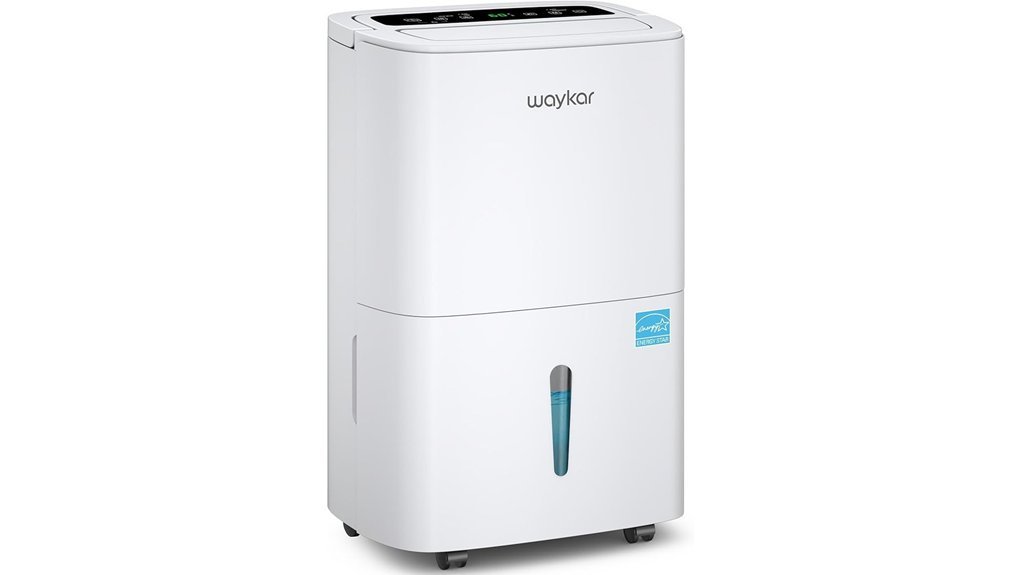
Waykar Max 80 Pint Dehumidifier with Drain Hose
Best Overall
The Waykar 80 Pint offers a useful balance of high listed output, portability, and drying-room controls. Its maximum claim is 80 pints per day at 95°F and 90% RH; the listing also states approximately 62 pints per day at 86°F and 80% RH. It is marketed for spaces up to 5,000 square feet, although the actual moisture load should determine sizing.
You can set the target humidity from 30% to 80%, empty the 3.5-liter tank manually, or connect the included 3.3-foot hose for gravity drainage. Casters, a top handle, auto defrost, self-drying, and a cord keeper make it practical when the drying setup changes.
Why You’ll Like It: It combines high listed extraction, flexible humidity control, an included hose, and easier movement than many heavy-duty portable units.
Who Should Buy This: Homeowners who need a versatile unit for a large laundry-drying room, damp basement, or regularly changing drying area.
Who Should Avoid This: Buyers with a small room and occasional light loads may get similar practical results from a smaller, less bulky model.
Pros:
- Strong maximum extraction claim with an additional warm-condition performance figure.
- Included hose supports unattended gravity drainage.
- Auto defrost, self-drying, timer, casters, handle, and adjustable humidity improve usability.
Cons:
- The headline 80-pint figure applies to very hot, humid test conditions.
- The 3.5-liter tank may fill quickly during active drying if the hose is not used.
- It needs more floor space than the 21-to-34-pint models.
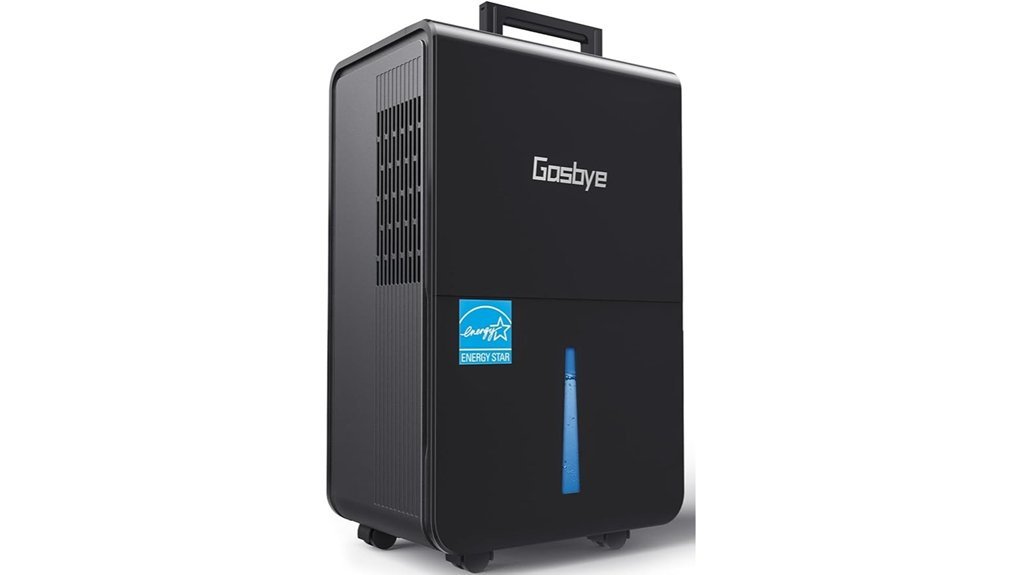
Gasbye DryPrime 115 Pint Dehumidifier with Drain Hose
Best for Heavy Moisture
The Gasbye DryPrime is the strongest choice here for a demanding moisture load. Instead of providing only one extreme-condition figure, its listing states removal of up to 115 pints per day at 86°F/80% RH, 73 pints at 80°F/60% RH, and 50 pints at 65°F/60% RH. These figures provide a more useful picture of how temperature and humidity affect output.
The unit is marketed for areas up to 4,500 square feet and includes a 1.72-gallon tank, drain hose, and garden-hose adapter. The listing also identifies four operating modes, automatic controls, a 43-pound cabinet, and an approximately 45 dB manufacturer noise claim.
Why You’ll Like It: The large bucket, substantial compressor platform, several drainage choices, and multi-condition performance data suit regular high-moisture drying.
Who Should Buy This: Owners of a large laundry room, frequently damp basement, garage drying area, or room that receives several wet loads.
Who Should Avoid This: Buyers with limited floor space, light seasonal humidity, or no convenient way to move a 43-pound unit.
Pros:
- Highest listed extraction and the clearest multi-condition capacity information.
- Large 1.72-gallon tank reduces emptying frequency.
- Includes a drain hose and adapter for flexible gravity-drain connections.
Cons:
- Heavier and bulkier than the medium-capacity alternatives.
- The 115-pint headline still reflects warm, highly humid conditions.
- Gravity drainage requires a suitable lower drain or sump location.
VEAGASO 34-Pint Dehumidifier for Home and Basement
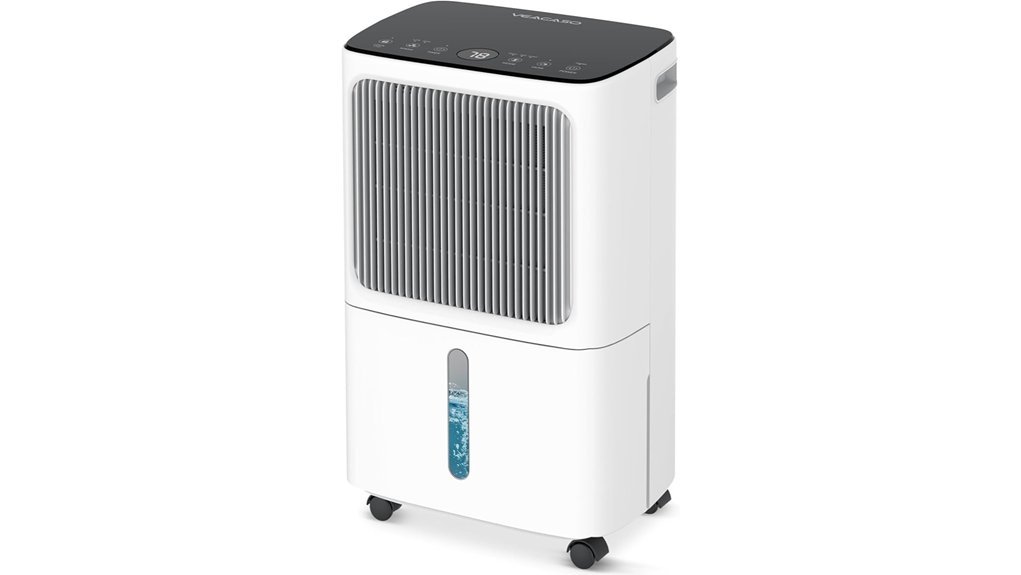
Best Quiet Mid-Size Pick
The VEAGASO 34 Pint balances useful drying capacity with a more manageable footprint. Its maximum 34-pint-per-day claim is measured at 95°F and 90% RH, and the unit is marketed for areas up to 2,500 square feet.
DEHU, DRY, and CONT modes cover automatic humidity management, laundry drying, and continuous operation. The 2-liter tank is suitable for occasional collection, while the included hose is the more practical option for longer drying sessions. The listing also identifies auto defrost, power-failure memory, two fan speeds, a washable filter, and a noise claim of up to 40 dB on its low setting.
Why You’ll Like It: It combines a dedicated drying mode, included drainage hose, clear controls, and a lower published noise claim than many larger models.
Who Should Buy This: People drying laundry in a small or medium room near bedrooms, offices, or shared living spaces.
Who Should Avoid This: Very wet basements, frequent multi-load drying, or large open spaces may require more capacity.
Pros:
- DEHU, DRY, and continuous modes make operation easy to match to the task.
- Included hose, auto defrost, timer, and power-failure memory support longer runs.
- Manufacturer claims up to 40 dB operation on the low setting.
Cons:
- The 2-liter tank is small for continuous high-moisture use.
- The 34-pint maximum applies to 95°F and 90% RH conditions.
- No app or voice control.
PLUSCENT 32 Pint Dehumidifier for Home, 2500 Sq. Ft.
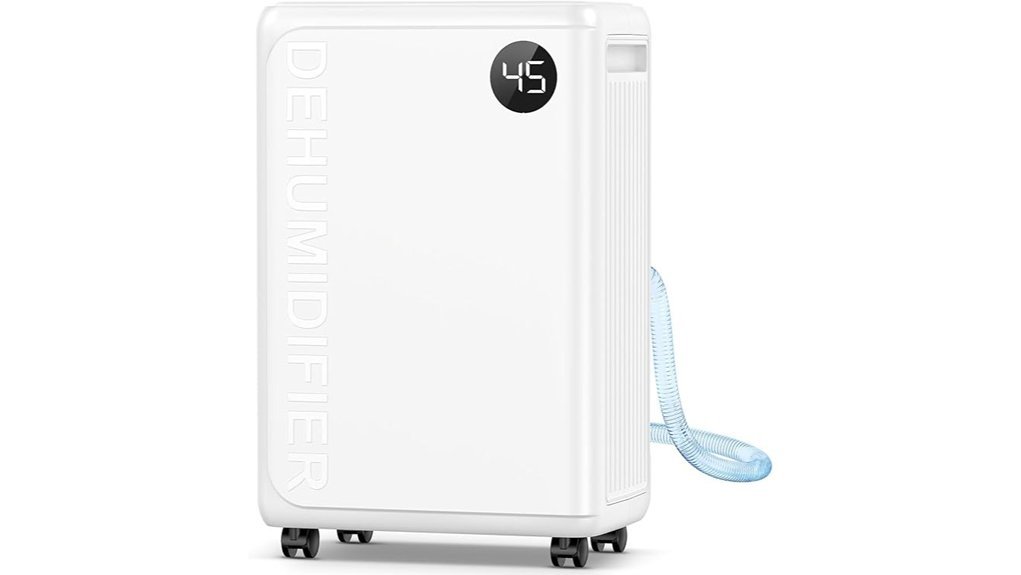
Best Mid-Size Controls
The PLUSCENT 32 Pint is another practical option for a medium-sized drying room. Its listed maximum is 32 pints per day at 95°F and 90% RH, with manufacturer-listed coverage up to 2,500 square feet.
DEHU, CONT, and DRY modes provide automatic humidity control, uninterrupted operation, and laundry-focused drying. A 24-hour timer, auto defrost, child lock, washable filter, wheels, 2-liter tank, and included short gravity hose add convenience.
Why You’ll Like It: The dedicated dry mode, child lock, timer, portability, and included hose provide the controls many households need without app setup.
Who Should Buy This: Families seeking a portable mid-capacity unit for laundry drying, basement humidity, or several rooms.
Who Should Avoid This: Buyers who need Wi-Fi control, a large collection bucket, or strong performance in a very wet large room.
Pros:
- Three operating modes for automatic, continuous, and laundry-drying use.
- Child lock, timer, washable filter, auto defrost, and caster wheels.
- Included gravity hose supports hands-free drainage.
Cons:
- The included hose is relatively short and still needs a continuously downward route.
- The 2-liter tank can require frequent emptying.
- The 32-pint maximum reflects hot, humid test conditions.
AIRPLUS 1500 Sq. Ft. Basement Dehumidifier (AP1907)
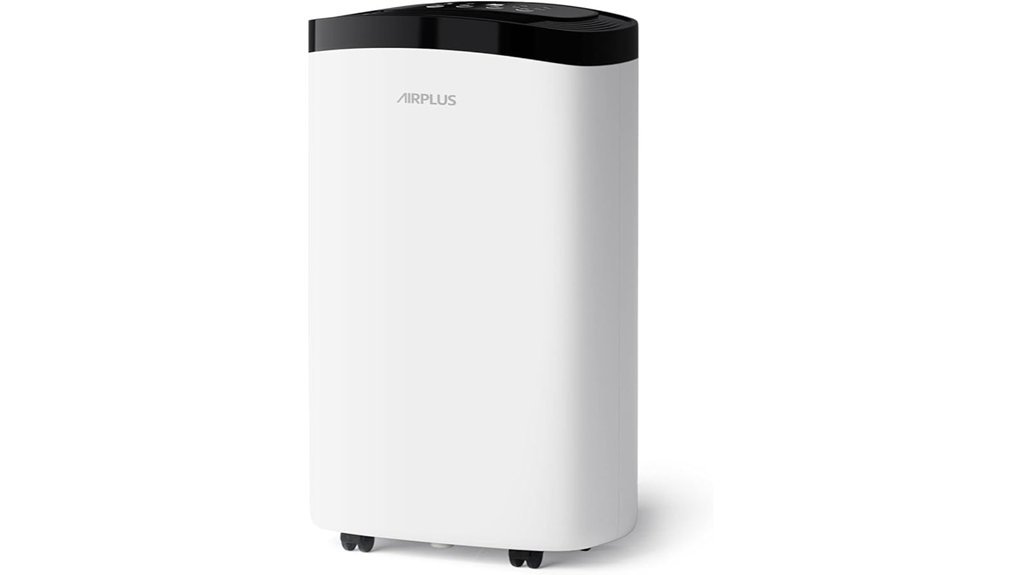
Best Compact Compressor Pick
The AIRPLUS AP1907 is a compact compressor dehumidifier marketed for areas up to 1,500 square feet. It can remove up to 30 pints per day at 86°F and 80% RH, giving it more drying power than small thermoelectric desktop units without the footprint of the larger Waykar or Gasbye.
The unit offers drying, raining, and sleep modes, a 1-to-24-hour timer, caster wheels, a carry handle, auto shutoff, a 1.5-liter tank, and an included drain hose. Its small tank makes continuous drainage especially valuable during active laundry drying.
Why You’ll Like It: It provides a useful 30-pint maximum, portable cabinet, included hose, and simple controls for rooms where space is limited.
Who Should Buy This: Apartment dwellers or homeowners with a compact laundry room and a suitable lower drain.
Who Should Avoid This: Large, very wet spaces and buyers seeking Wi-Fi or voice control.
Pros:
- Compact cabinet with wheels and a carry handle.
- Included hose makes continuous drainage easier to set up.
- Timer, drying mode, sleep mode, and automatic shutoff improve convenience.
Cons:
- The 1.5-liter tank is small for a 30-pint maximum extraction class.
- No smart-home control.
- Maximum output is based on warm, humid conditions.
Midea 22 Pint Energy Star Dehumidifier with Filter
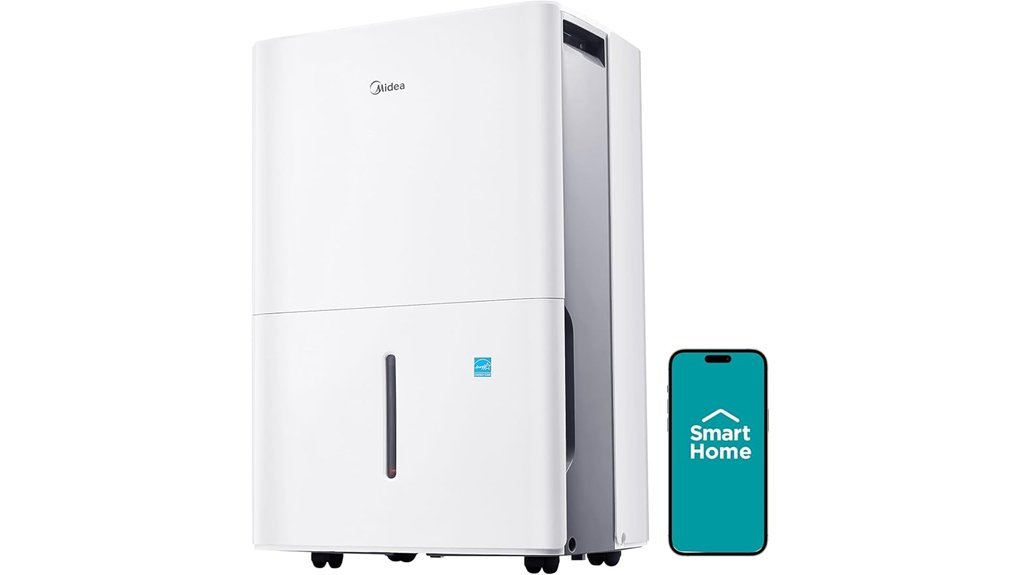
Best Smart Brand-Name Pick
Midea’s 22 Pint dehumidifier is marketed for rooms up to 1,500 square feet and lets you choose a target humidity between 35% and 85%. The current listing identifies ENERGY STAR certification, approximately 47 dBA operation, Wi-Fi control through the SmartHome app, and Alexa and Google Assistant support.
The 0.8-gallon bucket is larger than the tanks in several compact alternatives. A reusable filter, auto restart, auto defrost, caster wheels, timer, and continuous-drain port improve everyday use. A drain hose is not included.
Why You’ll Like It: It combines a recognized appliance brand, app and voice controls, a comparatively large bucket, and energy-conscious operation.
Who Should Buy This: Buyers with a smaller drying room who value remote monitoring, voice commands, and a larger manual-drain bucket.
Who Should Avoid This: Frequent heavy laundry loads may dry faster with a 30-to-50-pint-or-higher model.
Pros:
- SmartHome app, Alexa, and Google Assistant support.
- ENERGY STAR listing and approximately 47 dBA manufacturer noise rating.
- Reusable filter, 0.8-gallon tank, wheels, auto defrost, timer, and drain port.
Cons:
- A drain hose must be purchased separately.
- Lower listed capacity than the leading large-room picks.
- App and voice functions require compatible Wi-Fi and account setup.
Aiusevo 21 Pint Dehumidifier with Drain Hose
Best Simple Hose-Included Pick
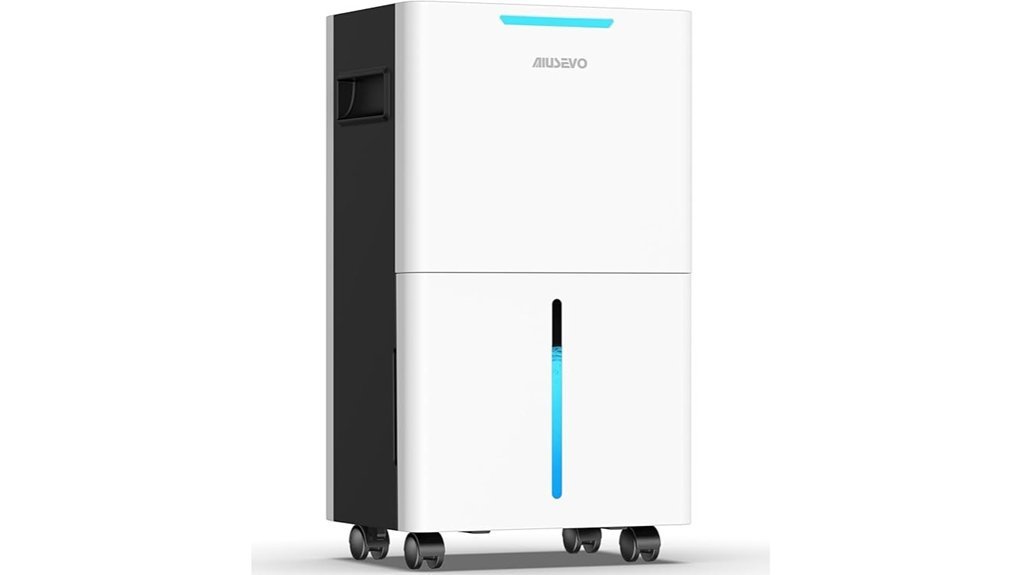
The Aiusevo 21 Pint is marketed for areas up to 1,500 square feet and has a maximum removal claim of 21 pints per day at 95°F and 90% RH. It includes DEHU, DRY, and CONTINUOUS modes for ordinary humidity control, laundry drying, and uninterrupted operation.
Its 2-liter tank includes automatic shutoff, while the included 3.28-foot hose supports gravity drainage. Wheels, handles, auto defrost, two fan speeds, timer controls, and a digital display make it a straightforward option for modest drying jobs.
Why You’ll Like It: The included hose and three practical modes provide the main features needed for light-to-moderate laundry drying without app complexity.
Who Should Buy This: Buyers seeking a simple, portable compressor unit for a small drying room, bathroom, bedroom, or occasional laundry load.
Who Should Avoid This: Large loads, severe basement moisture, construction drying, or water-damage cleanup require more capacity.
Pros:
- Included 3.28-foot hose for continuous drainage.
- Dedicated dry and continuous modes.
- Portable design with wheels, handles, timer, and auto defrost.
Cons:
- The 21-pint maximum is best suited to modest moisture loads.
- The 2-liter tank is small when hose drainage is unavailable.
- The headline output is measured at 95°F and 90% RH.
Factors to Consider When Choosing a Dehumidifier for a Drying Room
A drying room creates a different moisture load from an ordinary bedroom or office. Compare moisture-removal capacity, test conditions, temperature performance, drainage, airflow, and controls before relying on the advertised square-foot figure.
Drying Capacity and Test Conditions
Capacity is measured in pints removed during 24 hours, but the temperature and starting humidity matter. A unit rated at 80 pints per day in 95°F air at 90% RH will collect less water in a 60°F room at moderate humidity.
For a wet, high-load space such as a laundry-drying room, ENERGY STAR suggests approximately 30–50 pints per day for areas below 2,000 square feet and 50 pints or more for larger areas. Treat this as an initial sizing guide rather than a guarantee.
Room Size and Moisture Load
Square-foot coverage is only a starting point. Ceiling height, open doorways, outside-air leakage, wet laundry volume, room temperature, and how often new wet items enter the room all affect performance. A small room holding several wet loads can need more capacity than a larger room with mild seasonal humidity.
Residential Units vs. Restoration Equipment
The products in this guide are portable residential dehumidifiers. They are appropriate for laundry drying and ordinary dampness, but not necessarily for soaked flooring, wall cavities, floodwater, or commercial construction drying. Serious water intrusion may require professional extraction equipment, air movers, moisture meters, and removal of damaged materials.
Compressor vs. Desiccant
Compressor dehumidifiers usually provide better value and higher water removal in warm or moderately cool rooms. Desiccant dehumidifiers can perform better at lower temperatures, although their power use and operating characteristics differ. Small rechargeable desiccant cylinders and semiconductor units are intended for cabinets, closets, or light moisture control rather than rapid room drying.
Humidity Controls
Look for an adjustable humidistat, real-time display, and dedicated dry or continuous mode. For general indoor moisture control, the EPA recommends approximately 30%–50% relative humidity. A working range around 40%–50% is often practical for general drying, but the requirements of the material being dried should take priority.
Do not force paint, flooring, wood, adhesives, joint compound, or finishes to dry faster than their manufacturer recommends.
Drainage Options
Continuous drainage is one of the most valuable drying-room features. A gravity hose allows the unit to run without stopping when its tank fills, but the hose must slope continuously downward without loops, kinks, or raised sections.
If the only available drain is higher than the dehumidifier, choose a model with a built-in pump or use a separately approved condensate-pump setup. None of the retained products should be assumed to pump water upward.
Temperature and Auto Defrost
Compressor dehumidifiers become less effective as room temperature falls, and frost may form on the evaporator coil. Auto defrost pauses or adjusts operation to manage frost, but it does not make every compressor model suitable for an unheated winter room. Check the exact operating-temperature range in the manual.
Noise Levels
Noise matters when the drying room is near bedrooms, offices, or shared living areas. Manufacturer dB figures are useful for comparison, but fan speed, room surfaces, vibration, and measurement distance affect the sound you hear. Lower fan or sleep modes may reduce noise while also slowing moisture removal.
Airflow and Placement
Leave the manufacturer-recommended clearance around the intake and exhaust. Close outside doors and windows while the unit runs, and spread wet items so air can move between them. Avoid aiming the exhaust directly at delicate materials unless their drying instructions allow it.
A circulation fan can help distribute dry air, but it does not replace sufficient dehumidifier capacity.
Electrical Safety
Use a grounded wall outlet that matches the unit’s voltage and amperage requirements. Avoid extension cords unless the manufacturer specifically allows one. Keep the plug, cord, and controls away from standing water, and do not operate a damaged unit or place it where clothing can block its vents.
Maintenance
Clean the filter according to the manual, rinse the tank regularly, and inspect the drain hose for kinks, residue, or poor slope. A dirty filter or blocked intake reduces airflow and makes the compressor run longer.
Before storing the machine, drain all water, clean the tank, and allow the internal components to dry as directed by the manufacturer.
Before you buy: Measure the room, note its usual temperature, estimate the number of wet loads added each day, identify a lower drain, check the tank and hose details, confirm outlet requirements, and review the required intake and exhaust clearances.
Frequently Asked Questions
How Long Should I Run a Dehumidifier in a Drying Room?
Run it until the room reaches the selected humidity and the items are adequately dry. Then let the humidistat cycle the compressor or use the timer to avoid unnecessary operation. Drying time depends on the wet load, room temperature, airflow, dehumidifier capacity, and spacing between items.
What Size Dehumidifier Is Best for a Laundry Drying Room?
For wet, high-load conditions in a room below 2,000 square feet, approximately 30–50 pints per day is a useful starting range. Larger rooms or frequent heavy loads may need 50 pints per day or more. Cooler rooms should generally receive additional capacity because compressor performance falls as temperature drops.
Will a Dehumidifier Dry Clothes Faster Indoors?
It can help by lowering the room’s relative humidity so water evaporating from the fabric has somewhere to go. Results improve when clothes are spaced apart, doors and windows are closed, and air circulates around the items. The machine’s capacity must still match the amount of wet laundry.
Can Dehumidifiers Help Dry Paint or Drywall Faster?
They can reduce ambient humidity and support normal drying, but temperature, ventilation, coating thickness, product type, and manufacturer instructions still matter. Do not use aggressive dehumidification to override curing guidance for paint, drywall compound, adhesives, flooring, wood, or other moisture-sensitive materials.
What Humidity Level Is Ideal for Drying Rooms?
A range around 40%–50% RH is a practical starting point for general laundry drying and indoor moisture control. However, the correct setting depends on room temperature and the material being dried. Avoid condensation, but do not make the room excessively dry without a specific reason.
Do Dehumidifiers Work in Cold Drying Rooms?
Yes, but compressor models remove less moisture in cold air and may spend more time in defrost mode. For an unheated room, compare the manufacturer’s minimum operating temperature and consider a purpose-built low-temperature or desiccant model.
Is Continuous Drainage Worth It?
For regular drying-room use, usually yes. It prevents the unit from stopping when the bucket fills and reduces daily maintenance. Gravity hoses must maintain a downward slope. Choose a pump-equipped solution when water must travel upward.
Can a Portable Dehumidifier Handle Flood Damage?
A residential portable unit may help reduce remaining airborne moisture after water has been removed, but it should not be treated as complete flood-restoration equipment. Standing water, soaked insulation, wet wall cavities, contaminated water, or large saturated areas require prompt professional assessment.
How Often Should I Clean the Filter and Tank?
Follow the manufacturer’s maintenance schedule. During heavy drying, inspect the filter frequently and clean it when dust builds up. Rinse and dry the bucket often enough to prevent residue or odor, and check the hose regularly for blockage or poor drainage.
Final Recommendation
Best overall: Choose the Waykar 80 Pint for a large home drying room that needs strong extraction, adjustable controls, an included hose, and easy movement.
Best for heavy moisture: Choose the Gasbye DryPrime when you want a larger tank, substantial capacity, and useful performance figures at several temperatures and humidity levels.
Best quiet mid-size option: Choose the VEAGASO 34 Pint for a medium drying room near living or sleeping areas.
Best compact option: Choose the AIRPLUS AP1907 when floor space is limited but you still want compressor-based drying and an included hose.
Best smart option: Choose the Midea 22 Pint for app, Alexa, and Google Assistant controls in a smaller drying room.
Conclusion
The best dehumidifier for a drying room is the model that matches the real moisture load, room temperature, drainage setup, and frequency of use—not simply the largest square-foot claim. Compare pint capacity together with its test conditions, provide a suitable gravity drain when possible, maintain adequate airflow, and use an independent hygrometer to confirm room conditions.
For most large home drying rooms, the Waykar offers the strongest balance of capacity and convenience. The Gasbye is better suited to demanding loads, while the VEAGASO, PLUSCENT, AIRPLUS, Midea, and Aiusevo provide easier-to-place alternatives for smaller or more specialized drying spaces.