A woodworking shop usually needs more moisture-removal capacity than a small bedroom dehumidifier can provide. Lumber, unfinished projects, metal tools, machinery, finishes, and stored supplies all benefit from consistent relative humidity. Workshops may also have damp concrete, exterior air leaks, cool surfaces, or frequently opened doors that increase the moisture load.
This guide compares two workshop-suitable portable compressor models: the Vellgoo 64 Pint Dehumidifier as the balanced choice for many small-to-medium hobby shops and the AEOCKY 4500 Sq.Ft Dehumidifier for buyers who need a larger advertised coverage area, a 1.45-gallon tank, or help managing a wetter connected space.
Quick Verdict
Best Overall: Choose the Vellgoo for a typical small-to-medium woodworking shop when you want automatic humidity control, drain-hose support, auto defrost, and auto restart in a balanced package.
Best for Larger or Wetter Spaces: Consider the AEOCKY when the shop connects to a damp basement or garage, has frequent door openings, or would benefit from its larger advertised coverage and 1.45-gallon tank.
Important: The advertised 64-pint and 80-pint figures are manufacturer-listed maximums and may use different test conditions. Do not assume they are directly comparable standardized capacities.
Key Takeaways
- Choose by moisture load, temperature, drainage, and air leakage—not square footage alone.
- Use a separate hygrometer to confirm that the unit can reach and maintain the selected humidity.
- Keep the filter and air intake clear because woodworking dust can reduce airflow quickly.
- Fix leaks and standing water instead of expecting a portable dehumidifier to overcome them.
Quick Comparison
| Product | Best For | Advertised Capacity | Workshop-Friendly Features | Amazon |
|---|---|---|---|---|
| Vellgoo 64 Pint | Most small-to-medium hobby workshops | Manufacturer-listed maximum of 64 pints/day; up to 4,000 sq. ft. | Humidistat, drain-hose support, auto defrost, auto restart | Check Price on Amazon |
| AEOCKY 4500 Sq.Ft | Larger, wetter, or connected workshop areas | Manufacturer-listed maximum of 80 pints/day; up to 4,500 sq. ft. | Humidistat, drain-hose support, compressor design, 1.45-gallon tank | Check Price on Amazon |
Capacity Rating Note
Maximum extraction figures in Amazon titles may be measured under warmer and more humid conditions than standardized DOE or ENERGY STAR ratings. Compare exact model numbers and test conditions before treating two pint-per-day figures as equal measurements. ENERGY STAR explains how standardized dehumidifier testing and capacity are determined.
Important sizing note: Do not choose only by advertised square-foot coverage. Workshop moisture load, outdoor-air leakage, room temperature, wet concrete, drainage, and how often doors open can matter more than floor area. A separate hygrometer will show whether the selected unit can hold your target humidity without running continuously.
How These Two Models Were Compared
- Portable compressor design rather than low-output thermoelectric technology
- Adjustable humidity control for automatic cycling
- Drain-hose support for regular workshop use
- Defrost and restart features for garages and basement environments
- Maintenance access in a space exposed to sawdust
- Honest limitations involving temperature, drainage, and advertised capacity
Product-detail note: Listing information was checked in August 2026. Product versions, certifications, included accessories, specifications, and seller availability can change. Confirm the selected ASIN and manufacturer manual before ordering.
Vellgoo 64 Pint Dehumidifier for Workshop Humidity Control
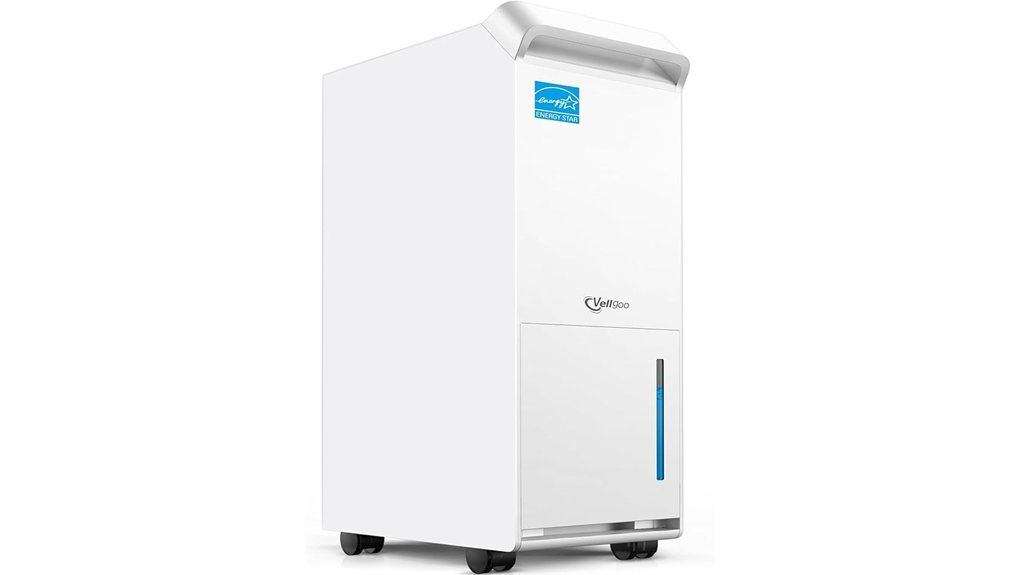
The Vellgoo is the more balanced choice for many small woodworking workshops because it combines compressor-based moisture removal with adjustable humidity control and drain-hose support. At the time of review, its Amazon listing advertised a maximum of 64 pints per day, coverage up to 4,000 square feet, three drainage options, auto defrost, auto restart, and mobility features.
The main workshop benefit is not the large coverage claim. It is the ability to select a humidity level and route collected water to a suitable drain. That setup can reduce bucket checks while helping limit large humidity swings around stored lumber, projects, hand tools, and machinery.
Best For: Hobby woodworkers who want a practical default choice for a small-to-medium shop, basement workshop, or attached garage.
Why You’ll Like It: It includes the core features most workshop owners should prioritize: automatic humidity control, hose drainage, restart after a power interruption, and defrost protection.
Who Should Avoid It: Buyers with an unheated shop that remains very cold should verify the exact operating-temperature range in the manual. Auto defrost protects the coil, but it does not make every compressor model effective in all winter conditions.
Verify Before Ordering: Confirm the exact model number, standardized capacity rating, bucket size, included drainage accessories, warranty terms, required airflow clearance, and minimum operating temperature.
Pros:
- Workshop-suitable design: A compressor unit is more appropriate for a workshop moisture load than a small thermoelectric model.
- Automatic humidity control: Allows the unit to cycle around a selected setting rather than relying only on manual operation.
- Flexible drainage: Drain-hose support can reduce how frequently the collection bucket needs attention.
- Useful recovery features: Auto restart and auto defrost are valuable in garages and basements.
Cons:
- The advertised 64-pint maximum and 4,000-square-foot coverage are manufacturer claims, not guarantees for every workshop.
- Its real extraction rate will vary with temperature and relative humidity.
- A compressor unit occupies more space and creates more operating sound than a desktop thermoelectric model.
- The filter and air intake require frequent inspection in a dusty woodworking environment.
AEOCKY 4500 Sq.Ft Dehumidifier for Larger or Wetter Workshops
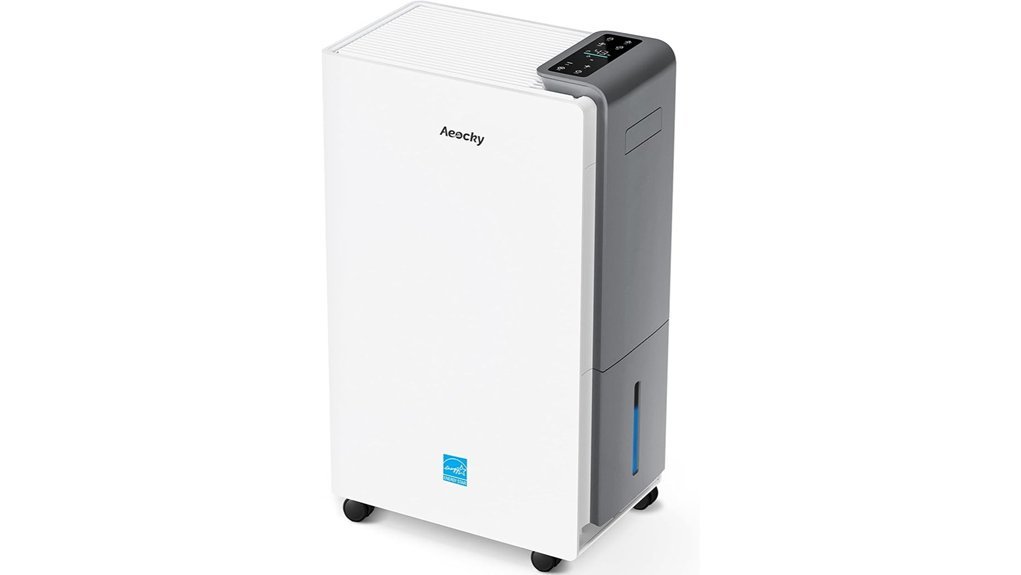
The AEOCKY is the alternative for a workshop that stays noticeably damp, shares air with a basement, or has frequent exterior-door openings. At the time of review, its Amazon listing advertised a maximum of 80 pints per day, coverage up to 4,500 square feet, an intelligent humidistat, drain-hose support, a compressor system, and a 1.45-gallon collection tank.
The listing’s 80-pint maximum should not be treated as directly equivalent to a standardized DOE capacity or used by itself to prove that this model outperforms the Vellgoo. Its more useful buying distinctions are the larger advertised coverage area, the 1.45-gallon tank, and its suitability for buyers managing a larger connected area or a persistent seasonal moisture load.
Best For: Larger garages, basement workshops, humid climates, connected rooms, or shops where a smaller-capacity unit struggles to reach the selected humidity.
Why You’ll Like It: It combines automatic humidity control, a substantial collection tank, and hose drainage in a portable compressor format.
Who Should Avoid It: It may be unnecessary for a small, dry, tightly sealed hobby room. Buyers who need water pumped upward must also verify that the exact selected version includes a condensate pump rather than gravity drainage only.
Verify Before Ordering: Confirm the exact model version, standardized capacity, pump inclusion, drain-hose accessories, operating-temperature range, dimensions, warranty, and required intake and exhaust clearance.
Pros:
- Larger advertised coverage: Relevant to a workshop connected to a basement, garage, or other humid area.
- Automatic humidistat: Supports cycling around a selected humidity setting.
- Drain-hose support: Can reduce bucket-emptying frequency when a proper downhill drain route is available.
- 1.45-gallon tank: Provides useful collection capacity when hose drainage is unavailable.
Cons:
- The advertised 80-pint maximum is based on manufacturer test conditions and is not automatically comparable with another brand’s pint figure.
- The exact pump configuration must be checked because closely related versions may have different drainage equipment.
- Its size and capacity may be excessive for a small room with a low moisture load.
- The filter and intake need regular cleaning and protection from concentrated sawdust.
Factors to Consider When Choosing a Dehumidifier for a Small Woodworking Workshop
The best woodworking shop dehumidifier is the one that can maintain consistent relative humidity in your actual conditions. Capacity ratings, humidistat accuracy, drainage, temperature, air leakage, dust exposure, and placement are more useful than a large square-foot number by itself.
Humidity Target and Wood Stability
A practical starting target for many indoor woodworking spaces is around 40% to 50% relative humidity. The EPA’s broader guidance is to keep indoor humidity around 30% to 50% when practical.
Consistency is more important than chasing one exact number. Wood gains or loses moisture as surrounding temperature and relative humidity change. The USDA Forest Products Laboratory explains this relationship through equilibrium moisture content. When possible, condition lumber and completed projects near the environment where they will eventually be used.
Use a separate digital hygrometer at bench height and near stored lumber. For important furniture or joinery work, a wood moisture meter can provide additional information that a room hygrometer cannot.
Capacity and Moisture Load
Compare models using capacity figures measured under matching test conditions. A manufacturer maximum, a DOE capacity, and an ENERGY STAR capacity may not represent the same environment.
Also remember that tank size is not moisture-removal capacity. A larger tank only stores more collected water before the unit shuts off. It does not prove that the compressor removes moisture faster.
Consider whether the shop has a concrete slab, open foundation, exterior air leaks, wet lumber, laundry equipment, plumbing, groundwater seepage, or frequent door openings. These conditions can create a much greater load than floor area alone suggests.
If the dehumidifier runs continuously while humidity remains above the selected level, first inspect for leaks, open windows, blocked airflow, a dirty filter, an unsuitable temperature, or an undersized unit. If it reaches the target and cycles normally, its capacity is more likely to be adequate.
Energy Efficiency
Look for a current ENERGY STAR certification for the exact model number when available. Do not rely solely on a certification year printed in an old Amazon title because product versions and program years change.
Actual electricity use depends on room temperature, moisture load, selected humidity, runtime, airflow, filter condition, and how often doors open. A properly sized unit that reaches the target and cycles is generally a better choice than an undersized unit that runs continuously.
Drainage and Maintenance
For regular workshop use, continuous gravity drainage is usually more convenient than emptying a bucket. The drain point must be below the hose outlet, and the hose should run continuously downhill without loops, kinks, or raised sections.
A built-in pump is needed when condensate must travel upward or across a route where gravity cannot maintain flow. Because manufacturers may sell pump and non-pump versions under similar names, confirm the exact configuration before ordering.
Wood dust can quickly coat filters and restrict airflow. Inspect the filter more often than you would in a bedroom, vacuum loose dust around the intake, and follow the manufacturer’s cleaning schedule. Never operate the unit with blocked vents or without the required filter.
Temperature and Defrost
Portable compressor dehumidifiers generally remove less moisture as room temperature drops. Auto defrost helps prevent excessive frost buildup, but it does not guarantee full warm-weather performance in an unheated winter shop.
Check the exact rated operating-temperature range in the manual. Air sealing, modest heating, or a different dehumidification method may be needed when the workshop remains cold for long periods.
Noise and Placement
Leave the manufacturer-required clearance around the intake and exhaust. Place the unit where air can circulate through the shop without blowing directly across freshly applied finishes.
Keep it away from concentrated sanding dust, overspray, flammable vapors, water splash, and locations where boards or tools could fall against the grille. Noise may be less important during active woodworking, but it can matter when the shop shares a wall or floor with living space.
Safety and Electrical Setup
Useful features can include bucket-full shutoff, auto restart, control lock, and defrost protection. Confirm which features are included on the exact product version rather than assuming every related model has them.
Plug the dehumidifier into a suitable grounded wall outlet. Do not use an extension cord, power strip, or plug adapter unless the manufacturer’s instructions expressly permit it. Follow all guidance for electrical load, airflow clearance, drainage, filter installation, and unattended operation.
A dehumidifier controls airborne moisture. It does not repair roof or plumbing leaks, stop groundwater, collect woodworking dust, or replace ventilation for finishes, adhesives, and solvents.
Before You Buy
- Measure the workshop and all connected rooms whose doors normally remain open.
- Record temperature and humidity for several days with a separate hygrometer.
- Identify leaks, damp concrete, wet materials, or other moisture sources.
- Compare capacity figures measured under matching test conditions.
- Confirm whether the selected version uses gravity drainage or includes a pump.
- Check the operating-temperature range, warranty, dimensions, and airflow clearances.
- Plan how you will keep sawdust away from the intake and filter.
Frequently Asked Questions
How Do Dehumidifiers Affect Wood Moisture Levels?
A dehumidifier lowers the surrounding relative humidity, so wood gradually moves toward a new equilibrium moisture content. The change is not immediate, and a portable room dehumidifier is not a substitute for a lumber kiln. Thick boards, tightly stacked lumber, and finished assemblies may adjust much more slowly than the room air.
Can Dehumidifiers Help Prevent Mold and Mildew in Workshops?
They can make conditions less favorable for mold by reducing excessive humidity. However, a dehumidifier cannot overcome an active leak, standing water, or continuously wet building material. Repair the moisture source, dry affected materials, and then use humidity control to help maintain the space.
What Is the Ideal Humidity Level for Woodworking?
Many indoor shops use approximately 40% to 50% relative humidity as a starting point, while the broader indoor-control range is commonly 30% to 50%. The most suitable setting depends on climate, season, wood species, project type, and the environment where the finished work will be used. Avoid large daily and seasonal swings whenever practical.
Which Dehumidifier Capacity Number Should I Trust?
Use figures measured under the same recognized test procedure whenever comparing products. A manufacturer-listed maximum measured in very warm, humid air can be higher than a standardized DOE or ENERGY STAR capacity. Check the exact model number and test conditions rather than comparing numbers from product titles alone.
Do I Need Continuous Drainage?
It is not mandatory, but it is highly useful for regular workshop operation. A drain hose prevents the unit from stopping each time the bucket fills. Gravity drainage requires the entire hose route to slope downward. Choose a pump-equipped version when water must travel upward, and verify that the exact model includes the pump.
Can a Dehumidifier Replace Dust Collection or Ventilation?
No. It removes water vapor, not woodworking dust, finish fumes, adhesive vapors, or solvent vapors. Use proper source dust collection, air filtration, and ventilation for those hazards.
How Often Should I Clean the Filter?
Inspect it frequently during active woodworking because sawdust can clog it faster than ordinary household dust. Clean or replace it according to the product manual, and check the intake whenever airflow weakens, noise changes, or runtime increases.
Will a Dehumidifier Stop Tools From Rusting?
Lower and more stable humidity can reduce condensation and conditions that encourage corrosion, but it cannot guarantee that tools will never rust. Wipe tools dry, avoid direct contact with damp concrete, address water intrusion, and use suitable protective storage or corrosion-prevention products when needed.
Final Recommendation
For most small-to-medium woodworking workshops, the Vellgoo 64 Pint Dehumidifier is the more balanced starting point. It combines adjustable humidity control, drain-hose support, auto restart, and auto defrost without relying on a small thermoelectric system.
Consider the AEOCKY 4500 Sq.Ft Dehumidifier when the workshop has a larger connected area, stays noticeably damp, or would benefit from its 1.45-gallon tank and larger advertised coverage. Do not choose it solely because its product title shows a higher maximum pint figure; verify standardized ratings and test conditions first.
Whichever model you select, confirm performance with a separate hygrometer, maintain a safe gravity-drain route or verified pump setup, keep the filter clear of sawdust, and repair water intrusion instead of expecting the machine to overcome it.
Bottom line: Stable humidity, correctly compared capacity, safe drainage, suitable operating temperature, and regular maintenance matter more than oversized coverage claims.