Affiliate disclosure: This article contains Amazon affiliate links. If you buy through one of these links, the site may earn a commission at no extra cost to you.
Last reviewed: August 2026
Important comfort note: A dehumidifier controls excess indoor moisture. It is not a medical treatment and is not proven to cure joint pain, muscle pain, arthritis, swelling, stiffness, or other health conditions. Persistent, severe, or unexplained pain should be discussed with a qualified healthcare professional.
If damp indoor air makes your bedroom, basement, laundry area, or living space feel clammy, a properly sized dehumidifier may help create a drier and more comfortable environment. The AEOCKY 50-Pint Compressor Dehumidifier is the strongest higher-capacity option in this guide, the PLUSCENT 32 Pint Dehumidifier offers a useful balance of capacity and portability, and the KeepGlad 98OZ Dehumidifier is better suited to lighter dampness where quieter operation matters.
Specification note: Product names, extraction figures, sound claims, dimensions, tank sizes, and coverage statements below are based on the current listing information reviewed in August 2026. Manufacturer test conditions and Amazon listings can change. The AEOCKY listing currently shows conflicting coverage figures, so this guide does not present a single square-foot rating for that model. Confirm the current product page and manual before ordering.
Quick Verdict
Best Overall for Higher-Capacity Moisture Removal: AEOCKY is the strongest fit when you want a compact compressor model with higher stated extraction and continuous drainage.
Best Balance of Capacity and Portability: PLUSCENT combines a stated 32-pint daily capacity with wheels, adjustable humidity control, a washable filter, and gravity drainage.
Best for Light Dampness and Quieter Rooms: KeepGlad is the more bedroom-friendly choice when a compact semiconductor design and lower stated noise matter more than fast compressor-level extraction.
How We Compared These Dehumidifiers
These products were compared by dehumidifier type, stated daily moisture removal, tank and hose options, humidity controls, portability, sound claims, dimensions, and suitability for light versus persistent dampness. Marketing coverage numbers were treated cautiously because real performance depends on room temperature, starting humidity, airflow, ceiling height, and the severity of the moisture problem.
Quick Comparison
| Product | Best Use | Type | Stated Moisture Removal | Water Handling | Amazon |
|---|---|---|---|---|---|
| AEOCKY 50-Pint | Persistent dampness in larger rooms and basements | Compressor | Up to 50 pints per day under high-temperature, high-humidity conditions | 0.5-gallon tank or drain hose | Check Current Availability |
| PLUSCENT 32 Pint | Bedrooms, laundry areas, basements, and medium-to-large rooms | Compressor | Up to 32 pints per day | 2-liter tank or gravity hose | Check Product Details |
| KeepGlad 98OZ | Light dampness in bedrooms, offices, bathrooms, and compact areas | Dual-semiconductor | Up to 40 ounces per day | 98-ounce tank or drain hose | Check Current Availability |
AEOCKY 50-Pint Compressor Dehumidifier: Best Overall
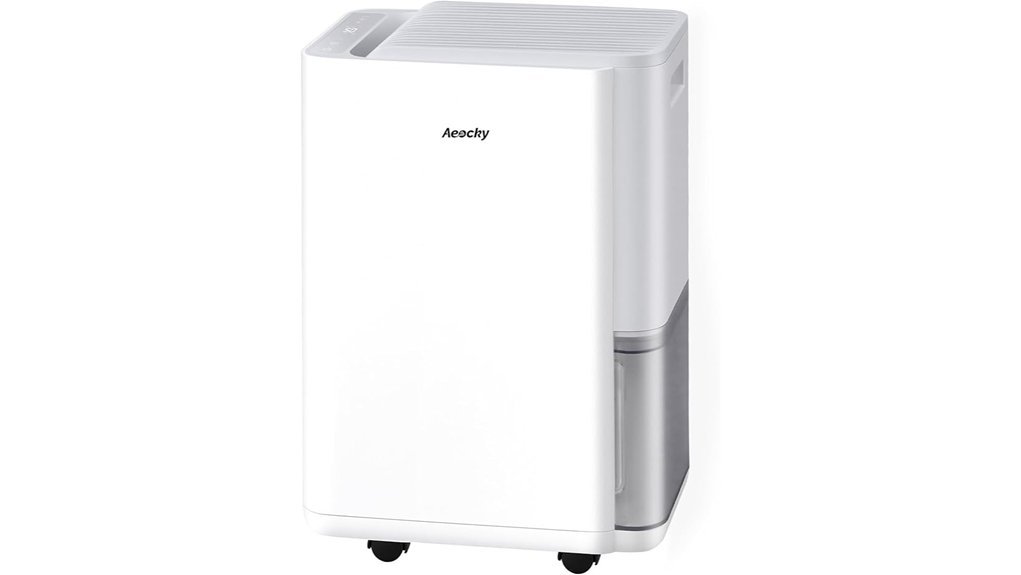
The AEOCKY is the strongest option in this roundup for a larger room, basement, or other area with persistent moisture. The current listing describes up to 50 pints of moisture removal per day at 95°F and 95% RH, or 38 pints at 86°F and 80% RH. It also lists a 0.5-gallon tank, drain-hose support, adjustable humidity control, and compact dimensions of about 8.03 by 11.1 by 15.75 inches.
Coverage caution: The current Amazon page is internally inconsistent: its title and structured specification show 2,500 square feet, while a feature bullet mentions up to 3,500 square feet. Because those figures conflict, choose this model by its stated extraction, room conditions, and drainage setup rather than relying on one coverage number.
Why You’ll Like It
This model addresses the main frustrations of a persistently damp room: slow moisture removal, frequent tank emptying, and limited floor space. Its compressor design provides much more room-scale extraction than a compact semiconductor unit, while the hose option supports longer operation near a suitable drain.
Best For: Basements, larger rooms, and buyers who need stronger extraction with a continuous-drain option.
Who Should Avoid It: Buyers who only need light moisture control in a closet or very small room, or anyone who expects near-silent operation beside a bed.
Pros:
- Higher stated extraction: The listing describes up to 50 pints per day under hot, very humid test conditions.
- Continuous drainage: The hose connection can reduce manual tank emptying when installed with a safe drainage route.
- Compact compressor body: Its listed dimensions are relatively small for a room-scale compressor model.
Cons:
- Conflicting coverage claims: The listing does not provide one consistent square-foot figure.
- Performance changes with conditions: Extraction will be lower in cooler or less humid rooms than in the maximum-capacity test environment.
- Compressor sound is still possible: Quiet marketing does not mean silent operation in a calm bedroom.
PLUSCENT 32 Pint Dehumidifier for Home: Best Balance
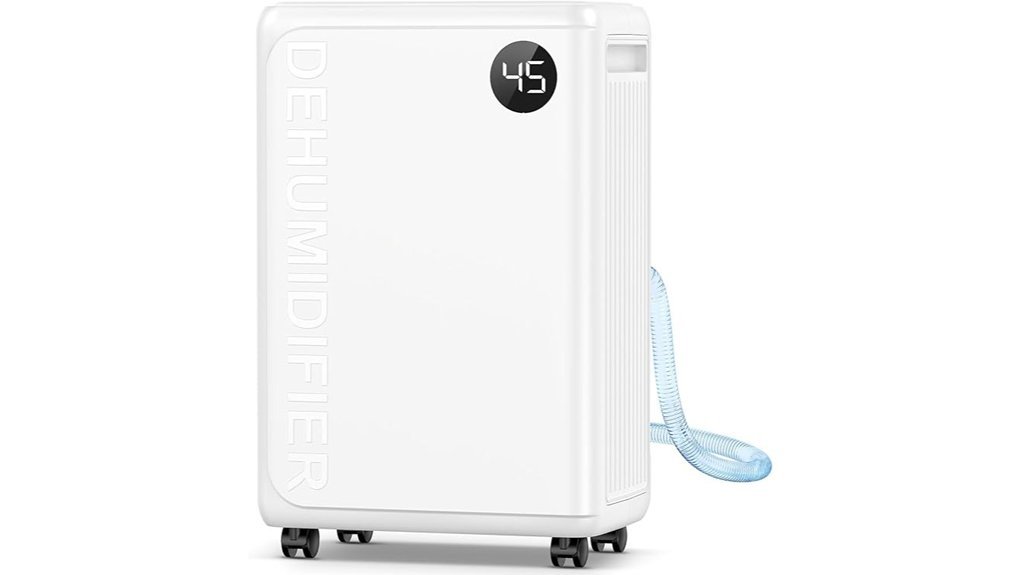
The PLUSCENT 32 Pint Dehumidifier is a practical middle-ground choice for bedrooms, laundry areas, basements, and other medium-to-large spaces. Its current listing states up to 32 pints of moisture removal per day, coverage up to 2,500 square feet, adjustable settings from 30% to 80% RH, and sound around 39 to 42 dB. It also lists a 2-liter tank, two fan speeds, a washable filter, 360-degree wheels, and dimensions of about 11 by 7.6 by 16.1 inches.
Why You’ll Like It
PLUSCENT combines useful everyday controls with room-scale compressor extraction. The adjustable humidistat helps the unit cycle around a selected setting, while the tank auto-stop and included gravity hose give you two ways to manage collected water. Wheels and a handle also make it easier to move between rooms.
Best For: Buyers who want a portable compressor dehumidifier with adjustable humidity control for a bedroom, basement, laundry area, or home office.
Who Should Avoid It: Homes without a lower drain point for gravity drainage, or unusually wet spaces that may need a higher-capacity or pumped-drain model.
Pros:
- Adjustable humidity control: The stated 30% to 80% RH range provides more control than a basic on/off mini unit.
- Portable design: Easy-roll wheels and a handle help one unit serve more than one room.
- Maintenance-friendly: A washable filter, removable tank, and full-tank auto-stop support routine use.
Cons:
- Gravity drainage has placement limits: The hose must run continuously downward to a suitable drain.
- The 2-liter tank may fill quickly: Manual operation in a damp room can require frequent emptying.
- Noise is room-dependent: The stated sound range may still be noticeable to light sleepers.
KeepGlad 98OZ Dehumidifier: Best for Light Dampness
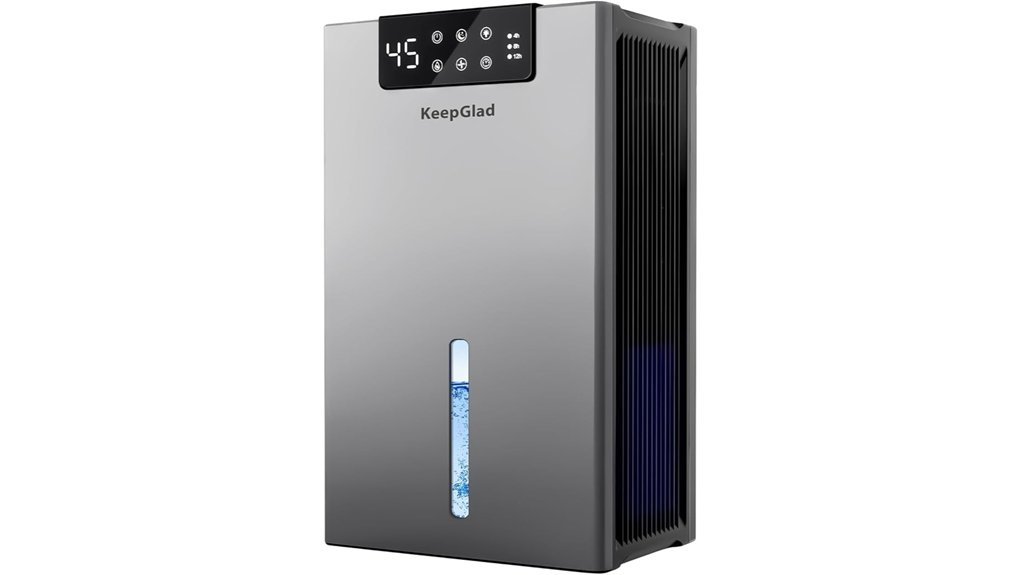
The KeepGlad 98OZ Dehumidifier is aimed at buyers who value a compact footprint, simple digital controls, and lower stated noise. The current listing describes a dual-semiconductor design, a 98-fluid-ounce tank, three speeds, a washable filter, a timer, a humidity display, a drain hose, moisture collection up to 40 ounces per day, and sleep-mode sound as low as 28 dB. Its listed dimensions are about 6.69 by 9.17 by 14.88 inches.
Why You’ll Like It
KeepGlad is easier to place in a bedroom, home office, bathroom, or other compact area than a larger compressor machine. Its tank auto shut-off, real-time display, fan-speed choices, washable filter, and hose option make it more flexible than a very basic mini dehumidifier.
Best For: Bedrooms, home offices, bathrooms, and smaller areas with light or moderate dampness where lower stated noise is a priority.
Who Should Avoid It: Very wet basements, water-damaged rooms, large open spaces, or any situation that needs fast compressor-level moisture removal.
Pros:
- Quiet-focused design: The listing states sleep-mode operation as low as 28 dB.
- Compact and easy to place: Its listed dimensions and built-in tank suit smaller rooms and limited floor space.
- Flexible controls: Three speeds, a timer, humidity display, full-tank shut-off, and hose support improve daily usability.
Cons:
- Lower extraction than compressor models: It may take much longer to manage persistent or severe dampness.
- Coverage is a marketing estimate: The 1,000-square-foot claim should not be treated as equal to the room-scale performance of a 32- or 50-pint compressor unit.
- Drain setup still needs planning: Continuous drainage requires a safe hose route and a suitable lower drain point.
Factors to Consider When Choosing a Dehumidifier for Humidity-Related Comfort
The right dehumidifier should match the room and the moisture problem, not simply the largest square-foot number on a listing. Use the points below to compare extraction, controls, drainage, sound, placement, and maintenance before buying.
Set Realistic Comfort Expectations
A dehumidifier can make an overly damp room feel less clammy and may support a more comfortable indoor environment. It should not be presented as a cure for arthritis, swelling, stiffness, muscle pain, or any other medical condition. Choose it for moisture control, and treat any comfort improvement as an individual experience rather than a guaranteed health outcome.
Match the Unit to the Room
Start with the room’s measured square footage, ceiling height, temperature, airflow, and dampness level. A cool basement with visible condensation usually needs more extraction than a mildly humid bedroom of the same size. Compressor dehumidifiers are generally the stronger choice for room-scale moisture removal, while semiconductor or thermoelectric units are better for lighter dampness, compact spaces, and quieter operation.
Compare Moisture Removal, Not Just Coverage
Square-foot coverage is a broad marketing guide. Daily moisture-removal capacity is more useful, but it also depends on the manufacturer’s test temperature and relative humidity. A model advertised at a high maximum capacity may collect much less water in a cooler or only moderately humid room.
Choose Tank or Continuous Drainage
A tank is convenient when you need to move the unit, but it must be emptied regularly. A drain hose is better for basements and longer operation, provided the hose can slope downward to a safe drain. Confirm whether the unit relies on gravity or includes a pump, because a gravity-only hose cannot move water uphill.
Look for Useful Humidity Controls
The U.S. Environmental Protection Agency generally recommends keeping indoor relative humidity between 30% and 50% when practical and below 60% to discourage moisture-related problems. An adjustable humidistat can cycle the unit around your selected level instead of running continuously. Use a separate hygrometer when you want to confirm the room reading.
Consider Bedroom Noise
Sound ratings can help compare models, but placement and room acoustics matter. A dehumidifier that seems quiet in a basement may be noticeable beside a bed. Look for sleep mode, adjustable fan speeds, and enough flexibility to place the unit several feet away while maintaining the airflow clearance required by the manual.
Review Energy Use and Runtime
A correctly sized unit can reach the target humidity sooner and cycle off more often. Avoid unsupported savings claims unless the manufacturer provides a clear test method. For long daily runtime, compare the current wattage and efficiency information on the product page and consider recognized energy-efficiency certification when it applies to the exact model.
Check Maintenance and Durability
Washable filters, accessible tanks, full-tank auto shut-off, and easy hose connections reduce maintenance frustration. Clean the filter and water tank as directed in the manual, keep air inlets clear, and inspect the hose for kinks or leaks. Never operate a damaged unit or place electrical equipment where it can contact standing water.
Before You Buy Checklist
- Measure the actual room and note whether it is mildly humid, persistently damp, or affected by an active leak.
- Compare daily extraction capacity and test conditions, not only square-foot coverage.
- Choose a compressor model for heavy room-scale moisture or a semiconductor model for lighter localized dampness.
- Decide whether you can use gravity drainage or will empty the tank manually.
- Check dimensions, tank size, sound claims, filter access, hose length, and warranty terms.
- Fix leaks and water intrusion instead of expecting a dehumidifier to solve the moisture source.
- Keep expectations focused on humidity control rather than medical treatment.
Frequently Asked Questions
Can a Dehumidifier Treat Joint or Muscle Pain?
No. A dehumidifier is designed to remove excess moisture from the air, not diagnose or treat pain. Some people may find a less damp room more comfortable, but that is not a guaranteed medical benefit. Seek professional medical advice for persistent, severe, or unexplained symptoms.
What Indoor Humidity Level Should I Target?
A practical target for many homes is about 30% to 50% relative humidity, with indoor humidity kept below 60% when possible. Adjust for the season, condensation, comfort, and the manufacturer’s instructions. Avoid making the room excessively dry.
Is a Compressor or Semiconductor Dehumidifier Better?
A compressor model is usually the stronger choice for basements, larger rooms, and heavier moisture loads. A semiconductor or thermoelectric model is generally smaller and quieter but removes less water, making it better for lighter dampness and compact spaces.
Can a Dehumidifier Help With Allergy-Related Comfort?
Controlling excess moisture can make indoor conditions less favorable for mold growth and dust mites. However, a dehumidifier does not remove every allergen and should be combined with leak repair, cleaning, ventilation, and appropriate medical guidance when needed.
What Maintenance Is Required for Dehumidifiers?
Empty and clean the tank, wash or replace the filter according to the manual, keep the air intake clear, and inspect the drain hose. Unplug the unit before cleaning and follow all manufacturer safety directions.
How Noisy Are Home Dehumidifiers?
Noise varies by compressor type, fan speed, room acoustics, and placement. Compact semiconductor units are often quieter, while higher-capacity compressor units may be more noticeable. Compare current sound claims, but remember that manufacturer dB figures may use different test methods.
Will a Dehumidifier Fix a Leak or Water Damage?
No. A dehumidifier can help remove moisture from the air, but it does not repair plumbing, foundation leaks, roof damage, drainage problems, or wet building materials. Stop the water source and dry or replace damaged materials as needed.
Final Recommendation
Choose the AEOCKY 50-Pint Compressor Dehumidifier when higher stated extraction and a compact compressor design are your main priorities, but verify the current coverage details because the listing is inconsistent. Pick the PLUSCENT 32 Pint Dehumidifier when you want the most balanced combination of room-scale extraction, portability, humidity controls, and routine maintenance. Choose the KeepGlad 98OZ Dehumidifier for lighter dampness in a bedroom, office, bathroom, or compact area where lower stated noise matters more than maximum extraction.
The best purchase is the model that matches your room conditions, moisture severity, drainage options, available floor space, and noise tolerance. Use any dehumidifier to manage excess moisture and improve indoor comfort, not as a substitute for leak repair or medical care.