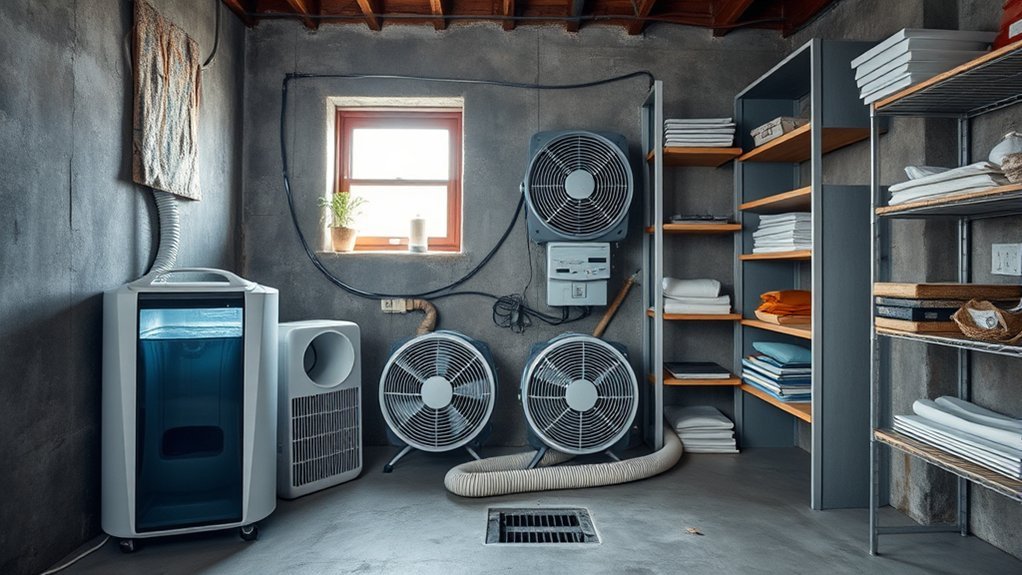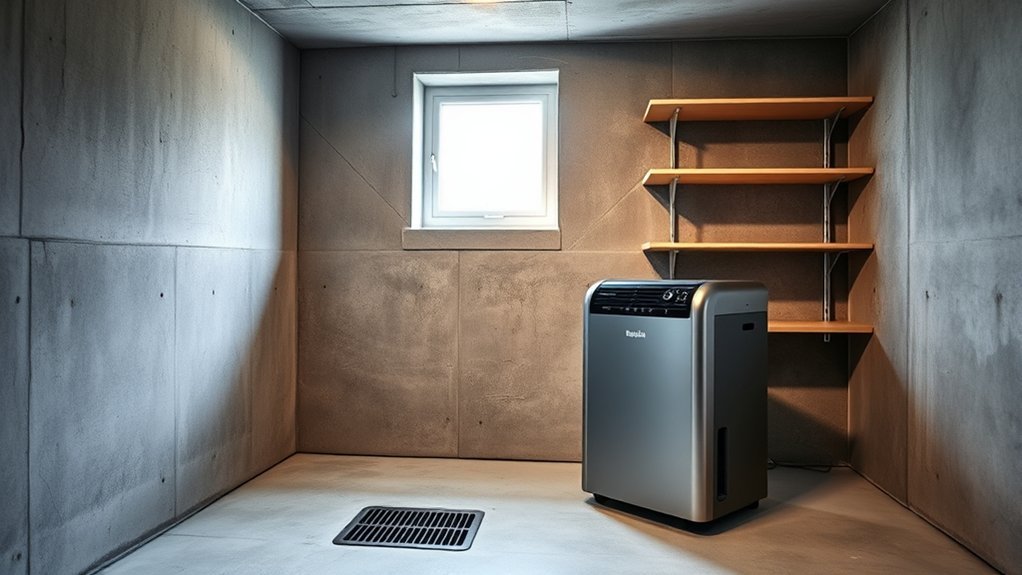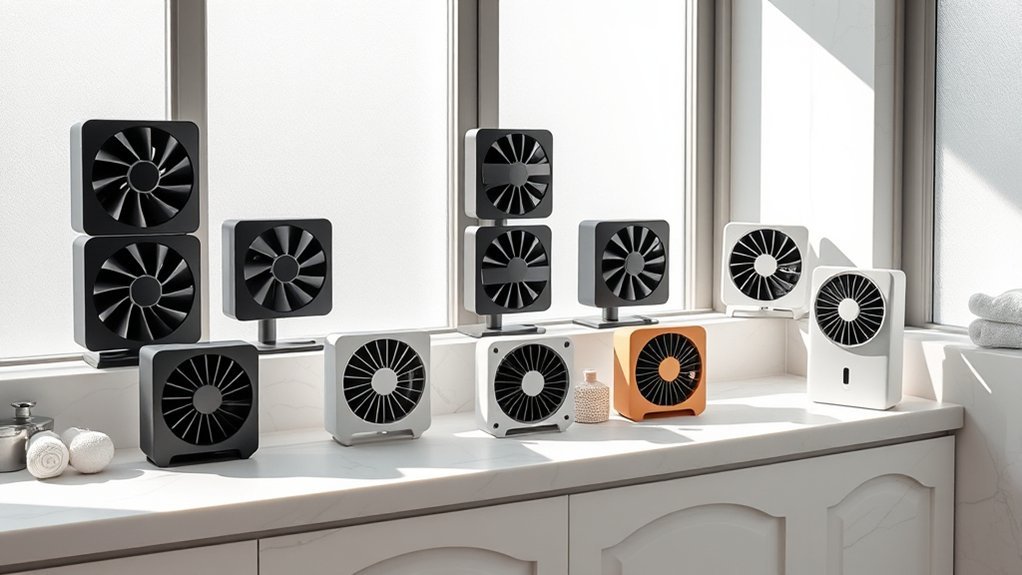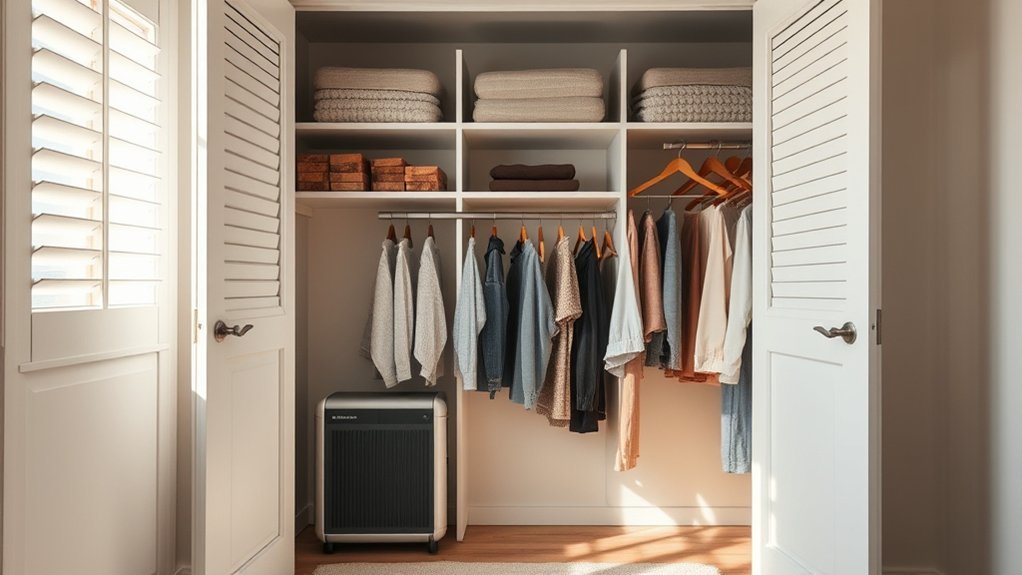
A damp closet is usually a moisture and airflow problem, not just an odor problem. To dehumidify a closet and prevent mold, first lower the closet humidity, then find what is adding moisture: wet clothes, damp shoes, a nearby bathroom, a plumbing leak, a cold exterior wall, or blocked ventilation. Moisture absorbers can help, but they work best after the source of dampness is controlled.
Quick Answer
To dehumidify a closet, empty damp items, open the door, run a dehumidifier or fan, and measure humidity with a hygrometer. Aim for 30% to 50% relative humidity and keep the closet under 50% when possible. Fix leaks first; absorbers alone will not stop mold.
Key Takeaways
- Use a hygrometer so you know whether the closet is actually staying below the mold-risk range.
- Dry wet clothes, shoes, walls, shelves, and flooring within 24 to 48 hours whenever possible.
- Use silica gel or charcoal for small enclosed spaces, but use a dehumidifier for recurring dampness.
- Improve airflow by spacing clothes, opening doors, using vents, or adding a small fan when safe.
- If you smell mold, see spreading growth, or suspect hidden wall moisture, fix the source before storing items again.
At a Glance
| Time Required | 30 minutes for inspection; several hours to 2 days for drying, depending on how damp the closet is. |
| Difficulty | Easy for humidity control; moderate if leaks, hidden wall dampness, or visible mold are present. |
| Tools Needed | Hygrometer, fan, dehumidifier, flashlight, clean cloths, mild detergent, moisture absorbers, breathable storage bags, gloves, and eye protection. |
| Cost | Usually $10 to $50 for a hygrometer and absorbers; more if you need a small dehumidifier, venting, or leak repair. |
Why Closet Moisture Causes Mold
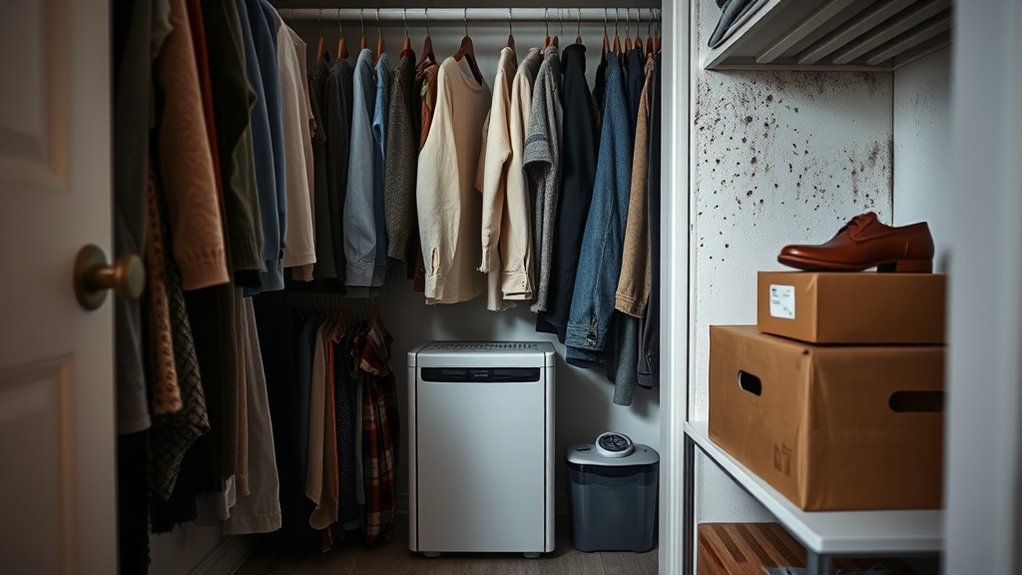
Closets are vulnerable to mold because they are often closed, dark, packed tightly, and poorly ventilated. When moisture gets trapped between clothes, shoes, shelves, walls, and storage boxes, the air can stay damp long enough for musty odors and mold growth to start.
The U.S. Environmental Protection Agency explains that the key to mold control is moisture control. The EPA recommends keeping indoor humidity below 60% when possible, ideally between 30% and 50%. The Centers for Disease Control and Prevention gives an even simpler prevention target: keep humidity no higher than 50% all day long.
That does not mean a closet instantly grows mold at 51% humidity. It means a damp closet should be kept as dry and stable as practical, especially if it holds cotton, leather, wool, paper, cardboard, or other organic materials that mold can use as a food source.
Moisture control is the real mold-prevention strategy. Deodorizers and absorbers can freshen a closet, but they cannot fix a leak, damp wall, or pile of wet laundry.
How to Dehumidify a Closet Fast
If the closet feels damp or smells musty, act quickly. The goal is to remove wet items, move air through the space, and bring the humidity down before moisture settles into fabrics and wall materials.
- Empty the damp area first. Remove clothing, shoes, baskets, cardboard boxes, and anything touching damp walls or flooring.
- Measure the humidity. Place a hygrometer inside the closet for at least 20 to 30 minutes. If it reads above 50%, keep drying and improving airflow.
- Open the door fully. Let the closet exchange air with the room instead of trapping stagnant moisture.
- Run a dehumidifier nearby. For a walk-in closet, place a small dehumidifier inside if the manufacturer allows that setup and the unit has safe clearance. For a reach-in closet, place the dehumidifier just outside the open door.
- Add a fan. Use a small fan to move air across shelves, corners, and the floor. Do not aim it at visible mold unless you are prepared to clean safely, because strong airflow can disturb spores.
- Dry surfaces. Wipe damp shelves, baseboards, and floors with clean cloths. If surfaces are dirty, use mild detergent and water, then dry completely.
- Recheck the reading. Keep drying until the closet stays near 30% to 50% relative humidity without the door constantly open.
Warning: Do not run electrical appliances in standing water or against wet surfaces. If a leak, soaked flooring, or electrical hazard is present, stop and fix the water problem before using fans or dehumidifiers.
Recommended Products


✔ EASY TO USE: This mini dehumidifier is spill and mess free. Just hang and go! Non-toxic, child and pet safe! Your small rooms will be dry and odor free. Works for areas up to 333 cubic feet.

Reduce excess moisture and make your living space more comfortable with a home dehumidifier.
Check for Closet Leaks and Damp Spots
Before you rely on moisture absorbers, inspect the closet for a moisture source. A closet can stay damp because of a plumbing leak, roof leak, exterior-wall condensation, bathroom humidity, wet shoes, damp laundry, or poor air movement behind tightly packed items.
Spot Water Damage
Use a flashlight and check the ceiling, back wall, side walls, baseboards, flooring, corners, and the area behind stored items. Look for:
- yellow, brown, gray, or dark water stains;
- peeling paint, bubbling drywall, or swollen trim;
- soft spots on walls, shelves, or flooring;
- condensation on a cold wall or pipe;
- musty odor that returns after cleaning;
- mold spotting on shoes, leather, fabric, baskets, cardboard, or the wall behind clothing.
If you use a moisture meter, compare the suspicious area with a clearly dry area nearby. A single number can be misleading because readings vary by material, but repeated high readings or dampness that returns after drying should be treated as a leak or condensation problem.
Fix Leaks Quickly
Small leaks can create a large mold problem because enclosed closets dry slowly. Fix roof, wall, window, plumbing, and HVAC leaks as soon as possible. The EPA says water-damaged areas and items should be dried within 24 to 48 hours to help prevent mold growth.
| Area | What to Check | Best Next Step |
|---|---|---|
| Ceiling | Stain rings, sagging paint, roof or upstairs plumbing leaks | Inspect above the closet and repair the source before repainting. |
| Wall | Cold spots, damp drywall, bubbling paint, musty odor | Dry the wall, improve air movement, and check for hidden moisture. |
| Floor | Dark edges, damp carpet, swollen flooring, wet shoe storage | Remove wet items, dry the floor, and lift stored goods off the surface. |
Improve Closet Airflow
Airflow helps prevent moisture from settling into fabrics, shelves, and walls. Start with the simplest fix: leave the closet door open for part of the day, especially after laundry, showering, rainy weather, or floor cleaning.
For a closet that stays damp, use one or more of these airflow upgrades:
- Space clothes apart. Overcrowding traps damp air between garments.
- Move items away from walls. Leave a small gap behind bins, shoe racks, and hanging clothes so air can circulate.
- Use louvered doors or vent grilles. These allow passive airflow even when the closet is closed.
- Add a quiet fan. A small fan can help move air in a walk-in closet or a deep reach-in closet.
- Control nearby humidity. Run bathroom exhaust fans, vent dryers outdoors, and avoid storing damp towels or workout gear in the closet.
Pro Tip: If only the back wall gets musty, pull clothes and storage bins 2 to 3 inches away from that wall. A small air gap can reduce condensation and make hidden dampness easier to spot.
Use Moisture Absorbers That Work
Moisture absorbers are helpful for small spaces, sealed containers, shoes, and seasonal storage. They are not a substitute for leak repair, ventilation, or a dehumidifier in a closet that repeatedly measures above 50% humidity.
Recommended Products

EFFECTIVE DEHUMIDIFICATION: The CLEVAST dehumidifier bags feature spherical calcium chloride particles that can attract and absorb excess moisture quickly and efficiently. Moisture absorbers are designed with premium one-way moisture-permeable paper that will securely lock the moisture inside.

DON'T JUST COVER UP ODORS, ELIMINATE THEM: DampRid Lavender Vanilla Hanging Moisture Absorbers attract and trap excess moisture from the air, eliminating musty odors and creating fresher, cleaner air. Includes three - 16-ounce bags.

DON'T JUST COVER UP ODORS, ELIMINATE THEM: DampRid Fragrance Free Hanging Moisture Absorbers attract and trap excess moisture from the air, eliminating musty odors and inhibiting mold and mildew.
When a Small Dehumidifier Is Better
Use a small electric dehumidifier when the closet is consistently damp, the hygrometer stays above 50%, musty odor returns, or clothing feels clammy. Choose a unit sized for the closet or the room outside it, keep the intake and exhaust clear, empty the tank often, and follow the manufacturer’s placement instructions.
For a reach-in closet, the safest setup is often to run the dehumidifier in the room with the closet door open. That lets dry air move into the closet without crowding an appliance into a tight space.
Silica Gel Packets
Silica gel packets work best inside sealed or semi-sealed spaces, such as shoe boxes, storage bins, handbags, and small drawers. They help control leftover moisture around individual items, but a few packets will not dehumidify a full closet.
| Use Case | Best Placement | Maintenance |
|---|---|---|
| Shoes and boots | Inside each shoe or boot after it is dry | Replace or recharge when the packet is saturated. |
| Storage bins | Inside bins with seasonal clothing or linens | Check monthly in humid seasons. |
| Handbags and accessories | Inside the bag or nearby on the shelf | Keep packets out of reach of children and pets. |
Activated Charcoal Bags
Activated charcoal bags are useful for odor control and minor residual dampness. They are a good choice for closets that smell stale after the main humidity problem is corrected. Place them where air can move around the bag, not buried under clothes or inside a packed box.
Refresh charcoal bags according to the product directions, often by placing them in sunlight or dry moving air. Replace them if the odor returns quickly or the bag no longer performs well.
Baking Soda Absorbers
Baking soda is best as a low-cost odor reducer, not a true closet dehumidifier. Use an open bowl or breathable container in a stable spot where it will not spill. Replace it when it clumps, looks dirty, or stops reducing odor.
For a closet that has visible condensation, damp walls, or a hygrometer reading above 50%, skip baking soda as the main fix and use active drying, airflow, and a dehumidifier.
Keep Clothes and Shoes Fully Dry
Every item going into the closet should be completely dry. Even slightly damp laundry, towels, umbrellas, coats, or shoes can raise humidity inside a closed closet and create a moisture reservoir around fabrics.
- Dry laundry fully before hanging or folding it.
- Air out workout clothes, raincoats, and towels before storing them.
- Let shoes dry outside the closet before placing them on a rack.
- Use boot trays or washable mats for footwear that may carry rain or snow.
- Inspect leather, suede, and fabric shoes for musty odor before long-term storage.
How to Handle Moldy Clothing
If a garment smells musty or has mildew spots, take it out of the closet right away. Brush loose mildew outdoors when possible so you do not spread spores inside. The University of Georgia Cooperative Extension recommends applying detergent and laundering mildew-stained fabrics, then using chlorine bleach only if it is safe for the fabric or using an oxygen-type bleach alternative when appropriate.
Always follow the care label. Dry the item completely before putting it back. If mold staining remains, the fabric feels weakened, or the odor returns after washing, keep it out of the closet until you decide whether it can be safely cleaned or should be discarded.
Choose Breathable Closet Storage
Storage choices can either trap moisture or help air move. Replace long-term plastic garment covers with breathable cotton garment bags. Use open baskets, ventilated bins, slatted shelves, or mesh organizers when the closet is prone to humidity.
Avoid cardboard boxes in damp closets. Cardboard absorbs moisture, blocks airflow, and can support mold growth. If you must use closed bins for seasonal storage, make sure everything inside is dry first and add silica gel packets inside the bin.
Keep folded goods, shoes, and storage bins off the floor when possible. Shelves, risers, and shoe racks improve airflow under items and reduce contact with damp flooring.
Note: Airtight plastic bins can protect dry items from damp room air, but they can also trap moisture if anything inside is even slightly wet. Dry first, then seal.
Recommended Products

Reinforced Handle: The storage bag handle is sewn with two layers of thick fabric, the load-bearing capacity is doubled. Reinforced seams are also implemented for added strength, which are hard to be broken, can be used for a longer period of time

Reinforced Handles: The reinforced handles are sewn with 3 layers of fabric to ensure easier carrying. You can lift the storage box without worrying about it breaking when filled with heavy clothes

Compact 17L Capacity: Measuring 15"L x 11 ¼"W x 6 ¼"H, this low-profile storage bin is perfect for keeping scarves, silk scarves, socks, accessories, and other smaller items neatly organized.
Stop Musty Closet Odors Early
A musty smell is an early warning sign. Do not cover it with fragrance until you know where it is coming from. Empty the closet enough to inspect walls, shelves, flooring, shoes, and stored textiles.
Use this odor-control sequence:
- Find the source. Check damp shoes, laundry, cardboard, back walls, and baseboards.
- Remove damp items. Wash, dry, or discard items that smell musty.
- Clean hard surfaces. Wipe shelves and floors with mild detergent and water, then dry completely.
- Lower humidity. Run a dehumidifier or fan and verify the reading with a hygrometer.
- Add odor absorbers last. Use activated charcoal or baking soda only after the closet is dry.
Clean Mold Safely When You Find It
If you see a small amount of mold on a hard surface, fix the moisture source first. Then clean the surface with detergent and water and dry it completely. The EPA’s home mold cleanup guidance says porous materials such as ceiling tiles and carpet may need to be thrown away if they become moldy because mold can be difficult or impossible to remove completely from those materials.
Wear gloves and eye protection when cleaning. If cleanup may disturb mold, the CDC recommends protecting your mouth and nose with at least a NIOSH-approved N95 respirator, along with gloves and goggles.
Warning: Never mix bleach with ammonia, vinegar, or other cleaners. If you choose to use bleach on a suitable hard surface, ventilate the area, follow the product label, and do not use more than 1 cup of bleach in 1 gallon of water.
Call a qualified mold or water-damage professional if the mold covers a large area, keeps returning, involves sewage or contaminated water, appears inside walls, affects HVAC components, or if anyone in the home has asthma, allergies, immune suppression, chronic lung disease, or other health concerns.
Maintain a Mold-Free Closet Routine
A mold-free closet routine is simple: measure, dry, ventilate, and inspect. Once the closet is dry, keep it that way with regular checks.
- Weekly: Open the closet door, check for odor, and look at corners, shoes, and back walls.
- Monthly: Check the hygrometer, refresh or replace absorbers, and remove clutter that blocks airflow.
- Seasonally: Wash or air out stored clothing, clean shelves, and inspect for roof, plumbing, or condensation changes.
- After rain or laundry days: Keep damp coats, umbrellas, shoes, and towels out until fully dry.
- After any leak: Empty the affected area and dry materials within 24 to 48 hours when possible.
Frequently Asked Questions
How do I get rid of humidity in my closet?
Remove damp items, open the closet door, run a fan, and use a dehumidifier if the hygrometer reads above 50%. Once the closet is dry, improve airflow, keep clothes spaced apart, and use silica gel or charcoal only for residual moisture and odor control.
How do I keep mold and mildew out of a closet?
Keep the closet dry, ventilated, and uncluttered. Store only fully dry clothes and shoes, fix leaks quickly, use breathable storage, and check humidity with a hygrometer. If musty odor returns, inspect for hidden moisture instead of masking the smell.
Should I dehumidify my closet?
Yes, if the closet smells musty, clothes feel damp, shoes grow mildew, or the humidity reading is above 50%. Use a dehumidifier for recurring dampness and moisture absorbers for small enclosed spaces after the main humidity problem is corrected.
What laundry detergent kills mold?
Start with detergent and the hottest wash temperature allowed by the care label. For white bleach-safe fabrics, chlorine bleach may help with mildew stains. For many colored or delicate fabrics, an oxygen bleach product may be safer. Always pretest and follow the garment label.
Are moisture absorber bags enough for a damp closet?
They are enough only for light residual dampness or odor in a small closet. If humidity stays high, the closet has a leak, or the smell keeps returning, use a dehumidifier, improve ventilation, and fix the moisture source.
When should I call a professional for closet mold?
Call a professional if mold covers a large area, appears inside walls, returns after cleaning, follows a leak or flood, affects carpet or drywall, or if anyone in the home has asthma, allergies, immune suppression, or chronic lung disease.
Conclusion
You can dehumidify a closet by lowering humidity, increasing airflow, and keeping stored items completely dry. Start with a hygrometer, remove damp contents, run a dehumidifier or fan, and fix leaks before using absorbers. Silica gel, activated charcoal, and baking soda can help with small spaces and odors, but they cannot solve an active moisture problem. Keep the closet near 30% to 50% relative humidity, inspect it regularly, and treat musty smell as a warning sign rather than a normal closet odor.
Sources
- U.S. Environmental Protection Agency — A Brief Guide to Mold, Moisture and Your Home — supports moisture-control principles, humidity range, 24–48-hour drying guidance, hidden mold cautions, and biocide cautions.
- Centers for Disease Control and Prevention — You Can Control Mold — supports keeping home humidity no higher than 50%, air movement, leak repair, and drying after water intrusion.
- U.S. Environmental Protection Agency — Mold Cleanup in Your Home — supports cleaning hard surfaces with detergent and water, drying completely, and discarding some porous moldy materials.
- Centers for Disease Control and Prevention — Mold Clean Up Guidelines and Recommendations — supports PPE guidance and bleach-safety warnings.
- University of Georgia Cooperative Extension — Remove Stains From Mildew, Mold — supports laundry and fabric stain-removal guidance for mildew-affected clothing.