A 2×2 grow tent has only four square feet of floor space, but its moisture load can rise quickly as plants grow and transpire. For most setups, the better approach is to condition the air entering the tent instead of placing a warm, bulky compressor unit beside the plants. The SPIDER FARMER 32 Pint Dehumidifier is the strongest direct match because its duct and remote sensor support outside-the-tent placement. The VIVOSUN 10L/D is the best option for WiFi control in the surrounding room, while the GoGuess 21 Pint offers simpler compressor-based control with continuous drainage.
Quick Comparison
| Product | Best Use | Listed Moisture Removal | Drainage | Key Limitation | Amazon |
|---|---|---|---|---|---|
| SPIDER FARMER | Best overall for a 2×2 tent | Up to 32 pints/day under stated test conditions | Tank or continuous hose | Higher power use and larger footprint | Check Price on Amazon |
| VIVOSUN 10L/D | Best smart control for the lung room | Up to 10 L or 23 pints/day | Tank or continuous hose | Adds heat if placed inside the tent | Check Price on Amazon |
| GoGuess 21 Pint | Best straightforward compressor option | Up to 21 pints/day under stated test conditions | Tank or continuous hose | No grow-specific duct or remote probe | Check Price on Amazon |
Capacity note: Manufacturer pints-per-day figures are measured under stated temperature and humidity conditions. Actual removal is usually lower in cooler or less humid rooms, so compare drainage, humidistat control, heat output, and your own humidity trend—not the headline capacity alone.
SPIDER FARMER 32 Pint Plant Dehumidifier
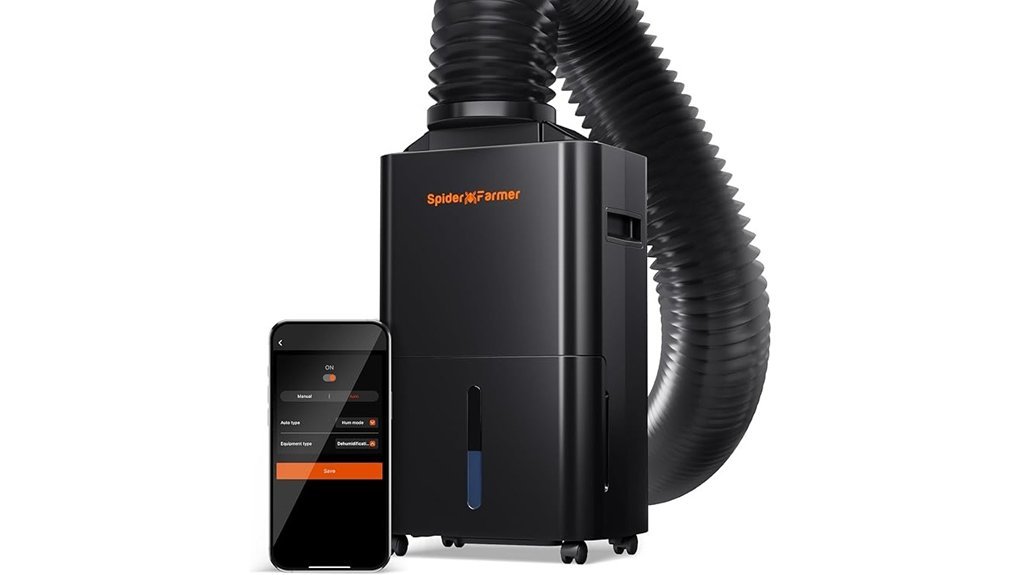
The SPIDER FARMER model is the clearest fit for a 2×2 grow tent because it is designed to work from outside the enclosure. The included air duct directs drier air toward the tent, while the remote temperature and humidity sensor can monitor conditions closer to the plants. This preserves floor space and helps keep most compressor heat outside the canopy area.
Its listing states a capacity of up to 32 pints per day at 95°F and 90% RH, with an adjustable humidity range from 30% to 80%. It also lists a 2.1-liter tank, continuous drainage, a timer, automatic defrost, a washable filter, and wheels. For a small tent, the main advantage is not a broad square-foot claim; it is the ducted layout and remote sensor placement.
Why You’ll Like It: It solves the two biggest problems in a 2×2 tent: limited floor space and added heat from an indoor compressor unit.
Best For: Growers who want direct humidity control for a 2×2 to 5×5 tent and have space outside the tent for the unit.
Who Should Avoid It: Growers whose humidity stays controlled through normal exhaust airflow, or anyone without enough room outside the tent for the unit and duct.
Pros:
- Grow-tent-focused design with an included air duct and remote sensor.
- Adjustable humidistat, continuous drain option, timer, and auto defrost.
- Can remain outside the tent, reducing heat and floor-space concerns.
Cons:
- More capacity and power draw than some lightly loaded 2×2 setups need.
- Requires room outside the tent, adequate clearance, and a practical duct route.
- The listed daily capacity is based on very warm, humid test conditions.
VIVOSUN 10L/D Dehumidifier with Smart WiFi App
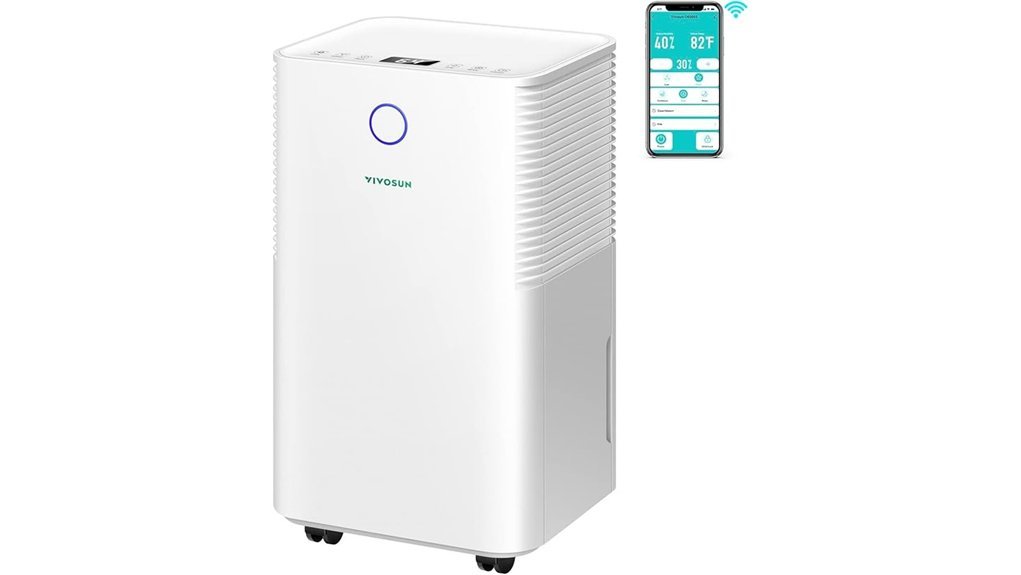
The VIVOSUN 10L/D is a practical choice when you want to manage the room that supplies air to your 2×2 tent. The manufacturer markets it as a 10L/D or 23-pint model, with an adjustable target range from 30% to 80% RH. The Tuya app can help you monitor or change settings without repeatedly opening the grow area.
This model includes a 2-liter tank, a continuous drain connection, two fan speeds, automatic, continuous, and sleep modes, a 24-hour timer, auto defrost, and a child lock. It is compact for a compressor unit, but it still releases heat while operating. Place it outside the tent unless your temperature control and available floor space can handle it.
Why You’ll Like It: Remote control and continuous drainage make it easier to manage overnight humidity rises or changes after watering.
Best For: Growers who want app control in a small lung room, closet, or room surrounding the tent.
Who Should Avoid It: Anyone who needs a dedicated tent duct, a remote canopy sensor, or does not have reliable WiFi near the grow area.
Pros:
- WiFi app control with an adjustable humidity target.
- Continuous drainage and several operating modes.
- Relatively narrow compressor design for a small lung room or closet.
Cons:
- No grow-tent air duct or remote canopy sensor is included.
- The 2-liter tank can fill quickly if a drain hose is not used.
- Placing it inside a 2×2 tent can take valuable space and add heat.
GoGuess 21 Pint Dehumidifier with Drain Hose and Timer
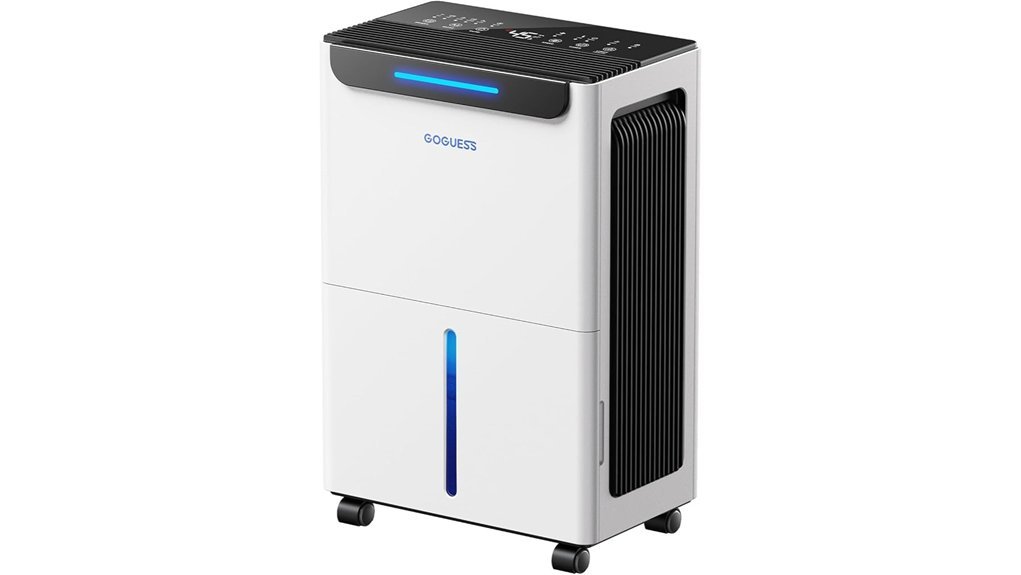
The GoGuess is a straightforward compressor dehumidifier for growers who do not need app control. Its listing states moisture removal of up to 21 pints per day at 95°F and 90% RH and an adjustable target from 30% to 80% RH. DEHU, TURBO, and SLEEP modes provide basic control for normal use, faster moisture removal, or lower-noise operation.
The included drain hose is especially useful in a grow setup because humidity can climb for hours after watering or after lights-off. Use this model in the surrounding room or closet and let the tent’s intake and exhaust exchange conditioned air. It is not designed with a dedicated tent duct, so placement and airflow matter.
Why You’ll Like It: It provides adjustable compressor-based moisture removal and continuous drainage without requiring an app or smart-home setup.
Best For: Growers who need a straightforward external dehumidifier for the room around a 2×2 tent and prefer simple onboard controls.
Who Should Avoid It: Growers who need remote monitoring, a canopy sensor, or a purpose-built duct connection.
Pros:
- Adjustable humidity setting and three useful operating modes.
- Continuous drain hose reduces bucket-emptying work.
- Lower listed capacity than many 32-pint models, which may suit a smaller surrounding room.
Cons:
- Still too bulky for most 2×2 tent floors.
- No WiFi control, remote sensor, or grow-specific duct.
- Real output will vary from the warm, humid rating conditions.
How to Choose a Dehumidifier for a 2×2 Grow Tent
1. Tent or Lung-Room Placement
A 2×2 tent has very little open floor space, and a compressor dehumidifier releases heat while running. For most setups, place the unit in the surrounding room and let the tent’s intake and exhaust exchange drier air. A ducted model with a remote sensor is more direct because it can serve the tent without sitting beside the plants.
2. Capacity and Moisture Load
Do not choose by advertised square-foot coverage alone. A grow tent’s moisture load depends on plant size, plant count, watering volume, exposed reservoirs, room temperature, exhaust rate, and the humidity of the surrounding room. Pints-per-day figures help compare models, but they do not predict exact performance in your setup.
3. Humidistat and Sensor Location
An adjustable humidistat is more useful than a simple humidity display. Place the sensor near canopy height, away from the direct stream of a humidifier, dehumidifier, intake, or exhaust fan. Compare its reading with a separate hygrometer before trusting automatic control.
4. Growth Stage and VPD
There is no single humidity setting that is ideal for every plant and every stage. Seedlings often tolerate more humidity than dense, late-stage plants. Use crop-specific guidance and consider temperature together with relative humidity, since both affect vapor pressure deficit. Avoid forcing the room to one fixed percentage throughout the entire grow.
5. Continuous Drainage
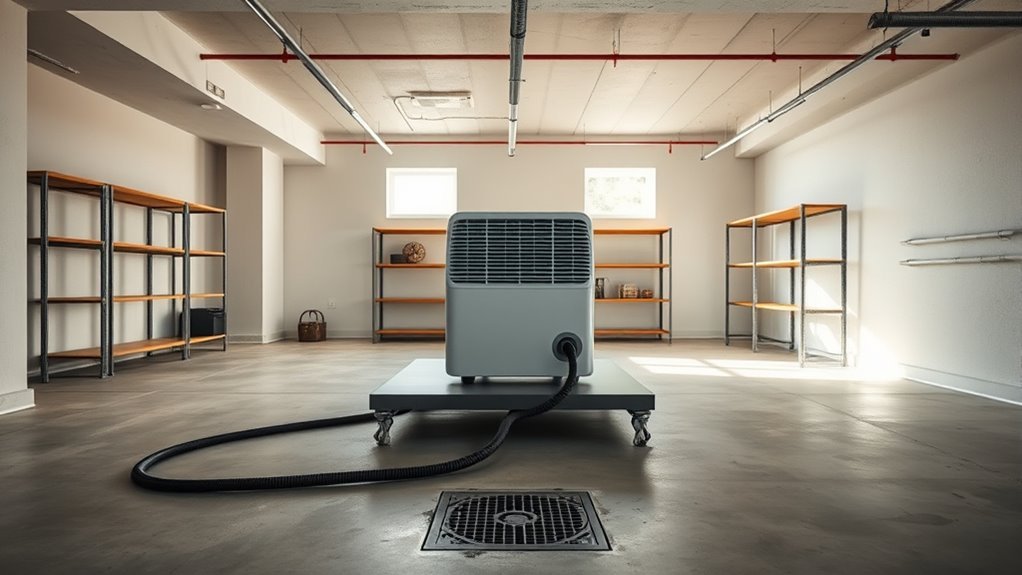
A drain hose is one of the most valuable features in a grow room. It prevents the unit from stopping when the tank fills during the night or after watering. Gravity drainage requires the hose to slope downward without kinks. If the drain point is higher than the unit, you will need a model with a pump or a separate condensate pump.
6. Compressor vs. Mini Semiconductor Units
Compressor models remove substantially more moisture and usually include an adjustable humidistat, but they are heavier, louder, and warmer. Mini semiconductor units are compact and quiet, yet their output can drop sharply in cooler or less humid air. For an active 2×2 grow, use a compressor model as the primary solution unless your humidity log proves that ventilation alone is sufficient.
7. Heat, Airflow, and Electrical Safety
Keep the air inlet and outlet clear, and follow the manufacturer’s required clearance. Do not press the unit against tent fabric, walls, or stored supplies. Keep plugs and connections dry and off the floor, avoid routing cords through standing-water areas, and do not use an extension cord unless the manufacturer explicitly permits it.
8. Energy Use and Noise
Compare wattage, timer controls, auto restart, and how often the compressor cycles. Noise matters if the setup is near a bedroom or work area, but moisture-removal performance and stable humidity control matter more than choosing the lowest decibel number.
- Measure the unit location, duct route, and required airflow clearance.
- Confirm where collected water will drain and whether gravity drainage is possible.
- Check the unit’s operating temperature range and auto-defrost feature.
- Decide whether you need WiFi, a remote sensor, or simple onboard controls.
- Plan how the dehumidifier, intake, and exhaust fan will work together.
- Verify the exact accessories included with the current Amazon listing before ordering.
Frequently Asked Questions
What Size Dehumidifier Do I Need for a 2×2 Grow Tent?
There is no universal pint rating for every 2×2 setup. A lightly planted tent may need only better ventilation, while several mature plants can require a compressor dehumidifier in the surrounding room. Choose by measured humidity trends, drainage needs, heat output, and control range rather than the tent’s four-square-foot floor area alone.
Should I Put the Dehumidifier Inside or Outside the Grow Tent?
Outside is usually better. It saves floor space and keeps compressor heat away from the canopy. Use the unit to dry the surrounding air, or use a purpose-built ducted model that sends conditioned air into the tent.
Will a Mini Dehumidifier Work in a 2×2 Grow Tent?
A mini semiconductor unit may collect some water, but it is usually too weak for mature plants, exposed reservoirs, or repeated nighttime humidity spikes. Do not rely on one as the primary solution unless your own humidity log shows that it consistently maintains the target.
Why Does Humidity Rise When the Lights Turn Off?
Air temperature often drops after lights-off. As the air cools, relative humidity can rise even when the total moisture changes only slightly. Plant transpiration, wet growing media, and reduced ventilation can make the spike larger.
Where Should I Place the Humidity Sensor?
Place it near canopy height in moving air, but not directly in front of the dehumidifier outlet, intake duct, exhaust fan, or a wet growing medium. A second hygrometer can help you check for hot or humid pockets.
How Do I Maintain a Grow-Room Dehumidifier?
Clean the filter and tank regularly, inspect the drain hose for algae or kinks, keep the air openings clear, and check for leaks. Confirm the sensor reading with a separate hygrometer and follow the manufacturer’s cleaning and operating instructions.
Are Square-Foot Coverage Claims Reliable for Grow Tents?
They are only a rough room-size reference. Grow tents can produce much more moisture per square foot than an ordinary bedroom or basement. Compare pints per day, test conditions, humidistat control, drainage, heat output, and your actual humidity trend.
Final Recommendation
Choose the SPIDER FARMER for the most direct 2×2 grow-tent solution because its duct and remote sensor support outside-the-tent placement.
Choose the VIVOSUN 10L/D when app control is more important and you plan to condition the surrounding room.
Choose the GoGuess 21 Pint for a simpler compressor setup with a drain hose and onboard controls.
Whichever model you choose, log humidity at canopy height before watering, after watering, and during lights-off. Those readings are more useful than a broad square-foot claim and help you avoid a unit that is too weak, unnecessarily large, or poorly placed.