Affiliate disclosure: As an Amazon Associate, this site may earn from qualifying purchases. The recommendations below are designed to help you compare grow-tent climate-control options more easily, but you should always check the current Amazon listing details before buying.
If you’re shopping for the 8 best air conditioner dehumidifier combos for grow tents in 2026, the right choice depends on whether your tent needs cooling, moisture removal, or both. Start with the AC Infinity HYDRONE 7 for small grow tents, Shinco 8,000 BTU for compact cooling, and Whynter ARC-14SH or ARC-14S for stronger portable AC performance. Add VIVOSUN AeroDrain D12, Shinco 12,000 BTU, MARS HYDRO 18L/day, and Spider Farmer 38 Pints if your main goal is smarter humidity control, better drainage, and steadier plant conditions. Compare tent size, BTU output, dehumidification rate, drainage setup, smart controls, and noise before you buy.
Quick Verdict
Best smart small-tent dehumidifier: AC Infinity HYDRONE 7
Best compact portable AC combo: Shinco 8,000 BTU Portable Air Conditioner
Best powerful cooling and dehumidifying option: Whynter ARC-14S or ARC-14SH
Best smart grow-system humidity control: VIVOSUN AeroDrain D12
Best dedicated tent dehumidifier choices: MARS HYDRO 18L/day and Spider Farmer 38 Pints
Quick Comparison Table
| Product | Best For | Main Function | Key Buyer Note | Amazon |
|---|---|---|---|---|
| AC Infinity HYDRONE 7 | Small grow tents | Smart dehumidifying | Strong control for compact spaces | Check Price |
| Shinco 8,000 BTU Portable AC | Compact cooling setups | Cooling, fan, dry mode | Needs venting through a window kit | Check Price |
| Whynter ARC-14SH | Cooling, dehumidifying, and heat | 4-in-1 climate control | Useful if you also need supplemental heating | Check Price |
| Whynter ARC-14S | Medium grow rooms or tents | Dual-hose cooling and dehumidifying | Heavy but powerful for hot, damp setups | Check Price |
| VIVOSUN AeroDrain D12 | Smart grow-tent humidity control | App-controlled dehumidifying | Best value comes from smart-system use | Check Price |
| Shinco 12,000 BTU Portable AC | Stronger portable cooling | Cooling, fan, dry mode | Better fit for users who need more BTU output | Check Price |
| MARS HYDRO 18L/Day | 3×3, 2×4, and 4×4 tents | Dedicated dehumidifying | Good when cooling is already handled | Check Price |
| Spider Farmer 38 Pints | Moisture-heavy grow spaces | Dedicated dehumidifying | Continuous drainage is best for longer runs | Check Price |
Before You Buy
Grow tents can trap heat and moisture faster than normal rooms. Before choosing one of these units, measure your tent, check your light heat output, confirm where the exhaust hose or drain hose will go, and make sure the unit can run safely with your available outlet and ventilation setup.
AC Infinity HYDRONE 7 Smart Plant Dehumidifier
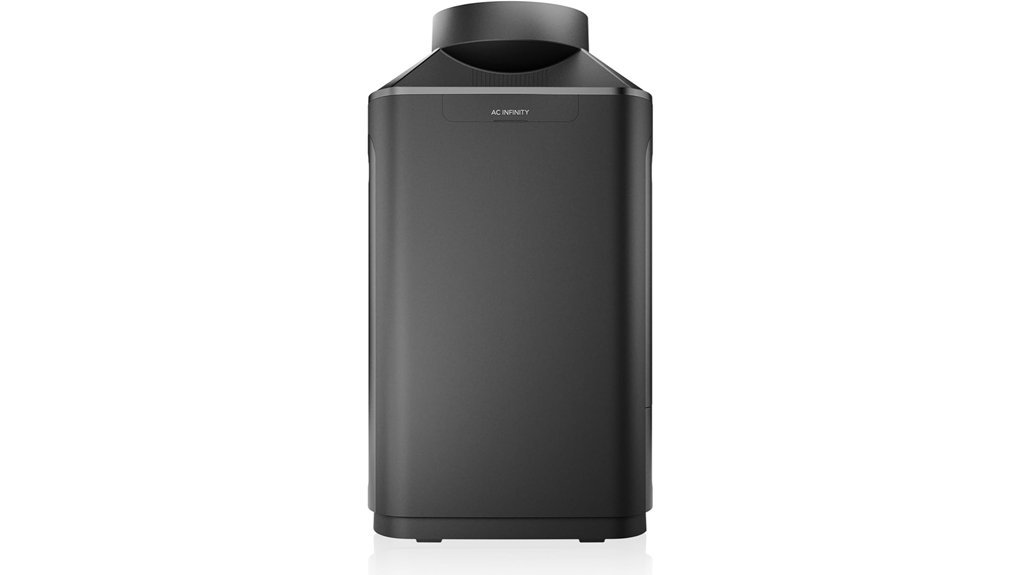
Best For: Smart humidity control in small grow tents and compact grow spaces.
The AC Infinity HYDRONE 7 is a smart pick if you want tight humidity control in a small grow tent, especially one up to 64 square feet. You get a 2-liter smart plant dehumidifier that fits compact spaces at 11.45 x 14.05 x 24.44 inches. Its 10 drying levels and PWM rotary motor react quickly, so you can fine-tune conditions fast. Smart humidity and VPD controls self-adjust output in exact percentages. You can use the exhaust and intake ports for ducted or closed-loop setups, and it performs well in hot or cold rooms.
Why You’ll Like It: This model is built for growers who want more control than a basic home dehumidifier offers. The smart humidity and VPD features are especially useful if you want consistent plant conditions without constant manual adjustments.
Who Should Buy This: Choose it if your grow tent is small, your humidity swings quickly, and you want precise controls with ducting flexibility.
Who Should Avoid This: Skip it if you need full-room cooling or a high-capacity dehumidifier for a large, wet grow area.
Best For: Growers with small tents or compact grow spaces up to 64 square feet who want precise, smart humidity and VPD control in hot or cold environments.
Pros:
- 10 drying levels and a PWM-controlled rotary motor provide fast, fine-tuned humidity adjustments.
- Smart humidity and VPD controls automatically self-adjust output to maintain an ideal climate.
- Exhaust and intake ports support both ducted and closed-loop setups for flexible installation.
Cons:
- 2-liter capacity may be too small for larger grow areas or very damp environments.
- Designed primarily for compact spaces, so it may be overkill for simple residential use.
- Warranty details are only available upon request.
Shinco 8,000 BTU Portable Air Conditioner with Remote
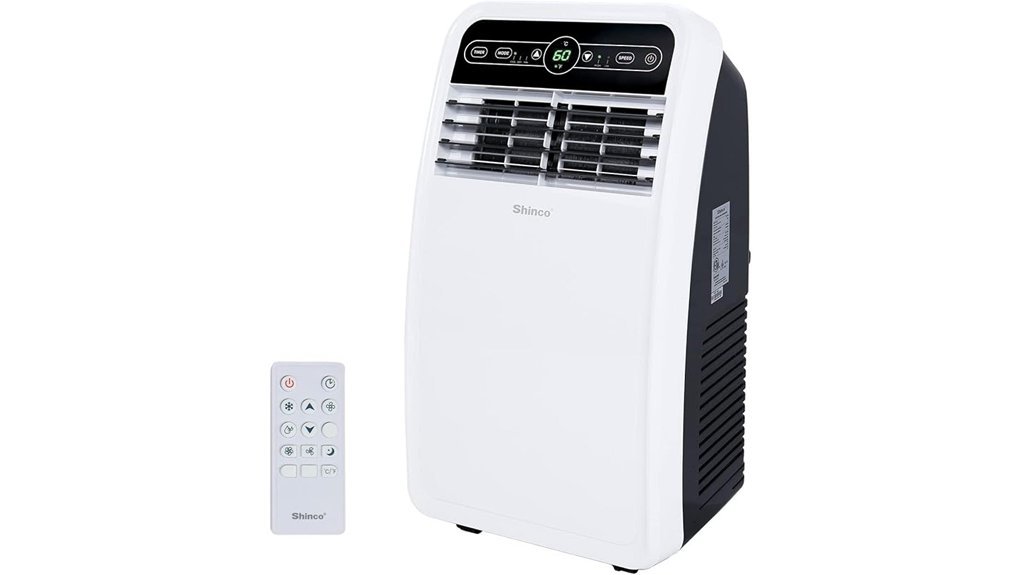
Best For: Compact grow spaces that need cooling, fan mode, and basic dehumidifying in one portable unit.
Need a compact, all-in-one unit for a small grow tent? The Shinco SPF1-08C gives you cooling, fan, and dehumidifying in one portable package. You can cool up to 350 sq. ft. with 8,000 BTU ASHRAE, while the 19.2L/day self-evaporating dehumidifier helps keep humidity in check. Set temperatures from 60°F to 86°F, choose two fan speeds, and use the remote from 23 feet away. It installs fast with the included hose and window kit, rolls easily on four casters, and runs under 55dB in sleep mode.
Why You’ll Like It: This is a practical choice if your grow area gets too warm and damp but you do not want separate equipment right away. It gives you cooling and dry mode together, which can make small-space climate management easier.
Who Should Buy This: Choose it if you need a portable AC for a small tent, apartment grow area, or compact room with a nearby venting option.
Who Should Avoid This: Avoid it if your setup has no safe venting path or if your humidity problem is severe enough to need a dedicated dehumidifier.
Best For: Small-space users, such as grow tent owners or apartment dwellers, who want a compact 3-in-1 portable AC with cooling, fan, and dehumidifying functions.
Pros:
- Cools spaces up to 350 sq. ft. with 8,000 BTU ASHRAE capacity
- Includes self-evaporating dehumidifier and two fan speeds for better climate control
- Easy to move and set up with four casters, remote control, and included window kit
Cons:
- Best suited for smaller rooms rather than larger spaces
- 55 dB noise level may still be noticeable outside sleep mode
- Portable units require venting setup and can be less efficient than window or split systems
Whynter Portable Air Conditioner & Heater (ARC-14SH)
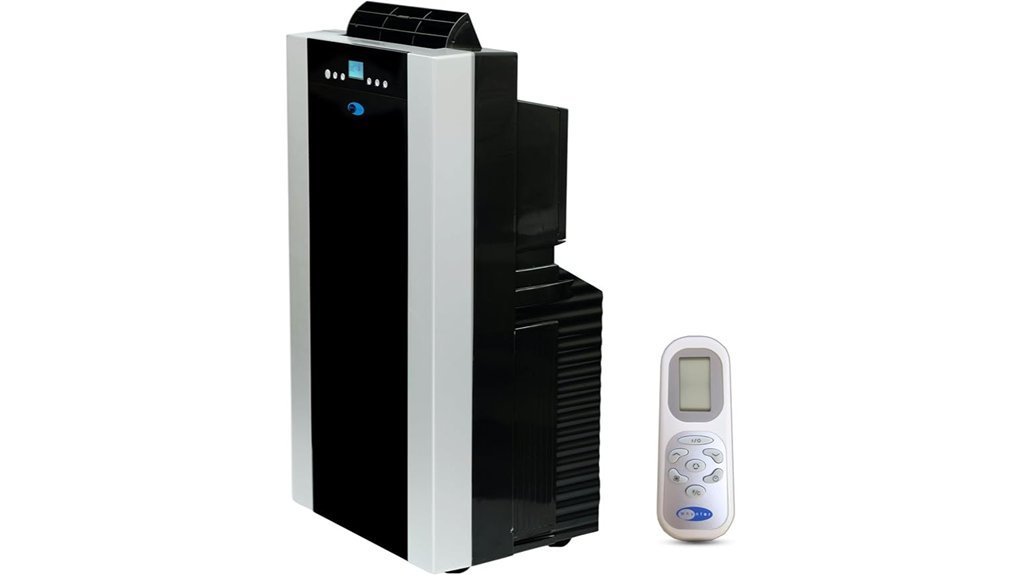
Best For: Growers who want cooling, dehumidifying, fan mode, and supplemental heat from one portable unit.
If you need one unit that cools, dehumidifies, and heats, the Whynter ARC-14SH fits well. You get 14,000 BTU of cooling, 9,200 SACC, and enough coverage for grow tents or rooms up to 500 sq. ft. Its four modes let you cool, dehumidify, fan, or heat as conditions shift. The unit removes up to 71 pints of moisture per day, and the auto drain helps you avoid constant emptying. You can set temperatures from 61°F to 89°F, while the washable filter and included window kit make setup simple.
Why You’ll Like It: This model makes sense when your grow space faces seasonal temperature swings. You can cool during hot periods, use dry mode when humidity rises, and use heat mode when the surrounding room gets too cold.
Who Should Buy This: Choose it if you want a multi-mode portable AC that can handle more than basic cooling.
Who Should Avoid This: Skip it if you only need a compact dehumidifier or if your grow tent cannot support portable AC venting.
Best For: People who need a versatile portable unit for cooling, dehumidifying, and supplemental heating in spaces up to about 500 sq. ft., such as bedrooms, apartments, or grow tents.
Pros:
- Offers four useful modes: cool, dehumidify, fan, and heat
- Strong cooling capacity at 14,000 BTU with coverage for up to 500 sq. ft.
- Includes an auto-drain dehumidifier and washable filter for easier maintenance
Cons:
- Portable units are generally noisier than window or split systems
- Requires window vent installation, which may not suit every setup
- Best for medium-sized spaces, so it may struggle in larger or poorly insulated rooms
Whynter Portable Air Conditioner 14,000 BTU (ARC-14S)
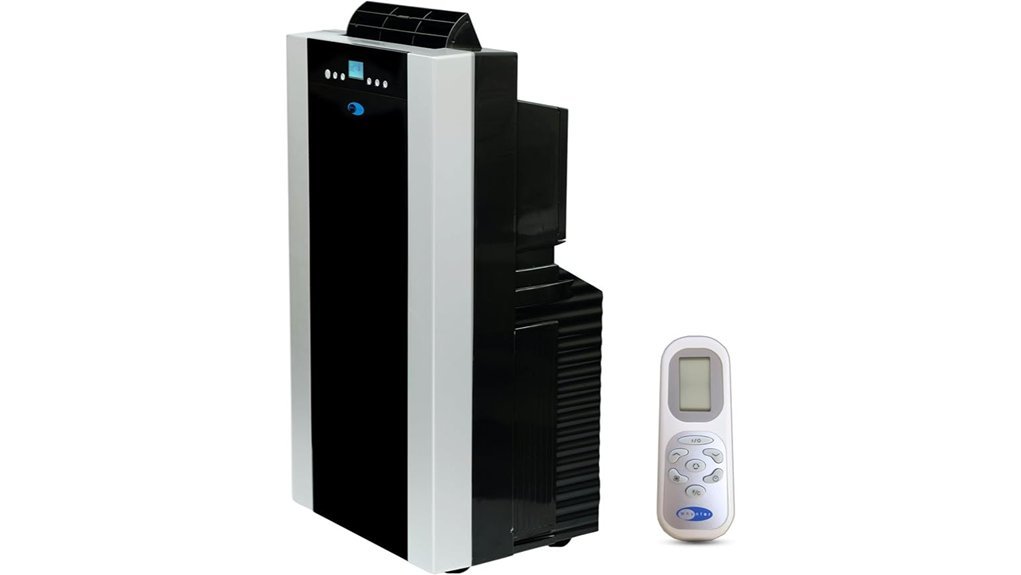
Best For: Medium grow tents or grow rooms that need stronger cooling and high daily moisture removal.
Whynter’s ARC-14S suits growers who need strong cooling and dehumidifying in medium-sized tents. You get 14,000 BTU of cooling, 71 pints per day of moisture removal, and coverage up to 500 sq. ft., so it can handle hotter, wetter setups well. The dual-hose design helps it work efficiently, while three fan speeds and a 61°F to 89°F thermostat let you fine-tune conditions. It runs at 51 dBA on low, includes a window kit, remote, and washable filters, and backs you with a one-year unit warranty and three-year compressor warranty.
Why You’ll Like It: The dual-hose design is useful for growers who want more efficient cooling than many single-hose portable units provide. It also works well when heat and humidity both rise during lights-on periods.
Who Should Buy This: Choose it if you want a stronger portable AC and dehumidifier option for a medium grow area.
Who Should Avoid This: Avoid it if you need something lightweight, ultra-quiet, or easy to move often.
Best For: Growers in medium-sized tents or rooms up to 500 sq. ft. who need powerful cooling, strong dehumidifying, and efficient dual-hose operation.
Pros:
- Delivers strong 14,000 BTU cooling with 71 pints/day dehumidification for hot, humid setups.
- Dual-hose design improves efficiency, and three fan speeds plus a 61°F to 89°F thermostat offer good control.
- Includes useful accessories like a window kit, remote, and washable filters, with a solid warranty package.
Cons:
- At 73 pounds, it’s heavy and not very easy to move or install.
- Noise can be noticeable at 51 dBA on low speed.
- Its 1300 W maximum power draw may be high for energy-conscious users.
VIVOSUN AeroDrain D12 Smart Environmental Dehumidifier
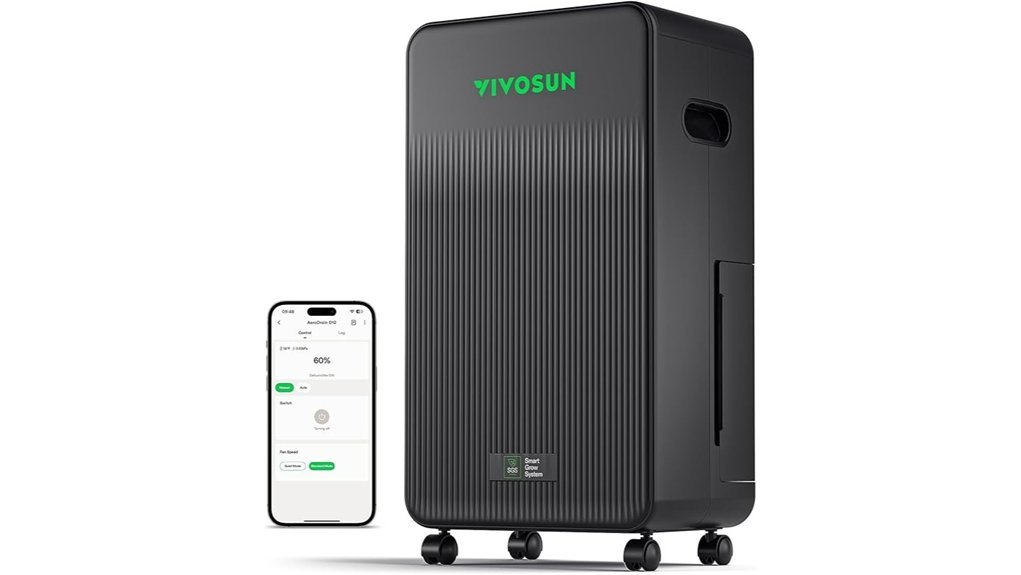
Best For: Growers who want app-based humidity monitoring and automatic moisture control.
VIVOSUN’s AeroDrain D12 suits growers who need smart humidity control in medium-sized tents. You can pull up to 12L of moisture a day, and its 2L tank gives you flexible collection before auto shutoff kicks in. The high-efficiency compressor and precise temp and humidity sensors help you keep conditions steady from seedlings to harvest. You can monitor and adjust settings in the Vivosun app, and it syncs with the Smart Grow System. Tool-free setup, handles, and caster wheels make it easy to move, while dual drainage options simplify long runs.
Why You’ll Like It: This unit is attractive if you already use or want a smart grow ecosystem. Remote monitoring can help you catch humidity spikes sooner and reduce the need for constant manual checks.
Who Should Buy This: Choose it if you want smart automation, app visibility, and drainage flexibility for a medium grow tent.
Who Should Avoid This: Skip it if you prefer simple manual controls or do not want to depend on app-based features.
Best For: Growers using medium-sized tents up to 5×5 ft who want smart, app-controlled humidity management from seedling through harvest.
Pros:
- Removes up to 12L of moisture per day for effective humidity control
- App connectivity and Smart Grow System syncing enable remote monitoring and automation
- Tool-free setup, handles, caster wheels, and dual drainage options make it easy to use
Cons:
- 2L tank may require frequent emptying in very humid conditions
- Best suited for medium spaces, so it may be overkill or less ideal for smaller setups
- Requires app/ecosystem use to get the full smart-control benefit
Shinco 12,000 BTU Portable Air Conditioner with Remote
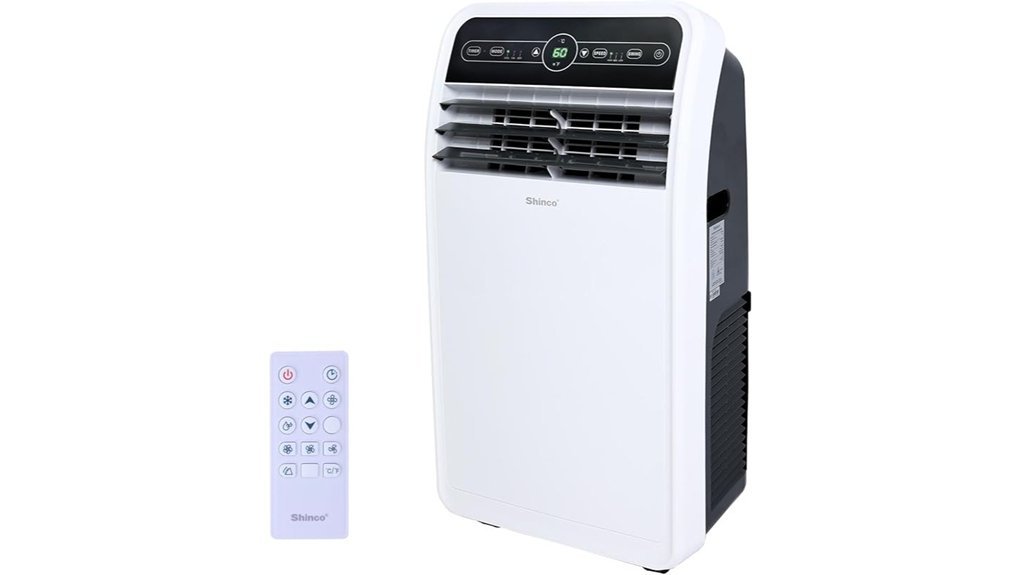
Best For: Grow tent users who need more cooling power than an 8,000 BTU portable AC can provide.
The Shinco 12,000 BTU portable AC suits grow tents up to 450 square feet. You get 3-in-1 cooling, fan, and dry modes, plus dehumidifying power up to 43.2L per day with self-evaporation. Its 3 fan speeds and 60°F–86°F range help you dial in tent climate fast. The included exhaust hose and window kit make setup simple, and the four casters let you move it easily. Use the LED display, 23-foot remote, swing function, and 24-hour timer to fine-tune airflow. It runs at 52 dB and includes a one-year warranty.
Why You’ll Like It: This model gives you stronger cooling than the smaller Shinco option while still keeping the same basic portable AC convenience. It is a better fit when your grow lights add more heat or your tent sits in a warm room.
Who Should Buy This: Choose it if you want a portable AC with higher BTU output, multiple fan speeds, and dry mode.
Who Should Avoid This: Avoid it if energy use, outlet capacity, or venting space is a concern in your setup.
Best For: Grow tent users or small-space owners who want a portable, easy-to-install 3-in-1 air conditioner with dehumidifying and remote-control convenience.
Pros:
- Cools spaces up to 450 sq. ft. with 12,000 BTU ASHRAE / 7,500 BTU SACC capacity
- 3-in-1 operation with cool, fan, and dry modes plus up to 43.2L/day dehumidification
- Easy to move and set up with included exhaust hose, window kit, and four casters
Cons:
- At 52 dB, it may be noticeable in quieter rooms or tents
- Best suited for smaller areas, so it may not be enough for larger spaces
- Uses 115V power and 3520 watts, which may be less efficient than some alternatives
MARS HYDRO 18L/Day Compressor Dehumidifier with Digital Display
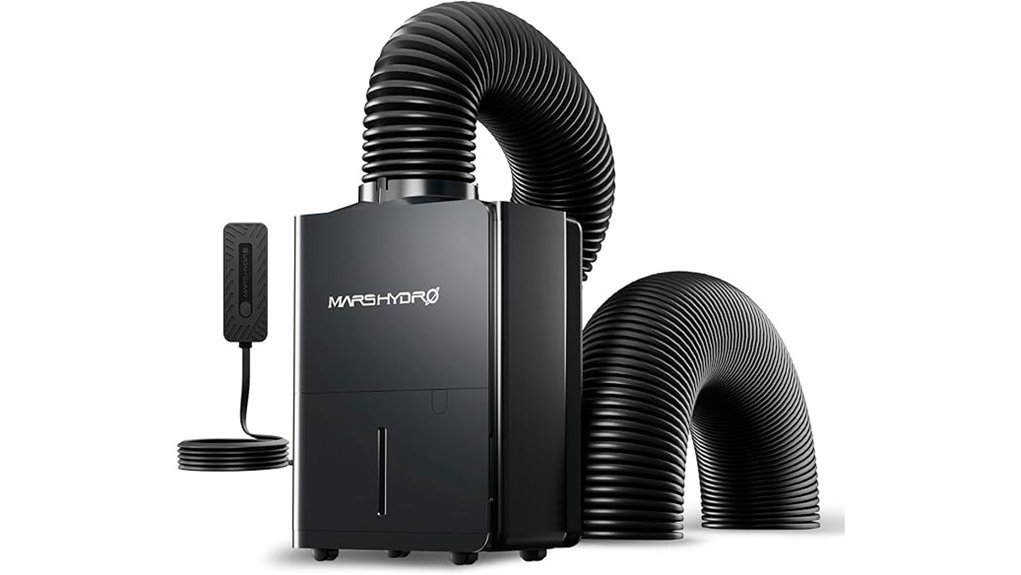
Best For: Smaller grow tents that already have cooling handled but still need reliable moisture removal.
Need a compact dehumidifier for a 3×3, 2×4, or 4×4 grow tent? The MARS HYDRO 18L/Day compressor unit fits those spaces well and pulls up to 38 pints of moisture daily. Its air duct channels damp air out without dumping extra heat into your tent, so you can protect plant stress. You can set target humidity from 30% to 90% and let the auto mode handle the rest. Precision sensors track conditions, while the full-tank alert and shutoff keep things safe. It’s easy to move, install, and clean with the washable filter.
Why You’ll Like It: This is a grow-focused choice for users who care more about moisture control than air conditioning. The target humidity range and auto mode help you keep the tent more stable during different plant stages.
Who Should Buy This: Choose it if your 3×3, 2×4, or 4×4 tent gets too damp and you want a compact compressor dehumidifier.
Who Should Avoid This: Avoid it if you need active cooling, because this is not a portable air conditioner.
Best For: Grow tent users with 3×3, 2×4, or 4×4 setups who want a compact, easy-to-use dehumidifier with automatic humidity control.
Pros:
- Designed for grow tents with an air duct that helps remove moisture without adding extra heat.
- Auto mode lets you set humidity from 30% to 90% for hands-free operation.
- Easy to move, install, and maintain with handles, caster wheels, and a washable filter.
Cons:
- The 2.1-liter tank may require frequent emptying in very humid conditions.
- Best suited for smaller grow tents, so it may be too limited for larger spaces.
- At 29.32 pounds, it is compact but still somewhat heavy for frequent lifting.
SPIDER FARMER 38 Pints Plant Dehumidifier with Timer
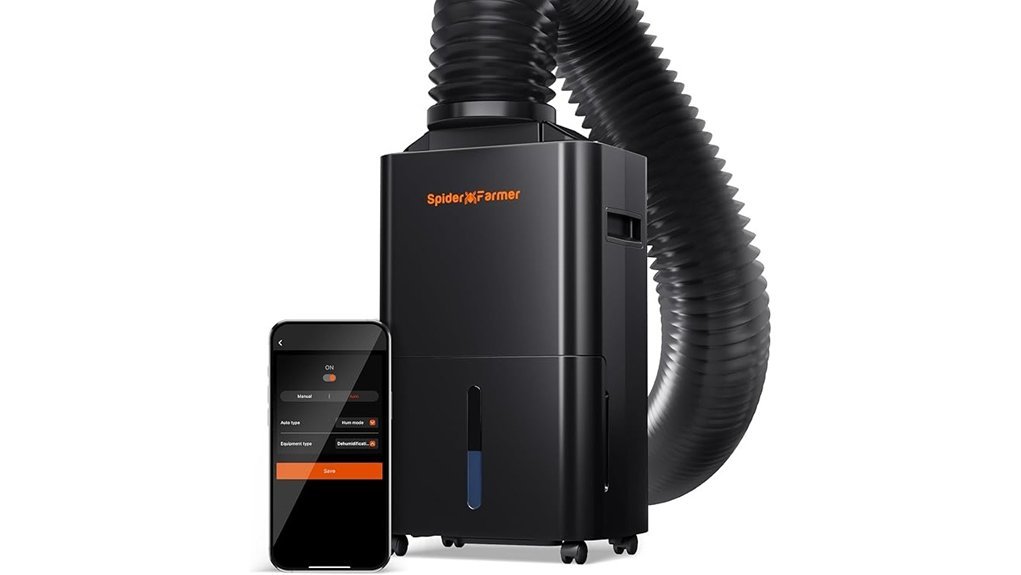
Best For: Growers who need dependable dehumidifying, adjustable humidity, and a continuous drain option.
Spider Farmer’s 38-pint dehumidifier suits growers who need reliable moisture control without adding much heat. You can place it outside the tent thanks to its air duct design, which helps protect plant temps. It handles spaces up to 2,000 square feet and removes up to 32 pints a day under hot, humid conditions. You get adjustable humidity from 30% to 80%, a 24-hour timer, and auto shutoff with a full-tank alert. The 2.1-liter tank, drain option, wheels, and handle make it easy to use. Automatic defrosting keeps it running smoothly.
Why You’ll Like It: This unit is helpful if you want a grow-friendly dehumidifier with timer control and drainage flexibility. Placing it outside the tent can also help reduce unwanted heat buildup inside the grow space.
Who Should Buy This: Choose it if you want adjustable humidity control, full-tank protection, and a drain option for longer runs.
Who Should Avoid This: Skip it if your main problem is heat rather than humidity, since it does not replace an air conditioner.
Best For: Growers, basement users, and homeowners who need a compact dehumidifier with precise humidity control and low-heat operation.
Pros:
- External air-duct design helps reduce added heat in grow tents
- Adjustable humidity range, timer, and auto shutoff add convenient control
- Continuous drain option, wheels, and handle make it easy to move and maintain
Cons:
- 2.1-liter tank may require frequent emptying without continuous drainage
- Best performance is under high heat and humidity, so real-world capacity may vary
- Designed primarily for moisture control, not for silent operation
Factors to Consider When Choosing an Air Conditioner Dehumidifier Combo for Grow Tent
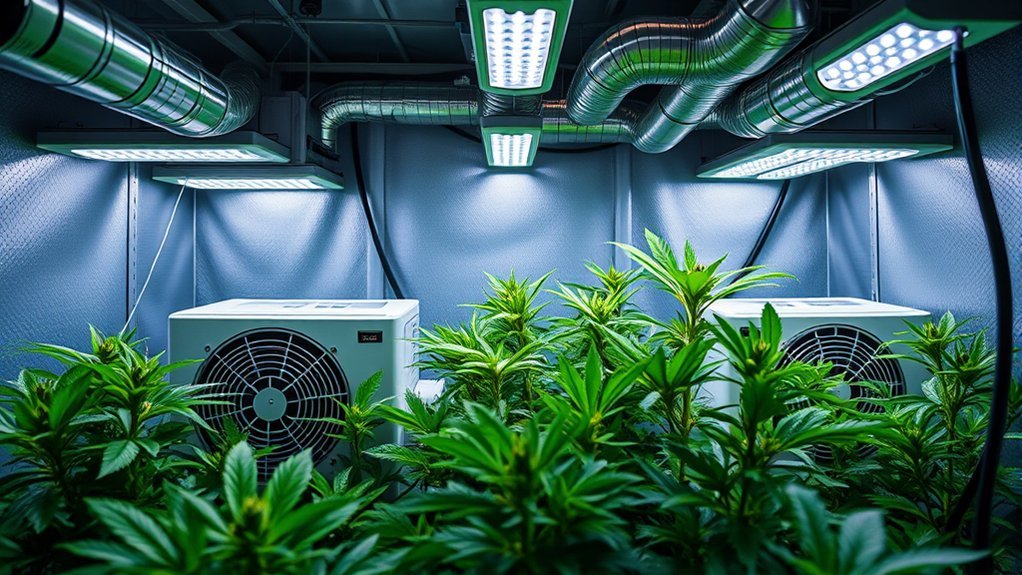
When you choose an air conditioner dehumidifier combo for your grow tent, start with cooling capacity and dehumidification rate so it can handle your plant load. Make sure the unit matches your tent size and gives you precise humidity control without overworking. You’ll also want to keep noise levels low enough so your grow space stays comfortable and undisturbed.
Safety Note for Grow Tents
Portable AC units need proper exhaust venting, and dehumidifiers need safe drainage or regular tank emptying. Keep cords away from standing water, avoid overloading outlets, and follow the manufacturer’s clearance, filter, and drainage instructions.
Cooling Capacity
Cooling capacity is one of the most important specs to get right, because it determines whether your air conditioner dehumidifier combo can actually keep a grow tent stable. You’ll usually see this rating in BTUs, which tells you how much heat the unit can remove each hour. For grow tents, a good rule is about 20 BTUs per square foot, but you should also factor in tent volume, lighting, and other gear that add heat. If you undersize the unit, temperatures will drift and stress plants. Look for a model with an adjustable range, often 60℉ to 86℉, so you can match different growth stages. The best choice cools your space efficiently without overworking, while still helping maintain balanced conditions in your tent.
Dehumidification Rate
Dehumidification rate matters just as much as cooling capacity, because even a well-cooled grow tent can still run too damp. You should check how much moisture the unit removes in 24 hours, usually listed in pints or liters per day. In humid spaces, a stronger rate helps you stop mold and mildew before they spread across leaves and stems. Aim for a capacity that fits your tent’s needs; a common rule of thumb is about 1 pint per square foot for solid moisture control. You should also factor in ambient temperature and room humidity, since both can affect performance. Look for adjustable humidity settings, too, so you can fine-tune moisture levels as your plants move through different growth stages and stay healthy.
Tent Size Match
Matching the combo to your tent size is key, because a unit that’s too small won’t cool or dehumidify effectively, while one that’s oversized can make control harder than it needs to be. Check the BTU rating first: bigger tents need more cooling power to hold steady temperatures. Then compare the unit’s floor-area coverage to your tent’s square footage; a model built for up to 500 sq. ft. won’t suit a much larger space. You should also look at airflow design, since even circulation helps spread conditioning evenly across the canopy. If your setup is compact, avoid unnecessary capacity; if it’s large, choose a combo sized for the full volume so you don’t create hot spots or weak coverage.
Humidity Control
Keeping humidity in the right range is just as important as controlling temperature in a grow tent, because most plants do best around 40% to 60% relative humidity, where growth stays healthy and mold risks stay lower. You should look for a combo unit with accurate sensors that automatically fine-tune moisture levels, so you don’t have to keep adjusting settings. If your tent is larger or runs especially damp, check the moisture removal rating; some models can pull as much as 71 pints a day. Smart controls can help you monitor and change conditions remotely, which makes management easier. A continuous drainage option is also worth choosing, since it lets the unit run longer without stopping to empty a tank.
Noise Levels
Once you’ve got humidity under control, noise becomes the next thing to watch, especially if your grow tent sits in a bedroom, apartment, or shared living space. Many air conditioner dehumidifier combos run around 51 to 55 decibels, which sounds like a quiet office or library. That’s usually manageable, but you should still check the dBA rating before you buy. If you need a calmer setup, look for models with sound-dampening features and sleep mode, which can cut nighttime noise while keeping conditions stable for your plants. Also, pay attention to fan speeds, because higher cooling or dehumidifying settings can make the unit louder. Choosing a quieter combo helps you protect your routine and avoid bothering neighbors.
Energy Efficiency
Energy efficiency can make a big difference in both your power bill and how well your grow tent stays dialed in. When you compare combo units, check the SEER rating first; a higher number means the system cools more efficiently and usually costs less to run over time. For the dehumidifier side, look at the Energy Factor, since a higher EF means it removes more moisture for each kilowatt-hour. You should also match the BTU capacity to your tent size so you’re not paying for extra output you don’t need. Self-evaporating models can help cut maintenance and reduce wasted operation. If a unit includes programmable timers, you can limit run time and keep energy use tight without sacrificing stable conditions.
Smart Controls
Smart controls can take a combo unit from simply efficient to truly set-and-forget for your grow tent. You’ll want precise humidity and temperature control so your plants stay in their ideal range without constant tweaking. Look for models with AI-driven adjustments that fine-tune drying output in exact percentages, helping you maintain stable conditions. Intelligent humidity sensors matter too, because they track moisture levels and keep performance on target while cutting wasted energy. Remote app connectivity adds real convenience, letting you check and adjust settings from anywhere. Automated timers and humidity set points also help you run the unit hands-free, so you can keep your grow environment consistent even when you’re busy.
Drainage Options
Drainage options can make or break how well a combo unit performs in a grow tent, especially if you want it running without constant attention. You should look for automatic drainage that keeps moisture moving out without frequent emptying. A drain hose lets you send water directly to a floor drain or collection point, which helps prevent overflow and keeps humidity steady. If you’re working with a larger tent, continuous drainage through a drain pipe can keep the system running longer with less oversight. A full tank alert is also worth having because it shuts the unit off before spills happen. For the most flexible setup, choose dual drainage options, so you can use gravity feed or a pump-assisted path that fits your space.
Pro Tips for Better Grow-Tent Climate Control
- Match the unit to your real heat load: grow lights, pumps, fans, and sealed rooms can raise cooling needs.
- Use continuous drainage when possible: it reduces shutdowns during humid days and late flower stages.
- Monitor both temperature and humidity: cooling alone may not solve excess moisture.
- Keep filters clean: clogged filters can reduce airflow, increase noise, and weaken performance.
- Plan your exhaust path: portable AC units need proper venting to remove heat from the grow area.
Frequently Asked Questions
How Much Electricity Do Air Conditioner Dehumidifier Combos Use in Grow Tents?
You’ll usually use 300–1,500 watts, depending on unit size, settings, and runtime. Bigger grow tents with hotter, wetter conditions push usage higher. Check the nameplate and multiply watts by hours for your daily cost.
Can One Unit Cool and Dehumidify a Sealed Grow Tent Effectively?
Yes, one unit can cool and dehumidify a sealed grow tent effectively if you size it right. Think of the tent like a closed climate box: you control heat and humidity better when the unit is properly sized, airflow is balanced, and sensors are monitored often.
What Tent Size Needs a Separate Dehumidifier and Air Conditioner?
You’ll usually need separate units once your tent’s over 4×4 feet, especially with high heat, dense canopy, or sealed conditions. In bigger tents, one combo unit often can’t both cool and dehumidify enough.
How Often Should Filters and Water Tanks Be Cleaned?
You should clean filters weekly and water tanks every few days; in dusty, humid grow spaces, check them more often, wash filters monthly, and empty tanks before buildup, mold, and odors start.
Are Smart Controls Worth It for Grow Tent Climate Management?
Yes, smart controls can be worth it because you’ll track temperature, humidity, and alerts remotely, automate adjustments, and reduce mistakes. If you’re home often and enjoy manual tuning, you might not need them.
Is a Dehumidifier the Same as an Air Conditioner for Grow Tents?
No. A dehumidifier mainly removes moisture, while an air conditioner removes heat and may also remove some moisture while cooling. Some portable AC units include dry mode, but a dedicated dehumidifier may still work better if humidity is your biggest problem.
Should You Place the Unit Inside or Outside the Grow Tent?
It depends on the unit design, heat output, drainage, and ducting. Some grow-focused dehumidifiers can sit outside the tent with ducting, which may help reduce heat buildup. Portable AC units usually need proper exhaust venting, so plan placement before buying.
Final Recommendation
If your grow tent mainly needs cooling plus moisture control, start with one of the portable AC options from Shinco or Whynter. If your grow space already has cooling and only struggles with humidity, choose a dedicated grow-tent dehumidifier like the AC Infinity HYDRONE 7, VIVOSUN AeroDrain D12, MARS HYDRO 18L/day, or Spider Farmer 38 Pints. The best pick is the one that matches your tent size, heat load, drainage plan, and preferred level of automation.
Conclusion
When you choose the right AC and dehumidifier combo, you’re giving your grow tent a steadier climate and a healthier rhythm. It keeps heat in check, pulls out heavy moisture, and helps your plants breathe easier through warm, damp, or sealed conditions. Whether you need a smart dehumidifier, a portable AC, or a stronger dual-purpose unit, the best pick fits your space, drainage setup, and growing style. Make the right call, and your grow tent will run smoother, cleaner, and more consistently all season long.