Updated August 2026.
Choosing a dehumidifier for low temperatures requires more than comparing pint ratings or square-foot claims. Compressor dehumidifiers can lose moisture-removal performance as a room gets colder, and frost may form on the coils. Automatic defrost helps, but the manufacturer’s approved minimum operating temperature is the more important specification.
After removing models that did not provide enough verifiable low-temperature guidance, three products remain. The Kesnos Energy Star Dehumidifier is the strongest whole-room option because its manual permits operation down to 41°F. The EasyAcc Small Bathroom Dehumidifier is better for compact rooms that stay around 55°F or warmer, while the Eva-dry E-500 provides silent, cordless moisture absorption in closets, cabinets, vehicles, and other small enclosed spaces.
Quick Verdict
- Best Overall for Cool Indoor Rooms: Kesnos Energy Star Dehumidifier
- Best for a Small Room Around 55°F: EasyAcc Small Bathroom Dehumidifier
- Best for Closets, Cabinets, and Vehicles: Eva-dry E-500 Renewable Mini Dehumidifier
How These Products Were Selected
Priority was given to a stated operating-temperature range, automatic defrost where relevant, honest capacity context, suitable drainage or renewal methods, and a clear use case. Seller coverage figures were not treated as guarantees, and no product is recommended here as a whole-room solution for freezing conditions.
Quick Comparison
| Product | Best Use | Moisture-Control Type | Temperature Guidance | Main Limitation | Check Details |
|---|---|---|---|---|---|
| Kesnos Energy Star | Cool basements and medium-size indoor rooms | Compressor | Manual states 41°F to 90°F; includes auto-defrost | Standardized capacity is much lower than the hot-condition 30-pint claim | Check on Amazon |
| EasyAcc Small Bathroom | Small bathrooms, closets, laundry nooks, and parked RVs | Compact powered unit | Seller-stated operation down to approximately 55°F | Not sized for a basement, large room, or severe dampness | Check on Amazon |
| Eva-dry E-500 | Closets, cabinets, safes, cars, and small storage compartments | Renewable silica-gel desiccant | No refrigeration coil to frost during moisture absorption | Passive, low-capacity control for enclosed micro-spaces only | Check on Amazon |
Before You Buy: Low-Temperature Reality Check
Automatic defrost does not turn an ordinary compressor dehumidifier into an all-weather appliance. As room temperature falls, the unit may collect less water and spend more time defrosting. The approved operating range in the manual should therefore take priority over an advertised capacity or coverage number.
Of the powered products retained in this guide, the Kesnos has the clearest documented range, beginning at 41°F. The EasyAcc listing describes operation down to approximately 55°F. Neither should be used below its stated range, and neither is presented as a solution for a freezing garage, shed, or outdoor area.
Safety note: Do not operate a powered dehumidifier in standing water, outdoors, inside a wet shower area, or below its approved temperature range. Place it on a stable surface, keep air openings clear, and follow the manufacturer’s upright-rest instructions after transportation.
Kesnos Energy Star Dehumidifier for Home & Basement
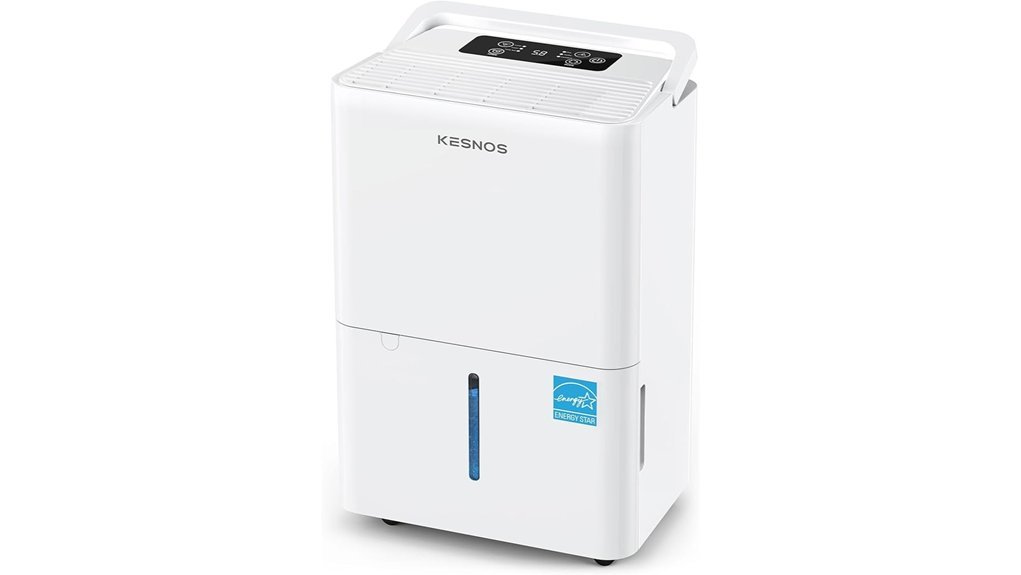
The Kesnos CTH30B is the strongest choice in this guide for a cool basement, bedroom, laundry room, or other indoor area that remains within its approved temperature range. Its manual specifies operation from 41°F to 90°F, giving buyers more useful low-temperature guidance than a general auto-defrost claim alone.
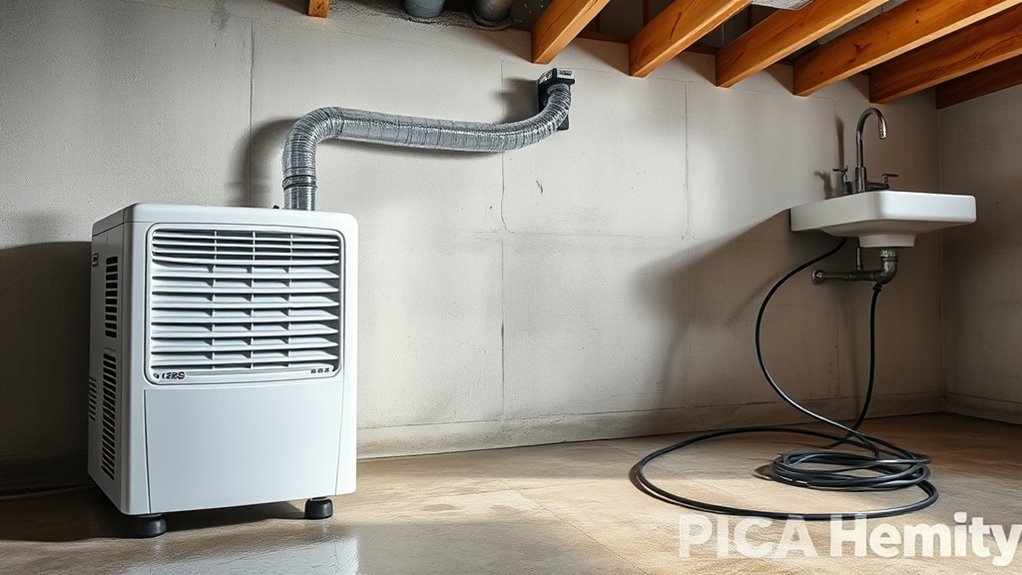
The unit includes automatic defrost, four operating modes, caster wheels, a washable filter, automatic restart, a 1.5-liter tank, and support for continuous gravity drainage. These features make it easier to manage a persistently damp room without relying entirely on manual tank emptying.
Capacity context: Kesnos markets this as a 30-pint model based on testing at 95°F and 90% relative humidity. Its standardized ENERGY STAR water-removal capacity is 9.2 pints per day. The standardized figure is more useful for comparing it with other certified products, although real collection in a cool room can still be lower.
Best For: Cool but non-freezing basements, bedrooms, laundry rooms, and medium-size enclosed living areas.
Why You’ll Like It: It combines a documented 41°F minimum, ENERGY STAR certification, automatic defrost, mobility, and continuous-drain support.
Who Should Buy It: Buyers who need room-scale humidity control and can keep the unit indoors with adequate airflow and a suitable electrical outlet.
Who Should Avoid It: Anyone whose space regularly falls below 41°F or who needs a built-in condensate pump rather than gravity drainage.
Pros:
- Manual provides a clear 41°F to 90°F operating range.
- ENERGY STAR certification provides a standardized efficiency and capacity reference.
- Automatic defrost helps manage frost within the approved temperature range.
- Included drain hose, caster wheels, washable filter, timer, and automatic restart improve convenience.
Cons:
- The 1.5-liter tank can require frequent emptying without continuous drainage.
- The advertised 30-pint figure is based on much warmer and more humid conditions than a winter basement.
- Its standardized 9.2-pint capacity may be too small for severe water intrusion or a very large open basement.
- Gravity drainage requires the hose to run continuously downhill to a suitable drain.
EasyAcc Small Bathroom Dehumidifier
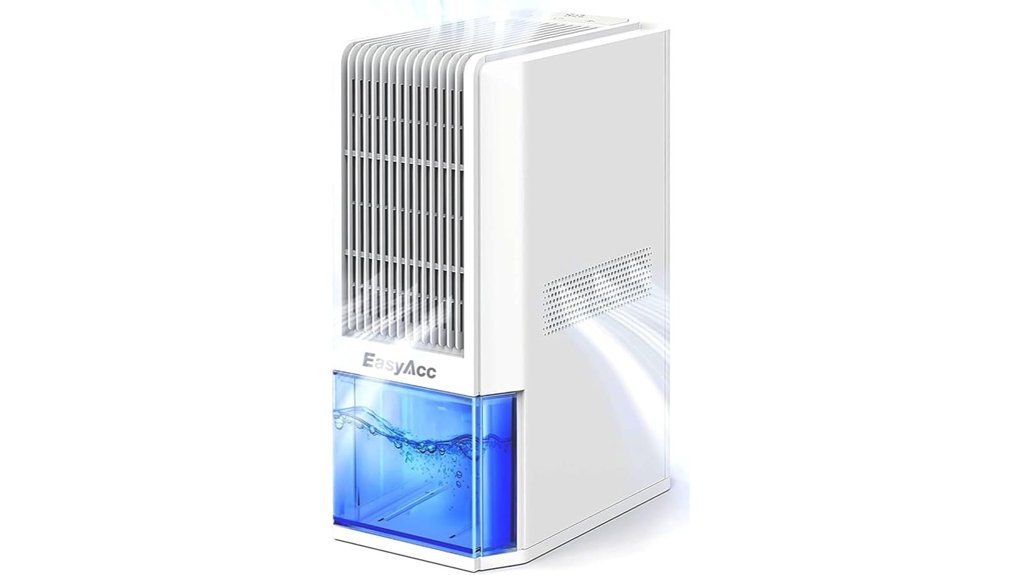
The EasyAcc Small Bathroom Dehumidifier is intended for compact, enclosed spaces where a full-size compressor model would be unnecessary or difficult to place. Its narrow design, 68-ounce tank, automatic shut-off, sleep mode, and automatic-defrost feature suit bathrooms, closets, laundry nooks, and parked RVs with dependable power.
Seller materials describe operation down to approximately 55°F and advertise maximum extraction figures between about 40 and 45 ounces per day under favorable conditions. Those numbers should be treated as best-case seller specifications rather than standardized room-dehumidifier ratings. Water collection can be much slower when the room is cooler or only moderately humid.
Best For: Small bathrooms, closets, laundry nooks, and compact RV interiors that remain around 55°F or warmer.
Why You’ll Like It: It provides automatic tank shut-off and a relatively large reservoir without taking up as much space as a conventional room dehumidifier.
Who Should Buy It: Buyers managing everyday condensation or light dampness in a small enclosed space.
Who Should Avoid It: Anyone trying to dry a basement, correct a plumbing leak, manage standing water, or control humidity across an open floor plan.
Pros:
- Compact footprint fits countertops and other tight placement areas.
- Automatic shut-off helps reduce the risk of tank overflow.
- Seller-stated automatic defrost supports use in moderately cool rooms.
- Sleep mode and switchable lighting are useful in bathrooms and bedrooms.
Cons:
- The approximately 55°F minimum is seller-stated rather than a standardized low-temperature certification.
- Published extraction claims vary between seller materials.
- It removes much less moisture than a full-size compressor dehumidifier.
- It does not replace a properly vented bathroom exhaust fan or repairs to an active moisture source.
Eva-dry E-500 Renewable Wireless Mini Dehumidifier
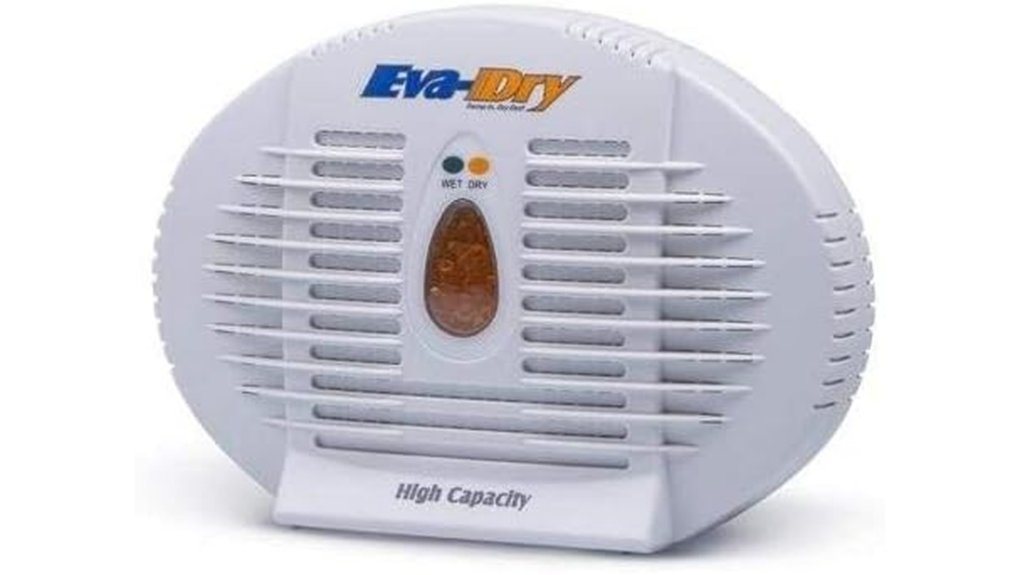
The Eva-dry E-500 is a renewable silica-gel moisture absorber designed for small enclosed spaces. It does not use a compressor, fan, collection tank, or refrigerated coil while absorbing moisture. That means it operates silently and avoids the coil-frost problem associated with compressor dehumidifiers.
The manufacturer describes it for enclosed areas up to 500 cubic feet, including closets, cabinets, safes, vehicles, RV compartments, and small boat cabins. It operates without a cord while absorbing moisture. When the indicator changes color, the unit must be plugged in to renew the desiccant before being returned to the space.
Current manufacturer pages do not present completely consistent absorption-capacity and renewal-time figures, so buyers should follow the instructions supplied with the current product rather than relying on an older numerical claim. Regardless of the exact cycle capacity, this remains a passive micro-space product rather than a substitute for a powered room dehumidifier.
Best For: Closets, cabinets, safes, cars, small RV compartments, and enclosed seasonal-storage spaces.
Why You’ll Like It: It is silent, reusable, spill-resistant, and cordless while it absorbs moisture.
Who Should Buy It: Buyers who need simple localized moisture control without continuous access to an outlet.
Who Should Avoid It: Anyone who needs rapid drying, an adjustable humidity setpoint, air circulation, continuous drainage, or whole-room capacity.
Pros:
- No fan, compressor, tank, batteries, or power cord is required during normal moisture absorption.
- Silent operation is suitable for cabinets, safes, vehicles, and sleeping areas.
- Renewable silica gel avoids disposable refill tubs or hanging moisture bags.
- No refrigerated coil means there is no coil-defrost cycle during use.
Cons:
- Suitable only for small enclosed spaces rather than open rooms.
- Requires periodic plug-in renewal after the indicator shows saturation.
- Does not display or maintain a selected relative-humidity level.
- Cannot keep up with active leaks, standing water, frequent door opening, or major outdoor-air infiltration.
Factors to Consider When Choosing a Dehumidifier for Low Temperatures
The right product depends on the lowest temperature the space reaches, the size of the enclosed air volume, the amount of new moisture entering, and whether you need active room-scale drying or passive protection for stored items.
Minimum Operating Temperature
Check the manufacturer’s approved operating range before looking at square-foot coverage. Automatic defrost can help clear frost within that range, but it does not prove below-freezing compatibility. A model approved down to 41°F may work in a cool basement but should not be assumed suitable for a garage that reaches 30°F.
Compressor, Compact Powered, or Desiccant
Compressor dehumidifiers provide the strongest whole-room moisture removal but become less effective in colder air. Compact powered units can help in small bathrooms and closets but have much lower capacity. Renewable desiccant units avoid a refrigeration coil and work silently, although they provide passive localized absorption rather than active room drying.
Capacity and Test Conditions
A pint-per-day or ounce-per-day claim is useful only when its test conditions are understood. A product tested in very hot, nearly saturated air can produce a much larger number than it will in a cool room at moderate humidity. Compare standardized capacity where available and judge real performance with a separate hygrometer.
Space Size and Airflow
Square-foot claims assume favorable room conditions and airflow. Closed doors, divided basements, stored boxes, blocked vents, high ceilings, and outdoor-air leakage can reduce performance. For closets, cabinets, safes, and vehicles, cubic-foot guidance is more meaningful than whole-room square footage.
Drainage and Tank Size
A small tank can become inconvenient in a persistently damp room. Continuous gravity drainage is useful when a suitable drain is below the unit’s outlet. Keep the hose running downhill without kinks, and never route condensate to a location where it can freeze, overflow, or damage surrounding materials.
Humidity Target
Many homes aim for approximately 30% to 50% relative humidity, while keeping humidity below 60% is an important general moisture-control goal. The most suitable setting depends on outdoor temperature, condensation on cold surfaces, stored materials, and personal comfort. Use a separate hygrometer rather than relying only on the dehumidifier’s display.
Energy Efficiency Ratings
ENERGY STAR certification provides a standardized efficiency signal for qualifying compressor dehumidifiers. It does not guarantee equal performance at every temperature. Also consider how long the unit must run, how often it enters defrost mode, and whether doors, windows, leaks, or damp foundations are continually adding moisture.
Noise Level Considerations
Seller-stated decibel ratings may be measured at a particular fan speed, distance, or room condition. Bedrooms benefit from a lower fan setting or sleep mode, while basements may prioritize extraction and airflow. A renewable silica-gel unit is silent during use but cannot provide powered whole-room drying.
Safety Features and Placement
Look for automatic shut-off, correct tank-position detection, automatic defrost, overheat protection, restart behavior, and a child lock when appropriate. Place powered units on a stable surface away from splashing water. Avoid extension cords unless the manufacturer specifically permits them, and follow the required upright-rest period after transportation.
Fix the Moisture Source First
A dehumidifier manages water vapor in the air; it does not repair foundation seepage, roof leaks, plumbing leaks, blocked gutters, poor grading, or an unvented clothes dryer. Correct active water problems first. In bathrooms and laundry areas, use properly vented exhaust systems when available.
Frequently Asked Questions
How Do I Maintain My Dehumidifier During Winter Months?
Empty and clean the tank, clean the filter as directed, inspect the drain hose, and keep the air inlet and outlet clear. Watch for repeated frost or unusually long defrost cycles. If the room falls below the approved operating temperature, turn the unit off and follow the manufacturer’s storage instructions.
Can I Use a Dehumidifier in an Unheated Garage?
Only when the garage remains within the product’s approved operating range. The Kesnos model in this guide is specified down to 41°F, but it is not approved for freezing conditions. A renewable desiccant unit may help inside a small cabinet, vehicle, or enclosed storage box, but it will not control an entire garage.
What Is the Ideal Humidity Level for Basements?
A practical general target is approximately 30% to 50% relative humidity, with humidity kept below 60%. In cold weather, condensation on windows, pipes, or foundation surfaces may require a lower setting. Use a separate hygrometer and avoid making the room excessively dry.
Does Auto Defrost Mean a Dehumidifier Works Below Freezing?
No. Automatic defrost helps manage frost within the product’s approved operating range. It does not prove that the unit can remove moisture efficiently or operate safely below freezing. Always check the current manual for the minimum temperature.
Why Does My Dehumidifier Collect Less Water in Winter?
Cool air contains less water vapor than warm air, and a compressor dehumidifier becomes less productive as the coil approaches freezing. Lower starting humidity, shorter run time, air leakage, and defrost cycles can also reduce visible water collection. Judge performance by the room’s relative humidity rather than tank volume alone.
Are Advertised Pint Ratings Directly Comparable?
Not always. Some seller ratings use extremely warm and humid test conditions, while standardized ratings use a regulated test procedure. Check the stated conditions and avoid comparing two capacity numbers unless they were measured under the same standard.
Which Type Is Best for a Cold Closet or Vehicle?
A renewable silica-gel unit is often the simplest option for a small enclosed closet, cabinet, safe, or parked vehicle because it works silently and does not use a refrigeration coil. It still needs periodic renewal and cannot handle an active leak, standing water, or a large open area.
Can a Small Bathroom Dehumidifier Dry a Basement?
No. A compact unit may reduce light condensation in a small enclosed bathroom or closet, but it does not provide the airflow or extraction capacity required for most basements. Use a properly sized room dehumidifier and address any foundation, drainage, or plumbing problem contributing moisture.
Conclusion
For a cool indoor basement or room that stays at or above 41°F, the Kesnos Energy Star Dehumidifier is the strongest overall choice because it combines a documented operating range, automatic defrost, standardized ENERGY STAR data, mobility, and continuous gravity drainage.
The EasyAcc Small Bathroom Dehumidifier is more appropriate for a compact bathroom, closet, laundry nook, or parked RV that remains around 55°F or warmer. Choose the Eva-dry E-500 for silent, cordless moisture absorption inside a closet, cabinet, safe, vehicle, or other small enclosed storage space.
Final Recommendation
Match the product to the lowest temperature and actual air volume of the space—not just an advertised square-foot figure. Choose Kesnos for active room-scale control above 41°F, EasyAcc for a small enclosed room around 55°F or warmer, and Eva-dry for passive protection inside a compact enclosure. None of these products should be treated as a proven whole-room solution for freezing conditions.