Affiliate disclosure: This article contains Amazon affiliate links. If you buy through these links, we may earn a small commission at no extra cost to you.
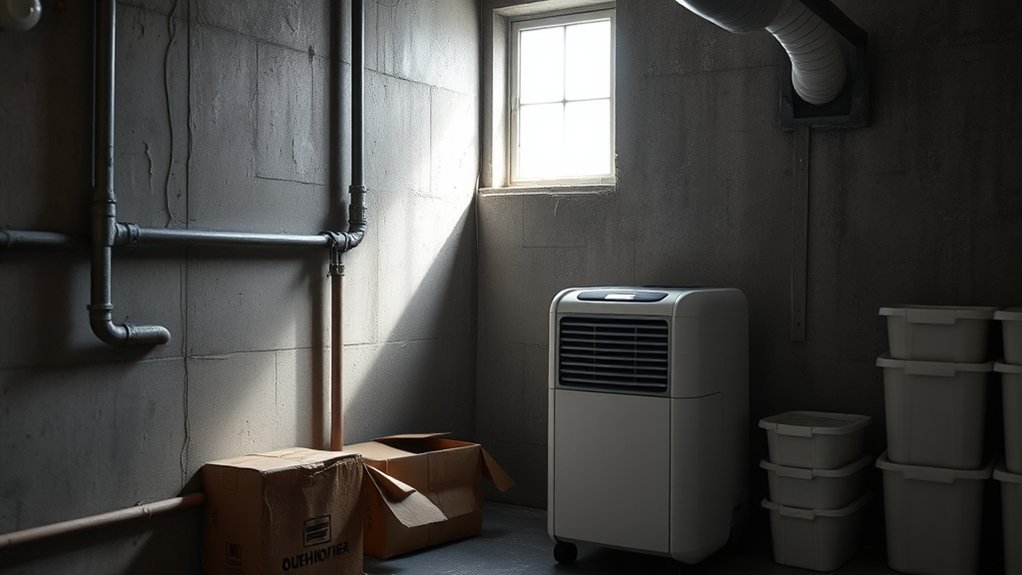
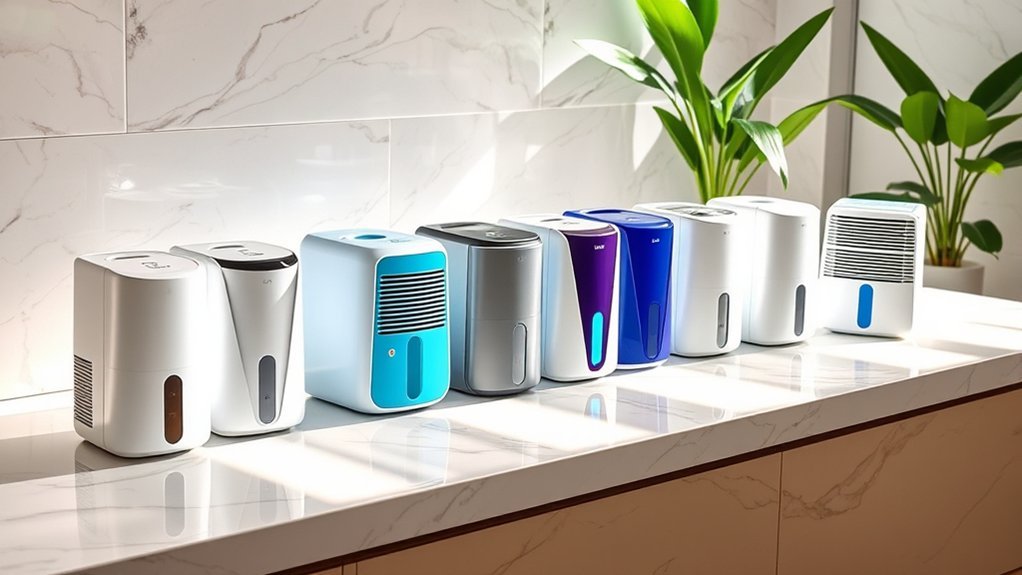
For a basement with continuous drain in 2026, you need a dehumidifier that can pull moisture steadily without forcing you to empty a bucket every day. The SEMKAP 32-Pint, avylo Basement Dehumidifier, PLUSCENT 32-Pint, KNKA 21 Pint, and AEOCKY 3500 Sq.Ft Compressor models all focus on moisture removal, drainage convenience, and basement comfort. Some are better for large damp spaces, while others fit smaller basements, laundry rooms, bedrooms, or tight areas. Choose based on your basement size, humidity level, drain location, noise needs, and energy goals. If you want the best fit, the details below will make your choice much easier.
Quick Verdict
If your main goal is hands-free basement drainage, start by checking whether you need a built-in pump or a simple gravity drain hose. A pump gives more placement flexibility, while gravity drainage works best when the hose can slope down to a floor drain or sump area.
- Best for large damp basements: avylo Basement Dehumidifier with Pump and Drain Hose.
- Best quiet 32-pint option: SEMKAP 32-Pint Dehumidifier.
- Best compact large-room pick: PLUSCENT 32 Pint Dehumidifier.
- Best for medium spaces: KNKA 21 Pint Dehumidifier.
- Best compact high-capacity option: AEOCKY 3500 Sq.Ft Compressor Dehumidifier.
Quick Comparison Table
| Product | Best For | Moisture Removal | Coverage | Drainage Style | Amazon |
|---|---|---|---|---|---|
| SEMKAP 32-Pint | Quiet basement use | Up to 32 pints/day | Up to 2,500 sq. ft. | Tank or hose | Check Price |
| avylo Basement Dehumidifier | Large basements | Up to 90 pints/day | Up to 4,500 sq. ft. | Built-in pump or tank | Check Price |
| PLUSCENT 32 Pint | Compact large-room use | Up to 32 pints/day | Up to 2,500 sq. ft. | Tank or hose | Check Price |
| KNKA 21 Pint | Medium basements | Up to 21 pints/day | Up to 1,600 sq. ft. | Tank or hose | Check Price |
| AEOCKY 3500 Sq.Ft | Compact high-capacity use | Up to 50 pints/day in extreme humidity | Up to 3,500 sq. ft. | Continuous gravity drainage | Check Price |
SEMKAP 32-Pint Dehumidifier for Basement and Home
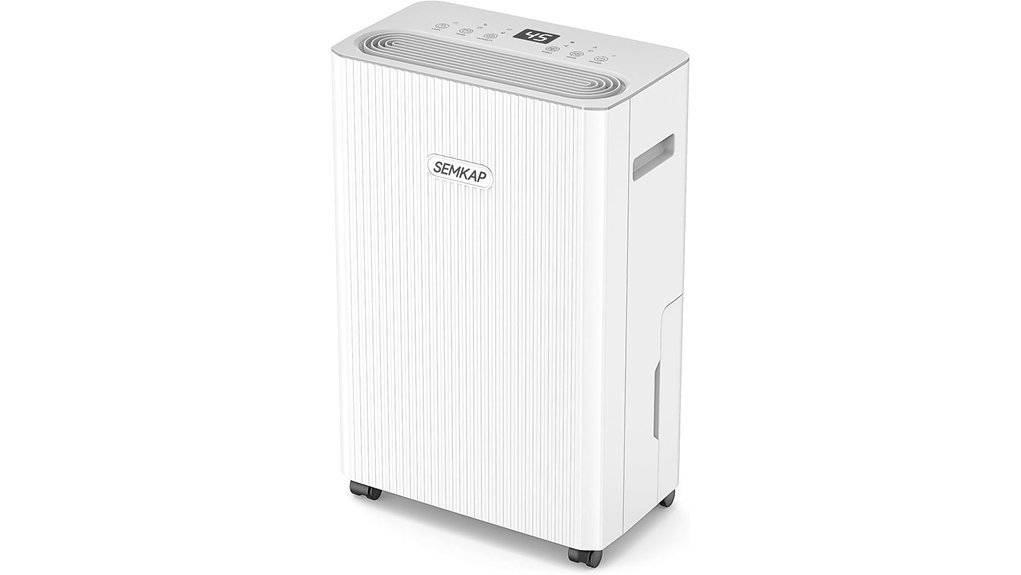
The SEMKAP 32-Pint Dehumidifier is a strong pick if you need reliable basement drainage for spaces up to 2,500 sq. ft. You can use it in basements, bedrooms, garages, and other damp rooms while it keeps humidity between 40% and 60%. It runs quietly at 35 dB, so it won’t disrupt your space. You can choose manual draining with the 2.5L tank or continuous drainage with the 3.28 ft hose. Wheels, a handle, child lock, auto shutoff, and smart modes make it easy to move, manage, and trust.
Why you’ll like it: This model is easy to place, quiet enough for finished basements, and flexible enough for both bucket use and hose drainage. It is a practical choice if you want steady moisture control without buying an oversized machine.
Best For: Homeowners, renters, and small business users who need a quiet, easy-to-move dehumidifier for basements and other damp spaces up to 2,500 sq. ft.
Who Should Buy This: Choose it if your basement is medium to large, your drain is close enough for the included hose, and you care about quiet operation.
Who Should Avoid This: Skip it if your basement is extremely wet, much larger than the suggested coverage area, or your drain point is too far away for the short hose.
Pros:
- Handles up to 32 pints per day and covers large spaces effectively.
- Quiet 35 dB operation with smart modes, child lock, and auto shutoff for convenient use.
- Flexible drainage options with a 2.5L tank or continuous drain hose, plus wheels and a handle for portability.
Cons:
- The 2.5L water tank may require frequent emptying in very humid conditions if not using continuous drainage.
- The 3.28 ft drain hose may be limiting depending on room layout and drain placement.
- Best suited for medium-to-large residential areas, so it may be more than needed for very small rooms.
avylo Basement Dehumidifier with Pump and Drain Hose
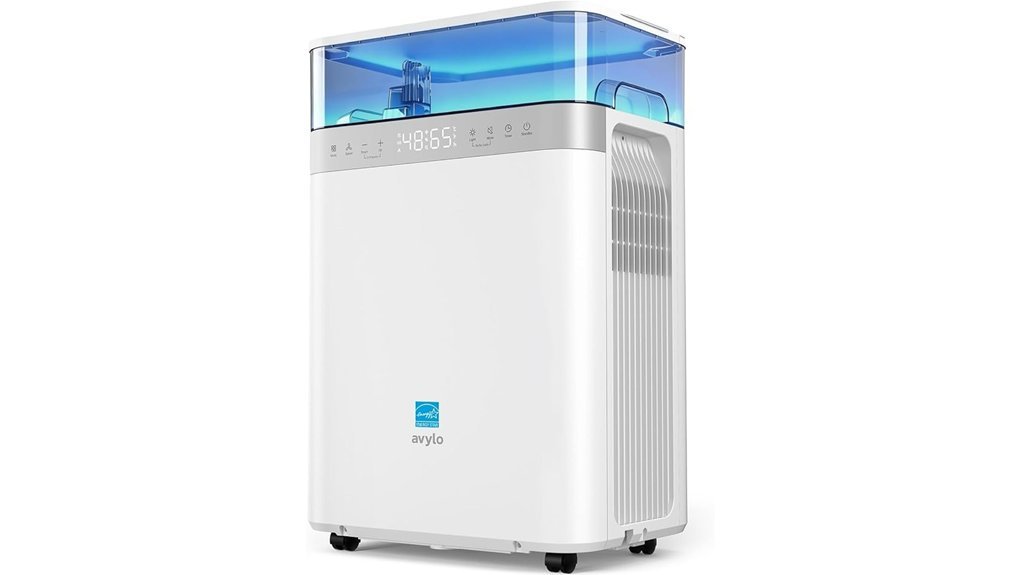
With 90 pints of daily moisture removal, avylo suits large, damp basements up to 4,500 square feet. You’ll get ENERGY STAR Most Efficient 2025 efficiency, so it can help control running costs during regular use. The built-in pump lifts water 15 feet, and the included 15-foot hose lets you drain continuously. You can also use the 2.11-gallon tank with auto shut-off. Three fan speeds, a 24-hour timer, and smart humidity control help you fine-tune comfort. At 41 dB, it stays quiet, and wheels plus handles make it easy to move.
Why you’ll like it: The built-in pump is the key advantage. It helps when your drain is higher than the unit or when a simple downward hose path will not work well in your basement.
Best For: Large, damp basements or other spacious areas up to 4,500 sq. ft. where you want powerful dehumidification, continuous drainage, and quiet operation.
Who Should Buy This: Choose it if your basement has heavy humidity, a larger floor plan, or a drain setup where pump-assisted drainage makes placement easier.
Who Should Avoid This: Skip it if you only need moisture control in a small room or you prefer a simpler, lower-capacity unit without pump hardware.
Pros:
- Removes up to 90 pints of moisture per day for strong whole-space performance.
- Built-in pump with a 15 ft lift plus included 15 ft hose supports continuous draining.
- Quiet 41 dB operation with useful features like a timer, smart humidity control, and easy mobility.
Cons:
- The 2.11-gallon tank may need frequent emptying if you don’t use continuous drainage.
- Best suited for larger spaces, so it may be overkill for small rooms.
- Multiple features and pump system may mean a higher upfront cost than simpler dehumidifiers.
PLUSCENT 32 Pint Dehumidifier for Large Rooms
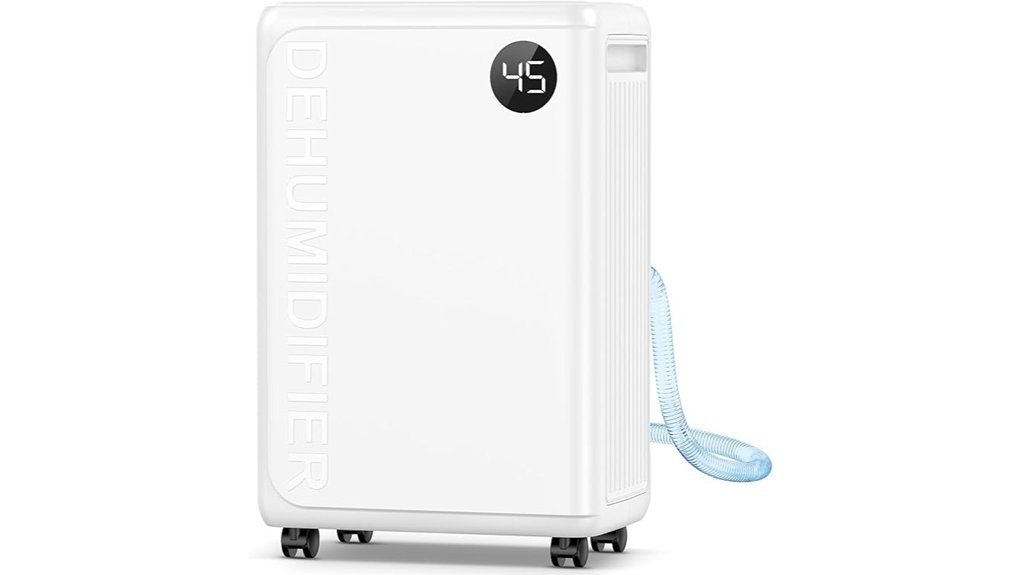
If you need a quiet, compact basement dehumidifier, PLUSCENT’s 32-pint model fits the bill. You can pull up to 32 pints of moisture a day and cover spaces as large as 2,500 square feet, so it works well in basements, bedrooms, bathrooms, and even RVs. Choose DEHU, CONT, or DRY mode to match humidity or laundry needs. The 24-hour timer helps you save energy, while the 39–42 dB operation won’t disrupt sleep. Use continuous drainage with the hose, or rely on the 2L tank, auto-restart, child lock, and washable filter for easy upkeep.
Why you’ll like it: It gives you a useful balance of capacity, quiet operation, and compact design. The multiple modes also make it easier to use in different rooms, not only in a basement.
Best For: Homeowners, renters, and RV users who want a quiet, compact dehumidifier for large spaces like basements, bedrooms, and bathrooms.
Who Should Buy This: Choose it if you want a 32-pint unit that is not bulky and you want simple controls for normal dehumidifying, continuous mode, or laundry drying support.
Who Should Avoid This: Skip it if your basement has severe water intrusion, standing moisture, or commercial-level humidity problems that need a stronger unit.
Pros:
- Removes up to 32 pints of moisture per day and covers areas up to 2,500 sq. ft.
- Runs quietly at 39–42 dB, making it suitable for nighttime use.
- Offers convenient features like three modes, 24-hour timer, continuous drainage, auto-restart, and child lock.
Cons:
- The 2L water tank may need frequent emptying in very damp conditions if not using the hose.
- At 130 watts, it may not be the most powerful option for extremely heavy moisture issues.
- Compact size is convenient, but it may be less suitable for very large or commercial spaces.
KNKA 21 Pint Dehumidifier for Home with Drain Hose
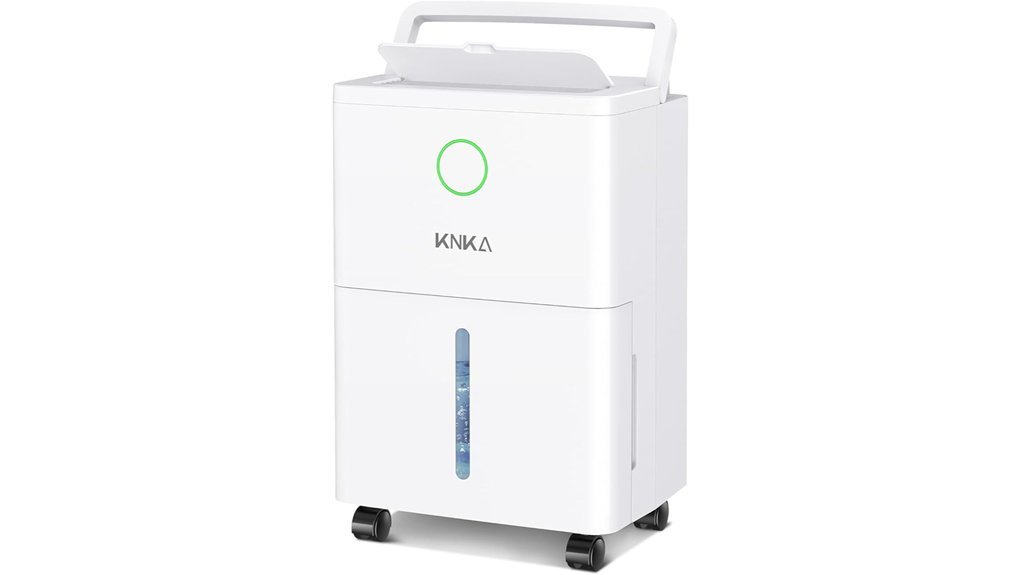
KNKA’s 21-pint dehumidifier fits basements up to 1,600 square feet with easy continuous draining. You can remove up to 21 pints of moisture daily, so it handles damp basements, bedrooms, bathrooms, kitchens, garages, and laundry rooms well. Use the included 2.13-foot hose for nonstop drainage, or empty the 1.7L tank when needed. The touchscreen lets you adjust humidity, fan speed, and the timer quickly. You’ll also get a 37 dB quiet mode, sleep mode, child lock, washable filter, wheels, and a handle for easy moving.
Why you’ll like it: It is a more manageable option for moderate basement moisture. You still get continuous drainage, but the lower capacity can make more sense if your room is not huge.
Best For: Homeowners or renters needing a quiet, portable dehumidifier for medium-sized spaces up to 1,600 sq. ft., especially basements, bedrooms, and laundry areas.
Who Should Buy This: Choose it if you have a medium basement, laundry room, or damp bedroom and want a quieter unit with basic hands-free drainage.
Who Should Avoid This: Skip it if your basement is large, very wet, or has poor airflow across multiple closed-off rooms.
Pros:
- Covers up to 1,600 sq. ft. and removes up to 21 pints of moisture per day.
- Offers both manual and continuous drainage with an included hose for convenience.
- Runs quietly at 37 dB and includes helpful features like sleep mode, child lock, and washable filter.
Cons:
- The 1.7L tank is relatively small, so it may need frequent emptying without continuous drainage.
- The included hose is only 2.13 ft long, which may limit placement options.
- Best suited for moderate moisture control rather than very large or extremely damp spaces.
AEOCKY 3500 Sq.Ft Compressor Dehumidifier with Drain Hose
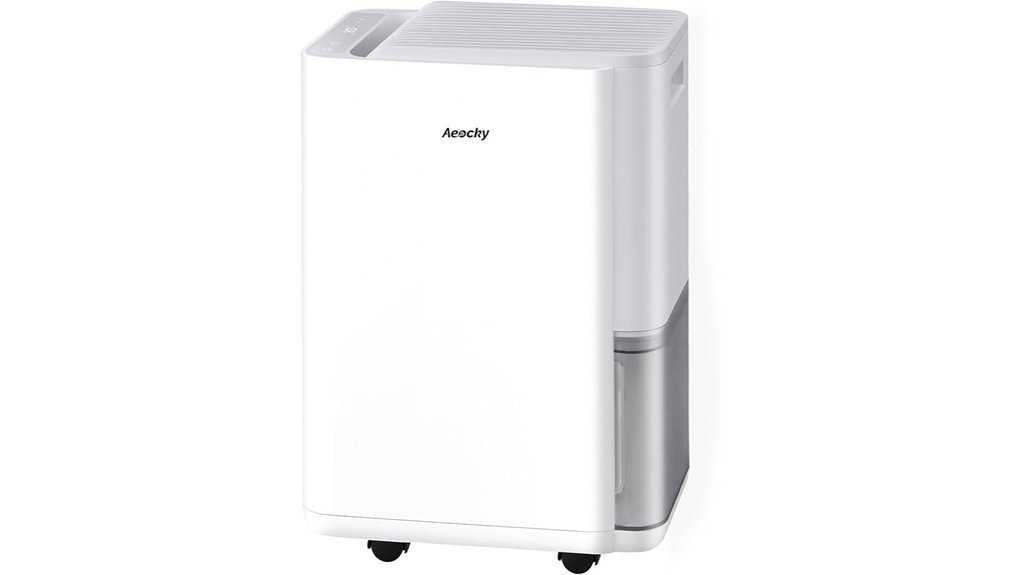
AEOCKY’s ARION is ideal when you need powerful basement drainage without bulky equipment. You get lab-validated performance claims from the brand, plus up to 50 pints a day in extreme humidity and 38 pints under normal conditions. It covers spaces up to 3,500 sq. ft., so it works well in basements, bedrooms, and bathrooms. Its 15.75-inch body fits tight spots, while the brushless DC motor is designed to reduce energy use. With continuous gravity drainage, auto-shutoff, and 360° casters, you can run it with less hassle.
Why you’ll like it: This is a strong option if you want higher capacity in a compact body. It is especially useful when floor space is limited but the basement still needs serious moisture control.
Best For: Homeowners, renters, and RV users who need a compact, high-capacity dehumidifier for basements, bedrooms, bathrooms, or other spaces up to 3,500 sq. ft.
Who Should Buy This: Choose it if you want compressor-level performance, compact placement, and continuous gravity drainage for a basement with a suitable drain path.
Who Should Avoid This: Skip it if your drain is not lower than the unit, because gravity drainage needs a downward hose route to work properly.
Pros:
- Strong moisture removal performance, with up to 50 pints/day in extreme humidity conditions.
- Compact 15.75-inch design that fits tight spaces while still offering full-size compressor power.
- Energy-efficient brushless DC motor, continuous drainage, and easy mobility with 360° casters.
Cons:
- Best performance is tied to specific humidity and temperature conditions, so real-world output may vary.
- As a compressor dehumidifier, it may still be heavier and noisier than smaller non-compressor units.
- Continuous drainage setup may be less convenient for users without a suitable floor drain or hose path.
Factors to Consider When Choosing a Dehumidifier for Basement Continuous Drain
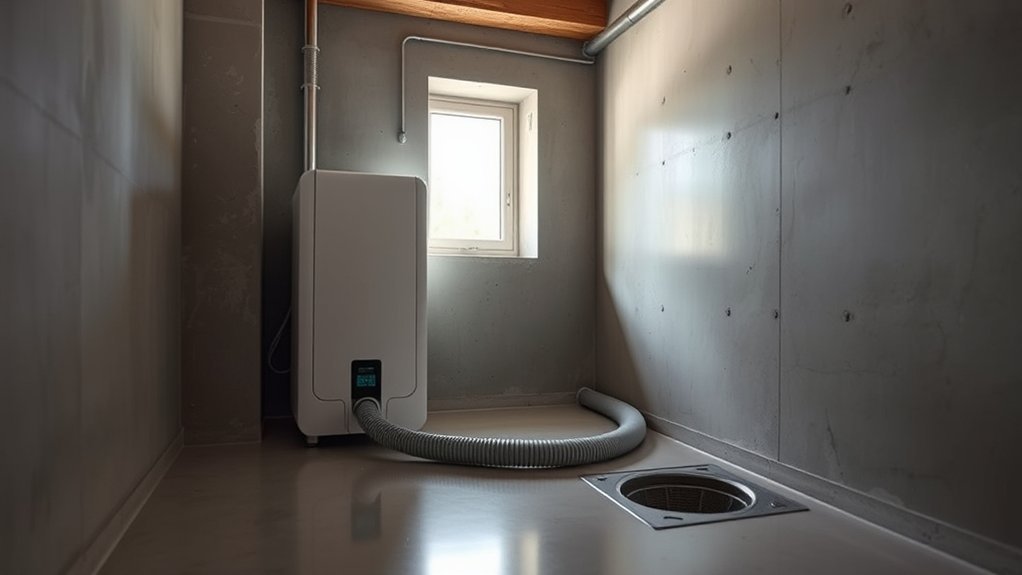
When you choose a dehumidifier for continuous basement drain, you’ll want to check the drainage method, coverage area, and humidity control range first. You should also think about where you’ll place it and how much noise it makes, especially if your basement gets regular use. To keep operating costs down, look for an energy-efficient model that can run steadily without wasting power.
Before You Buy Checklist
- Measure your basement square footage before choosing capacity.
- Check whether your drain is below the unit for gravity drainage.
- Choose a pump model if the water must move upward or across a longer route.
- Look at tank size if you may use manual draining sometimes.
- Check hose length, noise level, filter access, wheels, and auto-restart.
- For musty odor or mold concerns, also fix leaks, seepage, poor airflow, and wet materials.
Drainage Method Options
For basement continuous drain setups, the main choice is between a built-in pump and a gravity hose. A built-in pump lifts water vertically, so you can place the dehumidifier even when the drain sits above it. That flexibility helps in basements with awkward plumbing or floor layouts. A gravity hose is simpler: you position the hose at a downward angle, and water flows out on its own. It’s often easier to set up, but you’ll need a suitable drain location. If you want backup flexibility, look for models that also support manual draining. Many units include auto shut-off, which stops the machine when the tank fills during non-continuous use, helping prevent overflow and keeping operation safer and more reliable overall.
Coverage Area Match
One of the most important factors is matching the dehumidifier’s coverage area to your basement size. If you choose a unit that’s too small, it’ll struggle to keep up in a large space. If you pick one that’s too large, you may waste energy and dry the area more than needed. Compare your basement’s square footage with the manufacturer’s recommended range, which often runs from 1,600 to 4,500 sq. ft. For example, a 32-pint model can work well in about 2,500 sq. ft. Also account for your basement’s layout: walls, corners, and blocked airflow can reduce effectiveness. Check the product specs carefully so you can choose a model that fits your space and works efficiently.
Humidity Control Range
Keeping your basement between 40% and 60% relative humidity helps prevent mold growth and keeps the space comfortable, so look for a dehumidifier with adjustable settings that let you fine-tune moisture levels as conditions change. You’ll want a unit that lets you set a target RH, since spring dampness and winter dryness call for different levels. Smart modes can help by automatically adjusting output when humidity rises, saving you from constant tweaks. Because continuous drainage keeps water removal steady, your chosen range can stay consistent even during heavy moisture periods. A digital display with current humidity readings also makes it easier to verify performance and respond quickly if levels drift. With the right control range, you can maintain a healthier basement without guesswork.
Noise And Placement
Noise matters more than many buyers expect, especially in a basement where sound can echo and carry. You’ll want to check the decibel rating before you buy, since quieter models around 35 to 41 dB can run without becoming a distraction in nearby rooms. If your basement doubles as a workspace, media area, or guest space, lower noise makes a real difference. Placement matters just as much. Set the unit away from seating, sleeping, or office areas so airflow and fan noise don’t bother you. Some dehumidifiers include a sound-off mode for nighttime use, which helps in shared spaces. Wheels and handles also make it easier to move the unit until you find the best balance between moisture control and comfort.
Energy Use Efficiency
After you’ve checked noise and placement, it’s worth looking at how much power the unit will use day to day. You should compare Energy Efficiency Ratio, or EER, because a higher rating means the dehumidifier removes more moisture for each watt it uses. ENERGY STAR models can help you cut electricity use while still meeting EPA efficiency standards. If you want lower operating costs, look for a brushless DC motor; it may use less energy than a conventional motor depending on design and operating conditions. Continuous operation mode also matters, since it helps the unit hold steady humidity without constant on-off cycling. In many basements, an efficient model can help control daily running costs, depending on your local rates, room size, and how hard you use it.
Pro Tips for Better Basement Drainage
- Keep the hose as straight as possible to reduce kinks and water backup.
- For gravity drainage, make sure the hose slopes downward from the unit to the drain.
- Place the dehumidifier where air can move freely around the intake and exhaust.
- Clean the filter regularly so the unit does not work harder than needed.
- Use a separate fan in divided basements to help move damp air toward the dehumidifier.
Important Safety Note
A dehumidifier can reduce moisture, but it does not fix leaks, flooding, drainage failure, foundation cracks, or active mold contamination by itself. If your basement has standing water, visible mold growth, electrical hazards, or repeated water intrusion, solve those problems first and consider professional help.
Frequently Asked Questions
How Often Should a Basement Dehumidifier Filter Be Cleaned?
You should clean your basement dehumidifier filter every 2 to 4 weeks, but check it weekly if it’s dusty or runs constantly. Clean it more often during humid seasons, and always follow your model’s manual.
Can Continuous Drain Dehumidifiers Prevent Mold Growth Completely?
No, you can’t completely prevent mold growth, but you can reduce the risk by controlling moisture. Continuous drainage helps because the unit can keep removing water without stopping for a full tank. For better results, keep humidity near a healthy target range, improve airflow, and fix leaks quickly.
What Hose Length Works Best for Basement Drainage?
You’ll usually do best with a 6- to 10-foot hose for basement drainage; it’s long enough to reach a floor drain or sump, yet short enough to avoid kinks, sagging, and flow loss. If the included hose is shorter, check the manual before using a replacement hose.
Do Dehumidifiers With Pumps Use More Electricity?
Usually, yes. You’ll use a bit more electricity with a pump because it runs extra hardware, though the difference is often small compared with the compressor and fan. If you need upward or longer drainage, the convenience may be worth it.
Can One Dehumidifier Control Humidity in Multiple Basement Rooms?
Yes, you can, if your basement stays fairly open and doors remain open. You’ll need strong airflow, a properly sized unit, and possibly a fan. Separate rooms, closed doors, or heavy moisture usually need more than one unit.
Is a Pump Better Than Gravity Drainage for Basements?
A pump is better when the drain is higher than the dehumidifier or far from the best placement spot. Gravity drainage is better when you have a nearby floor drain and the hose can slope downward. The best choice depends on your basement layout.
What Humidity Level Should I Set in a Basement?
Many homeowners aim for about 40% to 50% relative humidity in a damp basement. If the air feels too dry, raise the setting slightly. If you still smell mustiness, lower the setting or improve airflow and check for hidden moisture sources.
Final Recommendation
For the strongest basement setup, choose the avylo Basement Dehumidifier with Pump and Drain Hose if you have a large, damp area or need pump-assisted drainage. For quieter everyday basement use, the SEMKAP 32-Pint is a balanced choice. For compact performance, the AEOCKY 3500 Sq.Ft and PLUSCENT 32 Pint are worth comparing closely. If your space is more moderate, the KNKA 21 Pint may be enough without oversizing your setup.
Conclusion
In your basement, imagine damp air fading as each dehumidifier quietly pulls moisture away like a hidden drain in the dark. With a continuous drain setup, you won’t have to empty buckets as often or fight musty odors every day. Whether you choose one of these five picks, focus on the right capacity, drainage style, hose path, and noise level. That way, you can turn a clammy space into a fresher, cleaner room that feels easier to breathe in every single day.