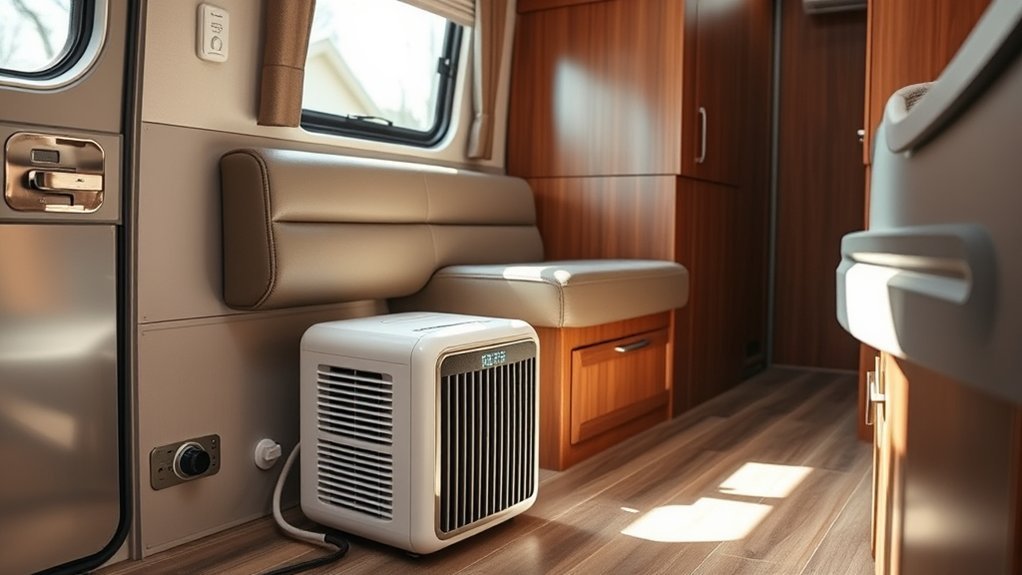
A dehumidifier with an essential oil diffuser combines light moisture control with a built-in aroma feature. This is a narrow product category, and many search results are actually humidifiers, stand-alone diffusers, or air purifiers rather than true dehumidifiers. After filtering out those wrong-category products, the two relevant choices in this guide are the Onsekin CS08 and the LOMMOL Home Dehumidifier with Essential Oil Diffuser.
Both are compact semiconductor-style dehumidifiers intended for mild, localized humidity. They may suit a bedroom, closet, bathroom, RV, or another enclosed space, but their advertised square-foot figures do not tell you how many pints of water they can remove per day. For a persistently wet basement, active leak, visible water, or heavy condensation, a properly sized compressor dehumidifier is usually the more appropriate choice.
Selection note: Only products that function as dehumidifiers and also include an aromatherapy feature were retained. Marketplace specifications and included accessories can change between listing versions, so confirm the current product page before ordering.
Quick verdict
- Best for portability and simple controls: Onsekin CS08 — compact design, two operating modes, automatic shutoff, sleep mode, aromatherapy, and seven-color lighting.
- Best for a larger collection tank: LOMMOL — an 86-ounce tank combined with an essential-oil diffuser and seven-color ambient lighting.
- Best for serious dampness: Neither. Choose a compressor dehumidifier with a published pint-per-day capacity, then use a separate diffuser if you also want fragrance.
Quick Comparison
| Product | Key moisture feature | Aromatherapy feature | Best fit | Main limitation |
|---|---|---|---|---|
| Onsekin CS08 | Semiconductor condensation, two modes, and automatic shutoff | Built-in aromatherapy feature with seven-color LED lighting | Bedrooms, closets, bathrooms, RVs, and light localized humidity | No clearly verified standardized pint-per-day rating |
| LOMMOL Home Dehumidifier | 86-ounce collection tank with compact dehumidification | Built-in essential-oil diffuser with seven-color LED lighting | Bedrooms, closets, RVs, and other enclosed spaces with mild humidity | No clearly verified standardized pint-per-day rating |
Onsekin CS08 Dehumidifier with Aromatherapy Diffuser and LED Light
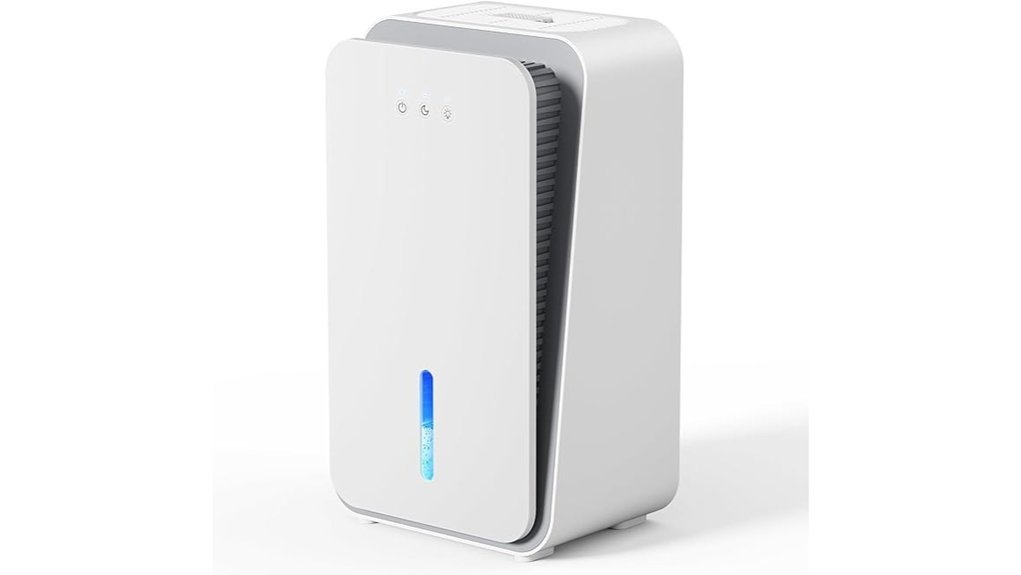
Best for portability and simple controls. The Onsekin CS08 is a compact semiconductor dehumidifier with two operating modes, automatic shutoff, sleep mode, seven-color lighting, and a built-in aromatherapy feature. At roughly 5.5 pounds, it is easier to move between a bedroom, closet, bathroom, RV, or other small-use location than a full-size compressor unit.
The manufacturer advertises coverage of up to 1,000 square feet, but that figure should not be treated as a standardized measure of moisture-removal performance. A more useful specification would be the amount of water removed in 24 hours, which was not clearly verified for this model. For that reason, it is safer to view the CS08 as a convenience-focused option for light humidity in an enclosed area, not as a substitute for a properly sized basement dehumidifier.
Why you may like it
- Its relatively light weight makes it easier to move between rooms.
- Two operating modes keep everyday control straightforward.
- The built-in aromatherapy feature and optional LED lighting combine moisture control with room fragrance and ambient light.
- Automatic shutoff reduces the risk of the collection tank overflowing when full.
Who should buy this: Someone dealing with mild condensation or musty air in an enclosed space who wants a portable dehumidifier with simple controls, automatic shutoff, fragrance, lighting, and a sleep setting.
Who should avoid this: Anyone trying to dry a wet basement, manage an active leak, remove several pints of water per day, or dehumidify a large open-plan area.
Pros:
- Compact and approximately 5.5 pounds for easier room-to-room movement.
- Includes a built-in aromatherapy function and seven-color LED lighting.
- Automatic shutoff adds useful day-to-day protection when the tank fills.
- Sleep mode provides a more bedroom-friendly operating option.
Cons:
- The advertised 1,000-square-foot coverage is not supported by a clearly verified standardized pint-per-day rating.
- Compact semiconductor dehumidifiers are generally better suited to light moisture loads than very damp spaces.
- A continuous-drain feature was not clearly verified for this exact listing.
LOMMOL Home Dehumidifier with Essential Oil Diffuser
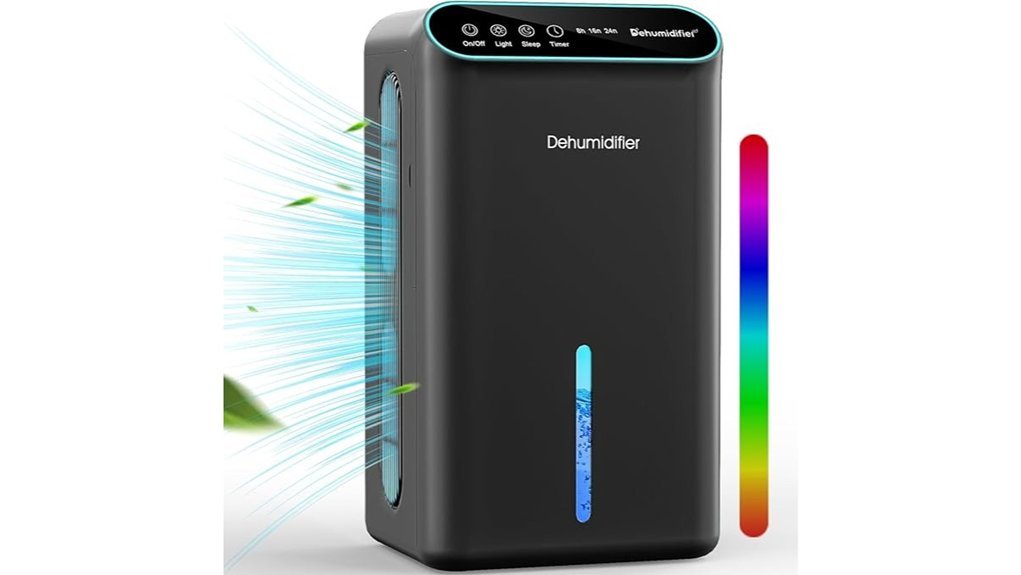
Best for a larger collection tank. This LOMMOL dehumidifier combines an 86-ounce water tank with an essential-oil diffuser and seven-color LED lighting. The larger tank is its clearest advantage for shoppers who want more collection capacity than many very small desktop-style dehumidifiers.
LOMMOL advertises coverage of up to 800 square feet, but that square-foot figure is not a substitute for standardized moisture-removal capacity. The amount of water the exact unit removes in 24 hours was not clearly verified, so the product is better treated as an option for mild humidity in a bedroom, closet, bathroom, RV, or similarly enclosed space rather than a high-capacity basement solution.
Why you may like it
- The 86-ounce tank provides useful collection capacity for a compact dehumidifier.
- The built-in essential-oil feature lets the appliance add fragrance while it runs.
- Seven-color LED lighting adds an optional ambient-light feature.
- Its combination design may appeal to buyers who would otherwise need both a small dehumidifier and a separate fragrance device.
Who should buy this: Someone who wants a compact dehumidifier for mild moisture and places a high priority on a larger collection tank, essential-oil fragrance, and ambient lighting.
Who should avoid this: Anyone who needs verified high-capacity moisture removal, guaranteed continuous drainage, or a unit specifically sized for seepage, flooding, or consistently wet basement conditions.
Pros:
- 86-ounce collection tank.
- Built-in essential-oil diffuser.
- Seven-color LED ambient lighting.
- Combines two convenience functions in one compact appliance.
Cons:
- The advertised 800-square-foot figure is not a substitute for a standardized daily removal capacity.
- Some controls and accessories can vary between marketplace versions, so confirm the exact current listing before ordering.
- It should not be treated as a high-capacity solution for flooding, seepage, or a consistently wet basement.
Factors to Consider When Choosing an Essential Oil Dehumidifier
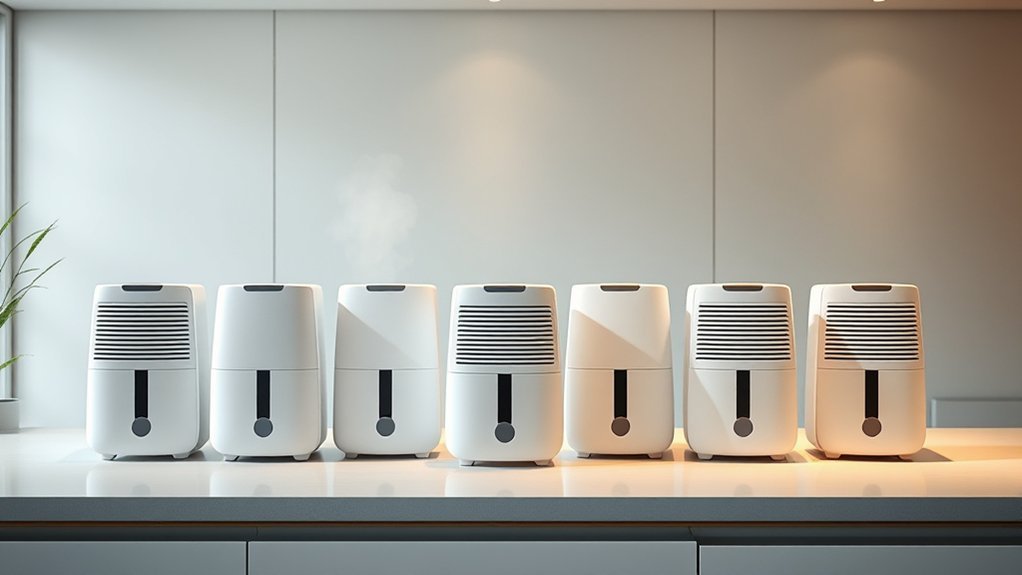
Choose the dehumidifier for the moisture problem first and treat aromatherapy as a secondary feature. A pleasant scent cannot compensate for an undersized unit, an unresolved leak, or a room that stays above the desired humidity level.
Measure the Humidity First
Use a separate hygrometer rather than guessing from how the room feels. The U.S. Environmental Protection Agency generally recommends keeping indoor relative humidity between 30% and 50% and below 60% to help limit moisture-related problems. If humidity remains high while the appliance runs, the room may need more ventilation, a stronger dehumidifier, or repair of the underlying moisture source. See the EPA moisture-control guidance.
Moisture-Removal Capacity
Do not rely on square-foot coverage alone. Standard dehumidifier capacity is normally expressed as the amount of water removed in 24 hours, commonly in pints per day. Room size and dampness both affect the capacity you need. Neither retained product provides a clearly verified standardized removal rate in the information reviewed for this guide, so both should be treated as compact options for mild moisture. For more demanding conditions, use the ENERGY STAR dehumidifier sizing guidance.
Tank Capacity and Drainage
A dehumidifier tank is emptied, not refilled. A larger collection tank means fewer trips to empty collected water, but it does not mean the machine removes moisture faster. If unattended drainage matters to you, confirm that the exact model currently offered includes a continuous gravity-drain connection and compatible hose before purchasing. A continuous-drain feature was not clearly verified for either exact retained listing during this review.
Room Temperature and Placement
Compact semiconductor units generally make the most sense in enclosed spaces with light to moderate moisture rather than severe water problems. Keep doors and windows closed when appropriate, leave open space around the air inlet and outlet, and place the appliance on a stable, level surface. Do not use a compact unit as the primary solution for standing water, plumbing leaks, wet walls, or basement seepage.
Aromatherapy Design
Follow the exact product instructions for the aromatherapy feature. Add essential oil only to the location specifically designated by the manufacturer and only in the permitted amount. Do not pour essential oil into the collected-water tank, fan opening, or air outlet unless the manual specifically permits it, because oil residue may damage plastic, filters, or internal components.
Noise, Controls, and Lights
For bedroom use, check the current listing for published sound information and whether a sleep setting changes fan operation or lighting. Also confirm whether LED lights can be switched off independently. Do not assume that timers, touch controls, or other convenience features shown on a similar model are included with the exact ASIN you are buying.
Essential-Oil Safety
Keep concentrated oils out of reach of children and pets, follow the oil label, and stop use if anyone develops irritation or breathing discomfort. Pet sensitivity varies by species, oil, concentration, and exposure. The ASPCA advises extra caution around pets with breathing problems and recommends avoiding diffuser use around birds. Review the ASPCA essential-oil guidance for pets and the Poison Control essential-oil safety guidance.
Cleaning and Maintenance
Empty collected water promptly, rinse the tank regularly, keep the air inlet free of dust, and clean or replace any filter according to the exact product manual. Unplug the unit before cleaning. If the aromatherapy area develops oily buildup, clean or replace the relevant pad or component only as the manufacturer directs.
Before you buy
- Measure current relative humidity with a hygrometer.
- Decide whether the problem is mild humidity or serious water intrusion.
- Look for a published pint-per-day removal rate when moisture is substantial.
- Confirm the exact tank size, drainage method, sound information, controls, and essential-oil instructions on the current listing.
- Check whether lights can be turned off if you plan to use the unit in a bedroom.
- Check current warranty, return terms, and included accessories because marketplace sellers and product versions can change.
Frequently Asked Questions
Is an Essential Oil Dehumidifier the Same as a Humidifier?
No. A dehumidifier removes water from the air, while a humidifier adds water to the air. A humidifier-diffuser is therefore the wrong product for a room that is already too damp.
Can These Models Handle a Wet Basement?
They are better suited to mild, localized humidity. For a wet basement, seepage, persistent heavy condensation, standing water, or another substantial moisture problem, choose a properly sized compressor dehumidifier with a verified pint-per-day rating and address any leak or drainage problem.
What Humidity Level Should I Target?
A practical home target is generally 30% to 50% relative humidity. Use a separate hygrometer to monitor conditions rather than relying only on how the room feels.
Can I Use Any Essential Oil in These Devices?
Use only an oil and quantity permitted by the exact product instructions. Apply it only to the designated aromatherapy area. Do not add oil directly to the collected-water tank or internal airflow path unless the manufacturer explicitly instructs you to do so.
Are Essential Oil Dehumidifiers Safe for Pets?
Do not assume every oil is safe for every animal. Keep concentrated oils and the appliance out of reach, provide appropriate ventilation, avoid diffuser use around birds, and ask a veterinarian before using essential oils near a pet with respiratory disease or another health concern.
Does a Larger Water Tank Mean a More Powerful Dehumidifier?
No. Tank capacity tells you how much collected water the container can hold before it needs to be emptied. Moisture-removal capacity tells you how much water the machine can extract from the air over time. A larger tank can be more convenient without making the dehumidifier more powerful.
How Often Should I Clean the Unit?
Empty the tank whenever it is full, rinse it regularly, and clean the air inlet, filter, and aromatherapy components according to the exact manual. More frequent cleaning may be useful in dusty rooms or whenever visible residue develops.
Conclusion
The Onsekin CS08 is the more attractive option if portability, simple controls, sleep mode, automatic shutoff, aromatherapy, and ambient lighting are your priorities. The LOMMOL Home Dehumidifier stands out primarily for its larger 86-ounce collection tank plus its built-in essential-oil and LED-light features.
Whichever model you consider, do not choose based on advertised square-foot coverage alone. Check the current Amazon listing for exact controls, included accessories, warranty information, and availability before ordering.
Final recommendation: Buy either model only for mild, localized humidity where the combined aromatherapy feature is genuinely useful to you. For a damp basement or another high-moisture area, choose a properly sized compressor dehumidifier with a verified daily removal capacity and use a separate essential-oil diffuser if desired.