Choosing the best HVAC dehumidifier means focusing on models that are built for whole-house or approved ducted installation—not simply commercial-looking units made to operate inside a crawl space. The three strongest topic matches in this guide are the AprilAire E080, AprilAire E100, and ALORAIR Sentinel WHD 100. Compare their standardized moisture-removal ratings, ducting requirements, drainage setup, controls, service access, and realistic home-sizing guidance before buying.
Quick verdict
Best overall: AprilAire E080 for many professionally planned whole-house installations. Best for larger or higher-moisture homes: AprilAire E100. Best alternative with flexible airflow options: ALORAIR Sentinel WHD 100. Final sizing should be based on the home’s moisture load and approved duct layout, not square footage alone.
Quick Comparison
| Product | Best Use | Capacity Context | Coverage Guidance | Drainage | Amazon |
|---|---|---|---|---|---|
| AprilAire E080 | Balanced whole-house installations | Marketed as an 80-pint model; current ENERGY STAR Appendix X1 listing: 65 PPD | Manufacturer guidance up to 4,400 sq. ft.; professional sizing recommended | Floor drain or properly routed drain hose | Check Price |
| AprilAire E100 Bundle | Larger homes or heavier moisture loads | Marketed as a 100-pint model; current ENERGY STAR Appendix X1 listing: 85 PPD | Manufacturer guidance up to 5,500 sq. ft.; professional sizing recommended | Continuous gravity drainage | Check Price |
| ALORAIR Sentinel WHD 100 | Flexible whole-house duct configurations | 90 PPD at AHAM conditions; 70 PPD under DOE whole-house conditions | Manufacturer guidance up to 2,300 sq. ft.; load-based sizing recommended | Continuous gravity drain | Check Price |
AprilAire E080 Pro Whole-House Dehumidifier
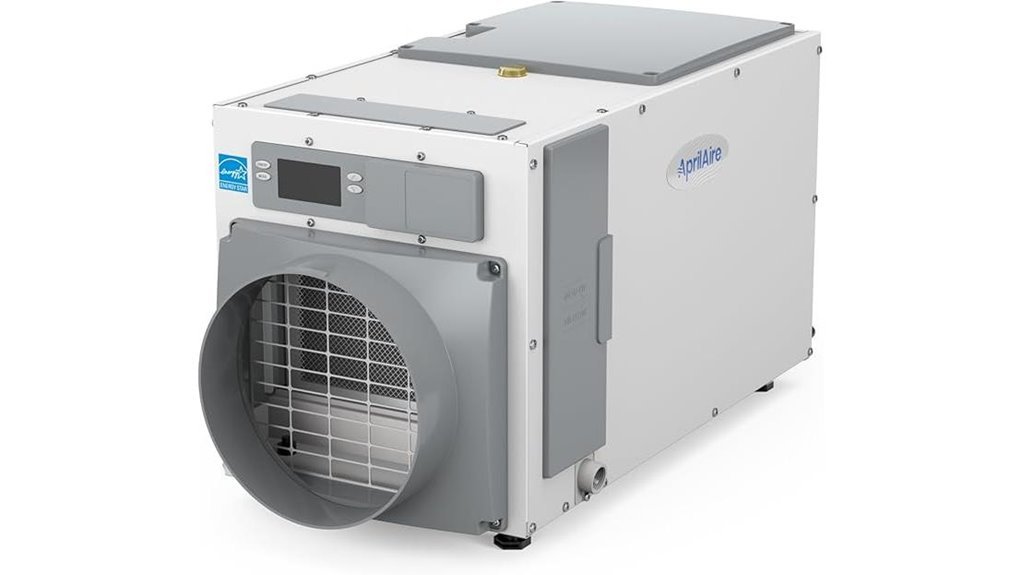
Best overall whole-house choice: The AprilAire E080 is designed for whole-home, basement, or sealed crawl-space dehumidification and includes inlet and outlet duct collars for approved ducted layouts. AprilAire markets it as an 80-pint model and gives coverage guidance up to 4,400 sq. ft. The current ENERGY STAR Appendix X1 listing reports a standardized water-removal capacity of 65 pints per day, so compare it with other units using the same test standard.
Why you’ll like it: It combines whole-house ducting support, automatic humidity control, continuous drainage, a washable MERV 8 filter, and a service network aimed at professional indoor-air-quality installations.
Best For: Homeowners who want a balanced-capacity whole-house dehumidifier and plan to have the ducting, controls, and drainage configured correctly.
Who Should Avoid It: Renters, buyers seeking a portable room appliance, or homes with a moisture problem that should first be corrected through leak repair, drainage work, or crawl-space sealing.
Key specifications:
- Marketed capacity: up to 80 pints per day.
- Current ENERGY STAR Appendix X1 capacity: 65 pints per day.
- Manufacturer coverage guidance: up to 4,400 sq. ft.
- Approximate cabinet size: 15 x 14 x 26 inches.
- Includes 10-inch inlet and outlet duct collars and a washable MERV 8 filter.
Pros:
- Purpose-built for whole-house and approved ducted applications.
- Automatic humidity control supports hands-off daily operation.
- Continuous drainage avoids routine bucket emptying.
- ENERGY STAR certified and currently listed as Most Efficient.
Cons:
- Installation accessories and professional labor can raise total project cost.
- Square-foot guidance should not replace a moisture-load calculation.
- A suitable drain path and practical filter access are required.
AprilAire E100 Pro Dehumidifier Bundle
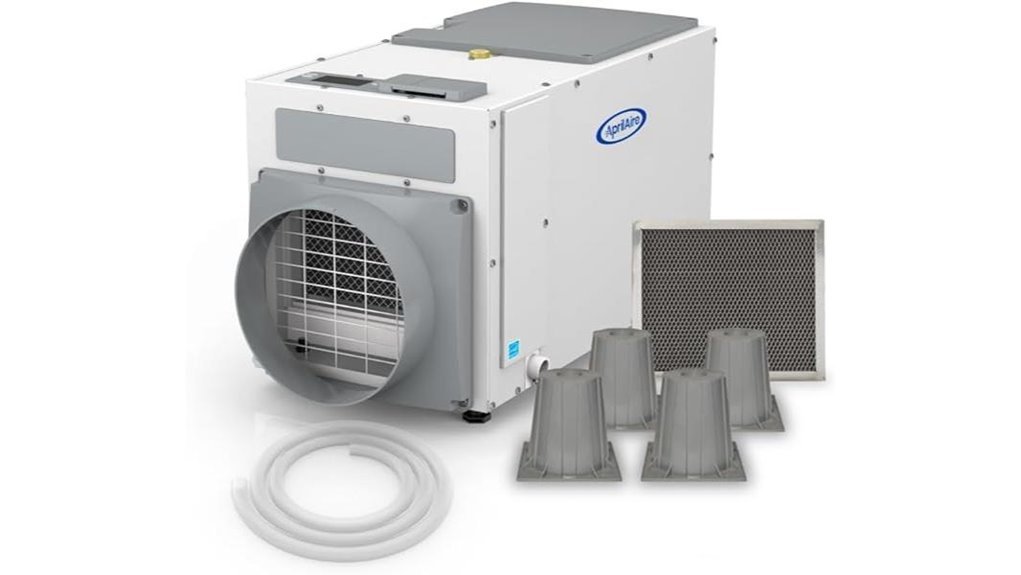
Best for larger homes: The AprilAire E100 uses the same whole-house-oriented design approach as the E080 but provides more moisture-removal headroom. AprilAire markets it as a 100-pint model and gives coverage guidance up to 5,500 sq. ft. The current ENERGY STAR Appendix X1 listing reports 85 pints per day, making it the stronger standardized-capacity choice of the two AprilAire models.
Why you’ll like it: It is a practical step up when the home is larger, the climate is more humid, or an HVAC load calculation shows that the E080 would have to run too long to maintain the target humidity.
Best For: Larger homes, humid regions, high latent loads, or installations where a professional determines that an 80-class model is undersized.
Who Should Avoid It: Smaller or well-sealed homes where the added capacity is unnecessary, and buyers who have not confirmed the exact seller bundle contents.
Key specifications:
- Marketed capacity: up to 100 pints per day.
- Current ENERGY STAR Appendix X1 capacity: 85 pints per day.
- Manufacturer coverage guidance: up to 5,500 sq. ft.
- Approximate cabinet size: 15 x 14 x 26 inches.
- Includes 10-inch inlet and outlet duct collars and a washable MERV 8 filter with the base E100 unit.
Pros:
- Higher standardized capacity than the E080.
- Whole-house ducting support and automatic humidity control.
- Continuous drainage supports long-term operation.
- ENERGY STAR certified and currently listed as Most Efficient.
Cons:
- Higher purchase and installation cost than the E080.
- Can be oversized when selected only by square footage.
- Bundle accessories can vary by seller, so the exact package should be checked before ordering.
ALORAIR Sentinel WHD 100 Whole-House Dehumidifier
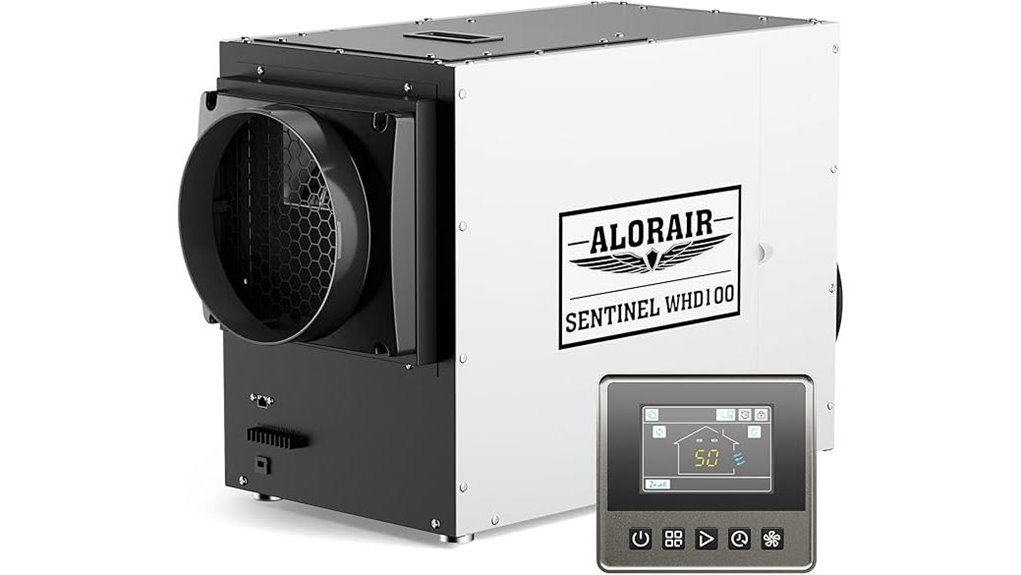
Best flexible whole-house alternative: The ALORAIR Sentinel WHD 100 is explicitly designed for whole-house and ducted applications. The manufacturer lists 90 pints per day at AHAM conditions and 70 pints per day under DOE whole-house conditions, with coverage guidance up to 2,300 sq. ft. Multiple inlet and outlet arrangements make it useful when the installation needs more airflow-layout flexibility than a basic standalone dehumidifier can provide.
Why you’ll like it: It provides clearly separated AHAM and DOE whole-house ratings, selectable airflow, a MERV 10 filter, automatic defrost, memory restart, and whole-house ducting options in one cabinet.
Best For: Homes where flexible duct orientation, higher AHAM capacity, or a different equipment footprint makes the ALORAIR layout a better fit.
Who Should Avoid It: Buyers who need a built-in condensate pump, want the lightest equipment possible, or do not have a suitable gravity-drain route.
Key specifications:
- AHAM capacity: 90 pints per day at 80°F and 60% relative humidity.
- DOE whole-house capacity: 70 pints per day at 73°F and 60% relative humidity.
- Manufacturer coverage guidance: up to 2,300 sq. ft.
- Airflow settings: 229 or 309 CFM.
- Approximate cabinet size: 22.64 x 14.65 x 19.88 inches; listed weight about 89 pounds.
- MERV 10 filter, automatic defrost, gravity drainage, and cETL certification.
Pros:
- Clear AHAM and DOE whole-house capacity ratings.
- Multiple duct-mounting options support varied installation layouts.
- Two airflow settings help the installer match the duct design.
- Automatic defrost and memory restart support unattended operation.
Cons:
- Gravity drainage requires a continuously descending route or a separate approved pump solution.
- The heavier cabinet may require two people or mechanical assistance during placement.
- Control compatibility and duct static pressure should be confirmed before installation.
Factors to Consider When Choosing an HVAC Dehumidifier
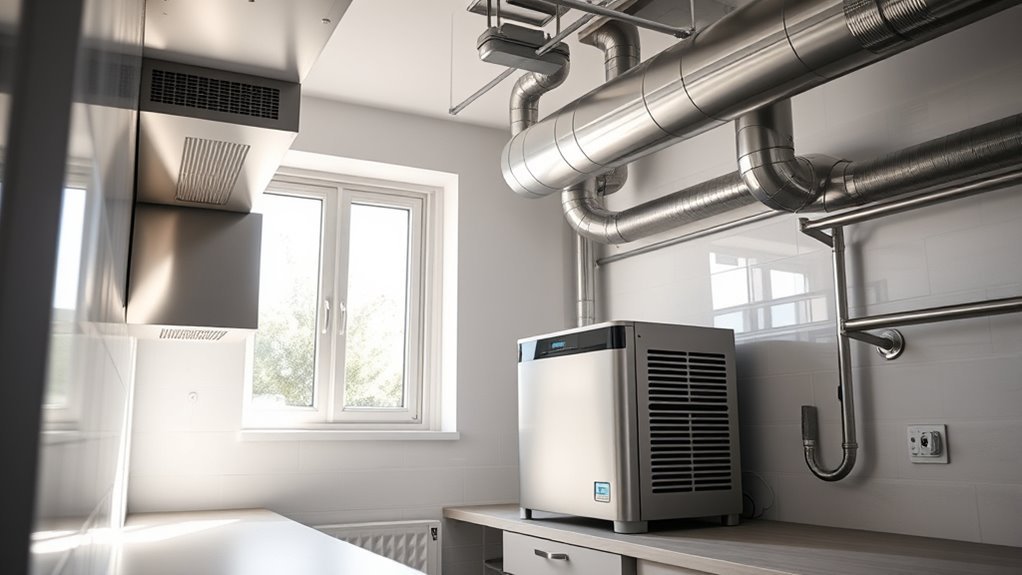
The best whole-house dehumidifier is the one that matches the building’s moisture load and can be installed without creating airflow, drainage, noise, or service problems. Use square-foot guidance only as an early filter. Final selection should account for climate, air leakage, basement or crawl-space conditions, duct design, cooling-system runtime, and the amount of moisture entering the home.
Verify Whole-House Duct Compatibility
A true HVAC dehumidifier should be approved for ducted use and should provide installation guidance for inlet, outlet, controls, drainage, and airflow. Do not assume that any commercial or crawl-space dehumidifier can be connected safely to central ductwork. Confirm the manufacturer’s permitted layout, duct size, external static-pressure limits, required dampers, and whether the HVAC blower must operate with the dehumidifier.
Compare Capacity Using the Same Test Standard
Capacity labels are easy to misread because a model name, manufacturer rating, AHAM rating, DOE whole-house rating, and current ENERGY STAR Appendix X1 value may not be identical. Compare products using the same standard whenever possible. A larger number measured under warmer or more humid test conditions does not automatically mean better real-home performance.
Size for Moisture Load, Not Only Square Footage
A tight home in a moderate climate may need less capacity than a smaller home with foundation seepage, frequent outdoor-air infiltration, or a damp basement. Oversizing can increase upfront cost and may produce shorter operating cycles, while undersizing can leave the unit running for long periods without reaching the target. An HVAC professional can estimate latent load and check whether the existing cooling system already removes enough moisture during normal operation.
Plan the Duct Layout
Whole-house dehumidifiers may use dedicated return and supply ducts or an approved connection to the existing HVAC system. The correct arrangement depends on the equipment manual and home layout. Poorly planned connections can create excessive static pressure, unwanted air mixing, noise, backflow, or short cycling. Insulated ductwork may also be needed to prevent condensation.
Confirm Drainage and Electrical Needs
These units remove many gallons of water during humid conditions, so drainage is not an afterthought. A gravity line must slope continuously toward an approved drain. Where that is impossible, the installer may need a compatible condensate pump. Also verify receptacle or hardwiring requirements, circuit capacity, local code, GFCI rules where applicable, and safe service-clearance around the cabinet.
Check Efficiency, Controls, and Filter Access
Compare ENERGY STAR status and integrated energy factor when the same test method is available. Useful controls include a built-in humidistat, external sensor support, HVAC interlock options, memory restart, automatic defrost, and filter reminders. Make sure the filter and drain line can be reached without dismantling ductwork or crawling through an impractical access point.
Solve the Moisture Source First
A dehumidifier can control airborne moisture, but it cannot repair plumbing leaks, foundation seepage, poor grading, missing gutters, standing water, torn vapor barriers, or damaged ducts. Correct bulk-water problems first. The equipment will then have a better chance of maintaining the target humidity efficiently.
- Confirm the exact model and standardized capacity rating.
- Get a moisture-load and airflow assessment.
- Verify the approved duct configuration and control method.
- Plan gravity drainage or a compatible condensate pump.
- Check electrical requirements and local code.
- Leave enough clearance for filter, coil, and drain maintenance.
- Confirm the current warranty and seller bundle contents.
Frequently Asked Questions
What Makes a Dehumidifier an HVAC or Whole-House Model?
A whole-house model is designed and documented for ducted air delivery, continuous drainage, and permanent humidity control. It should provide approved duct configurations, airflow data, control guidance, and service-clearance requirements. A standalone crawl-space unit is not automatically suitable for central HVAC integration.
Should I Choose the AprilAire E080 or E100?
The E080 is the more balanced choice for many homes, while the E100 offers more capacity for larger buildings or heavier moisture loads. Do not choose only by the advertised square-foot number. Use a professional sizing assessment that considers climate, air leakage, basement conditions, cooling runtime, and duct design.
Why Do Dehumidifier Capacity Numbers Differ?
Different ratings may use different temperature and relative-humidity test conditions. Model names and manufacturer marketing capacities can also differ from current ENERGY STAR Appendix X1 or DOE whole-house values. Compare units using the same standard and test conditions.
Can a Whole-House Dehumidifier Connect to Existing Ductwork?
Yes, when the manufacturer approves the planned configuration and the duct system can handle the required airflow and static pressure. The return, supply, dampers, blower interlock, and controls should follow the installation manual rather than a generic diagram.
What Indoor Humidity Setting Should I Use?
A target around 40% to 50% relative humidity is comfortable for many homes. The best setting can change with outdoor temperature, building tightness, window condensation, and occupant comfort. Avoid setting the unit lower than necessary because that increases runtime and energy use.
Does a Whole-House Dehumidifier Run With the Air Conditioner?
It can operate independently or in coordination with the HVAC blower, depending on the approved wiring and duct layout. Some configurations need the central blower during dehumidification, while others use dedicated ducts. The installation manual and controller setup determine the correct sequence.
Do I Need a Condensate Pump?
You need a pump when the drain location is above the dehumidifier or when a continuously downward-sloping gravity line is not possible. Confirm pump compatibility, lift height, safety-switch wiring, cleaning access, and freeze protection before installation.
How Often Does a Whole-House Dehumidifier Need Maintenance?
Inspect the filter and drain system regularly and follow the manufacturer’s cleaning schedule. Dust load, pets, construction debris, and installation location can shorten the interval. Also check the condensate line, pump if used, duct connections, and humidity sensor when performance changes.
Final recommendation
Choose the AprilAire E080 when a professional confirms that its capacity fits the home. Step up to the AprilAire E100 for a larger or more moisture-intensive application. Consider the ALORAIR Sentinel WHD 100 when its airflow options, cabinet layout, and duct configuration better match the project. In every case, verify the current listing, exact model, installation manual, drainage plan, and load calculation before ordering.
Conclusion
The best HVAC dehumidifier is not simply the model with the largest pint or square-foot claim. The AprilAire E080, AprilAire E100, and ALORAIR Sentinel WHD 100 all match whole-house buyer intent because they are designed for approved ducted applications and continuous humidity control. Compare standardized capacity ratings, duct requirements, drainage, controls, maintenance access, and installation cost. A correctly sized and properly installed unit will be easier to maintain, more predictable to operate, and more likely to control humidity throughout the home.