The best dehumidifier depends on the size and dampness of your space, drainage setup, operating temperature, and actual moisture load rather than an advertised square-foot figure alone. This guide compares four compressor-based options for bedrooms, basements, laundry areas, garages, and other humid spaces. The Waykar 34 Pint is the most balanced general-use choice, the De’Longhi 50 Pint with Pump is especially useful when water must drain upward, the DECIUU 100 Pint targets heavier moisture loads, and the Aiusevo AS280 offers a lower-capacity option for medium-size rooms.
Quick verdict
For most buyers, start with the Waykar if you want a balanced portable dehumidifier with gravity drainage. Choose the De’Longhi when a built-in pump is the priority, the DECIUU for a larger or persistently damp area, and the Aiusevo when you need a smaller compressor unit. Compare pint ratings carefully because advertised capacities may be measured under different temperature and humidity conditions.
Quick Comparison
| Product | Best For | Listed Capacity | Drainage | Amazon |
|---|---|---|---|---|
| Waykar 34 Pint | Balanced home and basement use | Up to 34 pints/day at 95°F, 90% RH | Tank or gravity hose | Check Product Details |
| De’Longhi 50 Pint with Pump | Large damp rooms and upward drainage | 50 pints/day listed capacity | Bucket, hose, or pump | Check Product Details |
| DECIUU 100 Pint with Pump | Large basements and heavier moisture loads | Up to 100 pints/day at 95°F, 90% RH; about 50 pints/day at 80°F, 60% RH | Tank, gravity hose, or pump | Check Product Details |
| Aiusevo AS280 | Bedrooms and medium-size rooms | Up to 21 pints/day at 95°F, 90% RH | Tank or gravity hose | Check Product Details |
Before you buy: Coverage figures and headline pint ratings are seller or manufacturer specifications. Capacity can change significantly with temperature and starting humidity, and different listings may use different test conditions. Compare the current Amazon listing and product manual before ordering, especially if you are sizing a unit for a cool or very wet basement.
How these picks compare
The recommendations prioritize moisture-removal capacity, drainage flexibility, room conditions, portability, controls, and honest limitations. A built-in pump receives extra weight when the drain is higher than the unit, while gravity-drain models make more sense when a nearby floor drain or other low outlet is available.
Waykar 34 Pints Energy Star Dehumidifier
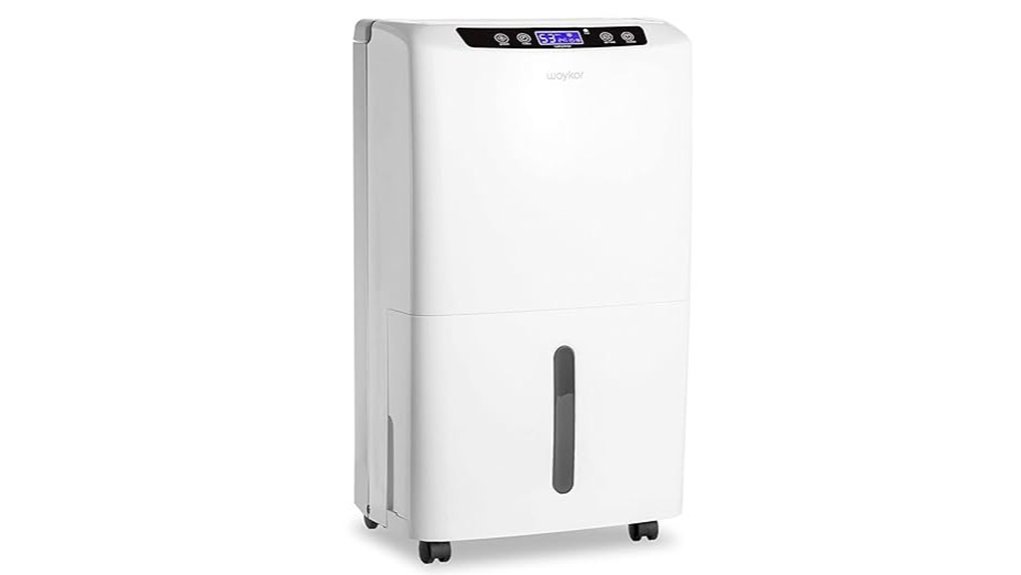
Best Overall: The Waykar 34 Pint is a practical choice for a basement, garage, or large room when you want compressor-based moisture removal without moving to a much larger high-capacity machine. Its listing rates moisture removal at up to 34 pints per day under 95°F and 90% relative humidity conditions and includes adjustable humidity control, fan-speed adjustment, automatic defrost, a timer, auto restart, and a washable filter.
The 0.66-gallon tank works for manual emptying, while the hose connection is better for longer operating periods when a suitable low drain is nearby. Wheels and handles also make it easier to move the dehumidifier between rooms.
Best For: Homeowners who want a balanced portable dehumidifier for bedrooms, basements, garages, and other moderately damp areas.
Why You’ll Like It:
- Useful balance of moisture-removal capacity, portability, humidity adjustment, and continuous gravity drainage.
- The current listing identifies the model as an ENERGY STAR option for buyers concerned about operating efficiency.
- Automatic shutoff, restart, and defrost functions reduce routine monitoring.
Consider Before Buying:
- The 34-pint headline capacity is measured under hot, very humid conditions, so actual daily extraction can be lower in a cooler basement.
- The tank may fill quickly in a very damp room, making the drain hose more practical for longer runs.
- It uses gravity drainage rather than a built-in pump, so the hose must run toward a lower drain point.
De’Longhi 50 Pint Dehumidifier with Pump, White
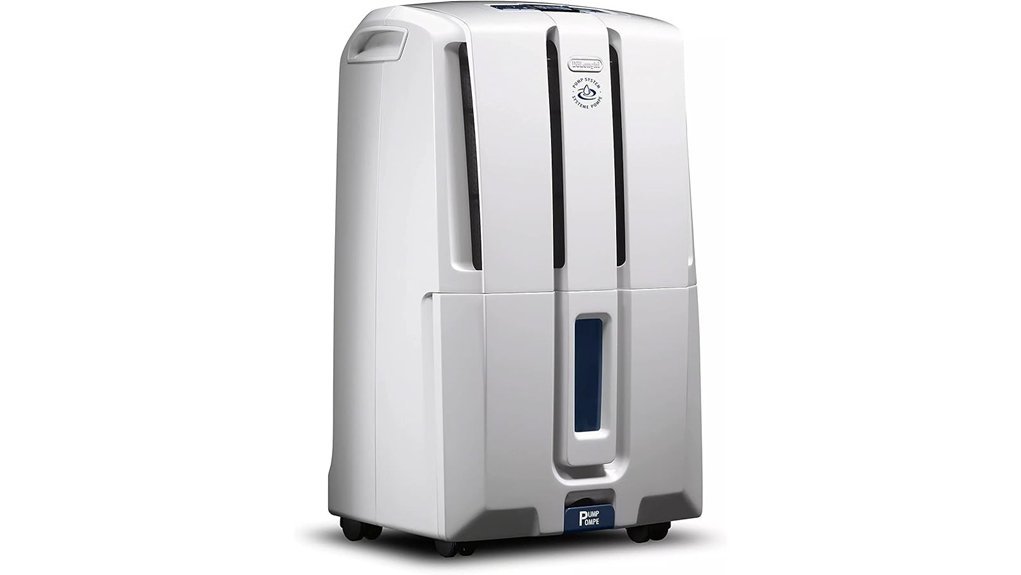
Best Built-In Pump Pick: The De’Longhi DDX250PEF is designed for larger damp areas and is especially useful when collected water must be moved upward to a sink, window, or another raised drain point. Its built-in pump and pump hose reduce the need to carry and empty a full bucket manually.
The unit includes humidity control, a 24-hour timer, fan-speed adjustment, automatic defrost, and a display. Use the bucket for temporary operation, gravity drainage when a low drain is available, or the pump when the drain is higher than the appliance.
Best For: Large basements, laundry areas, and other damp spaces where upward drainage is more important than minimum size or weight.
Why You’ll Like It:
- The built-in pump provides more installation flexibility than a gravity hose alone.
- The 50-pint class is better suited to heavier moisture loads than smaller portable models.
- Wheels, digital controls, and automatic functions make routine operation easier.
Consider Before Buying:
- At about 47 pounds, it is much easier to roll across one floor than carry between floors.
- A 50-pint dehumidifier can be more machine than you need for a small bedroom or lightly damp closet.
- Confirm current warranty terms, hose details, filters, and availability on the Amazon listing before ordering.
DECIUU 100 Pint Dehumidifier with Pump
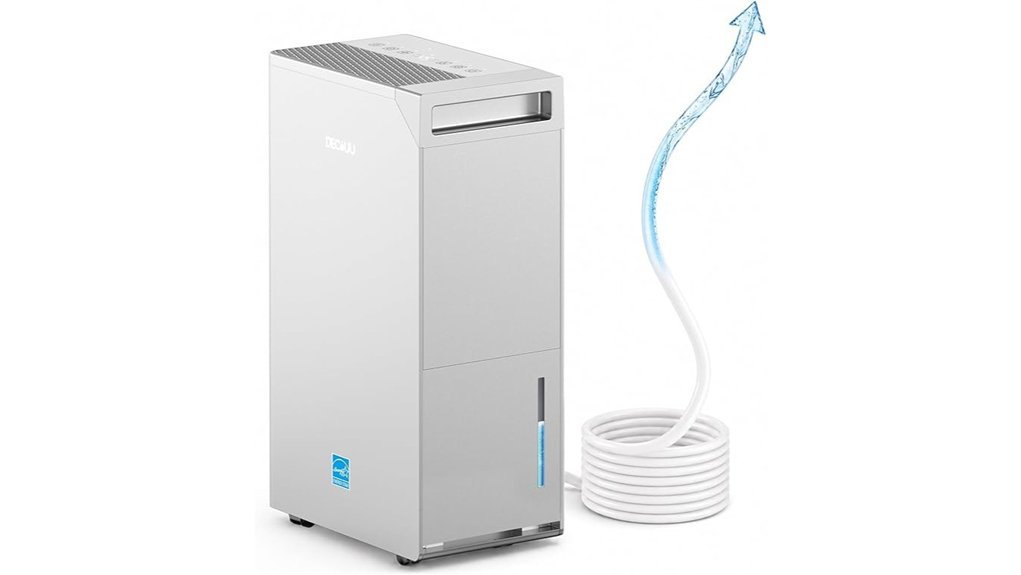
Best for Large Moisture Loads: The DECIUU model is aimed at larger, persistently damp spaces where a smaller machine may need to run for long periods. The important detail is how its capacity is measured: the manufacturer lists up to 100 pints per day at 95°F and 90% relative humidity, while output is about 50 pints per day at 80°F and 60% relative humidity.
The built-in pump is a major convenience feature because it can move collected water toward a higher drain rather than relying only on gravity. The unit also offers a tank and gravity-drain option, giving buyers three ways to handle collected water.
Best For: Large basements, garages, storage areas, laundry areas, and properties with persistent humidity or frequent water collection.
Why You’ll Like It:
- Higher moisture-removal capability makes it better suited to demanding spaces than lower-capacity models.
- Tank, gravity hose, and built-in pump drainage provide flexible installation choices.
- Wheels, a washable filter, child lock, and automatic humidity controls make a larger unit easier to manage.
Consider Before Buying:
- Do not compare its 100-pint maximum directly with ratings measured under cooler or less humid conditions.
- It can be oversized for a small room with mild seasonal humidity.
- The bucket still requires manual attention when neither continuous drainage option is being used.
- Confirm current certification, warranty, pump-hose specifications, and seller information before ordering.
Aiusevo AS280 1500 Sq. Ft. Dehumidifier
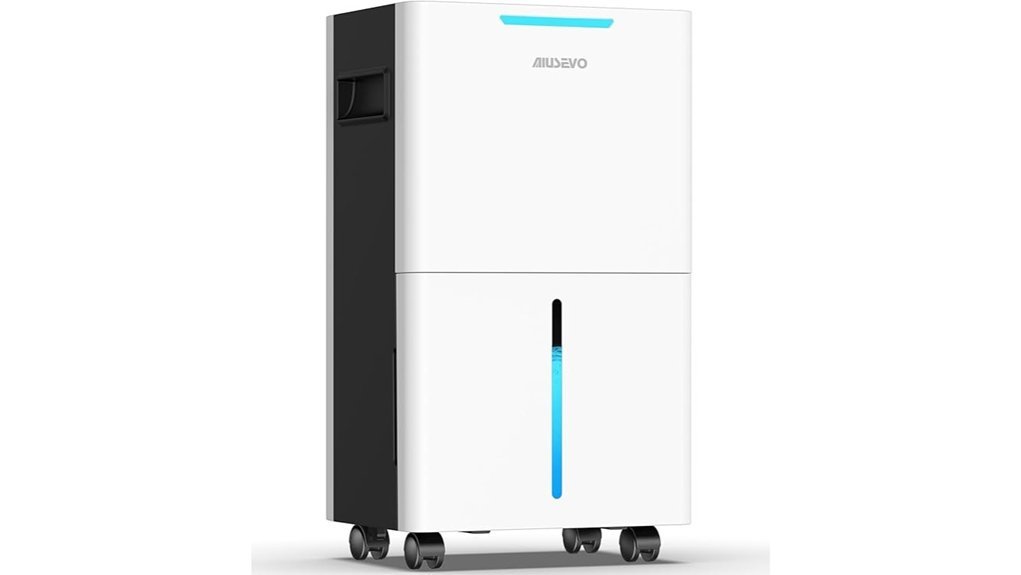
Best for Medium-Size Rooms: The Aiusevo AS280 is listed to remove up to 21 pints per day at 95°F and 90% relative humidity. It offers adjustable humidity control, a 24-hour timer, and separate modes for normal dehumidifying, laundry drying, and continuous operation.
The 2-liter tank has automatic full-tank shutoff, while the included drain hose supports continuous gravity drainage. Wheels and handles are useful when you want to move one dehumidifier between a bedroom, bathroom, living area, garage, or other suitable space.
Best For: Buyers who want straightforward compressor-based humidity control for a medium-size room without stepping up to a heavier pump-equipped machine.
Why You’ll Like It:
- Three operating modes make it easy to switch between everyday humidity control, laundry drying, and continuous operation.
- The included gravity-drain hose reduces bucket emptying when a suitable lower drain is available.
- Handles and caster wheels suit buyers who expect to move one unit between rooms.
Consider Before Buying:
- The 21-pint headline capacity is measured at 95°F and 90% RH, so extraction can be lower in cooler or less humid conditions.
- The 2-liter tank can fill quickly when the room is very damp.
- The drain hose relies on gravity and must maintain a downward path without kinks.
Factors to Consider When Choosing a Dehumidifier
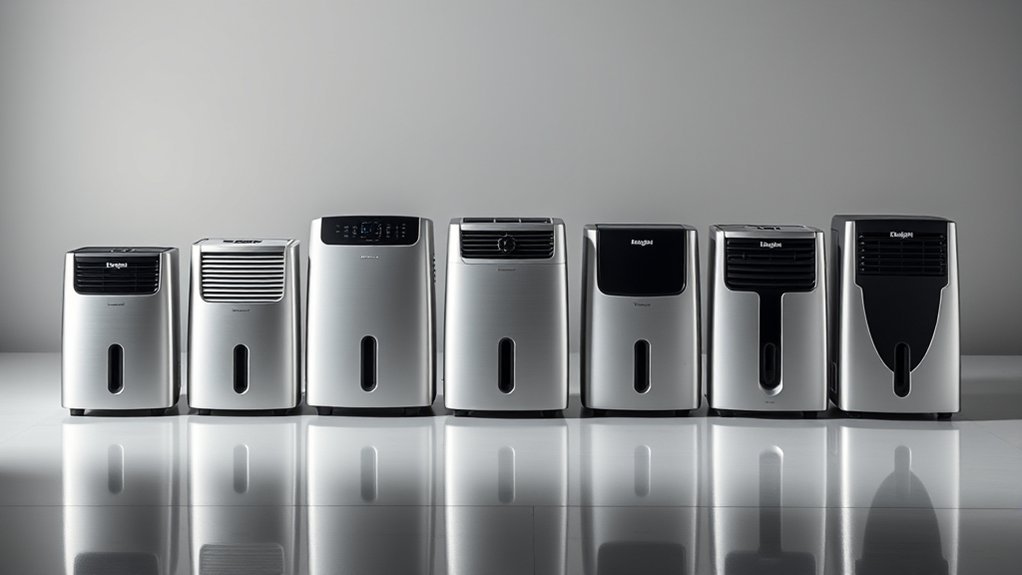
Start with moisture-removal capacity and actual room conditions, then compare drainage, efficiency, noise, controls, portability, and maintenance. Marketing coverage numbers can help with an initial comparison, but they do not tell you how wet, cool, open, or poorly sealed the room is.
Capacity and Room Conditions
Portable dehumidifier capacity is measured by the amount of water removed over 24 hours under stated test conditions. Always check the temperature and relative humidity attached to a capacity claim. A figure measured at 95°F and 90% RH should not be treated as directly equivalent to one measured in cooler, less humid air. A slightly damp bedroom also needs less extraction than a wet basement with condensation, laundry drying, or another continuous moisture source.
Compare Capacity Ratings Carefully
Headline product names can make one machine appear dramatically stronger than another even when the ratings were produced under different conditions. When possible, compare pint capacity under the same test temperature and humidity. If equivalent ratings are not available, treat the larger marketing number as a maximum-condition specification rather than guaranteed daily performance in your home.
Compressor vs. Semiconductor
Compressor dehumidifiers generally provide much stronger moisture removal and are normally the better choice for basements, laundry rooms, garages, and larger living areas. Small semiconductor dehumidifiers are quieter and more compact, but they are intended for lighter moisture loads and should not be compared directly with full-size compressor machines by tank size alone.
Drainage Options
A removable tank is simple but requires regular emptying. A gravity hose can run continuously when the drain is below the outlet and the hose maintains a downward slope. A built-in pump costs more but can move water toward a higher drain, which can be useful in basements without a conveniently positioned floor drain.
Energy Efficiency
Look for a current ENERGY STAR listing when energy efficiency is important and compare Integrated Energy Factor when equivalent specifications are available. A humidistat and timer can also reduce unnecessary operation by allowing the compressor to cycle according to the selected humidity level. Certification wording can change between model years, so verify the exact model rather than relying only on an older badge or award mentioned in seller copy.
Noise Levels
Noise matters most in bedrooms, offices, and living rooms. Compare listed sound specifications when available, but remember that fan speed, compressor cycling, flooring, nearby furniture, and room acoustics can affect how loud a portable dehumidifier seems in actual use.
Control Features
Useful controls include an adjustable humidistat, timer, auto restart, auto defrost, full-tank shutoff, fan-speed adjustment, and washable-filter access. Child lock and power memory can also help in family homes or areas with frequent power interruptions.
Portability and Size
Check dimensions, weight, handle design, caster wheels, tank access, and required airflow clearance before buying. A smaller machine is easier to move and place, while a larger tank or higher extraction capacity can reduce maintenance in a persistently damp space.
Before You Buy Checklist
- Measure the space and decide whether it is slightly damp, very damp, or persistently wet.
- Identify ongoing moisture sources such as leaks, seepage, laundry drying, or poor ventilation.
- Compare pint ratings using equivalent test conditions whenever possible.
- Decide whether a low gravity drain is available or a built-in pump is necessary.
- Confirm the operating-temperature range if the unit will run in a cold basement.
- Review tank size, hose length, filter access, noise information, warranty, seller, and return terms.
- Check the exact model number before relying on ENERGY STAR or other certification wording.
Frequently Asked Questions
What Humidity Level Should I Set?
A target around 45% to 50% relative humidity is a practical starting point for many homes. Adjust within roughly the 30% to 50% range according to comfort, condensation, season, and room conditions. If condensation remains visible, investigate the moisture source rather than relying only on a lower humidistat setting.
How Often Should I Clean a Dehumidifier Filter?
Check the filter regularly and follow the cleaning interval in the product manual. A check every two to four weeks is a reasonable routine when the unit operates frequently, while dusty rooms or homes with pets may require more frequent cleaning. Restricted airflow can reduce dehumidifier performance.
Can a Dehumidifier Run Overnight?
A properly installed portable dehumidifier can operate overnight when used according to its manual. Keep the air intake and outlet clear, make sure the tank is seated correctly, inspect the power cord and outlet, and use the humidistat, timer, full-tank shutoff, or continuous drainage system as directed by the manufacturer.
Will a Dehumidifier Fix Mold or Water Leaks?
No. A dehumidifier can reduce moisture in the air, but it does not repair plumbing leaks, stop water intrusion, remove standing water, or replace proper mold cleanup. Correct the moisture source and dry wet materials promptly.
Do Dehumidifiers Work in Cold Basements?
They can, but compressor-based moisture extraction generally falls as room temperature drops. Check the manufacturer’s minimum operating temperature and whether the model includes automatic defrost. A large square-foot claim does not guarantee high extraction in a consistently cold basement.
Is a Built-In Pump Worth It?
A built-in pump is worth considering when the only practical drain is higher than the dehumidifier or when a gravity hose cannot maintain a continuous downward slope. If you already have a nearby floor drain below the outlet, gravity drainage is usually simpler.
Does a Bigger Water Tank Mean a More Powerful Dehumidifier?
No. Tank volume tells you how much collected water the appliance can hold before it needs emptying. Moisture-removal capacity tells you how much water the dehumidifier can extract over a stated period and under stated test conditions. These are different specifications.
Should I Trust Square-Foot Coverage Ratings?
Use coverage ratings as a starting point rather than a guarantee. Temperature, starting humidity, ceiling height, airflow, open doors, water intrusion, and other moisture sources can all affect how much capacity a room actually needs.
Conclusion
The Waykar 34 Pint is the most balanced option here for general home and basement use, while the De’Longhi 50 Pint is the better match when upward pump drainage is the deciding factor. Choose the DECIUU 100 Pint when you need more moisture-removal capability for a large or persistently damp area, but remember that its 100-pint maximum is based on very warm, humid test conditions. The Aiusevo AS280 is the simpler lower-capacity choice for medium-size rooms. Match capacity to the real moisture load, compare ratings under similar conditions, choose the right drainage method, and correct leaks or water intrusion before expecting a dehumidifier to solve the underlying moisture problem.
Final Recommendation
Choose Waykar for the best balance of capacity and simplicity, De’Longhi when you specifically need pump drainage, DECIUU for heavier moisture loads and flexible drainage, or Aiusevo when a smaller compressor dehumidifier better matches your room and budget. Verify the current Amazon listing, model specifications, warranty, and seller before purchasing.