Disclosure: As an Amazon Associate, we earn from qualifying purchases. If you click a link on this page and make a purchase, we may receive a small commission at no extra cost to you.
If you’re choosing a dehumidifier for a home in the Netherlands in 2026, focus on more than pint capacity. Damp basements, bathrooms, laundry rooms, and older homes need the right mix of moisture removal, drainage, noise control, portability, and safe electrical compatibility.
This guide compares compressor models such as the Waykar Max 80 Pint, AEOCKY 4500 Sq.Ft, Midea Cube 50 Pint, KNKA 2500 Sq.Ft, BANABIE 2500 Sq.Ft, and PLUSCENT 32 Pint, plus compact models for smaller damp areas. These are Amazon.com comparison candidates, not automatically Netherlands-ready appliances. Your first check should always be the exact voltage, frequency, plug type, and manufacturer guidance for the unit you are considering.
Important Netherlands electrical compatibility note
Before buying from Amazon.com, confirm that the exact product rating label supports 230V / 50Hz operation and check the plug type, warranty coverage, shipping rules, and import costs. Many US-market appliances are designed around 115V or 120V power. A simple plug adapter does not change voltage or frequency. If the manufacturer does not explicitly confirm compatibility with your local electrical supply, do not connect the unit directly to a Netherlands outlet.
How These Options Are Compared
- Moisture-removal class and realistic room use.
- Compressor versus compact moisture-removal technology.
- Manual tank and continuous-drainage convenience.
- Noise, portability, controls, and maintenance.
- Electrical compatibility and suitability for Netherlands buyers.
Quick Verdict
Choose a compressor dehumidifier if you need serious moisture control in a basement, laundry room, or large living area. Choose a compact semiconductor-style model mainly for small bedrooms, wardrobes, bathrooms, RV-style spaces, or mild dampness. For Netherlands use, only proceed after confirming electrical compatibility for the exact unit.
- Large-space performance candidates: Waykar Max 80 Pint, AEOCKY 4500 Sq.Ft, or Midea Cube 50 Pint.
- Mid-size room candidates: BANABIE 2500 Sq.Ft, KNKA 2500 Sq.Ft, or PLUSCENT 32 Pint.
- Small quiet-space candidates: 106 oz, UBBO 95 oz, or PSOS 98 oz models.
Quick Comparison
| Product | Type | Best For | Key Strength | Main Limitation |
|---|---|---|---|---|
| Waykar Max 80 Pint | Compressor | Large rooms and basements | High moisture-removal headroom with drain support | Large unit; verify Netherlands electrical compatibility |
| BANABIE 2500 Sq.Ft | Compressor | Mid-size damp rooms | Smart humidity control and drainage options | Small manual tank for very wet spaces |
| 106 oz Water Tank Model | Semiconductor | Bedrooms and closets | Compact, quiet, and easy to move | Not a heavy-duty basement solution |
| AEOCKY 4500 Sq.Ft | Compressor | Large-room humidity control | High-capacity design and smart humidistat | Bulky and requires electrical compatibility check |
| Midea Cube 50 Pint | Compressor | Smart large-room control | Large tank and smart control | Full bucket can become heavy |
| UBBO 95 oz | Compact | Home, RV, and small rooms | Quiet compact design with drainage option | Limited for large or very wet rooms |
| KNKA 2500 Sq.Ft | Compressor | Basements and laundry rooms | Drain hose, multiple modes, and humidity indicator | Gravity drainage needs correct hose placement |
| PLUSCENT 32 Pint | Compressor | Everyday home humidity control | Simple modes and washable filter | Gravity drainage may not suit every setup |
| PSOS 98 oz | Compact | Small rooms and humidity monitoring | Compact tank and humidity display | Not ideal for heavy basement dampness |
Compatibility reminder: Coverage, capacity, and features do not make a product electrically suitable for the Netherlands. Check the exact rating label and manufacturer guidance before ordering any Amazon.com model.
Waykar Max 80 Pint Energy Star Home Dehumidifier
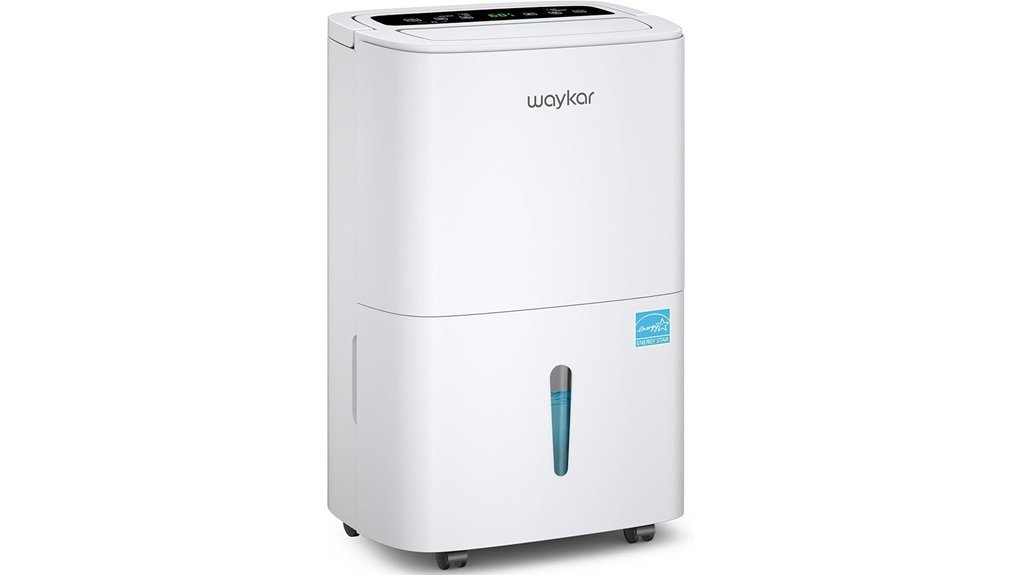
Best High-Capacity Candidate: The Waykar Max 80 Pint Energy Star Home Dehumidifier is worth considering if you need serious moisture control for a large damp room, basement, bathroom, or laundry area. It is marketed for spaces up to 5,000 sq. ft. and includes drain support, which can reduce how often you need to empty the tank.
The headline 80-pint figure is a maximum rating measured under warm, very humid conditions. Real-world water removal can be lower in cooler Dutch basements. That does not automatically make the unit ineffective, but it means you should compare operating conditions rather than relying only on the largest number in the listing.
The unit also offers adjustable humidity control, auto defrost, self-drying, washable filtration, a digital display, and portability features.
Why You’ll Like It: It gives you considerably more moisture-removal headroom than compact units, which can help in rooms affected by laundry drying, poor ventilation, or persistent dampness.
Best For: Larger damp rooms, basements, bathrooms, laundry rooms, and locations where continuous drainage is available.
Skip It If: You need a small bedside unit or the exact product label does not confirm safe compatibility with your local Netherlands power supply.
Pros:
- High-capacity design for larger damp spaces.
- Drain support can reduce manual tank emptying.
- Auto defrost, self-drying, timer, and adjustable humidity control improve convenience.
Cons:
- May be louder and bulkier than compact bedroom models.
- The tank still needs cleaning and maintenance when continuous drainage is not used.
- Netherlands buyers must verify voltage, frequency, plug type, and warranty coverage before purchase.
BANABIE 2500 Sq.Ft Dehumidifier with Smart Humidity Control
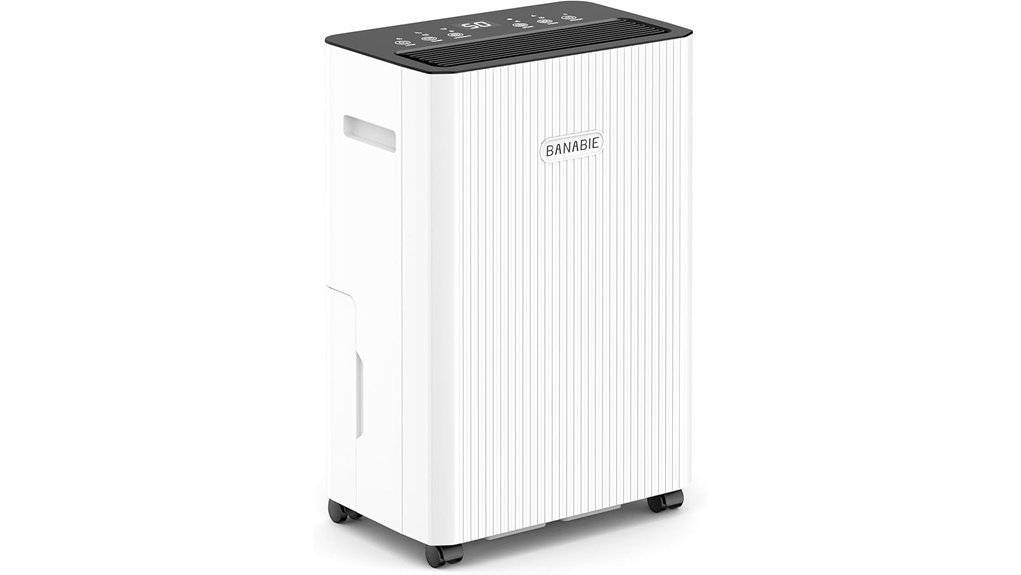
Best Mid-Size Quiet Candidate: This 2,500 sq. ft. dehumidifier is a good fit if you want stronger performance than a mini unit but do not need the largest high-capacity class. It is listed as a 32-pint compressor dehumidifier with smart humidity control, a drain hose, a 24-hour timer, and quiet-operation features.
The 32-pint figure is based on warm, high-humidity conditions, so actual daily removal can be lower in a cool room. The 2.5L manual tank is convenient for occasional use, while the included hose can make more sense in damp areas that collect water quickly.
For Dutch homes with laundry moisture, bathroom humidity, or a damp storage room, this class of compressor unit may be more practical than a small semiconductor unit, but the exact electrical specification must be checked before purchase.
Why You’ll Like It: It balances physical size, controls, and moisture removal without taking up as much room as many larger basement units.
Best For: Bedrooms, bathrooms, laundry rooms, and medium damp areas within the manufacturer’s stated operating limits.
Skip It If: Your basement is very wet, you need a much larger collection tank, or the exact unit is not approved for your local electrical supply.
Pros:
- 32-pint maximum daily moisture-removal rating under high-humidity conditions.
- Smart humidity control reduces constant manual adjustment.
- Drain-hose and tank options give you flexible setup choices.
Cons:
- The 2.5L tank may fill quickly in very humid rooms.
- Coverage claims depend on room layout, temperature, and humidity.
- Voltage, frequency, and plug compatibility must be confirmed for Netherlands use.
Dehumidifier for Home with 106 OZ Water Tank
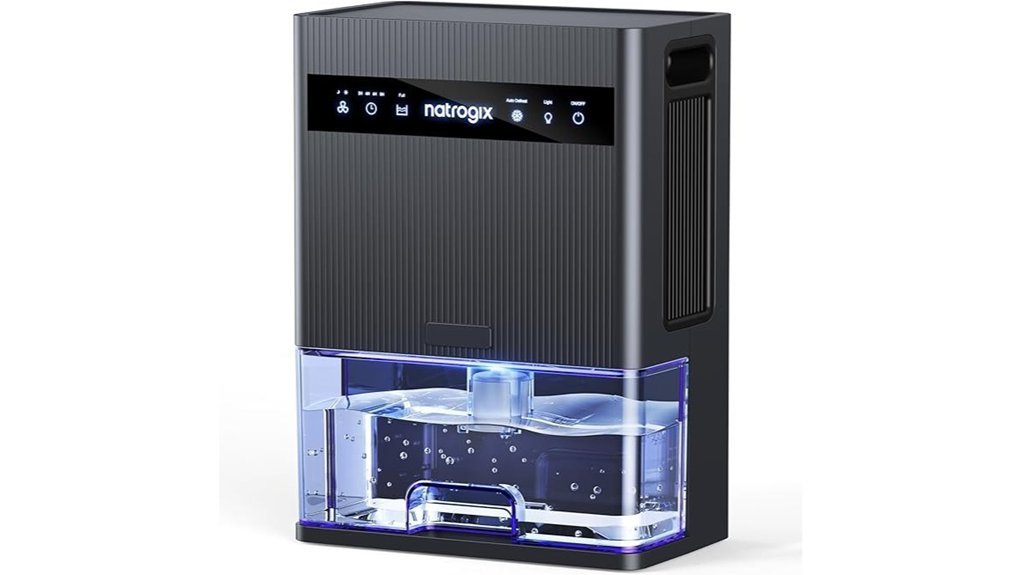
Best Compact Bedroom Candidate: This 106 oz water-tank dehumidifier is best viewed as a small-space moisture helper rather than a full basement solution. It uses semiconductor condensation technology, which generally favors lower weight and quieter operation over the raw water-removal performance of a compressor model.
That makes it more appropriate for bedrooms, closets, small bathrooms, wardrobes, and other areas where mild dampness is the main problem. The hidden handle, sleep mode, auto shut-off, defrost-related controls, and seven-color LED lighting are designed around convenience in living spaces.
Why You’ll Like It: It is lightweight, quiet, and easier to move between small rooms when you only need modest moisture control.
Best For: Small bedrooms, closets, bathrooms, wardrobes, and spaces where low noise matters more than maximum extraction capacity.
Skip It If: You need to dry a wet basement, a large laundry room, or an area with persistent heavy condensation.
Pros:
- Compact design with a relatively large collection tank for its class.
- Sleep mode can reduce nighttime disturbance.
- Auto shut-off helps prevent overflow when the tank is full.
Cons:
- Not designed to replace a compressor dehumidifier in large damp spaces.
- Performance can decline as temperature and humidity fall.
- Electrical compatibility still needs to be confirmed before Netherlands use.
AEOCKY 4500 Sq.Ft Smart Dehumidifier
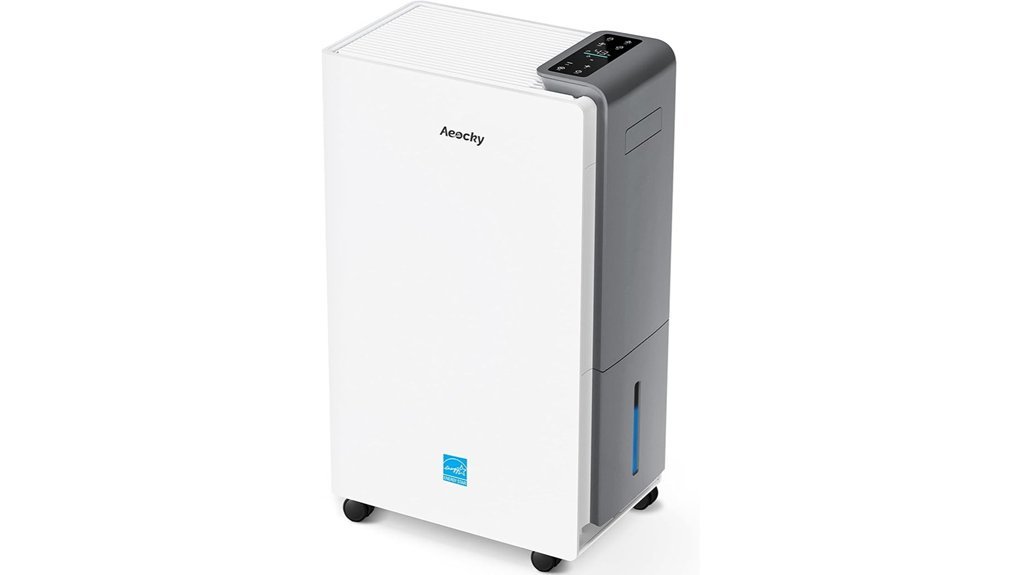
Best Energy-Focused Large-Room Candidate: The AEOCKY Smart Dehumidifier is a high-capacity compressor option with adjustable humidity control. The listing information for this model family references large-room coverage, an 80-pint maximum rating under high-humidity conditions, drain support, a humidistat, timer, child lock, and power-off memory.
Coverage figures can vary across listing versions, so treat the square-foot number as a general sizing reference rather than a guarantee. Actual performance depends on temperature, starting humidity, air movement, room layout, and your target humidity.
The ENERGY STAR Most Efficient 2025 positioning is useful for efficiency-focused buyers, but electricity savings are not guaranteed. Runtime and local electricity cost matter just as much as the label.
Why You’ll Like It: It combines high moisture-removal potential with automatic humidity control, which can reduce constant adjustment in a persistently damp space.
Best For: Large living spaces, basements, bathrooms, and other damp areas where compressor-level capacity is appropriate.
Skip It If: You need a compact unit or the exact model’s electrical rating is not approved for 230V/50Hz Netherlands operation.
Pros:
- High-capacity design for larger damp spaces.
- Smart humidistat and adjustable humidity settings improve control.
- Drain-hose support can make long-running use easier.
Cons:
- Large size may be awkward in tight rooms.
- Coverage and energy-saving results vary with operating conditions.
- Confirm voltage, frequency, and plug compatibility before Netherlands use.
Midea Cube 50 Pint Dehumidifier with Smart Control
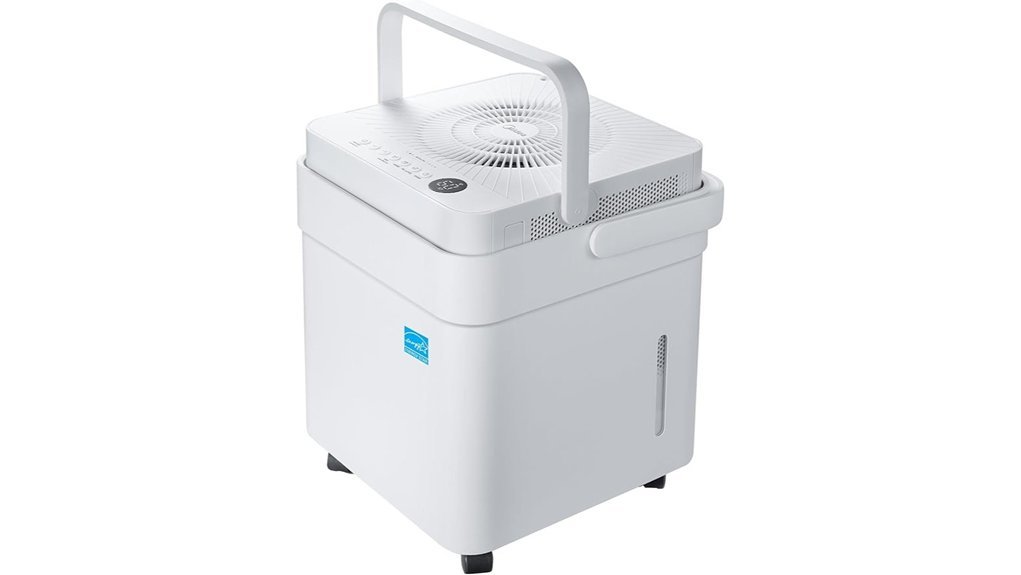
Best Smart Tank Candidate: The Midea Cube 50 Pint Dehumidifier is a strong match if you value smart controls and a larger water-collection setup. Its cube-style lift-and-twist design helps with storage, while smart control can make humidity management more convenient.
The large tank can reduce emptying frequency, but it also becomes considerably heavier as it fills. If you have a suitable drain nearby, continuous drainage may be easier than carrying a full bucket across the room. This can be especially useful in laundry areas and basements that stay damp for long periods.
Why You’ll Like It: It combines smart control with an unusually large collection setup for people who want fewer manual checks.
Best For: Larger rooms, basements, laundry rooms, and smart-home users who value remote control.
Skip It If: You dislike lifting a heavy water tank, need the smallest possible footprint, or cannot verify Netherlands-compatible electrical specifications for the exact model.
Pros:
- Smart control adds convenience.
- Large tank design can reduce emptying frequency.
- Continuous drainage improves long-running usability.
Cons:
- The bucket can become heavy when full.
- The lift-and-twist design may not suit every user.
- Confirm the exact model’s voltage, frequency, plug, and warranty details before purchase.
UBBO 95oz Dehumidifier for Home and RV
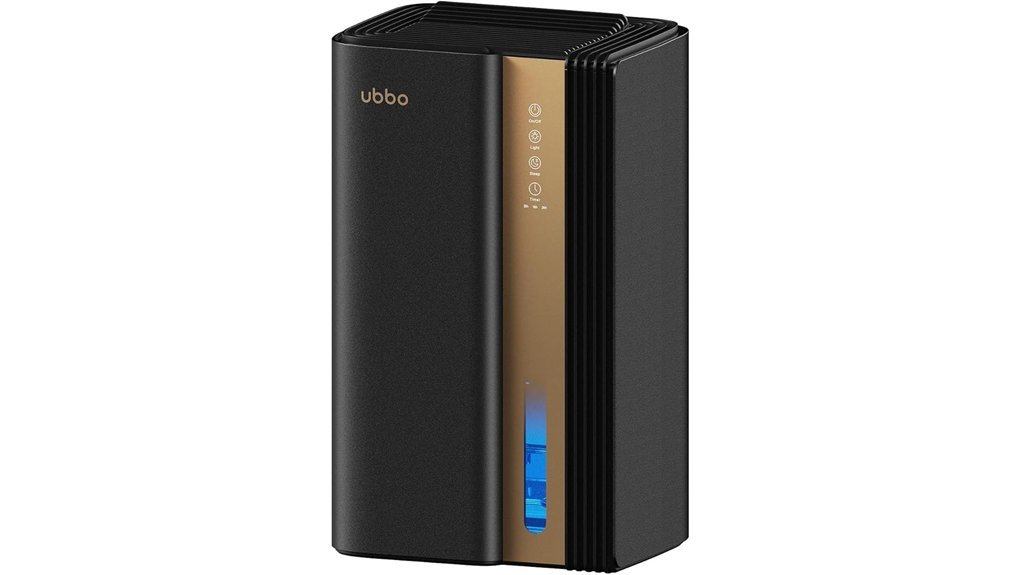
Best Home and RV Compact Candidate: The UBBO 95oz Dehumidifier is designed for smaller spaces where portability, quiet operation, and convenience matter more than heavy-duty extraction. The listing includes a removable tank, automatic shut-off, timer and sleep features, drainage support, lighting, and an aroma-box feature.
This is not the right choice for a large wet basement, but it can make more sense for bedrooms, bathrooms, kitchens, small storage areas, and RV-style spaces. Continuous drainage is useful when the layout allows the hose to slope correctly toward a suitable drain.
Why You’ll Like It: It is easier to position than a large compressor model and adds convenience features for smaller living spaces.
Best For: Small rooms, bathrooms, kitchens, RV-style spaces, and quiet areas with mild to moderate dampness.
Skip It If: You need strong whole-room drying for a large basement or open-plan area.
Pros:
- Compact tank design suits smaller rooms.
- Quiet-operation features make it easier to use near living areas.
- Continuous-drainage support can reduce manual emptying.
Cons:
- Moisture-removal power is limited compared with compressor models.
- Coverage claims should be treated cautiously in open spaces.
- Electrical compatibility must still be confirmed for Netherlands use.
KNKA 2500 Sq.Ft Dehumidifier with Drain Hose
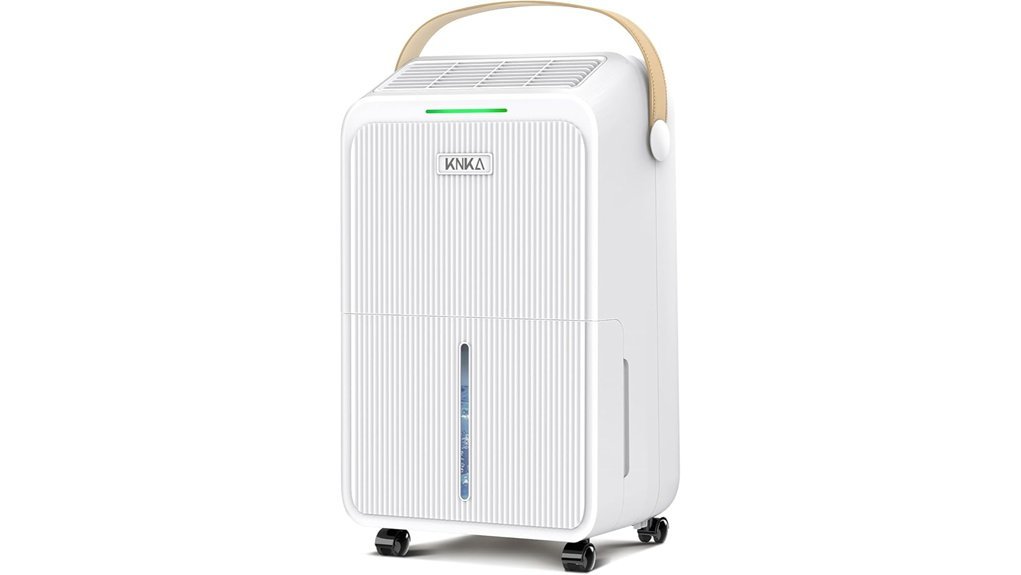
Best Drain-Hose Candidate for Mid-Size Spaces: The KNKA 2500 Sq.Ft Dehumidifier is a practical compressor option for buyers who want several operating modes and continuous drainage support. It is listed with a maximum 34-pint moisture-removal rating under warm, high-humidity conditions and includes DEHU, DRY, and CONT modes.
The included hose works best when gravity can move water downward toward a suitable drain. If your drain is above the dehumidifier, gravity drainage will not lift water upward. Without continuous drainage, you will need to rely on the internal tank and empty it as required.
Why You’ll Like It: It gives you useful operating controls without an overly complicated setup, while the humidity indicator helps you monitor room conditions.
Best For: Basements, laundry rooms, bedrooms, bathrooms, offices, and other medium damp spaces.
Skip It If: You cannot create a suitable gravity-drain path, dislike manual tank emptying, or cannot verify safe electrical compatibility.
Pros:
- 34-pint maximum rating gives it stronger performance than compact units.
- DEHU, DRY, and CONT modes suit different moisture problems.
- Wheels, handle, washable filter, and humidity indicator improve usability.
Cons:
- Continuous drainage depends on correct hose placement.
- May be more unit than you need for a small closet or wardrobe.
- Voltage, frequency, and plug details need confirmation before Netherlands use.
PLUSCENT 32 Pint Dehumidifier for Home
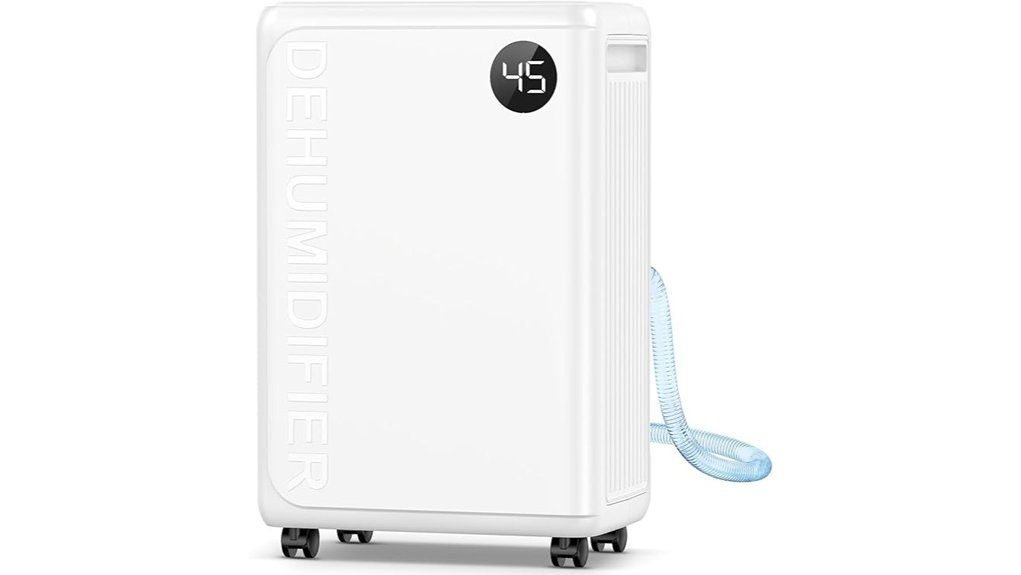
Best Simple 32-Pint Home Candidate: The PLUSCENT 32 Pint Dehumidifier is aimed at homeowners who want straightforward humidity control without an overly complicated feature list. It is marketed for spaces up to 2,500 sq. ft. and includes three modes, a 24-hour timer, easy-roll wheels, a washable filter, and drain-hose support.
For homes where moisture builds in a bedroom, basement corner, bathroom, or open living area, this type of compressor unit can be a useful middle-ground choice. It provides more moisture-removal capability than a mini dehumidifier while remaining less imposing than many larger high-capacity models.
Why You’ll Like It: It keeps the controls relatively simple and provides the core functions most buyers look for: dehumidification, continuous operation, drying mode, timer, and drainage support.
Best For: Bedrooms, basements, bathrooms, and common living areas that need everyday moisture control.
Skip It If: Your space needs substantially higher capacity, you require pumped upward drainage, or you cannot verify Netherlands electrical compatibility.
Pros:
- Useful middle-ground capacity for common home spaces.
- Three operating modes make it easier to match different moisture conditions.
- Wheels and washable filter help with movement and maintenance.
Cons:
- Gravity drainage may not work in every room layout.
- Manual emptying may be frequent in very humid conditions.
- Check electrical specifications before using it in the Netherlands.
PSOS Dehumidifier for Home with 98 OZ Tank
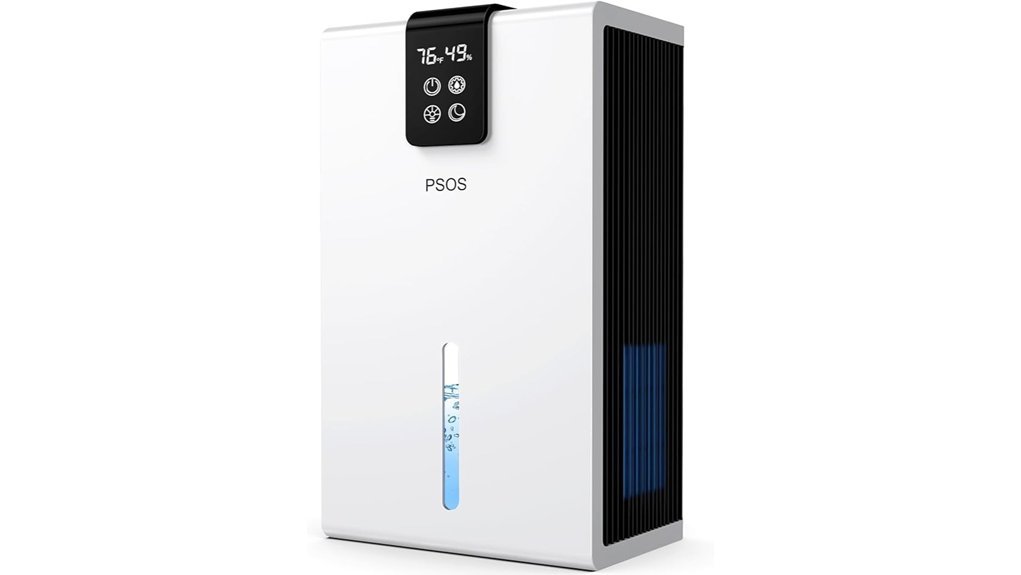
Best Compact Humidity-Monitoring Candidate: The PSOS Dehumidifier with a 98 oz tank is better suited to small rooms than large wet basements. Its compact design, quiet-operation features, humidity display, auto shut-off, washable filter, and ambient lighting make it more appealing for bedrooms and living areas.
Do not compare its tank capacity directly with the daily pint-removal figures of large compressor units. Tank size describes how much collected water the reservoir can hold, not how quickly the machine can remove moisture from a room.
Why You’ll Like It: It provides a simple way to monitor and reduce mild dampness without bringing a large floor-standing compressor unit into the room.
Best For: Bedrooms, closets, bathrooms, living rooms, and smaller damp spaces.
Skip It If: You need heavy-duty moisture removal or continuous operation in a persistently wet basement.
Pros:
- Compact 98 oz tank design suits smaller rooms.
- Humidity monitoring helps you track changing room conditions.
- Auto shut-off and washable filtration support easier maintenance.
Cons:
- Not suitable as a primary solution for large wet areas.
- Requires regular tank emptying and filter cleaning.
- Electrical compatibility must be checked before Netherlands use.
Factors to Consider When Choosing a Dehumidifier in the Netherlands
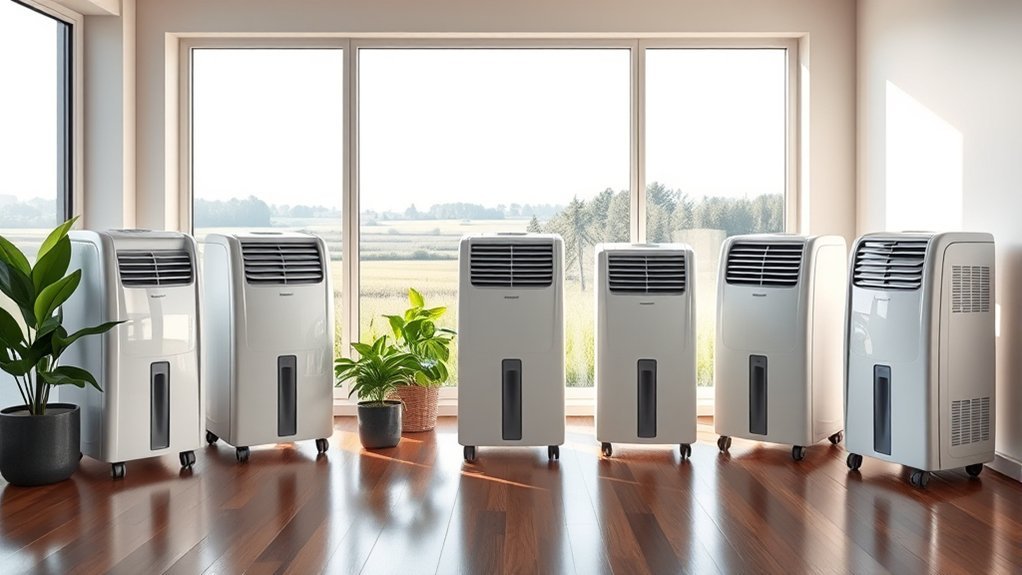
When choosing a dehumidifier for a home in the Netherlands, start with electrical compatibility, room size, and the severity of the moisture problem. Then compare extraction capacity, drainage, noise, energy use, tank size, and maintenance. A properly sized compressor unit is usually more suitable for large damp rooms, while compact semiconductor models make more sense for mild humidity in smaller spaces.
Coverage Area Size
Match the dehumidifier’s listed coverage area to the room you actually want to dry, but do not use square-foot marketing claims as your only sizing method. Open-plan rooms, basements, and laundry areas often require more capacity than small bedrooms or wardrobes. Poor ventilation, cold walls, frequent condensation, and moisture from drying clothes can all increase the workload.
Moisture Removal Capacity
Moisture-removal capacity is often shown in pints per day. Check the test conditions behind that number. A maximum figure measured in warm, very humid air may be much higher than what the unit removes in a cool basement. For persistent basement or laundry moisture, compressor models with drain support are usually the more appropriate class. For a small bedroom or closet with mild dampness, a compact unit may be enough.
Electrical Compatibility
This is especially important for Netherlands buyers shopping on Amazon.com. Check the exact product rating label for voltage and frequency as well as the plug type and warranty terms. Do not assume that an appliance is safe because its plug can be physically adapted. A plug adapter does not convert the electrical supply. If the manufacturer does not explicitly approve the unit for your local power conditions, choose another model.
Energy Efficiency Rating
An efficient model can reduce running costs compared with a less efficient alternative doing the same job, but savings are never automatic. A dehumidifier running continuously in a wet basement will consume more electricity than one that cycles occasionally in a mildly damp bedroom. Helpful features include automatic humidity control, defrost protection, timers, restart functions, and adjustable target humidity.
Noise Level Consideration
Noise matters most in bedrooms, offices, and living rooms. Compact semiconductor units are often easier to live with in quiet areas but generally remove less moisture. Compressor units offer stronger drying performance but add fan and compressor noise. If you plan to run a unit overnight, compare sleep modes, low-fan settings, and published noise information for the exact model.
Drainage Options Available
Manual tanks are simple but require regular emptying. Continuous drainage is especially useful in basements, bathrooms, laundry rooms, and other spaces where the machine runs for many hours. Gravity drainage needs a hose that continuously slopes downward toward a suitable drain. If water needs to travel upward, you need a drainage system specifically designed to pump it.
Smart Features Integration
Smart features can be useful if you want app control, real-time humidity information, timers, or automatic restart after a power interruption. They improve convenience but do not compensate for incorrect sizing. A smart dehumidifier that is too small for the moisture load will still struggle.
Before You Buy Checklist
- Check the exact rating label for voltage and frequency before anything else.
- Confirm plug type, warranty coverage, shipping rules, and import requirements.
- Measure the room and decide whether it is mildly damp, very damp, or persistently wet.
- Choose compressor models for serious basement, laundry-room, and large-space moisture problems.
- Use compact semiconductor models mainly for smaller rooms and mild humidity.
- Check whether continuous gravity drainage is practical in your room.
- Compare moisture-removal capacity using the stated test conditions, not only the largest advertised figure.
- Use a hygrometer so you can monitor changing room humidity instead of relying only on how the air feels.
Frequently Asked Questions
How Do I Maintain My Dehumidifier for Optimal Performance?
Empty the water tank before it overflows, clean or replace the filter as directed by the manufacturer, keep the air intake and outlet clear, and check the drain hose for clogs or poor positioning. Wipe the tank regularly and let the unit dry before long-term storage.
What Size Dehumidifier Do I Need for My Space?
For a large damp basement or laundry room, start with a compressor dehumidifier that has adequate moisture-removal capacity and drainage support. For small bedrooms, closets, and wardrobes, a compact unit may be enough. Room temperature, starting humidity, ventilation, and the amount of moisture entering the room matter as much as square footage.
Can Dehumidifiers Help With Allergies and Asthma?
A dehumidifier can reduce excess moisture that supports mold growth and dust mites, which may bother some sensitive people. It is not a medical treatment. Speak with a qualified health professional if allergy or asthma symptoms continue.
How Noisy Are Modern Dehumidifiers During Operation?
Noise varies by design and operating mode. Compact semiconductor models are often quieter but less powerful. Compressor models remove more moisture but can produce more fan and compressor noise, especially at higher settings.
Are There Energy-Efficient Dehumidifier Options Available?
Yes. Look for credible energy-efficiency labeling, efficient compressor designs, automatic humidity control, defrost functions, timers, and automatic cycling. Actual electricity use still depends heavily on room dampness, runtime, temperature, and your target humidity.
Should I Use Continuous Drainage or the Water Tank?
Use the tank if you run the unit only occasionally or cannot route a hose safely. Continuous drainage is more convenient when the room is persistently damp or the unit runs every day. For gravity drainage, the hose needs a continuous downward path unless the dehumidifier has a suitable pump system.
Are Amazon.com Dehumidifiers Safe for the Netherlands?
Only when the exact model is electrically compatible with the Netherlands and the manufacturer approves that use. Check the rating label for voltage and frequency, then confirm the plug type and manufacturer instructions. If a unit is marked only for a different electrical supply, do not connect it directly to a Netherlands outlet. A simple travel-plug adapter does not change voltage or frequency.
Final Recommendation
For serious moisture problems, the Waykar Max 80 Pint, AEOCKY, and Midea Cube 50 Pint stand out as the strongest high-capacity candidates in this comparison. KNKA, BANABIE, and PLUSCENT offer a more moderate compressor-class alternative, while the 106 oz, UBBO, and PSOS models are better suited to lighter small-room moisture control.
Most important: for a home in the Netherlands, electrical compatibility comes before capacity, smart features, tank size, or price. Do not buy any Amazon.com model solely because its performance specifications look attractive. Confirm that the exact unit is approved for your local voltage and frequency first.
Conclusion
The right dehumidifier for the Netherlands depends on both your moisture problem and the electrical specification of the exact unit. For basements, laundry rooms, and larger living areas, compressor models such as the Waykar Max 80 Pint, AEOCKY, Midea Cube 50 Pint, KNKA 2500 Sq.Ft, BANABIE 2500 Sq.Ft, and PLUSCENT 32 Pint offer more moisture-removal potential than compact units. For bedrooms, closets, bathrooms, RV-style spaces, and mild dampness, compact models may be easier to live with.
Before buying, confirm the room size, moisture severity, drainage setup, noise requirements, tank maintenance, voltage, frequency, plug type, and warranty coverage. A well-matched dehumidifier can make moisture easier to manage, but the safest choice is one that fits both the room and the Netherlands electrical supply.