For homes in humid climates, the right dehumidifier should be chosen by moisture-removal capacity, room conditions, drainage, operating temperature, and humidity controls rather than an advertised square-foot number alone. The three compressor models retained in this guide are the AEOCKY 50-Pint for heavier moisture loads, the KNKA 34-Pint for flexible everyday use, and the BANABIE 32-Pint for moderately damp residential spaces.
Affiliate disclosure: This article contains Amazon affiliate links. We may earn a commission from qualifying purchases at no extra cost to you.
Marketplace note: Product specifications and availability can change. Confirm the current capacity rating, voltage, warranty, drainage accessories, and return terms on the product page before ordering.
Updated August 2026.
Quick Verdict
Best overall: The AEOCKY 50-Pint offers the strongest advertised moisture-removal capacity of the retained models and is the better starting point for very damp basements, garages, and larger living areas.
Best value: The KNKA 34-Pint combines a drain hose, adjustable humidity control, multiple operating modes, and a manageable residential size.
Best for moderate humidity: The BANABIE 32-Pint is suited to bedrooms, living areas, basements, and other spaces with a moderate moisture load, provided its gravity-drain setup works with your layout.
Quick Comparison
| Product | Advertised Maximum | Drainage | Best For | Amazon |
|---|---|---|---|---|
| AEOCKY 50-Pint BOREAS-001 | Up to 50 pints/day at hot, highly humid test conditions; the listing also states 38 pints/day at 86°F and 80% RH | 0.8-gallon tank or continuous gravity drainage | Very damp basements, garages, laundry areas, and larger rooms | Check Availability |
| KNKA 34-Pint | Up to 34 pints/day at 95°F and 90% RH | Internal tank or included gravity-drain hose | Flexible residential use and automatic humidity control | Check Availability |
| BANABIE 32-Pint | Up to 32 pints/day at 95°F and 90% RH | 2.5-liter tank or continuous gravity drainage | Moderately damp bedrooms, basements, bathrooms, and open living spaces | Check Availability |
Capacity note: The maximum figures above are marketplace claims measured under the stated conditions. A unit may collect less water in a cooler basement or when the room is closer to the selected humidity level. Use capacity, starting humidity, temperature, and drainage needs—not coverage claims alone—to choose a model.
How We Compared These Dehumidifiers
These products were compared using buyer-focused criteria rather than price, star ratings, or promotional rankings. The main factors were:
- Technology: Compressor models were prioritized because they are generally more suitable than small thermoelectric units for sustained whole-room humidity.
- Moisture-removal capacity: Higher-capacity models are more appropriate for very damp rooms and humid climates.
- Drainage: Continuous drainage can reduce the need to empty a tank several times per day.
- Humidity control: An adjustable humidistat allows the unit to cycle instead of running continuously.
- Operating conditions: Cooler basements may require effective automatic defrost and realistic expectations about capacity.
- Buyer limitations: Tank size, gravity-drain requirements, noise, placement, maintenance, and unverifiable coverage claims were considered.
AEOCKY 50-Pint Dehumidifier — Best Overall
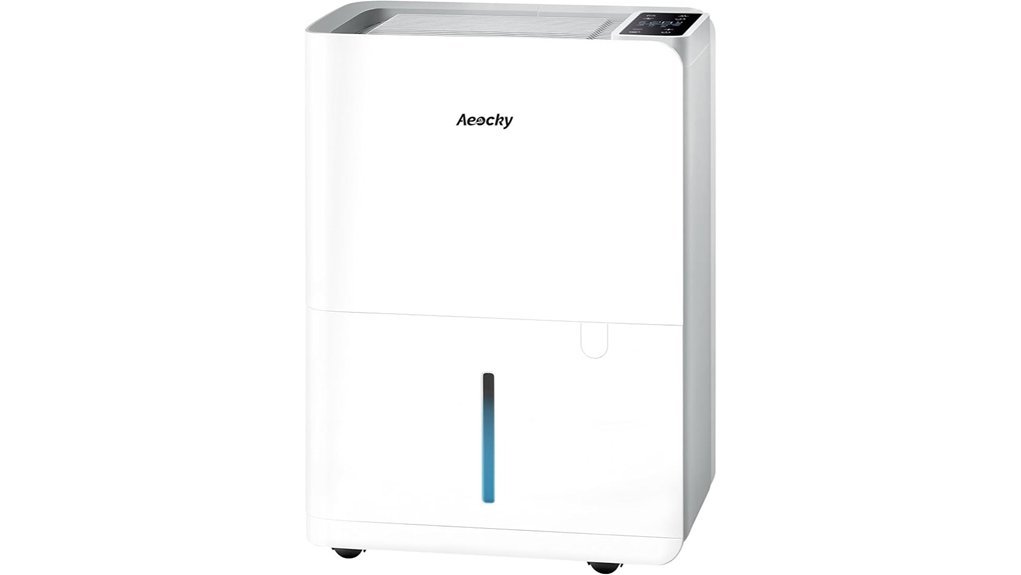
The AEOCKY BOREAS-001 is the strongest retained option for a very damp basement, humid garage, laundry area, or larger living space. Its Amazon listing advertises removal of up to 50 pints per day at 95°F and 95% RH and approximately 38 pints per day at 86°F and 80% RH. The second figure gives buyers a more useful reference than the hottest maximum test condition.
The unit includes an adjustable humidistat, a 0.8-gallon collection tank, a drain hose, a garden-hose adapter, fan-speed control, a timer, and a child lock. Continuous gravity drainage is particularly useful in a humid climate because a small internal tank can fill quickly when the unit is collecting several gallons of water over multiple days.
Why You’ll Like It: It offers the highest advertised moisture-removal capacity among the three retained products and provides both tank and hose drainage.
Best For: Very damp basements, humid garages, laundry rooms, storage areas, and larger occupied rooms.
Consider Another Option If: Your space has only mild seasonal humidity, you lack a suitable gravity drain, or you need a compact unit for a small bedroom.
Pros:
- Higher advertised moisture-removal capacity than the other retained models.
- The listing provides capacity figures for two different temperature and humidity conditions.
- Supports continuous drainage and includes a hose and garden-hose adapter.
- Adjustable humidity control helps avoid unnecessary nonstop operation.
- Casters make it easier to reposition within the same floor of the home.
Cons:
- The advertised maximum should not be treated as the amount it will collect every day in normal household conditions.
- The 0.8-gallon tank may need frequent emptying during heavy moisture removal.
- Gravity drainage requires a drain point lower than the hose outlet unless a separate condensate pump is used.
- Large advertised coverage figures do not guarantee even humidity control through closed rooms or separate floors.
KNKA 34-Pint Dehumidifier — Best Value
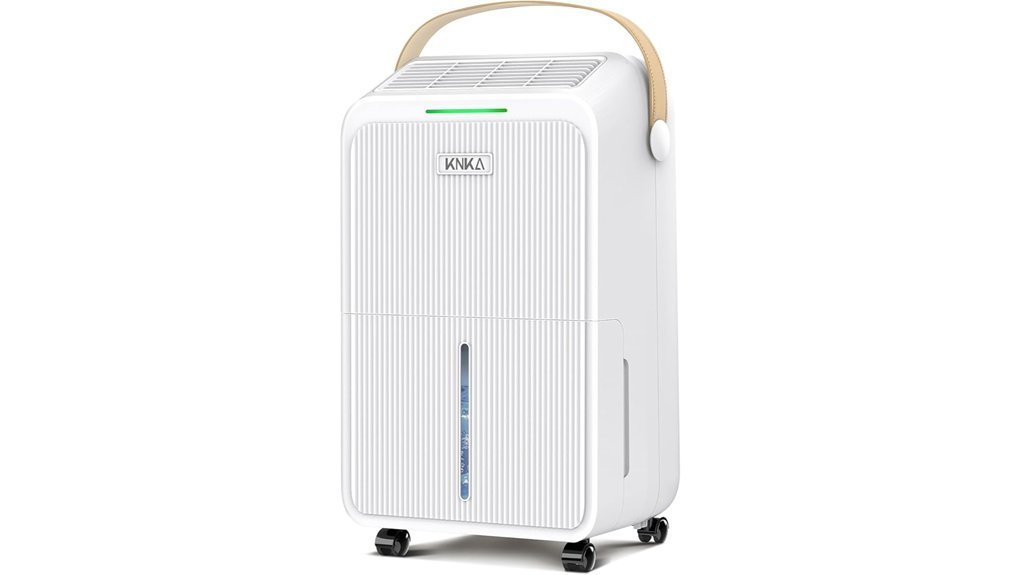
The KNKA 34-Pint Dehumidifier is a practical middle-ground option for bedrooms, basements, offices, laundry rooms, and other residential spaces. Its marketplace listing advertises removal of up to 34 pints per day at 95°F and 90% RH. Actual daily collection will normally change with temperature, starting humidity, airflow, and the selected humidity level.
It includes dehumidifying, clothes-drying, and continuous modes, along with automatic humidity adjustment, fan controls, a timer, a child lock, tank-full protection, and a drain hose. These controls make it easier to use for both routine humidity management and temporary moisture loads such as indoor laundry drying.
Why You’ll Like It: It balances useful compressor capacity, automatic humidity control, multiple modes, and continuous drainage without moving into a larger high-capacity class.
Best For: Moderately to very damp residential rooms where flexible controls and a drain hose are priorities.
Consider Another Option If: You have active seepage, a very large open basement, or a consistently severe moisture load that calls for a higher DOE-rated capacity.
Pros:
- Compressor design is more suitable for sustained room humidity than a compact semiconductor model.
- Includes automatic humidity adjustment and several operating modes.
- Supports continuous drainage with the supplied hose.
- Includes timer, child-lock, tank-full, and automatic shutoff functions.
- Suitable for buyers who need more capacity than a small-room unit but not the largest model in this guide.
Cons:
- The 34-pint figure is an advertised maximum measured at hot, very humid conditions.
- The internal tank can fill quickly if continuous drainage is not used.
- Noise claims come from the marketplace listing and may differ with fan speed, floor surface, and room acoustics.
- The drain hose relies on gravity and cannot send water upward by itself.
BANABIE 32-Pint Dehumidifier — Best for Moderate Humidity
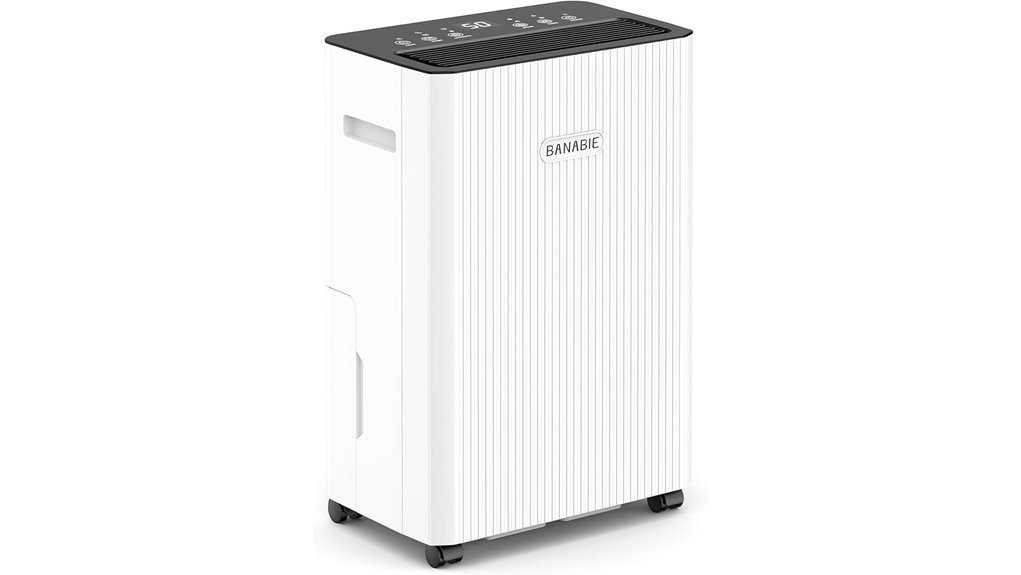
The BANABIE 32-Pint Dehumidifier is suited to moderately damp basements, bedrooms, bathrooms, RVs, and open living areas. Its Amazon title advertises coverage of up to 2,500 square feet and removal of up to 32 pints per day at 95°F and 90% RH. Because the same product page contains different square-foot figures, buyers should treat coverage as a broad marketing estimate rather than a precise sizing guarantee.
The unit provides adjustable humidity control, a timer, two fan speeds, automatic shutoff, a 2.5-liter tank, and a continuous gravity-drain option. It is a sensible choice when the room has a recurring humidity problem but does not require the higher advertised capacity of the AEOCKY.
Why You’ll Like It: It provides standard compressor dehumidification, automatic humidity management, and two drainage choices in a relatively straightforward package.
Best For: Moderately damp rooms, seasonal humidity, bedrooms, finished basements, and buyers who can use a nearby gravity drain.
Consider Another Option If: The room has wet walls, standing water, active foundation seepage, or a high moisture load across several closed rooms.
Pros:
- Compressor-based moisture removal for normal residential humidity control.
- Automatic humidity control can cycle the compressor based on the selected setting.
- Offers both an internal tank and continuous gravity drainage.
- Includes a timer, adjustable fan speed, and automatic tank-full shutoff.
- Portable format allows repositioning between nearby rooms when necessary.
Cons:
- The product page contains inconsistent advertised coverage figures.
- The 2.5-liter tank may require frequent emptying in very damp conditions.
- The maximum capacity is based on hot, highly humid test conditions.
- Gravity drainage may not work where the available sink or drain is higher than the hose outlet.
Factors to Consider When Choosing a Dehumidifier for a Humid Climate
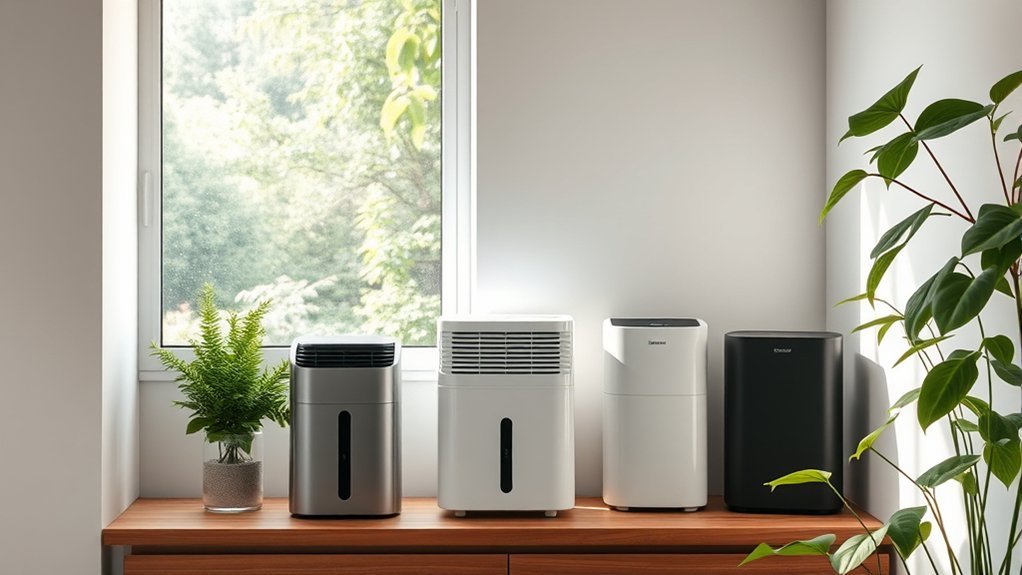
A humid climate can keep a dehumidifier working for many hours per day, so capacity, drainage, controls, and operating conditions matter more than decorative features. Use the following factors to narrow the options.
Measure the Actual Humidity
Use a separate hygrometer to measure the room rather than relying only on how the air feels. The U.S. Environmental Protection Agency recommends keeping indoor relative humidity below 60% and ideally between 30% and 50%. A practical target near 45%–50% often provides moisture control without making the space unnecessarily dry.
For more guidance, see the EPA indoor-air-quality recommendations.
Coverage Area Is Only a Starting Point
Advertised square-foot coverage is not a standardized promise of equal performance. An open 1,500-square-foot basement may be easier to manage than several closed rooms totaling the same area. Ceiling height, airflow, outdoor humidity, water intrusion, temperature, and how often doors are opened all affect performance.
Choose primarily by rated moisture-removal capacity and dampness level. Use square footage only as a secondary comparison point.
Understand Moisture-Removal Capacity
Capacity is expressed in pints of water removed over 24 hours under specified test conditions. A marketplace figure measured at 95°F and 90% RH should not be compared directly with a DOE capacity measured under cooler, more realistic conditions.
ENERGY STAR’s general sizing guidance recommends approximately:
- 20–30 pints per day: Slightly to moderately damp spaces under 2,000 square feet.
- 25–40 pints per day: Very damp spaces under 2,000 square feet.
- 30–50 pints per day: Wet spaces under 2,000 square feet.
- 30 pints or more: Slightly to moderately damp spaces over 2,000 square feet.
- 40–50 pints or more: Very damp or wet spaces over 2,000 square feet.
These are estimates, not substitutes for assessing the actual moisture source. See the ENERGY STAR dehumidifier buying guidance.
Compressor Versus Thermoelectric Models
Compressor dehumidifiers generally remove substantially more moisture and are the better choice for basements, living rooms, garages, and sustained humid-climate use. Thermoelectric units are usually better for small enclosed areas with light moisture, such as closets, cabinets, compact bathrooms, or RV sleeping areas.
Do not choose a small thermoelectric model for a large damp basement simply because its listing advertises a large coverage number.
Check the Drainage Layout
Continuous drainage is highly useful in a humid climate, but most included hoses rely on gravity. The hose must slope downward without loops, kinks, or an uphill section. Suitable destinations may include a floor drain, low utility sink, shower drain, or sump area where permitted.
If the only drain is higher than the dehumidifier outlet, choose a model with a built-in pump or use a compatible external condensate pump. Never assume a standard drain hose can push water upward.
Verify Energy Efficiency
Look for an exact model number in the official ENERGY STAR Product Finder rather than relying only on a logo or claim in a marketplace title. The relevant efficiency measure is the Integrated Energy Factor, which compares water removal with total energy consumption.
Smart humidity control, a correctly sized unit, a clean filter, and an appropriate humidity target can also reduce unnecessary runtime. Avoid setting the target far below what the room requires.
Operating Temperature and Automatic Defrost
Compressor dehumidifiers usually collect less water as the room becomes cooler. In a cool basement, frost can form on the evaporator coil. Automatic defrost helps protect operation, but it does not make a standard residential compressor model perform like a low-temperature commercial dehumidifier.
Check the manufacturer’s minimum operating-temperature specification when the room regularly falls below normal household temperatures.
Treat Noise Claims as Estimates
Published decibel figures may be measured under controlled conditions and at a particular fan speed. Real-world sound can change with compressor cycling, fan speed, floor vibration, wall reflections, and distance from the unit.
For a bedroom or office, place the dehumidifier on a stable, level surface and avoid positioning it against furniture that can amplify vibration. A lower fan setting may be quieter but can also reduce air circulation.
Useful Controls
The most useful control is an adjustable humidistat that automatically starts and stops the compressor around the selected target. Other practical features include:
- Automatic restart after a power interruption.
- Automatic defrost.
- Tank-full shutoff.
- A washable filter.
- A timer.
- A child lock.
- A continuous operating mode for specific drying tasks.
Continuous mode should not replace a sensible humidity target during normal everyday use.
Portability and Placement
Casters and handles help when moving a unit within one floor, but compressor dehumidifiers should be kept upright. After transporting or tilting one, follow the manufacturer’s instructions about how long it must stand before operation.
Leave the recommended clearance around the air inlet and outlet. Closing doors and windows can improve performance, but air still needs to circulate within the intended treatment area.
Safety and Moisture-Source Control
A dehumidifier is not a repair for leaking plumbing, foundation seepage, roof damage, flooding, or an improperly vented clothes dryer. Fix the moisture source first whenever possible.
Use a grounded wall outlet that meets the manual’s electrical requirements. Avoid damaged extension cords, blocked air openings, wet electrical connections, and locations where the appliance may be splashed or submerged. Empty and clean the tank regularly to prevent residue and odors.
Safety note: Do not operate a standard household dehumidifier in standing water. For flooding, electrical damage, major leaks, widespread mold, or persistent wall and floor seepage, address the water source and seek qualified help where appropriate.
Before You Buy
- Measure the room and note whether it is slightly damp, very damp, or wet.
- Check the temperature and relative humidity with a separate hygrometer.
- Compare capacity under the same test standard whenever possible.
- Confirm whether the included hose is long enough to reach a lower drain.
- Check whether a pump is needed for upward drainage.
- Confirm the minimum operating temperature and automatic-defrost function.
- Review tank size, filter access, dimensions, weight, and clearance requirements.
- Verify the exact model’s ENERGY STAR status rather than relying only on listing text.
- Confirm voltage, warranty coverage, return terms, and current availability.
- Plan to repair leaks and improve bathroom, kitchen, and dryer ventilation as needed.
Frequently Asked Questions
What Humidity Level Should I Set?
A target between approximately 45% and 50% relative humidity is a practical starting point for many homes. EPA guidance recommends keeping indoor humidity below 60% and ideally between 30% and 50%. Adjust the setting if condensation remains or the air becomes uncomfortably dry.
What Size Dehumidifier Is Best for My Room?
Use both room size and dampness. A slightly damp room needs less capacity than a room with wet floors, visible condensation, or recurring seepage. For spaces under 2,000 square feet, ENERGY STAR’s guidance ranges from roughly 20–30 pints for moderate dampness to 30–50 pints for wet conditions. Larger or wetter spaces generally need more capacity.
Can a Dehumidifier Help With Allergies and Asthma?
Controlling excessive humidity may make the environment less favorable for mold and dust mites, which can be triggers for some people. However, a dehumidifier does not remove existing mold, repair leaks, replace cleaning, or treat asthma or allergies. Address the moisture source and follow appropriate medical advice.
Will a Dehumidifier Remove Existing Mold?
No. It can help reduce the moisture that supports future growth, but existing mold must be cleaned or remediated appropriately, and the water source must be corrected. Porous materials with significant contamination may require removal.
Can I Run a Dehumidifier Continuously?
A unit can operate for extended periods when the manual allows it, particularly during initial drying. For everyday use, an adjustable humidistat is usually better than permanent continuous mode because it lets the compressor cycle around the selected humidity target. Use continuous drainage if the tank would otherwise fill unattended.
Does a Dehumidifier Cool the Room?
No. A standard dehumidifier is not an air conditioner. It removes moisture but releases some heat during operation, so the room may become slightly warmer even though lower humidity can make the air feel more comfortable.
How Do I Maintain My Dehumidifier?
Clean the filter according to the manual, empty and rinse the tank, keep the inlet and outlet clear, inspect the drain hose for blockage or kinks, and wipe dust from the exterior. Unplug the unit before cleaning and never immerse its electrical components.
Why Is My Dehumidifier Collecting Less Water Than Advertised?
The advertised maximum may have been measured at a higher temperature and humidity than your room. Collection also slows as the room approaches the selected humidity level. Cooler air, blocked airflow, a dirty filter, short cycling, or an oversized coverage claim can further reduce daily collection.
Conclusion
For a genuinely humid home, prioritize a compressor dehumidifier with an adjustable humidistat and practical continuous drainage. The AEOCKY 50-Pint is the strongest overall choice among these three for heavier moisture loads. The KNKA 34-Pint offers a useful balance of capacity, controls, and drainage for everyday residential use, while the BANABIE 32-Pint is better suited to moderately damp spaces.
Final Recommendation
Choose the AEOCKY when moisture removal is the priority, the KNKA when you want flexible controls and solid mid-range capacity, or the BANABIE for a more moderate humidity problem. Whichever model you choose, verify the current listing, capacity standard, drainage layout, and warranty before purchasing.