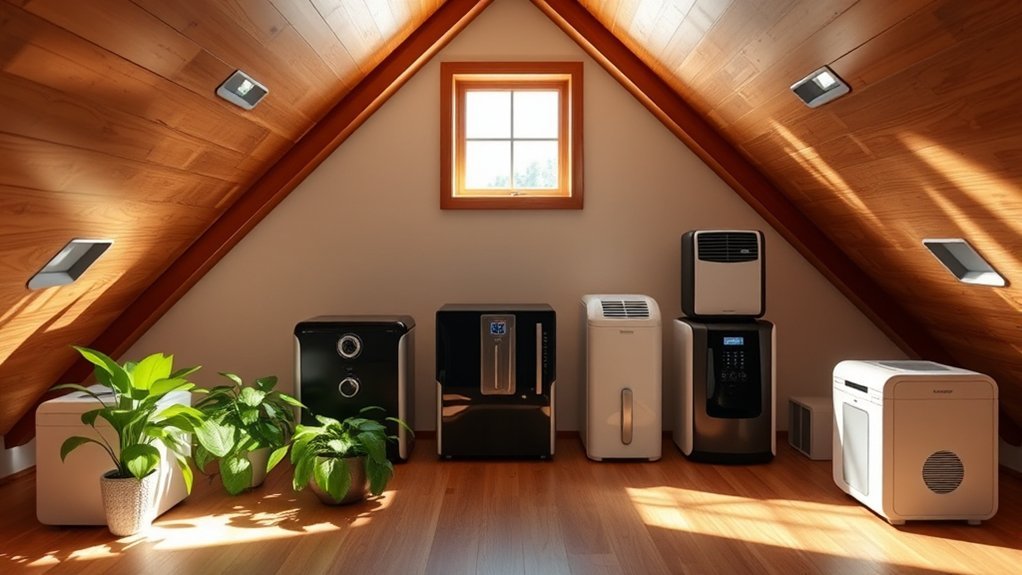
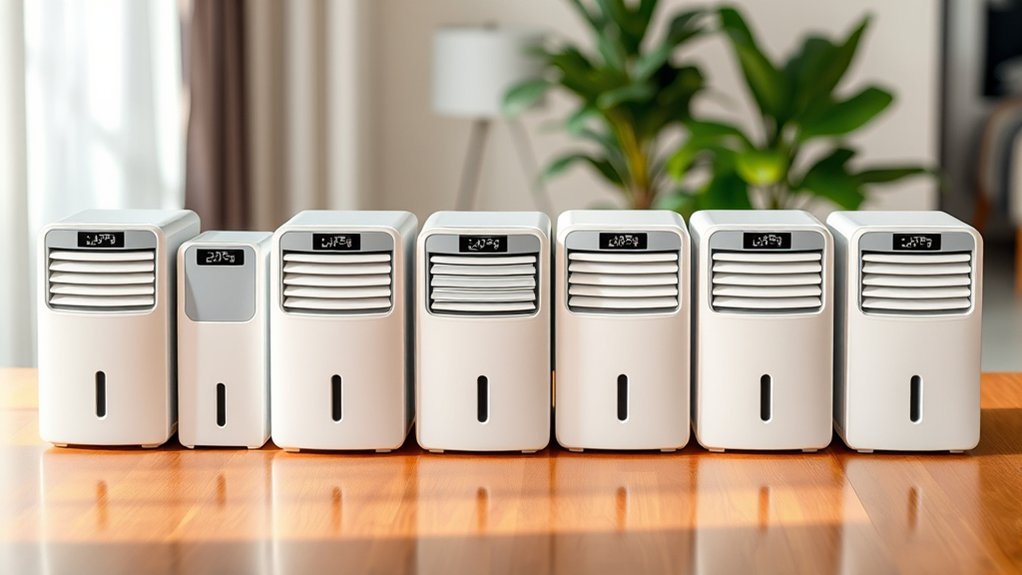
A basement shower can add a large burst of moisture to an area that may already feel damp. The best dehumidifier for a basement shower depends on whether you need to dry a small enclosed bathroom or control humidity across the wider basement. For a large or consistently damp area, prioritize a compressor dehumidifier with a clearly stated pint-per-day capacity and continuous drainage. Compact semiconductor models can help in a warm, small shower room, but they are not substitutes for a full-size basement unit.
Quick verdict
- Best Overall: The 2500 Sq.Ft Dehumidifier with Smart Humidity Control offers the strongest listed moisture-removal rate and is the best fit for a damp basement.
- Best for a Small Basement Bathroom: The KeepGlad 98OZ Dehumidifier combines a compact design, humidity display, and drain-hose option.
- Best Compact Continuous-Drain Pick: The Levoair 2000ml Dehumidifier is easy to place near a suitable drain in a small, warm shower room.
Quick Comparison
| Product | Best For | Listed Removal Rate | Drainage | Main Limitation |
|---|---|---|---|---|
| 2500 Sq.Ft Smart Dehumidifier | Full basement or very damp area | Up to 32 pints per day | Tank or gravity drain hose | Needs a suitable downhill drain for continuous use |
| KeepGlad 98OZ Dehumidifier | Small basement bathroom | Up to 40 oz per day under stated test conditions | Tank or drain hose | Not sized for heavy moisture across a full basement |
| Levoair 2000ml Dehumidifier | Compact, warm shower room | Up to 35 oz per day under stated test conditions | Tank or 5 ft drain hose | Performance drops in cooler conditions |
2500 Sq.Ft Dehumidifier with Smart Humidity Control
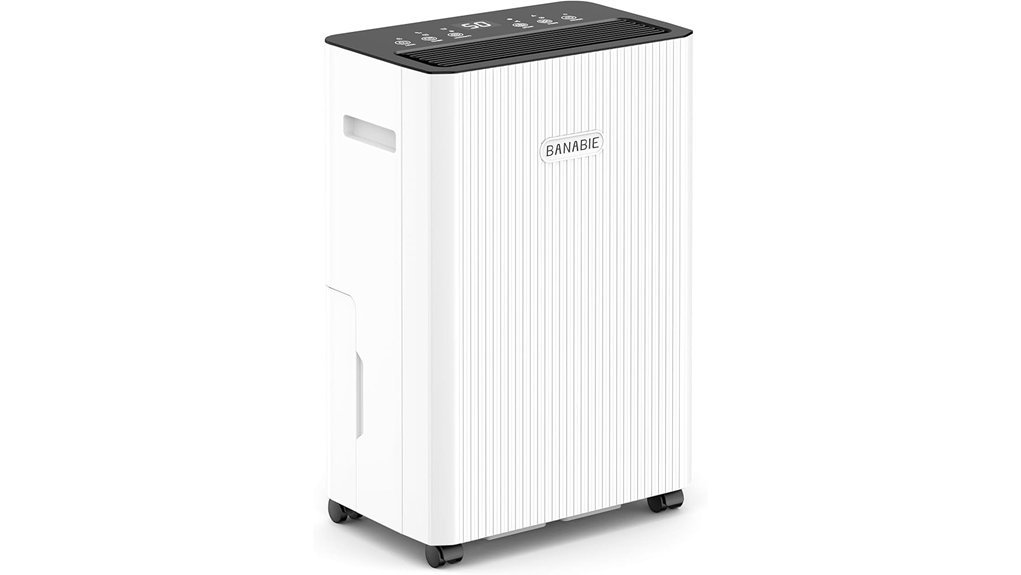
This 2,500 sq. ft. dehumidifier is the strongest match for a basement that stays damp before and after shower use. The product listing rates it to remove up to 32 pints of moisture per day and includes adjustable humidity control, a 24-hour timer, a washable filter, and a drain hose. Those features make it more suitable than a mini semiconductor unit for controlling moisture beyond the shower room itself.
The unit can collect water in its 2.5-liter tank or drain continuously through a gravity-fed hose. Wheels and handles make it easier to reposition, while the full-tank shutoff helps prevent overflow when manual drainage is used.
Best For: Damp basements, open basement layouts, laundry areas, or households that need meaningful moisture removal after frequent showers.
Why You’ll Like It: It combines the highest listed extraction rate in this guide with automatic humidity control and low-maintenance drainage.
Who Should Avoid It: Buyers who only need occasional moisture control in a tiny bathroom may find a full-size unit larger than necessary.
Pros:
- Higher Capacity: Listed to remove up to 32 pints per day, making it the most credible option here for a damp basement.
- Automatic Control: Smart humidity sensing can cycle the unit as conditions change.
- Flexible Drainage: Supports both tank collection and continuous gravity drainage.
- Portable Design: Wheels and handles help with movement between basement areas.
Cons:
- Drain Placement Matters: A gravity hose must run downhill without kinks to a suitable drain.
- Tank Needs Attention: The 2.5-liter tank may fill quickly if the hose is not used.
- Large Footprint: It takes more floor space than compact countertop models.
KeepGlad 98OZ Dehumidifier for Home and Basement
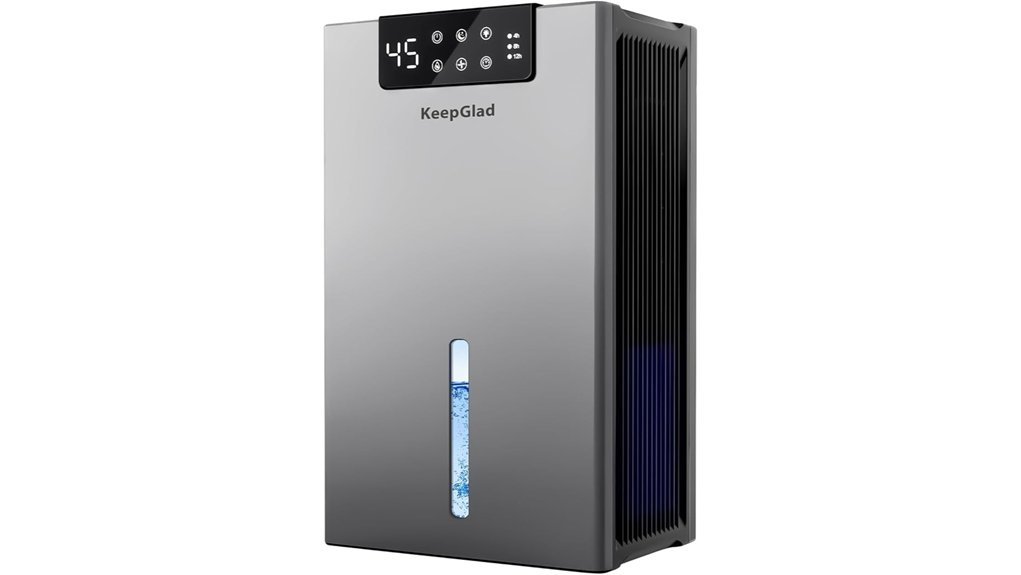
The KeepGlad 98OZ Dehumidifier is a compact option for a small basement bathroom where moisture is concentrated near the shower. Its listing states a maximum removal rate of up to 40 ounces per day under favorable test conditions. That is useful for light to moderate moisture in a warm enclosed room, but it is far below the capacity normally expected from a compressor dehumidifier for an entire damp basement.
A digital humidity display, adjustable settings, timer, washable filter, full-tank shutoff, and drain-hose option make it easier to manage than a basic mini model. The large 98-ounce tank also reduces how often it needs emptying when continuous drainage is not practical.
Best For: Small basement bathrooms, powder rooms, or laundry corners where a compact unit and drain hose are more important than full-basement capacity.
Why You’ll Like It: The display and drain option make day-to-day humidity monitoring and water management simple.
Who Should Avoid It: Do not choose it as the only moisture-control device for a large, cold, or persistently wet basement.
Pros:
- Large Tank for Its Class: The 98-ounce reservoir can run longer between manual emptying.
- Humidity Display: Lets you check the room reading without a separate basic gauge.
- Continuous Drain Option: Helps reduce daily maintenance when a suitable drain is nearby.
- Compact Placement: Easier to fit in a small bathroom than a full-size compressor unit.
Cons:
- Modest Extraction: Up to 40 ounces per day is not enough for heavy whole-basement moisture.
- Condition-Sensitive: Semiconductor dehumidifiers generally work best in warmer, humid rooms.
- Marketing Coverage Needs Context: Actual results depend more on moisture load, temperature, airflow, and room enclosure than the advertised square-foot figure alone.
Small Portable Dehumidifier with Drain Hose (2000ml)
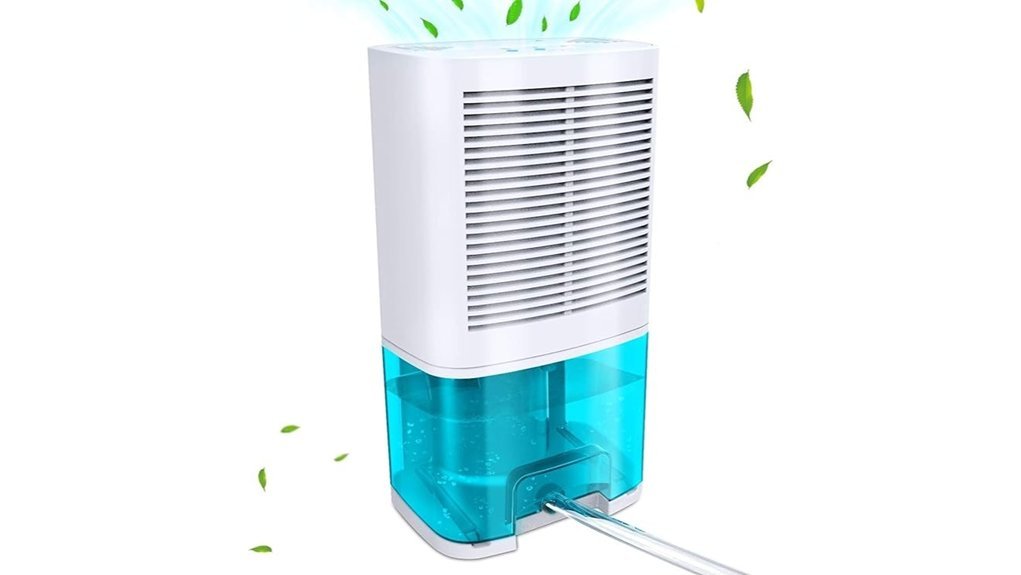
The Levoair 2000ml portable dehumidifier is designed for small enclosed spaces and includes a 5-foot drain hose. The listing states that it can collect up to 35 ounces of water per day at 86°F and 80% relative humidity. Because that figure is measured in warm, very humid conditions, expect less extraction in a cool basement.
Its 2-liter tank, automatic shutoff, light 5-pound body, and hose connection make it convenient for a small basement shower room with limited floor space. It can run without frequent tank emptying when the hose has a clear downhill path to a floor drain, sink, or other approved drain point.
Best For: A compact, warm basement bathroom where the shower is the main humidity source and a gravity drain is available.
Why You’ll Like It: It is easy to carry, simple to operate, and includes continuous drainage in a small form.
Who Should Avoid It: Skip it for cold basements, visible wall dampness, seepage, or whole-room humidity that remains high for long periods.
Pros:
- Drain Hose Included: Supports longer operation without repeatedly emptying the tank.
- Compact and Portable: Weighs about 5 pounds and has a narrow footprint.
- Auto Shutoff: Stops collection when the tank is full during manual-drain use.
- Low Power Design: Uses semiconductor technology rather than a large compressor.
Cons:
- Low Capacity for a Basement: Its best-case daily extraction is only about 35 ounces.
- Warm-Weather Performance: The stated removal rate is based on high temperature and humidity.
- Gravity Drain Only: The hose will not move water uphill like a built-in pump.
Factors to Consider When Choosing a Dehumidifier for a Basement Shower
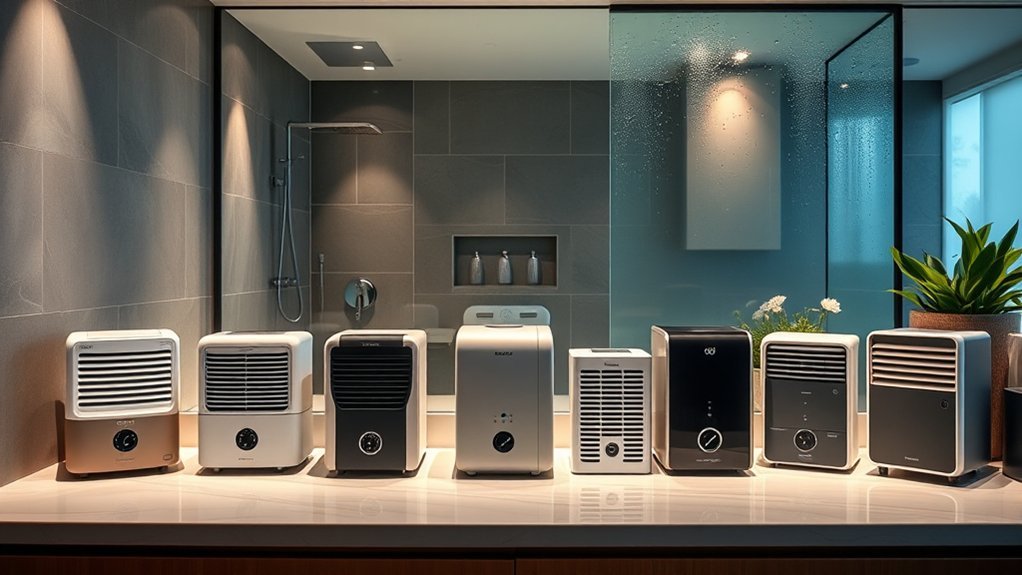
A basement shower creates short, intense humidity spikes. The right unit must match the size and dampness of the space, not just an advertised coverage number. Use the points below to compare the three remaining options.
Moisture Removal Capacity
Compare the amount of water a unit can remove in 24 hours. A full-size compressor model rated in pints per day is usually the better choice for a damp basement. Compact semiconductor models rated in ounces per day are better suited to a small, warm, enclosed bathroom with light to moderate moisture. Do not treat a 35- or 40-ounce daily rate as equal to a 30-pint unit.
Room Size and Moisture Load
Square-foot coverage is only a starting point. Consider whether the shower room has a door, whether the basement has seepage or condensation, how often the shower is used, and whether an exhaust fan vents outdoors. A mini unit may help a small bathroom, while a larger basement often needs a compressor dehumidifier that can move more air and remove substantially more water.
Basement Temperature
Cool air holds less moisture, and small semiconductor units often lose effectiveness as temperature drops. For a cool basement, check the listed operating-temperature range and look for automatic defrost on compressor models. If frost forms on the coils, moisture removal will fall until the unit defrosts.
Maintenance and Drainage Options
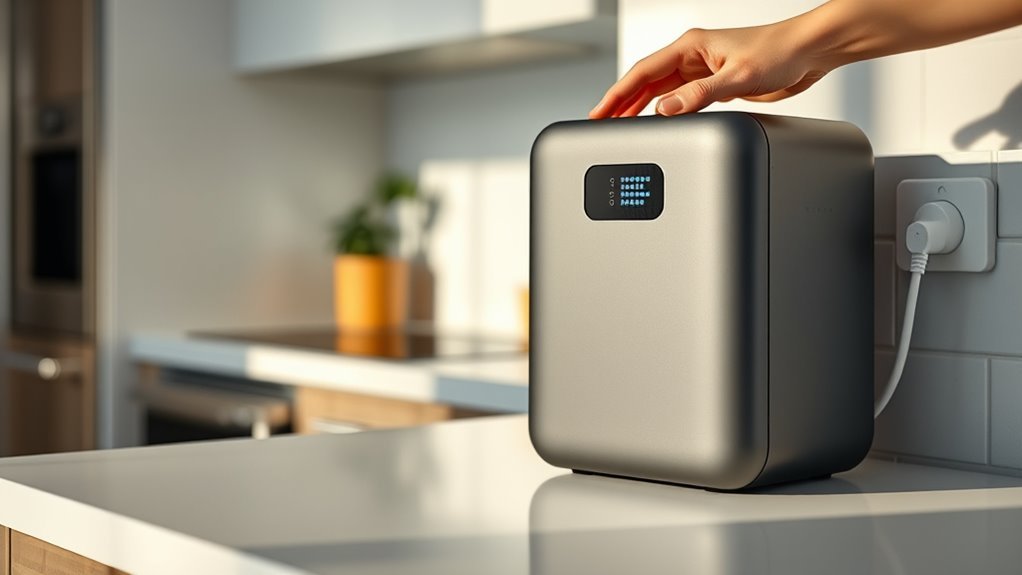
Continuous drainage is valuable near a basement shower because the tank can fill quickly after repeated use. A gravity hose must run steadily downhill without loops, kinks, or a submerged end. If the drain is higher than the appliance, choose a model with a built-in pump instead. Also clean the filter, tank, air inlet, and outlet as directed by the manufacturer.
Noise Level and Placement
Place the unit where air can circulate around the intake and outlet. Do not hide it behind towels, cabinets, or shower curtains. A compact model may be quieter, but low noise should not come at the cost of inadequate extraction. For a frequently used basement shower, capacity and drainage usually matter more than a very low decibel claim.
Electrical and Water Safety
Keep the appliance, plug, and extension connections away from water and direct spray. Use a stable floor or shelf outside the wet zone, follow all clearance instructions, and use an outlet protected for bathroom or basement use. Do not operate a unit with a damaged cord, loose plug, cracked tank, or leaking drain connection.
Before you buy
- Measure the shower room and the total basement area you want to control.
- Check humidity before and after shower use with a hygrometer.
- Choose pints per day for a damp basement, not square feet alone.
- Confirm the operating-temperature range for your basement.
- Plan a safe drainage route before relying on continuous drain mode.
- Use bathroom ventilation as the first line of moisture control when available.
Frequently Asked Questions
How Often Should I Empty the Dehumidifier’s Water Tank?
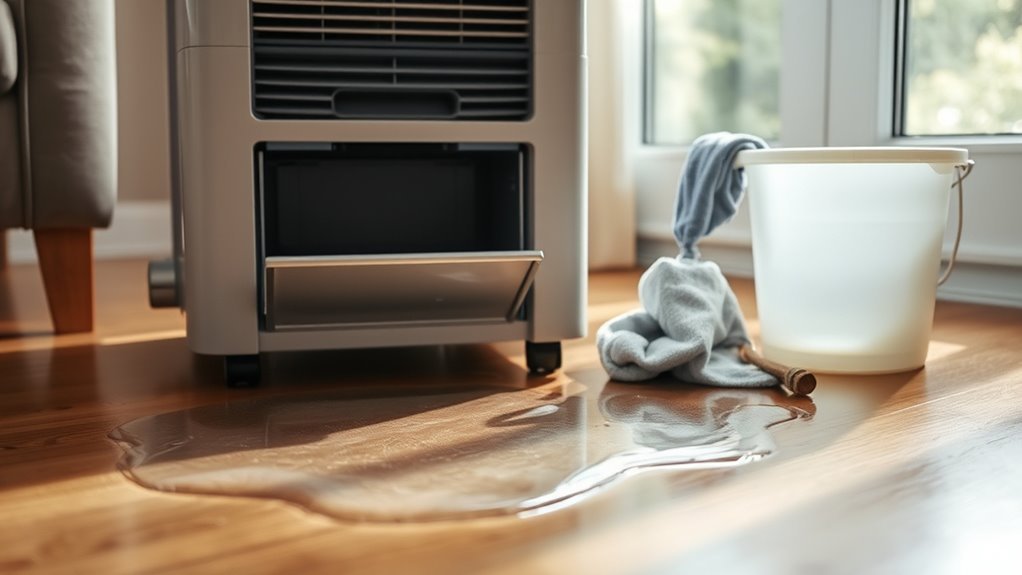
Empty it whenever the full-tank indicator turns on or the unit stops. In a humid basement shower room, that may be daily or more often for a small tank. Continuous drainage can reduce this task, but inspect the hose regularly for kinks, leaks, or blockages.
Can a Dehumidifier Remove Mold?
No. A dehumidifier can lower humidity and make conditions less favorable for new mold growth, but it does not remove existing mold or repair the moisture source. Clean affected materials properly and correct leaks, seepage, failed ventilation, or other water problems.
What Humidity Level Should I Target?
A practical target is generally between 30% and 50% relative humidity, while keeping the area below 60%. Avoid setting the unit unnecessarily low because that can waste energy and may make the room uncomfortable.
Should I Run the Dehumidifier During a Shower?
Follow the manufacturer’s placement and electrical-safety instructions. The unit should remain outside the shower and splash zone. An exhaust fan vented outdoors should handle steam at the source, while the dehumidifier can help lower the remaining room humidity before and after use.
Is a Mini Dehumidifier Enough for a Basement Shower?
It may be enough for a small, warm, enclosed bathroom with light moisture and good ventilation. It is usually not enough for a large, cold, very damp, or open basement. In those conditions, choose a compressor model with a clearly stated pint-per-day capacity.
How Can I Compare Energy Use?
Compare the listed daily removal capacity with power consumption, and look for a current ENERGY STAR certification when energy efficiency is a priority. A low-watt mini unit may use less power but can run much longer and still remove far less water than a correctly sized compressor model.
Conclusion
For most damp basements with a shower, the 2500 Sq.Ft Dehumidifier with Smart Humidity Control is the strongest choice because it has a meaningful 32-pint daily rating and continuous drainage. The KeepGlad 98OZ and Levoair 2000ml models make more sense for a small, warm, enclosed bathroom where moisture is lighter and space is limited.
Choose based on daily extraction, basement temperature, drainage access, and actual humidity readings. Pair the dehumidifier with outdoor-vented bathroom exhaust, prompt leak repairs, and safe electrical placement for better long-term moisture control.