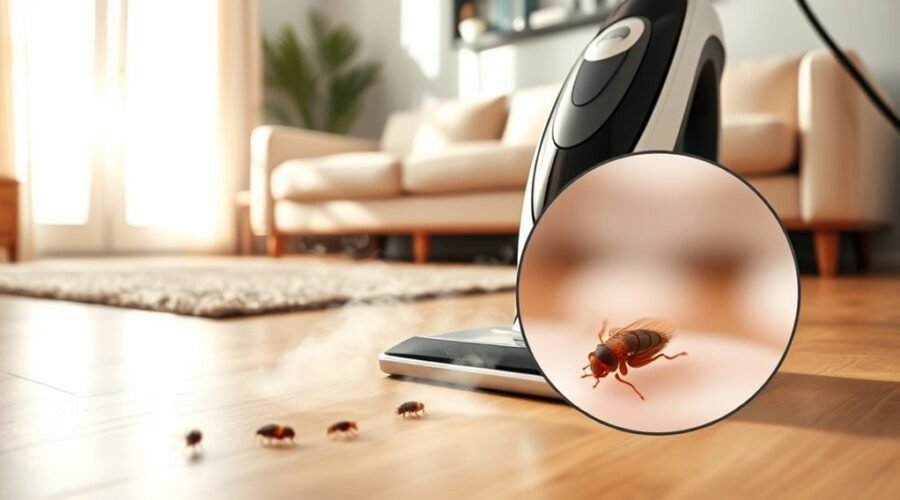
A steam mop can kill fleas, but only under specific conditions. Heat must be high enough, and contact must be long enough, to reach eggs, larvae, and adults hidden in fabric and carpet fibers. That makes technique as important as the tool itself. The real question is not whether steam works, but where it works best, and when it is not enough on its own.
Does a Steam Mop Kill Fleas?
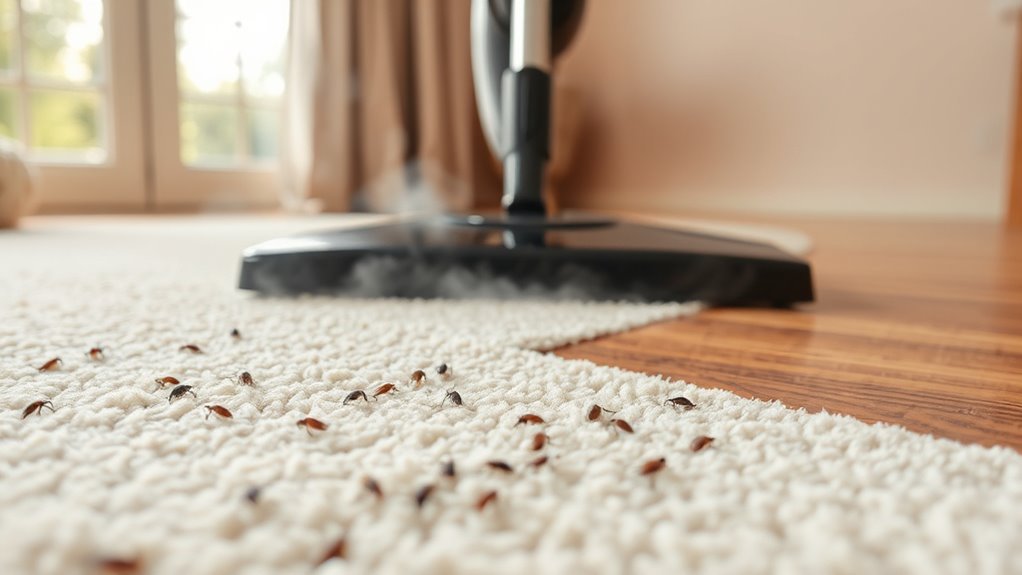
Yes—when used correctly, a steam mop can kill fleas at all life stages, including eggs, larvae, and adults, because temperatures above 200°F (93°C) rapidly denature proteins and disrupt essential physiological functions. This makes the steam mop a credible nonchemical tool in flea control.
To kill fleas reliably, surfaces must receive sustained contact; brief passes are insufficient, and a dwell time of at least 30 seconds improves efficacy. The device can reach carpets, upholstery, crevices, and baseboards where the flea life cycle often persists beyond ordinary cleaning methods.
Sustained steam contact is key; brief passes won’t do. Thirty seconds or more greatly improves flea-killing efficacy.
The EPA recognizes hot steam with soap as lethal to fleas, supporting its role in chemical-free pest management. However, liberation from infestation requires more than heat alone. Regular vacuuming, laundering bedding, and repeated treatment help prevent reinfestation and remove surviving pests from hidden reservoirs.
Used within a broader protocol, steam cleaning can sharply reduce flea populations and restore control.
How Steam Kills Fleas at Every Stage
Steam kills fleas by combining temperatures above 200°F (93°C) with moisture that penetrates carpet fibers, upholstery, cracks, and baseboards. This high heat disrupts every life stage, making steam cleaning a direct method to kill fleas without chemicals.
Eggs fail to develop above 100.4°F (38°C), so flea eggs are especially vulnerable. Larvae and pupae perish when heat and moisture penetrate deeply into concealed debris. Adults die on contact, limiting reinfestation.
- High heat denatures essential proteins
- Moisture helps penetrate deeply
- Flea eggs lose viability quickly
- Thick carpet needs dwell time
- 30 seconds improves effective treatment
Studies indicate that sustained contact can greatly reduce populations when paired with integrated control.
For households seeking liberation from infestation, steam cleaning offers an evidence-based, effective treatment that attacks fleas at their biological weak points and supports cleaner living conditions.
Best Places to Steam Clean for Fleas
Carpets and rugs are primary targets for steam cleaning because their fibers can harbor adult fleas, larvae, and eggs deep within the pile.
Upholstered furniture also warrants treatment, particularly where pets rest, since steam can penetrate soft surfaces and disrupt concealed infestations.
Baseboards and crevices should be treated as well, because high-temperature steam can reach hidden flea populations in cracks and edges where reinfestation often begins.
Carpets and Rugs
When applied to carpets and rugs, high-temperature steam can be a highly effective flea-control method because it penetrates deep into fibers, seams, and crevices where eggs, larvae, and adults often remain hidden.
In steam cleaning carpets, temperatures above 200°F can kill adult fleas and disrupt flea eggs before development resumes.
- High-temperature steam reaches hidden zones.
- Thirty seconds of dwell time improves lethality.
- Flea eggs and larvae fail above 100.4°F.
- Systematic coverage reduces missed harborages.
- Vacuuming afterward helps prevent re-infestation.
This approach offers a precise, liberation-oriented strategy for reclaiming living spaces from infestation.
Regular treatment of carpets and rugs, when paired with thorough vacuuming, can sharply reduce populations and support sustained control.
Upholstered Furniture
Upholstered furniture is a critical target in flea eradication because its soft fabrics can conceal eggs, larvae, and adult fleas deep within seams and padding. Steam cleaning upholstered furniture can serve as a decisive flea treatment when temperatures exceed 200°F, allowing heat to kill adult fleas and larvae on contact. The steam must penetrate deeply and remain in contact for at least 30 seconds to reach flea eggs hidden below the surface. Regular treatment reduces re-infestation and supports liberation from persistent pests.
| Surface | Effect | Note |
|---|---|---|
| Cushions | High mortality | Heat reaches buried stages |
| Seams | Hidden eggs exposed | Slow pass required |
| Armrests | Adult fleas killed | Repeat if needed |
Baseboards and Crevices
Baseboards and crevices are among the most important places to steam clean for fleas because these narrow spaces can shelter eggs, larvae, and other hidden life stages that routine cleaning often misses.
Steam cleaning baseboards and crevices applies high temperature directly into seams where flea eggs accumulate, disrupting development without chemical residue.
- Targets concealed flea habitats
- Reaches deep cracks effectively
- Supports non-toxic pest reduction
- Interrupts the flea life cycle
- Complements regular cleaning protocols
The EPA specifically identifies these micro-habitats as priority sites for control.
When performed regularly, steam cleaning can reduce re-infestation risk and improve household liberation from persistent fleas.
Its chemical-free action makes it suitable for environments where minimizing exposure matters, while still delivering precise, authoritative control in overlooked structural gaps.
Why Temperature and Dwell Time Matter
Temperature and dwell time are critical because steam must exceed 200°F (93°C) and remain in contact with the surface for at least 30 seconds to kill fleas in all life stages, including eggs, larvae, pupae, and adults.
Steam must exceed 200°F and contact surfaces for at least 30 seconds to eliminate fleas at every life stage.
In steam cleaning, temperature determines whether high heat can penetrate fibers and disrupt flea biology. Flea eggs can survive below 100.4°F (38°C), so insufficient heat allows development to continue and undermines control.
Dwell time is equally important because the mop must move slowly enough for heat to reach hidden pests. If the unit runs too cool or too quickly, effectiveness drops sharply.
Thicker carpets demand extended dwell time, since dense material can block rapid heat transfer.
Precise application of temperature and dwell time gives households a practical, science-based method for liberation from infestation, targeting concealed stages that otherwise evade conventional cleaning.
How to Prep Your Home for Steam Cleaning
Before steam cleaning, a room should be prepared methodically to maximize flea removal. The process begins with a vacuum thoroughly pass across floors, baseboards, and fabric surfaces, because suction removes loose debris, fleas, and eggs before heat is applied.
Furniture and smaller items should be moved to expose hidden areas and prevent untreated refuges. Machine-washable textiles, including pet bedding, should be bagged and laundered in hot water before treatment.
Non-washable soft surfaces should be positioned for access, since steam cleaning works best when the operator can reach deep into carpets and upholstered zones without obstruction. A structured sequence supports control and liberation from infestation.
- Clear walkways and corners
- Remove clutter from the floor
- Wash washable fabrics in hot water
- Set aside pet bedding separately
- Plan one side at a time
This preparation improves coverage and reduces missed sites. Cleaning alone becomes more effective when the room is organized, accessible, and scientifically managed.
How to Steam Clean Carpets and Upholstery
Carpets and upholstery should first be vacuumed thoroughly to remove loose debris and expose embedded flea eggs and larvae.
Steam cleaning is most effective when the unit delivers temperatures above 200°F and maintains at least 30 seconds of contact time over fibers, seams, cracks, and baseboards.
After treatment, the material should be allowed to dry completely, and the process should be repeated as needed to suppress re-infestation.
Preparing Carpets and Upholstery
A thorough preparation of carpets and upholstery is essential for effective steam treatment against fleas. Before steam cleaning, a vacuum should remove loose debris, fleas, and eggs from carpets and upholstery, improving heat transfer and reach. This preliminary action supports extensive coverage and reduces infestation pressure.
- Target high-risk areas: corners, edges, and furniture bases.
- Vacuum slowly to extract embedded matter from fibers.
- Clear surfaces to expose hidden infestation zones.
- Assess fabric compatibility before applying heat.
- Plan access around furniture for complete treatment.
Prepared fibers allow the steam cleaner to penetrate deeply and deliver lethal temperatures above 200°F (93°C). Such preparation strengthens control, enabling cleaner, freer living spaces.
After treatment, wash pet bedding and washable textiles in hot water to eliminate residual eggs and surviving fleas.
Steam Cleaning Techniques
Effective steam cleaning for flea control depends on maintaining a surface temperature of at least 200°F (93°C), which can kill fleas on contact when heat is delivered properly into carpet and upholstery fibers.
Vacuum first to remove loose debris and exposed pests. Then move the unit slowly, pausing at least 30 seconds over each section so heat penetrates deep into fibers. Concentrate on seams, cracks, and baseboards, where flea eggs and adults persist.
This methodical cleaning works best when surfaces receive uniform coverage. For severe infestations, repeat treatments every few days to disrupt hatching cycles.
Among treatment options, steam cleaning offers a nonchemical route to reclaim living spaces.
Drying and Follow-Up
Once steam cleaning has been applied to carpets and upholstery, the treated areas should dry completely to prevent moisture retention, which can promote odors and mold growth.
Adequate ventilation accelerates drying and lowers humidity, supporting a cleaner, more liberated domestic environment. A high-quality steam cleaner above 200°F should have delivered lethal heat, but follow-up remains essential.
- Maintain airflow with open windows or fans.
- Avoid use until surfaces are fully dry.
- Inspect seams and fibers for flea eggs.
- Vacuum after drying to remove survivors.
- Repeat checks where infestation pressure persists.
A dwell time of at least 30 seconds on contact surfaces improves penetration, yet no treatment is complete without post-cleaning surveillance.
Systematic vacuuming and drying reduce reinfestation risk and reinforce control.
How Long Steam Takes to Kill Fleas
Steam can kill fleas rapidly when it reaches sufficient temperature, with exposure above 200 °F (93 °C) destroying adult fleas in under a minute on contact.
In steam cleaning, however, contact time determines whether the heat can penetrate deeply enough into carpet fibers and upholstery to kill fleas throughout the infestation. A recommended dwell time of at least 30 seconds is generally required for reliable treatment, especially in thicker textiles where heat loss is greater.
When applied correctly, high-temperature steam can disrupt every stage of the flea life cycle, and temperatures above 100.4 °F (38 °C) prevent flea eggs completely from developing.
If the steam is too cool or moved too quickly, effectiveness drops sharply, allowing survivors to remain hidden. Precise, unhurried application consequently matters.
For liberation from recurring infestation, steam must be sustained long enough to deliver lethal heat to the full depth of the material.
How to Follow Up After Steam Cleaning
After steam cleaning, the treated area should be allowed to dry completely and ventilated well to reduce moisture retention, which can otherwise favor reinfestation. Regular follow-up is required to secure lasting liberation from fleas.
- vacuum regularly to remove flea eggs and larvae
- Wash bedding, rugs, and fabrics in hot water above 60°C
- Inspect cracks and crevices where survivors may persist
- Consider additional treatments for broad environmental control
- Schedule follow-up steam cleanings every few days in severe cases
This sequence disrupts the flea life cycle with scientific precision. Steam cleaning is only one stage; continued sanitation reduces hidden reservoirs and limits rebound.
Dry, airy surfaces are less hospitable to re-colonization, while hot water and consistent vacuuming remove residual eggs before maturation. Monitoring should remain systematic, especially in sheltered zones.
When infestations are intense, follow-up steam cleanings can improve clearance across all life stages and support durable control without delay.
When to Add Other Flea Treatments
When steam cleaning is insufficient to interrupt the flea life cycle, additional treatments should be introduced to target hidden eggs, larvae, and surviving adults. At that point, steam cleaning alone is not enough to reclaim a home from infestation.
Chemical treatments, including flea sprays, may be applied to carpets, baseboards, and upholstery after heat exposure has reduced surface populations. Concurrently, flea powders or veterinarian-approved topical products on pets can eliminate adult fleas and prevent re-infestation.
A plant-based flea and tick home treatment spray may also be used on treated surfaces to address remaining fleas and reinforce protection. In the following weeks, pet bedding should be washed regularly, and vacuuming should continue to remove newly hatched stages.
If activity persists despite these measures, professional pest control becomes the most reliable escalation. This integrated approach increases the likelihood of complete suppression and limits the recovery of the population.
Frequently Asked Questions
What Can I Mop My Floors With to Kill Fleas?
Floors may be mopped with a hot vinegar solution or steam settings above 200°F; natural remedies and essential oils are adjuncts only. Pet treatments, thorough vacuuming, and frequent cleaning improve flea suppression, but persistence remains essential.
What Kills Fleas Instantly in the House?
Steam at above 200°F kills fleas instantly on contact. Flea traps, vacuuming techniques, natural repellents, essential oils, carpet treatments, and pet grooming strengthen liberation, while broader integrated control prevents rapid reinfestation throughout the house.
How Quickly Does Steam Kill Fleas?
It kills within seconds, often under a minute at 200°F; deeper carpets may need 30 seconds. Steam temperature effects disrupt the flea life cycle, and steam mop benefits require pet safety precautions, regular steam cleaning frequency, and alternative flea treatments.
Does Dawn Soap Get Rid of Flea Eggs?
Dawn soap does not reliably eliminate flea eggs; its Dawn effectiveness is limited by soap properties and the flea lifecycle. Effective cleaning techniques and pest prevention require heat, specialized Natural remedies, and repeated treatment.
Conclusion
To sum up, steam mops can be highly effective against fleas when applied correctly. Because steam above 200°F maintained for at least 30 seconds can destroy eggs, larvae, and adults, it offers a strong nonchemical control method. One notable fact: fleas can complete a life cycle in as little as 14 days, making prompt treatment essential. For best results, thorough vacuuming, careful steam application, and follow-up measures remain critical to prevent reinfestation.