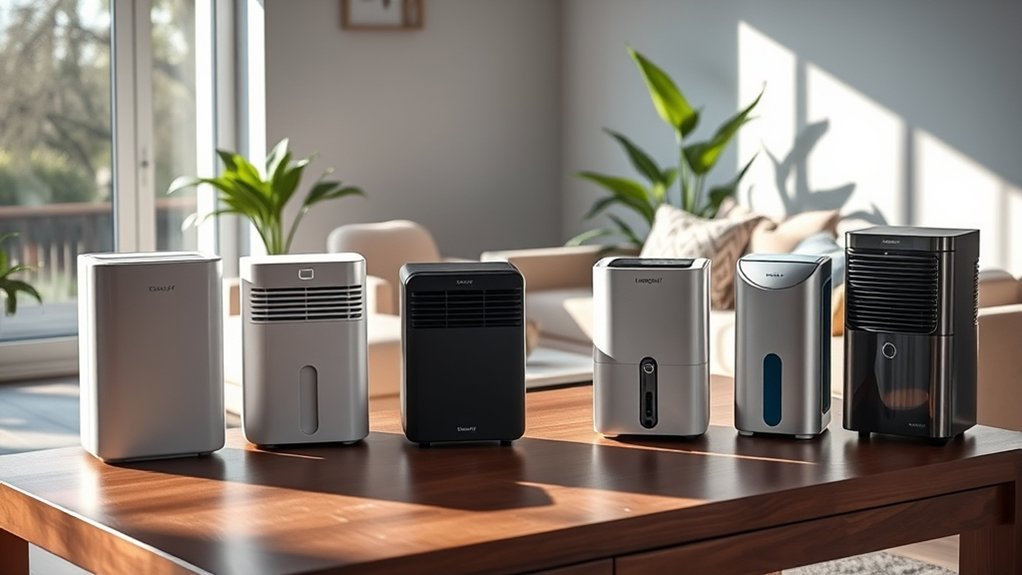
If you need a high-capacity dehumidifier for a basement, large home, garage, storage area, or restoration job, focus on moisture-removal capacity, drainage, noise, and the conditions used for the rating. This updated 2026 guide compares compressor-based models that advertise roughly 80 to 180 pints per day, but those figures are not all measured under the same temperature and humidity conditions. AEOCKY offers a strong all-around balance, avylo and DECIUU add pump drainage, Vellgoo targets very large residential spaces, and ALORAIR is built for commercial drying and restoration work.
Affiliate disclosure: This article contains Amazon affiliate links. We may earn a commission from qualifying purchases at no extra cost to you.
Important rating note: Pint-per-day figures are not always measured under the same temperature and humidity conditions. Compare condition-matched standardized or AHAM figures when available, not only the largest “maximum” or saturation claim.
How we compared: We looked at advertised moisture-removal capacity and its stated test conditions, drainage method, coverage claim, humidity controls, defrost and restart features, and how clearly each listing explains its specifications. This is a specification-based comparison and does not claim hands-on testing.
Quick Verdict
- Best overall balance: AEOCKY 105 Pint for efficient large-space control and continuous gravity drainage.
- Best residential option with a pump: avylo 90 Pint for draining upward when a floor drain is unavailable.
- Highest residential maximum claim: Vellgoo Max 140 Pint for severe humidity in very large areas.
- Best high-lift residential pump: DECIUU with Pump for a listed pump lift up to 16.4 feet.
- Best commercial pick: ALORAIR Storm LGR Extreme for restoration, crawl spaces, and job-site drying.
Quick Comparison of High-Capacity Dehumidifiers
The figures below are manufacturer or Amazon listing claims and may use different test conditions. Confirm the selected variant, minimum operating temperature, included hose, pump lift where applicable, and warranty before ordering.
| Product | Maximum Claim | Coverage Claim | Drainage | Best For | Amazon |
|---|---|---|---|---|---|
| AEOCKY | 105 pints/day | Up to 6,000 sq. ft. | Tank or gravity hose | Efficient everyday large-space use | Check Product Details |
| avylo | 90 pints/day (listing maximum) | Up to 5,000 sq. ft. | Tank, gravity hose, or pump | Basements without a nearby floor drain | Check Product Details |
| Vellgoo Max | 140 pints/day at 95°F/95% RH | Up to 6,000 sq. ft. | Tank or gravity hose | Severe residential humidity | Check Product Details |
| DECIUU with Pump | 100 pints/day at 95°F/90% RH | Up to 5,000 sq. ft. | Tank, gravity hose, or 16.4-ft pump lift | High-lift residential drainage | Check Product Details |
| Waykar | 80 pints/day at 95°F/90% RH | Up to 5,000 sq. ft. | Tank or gravity hose | Large basements and open rooms | Check Product Details |
| Gasbye | 115 pints/day (seller maximum) | Up to 4,500 sq. ft. | Tank or gravity hose | Quiet large-room moisture control | Check Product Details |
| DECIUU 100 Pint | 100 pints/day at 95°F/90% RH | Up to 5,000 sq. ft. | Tank or gravity hose | Efficient continuous gravity drainage | Check Product Details |
| Ludatido | Up to 80 pints/day | Up to 5,000 sq. ft. | 6.5L tank or gravity hose | Buyers who want a larger tank | Check Product Details |
| MEPTY | 100 pints/day | Up to 6,000 sq. ft. | Tank or gravity hose | Simple controls and large coverage claim | Check Product Details |
| ALORAIR Storm LGR Extreme | 180 pints saturation at 90°F/90% RH; 85 pints AHAM at 80°F/60% RH | Up to 2,300 sq. ft. | Built-in pump | Commercial drying and restoration | Check Product Details |
Listing consistency note: Some Amazon pages show generic product-detail fields that conflict with the selected variant title or feature bullets. Where that happens, treat the headline figures as seller claims and confirm the exact selected model before ordering.
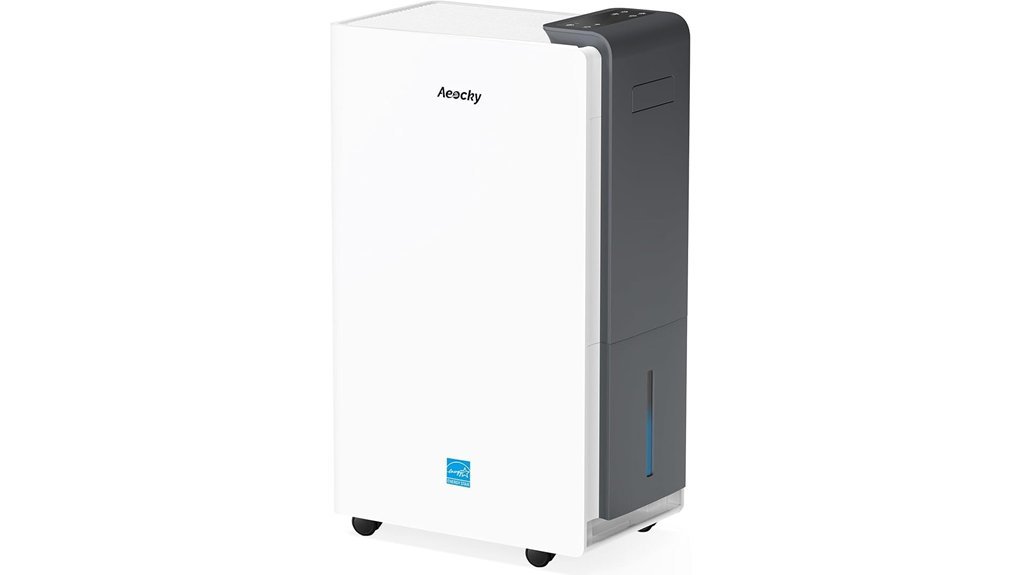
AEOCKY 6000 Sq.Ft Energy Star Dehumidifier with Drain Hose
Best Overall Balance
AEOCKY’s large-space model is a strong all-around choice for basements, living areas, and other damp rooms. The listing claims up to 105 pints per day and coverage up to 6,000 sq. ft., with ENERGY STAR Most Efficient 2024 recognition. Its humidistat can maintain a selected target, while Auto, Constant Humidity, Continuous, Smart Drying, and Sleep modes make it easier to match the unit to different conditions.
Best For: Buyers who want efficient large-space dehumidification without paying for a built-in pump they may not need.
Why You’ll Like It: It offers a useful mix of capacity, multiple operating modes, continuous gravity drainage, and a seller-published operating-noise range of 43 to 48 dB.
Who Should Avoid It: Homes that need water pumped upward to a sink or window rather than drained downhill.
Pros:
- High maximum removal and coverage claims for large residential spaces.
- ENERGY STAR Most Efficient 2024 listing.
- Multiple modes, intelligent humidistat, and included drain hose.
Cons:
- No built-in pump is listed.
- Maximum capacity is based on high temperature and humidity conditions.
- A large compressor unit still needs clear airflow space and routine filter cleaning.
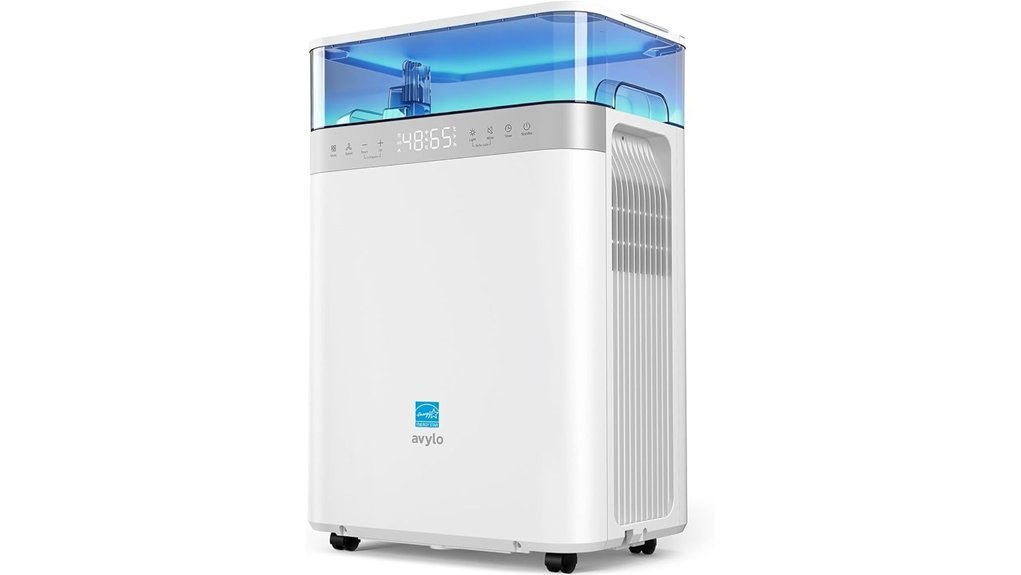
avylo Dehumidifier for Basement with Pump, 90 Pint/D
Best Residential Pick with a Pump
The avylo 90 Pint model stands out when gravity drainage is difficult. Its listing advertises up to 90 pints per day, coverage up to 5,000 sq. ft., ENERGY STAR Most Efficient 2025, and three drainage choices: a 2.11-gallon top-mounted tank, a gravity hose, or a built-in pump listed for up to 15 feet of lift. Automatic shutoff, auto defrost, humidity sensing, and casters support low-maintenance basement use.
Best For: Large basements where collected water must be moved upward or across the room to a sink, window, or utility drain.
Why You’ll Like It: The listed 15-foot pump lift reduces placement limits, and the larger top-mounted tank is easier to access than many rear or lower tanks.
Who Should Avoid It: Buyers with an easy floor-drain setup who do not need the added pump hardware.
Pros:
- Built-in pump with up to 15 feet of listed lift, plus gravity and tank drainage.
- ENERGY STAR Most Efficient 2025 listing.
- Large tank, automatic controls, and mobile design.
Cons:
- Pump tubing needs careful routing to prevent leaks or kinks.
- More components can mean more setup than a gravity-drain model.
- The selected listing title says up to 5,000 sq. ft., while a generic Amazon detail field currently shows 4,500 sq. ft.; confirm the selected variant.
Vellgoo Max 140 Pint Energy Star Dehumidifier
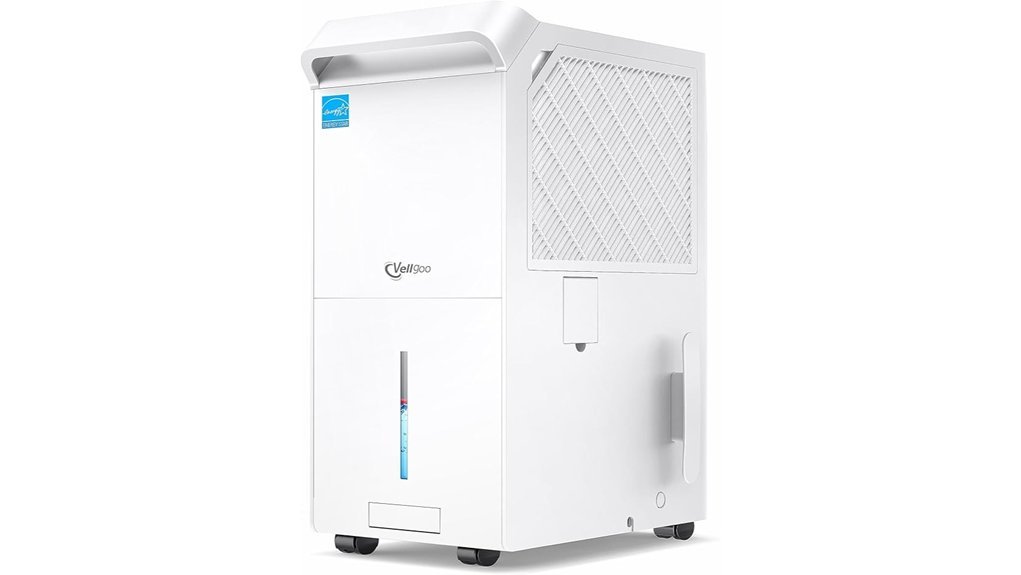
Highest Residential Maximum Claim
The Vellgoo Max is aimed at large basements, garages, and homes with severe moisture problems. Its current listing advertises up to 140 pints per day at 95°F and 95% relative humidity and coverage up to 6,000 sq. ft. It also lists ENERGY STAR Most Efficient 2025, automatic defrost, humidity control, auto restart, a timer, sleep mode, and child lock. The included drain hose supports gravity drainage for longer unattended runs.
Best For: Large residential areas with persistent humidity and a nearby floor drain.
Why You’ll Like It: It combines one of the highest residential maximum-capacity claims in this roundup with energy-focused controls and continuous drainage.
Who Should Avoid It: Buyers with a small room, light seasonal dampness, or no practical route for a gravity drain hose.
Pros:
- Very high maximum moisture-removal claim for demanding residential spaces.
- ENERGY STAR Most Efficient 2025 listing and automatic humidity control.
- Drain hose, auto restart, defrost, timer, sleep mode, and child lock.
Cons:
- The 140-pint maximum is measured at 95°F and 95% RH and should not be compared directly with lower-temperature standardized or AHAM figures.
- Large capacity can be unnecessary for smaller rooms.
- Gravity drainage requires a lower drain point and proper hose slope.
DECIUU 100 Pint Dehumidifier with Pump
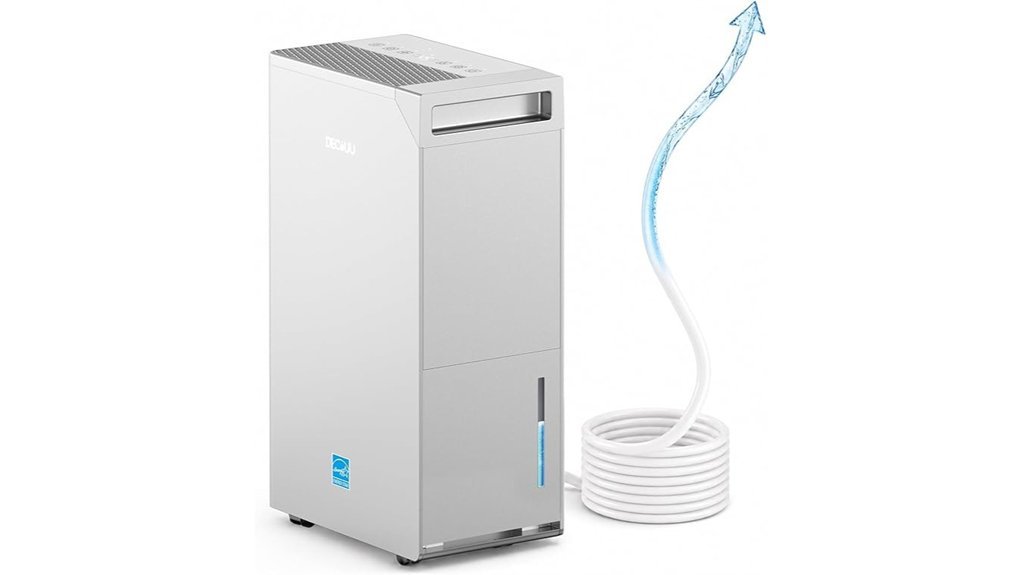
Best High-Lift Residential Pump
This DECIUU version adds a built-in pump to the brand’s 100-pint large-space platform. The listing claims up to 100 pints per day at 95°F and 90% RH, up to 70 pints at 86°F and 80% RH, coverage up to 5,000 sq. ft., and pump drainage up to 16.4 feet vertically according to the current listing. You can also use the 1.45-gallon tank, the included gravity hose, or a standard garden hose.
Best For: Basements where the only practical drain is a sink, window, or outlet above the dehumidifier.
Why You’ll Like It: The 16.4-foot listed pump lift gives you more installation flexibility than gravity-only models.
Who Should Avoid It: Buyers with a convenient floor drain who prefer fewer components and simpler maintenance.
Pros:
- Built-in pump with up to 16.4 feet of vertical lift.
- ENERGY STAR Most Efficient 2024 listing.
- Tank, pump, short gravity hose, and garden-hose drainage choices.
Cons:
- Pump setup requires careful tubing placement and periodic inspection.
- The maximum capacity is measured under hot, humid conditions.
- The pump version may cost more than the gravity-drain model.
Waykar 80 Pints Energy Star Dehumidifier
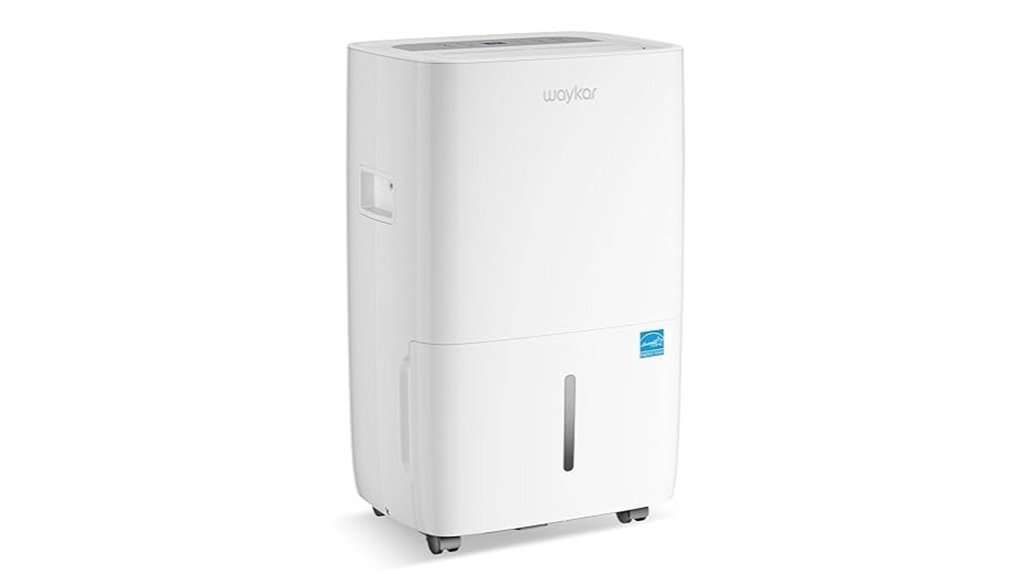
Best for Large Rooms
The Waykar 80 Pint model is designed for large basements, open living areas, garages, and similar spaces. The selected listing advertises coverage up to 5,000 sq. ft. and up to 80 pints per day at 95°F and 90% relative humidity. Some generic Amazon product-detail fields currently show different figures, so confirm that the 80-pint/5,000-sq.-ft. variant is selected before ordering. You can set a target humidity, use the 90-degree swing function to distribute airflow, and choose between the 1.14-gallon tank and continuous gravity drainage.
Best For: Buyers who want a straightforward ENERGY STAR compressor dehumidifier for a large room with a convenient drain nearby.
Why You’ll Like It: The adjustable humidistat, auto swing, frost protection, tank, and hose drainage provide flexible everyday use.
Who Should Avoid It: Anyone who needs a pump or expects the 80-pint maximum in cooler, less humid real-world conditions.
Pros:
- Large 5,000-sq.-ft. coverage claim.
- ENERGY STAR listing with tank or hose drainage.
- Adjustable humidity, auto swing, and frost protection.
Cons:
- No condensate pump is listed.
- The 80-pint maximum is tied to 95°F and 90% RH, and Amazon currently shows conflicting generic detail fields for this listing.
- The tank can fill quickly during severe humidity if a hose is not connected.
Gasbye 4500 Sq.Ft. Energy Star Dehumidifier with Drain Hose
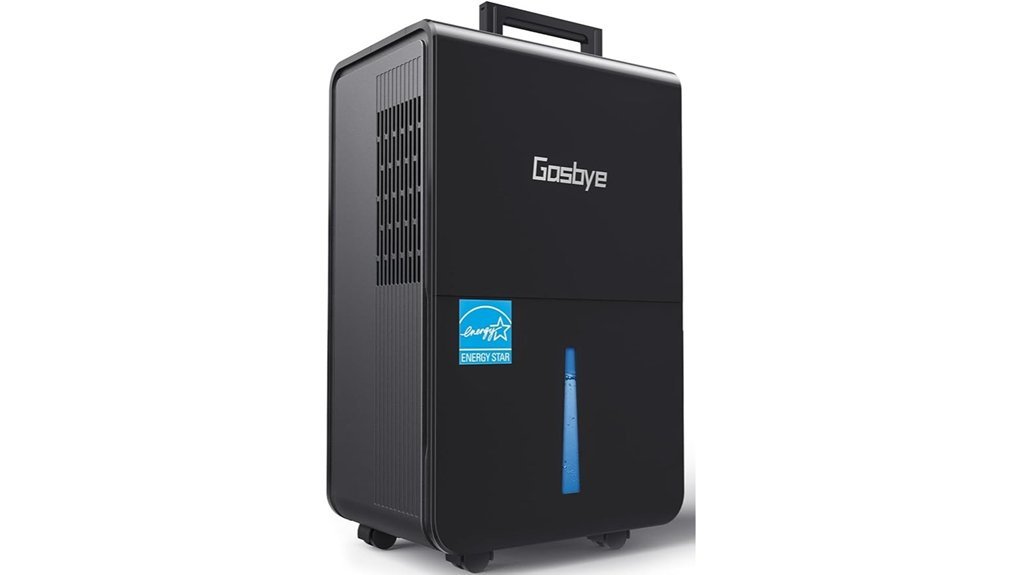
Best 2026 ENERGY STAR Option
Gasbye’s model targets basements and large rooms up to 4,500 sq. ft. The listing advertises a seller maximum of 115 pints per day, 2026 ENERGY STAR certification, a 1.7-gallon tank, a 45 dB headline noise claim, automatic shutoff and restart, and continuous drainage through a hose. A separate Amazon product-detail field currently shows 100 pints per day, so use the 115-pint figure as a seller maximum rather than a directly comparable standardized rating. Normal, turbo, comfort, and continuous modes help you trade off speed, noise, and humidity control.
Best For: Buyers who want a current-year ENERGY STAR large-room model with a relatively large tank and simple gravity drainage.
Why You’ll Like It: It balances a strong maximum claim with a 1.7-gallon tank and a seller-stated 45 dB sound level.
Who Should Avoid It: Basements that need water pumped above the unit or buyers who need a compact machine.
Pros:
- 2026 ENERGY STAR listing.
- Large tank, washable filter, and several operating modes.
- Automatic humidity control and hose drainage.
Cons:
- No built-in pump is listed.
- The listing presents a 115-pint seller maximum alongside a separate 100-pint dehumidification field, so the capacity basis is not perfectly clear.
- At roughly 43 pounds, it may be awkward to move between floors.
DECIUU 100 Pint Energy Star Dehumidifier for Basement
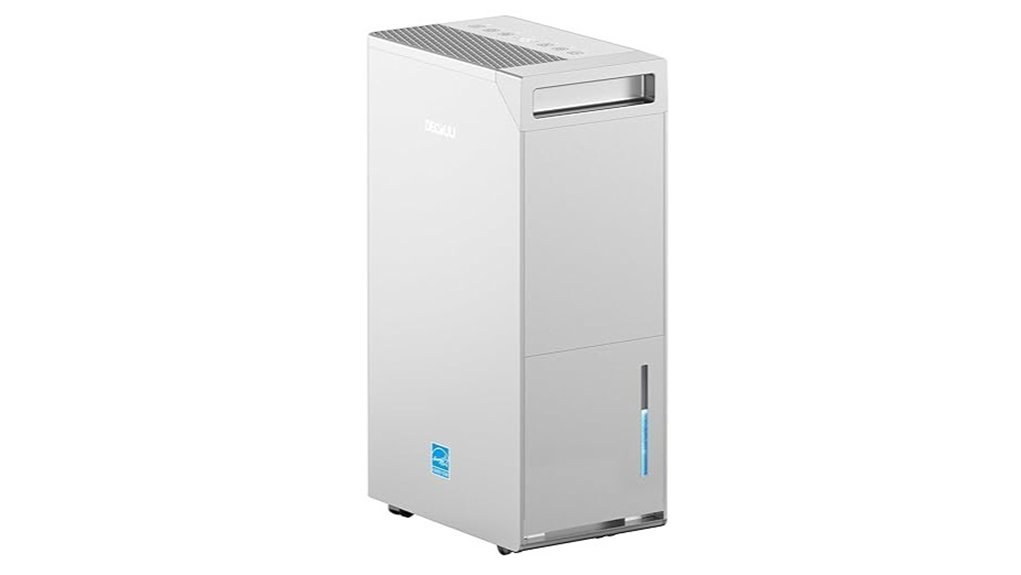
Best Efficient Gravity-Drain Pick
The DECIUU 100 Pint model is designed for large basements, garages, laundry rooms, and storage areas. Its listing states up to 100 pints per day at 95°F and 90% RH, up to 70 pints at 86°F and 80% RH, and coverage up to 5,000 sq. ft. It is listed as ENERGY STAR Most Efficient 2024 and supports a 1.45-gallon tank, an included 6.56-foot drain hose, or a standard 3/4-inch garden-hose connection.
Best For: Buyers who have a floor drain and want efficient continuous operation without paying for a pump.
Why You’ll Like It: The listing provides more than one test-condition capacity figure, making comparison easier than with a single unexplained maximum.
Who Should Avoid It: Spaces where water must travel uphill to reach the drain.
Pros:
- ENERGY STAR Most Efficient 2024 listing.
- Three non-pump collection or gravity-drain configurations.
- 35% to 80% humidity setting range, auto defrost, washable filter, and casters.
Cons:
- No built-in pump.
- The 100-pint figure is measured under hot, humid conditions.
- The tank still needs frequent attention during heavy moisture loads if no hose is used.
Ludatido 2025 Upgraded Dehumidifier, 80 Pint/day
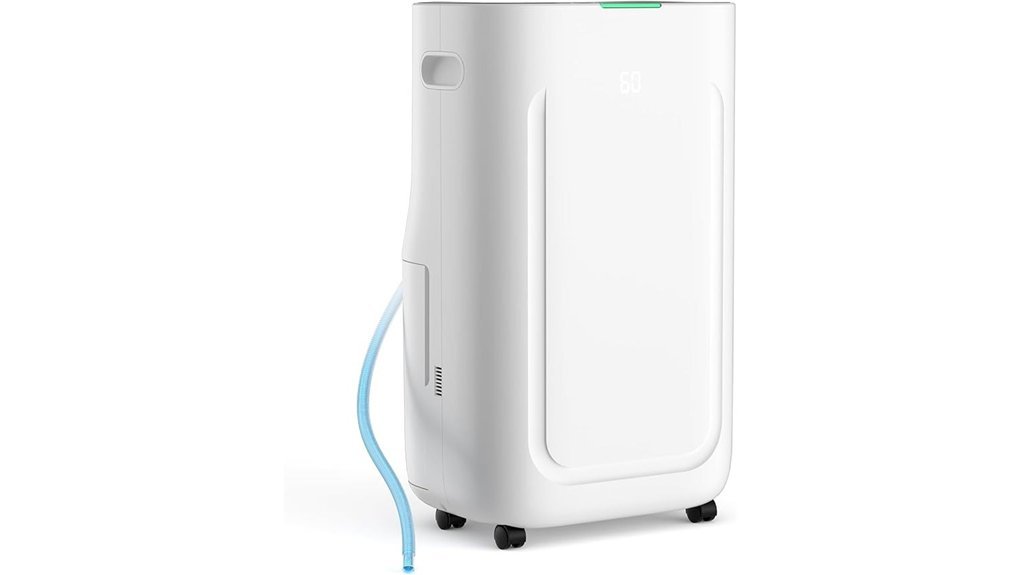
Best Large-Tank Option
The Ludatido model combines a seller-listed 80-pint maximum with a 6.5-liter (1.72-gallon) tank and a coverage claim up to 5,000 sq. ft. It includes a drain-hose connection, automatic shutoff and restart, automatic defrost, child lock, timer, washable filter, wheels, and several operating modes. The current listing contains some inconsistent wording around daily capacity and noise, so treat the headline figures as seller claims and confirm the latest specifications before buying.
Best For: Large spaces where a bigger tank is useful because continuous drainage is not always available.
Why You’ll Like It: The 6.5-liter tank can reduce how often you empty the unit compared with smaller residential tanks.
Who Should Avoid It: Buyers who want independently clear efficiency data or a pump-equipped drain system.
Pros:
- Large 6.5-liter tank and continuous gravity-drain option.
- Timer, defrost, child lock, washable filter, and casters.
- Multiple modes for humidity control and laundry drying.
Cons:
- The listing contains inconsistent capacity and noise wording.
- No built-in pump is listed.
- Coverage and maximum removal claims should be treated as approximate.
MEPTY 6000 Sq.Ft Dehumidifier with Smart Humidity Control
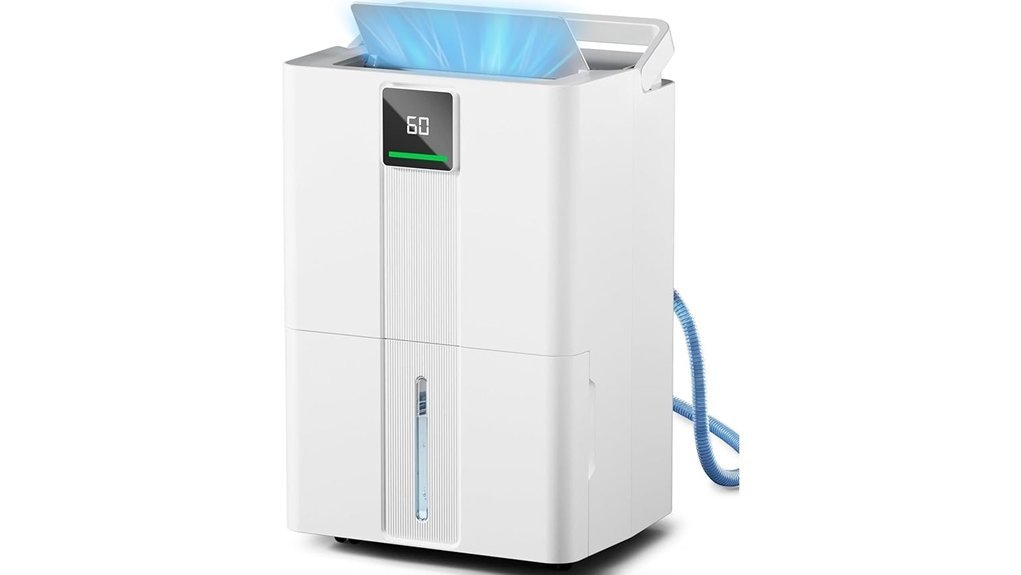
Best Easy-Read Controls
MEPTY’s model is listed for spaces up to 6,000 sq. ft. with a maximum moisture-removal claim of 100 pints per day. It includes smart humidity control, a 24-hour timer, child lock, sleep and laundry-drying modes, a two-speed fan, a three-color humidity display, casters, a removable filter, and tank or hose drainage.
Best For: Buyers who value a clear humidity display and simple mode selection in a large basement or home.
Why You’ll Like It: The color display makes it easier to check room humidity at a glance without walking up to read small numbers.
Who Should Avoid It: Buyers who need a verified pump lift, published AHAM figure, or ENERGY STAR designation.
Pros:
- Large coverage and maximum-capacity claims.
- Color humidity display, timer, child lock, and multiple modes.
- Tank and continuous gravity-drain options.
Cons:
- No built-in pump is listed.
- The listing does not present an AHAM figure in the product title.
- Continuous unattended use depends on correct hose placement.
ALORAIR Commercial Dehumidifier with Pump and Warranty
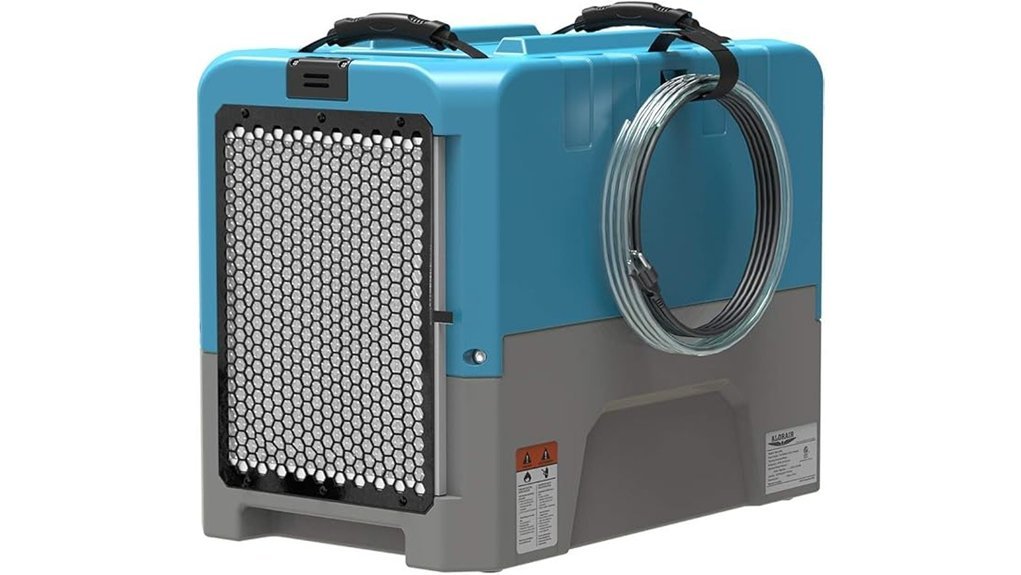
Best Commercial Dehumidifier
The ALORAIR Storm LGR Extreme is the specialist option in this roundup. Its manufacturer specifications state 180 pints per day at saturation at 90°F/90% RH and 85 pints per day at AHAM conditions of 80°F/60% RH. Those two numbers are not interchangeable, so compare only against ratings measured under the same conditions. It is built for flood restoration, crawl spaces, basements, and job sites, with a built-in pump, automatic defrost, auto restart, adjustable humidity control, and a current six-year limited warranty listed by the manufacturer, subject to its warranty terms and purchase-date requirements.
Best For: Contractors, restoration work, crawl spaces, and homeowners who need rugged continuous drying rather than a decorative living-space appliance.
Why You’ll Like It: The published AHAM rating, pump drainage, and commercial form factor make its intended use much clearer than consumer models that show only a maximum figure.
Who Should Avoid It: Bedrooms, small apartments, and buyers who prioritize light weight or furniture-like styling.
Pros:
- 85-pint AHAM rating at 80°F/60% RH and 180-pint saturation claim at 90°F/90% RH.
- Built-in condensate pump for continuous drainage.
- Commercial controls, automatic defrost, auto restart, and listed six-year limited warranty.
Cons:
- Heavier and less convenient to move than residential models.
- Commercial performance and construction can cost more.
- Its 2,300-sq.-ft. coverage claim is lower than some residential marketing claims, even though the use case is more demanding.
Factors to Consider When Choosing a High Capacity Dehumidifier
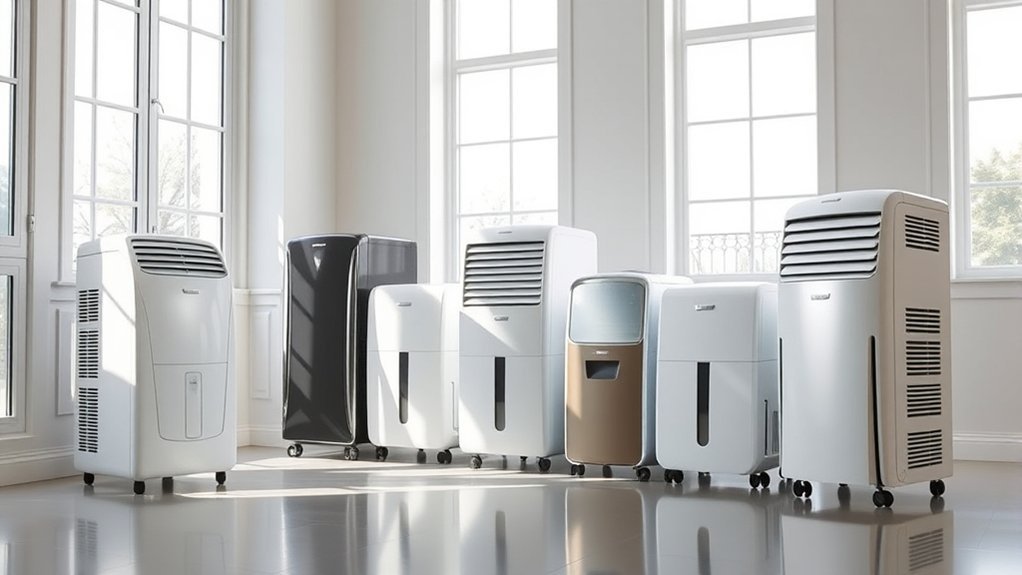
Start with the moisture problem, not the largest number on the box. A high-capacity dehumidifier should match the room’s actual dampness, temperature, drainage layout, noise tolerance, and electrical setup. The points below help you compare models that may use different rating conditions.
Moisture Removal Capacity
Moisture-removal capacity is usually stated in pints per 24 hours, but the test conditions matter. A “maximum” figure measured at 95°F and very high relative humidity or at saturation can be much higher than a standardized figure measured under cooler conditions. Current ENERGY STAR portable-dehumidifier testing uses a 65°F test condition, while commercial listings may publish a separate AHAM figure under another stated condition. For a fair comparison, compare ratings measured at the same temperature and relative humidity whenever possible. Choose more capacity for standing moisture, repeated condensation, water-damage drying, or a very large open basement; choose less for mild seasonal dampness.
Coverage Area Size
Coverage claims are useful for rough screening, but they are not a substitute for capacity and room conditions. Ceiling height, closed doors, outdoor air leakage, temperature, and the amount of moisture entering the space all affect performance. A unit advertised for 5,000 or 6,000 sq. ft. may still struggle if the space is cool, divided into many rooms, or receiving active water intrusion. Fix leaks first and use fans or open doors to improve air movement where appropriate.
Energy Efficiency Rating
Because a large dehumidifier may run for many hours, ENERGY STAR certification can reduce operating cost compared with a similar non-certified model. ENERGY STAR Most Efficient identifies qualifying top-tier products for a specific year, but the year and exact model should match the listing. Avoid unsupported promises about a guaranteed dollar amount of savings because electricity rates, humidity, runtime, and room conditions vary widely.
Drainage Options
A tank is flexible but requires manual emptying. Gravity drainage is usually the simplest choice when a floor drain sits below the outlet and the hose can slope downward without kinks. A built-in pump is worth considering when water must move upward to a sink, window, or utility drain. Check whether the pump hose and gravity hose are included, the listed lift height, and the manufacturer’s hose-size requirements.
Noise And Controls
Noise matters in bedrooms, living rooms, and home offices. Seller-stated decibel figures may be measured at a low fan setting, so expect more sound in turbo or continuous mode. Useful controls include a humidistat, auto restart after a power outage, automatic defrost, a timer, a full-tank shutoff, a child lock, and a washable-filter reminder. EPA and ENERGY STAR guidance generally places ideal indoor relative humidity around 30% to 50%. Use the lowest setting only as needed for the space, and follow building conditions and manufacturer guidance.
Before You Buy Checklist
- Confirm whether the pint rating is AHAM, standardized, high-humidity, or saturation.
- Compare pint ratings only when the stated temperature and relative-humidity test conditions are reasonably comparable.
- Measure the room and consider ceiling height, open doorways, and active moisture sources.
- Decide whether you need a tank, gravity hose, or pump.
- Check the minimum operating temperature and automatic-defrost guidance.
- Verify hose inclusion, pump lift, filter type, warranty, and current model number.
- Use a properly grounded outlet and do not use an extension cord unless the manufacturer expressly allows it.
Frequently Asked Questions
Why Do Dehumidifier Pint Ratings Vary So Much?
Because the test temperature and relative humidity can be different. A seller maximum measured in very warm, very humid air or at saturation can look much larger than a standardized figure measured under cooler conditions. Compare the stated test conditions, not just the biggest pint number.
How Often Should I Clean or Replace a Dehumidifier’s Filter?
Check the filter every two to four weeks during regular use and clean it as directed in the manual. Many large dehumidifiers use washable filters that do not need routine replacement. Replace a filter only when the manufacturer specifies a schedule or when it is damaged and an approved replacement is available.
Can I Use a High-Capacity Dehumidifier in Freezing Temperatures?
Most standard compressor dehumidifiers are not intended for freezing conditions. Low temperatures can cause frost buildup and sharply reduce moisture removal. Use the model only within its listed operating-temperature range and choose a purpose-built low-temperature or desiccant unit when the space regularly falls below that range.
What Size Drain Hose Works Best for Continuous Drainage?
Use the included hose or the exact diameter and connection type listed by the manufacturer. Some models accept a standard garden hose, while others use a smaller dedicated tube. Keep a gravity hose continuously sloped downward and check it for kinks, clogs, and leaks.
Do Dehumidifiers Increase Electricity Costs Significantly?
They add to electricity use, especially during hot and humid periods, but actual cost depends on wattage, runtime, local rates, and how much moisture enters the space. An efficient model, correct sizing, sealed air leaks, a sensible humidity target, and continuous drainage can reduce unnecessary runtime.
Is Collected Dehumidifier Water Safe to Drink or Use?
No. Do not drink dehumidifier water or use it for cooking because the tank and coils can collect dust, microorganisms, and other contaminants. Follow local rules for disposal. Where permitted, it may be used for non-edible outdoor plants or poured into an appropriate drain, but keep it away from walkways and foundations where pooling could cause slips or moisture damage.
Should I Buy a Model with a Pump?
Choose a pump model when the drain point is above the dehumidifier or when you cannot maintain a downhill hose slope. Choose gravity drainage when a reliable floor drain is nearby; it is simpler and removes one mechanical component from the system.
Conclusion
Final recommendation: Choose AEOCKY for a balanced large-space residential option when gravity drainage works. Choose avylo when you need a built-in pump, or DECIUU with Pump when its listed 16.4-foot lift better fits the drain route. Vellgoo is the high-maximum residential option, while ALORAIR is the specialist choice for restoration and commercial-style drying.
Whichever model you choose, compare rating conditions first, confirm the selected Amazon variant, verify the drain route, and check the current operating-temperature and warranty details before ordering.
The best high-capacity dehumidifier is the one that matches your moisture load and drainage layout, not simply the model with the largest advertised number. A properly sized unit with a practical drainage setup and a sensible humidity target is more useful than chasing a headline capacity figure measured under conditions your basement may never reach.