Affiliate disclosure: As an Amazon Associate, we may earn from qualifying purchases at no extra cost to you. Product specifications, sellers, and availability can change, so confirm the current Amazon listing before you buy.
Quick Verdict: Choose a continuous-drain dehumidifier by drainage setup first. A gravity drain hose works best when the unit can sit above a nearby floor drain, sink, tub, or sump. If water must move upward, a model with a built-in pump is the easier choice.
For app and voice control, the Midea Cube 20 Pint is the standout mid-size pick. For larger basements, compare the AIRPLUS 70 Pint, Yaufey 5000 Sq. Ft., and AEOCKY 7000 Sq.Ft. If gravity drainage will not work, the AEOCKY 4500 Sq.Ft with Pump is the most practical option here. For compact spaces, Levoair and Litever are easier to place.
If you want a dehumidifier that drains continuously, the best choice depends on room size, moisture load, drain location, noise needs, and whether you need app control or a built-in pump. The products below all match the continuous-drain buyer intent, but they are not interchangeable: full-size compressor models are better for larger damp rooms, while compact semiconductor models are intended for much smaller spaces. Capacity and coverage figures are manufacturer-listed and can vary with temperature and humidity, so compare the current listing and your actual room conditions before buying.
Quick Comparison: 5 Standout Continuous-Drain Dehumidifiers
This table highlights five distinct use cases: smart control, large-room capacity, quieter mid-size use, energy-focused large-space use, and pump-assisted drainage. Use the full reviews below for the remaining options and for important limitations.
| Product | Best For | Coverage / Capacity | Drainage Type | Amazon |
|---|---|---|---|---|
| Midea Cube 20 Pint | Smart mid-size rooms | Up to 1,500 sq. ft. / 20 pints | Drain hose | Check Price |
| AIRPLUS 70 Pint | Large basements and rooms | Up to 4,500 sq. ft. / 70 pints | Drain hose | Check Price |
| KNKA 2500 Sq.Ft | Quiet damp rooms | Up to 2,500 sq. ft. / 34 pints | 3.28 ft hose | Check Price |
| Yaufey 5000 Sq. Ft. | Large energy-conscious spaces | Up to 5,000 sq. ft. / up to 80 pints | 3.28 ft hose | Check Price |
| AEOCKY 4500 Sq.Ft with Pump | Basements without easy gravity drainage | Up to 4,500 sq. ft. / up to 80 pints | Built-in pump | Check Price |
Midea Cube 20 Pint Dehumidifier with Alexa Compatibility
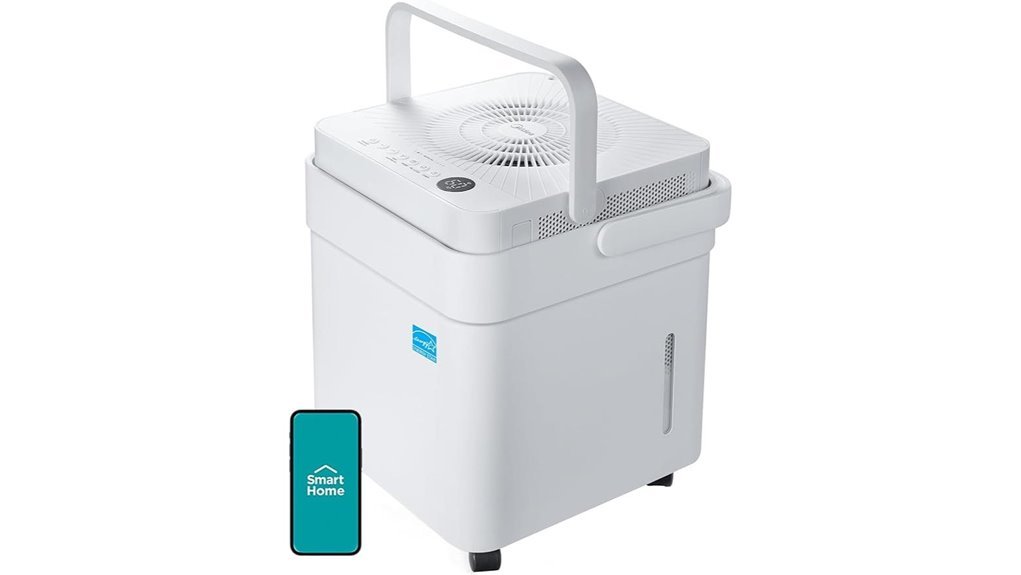
If you want a dehumidifier that can keep running with minimal hands-on upkeep, the Midea Cube 20 Pint is a strong fit. You can cover up to 1,500 sq. ft. and pull 20 pints of moisture daily while using the included drain hose for continuous runoff. Its lift-and-twist design gives you flexible placement and easier storage, and the Wi-Fi connection lets you control settings through the SmartHome app or with Alexa and Google Assistant. You’ll also get auto restart, auto defrost, a washable filter, ENERGY STAR efficiency, and quiet operation for steady use.
Why You’ll Like It: This is one of the easier options if you want smart control without buying a huge basement unit. It works well for people who want to check humidity, adjust settings, and manage moisture without constantly walking over to the machine.
Best For: Homeowners or renters who want a smart, low-maintenance dehumidifier for medium to large spaces with easy app and voice control.
Who Should Avoid It: Skip it if you need heavy-duty basement capacity or if you do not want to use Wi-Fi features.
Pros:
- Covers up to 1,500 sq. ft. and removes 20 pints of moisture per day.
- Wi-Fi enabled with Alexa, Google Assistant, and SmartHome app control.
- Includes continuous drain, washable filter, ENERGY STAR efficiency, and quiet operation.
Cons:
- 33.29-pound weight may make moving it less convenient.
- 3.2-gallon tank and larger cube design can still take up noticeable floor space.
- Best features rely on Wi-Fi and smart-home setup for full convenience.
AIRPLUS 70 Pint Dehumidifier for Home and Basement
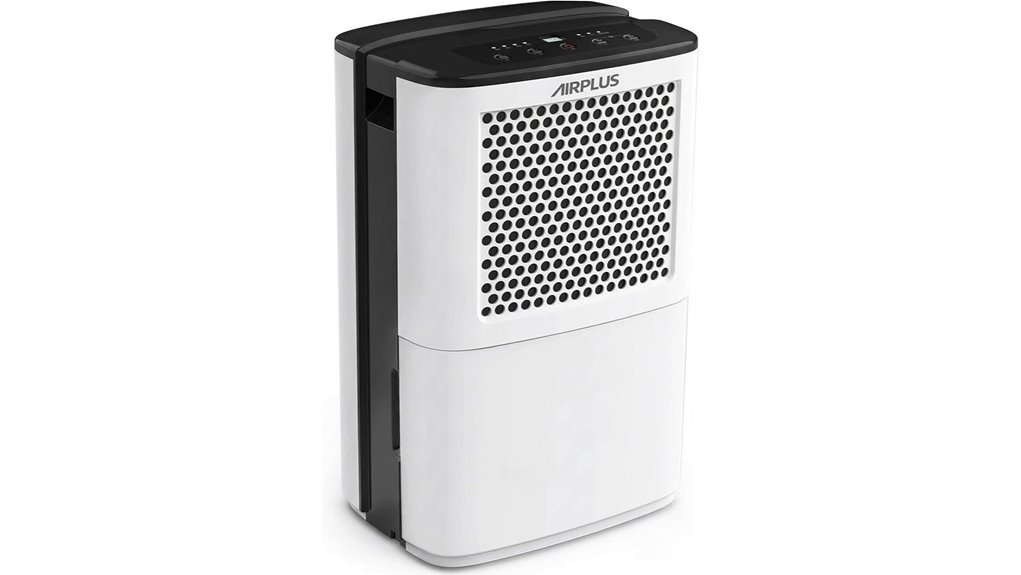
AIRPLUS’s 70-pint dehumidifier fits you best if you need steady moisture removal in large spaces. The listing rates it for up to 4,500 sq. ft. and up to 70 pints per day under high-temperature, high-humidity test conditions. Use the continuous drain hose for lower-maintenance water removal, or rely on auto shutoff when the tank fills. Dehumidification, drying, and fan modes give you a simple set of controls for basements, bedrooms, bathrooms, and other roomy indoor areas.
Why You’ll Like It: This model is built for buyers who want strong capacity without complicated controls. It makes sense when you need moisture control in a basement or open area and want a simple drain-hose setup.
Best For: Homeowners who need reliable moisture removal in large spaces like basements, bedrooms, and bathrooms, with easy operation and continuous drainage.
Who Should Avoid It: It may be too much for a small closet, tiny bathroom, or lightly damp room.
Pros:
- Covers up to 4,500 sq. ft., making it suitable for large rooms and basements.
- Supports continuous drainage and auto shutoff for convenient, low-maintenance use.
- Offers multiple modes, including dehumidification, drying, and fan-only operation.
Cons:
- May be more dehumidifier than needed for small rooms or light moisture issues.
- Requires a drain hose for the most hands-off water removal experience.
- Its larger-room design can be less convenient to move frequently than a compact unit.
KNKA 2500 Sq.Ft Dehumidifier with Drain Hose
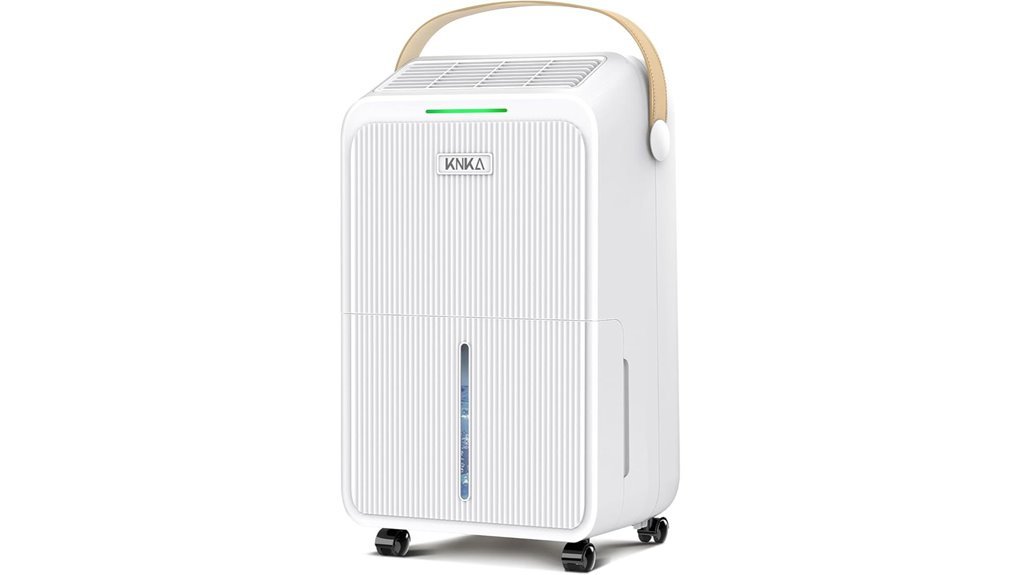
The KNKA 2500 Sq.Ft Dehumidifier is ideal for large, damp spaces you want to keep dry nonstop. You can pull up to 34 pints of moisture a day from basements, bedrooms, garages, crawlspaces, RVs, and more. Choose DEHU for 30%–80% control, DRY for clothes, or CONT for nonstop use in wet areas. Its 3L tank shuts off automatically, or you can attach the 3.28 ft hose for continuous drainage. You’ll also get quiet 37dB operation, smart humidity readings, timer control, child lock, washable filter, and easy rolling wheels.
Why You’ll Like It: The KNKA gives you a useful balance of coverage, quiet operation, portability, and continuous drainage. It is a practical choice when you want more power than a compact unit but do not need a very large 70-pint machine.
Best For: Homeowners, renters, and RV users who need a quiet, high-capacity dehumidifier for large damp spaces like basements, bedrooms, garages, and crawlspaces.
Who Should Avoid It: Avoid it if your drain point is far away, because the included hose may be too short for some layouts.
Pros:
- Covers up to 2500 sq. ft. and removes up to 34 pints of moisture per day.
- Offers flexible modes, including DEHU, DRY, and CONT, for humidity control and clothes drying.
- Includes convenient features like continuous drainage, quiet 37dB operation, smart controls, and child lock.
Cons:
- The 3L water tank may still require emptying if continuous drainage isn’t used.
- At 230 watts, it may use more energy than smaller, lower-capacity units.
- The 3.28 ft drain hose may be short for some room setups.
Yaufey 5000 Sq. Ft. Energy Star Dehumidifier
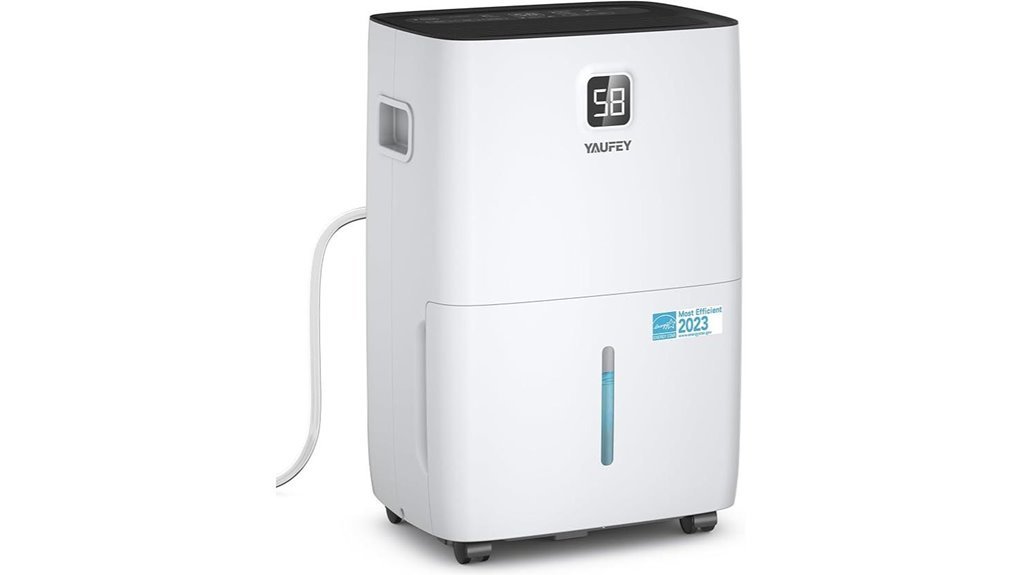
Yaufey’s 5000 sq. ft. ENERGY STAR dehumidifier is aimed at large damp spaces. The listing states up to 80 pints per day at 95°F/90% RH and 60 pints per day at 86°F/80% RH, so the moisture-removal figure depends heavily on test conditions. You get four operating modes, humidity control from 30% to 80%, and a 3.28-foot drain hose for continuous drainage. It is a strong fit when you want higher capacity with an efficiency-focused design.
Why You’ll Like It: This is a better fit for large spaces where a small dehumidifier would run too often or struggle to keep up. The combination of higher capacity, humidity control, and continuous drainage makes it easier to manage damp air with less daily effort.
Best For: Homeowners, renters, and small business users who need powerful, energy-efficient moisture removal for large spaces up to 5,000 sq. ft., especially in basements, garages, bedrooms, and living areas.
Who Should Avoid It: It may be oversized if you only need moisture control in a small bedroom, closet, or bathroom.
Pros:
- Removes up to 80 pints of moisture per day in very humid conditions, making it effective for large or damp spaces.
- Energy Star certified design can help reduce electricity use during regular operation.
- Offers smart humidity control, multiple modes, and convenient continuous drainage for low-maintenance operation.
Cons:
- Its large-capacity design may be more than needed for smaller rooms or light-duty use.
- The unit may still be bulky compared with compact dehumidifiers, despite the wheels and handle.
- Continuous operation and higher capacity can mean a higher upfront cost than basic models.
PLUSCENT 32 Pint Dehumidifier for Large Rooms
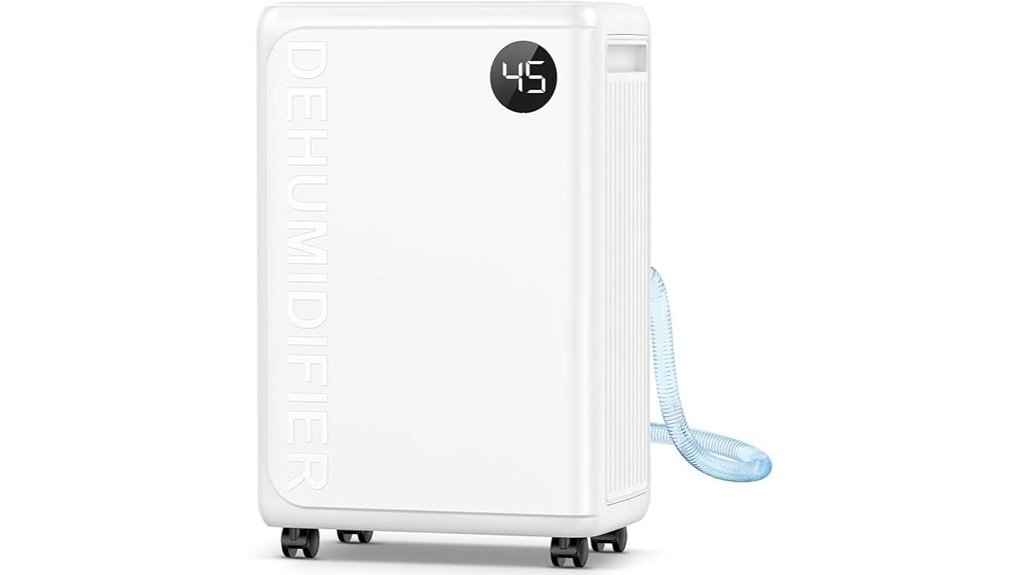
PLUSCENT’s 32-pint capacity suits rooms up to 2,500 sq. ft. according to the listing. DEHU mode handles normal humidity control, CONT is for sustained dehumidification, and DRY supports laundry drying. A 24-hour timer, auto-stop, auto-restart, and auto-defrost simplify day-to-day use. Connect the drain hose when you want continuous water removal instead of relying on the tank. Wheels, handles, a washable filter, and child-lock controls add practical convenience.
Why You’ll Like It: The PLUSCENT is easy to understand and easy to place. It is useful for buyers who want a practical dehumidifier with common convenience features instead of a complicated smart-home setup.
Best For: Homeowners or renters who need a quiet, easy-to-use dehumidifier for large spaces like basements, bedrooms, or open-concept areas.
Who Should Avoid It: Skip it if you need a pump to move water upward or if you do not have a place for gravity drainage.
Pros:
- Removes up to 32 pints of moisture per day and covers spaces up to 2,500 sq. ft.
- Offers three useful modes, a 24-hour timer, auto-stop, auto-restart, and auto-defrost.
- Includes convenient features like continuous drainage, wheels, handles, a washable filter, and child lock.
Cons:
- The 2L tank is relatively small if you choose not to use the drain hose.
- Best performance is for large indoor spaces, so it may be more than needed for small rooms.
- Requires access to a drainage setup for truly hands-off operation.
Tehanld 3000 Sq.Ft Dehumidifier with Drain Hose
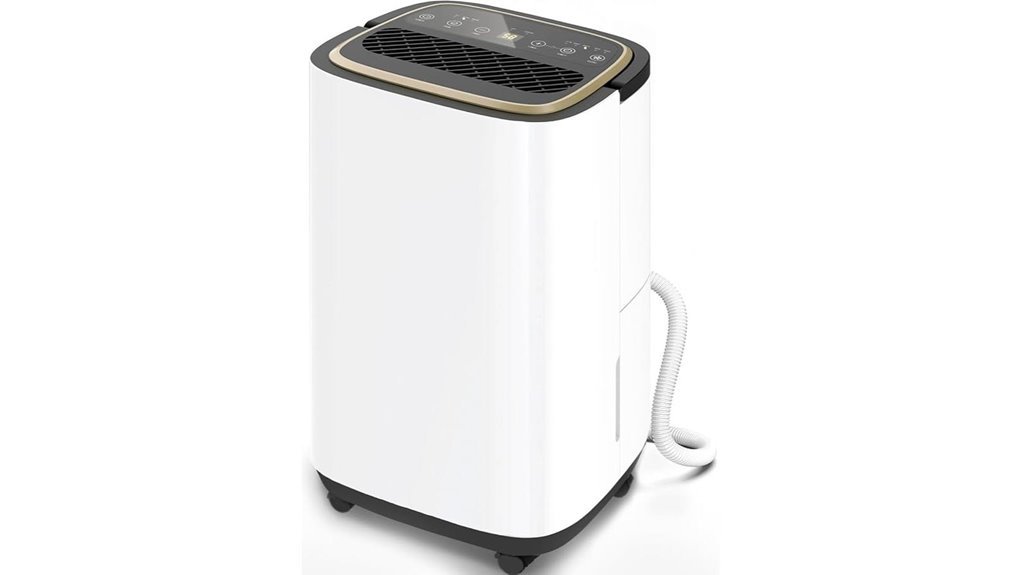
Need steady moisture control for a large space? The Tehanld 30-pint dehumidifier is listed for up to 3,000 sq. ft. and offers adjustable humidity control, laundry drying, and air-circulation modes. A 60-inch drain hose gives you more routing flexibility than the shorter hoses included with several models here. You also get dual fan speeds, a real-time display, timer, child lock, wheels, and a carry handle for easier everyday use.
Why You’ll Like It: This model is a good fit when you want a longer drain hose than many basic units include. The 3-in-1 design also helps if you want one unit for normal dehumidifying, laundry support, and air circulation.
Best For: Homeowners needing reliable moisture control for large spaces like basements, bedrooms, laundry rooms, and open living areas, especially when hands-free drainage and easy portability are important.
Who Should Avoid It: It may not be the best choice for very wet basements that need a higher-capacity model or a pump.
Pros:
- Covers up to 3,000 sq. ft. and effectively reduces humidity for large rooms and damp areas.
- Offers 3-in-1 functionality with adjustable humidity, laundry drying, and air circulation.
- Includes flexible drainage options, humidity controls, child lock, timer, and easy-move wheels for convenience.
Cons:
- The 30-pint capacity may be less ideal for extremely wet or flood-prone environments.
- Best performance depends on proper setup and may require hose drainage for long-term unattended use.
- The unit may be too large for small rooms or users who only need occasional dehumidifying.
Levoair Small Dehumidifier with Drain Hose
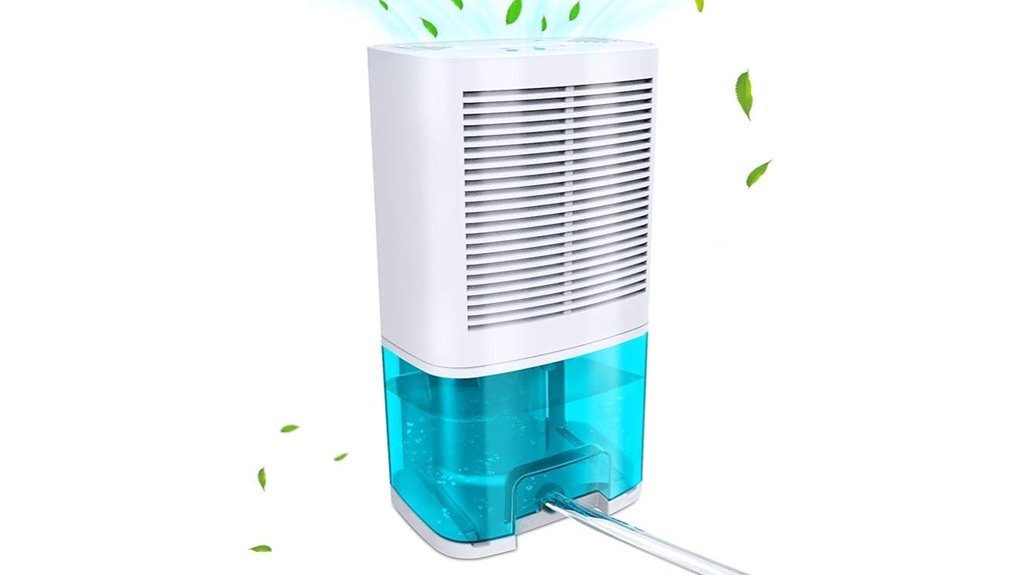
If you want a compact dehumidifier with continuous drainage for a small room, the Levoair model is easier to place than a full-size compressor unit. The listing rates it for up to 650 sq. ft. and up to about 1 liter of moisture removal per day under warm, humid conditions. It uses a 2-liter tank, supports hose drainage, has auto shutoff, and is rated at 48 watts. Its smaller semiconductor-style design is better suited to bedrooms, bathrooms, closets, kitchens, and RVs than to a heavily damp full-size basement.
Why You’ll Like It: This is easier to place than a full-size compressor dehumidifier. It is especially useful when you need modest moisture control in a bedroom, closet, bathroom, kitchen, RV, or other small area.
Best For: People who want a compact dehumidifier for bathrooms, bedrooms, closets, kitchens, or RVs, with the convenience of continuous drain hose operation.
Who Should Avoid It: Avoid it for large basements, heavy dampness, or cold spaces where small semiconductor models may not perform as strongly.
Pros:
- Hands-free draining option with an included hose, plus manual tank emptying if needed.
- Compact design with a 48-watt rated power draw and continuous-drain option.
- Compact, lightweight design with auto shutoff for safety and easy portability.
Cons:
- Best performance is limited to warmer, more humid conditions.
- 2000ml tank may still require frequent emptying in very damp spaces without the hose.
- Coverage and moisture removal are modest compared with larger, higher-capacity dehumidifiers.
VEAGASO 34-Pint Dehumidifier for Basement and Home
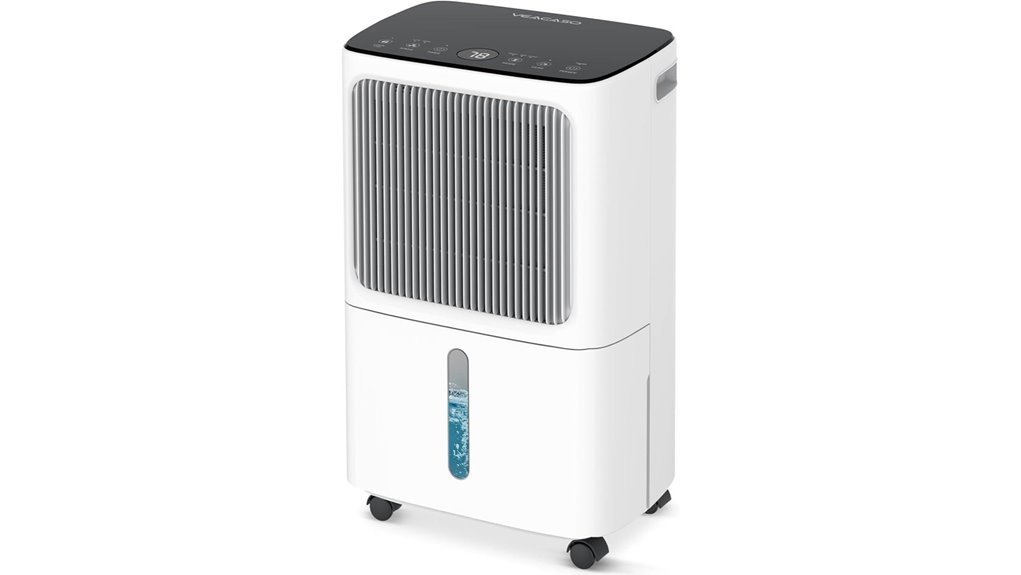
The VEAGASO VG380 suits you best if you need steady moisture control in larger indoor spaces. You get 34 pints of daily capacity, enough for up to 2,500 square feet, so it handles basements, bathrooms, and big rooms with ease. Use DEHU mode to keep living areas comfortable, DRY mode to speed up indoor laundry drying, or CONT mode for nonstop basement protection. You can drain it into the 0.53-gallon tank or connect a hose for continuous runoff. The LED touch panel, 1–24 hour timer, quiet operation, and swivel casters make it easy to use.
Why You’ll Like It: The VEAGASO gives you a clear mode setup and easy controls, which helps if you want a practical basement or bathroom dehumidifier without overthinking the settings.
Best For: Homeowners or renters who need reliable dehumidification for larger indoor spaces like basements, bathrooms, and big rooms.
Who Should Avoid It: The tank is small, so buyers who do not plan to use the drain hose may prefer a larger tank.
Pros:
- 34-pint daily capacity covers up to 2,500 sq. ft. for effective moisture control.
- Multiple modes support living spaces, laundry drying, and continuous basement use.
- Easy to move and operate with LED touch controls, timer, quiet performance, and swivel casters.
Cons:
- Smaller 0.53-gallon tank may require frequent emptying in manual mode.
- Best suited for indoor residential use rather than heavy commercial applications.
- Continuous drainage setup requires access to a hose and floor drain or sink.
AEOCKY 7000 Sq.Ft ENERGY STAR Dehumidifier
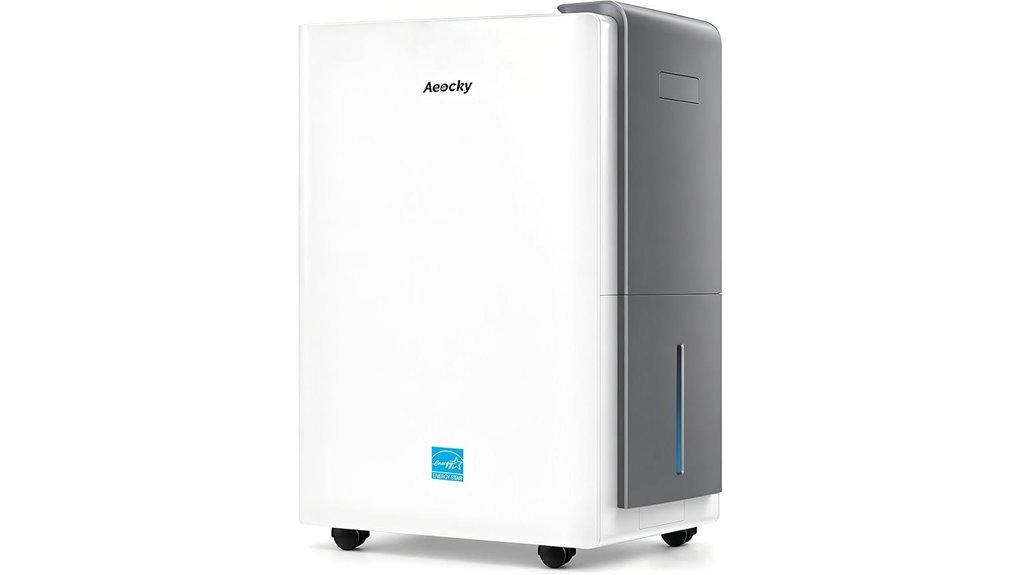
AEOCKY’s 7000 sq. ft. ENERGY STAR dehumidifier is the high-capacity option in this roundup. The listing advertises up to 140 pints per day under extreme humidity conditions, along with automatic humidity control, auto restart, timer settings, child lock, and multiple modes including Auto, Continuous, and Sleep. A large-capacity model like this makes the most sense for big, persistently damp spaces where compact units would be undersized.
Why You’ll Like It: This is the big-capacity option for buyers who want serious moisture removal with automatic humidity control. It is better suited to large, damp spaces than small bedrooms or closets.
Best For: Homeowners and renters who need high-capacity moisture control for large basements, open living areas, or other large indoor spaces.
Who Should Avoid It: Avoid it if your space is small or if you prefer a lighter, simpler machine.
Pros:
- Removes up to 140 pints of moisture per day in high-humidity conditions.
- ENERGY STAR efficiency focus plus automatic humidity control for large-space operation.
- Includes auto restart, timer, child lock, and multiple operating modes for flexible control.
Cons:
- May be larger and heavier than compact dehumidifiers, making it less ideal for small spaces.
- Best results are geared toward larger areas, so it may be overkill for a single room.
- High capacity and a larger cabinet may be unnecessary for smaller or lightly damp rooms.
ZAFRO 21 Pint Dehumidifier with Drain Hose
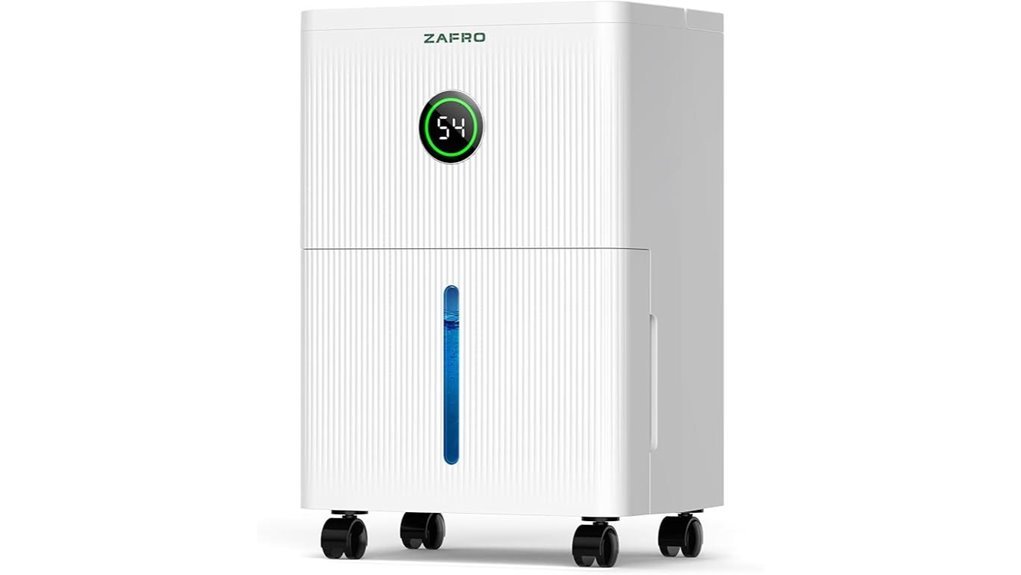
With its roughly 3.3-foot drain hose, the ZAFRO 21 Pint supports hands-off continuous drainage. The listing states up to 21 pints of moisture removal per day and about 41 dB operation, making it a reasonable fit for bedrooms, bathrooms, and medium-size damp areas where noise matters. Sleep Mode, a 24-hour timer, humidity displays, auto-defrost, power-off memory, a compact tank, and rolling wheels add everyday convenience.
Why You’ll Like It: ZAFRO is a good choice if you care about night use and visual humidity feedback. The sleep mode and lower noise level make it easier to use near bedrooms than some larger, louder models.
Best For: People who want a quiet, easy-to-use dehumidifier for bedrooms, bathrooms, or basements with convenient continuous drainage and sleep-friendly features.
Who Should Avoid It: It is not the best fit for very large or extremely damp basements that need stronger daily moisture removal.
Pros:
- Removes up to 21 pints of moisture per day for effective dehumidification.
- Runs quietly at 41 dB with Smart Sleep Mode and a 24-hour timer.
- Offers flexible drainage, useful humidity indicators, and portable rolling wheels.
Cons:
- The 0.45-gallon tank may require frequent emptying without the drain hose.
- Best suited for smaller to medium spaces rather than very large areas.
- No mention of app control or smart-home integration.
Tehanld 2500 Sq.Ft Dehumidifier with Drain Hose and Timer
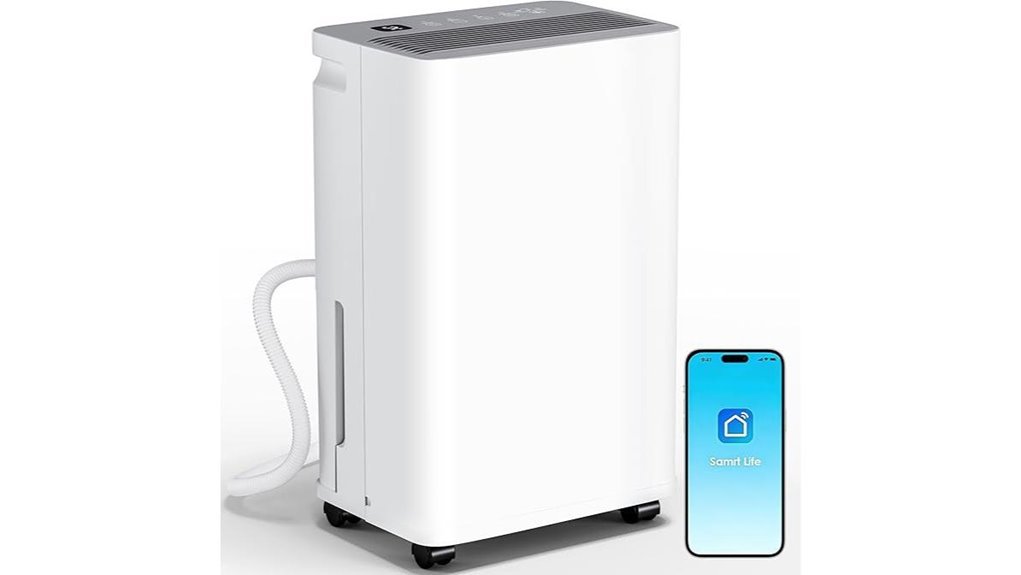
Need steady humidity control for a larger room? The Tehanld dehumidifier is listed for up to 2,500 sq. ft. and up to 35 pints per day. It includes a 24-hour timer, adjustable humidity control, a 39-inch drain hose for continuous drainage, and low-noise operation. This is a practical choice if you want a straightforward drain-hose setup without paying for app or voice-control features you may not use.
Why You’ll Like It: This model focuses on quiet operation, timer control, and continuous drainage. It is useful for living rooms, garages, and basement areas where you want simple humidity management without a complicated smart-home setup.
Best For: Homeowners or renters needing quiet, energy-efficient humidity control for large spaces like basements, living rooms, or garages.
Who Should Avoid It: The 39-inch hose may limit placement if your drain is far from the unit.
Pros:
- Covers up to 2,500 sq. ft. and removes 35 pints of moisture per day.
- Very quiet operation at 30 dB, making it suitable for everyday use.
- Includes a 24-hour timer, adjustable humidity control, and continuous drain hose for convenience.
Cons:
- The 0.8-gallon tank may require frequent emptying if not using the drain hose.
- Best performance is in large indoor spaces, so it may be more than needed for small rooms.
- Plastic construction may feel less premium than metal-bodied units.
Litever Small Portable Dehumidifier with Drain Hose
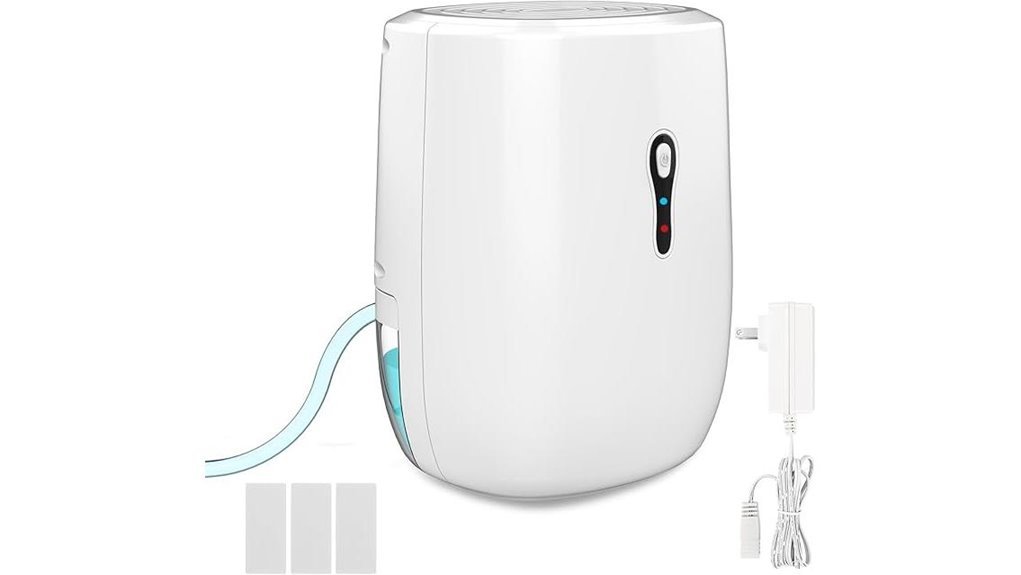
Litever’s compact 22-watt dehumidifier is meant for very small spaces that need hands-free drainage. You can place it in a bathroom, closet, pantry, RV, or gun safe, and use the included drain hose for continuous water removal. The current listing rates it for up to about 100 sq. ft. and roughly 0.3 liters of moisture removal per day under stated conditions. The 800 ml tank, auto-off feature, memory function, and lightweight design make it easy to manage in tight spaces.
Why You’ll Like It: This is not meant to compete with large compressor units. Its strength is small-space control, low power use, and easy placement where a full-size dehumidifier would be awkward.
Best For: People who need a compact, easy-to-place dehumidifier for spaces around 100 sq. ft. or less, such as closets, small bathrooms, RV storage areas, gun safes, or pantries, especially when continuous drainage is helpful.
Who Should Avoid It: Avoid it for bedrooms, basements, or large rooms over its rated coverage area.
Pros:
- Includes a 4-foot drain hose for hands-free continuous drainage.
- Compact and lightweight design makes it easy to move and fit into tight spaces.
- Auto-off and memory functions add convenience and peace of mind.
Cons:
- Only suitable for very small spaces around 100 sq. ft. or less, so it will not replace a full-size room dehumidifier.
- About 0.3 L/day listed dehumidification capacity is modest compared with full-size compressor units.
- Requires setup with hose routing and secure placement using pads/clips.
KeepGlad Dehumidifier for Home, Basement, and Bedroom
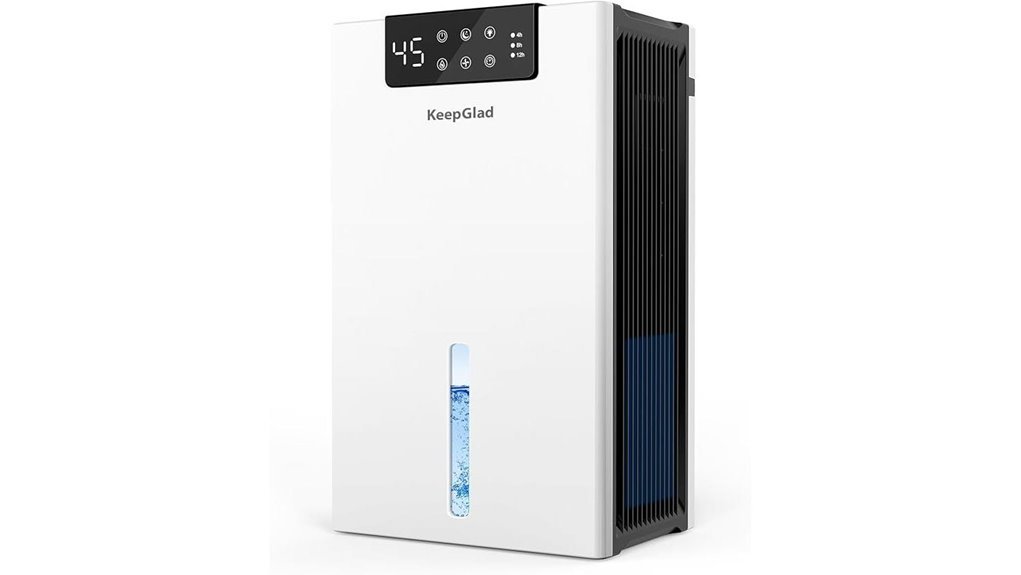
If you want quiet, hands-free moisture control, the KeepGlad RX02-B is a compact option for bedrooms, laundry areas, and smaller basement zones. The listing rates it for up to 1,000 square feet and up to about 2.8 pints of moisture removal per day. A 98-ounce tank, drain hose, auto shutoff, timer settings, three fan speeds, and a digital humidity display make it easy to manage. Its low-noise sleep-focused operation is a better fit for moderate humidity than for severe basement dampness.
Why You’ll Like It: KeepGlad is best for people who want quiet comfort more than heavy-duty moisture removal. It works well for moderate humidity in bedrooms, laundry areas, and smaller basement zones.
Best For: People who want low-maintenance moisture control in bedrooms, laundry areas, and smaller basement zones with moderate humidity.
Who Should Avoid It: Avoid it if you need a high-pint compressor dehumidifier for severe basement dampness.
Pros:
- Listed for up to 1,000 square feet with about 2.8 pints of moisture removal per day.
- Hands-free operation with a drain hose, auto shut-off, and a 98-ounce tank.
- Low-noise sleep-focused operation plus useful controls like timers, humidity display, and three fan speeds.
Cons:
- The 98-ounce tank may still need frequent emptying in very damp spaces if not using the drain hose.
- Best suited for moderate moisture control rather than heavy-duty industrial dehumidification.
- The unit is relatively compact, so it may not be ideal for very large or open-plan areas beyond its rated coverage.
BANABIE 2500 Sq.Ft Basement Dehumidifier with Drain Hose
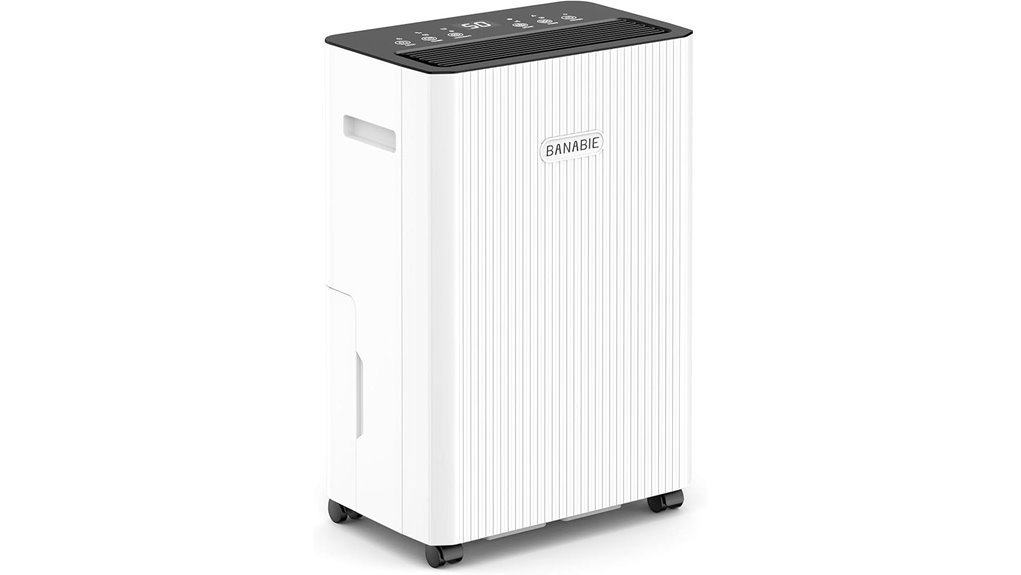
The BANABIE drain-hose dehumidifier is listed for up to 2,500 sq. ft. and up to 32 pints of moisture removal per day. Use the included hose for gravity drainage, or rely on the tank with auto shutoff when a drain is not available. Adjustable humidity control, Auto and Continuous-style operating options, a timer, and low-noise operation make it a practical basement-focused choice when you do not need a built-in pump.
Why You’ll Like It: This model focuses on the features many basement buyers want most: a useful coverage rating, quiet operation, continuous mode, and a drain hose. It is a practical option when you want less upkeep without moving into pump-equipped pricing.
Best For: Homeowners or renters with medium to large basements who want a quiet, portable dehumidifier with flexible drainage and easy humidity control.
Who Should Avoid It: Avoid it if your basement drain is not nearby or if you need water pumped upward.
Pros:
- Covers up to 2,500 sq. ft. and removes up to 32 pints of moisture per day.
- Offers both gravity drainage with a hose and tank operation with auto shutoff.
- Low-noise operation and automatic humidity controls support everyday basement use.
Cons:
- The included drain hose may limit placement if the drain point is far from the unit.
- The water tank may need frequent emptying in very humid conditions if you do not use the hose.
- Best performance is in basement-sized spaces, so it may be overpowered for smaller rooms.
AEOCKY 4500 Sq.Ft Energy Star Dehumidifier with Pump
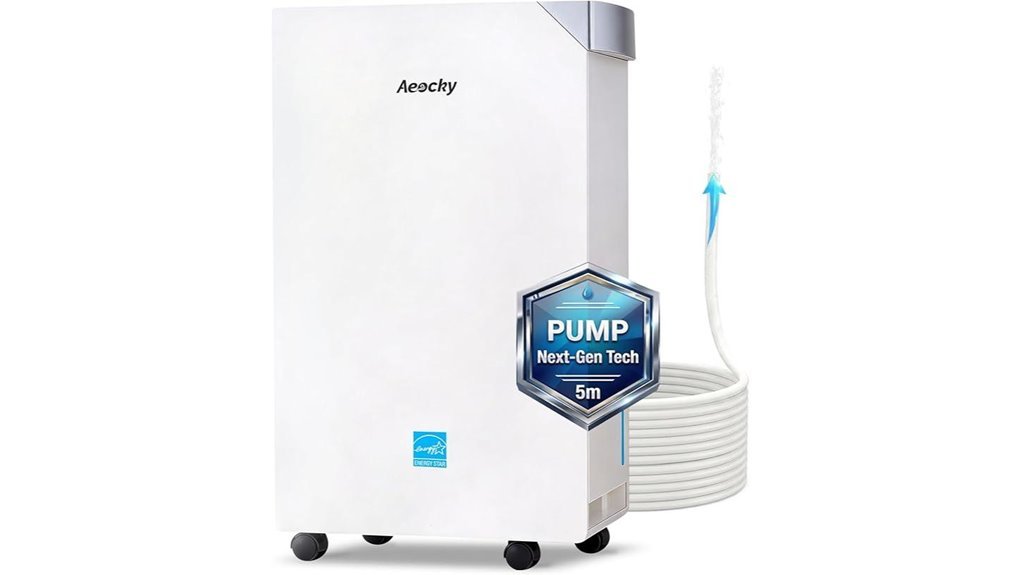
AEOCKY’s 4500 sq. ft. ENERGY STAR dehumidifier is the strongest fit here when gravity drainage is not practical. The listing advertises up to 80 pints per day under extreme humidity conditions and 56 pints per day at 86°F/80% RH. Its built-in pump can lift water up to 5 meters, so you can route drainage upward instead of relying only on downhill hose flow. Automatic humidity control, dual-sensor protection, power-off memory, and quiet, low-vibration operation add convenience for basement use.
Why You’ll Like It: This is the most useful option here if your drain point is above the dehumidifier or too awkward for simple gravity drainage. A built-in pump can make basement placement much easier when a floor drain is not available.
Best For: Homeowners and basement users who need high-capacity moisture removal, automatic pumping, and adjustable humidity control.
Who Should Avoid It: Skip it if you only need a simple drain hose and do not want extra pump features.
Pros:
- ENERGY STAR Most Efficient performance with strong moisture removal up to 80 pints per day.
- Built-in pump lifts water up to 5 meters, reducing the need for manual emptying.
- Automatic humidity control, dual-sensor protection, quiet operation, and power-off memory add convenience.
Cons:
- The pump adds setup and maintenance complexity compared with a basic gravity-drain model.
- Best suited for users who need larger-capacity moisture control, so it may be more than needed for small rooms.
- If you already have an easy downhill drain path, the pump may be unnecessary.
Before You Buy: Check the drain direction before choosing a model. Most hose-drain dehumidifiers rely on gravity, so the hose should slope downward without kinks. If your drain is higher than the unit, choose a pump model instead.
- Measure your room or basement square footage.
- Confirm whether you need a pump or simple gravity drainage.
- Check the hose length and where the water will go.
- Match noise level to the room, especially for bedrooms.
- Clean the filter and drain hose regularly for better performance.
Factors to Consider When Choosing Continuous Run Drain Feed Dehumidifiers
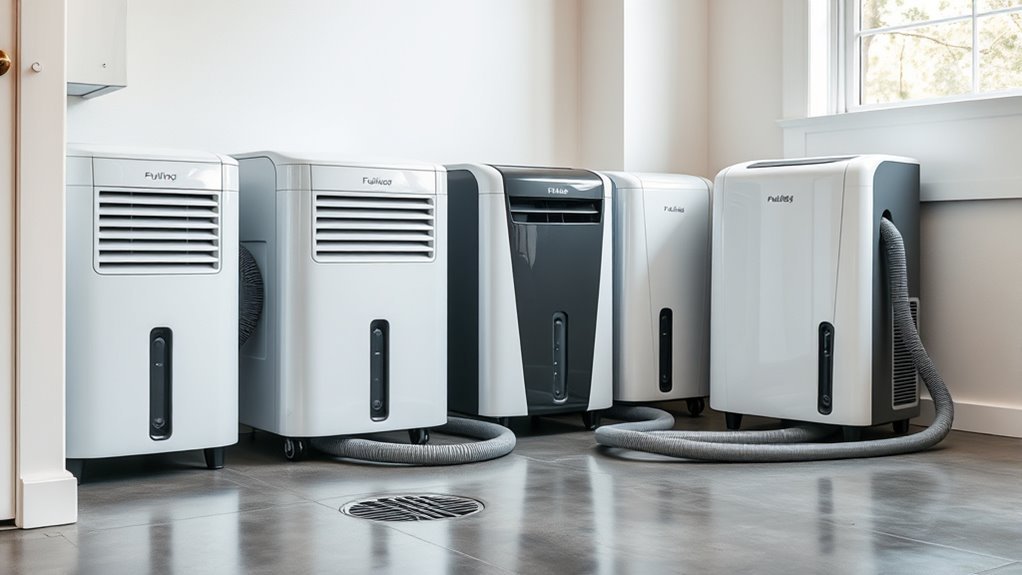
When you choose a continuous-drain dehumidifier, check the drainage path first. Then compare moisture-removal capacity, coverage guidance, noise, controls, energy efficiency, and maintenance needs. The best unit is the one that can remove enough moisture for your space and discharge water safely without creating a hose-routing problem.
Drainage Options
Drainage is the first fit check because it determines whether the setup can actually run with less hands-on emptying. A gravity drain hose needs a continuous downhill path to a floor drain, sink, tub, or sump. If the drain point is higher than the dehumidifier, use a model with a built-in pump or a manufacturer-approved external condensate pump. Keep the hose free of kinks and confirm water flow after installation.
Continuous Mode vs. Continuous Drainage
These terms describe different features. Continuous drainage means collected water leaves through a hose or pump instead of staying in the tank. Continuous mode usually means the unit keeps dehumidifying without stopping at a normal humidity target. You can often use continuous drainage while still letting the humidistat cycle the compressor on and off, which is usually the better everyday setup.
Tank Capacity
Tank capacity matters most when you will sometimes run the unit without a drain hose. A larger tank can reduce manual emptying, but once a reliable continuous-drain setup is connected, hose routing and automatic shutoff behavior matter more than bucket size. If you expect to switch between manual and hose drainage, choose a tank size you can comfortably remove, carry, and clean.
Coverage Area
Match the unit’s coverage guidance and moisture-removal capacity to the actual room and dampness level. Square-foot ratings are useful for comparison, but pint-per-day capacity and test conditions matter too. A compact semiconductor unit may suit a closet or RV, while a damp basement generally needs a compressor model with much higher daily removal. If the space is unusually cold, wet, or open to outdoor air, follow the manufacturer’s sizing and minimum-temperature guidance rather than relying on square footage alone.
Noise Levels
Noise matters most in bedrooms, offices, and living areas. Compare the manufacturer’s dB rating when available, but remember that sound can change by fan speed and operating mode. Sleep mode, lower fan speeds, and display-off controls can make nighttime use easier. For a basement or utility room, higher capacity may matter more than chasing the lowest possible sound rating.
Smart Controls
Smart controls are useful only if they match how you plan to use the unit. Some models, such as the Midea Cube, offer app and voice control; many others use a digital humidistat, timer, and automatic restart instead. Prioritize accurate humidity adjustment and reliable automatic cycling first, then treat Wi-Fi or voice control as a convenience feature.
Energy Efficiency
For a dehumidifier that may run for long periods, efficiency can affect operating cost. Look for an ENERGY STAR certified model when available, and use a realistic humidity target so the compressor does not run continuously without need. Keep the filter clean, maintain clear airflow, and keep the drainage path unobstructed. In cooler spaces, also confirm the manufacturer’s minimum operating temperature and defrost behavior.
Pump vs. Gravity Drain
A gravity drain model is usually enough if the dehumidifier sits higher than the drain point and the hose can slope downward. This setup is simple, quiet, and often less expensive. A pump model is better when the drain point is above the unit, across the room, or harder to reach. For example, a basement without a nearby floor drain may need a pump to move water to a sink, window, or higher drain line. Before buying, picture exactly where the unit will sit and where the hose will end. This one step can prevent leaks, poor drainage, and daily frustration.
Maintenance and Safety
Continuous drainage reduces bucket emptying, but it does not remove all maintenance. You still need to keep the filter clean, check the hose for clogs, and make sure the unit has enough airflow around it. Avoid tightly bending the hose, placing the unit on an uneven surface, or routing water where it can damage flooring. If you use the dehumidifier in a basement, check the hose after the first few hours to confirm water is flowing correctly. Also follow the manufacturer’s instructions for minimum operating temperature, cleaning, and placement.
Pro Tip: Do not confuse continuous drainage with continuous dehumidification. In normal use, set a humidity target and let the humidistat cycle the unit while the hose or pump removes collected water automatically.
Many homes aim for roughly 30% to 50% relative humidity, but the best target depends on climate, season, comfort, and building conditions. If the room still smells musty, shows condensation, or stays damp, you may need more capacity, better airflow, or a better drainage setup.
Frequently Asked Questions
How Often Should the Drain Hose Be Cleaned?
Inspect the drain hose regularly and clean it whenever you notice slime, odor, slow drainage, or visible buildup. Follow the manufacturer’s maintenance instructions, and make sure the hose stays free of kinks or pinches.
Can a Drain Feed Dehumidifier Run in Freezing Temperatures?
Generally, do not operate a dehumidifier below the manufacturer’s stated minimum temperature. Freezing conditions can cause icing, blocked drainage, and poor performance. Check the product manual before using a dehumidifier in a cold garage, crawlspace, or basement.
What Hose Length Works Best for Continuous Drainage?
Use the shortest practical hose that reaches the drain while maintaining a steady downhill slope for gravity drainage. Avoid long, twisted, or uphill runs. If the water must move upward, use a built-in pump model or a compatible condensate-pump setup instead of forcing a gravity hose to do the job.
Do Continuous Drain Models Need a Floor Drain?
No, you don’t always need a floor drain. You can route the hose to a sink, tub, sump, or condensate pump as long as it drains correctly and stays unclogged. If the water needs to move upward, choose a model with a built-in pump or use a compatible external condensate pump.
How Noisy Are Drain Feed Dehumidifiers During Nightly Operation?
You’ll usually hear a steady fan hum during nightly operation. Compact and sleep-mode models can be quieter, while larger basement units can sound louder when they cycle or run at high speed. For bedrooms, look for lower dB ratings, sleep mode, and display-off controls.
Is a Pump Dehumidifier Better Than a Drain Hose Model?
A pump dehumidifier is better when water must travel upward or across a longer route. A regular drain hose model is better when the unit can drain downhill into a nearby floor drain, sink, tub, or sump. The best choice depends on your room layout, not just the dehumidifier’s capacity.
Can I Leave a Continuous Drain Dehumidifier Running All Day?
Many continuous drain dehumidifiers are designed for long-running use, but you should still follow the manual, keep the filter clean, and confirm the hose drains properly. Use a humidity target, timer, or auto mode when possible so the unit does not run harder than needed.
Conclusion
You have several strong options for a continuous-drain dehumidifier, but the right pick depends more on drainage and moisture load than on the biggest coverage number. Choose the Midea Cube 20 Pint for app and voice control, compare the AIRPLUS 70 Pint, Yaufey 5000 Sq. Ft., and AEOCKY 7000 Sq.Ft for larger damp spaces, and choose the AEOCKY 4500 Sq.Ft with Pump when water must be lifted upward. For small spaces, Levoair and Litever are easier to place, but their lower moisture-removal capacity makes them a different class of product. Confirm the room size, drain route, and current listing details before you buy.
Final Recommendation: The best continuous drain dehumidifier is not always the biggest one. Match the product to your room size, drainage route, and noise needs first.
For easy smart control, choose Midea. For big basements, choose a higher-capacity unit. For difficult drainage, choose a pump model. For tiny spaces, choose a compact hose-drain model.