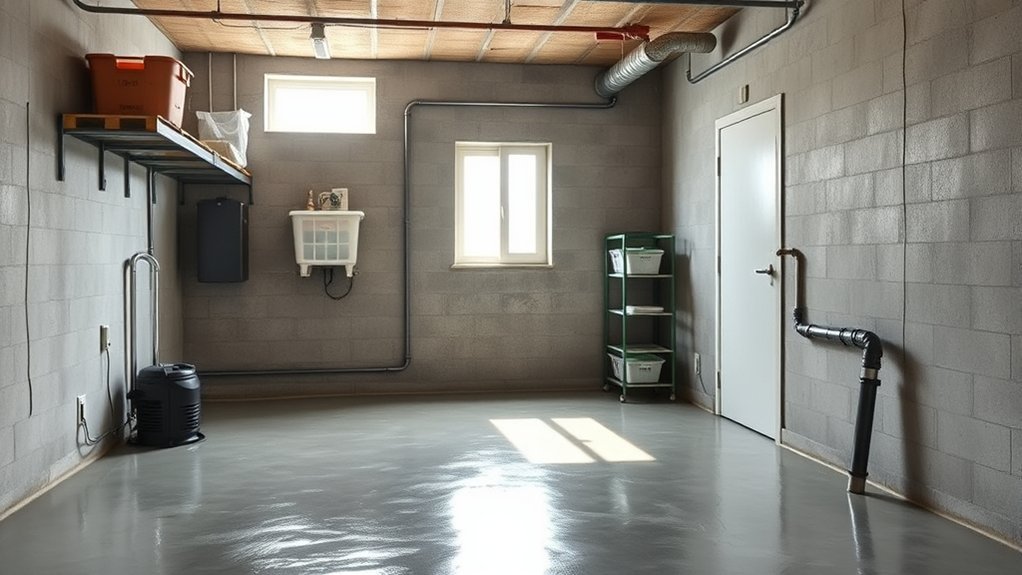
A 3×3 grow tent has a small footprint, but actively growing plants, wet media, watering, and lights-off temperature drops can create more moisture than a mini dehumidifier can remove. The right setup depends on your measured relative humidity, plant count, temperature, ventilation, watering volume, and whether you can use continuous drainage. Of the two compact options compared here, the 68oz Levoair dehumidifier has the stronger listed extraction rate and a drain hose, while the Pure Enrichment PureDry Mini is the simpler choice for a mild humidity problem. For several mature plants or persistent nighttime humidity spikes, a larger dehumidifier in the surrounding lung room may be more effective than placing a small unit inside the tent.
Quick verdict
- Best higher-capacity compact option: 68oz Levoair Dehumidifier, because its larger tank, stronger listed extraction, and continuous-drain option reduce maintenance.
- Best simple mini option: Pure Enrichment PureDry Mini, for light moisture control when easy operation matters more than drainage or adjustable settings.
- Best approach for heavy humidity: Control the surrounding lung room with a properly sized dehumidifier instead of expecting a thermoelectric mini unit to handle a mature, high-transpiration grow by itself.
How these options were compared
The comparison focuses on listed moisture removal, tank size, drainage, control simplicity, physical placement, and realistic limitations in a 3×3 grow tent. Advertised room coverage is treated cautiously because plant transpiration and wet growing media create a different moisture load than an ordinary room.
Quick Comparison
| Product | Best For | Listed Moisture Removal | Drainage | Key Limitation | Check Details |
|---|---|---|---|---|---|
| 68oz Levoair Dehumidifier | Light-to-moderate moisture loads and fewer tank-emptying interruptions | Up to 35 oz per day at 86°F and 80% RH | 68 oz tank or continuous hose | Real extraction can fall sharply in cooler or less-humid air | Check Product Details |
| Pure Enrichment PureDry Mini | Simple operation, small plant counts, and mild humidity problems | Up to about 10 oz per day | Removable 27 oz tank | Current product information does not list an adjustable humidistat or drain-hose option | Check Product Details |
Important: Both products are compact thermoelectric-style options intended for relatively small moisture loads. The Levoair’s maximum extraction figure is listed under warm, very humid conditions, while the PureDry Mini is listed at up to about 10 oz per day. Actual water collection inside a grow tent can be much lower depending on temperature, humidity, airflow, and plant transpiration. Use a separate hygrometer and judge performance across complete lights-on and lights-off cycles.
68oz Levoair Dehumidifier With Drain Hose
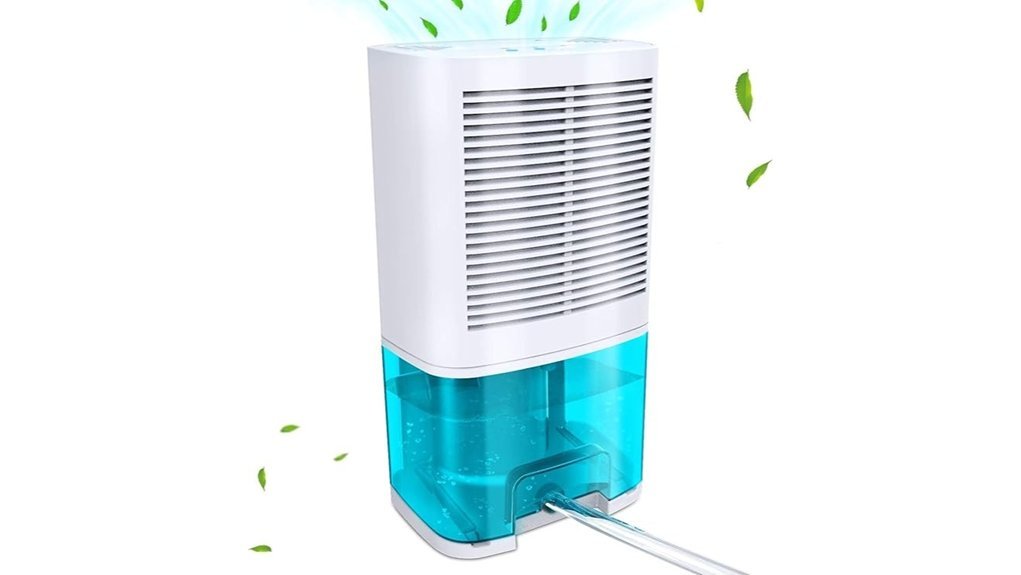
Best Higher-Capacity Compact Option
The 68oz Levoair dehumidifier is the more capable compact choice in this comparison. Its 2-liter collection tank holds substantially more water than a basic mini unit, and the included continuous-drain hose can reduce the need to open the tent and empty the tank repeatedly.
The listing states that it can remove up to 35 oz of moisture per day at 86°F and 80% RH. Treat that as a best-case listed rating, not a guaranteed result in your tent. Actual extraction will depend on temperature, relative humidity, airflow, and how much moisture the plants and growing media release. The listing also notes that dehumidification becomes less effective at lower temperatures or very low humidity. Its larger tank, automatic full-tank shutoff, portable handle, and continuous drainage make it easier to manage during longer runs.
Why You’ll Like It
- Less frequent emptying: The 68 oz tank provides more collection space than the other retained option.
- Continuous drainage: The included hose can support longer operation when it is routed securely with a steady downward slope.
- Compact footprint: It can fit near a 3×3 tent or in the surrounding grow area without using the space required by a full-size room unit.
- Automatic shutoff: The unit stops when the tank is full if continuous drainage is not being used.
Best For: Growers with a light-to-moderate moisture load who want the stronger listed extraction rate and a continuous-drain option.
Who Should Avoid It: Growers with a cool tent, persistent high RH, several mature plants, very limited floor space, or no safe path for the drain hose should consider dehumidifying the surrounding room instead.
Pros:
- Larger 2-liter tank than the other compact choice.
- Manual tank collection and continuous drainage options.
- Automatic full-tank shutoff and portable handle.
- Higher listed extraction rate than the PureDry Mini.
Cons:
- The maximum extraction claim depends on warm, high-humidity test conditions.
- The current listing describes one-button operation rather than an adjustable target-humidity control.
- The drain hose must be secured and routed away from plugs, power strips, and irrigation runoff.
- It may still be undersized for a mature, heavily planted 3×3 tent.
Pure Enrichment PureDry Mini Dehumidifier 27oz
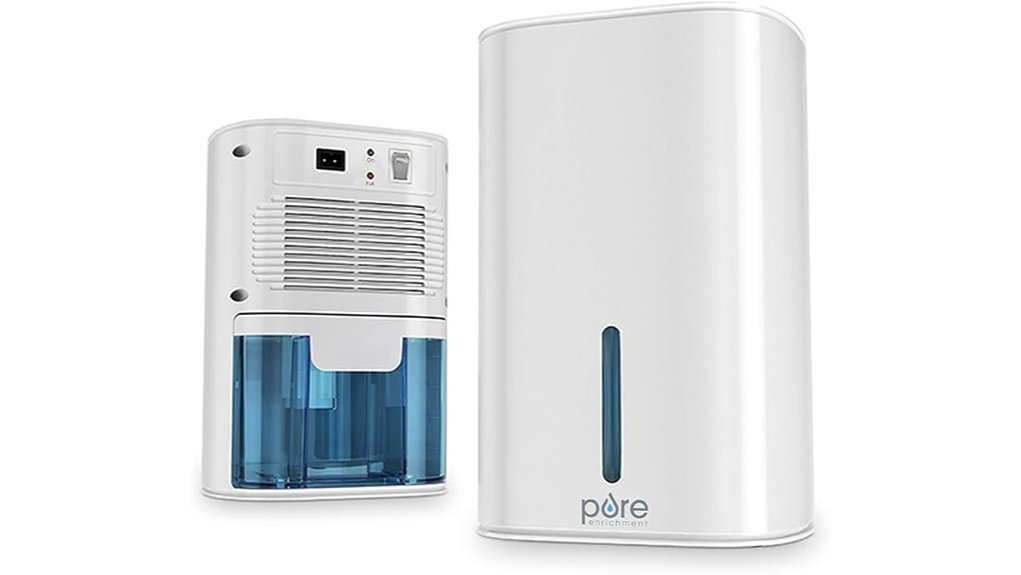
Best Simple Mini Option
The Pure Enrichment PureDry Mini is a straightforward option for growers who want a small plug-in dehumidifier without programming or hose installation. It uses a 27 oz transparent tank, a simple on/off control, and automatic shutoff when the tank is full.
The manufacturer lists moisture removal of up to about 10 oz per day, while Amazon product information lists coverage up to 110 square feet. For grow-tent use, the extraction rating and your measured RH trend matter more than the square-foot figure. This model is best for early growth, a small plant count, mild humidity control, or supplemental use when ventilation already handles most of the moisture.
Why You’ll Like It
- Easy operation: A single control keeps setup simple.
- Visible water level: The transparent tank lets you monitor collection without removing it.
- Automatic shutoff: It stops when the tank reaches capacity to help prevent overflow.
- Compact design: Its small housing is easier to place where tent floor space is limited.
- Five-year manufacturer warranty: The product is backed by a five-year warranty, subject to the manufacturer’s current terms.
Best For: Light moisture problems, small plant counts, or growers who value simple operation and compact dimensions.
Who Should Avoid It: It is not a good match for a tent that regularly remains above the target RH because its current product information does not list adjustable target-humidity control, continuous drainage, or high extraction capacity.
Pros:
- Compact and simple to operate.
- Transparent 27 oz tank and automatic shutoff.
- No drain-hose installation required.
- Five-year manufacturer warranty under current warranty terms.
Cons:
- The current product information does not list an adjustable humidity target.
- The current product information does not list a continuous-drain hose option.
- Limited extraction for high-transpiration conditions.
- The tank may require frequent attention if the unit collects near its listed maximum.
When a Mini Dehumidifier Is Not Enough
Consider a lung-room dehumidifier when:
- RH stays above your target while the mini unit runs continuously.
- Humidity rises quickly after lights-out or watering.
- You see condensation on tent walls, ducting, or nearby surfaces.
- Several mature plants are releasing substantial moisture.
- Warm exhaust from a unit inside the tent pushes temperature too high.
A larger compressor dehumidifier placed in the room that supplies the tent can treat incoming air without occupying canopy or floor space inside the tent. This approach can also make drainage, maintenance, and heat management easier. Size the room unit from actual moisture behavior rather than the tent’s nine-square-foot floor area alone.
Factors to Consider When Choosing a Dehumidifier for a 3×3 Grow Tent
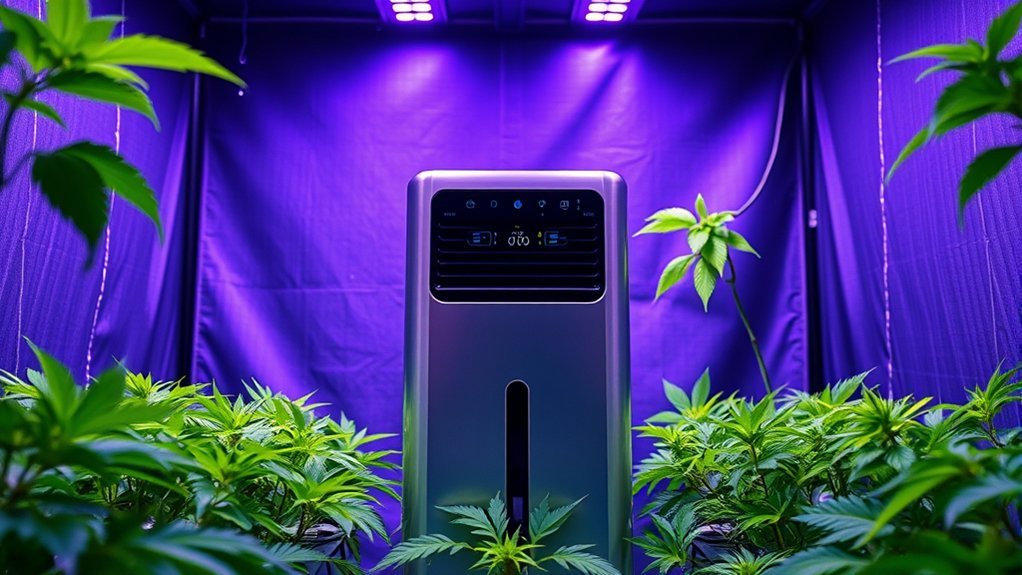
A grow tent should not be sized like an ordinary bedroom. Its floor area is small, but moisture production can be intense. Use the factors below to decide whether a mini dehumidifier is enough or whether you should control the room that supplies air to the tent.
Measure the Actual Moisture Load
Start with a reliable hygrometer and record humidity during both lights-on and lights-off periods. Note the peak RH, how quickly it rises after watering, and how long it takes to return to your target. A dehumidifier is adequately sized only if it can lower and hold humidity instead of running continuously while RH continues to climb.
Do not rely on a room-coverage claim alone. Square-foot ratings describe ordinary room use and do not account for wet growing media, dense foliage, ventilation rate, plant transpiration, or nighttime temperature changes.
Humidity Control Options
Your ideal humidity range depends on the crop and growth stage. The current product information for these two compact models does not list a true adjustable humidistat, so monitor the tent with a separate hygrometer at canopy level. A plug-in humidity controller may be useful only when it is compatible with the appliance’s restart behavior and electrical rating; verify both before use.
Drainage and Tank Size
A removable tank is convenient for a mild moisture problem, but frequent emptying becomes frustrating during humid periods. Continuous drainage is useful for longer runs, provided the hose slopes downward, cannot kink, and empties into a safe container or drain. Check the hose and connection regularly for leaks.
Temperature and Technology
Compact thermoelectric or Peltier-style dehumidifiers generally remove less water as temperature and humidity fall. The Levoair listing specifically warns that its dehumidification becomes less effective below 59°F or at very low relative humidity. A compressor dehumidifier can remove much more moisture, but a room-size unit may occupy too much space and add too much heat inside a 3×3 tent. For a heavy moisture load, placing a larger unit in the surrounding lung room is usually more practical.
Airflow and Placement
Keep the intake and outlet clear so air can move freely. Do not aim warm, dry exhaust directly at leaves, and do not let the unit block circulation fans or the tent’s intake and exhaust path. Place it on a stable, dry surface where it cannot be splashed during watering.
Noise and Heat
Noise matters when the tent is near a bedroom or work area, but heat output is often the bigger grow-room concern. Every powered dehumidifier adds some heat to its surroundings. Watch tent temperature after installation and adjust ventilation if the added heat pushes the environment outside your intended range.
Energy Efficiency
Compare wattage, listed extraction, and how long the unit must run to maintain the target RH. A lower-capacity mini unit is not automatically efficient if it runs continuously without controlling the moisture. The better setup is the smallest unit that can consistently manage the measured load.
Safety Features and Electrical Setup
Prioritize automatic full-tank shutoff, stable hose connections, intact power adapters, and clear manufacturer instructions. Keep plugs, adapters, extension connections, and power strips away from water, runoff, and condensation. Never place a dehumidifier where it could tip into a tray or reservoir.
Before you buy
- Record the highest RH reading, especially after lights-out and watering.
- Confirm the current product dimensions and required airflow clearance.
- Decide whether you need a tank, a drain hose, or a lung-room setup.
- Check the operating temperature and humidity guidance in the current listing or manual.
- Plan where collected water will go before using continuous drainage.
- Keep a separate hygrometer at canopy level to verify actual performance.
- Reassess capacity as plant size, foliage density, and watering volume increase.
Frequently Asked Questions
How Do I Know the Right Size Dehumidifier for My Tent?
Use actual humidity behavior rather than tent dimensions alone. Measure peak RH, note how fast it rises after watering and lights-out, and select a setup that can return the tent to your chosen range. If a mini dehumidifier runs continuously but humidity remains high, its practical capacity is too low.
Can I Use a Dehumidifier During the Flowering Stage?
Yes, a dehumidifier can help control excess moisture during flowering. Match the target humidity to the crop and stage, avoid directing warm dry exhaust at flowers, and verify the result with a separate hygrometer rather than relying on a coverage claim.
Do Mini Dehumidifiers Work in a 3×3 Grow Tent?
They can help when the moisture load is modest, ventilation is balanced, and the surrounding room is not extremely humid. They may be inadequate for several mature plants, frequent watering, or a poorly ventilated tent. Monitor the RH trend through at least one full lights-on and lights-off cycle.
Should I Use Continuous Drainage?
Continuous drainage is helpful when the tank fills frequently or the grow must run unattended. The hose needs a steady downward path and a secure discharge point. Inspect it regularly because a loose, blocked, or kinked hose can place water near electrical equipment.
Where Should I Place the Dehumidifier?
Place it on a stable, dry surface with clear space around the inlet and outlet. Keep it away from irrigation spray, runoff trays, and direct contact with foliage. In a crowded tent, placing the dehumidifier just outside the tent or treating the surrounding lung room may improve safety and airflow.
How Often Should I Empty the Water Tank?
Empty the tank whenever the full indicator appears or before it reaches capacity. The interval depends on humidity, temperature, plant load, extraction rate, and tank size. Check it frequently during the first few days of use so you can establish how quickly your specific setup fills the tank.
Is a Lung-Room Dehumidifier Better Than an In-Tent Unit?
It often is when humidity is persistent or plant load is high. A larger unit in the surrounding room can dry the air entering the tent, preserve floor space, simplify drainage, and keep more of the appliance’s heat away from the canopy.
Conclusion
The right dehumidifier for a 3×3 grow tent is the one that can control the measured moisture load without blocking airflow, overheating the tent, or demanding constant attention. The 68oz Levoair dehumidifier is the stronger compact option here because it combines a larger tank, a higher listed extraction rate, and continuous drainage. The Pure Enrichment PureDry Mini is the simpler choice for mild humidity control and small plant counts. Neither should be treated as a guaranteed solution for several mature plants or a tent with persistent lights-off humidity spikes.
Final recommendation
Choose the 68 oz Levoair when your measured moisture load is modest but you want the stronger listed compact capacity and a drain hose. Choose the PureDry Mini when your readings show that a low-capacity, tank-only unit is enough and simple operation is the priority. If either model runs continuously without holding your target RH, move to a properly sized lung-room dehumidifier and reassess ventilation, temperature, and watering practices.