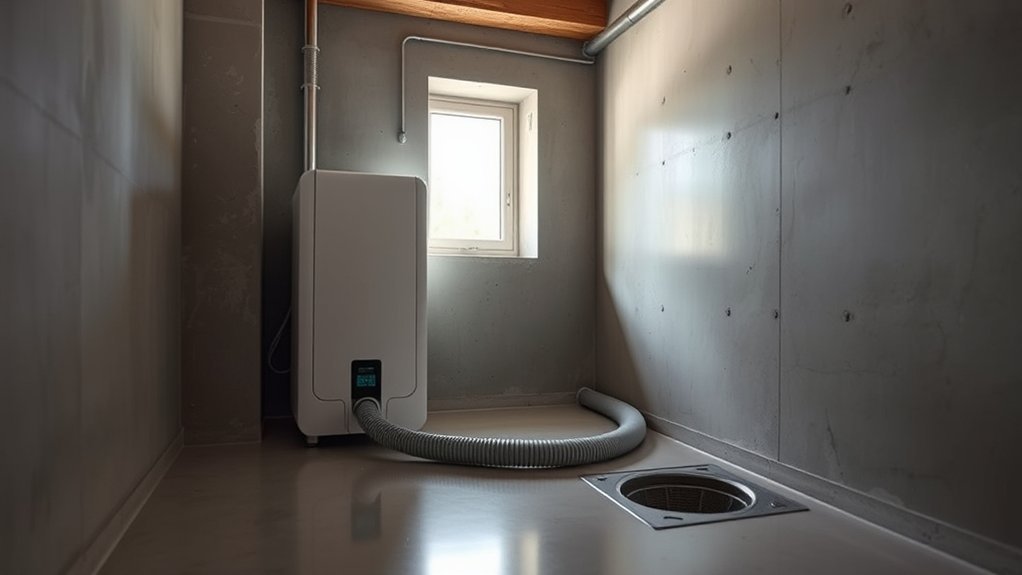
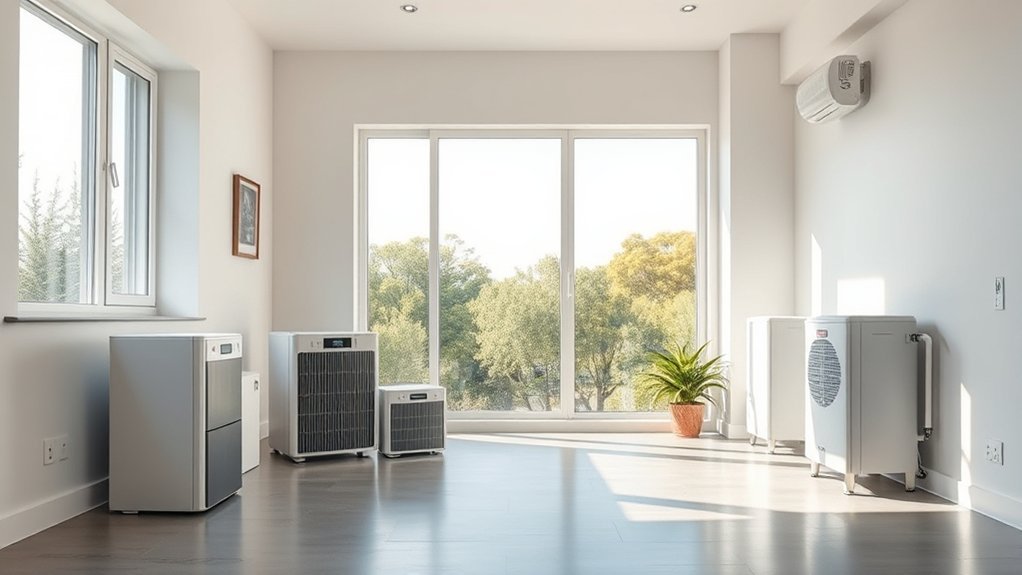
For an efficient dehumidifier in 2026, start with the moisture problem—not the biggest number in the product title. For large basements and open living areas, compressor models such as the Frigidaire 50 Pint WiFi, Vellgoo Max, Gasbye DryPrime, Waykar, Yaufey, and Vellgoo 64 Pint offer stronger moisture removal and continuous-drain options. For bedrooms, bathrooms, closets, or light seasonal dampness, the compact ToLife and BEDRED thermoelectric units are quieter and easier to move, but they are not substitutes for a full-size compressor dehumidifier in a wet basement.
Quick Comparison of the Best Efficient Dehumidifiers
Dehumidifier capacity claims are not always measured under the same temperature and humidity conditions. Use the table as a starting point, then check the current Amazon listing and manufacturer documentation for the standardized capacity, room conditions, drainage setup, and warranty before buying.
| Product | Best For | Type | Advertised Coverage | Drainage | Efficiency Note |
|---|---|---|---|---|---|
| Frigidaire 50 Pint WiFi | Best overall smart model | Compressor | Up to 4,500 sq. ft. | Tank or continuous drain | ENERGY STAR certified |
| Vellgoo Max 80 Pint | Large basements | Compressor | Up to 4,500 sq. ft. | Tank, included hose, or garden hose | ENERGY STAR Most Efficient 2025 claim |
| Gasbye DryPrime | Hot, humid conditions | Compressor | Up to 4,500 sq. ft. | Tank, hose, or garden-hose adapter | ENERGY STAR model; compare standardized rating |
| Waykar 80 Pint | Large rooms and broad airflow | Compressor | Up to 5,000 sq. ft. | Tank or continuous drain | ENERGY STAR certified |
| Yaufey 5000 Sq. Ft. | Flexible controls | Compressor | Up to 5,000 sq. ft. | Tank or continuous drain | ENERGY STAR certified |
| Vellgoo 64 Pint | Medium-to-large spaces | Compressor | Up to 4,000 sq. ft. | Multiple drain options | ENERGY STAR Most Efficient 2024 claim |
| ToLife 95 OZ | Quiet rooms and light moisture | Thermoelectric | Marketed up to 1,000 sq. ft. | Removable tank | Low-power design; not an ENERGY STAR compressor model |
| BEDRED CT11 | Compact black design | Thermoelectric | Marketed up to 1,000 sq. ft. | Removable tank | Best for light moisture, not severe dampness |
Frigidaire 50 Pint Dehumidifier w/Wifi
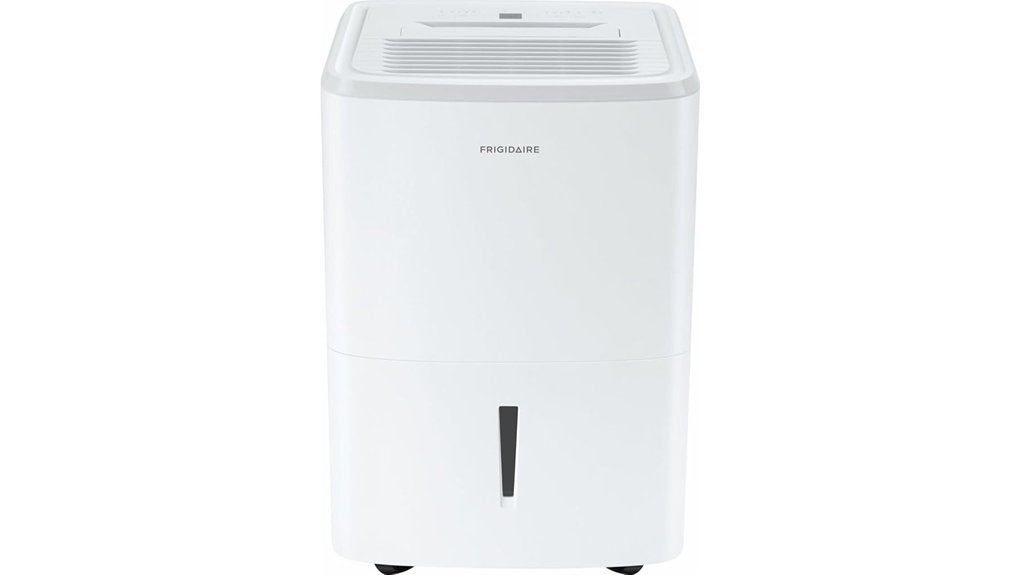
Frigidaire’s 50-pint WiFi dehumidifier is the strongest all-around option in this list for buyers who want an ENERGY STAR compressor model with app control. It is designed for larger residential areas and combines automatic humidity control, three fan speeds, a washable filter, a front-loading bucket, and continuous drainage. The WiFi feature is useful when the unit is in a basement, cabin, or another area you do not check often, although remote features still depend on a stable home network and working app service.
Why You’ll Like It: It balances strong moisture removal, familiar controls, remote monitoring, and easier long-term maintenance.
Best For: Large rooms, basements, and homeowners who want smart control and continuous drainage.
Who Should Avoid It: Buyers who only need a small bedroom unit or do not want to depend on an app for remote features.
Pros:
- 50-pint compressor capacity and strong airflow for larger residential spaces.
- WiFi control, automatic humidity management, and three fan speeds.
- Washable filter, splash-guard bucket, and continuous-drain support.
Cons:
- Heavier and bulkier than compact thermoelectric units.
- Remote control depends on WiFi, the app, and online service availability.
- May be more machine than a small room with mild humidity needs.
Vellgoo Max 80 Pint Dehumidifier with Drain Hose
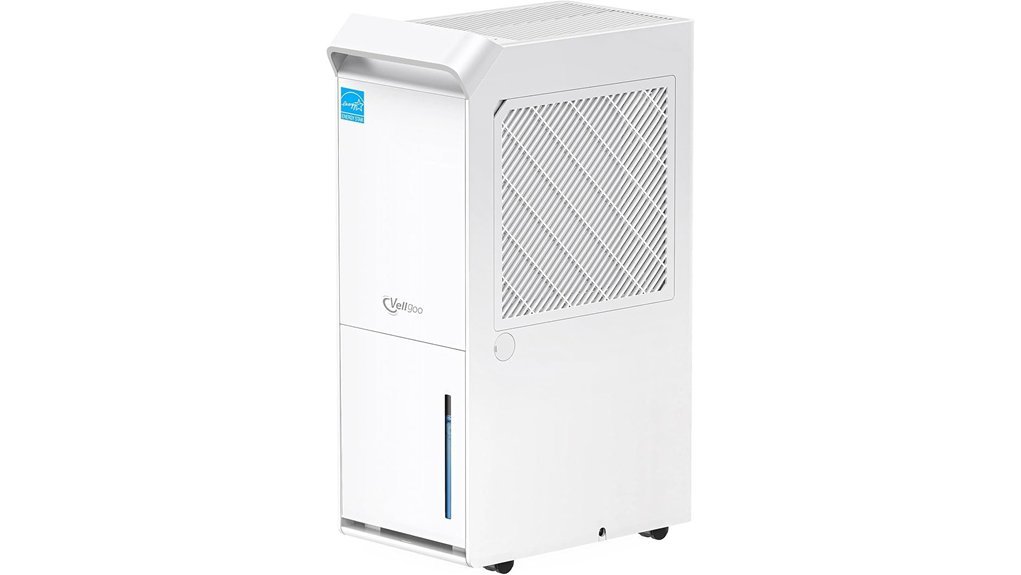
The Vellgoo Max 80 Pint Dehumidifier is aimed at large, damp spaces up to 4,500 sq. ft. Its advertised maximum capacity is measured under demanding humidity conditions, so compare the standardized rating with other models before treating every “80-pint” claim as equal. Smart humidity control lets you set a target between 40% and 80% RH, while the washable filter, 24-hour timer, child lock, and included 6.56-foot hose make continuous use easier. The listing also identifies it as an ENERGY STAR Most Efficient 2025 model.
Why You’ll Like It: It offers flexible drainage and useful controls for a basement where manual bucket emptying would become tiring.
Best For: Large basements, garages, and open living areas with a nearby floor drain.
Who Should Avoid It: Small-room buyers or anyone who cannot provide a suitable gravity-drain route.
Pros:
- High advertised moisture-removal capacity for demanding humidity.
- ENERGY STAR Most Efficient 2025 claim for efficiency-focused shoppers.
- Included hose, garden-hose connection, timer, child lock, and washable filter.
Cons:
- Advertised pint figures may use different test conditions than standardized ratings.
- Larger body is less convenient to move between floors.
- Gravity drainage only works when the hose slopes continuously toward a lower drain.
Gasbye 4500 Sq.Ft. Energy Star Dehumidifier with Drain Hose
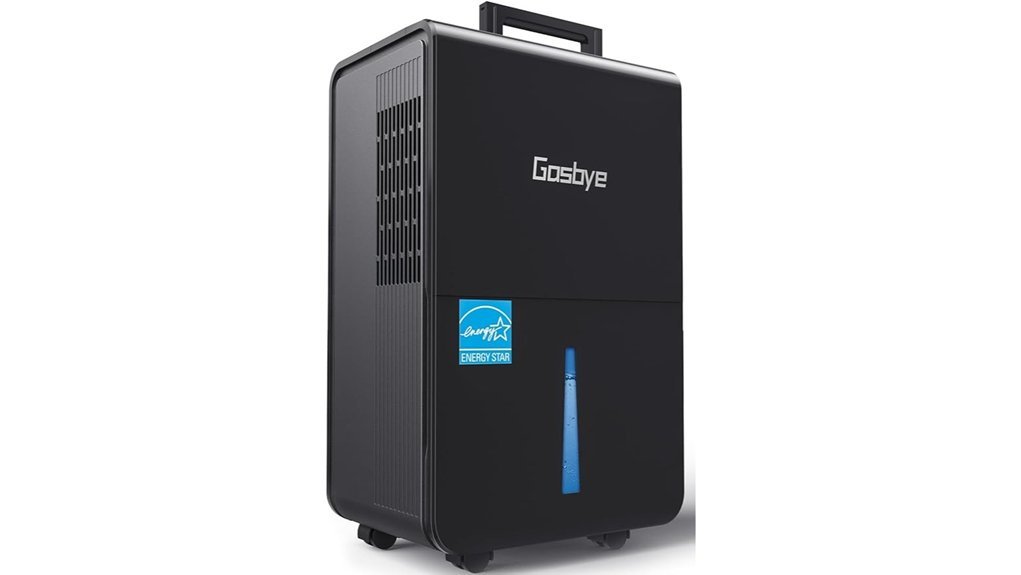
Gasbye’s DryPrime is designed for large homes and basements up to 4,500 sq. ft. The listing advertises up to 115 pints per day in very hot, humid conditions, but that maximum should not be compared directly with a standardized 50-pint or 52-pint DOE rating. Its smart humidity control cycles the compressor as needed, while a 1.7-gallon tank, 5-foot hose, and garden-hose adapter provide several drainage choices. A washable filter and copper-tube heat-exchanger design support regular maintenance and long operating sessions.
Why You’ll Like It: The multiple drainage options make it easier to set up in a basement, laundry area, or other consistently humid space.
Best For: Large, hot, humid rooms where continuous drainage is available.
Who Should Avoid It: Buyers comparing products only by the largest advertised pint number without checking standardized capacity.
Pros:
- Strong advertised output under hot and humid test conditions.
- Smart humidity control and several drain configurations.
- Large tank, washable filter, and included garden-hose adapter.
Cons:
- The 115-pint maximum is condition-dependent and not a universal daily result.
- Large compressor unit is heavier than bedroom-size models.
- Manual tank emptying can still be frequent if continuous drainage is not used.
Waykar 80 Pints Energy Star Dehumidifier for Large Rooms
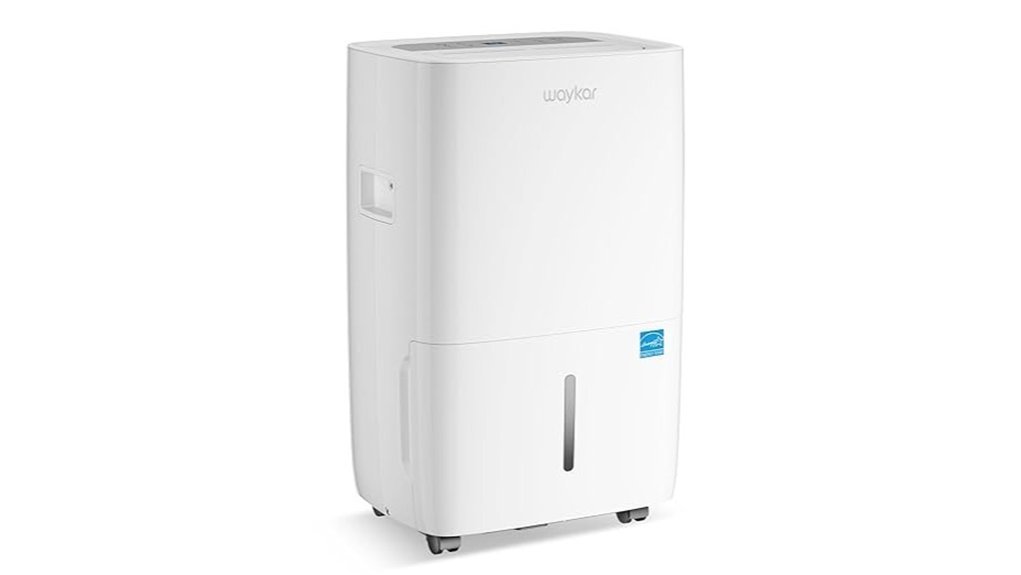
The Waykar 80 Pint model is marketed for large spaces up to 5,000 sq. ft. and includes an auto-swing outlet to distribute drier air across a wider area. Its maximum 80-pint claim is tied to hot, highly humid conditions, so use the standardized product rating when comparing it with other dehumidifiers. Smart controls allow a target humidity between 30% and 80%, and the unit supports both bucket collection and continuous drainage. Automatic defrost and protection functions help it manage normal operating changes.
Why You’ll Like It: The swing outlet and continuous-drain support suit open basements and large rooms better than a small fixed-vent unit.
Best For: Large rooms, finished basements, and homes that need wider airflow coverage.
Who Should Avoid It: Small spaces where a large compressor unit would be unnecessary or difficult to place.
Pros:
- Advertised for spaces up to 5,000 sq. ft.
- Auto-swing airflow, adjustable humidity control, and automatic defrost.
- Tank and continuous-drain options for flexible setup.
Cons:
- The maximum pint claim depends on test temperature and relative humidity.
- The bucket may need regular emptying without a drain hose.
- Large coverage claims should not replace proper sizing for actual room conditions.
Yaufey 5000 Sq. Ft. Energy Star Dehumidifier
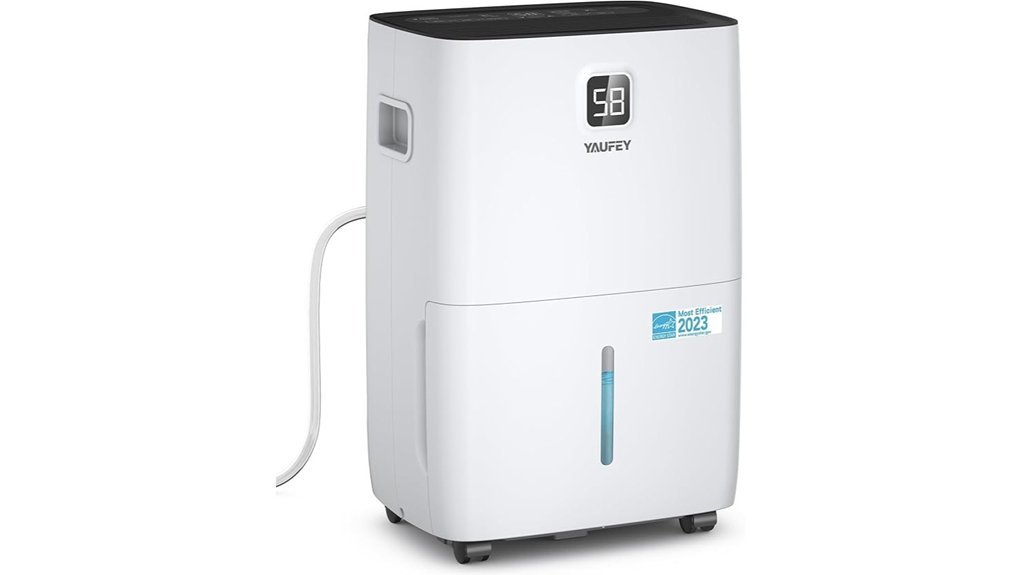
Yaufey’s large-room dehumidifier is marketed for spaces up to 5,000 sq. ft. and advertises a maximum removal rate of up to 80 pints per day under high-humidity conditions. Smart sensors, several operating modes, adjustable fan speeds, and a target humidity range give you more control than a basic one-button model. You can collect water in the tank or connect continuous drainage, and the wheels and handle make room-to-room positioning easier on the same floor.
Why You’ll Like It: It offers a useful mix of humidity settings, fan control, portability, and drainage choices.
Best For: Large rooms and basements where users want more control over fan speed and humidity settings.
Who Should Avoid It: Buyers who prefer the simplest possible control panel or need a built-in pump rather than gravity drainage.
Pros:
- Advertised coverage up to 5,000 sq. ft. with high-condition output up to 80 pints per day.
- Smart sensors, multiple modes, and adjustable fan speeds.
- Tank and continuous drainage, washable filter, wheels, and handle.
Cons:
- Maximum capacity is dependent on test conditions.
- More settings can mean a longer setup process for first-time users.
- Continuous drainage requires correct hose positioning and routine inspection.
Vellgoo 64 Pint Dehumidifier with Smart Humidity Control
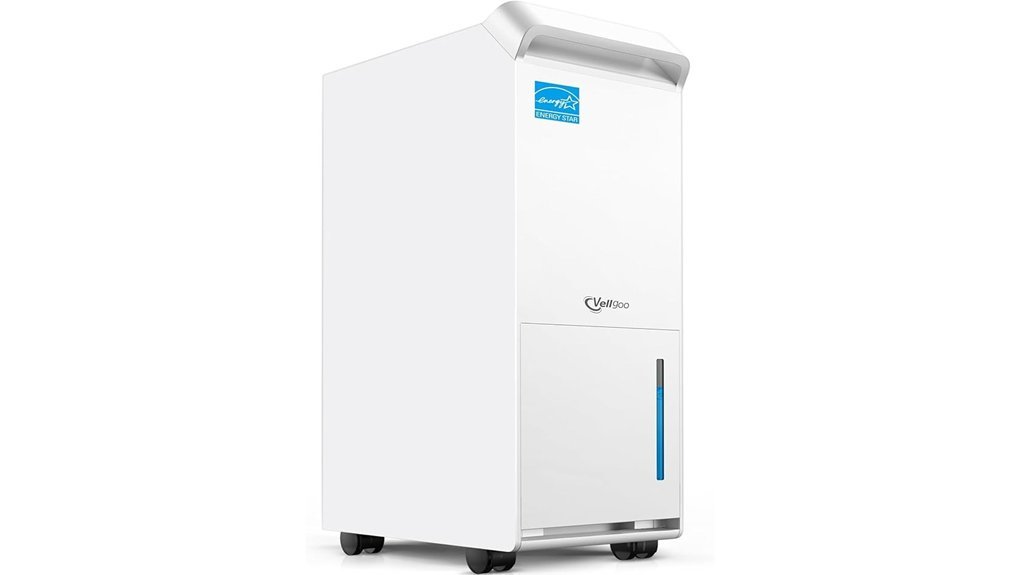
The Vellgoo 64 Pint Dehumidifier is a better fit for shoppers who do not need the largest model in the roundup. Current product information identifies it as a 64-pint unit for spaces up to about 4,000 sq. ft., rather than the 70-pint and 4,500-sq.-ft. figures previously stated. It includes smart humidity control, automatic defrost, automatic restart, easy mobility, and three drainage approaches. The listing identifies it as an ENERGY STAR Most Efficient 2024 model.
Why You’ll Like It: It gives you most of the controls and drainage flexibility of a larger basement model in a slightly lower-capacity package.
Best For: Medium-to-large basements, garages, and open rooms that need steady automatic humidity control.
Who Should Avoid It: Severe water intrusion, flood cleanup, or very small bedrooms.
Pros:
- Corrected 64-pint capacity and advertised coverage up to about 4,000 sq. ft.
- Smart humidity control, auto defrost, auto restart, and several drain options.
- ENERGY STAR Most Efficient 2024 claim.
Cons:
- Not as powerful as the larger Vellgoo Max under demanding conditions.
- Manual bucket use still requires regular checks.
- Coverage figures are estimates and depend on temperature, layout, and moisture load.
ToLife Dehumidifier for Home, 1000 sq.ft, 95 OZ
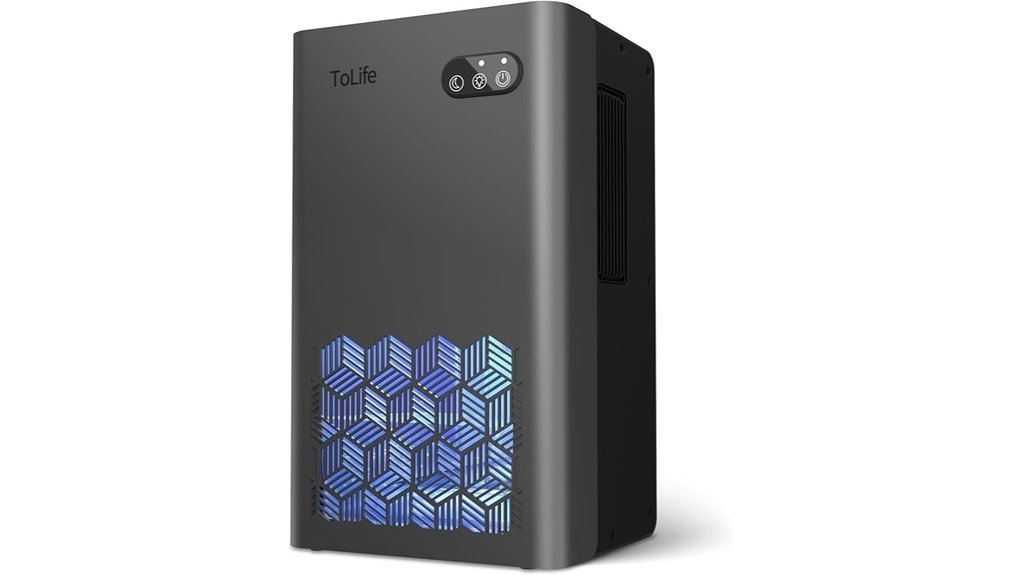
The ToLife Dehumidifier is a compact thermoelectric model with a 95-ounce tank, automatic shutoff, quiet sleep operation, and seven-color lighting. It is marketed for rooms up to 1,000 sq. ft., but thermoelectric units remove far less water than full-size compressor dehumidifiers. Treat it as a light-moisture option for a bedroom, bathroom, closet, or office—not as a whole-basement solution.
Why You’ll Like It: It is easy to carry, simple to empty, and quieter than most compressor models.
Best For: Bedrooms, bathrooms, closets, offices, and mild seasonal humidity.
Who Should Avoid It: Anyone dealing with standing water, persistent basement dampness, or a room that stays far above the target humidity.
Pros:
- Compact design with a carry-friendly shape.
- Quiet sleep operation and optional ambient lighting.
- 95-ounce tank with automatic full-tank shutoff.
Cons:
- Thermoelectric moisture removal is much lower than compressor performance.
- The 1,000-sq.-ft. coverage claim is best viewed as a marketing estimate for light humidity.
- No continuous-drain feature is listed for this configuration.
95OZ Dehumidifier for Home 1000 Sq.Ft Quiet Black
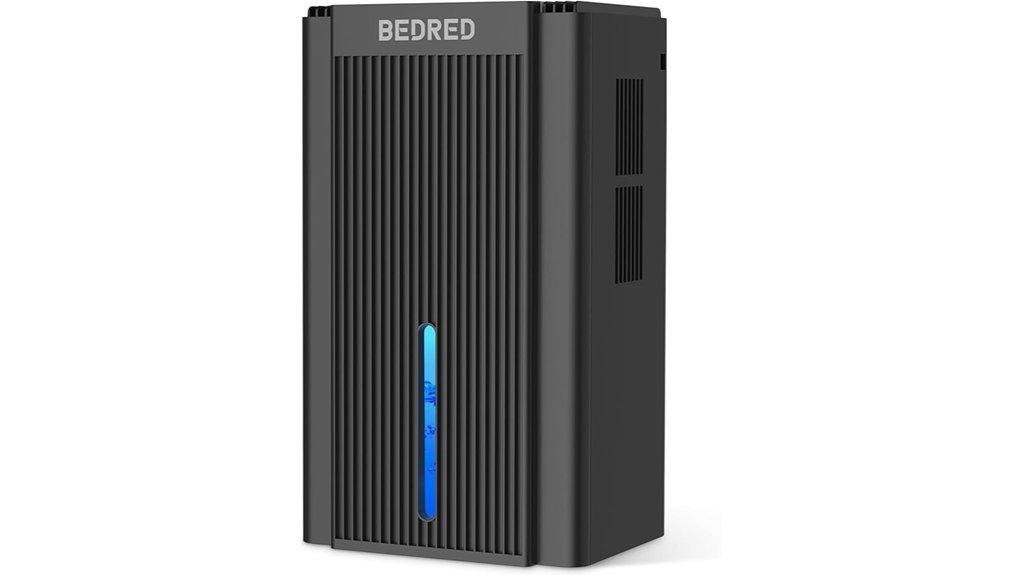
The BEDRED CT11 is another thermoelectric model built around quiet operation and simple tank collection. It has a 95-ounce reservoir, automatic shutoff, sleep mode, and seven-color ambient lighting. The sleek black housing works well in bedrooms, offices, bathrooms, or RV living areas, but its compact technology is intended for light to moderate moisture—not heavy basement dehumidification.
Why You’ll Like It: It combines a discreet black finish with quiet controls and automatic full-tank protection.
Best For: Small living spaces where quiet operation and appearance matter more than maximum extraction speed.
Who Should Avoid It: Buyers who need standardized high-capacity moisture removal or continuous drainage.
Pros:
- Compact thermoelectric design with quiet sleep mode.
- 95-ounce tank and automatic shutoff.
- Seven-color ambient lighting and a simple portable body.
Cons:
- Less powerful than compressor-based dehumidifiers.
- Advertised coverage should not be confused with heavy-duty basement capacity.
- Tank-only operation requires periodic emptying.
Factors to Consider When Choosing an Efficient Dehumidifier
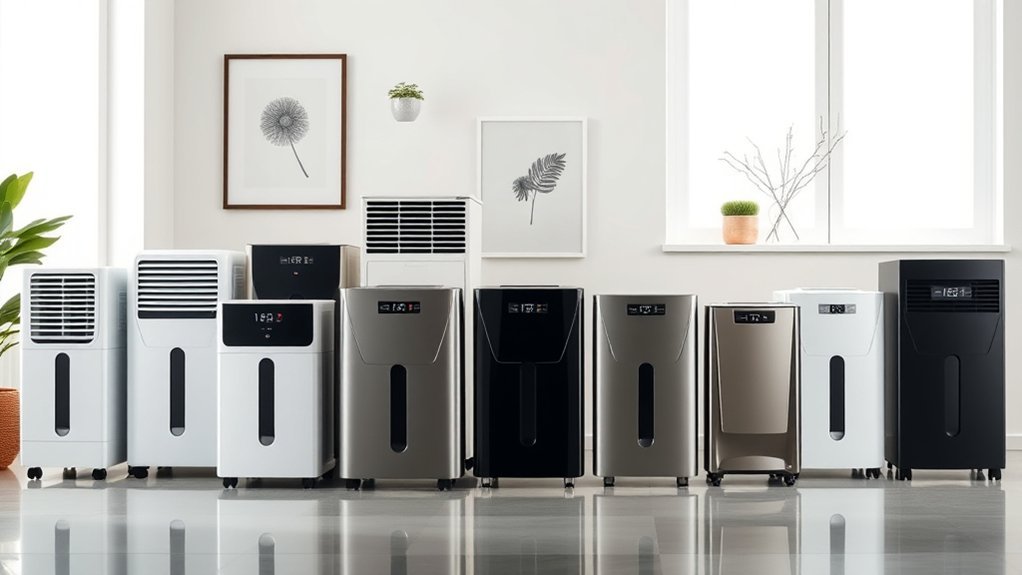
Choose a dehumidifier by matching its standardized moisture-removal capacity to your room size, temperature, and humidity level. Then compare energy efficiency, noise, drainage, filter access, controls, and warranty. A correctly sized unit usually reaches the target humidity faster and cycles off more often than an undersized unit running nonstop.
Standardized Capacity vs. Marketing Claims
Do not compare two products only by the largest pint number in their titles. Some sellers advertise maximum extraction at conditions such as 95°F and 90% relative humidity, while standardized ratings use less extreme conditions. A model marketed as “80 pint” or “115 pint” may belong to a lower standardized capacity class. Look for the DOE-rated capacity or ENERGY STAR product record so you are comparing like with like.
Coverage Area
Coverage is an estimate, not a guarantee. Open floor plans, cool basements, active leaks, poor air circulation, and very high humidity all increase the moisture load. A smaller unit can work in a bedroom with light humidity, while a large basement usually needs a compressor model with continuous drainage. Fix leaks and water intrusion first; a portable dehumidifier is not a substitute for drainage or waterproofing repairs.
Moisture Removal Rate
Moisture-removal rate tells you how much water the unit can collect in 24 hours under stated test conditions. Large compressor dehumidifiers remove much more water than compact thermoelectric models. For a damp basement or large open room, prioritize a standardized high-capacity rating. For a closet, bathroom, or mild bedroom humidity, a small thermoelectric unit may be enough.
Energy Star Rating
An ENERGY STAR rating helps identify compressor dehumidifiers that remove moisture more efficiently than comparable conventional models. It does not mean every certified model costs the same to run, because room conditions, capacity, fan speed, and daily runtime still matter. Compare the integrated energy factor and annual energy use when available instead of relying on broad savings promises.
Noise Levels
Check the listed decibel rating and fan-speed options if the unit will run near a bedroom, office, or television. Lower numbers are quieter. Compact thermoelectric units are usually quieter but remove less water. Full-size compressor models are more capable but often produce fan, compressor, and vibration noise. A sleep or low-fan mode can help, but do not sacrifice the capacity needed for the room.
Drainage Options
A removable bucket is simple but requires regular emptying. Gravity drainage is more convenient when you have a lower floor drain and can keep the hose sloping downward without kinks. A built-in pump is useful when water must travel upward, but none of the products in this list should be assumed to include a pump unless the current listing clearly says so. Always secure the hose and check the connection for leaks.
Maintenance and Placement
Leave the clearance required by the manual, keep the air intake and outlet open, and clean the washable filter on schedule. Place the unit upright on a stable surface and inspect the bucket, hose, and drain connection regularly. After moving a compressor model on its side, follow the manufacturer’s instructions before switching it on.
- Confirm standardized pint capacity and test conditions.
- Measure the room and consider how damp it becomes.
- Choose tank, gravity drain, or pump drainage.
- Check operating temperature, noise, filter access, and hose length.
- Verify the current warranty and seller before ordering.
Frequently Asked Questions
How Often Should I Clean a Dehumidifier Filter?
Check the filter every two to four weeks during regular use and clean it sooner if you have pets, dust, construction work, or reduced airflow. Follow the product manual because filter designs and cleaning methods vary.
Can a Dehumidifier Help Reduce Mold Growth?
A dehumidifier can make conditions less favorable for new mold growth by controlling humidity. It will not remove existing mold or fix a leak, condensation problem, or water intrusion. Address the moisture source and clean affected materials safely.
What Humidity Level Is Ideal for Most Homes?
A common target is about 30% to 50% relative humidity. Many homes feel comfortable around 40% to 50%, while colder weather may require a lower setting to reduce window condensation.
Do Dehumidifiers Work Better With Closed Doors and Windows?
Yes. Closing exterior doors and windows prevents humid outdoor air from constantly entering the space. Interior doors can remain open when you want one properly sized unit to treat connected rooms and airflow can move freely.
How Much Electricity Does an Efficient Dehumidifier Use?
Electricity use depends on wattage and runtime. To estimate daily use, multiply watts by operating hours and divide by 1,000. For example, a 500-watt unit running eight hours uses about 4 kWh. A humidistat, correct sizing, clean filter, and closed windows can reduce unnecessary runtime.
Is a Thermoelectric Dehumidifier Good for a Basement?
Only for a small basement area with light humidity. For persistent dampness, musty odors, or a large basement, a compressor dehumidifier with a standardized pint rating and continuous drainage is usually the more suitable choice.
Conclusion
The best efficient dehumidifier is the one that reaches your target humidity without running harder than necessary. For most large-room buyers, the Frigidaire 50 Pint WiFi offers the clearest balance of verified capacity, ENERGY STAR efficiency, smart control, and drainage flexibility. The Vellgoo Max, Gasbye, Waykar, and Yaufey are worth comparing for demanding spaces, but check how their maximum pint claims were measured. For light bedroom or bathroom moisture, the ToLife and BEDRED models are quieter and easier to place, as long as you understand their lower extraction power.