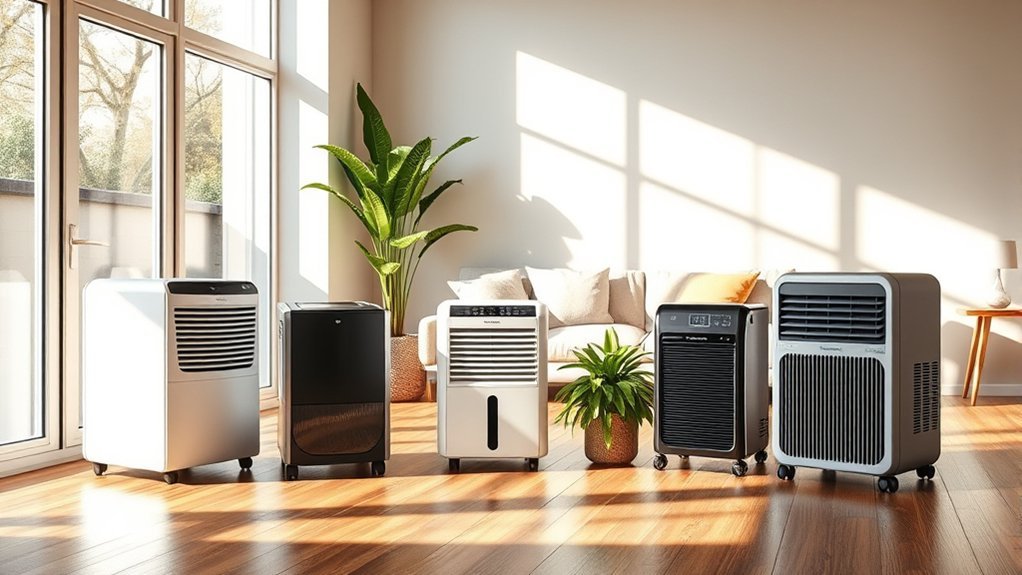
For a large basement in 2026, you’ll usually want a 70-pint dehumidifier or a larger high-capacity basement model that can handle damp air, musty smells, and long runtime without constant babysitting. The best choice depends on your basement size, drainage setup, noise tolerance, and whether you need a built-in pump. Below, you’ll find strong basement-ready options including the Vellgoo Max 140 Pint, Landeagle 6000 Sq. Ft. unit, AEOCKY with pump, ARGENDON Crawlspace model with pump, Yaufey 5000 Sq. Ft., Waykar Max, HBN FDD25-5259, AIRPLUS AP2103, and Ludatido 2026 ENERGY STAR model. Compare capacity, drainage, energy use, and control features so you can choose the model that fits your basement instead of overpaying for features you may not need.
Quick Verdict
Best for very large basements: Vellgoo Max 140 Pint or Landeagle 6000 Sq. Ft. because both target bigger spaces with strong moisture removal.
Best if you need automatic drainage: AEOCKY or ARGENDON because a pump can help when a floor drain is not nearby or water must move upward.
Best balanced picks for most large basements: Yaufey, Waykar Max, HBN, AIRPLUS, or Ludatido if you want high capacity, humidity control, and continuous drain support without choosing the largest unit here.
Affiliate note: This article includes Amazon affiliate links. If you buy through these links, the site may earn a commission at no extra cost to you. Product details can change, so always confirm the latest specs, dimensions, drainage setup, certification details, and warranty terms on Amazon before buying.
Important Capacity Note
Many dehumidifier listings show a maximum pint rating measured in warm, very humid conditions. Real basement performance can be lower when the room is cooler or less humid. Use the listed pint rating as a comparison point, but also check coverage area, drainage options, auto-defrost, tank size, and whether the unit can run continuously in your basement layout.
Quick Comparison Table
| Product | Best For | Listed Capacity | Drainage Style | Main Buyer Advantage | Amazon |
|---|---|---|---|---|---|
| Vellgoo Max 140 Pint | High-humidity, large basement spaces | Up to 140 pints/day | Continuous drain hose | Maximum drying power in this list | Check Price |
| Landeagle 6000 Sq. Ft Dehumidifier | Very large basements and laundry areas | Up to 100 pints/day | Tank or drain hose | Large coverage with multiple modes | Check Price |
| AEOCKY 4500 Sq.Ft with Pump | Automatic drainage setups | 80 pints/day | Built-in pump | Hands-free water removal | Check Price |
| ARGENDON Crawlspace Dehumidifier with Pump | Crawlspaces and smaller basement zones | 70 pints/day | Built-in pump or gravity hose | Pump drainage for tricky layouts | Check Price |
| Yaufey 5000 Sq. Ft. Energy Star | Energy-conscious basement owners | Up to 80 pints/day | Tank or hose | Good balance of capacity and efficiency | Check Price |
| Waykar Max 80 Pint | Basements, bedrooms, and bathrooms | Up to 80 pints/day | Tank or drain hose | Energy Star design with self-drying | Check Price |
| HBN FDD25-5259 | Large basements needing smart controls | 80 pints/day | Tank or continuous drain | Modes, timer, humidity display | Check Price |
| AIRPLUS AP2103 | Movable basement moisture control | 70 pints/day | Tank or drain hose | Portable design with flexible controls | Check Price |
| Ludatido 2026 ENERGY STAR | Quiet energy-efficient drying | 80 pints/day | Tank or continuous drain | Quiet operation and large coverage | Check Price |
Vellgoo Max 140 Pint Dehumidifier for Basement
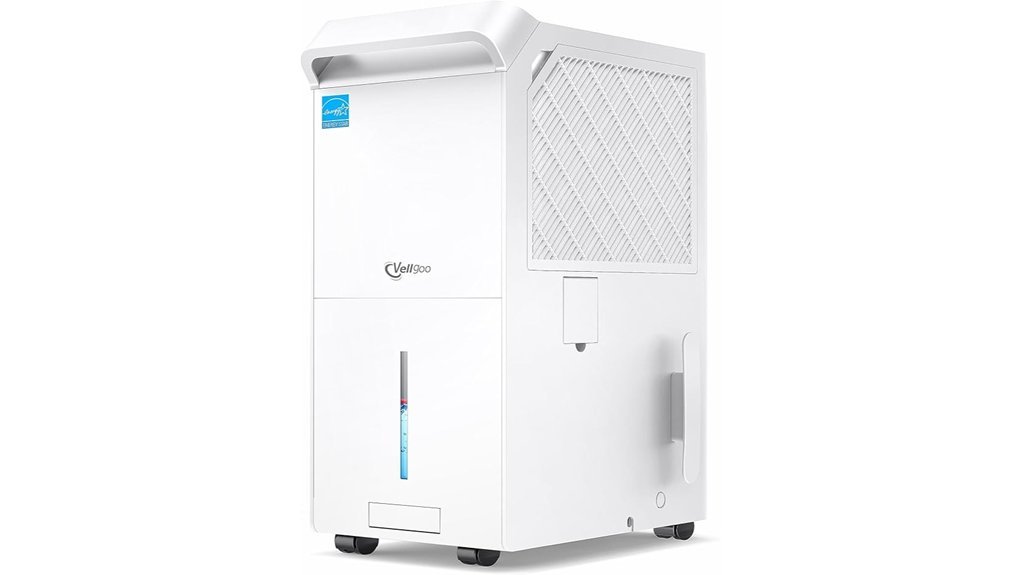
Vellgoo Max 140 Pint Dehumidifier targets sprawling basements up to 6,000 square feet with serious drying power. You get a listed maximum of 140 pints a day in very humid conditions, plus an ENERGY STAR Most Efficient 2025 listing for better long-term efficiency. Its large-capacity compressor design gives it more headroom than a standard 70-pint model when your basement stays damp after rain, laundry, or humid weather. Use the 6.56-foot hose for continuous drainage, or rely on the LED controls, timer, sleep mode, wheels, child lock, and washable filter. Auto restart and defrost help it stay practical for basement use.
Why You’ll Like It: This is one of the strongest options here for basements with heavy humidity, water-prone walls, or a large open layout. The high listed daily pint rating gives it more headroom than a standard 70-pint model.
Best For: Homeowners with large basements or whole-home dampness up to 6,000 sq. ft. who want powerful dehumidification with convenient drainage and useful controls.
Who Should Avoid It: It may be more than necessary if your basement only gets slightly damp in summer. Buyers with small rooms may prefer a lower-capacity model that takes up less space.
Pros:
- Strong listed moisture removal up to 140 pints/day in very humid conditions.
- Large coverage rating makes it a strong match for open basements and garage-style spaces.
- Useful features include a continuous drain hose, auto restart, defrost, timer, and child lock.
Cons:
- Large-capacity operation can use more electricity during heavy runtime.
- May feel bulky in smaller rooms or tight basement corners.
- Current specs and warranty terms should be confirmed on the Amazon listing before buying.
Landeagle 6000 Sq. Ft Dehumidifier with Drain Hose
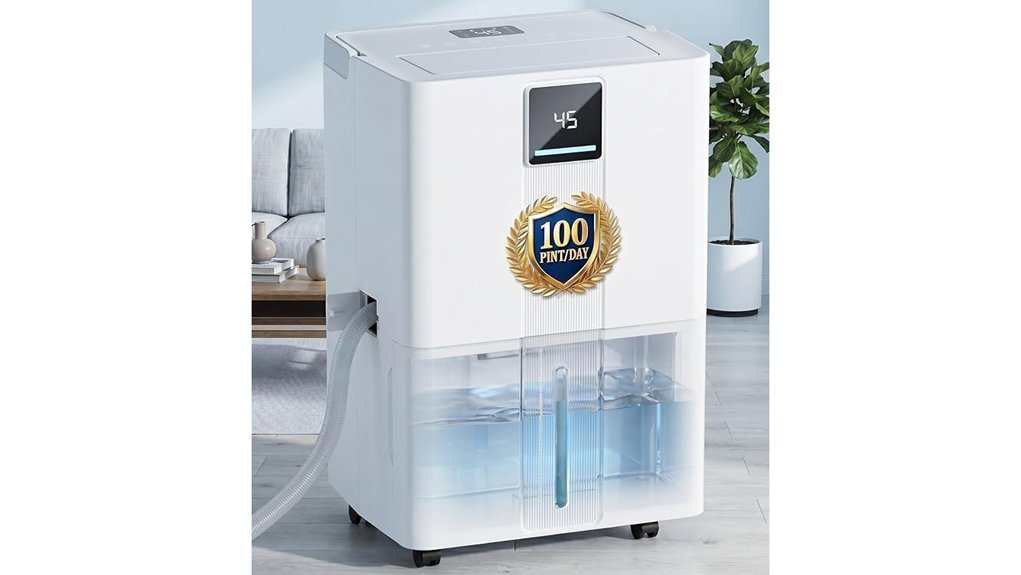
If you’re looking for a dehumidifier that can handle a truly large basement, the Landeagle 6000 Sq. Ft model gives you strong moisture removal and flexible control. It has a listed capacity of up to 100 pints a day and covers spaces up to 6,000 square feet, so you can tackle damp rooms fast. You can use Dry Mode for laundry, Auto Mode for steady comfort, or Sleep Mode when you want quieter operation. The 1.6-gallon tank pauses when full, and the drain hose lets you run it longer with less fuss. It also keeps settings and includes protection features for everyday use.
Why You’ll Like It: This model makes sense if your basement is open, humid, and large enough that a smaller 50-pint or basic 70-pint unit may run constantly. The drain hose support is especially helpful because large basements can fill a tank quickly during wet weather.
Best For: Homeowners with large basements, damp rooms, or laundry areas who need a powerful, easy-to-use dehumidifier with flexible modes and continuous drainage.
Who Should Avoid It: Skip it if your room is small, lightly humid, or has limited floor space. A very high-capacity model can be more machine than you need for a compact bedroom or closet.
Pros:
- Listed to remove up to 100 pints of moisture per day and cover spaces up to 6,000 sq. ft.
- Offers useful modes like Dry, Auto, and Sleep, plus a drain hose for less frequent emptying.
- Includes convenient features such as a washable filter, humidity display, and child lock.
Cons:
- At 6,000 sq. ft. capacity, it may be larger than needed for small rooms.
- The 1.6-gallon tank can still require emptying if the drain hose is not used.
- Best performance depends on suitable temperature, humidity, airflow, and drainage setup.
AEOCKY 4500 Sq.Ft Energy Star Dehumidifier with Pump
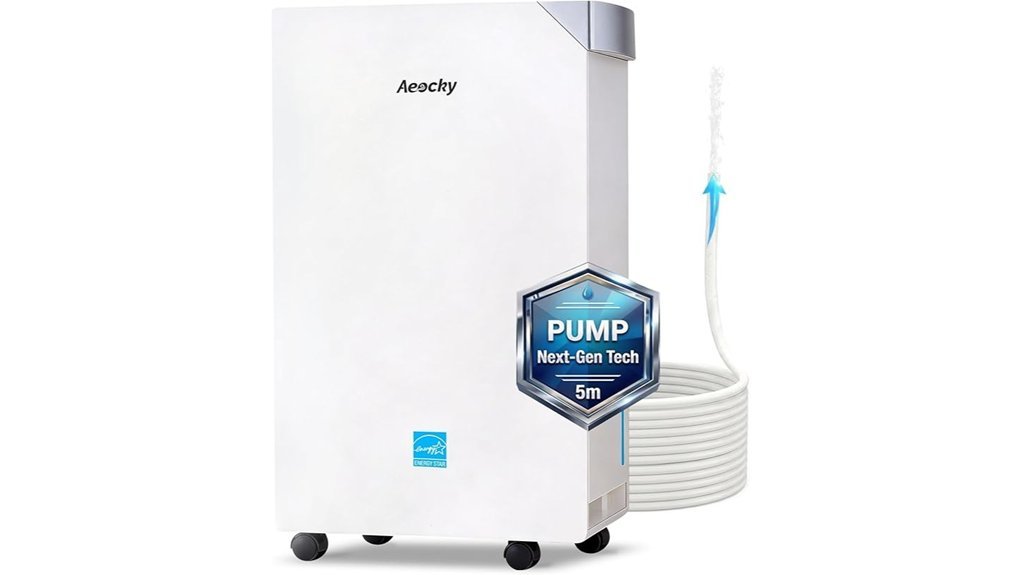
AEOCKY’s 4500 sq. ft. Energy Star dehumidifier with pump gives you serious basement control with its listed 80-pint capacity and intelligent humidistat. It targets spaces up to 4,500 square feet and is designed for buyers who want more automatic drainage than a simple bucket setup can provide. The built-in pump helps move collected water to a drain point when gravity drainage is not convenient. You also get a drain hose, quiet-use features, smart socket compatibility, and warranty support. Before ordering, confirm current seller availability and the exact pump setup on Amazon.
Why You’ll Like It: The built-in pump is the standout feature. It can reduce daily maintenance when your basement does not have a convenient floor drain near the unit.
Best For: Homeowners needing a high-capacity, energy-conscious dehumidifier with automatic pumping for basements or large spaces up to 4,500 sq. ft.
Who Should Avoid It: If you already have a floor drain directly beside the unit, a non-pump model may be enough. Pump models usually make the most sense when gravity drainage is not easy.
Pros:
- Built-in pump can reduce manual bucket emptying in difficult basement layouts.
- Listed 80-pint capacity and 4,500 sq. ft. coverage fit many large residential spaces.
- Includes smart humidity control, drain hose support, and warranty-backed positioning.
Cons:
- May cost more than basic dehumidifiers without a pump.
- Pump system and smart features may be unnecessary for smaller spaces.
- Requires proper drainage setup to fully benefit from auto-drainage functionality.
ARGENDON Crawlspace Dehumidifier with Pump (70 Pint)
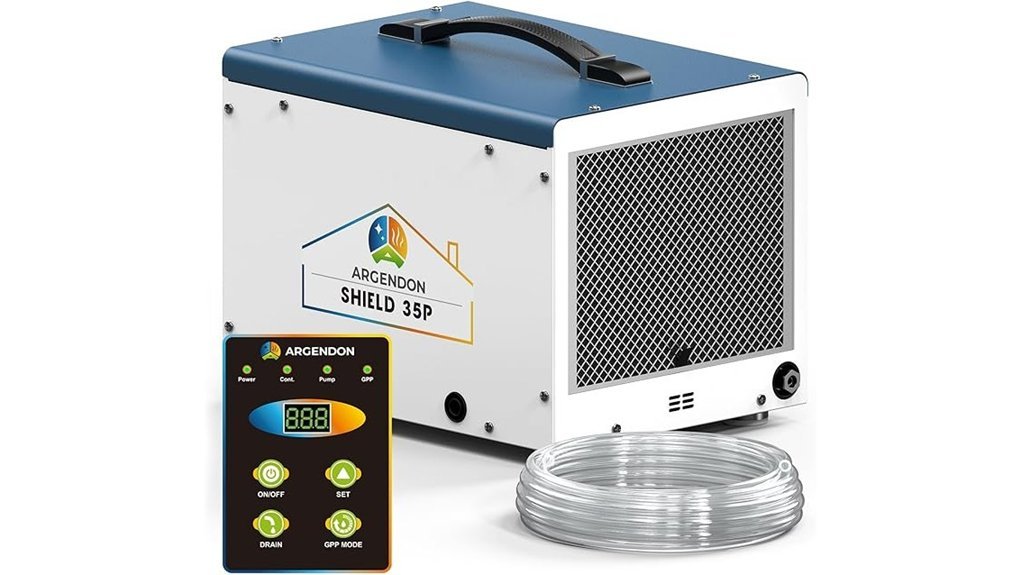
The ARGENDON Crawlspace Dehumidifier suits crawlspaces, storage areas, and basement zones up to about 1,000 square feet. You get 70 pints of daily moisture removal and 115 cfm airflow, so it tackles damp air efficiently in smaller enclosed areas. Use the built-in pump to move water upward or switch to gravity drainage with the included hose. You can set humidity from 25% to 85% on the digital panel, and automatic defrost helps in cooler conditions. Its metal build stays compact, includes a handle, and meets ETL safety standards.
Why You’ll Like It: The built-in pump is the main reason to consider this model. If your basement drain is higher than the unit, or you need to move water toward a sink or sump area, a pump model can save you from frequent bucket emptying.
Best For: Homeowners needing a compact, high-capacity dehumidifier for crawlspaces, storage areas, or divided basement zones with flexible drainage options.
Who Should Avoid It: If your basement is much larger than 1,000 square feet and heavily damp throughout, you may need a unit with broader rated coverage or multiple dehumidifiers placed in different zones.
Pros:
- Removes up to 70 pints of moisture per day with 115 cfm airflow for efficient drying.
- Built-in pump and gravity hose offer versatile drainage options.
- Adjustable humidity control, automatic defrost, and ETL safety certification add convenience and peace of mind.
Cons:
- Less suitable for very large open basements than higher-coverage models.
- May be less convenient to move frequently than lighter home units.
- Best value comes from using its pump or drain setup, not manual monitoring.
Yaufey 5000 Sq. Ft. Energy Star Dehumidifier
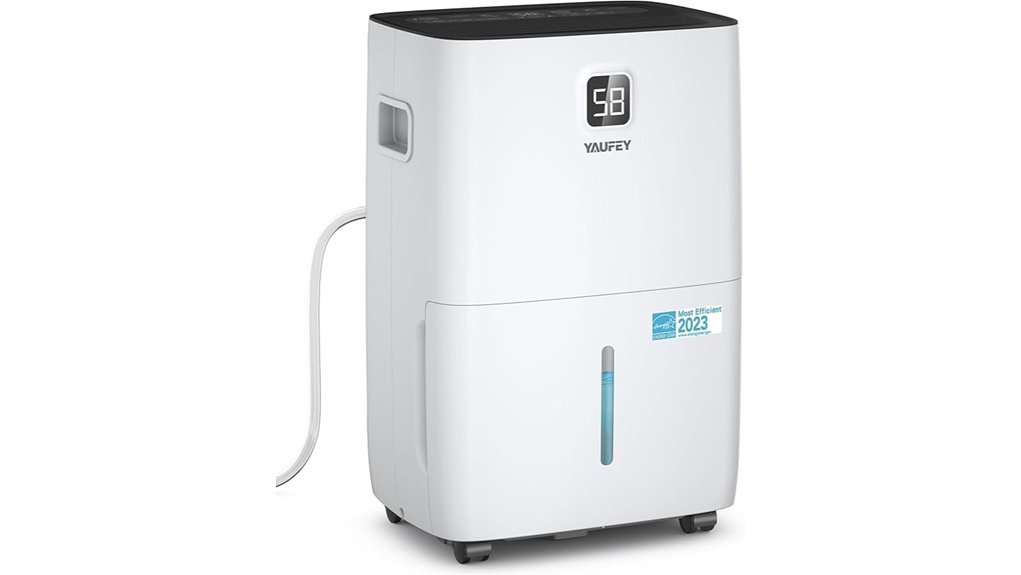
If your basement spans up to 5,000 square feet, Yaufey delivers serious moisture control. You get up to 80 pints a day in very humid conditions and 60 pints in warm, damp rooms, while the Energy Star design helps reduce power use compared with less efficient models. Its smart compressor and sensors keep humidity between 30% and 80%, with dedicated Sleep, Living, Basement, and Continuous modes. You can drain it manually or with the included hose, and the 1.06-gallon tank shuts off automatically when full. Wheels and a washable filter make it practical for everyday basement use.
Why You’ll Like It: Yaufey is a practical middle ground for buyers who want large-space coverage, energy-conscious operation, and simple drainage without jumping to the highest-capacity model on the list.
Best For: Homeowners, renters, or property managers who need high-capacity moisture control for large spaces like basements, garages, living rooms, or offices.
Who Should Avoid It: Avoid relying on the small tank alone if your basement is very damp. For best convenience, plan to use the hose whenever possible.
Pros:
- Covers up to 5,000 sq. ft. and removes up to 80 pints of moisture per day in very humid conditions.
- Energy Star positioning and smart compressor control can help manage long-term running costs.
- Convenient features include multiple modes, manual or continuous drainage, auto shut-off, wheels, and a washable filter.
Cons:
- The 1.06-gallon tank may require frequent emptying if you’re not using the drain hose.
- Best performance is in large spaces, so it may be more than some small rooms need.
- It is not silent, so compare noise expectations if your basement is a living space.
Waykar Max 80 Pint Home Dehumidifier with Drain Hose
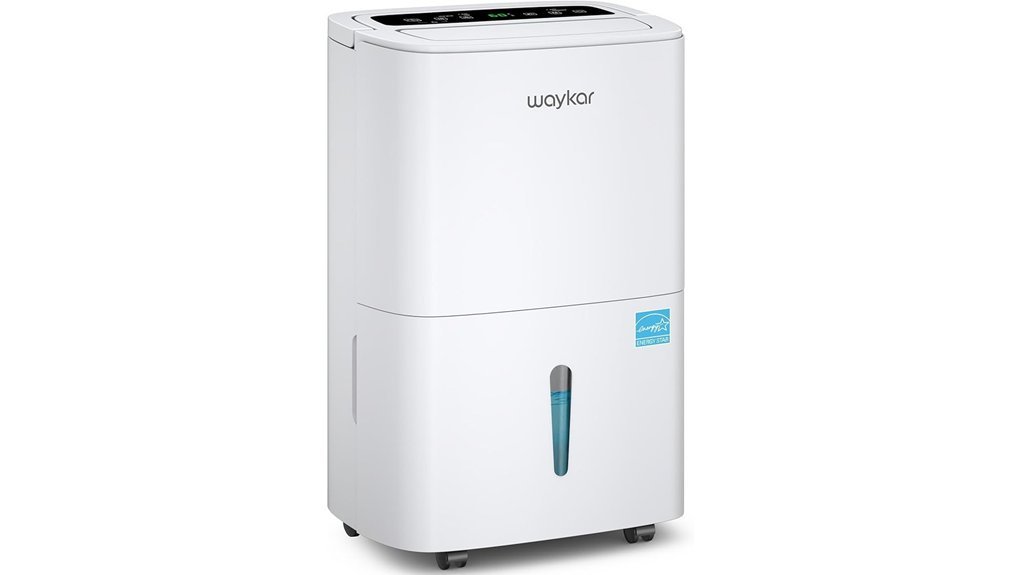
The Waykar Max 80 Pint Dehumidifier suits large basements up to 5,000 square feet. You can count on it to pull up to 80 pints a day from muggy air, or 62 pints in warmer, damp spaces. Set your target from 30% to 80% humidity, then let auto mode handle the rest. Its Energy Star design helps manage energy use, while auto-defrost keeps it running in cooler conditions. Move it easily with casters and a handle. Use the tank or attach the drain hose for nonstop drainage. The washable filter and self-drying function simplify upkeep.
Why You’ll Like It: Waykar Max is a strong everyday option because it covers the major features most basement buyers want: 80-pint moisture removal, Energy Star design, auto mode, defrost, washable filter, and drain hose support.
Best For: Homeowners who need a powerful, energy-conscious dehumidifier for large spaces like basements, bedrooms, and bathrooms, with flexible drainage and easy mobility.
Who Should Avoid It: If your basement has severe moisture, standing water, or active leaks, solve the water-entry issue first. A dehumidifier helps humidity, but it is not a replacement for waterproofing or repair.
Pros:
- Removes up to 80 pints of moisture per day and covers up to 5,000 sq. ft.
- Energy Star design with auto-defrost and self-drying functions for efficiency and longevity.
- Offers both tank and drain hose drainage options, plus a washable filter for easy maintenance.
Cons:
- Larger size may be less convenient for very small rooms or tight storage spaces.
- The water tank still requires emptying if continuous drainage is not used.
- Best performance depends on keeping the unit properly positioned for airflow and drainage.
4500 Sq.Ft Dehumidifier with Smart Humidity Control
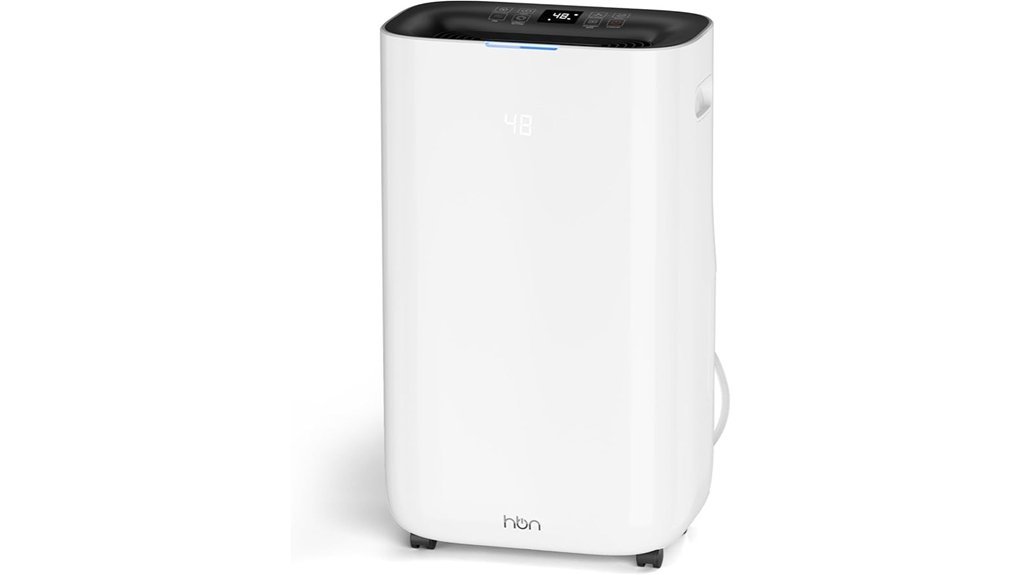
Need a basement dehumidifier that handles serious moisture? The HBN FDD25-5259 covers up to 4,500 sq. ft. and removes 80 pints a day in high-humidity conditions, so you can tackle damp basements with confidence. You can set humidity anywhere from 30% to 80%, then let its smart sensor keep things steady. Choose Normal, Continuous, Strong, or Dry Clothes mode, and adjust among three fan speeds. Its touch panel shows real-time readings, while the 24-hour timer automates runtime. You’ll also get child lock protection, casters, a handle, continuous drain support, and a washable filter.
Why You’ll Like It: This unit is a strong match if you want a basement dehumidifier that is easy to adjust. The multiple modes and fan speeds help you switch between everyday humidity control, faster drying, and laundry support.
Best For: Homeowners needing a powerful, smart dehumidifier for large basements or other moisture-prone spaces up to 4,500 sq. ft.
Who Should Avoid It: If you only want a simple on/off dehumidifier with no extra settings, the smart sensor and multiple modes may feel unnecessary.
Pros:
- Handles large areas with an 80 pints/day listed capacity for strong moisture removal.
- Smart humidity control, multiple modes, and 3 fan speeds offer flexible operation.
- Child lock, casters, handle, and continuous drain option add convenience.
Cons:
- Bulkier than compact dehumidifiers, so it may take up more space.
- Best suited for larger damp areas, which may be more capacity than needed for small rooms.
- Manual tank emptying may still be necessary if continuous drainage isn’t set up.
AIRPLUS Dehumidifier for Basement 4500 Sq Ft (AP2103)
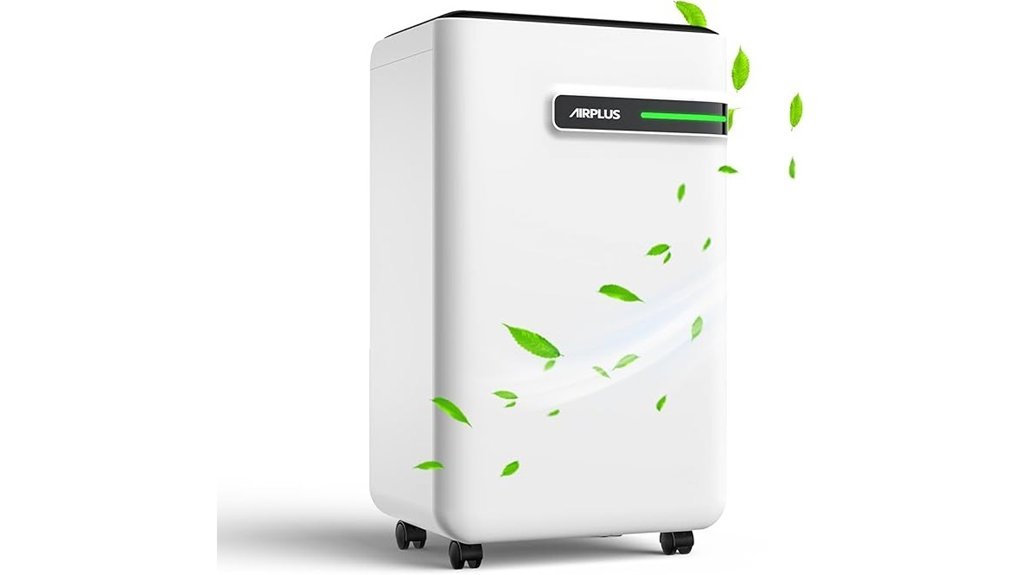
The AIRPLUS AP2103 suits you if your basement spans up to 4,500 square feet. It removes up to 70 pints of moisture a day under listed test conditions, so you can tackle damp, musty air in larger rooms. You get simple controls for drying, humidity, timer, speed, and ionizer settings, plus continuous or standard dehumidification modes. The handle and 360° wheels make it easy to move. The full-tank alert shuts it off automatically. You can empty the 4.5-liter tank yourself or connect a drain hose for nonstop drainage.
Why You’ll Like It: AIRPLUS is appealing if you want a unit that can move between basement zones, laundry rooms, and other damp areas. The wheels and handle help if you do not want a fixed setup.
Best For: Homeowners or renters with large basements or damp spaces up to 4,500 square feet who want an easy-to-move dehumidifier with flexible drainage options.
Who Should Avoid It: If you need automatic vertical drainage to a sink or window, a model with a built-in pump may be more convenient than a standard hose setup.
Pros:
- Removes up to 70 pints of moisture per day, making it useful for larger areas.
- Portable handle, 360° wheels, and both tank and continuous drain options add convenience.
- Includes defrost, timer, multiple speeds, and a 4.5-liter tank.
Cons:
- 4.5-liter tank may still require frequent emptying if continuous drainage isn’t used.
- Best suited for larger spaces, so it may be more than needed for smaller rooms.
- Uses 300 watts, which may matter if you run it for long periods.
Ludatido 2026 ENERGY STAR Dehumidifier, 80 Pint/Day
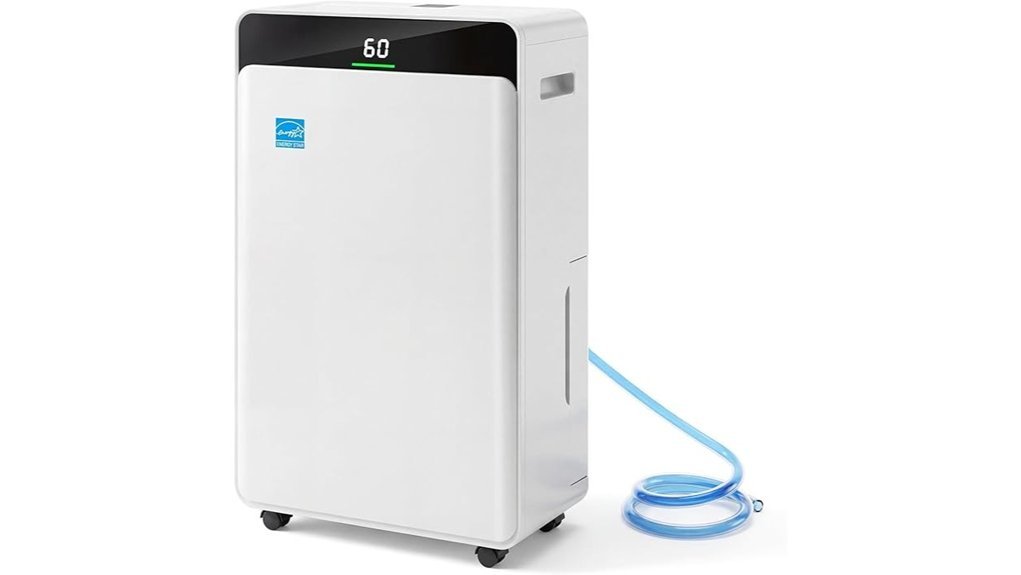
If you need powerful moisture removal for a large basement, Ludatido’s 80-pint unit fits the job. It is listed for spaces up to 5,000 sq. ft. and is built for humid basements, garages, RVs, and large rooms. The ENERGY STAR positioning helps if energy use matters during long runtime. The 1.72-gallon tank reduces trips to empty it, and the continuous drain option lets you run it with less hands-on maintenance when you have a safe drain route. Dry, sleep, fan, and 24-hour timer modes give you flexible control.
Why You’ll Like It: This model is attractive if noise and energy use matter as much as capacity. The quiet-use positioning makes it easier to consider for a basement that also works as a home gym, office, guest room, or media space.
Best For: Homeowners, renters, and anyone needing high-capacity, energy-conscious moisture removal for large spaces like basements, garages, RVs, or whole-home areas.
Who Should Avoid It: If your main problem is vertical drainage, compare this with a pump model before buying. Continuous drain options are useful, but gravity drainage still needs the right slope and drain location.
Pros:
- Listed to remove up to 80 pints of moisture per day and cover up to 5,000 sq. ft.
- Energy-conscious positioning may help during long basement runtime.
- Useful modes include dry, sleep, fan, and a 24-hour timer.
Cons:
- The tank may still need regular emptying without continuous drain setup.
- Best suited for large, humid spaces, so it may be more than needed for small rooms.
- Continuous drain requires a hose and nearby lower drain point for hands-free use.
Before You Buy Checklist
- Measure your basement: Match the dehumidifier’s rated coverage to your actual square footage and layout.
- Check your drainage path: A hose needs a downward slope. A pump helps when water must move upward or across a distance.
- Compare test conditions: Max pint ratings can look impressive, but real basement performance may be lower in cooler rooms.
- Think about runtime: Large, wet basements may need continuous operation during humid months.
- Confirm noise level: If the basement is a living space, look for quieter operation and sleep mode.
- Plan filter cleaning: Washable filters still need regular cleaning to keep airflow strong.
- Do not ignore leaks: A dehumidifier controls air moisture, but it will not fix water intrusion, cracks, or drainage problems.
Factors to Consider When Choosing a 70 Pt Dehumidifier for Large Basement
When you choose a 70 pt dehumidifier for a large basement, check its moisture removal capacity and make sure it matches your space. You’ll also want to confirm the coverage area, drainage options, and how much noise and energy it uses. If you like convenience, look for smart controls that let you monitor and adjust settings with ease.
Moisture Removal Capacity
Moisture removal capacity is one of the most important specs to check, since a 70-pint dehumidifier can pull a lot of water from damp air under high-humidity conditions. You should look for real-world performance, not just the largest number on the label, because output can drop when temperatures fall. Choose a unit that keeps humidity steady in a practical range so you can reduce musty odors and protect stored items. Features like adjustable humidity controls help you fine-tune operation, while automatic defrost helps the unit keep working in cooler basement conditions. You should also compare energy use, since a model that removes more moisture with less electricity gives you better long-term value.
Basement Coverage Area
After checking moisture removal capacity, make sure the unit can actually cover your basement’s full footprint, since some 70-pint crawlspace units focus on about 1,000 square feet while larger residential models claim 4,500 to 6,000 square feet. You should match the dehumidifier’s rated coverage to your basement’s size, especially if humidity runs high. In a larger or damper space, a unit that’s too small may struggle to keep conditions comfortable. Pay attention to the layout too: open basements usually let air move freely, while divided rooms can trap moisture in separate zones. You’ll also want adjustable humidity settings so you can fine-tune performance as conditions change. Good airflow and ventilation help the unit work more efficiently and maintain steadier humidity levels throughout the basement.
Drainage Options
Drainage options matter just as much as capacity, especially in a large basement where you want the dehumidifier running nonstop without constant emptying. You’ll get the most convenience from a model with dual drainage, since you can use a standard hose for gravity drainage or a built-in pump for vertical drainage. Continuous drainage keeps you from pulling out a tank and emptying it by hand. If you prefer a tank, choose one with auto shut-off so it won’t overflow. Check the included hose length, too; a longer hose gives you more placement freedom in a bigger basement. Automatic defrost helps the unit keep draining efficiently in cooler spaces and reduces ice buildup.
Noise And Energy Use
Even if a 70-pint dehumidifier can handle a large basement, its noise level and energy use still matter because you’ll likely run it for long stretches. If your basement doubles as a hangout, guest room, or sleep space, look for a unit with lower fan settings or sleep mode so it won’t dominate the room. You should also check for ENERGY STAR certification, since efficient models can reduce energy use versus comparable non-certified units. Lower wattage can help over months of operation, but performance still matters. Continuous drainage can reduce interruptions, and programmable timers or humidity controls can limit wasted runtime by letting the unit work only when moisture levels demand it.
Smart Control Features
Smart control features can make a 70-pint dehumidifier much easier to manage in a large basement. You can use a digital control panel to set your target humidity, often across a broad range, so you keep moisture where you want it. A programmable timer lets you run the unit when it fits your schedule, which can save energy and add convenience. Look for color-coded humidity displays, since they show real-time moisture levels at a glance. Automatic defrost helps the dehumidifier keep working in cooler basement conditions without ice buildup. Power-on memory is also useful because it restores your previous settings after an outage, so you won’t need to reset everything.
Tank Size And Maintenance
Tank size becomes important when your basement is very damp. A small tank can fill quickly, which means the dehumidifier may shut off before the space reaches your target humidity. If you do not have a floor drain, choose a model with a larger tank, clear full-tank alert, and easy-grip bucket. If you do have a drain, continuous drainage is usually the better long-term setup. Maintenance also matters. Clean the filter regularly, keep the intake and exhaust vents open, and leave enough clearance around the unit so it can move air properly.
Pro Tips for Better Basement Drying
Place the unit near the moisture source if one area feels wetter than the rest of the basement.
Keep doors open between basement rooms when possible so air can circulate.
Use continuous drainage during rainy weeks or humid summer months to avoid full-tank shutdowns.
Target comfort, not bone-dry air. Many homes feel better around 45% to 55% relative humidity, but you should follow your unit’s guidance and your home’s needs.
Frequently Asked Questions
Can a 70 Pint Dehumidifier Run Continuously Without Overheating?
Yes, you can run a 70-pint dehumidifier continuously if it’s designed for that duty and has proper airflow. You’ll avoid overheating by keeping filters clean, vents clear, and the room within rated temperatures. Continuous drainage also helps because the unit will not stop every time the tank fills.
How Often Should I Clean the Dehumidifier Filter?
You should clean your dehumidifier filter every 2 to 4 weeks, and more often if you have dust, pets, remodeling debris, or heavy use. A clean filter keeps airflow strong, helps the compressor work efficiently, and may reduce noise caused by restricted air movement.
Does a Dehumidifier Help Prevent Musty Basement Odors?
Yes, you’ll reduce musty basement odors by lowering humidity and discouraging the damp conditions that support mildew. You should still clean the filter, empty the tank, improve airflow, and remove damp cardboard, rugs, or stored items that can hold odors.
Can I Use One in a Basement With No Floor Drain?
Yes, you can use one in a basement with no floor drain. You’ll need to empty the tank manually, use a condensate pump, or run a drain hose to a sink or sump if the layout allows it. If you do not want daily bucket emptying, choose a model with a built-in pump or plan a safe drainage route before buying.
How Noisy Are 70 Pint Dehumidifiers at Night?
You’ll usually hear a 70 pint dehumidifier, but in night mode it’s often quiet enough for a basement. Expect a steady fan hum that may still bother light sleepers nearby. If noise matters, compare listed decibel ratings and look for sleep mode or low fan settings.
Is a Pump Dehumidifier Worth It for a Basement?
A pump dehumidifier is worth it if your drain is not lower than the unit or if you need to move water up to a sink, window, or higher drain point. If you already have a nearby floor drain, a standard gravity hose may be enough.
What Humidity Level Should I Set for a Large Basement?
Many basement owners aim for around 45% to 55% relative humidity for comfort and odor control. If the basement still feels damp, lower the target gradually. Avoid setting the target too low for long periods because the unit may run constantly and use more energy.
Will a Dehumidifier Fix Basement Water Leaks?
No, a dehumidifier will not fix active leaks, seepage, foundation cracks, or standing water. It can help control air moisture after you address the water source, but waterproofing, grading, gutter repair, sump pump work, or plumbing repair may still be needed.
Final Recommendation
Choose the Vellgoo Max 140 Pint or Landeagle 6000 Sq. Ft if you want the most coverage and drying power for a very large basement. Choose AEOCKY or ARGENDON if your biggest headache is drainage and you need a pump. Choose Yaufey, Waykar Max, HBN, AIRPLUS, or Ludatido if you want a more balanced basement dehumidifier with strong capacity, smart controls, and everyday convenience.
The safest buying move is to match the unit to your basement size, confirm the drainage route, compare the current listing specs, and check Amazon for the latest model details before ordering.
Conclusion
Choosing the right 70 pt dehumidifier or larger-capacity basement model comes down to matching capacity, drainage, and energy use to your space. You’ll want a model that handles moisture reliably, so your basement stays dry, comfortable, and better protected from musty odors and moisture damage. Whether you value smart controls, a drain hose, a built-in pump, quiet operation, or Energy Star efficiency, the best pick is the one that fits your basement layout and keeps your home feeling fresh year-round.