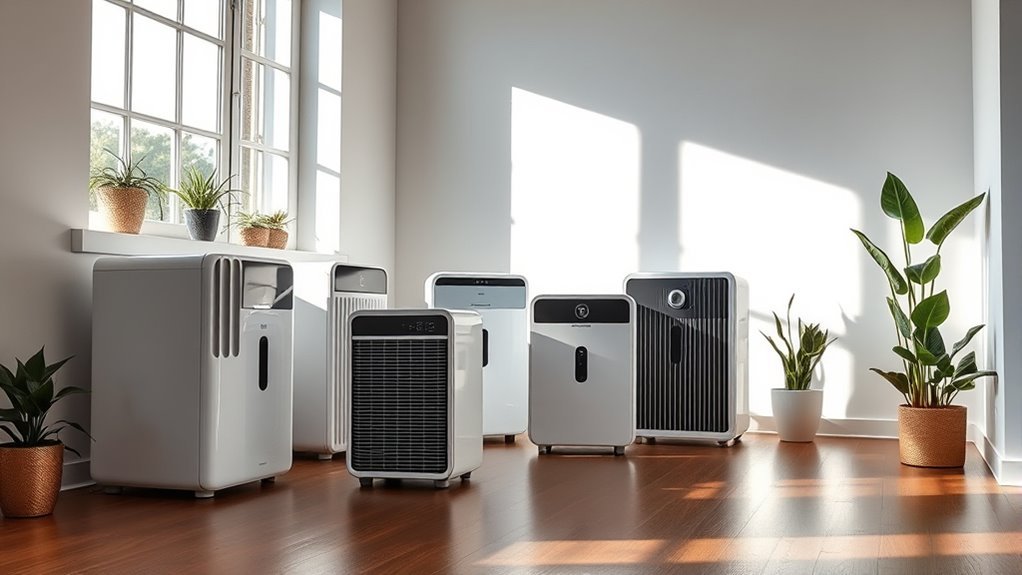
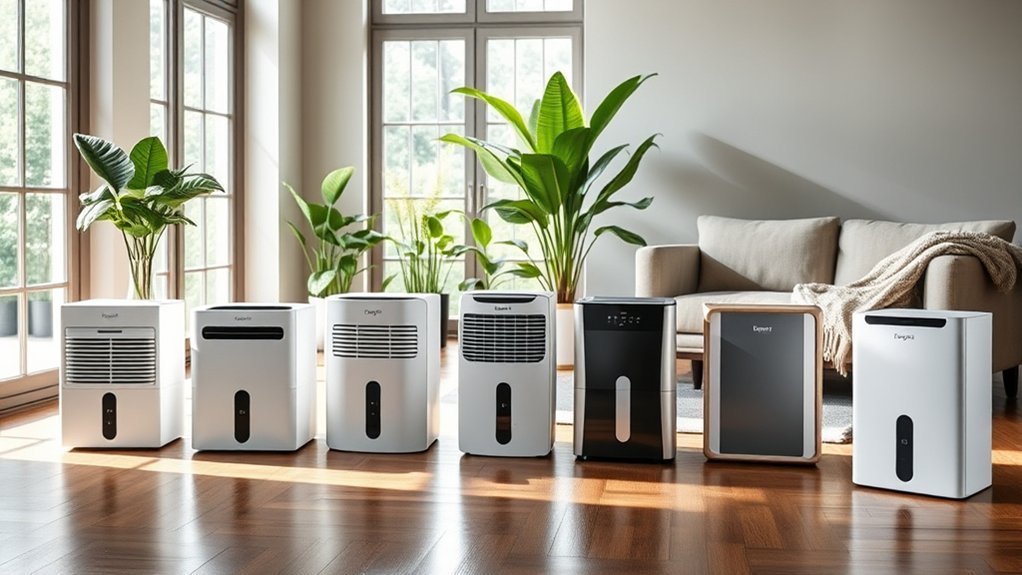
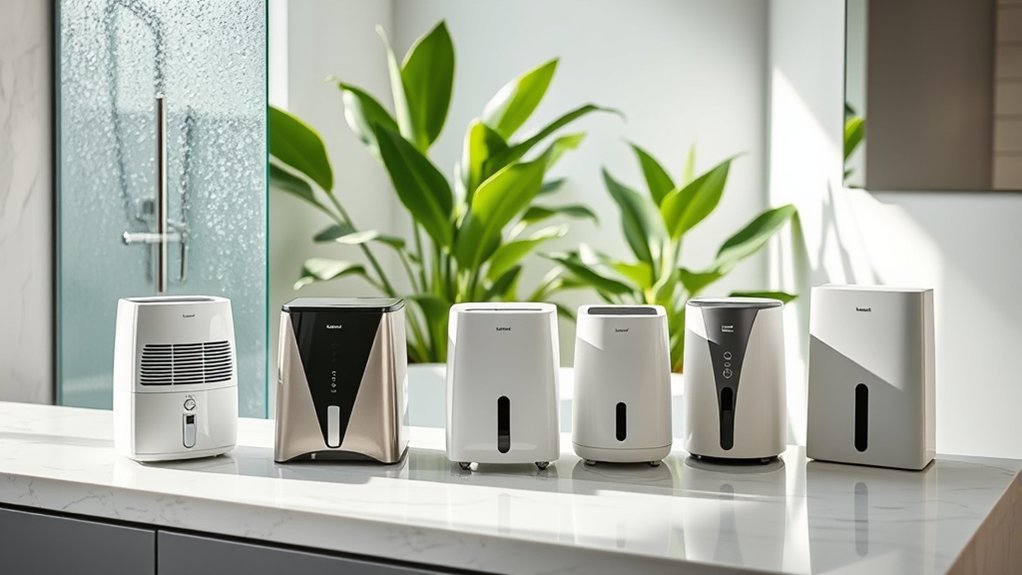
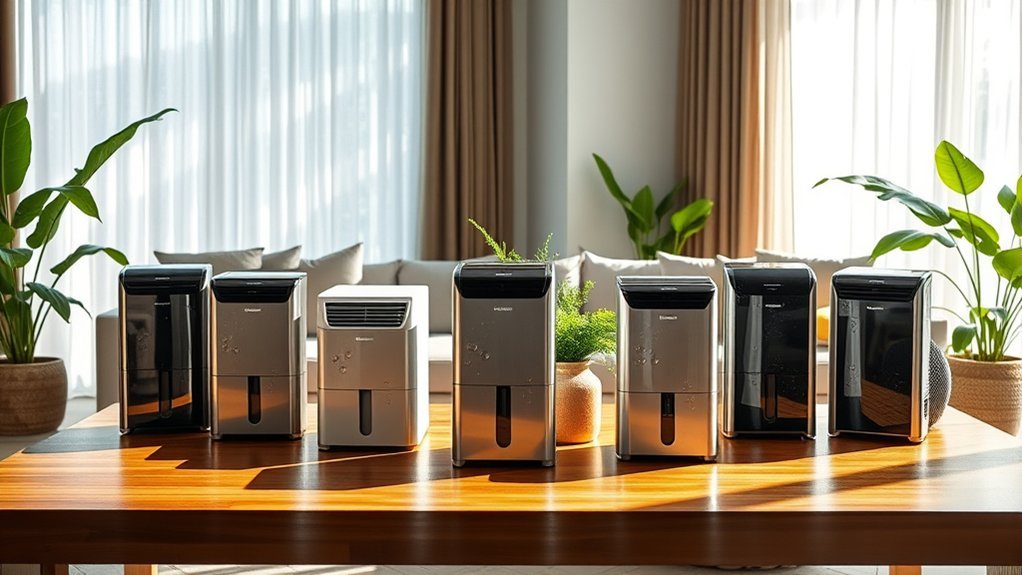
The best energy-efficient dehumidifier for a large basement depends on more than the advertised square-foot rating. You also need enough moisture-removal capacity for the basement’s actual dampness, a practical drainage method, automatic humidity control, and acceptable operating noise.
From the products reviewed here, the Vellgoo 64 Pint offers the best balance for many homes, while the Vellgoo 140 Pint is the stronger choice for severe moisture or a very large open basement. Choose the DECIUU Max 100 Pint when you need a built-in pump to move water upward. The PLUSCENT 32 Pint is better suited to moderately damp spaces and buyers who do not need the highest extraction capacity.
Quick verdict
- Best balanced choice: Vellgoo 64 Pint
- Best for moderate dampness: PLUSCENT 32 Pint
- Best high-capacity option: Vellgoo 140 Pint
- Best with a built-in pump: DECIUU Max 100 Pint
Capacity note: Headline pint ratings are not always measured under identical temperature and humidity conditions. Treat “up to” capacities and square-foot claims as comparison guides, then check the exact standardized capacity, operating-temperature range, and ENERGY STAR model number before buying.
Quick Comparison
| Product | Listed Capacity | Listed Coverage | Drainage | Best For | Amazon |
|---|---|---|---|---|---|
| Vellgoo 64 Pint | Up to 64 pints/day | Up to 4,000 sq. ft. | Tank or gravity hose | Balanced everyday basement use | Check Amazon |
| PLUSCENT 32 Pint | Up to 32 pints/day | Up to 2,500 sq. ft. | Tank or gravity hose | Moderately damp basements | Check Amazon |
| Vellgoo 140 Pint | Up to 140 pints/day under high-temperature, high-humidity conditions | Up to 6,000 sq. ft. | Tank or gravity hose | Very large or heavily damp spaces | Check Amazon |
| DECIUU Max 100 Pint | Up to 100 pints/day under high-temperature, high-humidity conditions | Up to 5,000 sq. ft. | Tank, gravity hose, or built-in pump | Upward or long-distance drainage | Check Amazon |
Vellgoo 64 Pint Dehumidifier with Smart Control
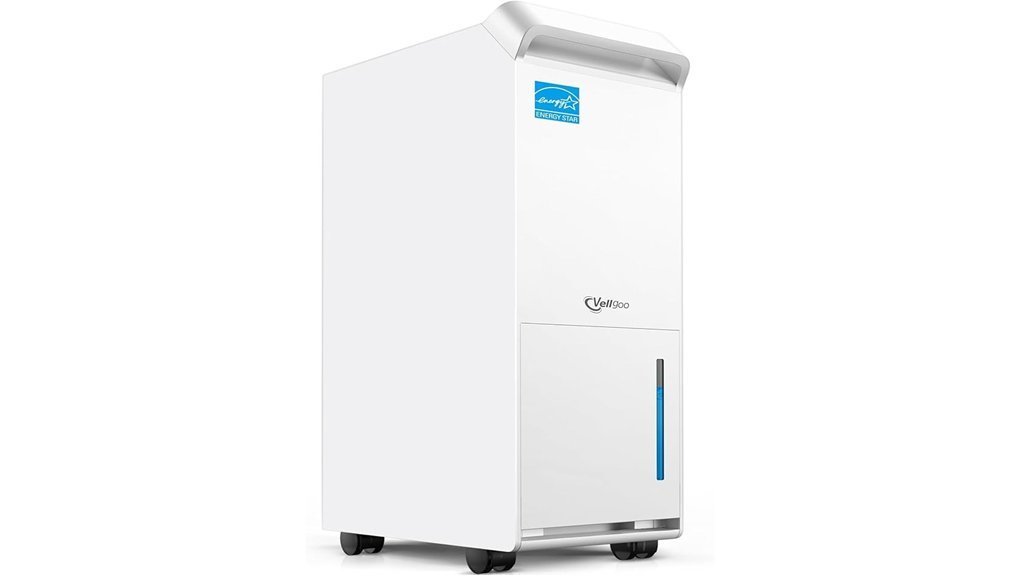
Best Balanced Choice
The Vellgoo 64 Pint Dehumidifier is the most balanced option in this lineup for a large, open basement with regular seasonal dampness. Its current listing advertises coverage up to 4,000 square feet, adjustable humidity control, automatic defrost, automatic restart, and continuous gravity drainage.
This is a practical choice when you want more capacity than a compact 30-pint-class unit but do not need the size or power of the 140-pint Vellgoo. The washable filter, timer, caster wheels, and multiple operating modes also make routine use more manageable.
Why you’ll like it: It combines useful basement capacity, automatic controls, and gravity drainage without moving into the largest and heaviest class.
Who should buy it: Homeowners with a medium-to-large open basement and access to a nearby low drain.
Who should avoid it: Buyers who need to pump condensate upward or control severe water intrusion.
Pros:
- Strong balance of moisture-removal capacity and manageable size.
- Adjustable humidistat, timer, auto defrost, and auto restart.
- Supports continuous gravity drainage for unattended operation.
- Washable filter and caster wheels simplify routine upkeep.
Cons:
- No built-in pump for upward drainage.
- The advertised coverage is not a substitute for sizing by actual moisture load.
- Compressor and fan noise may be noticeable in a finished living area.
PLUSCENT 32 Pint Dehumidifier for Home
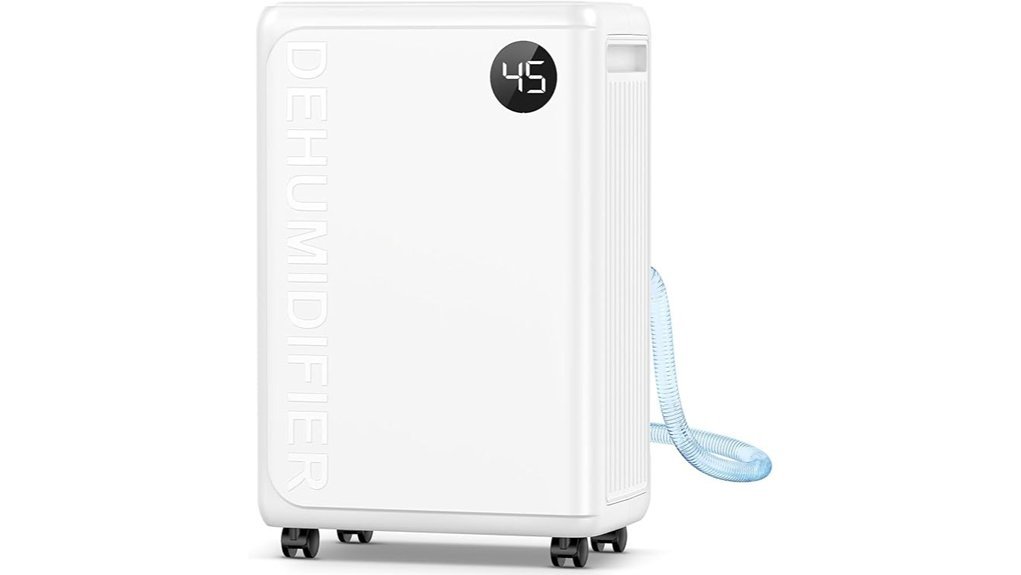
Best for Moderate Dampness
The PLUSCENT 32 Pint Dehumidifier is the smallest-capacity model in this guide. It is better suited to a moderately damp basement than to a space with standing water, active seepage, or a consistently heavy moisture load.
Its listing advertises coverage up to 2,500 square feet, three operating modes, automatic defrost, a 24-hour timer, adjustable humidity control, and noise of approximately 39–42 dB. It can collect water in its tank or drain continuously through a hose positioned downhill from the unit.
Why you’ll like it: It is easier to place and move than the high-capacity models while still providing automatic humidity control and continuous drainage.
Who should buy it: Buyers with a moderately damp basement, smaller open floor plan, or lighter seasonal humidity.
Who should avoid it: Anyone dealing with persistent seepage, frequent condensation across a very large basement, or a heavy laundry-related moisture load.
Pros:
- More compact than the 64-, 100-, and 140-pint options.
- Advertised operating noise of approximately 39–42 dB.
- Continuous gravity drainage and automatic tank shutoff.
- Auto defrost, timer, child lock, and washable filter.
Cons:
- Lower moisture-removal capacity than the other models.
- No built-in pump.
- The current listing does not state an ENERGY STAR certification.
- May run for long periods in a very wet basement.
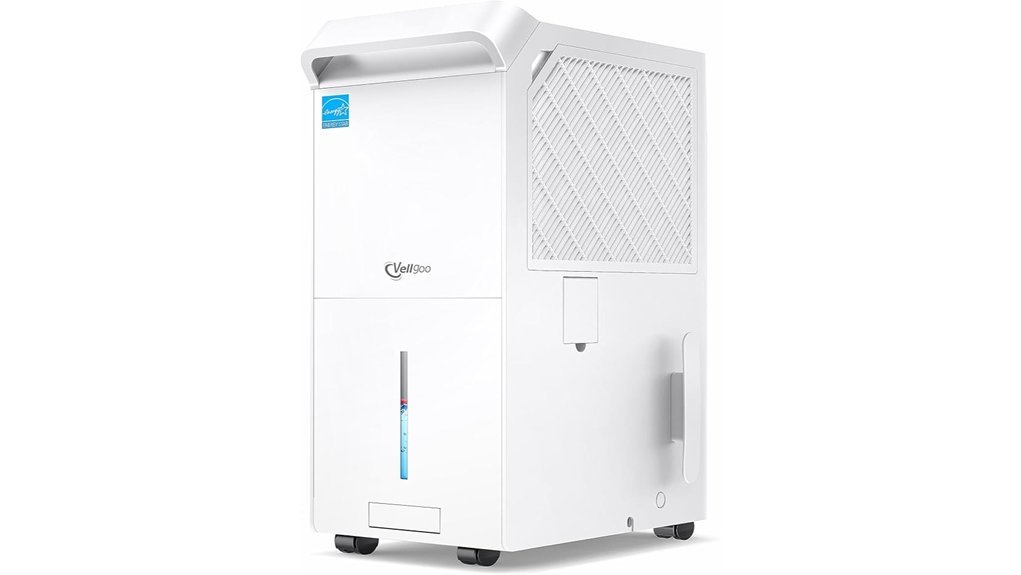
Vellgoo 140 Pint Energy Star Dehumidifier for Home
Best High-Capacity Choice
The Vellgoo 140 Pint model is the strongest option here for a very large, open basement or a space with a demanding moisture load. The manufacturer advertises removal of up to 140 pints per day under hot, extremely humid test conditions and coverage up to 6,000 square feet.
It includes adjustable humidity control, multiple operating modes, automatic shutoff, auto restart, auto defrost, a large water tank, and continuous gravity drainage. Its high capacity can help it reduce humidity more quickly than a smaller unit, but it is also physically larger and has a listed operating noise of about 53 dB.
Important: The 140-pint figure is a maximum measured under high-temperature, high-humidity conditions. Do not compare it directly with another product’s standardized pint rating without checking the test conditions.
Why you’ll like it: Its higher extraction capacity is better suited to severe seasonal humidity and very large open spaces.
Who should buy it: Buyers with a large basement, strong moisture load, and an available floor drain or other downhill drainage point.
Who should avoid it: Buyers who need a built-in pump, have limited floor space, or plan to run the unit beside a quiet entertainment or sleeping area.
Pros:
- Highest advertised moisture-removal capacity in this comparison.
- Designed for large open basements and other expansive spaces.
- Continuous gravity drainage reduces bucket-emptying work.
- Includes automatic humidity control, defrost, restart, and shutoff.
Cons:
- Listed noise of approximately 53 dB may be noticeable.
- Larger and heavier than lower-capacity alternatives.
- No built-in pump on this linked configuration.
- Maximum capacity depends on unusually hot and humid test conditions.
DECIUU Max 100 Pint Dehumidifier with Pump
Best with Built-In Pump
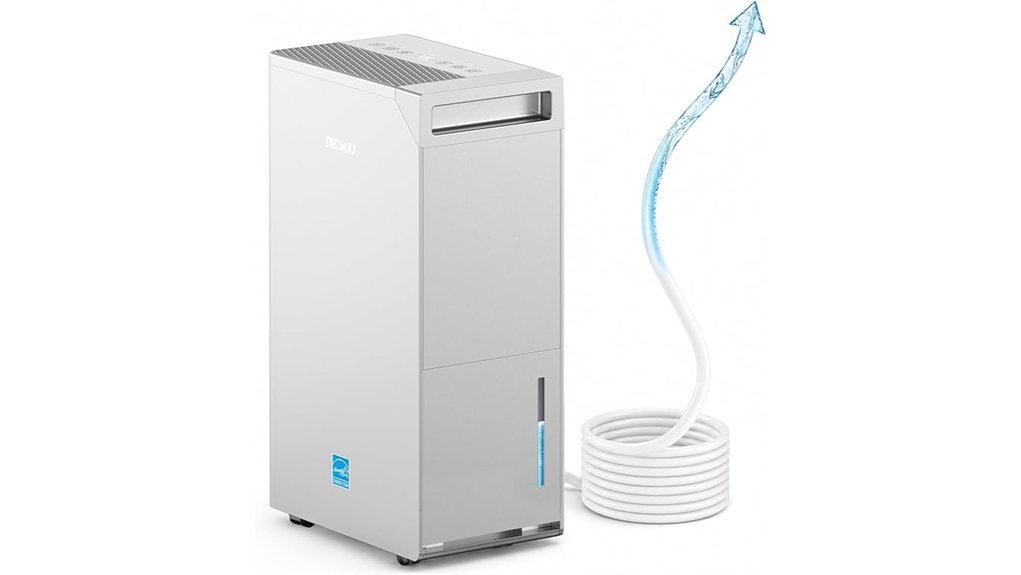
The DECIUU Max 100 Pint Dehumidifier is the most convenient choice when a floor drain is unavailable. In addition to tank collection and gravity drainage, its built-in pump can send collected water upward to a suitable sink, drain, or discharge point within the limits stated in the manual.
The listing advertises coverage up to 5,000 square feet and maximum removal of up to 100 pints per day under hot, humid conditions. Its capacity is lower under more typical test conditions, so buyers should compare the standardized rating rather than relying only on the headline number.
Why you’ll like it: The built-in pump gives you more freedom to place the unit away from a low floor drain.
Who should buy it: Homeowners who need to discharge water into an elevated sink, utility drain, or other approved location.
Who should avoid it: Buyers who already have an easy downhill drain and prefer the simplest possible drainage system.
Pros:
- Built-in pump supports upward drainage.
- High advertised capacity for large, damp spaces.
- Tank, gravity-hose, and pump drainage options.
- Automatic humidity control, defrost, restart, and shutoff.
Cons:
- Pump systems introduce more parts than a basic gravity drain.
- Maximum 100-pint rating is based on hot, humid conditions.
- Larger footprint than the PLUSCENT model.
- Operating noise may be noticeable at higher fan settings.
Factors to Consider When Choosing an Energy Efficient Dehumidifier for Large Basements
A large square-foot claim does not guarantee that a dehumidifier can keep up with your basement. Choose according to the moisture source, standardized capacity, drainage layout, basement temperature, efficiency rating, and how often the area is occupied.
Start With the Actual Moisture Load
A basement with mild summer humidity needs less capacity than one with visible wall condensation, frequent laundry drying, or water entering through cracks. A smaller unit may handle moderate seasonal dampness, while persistent moisture usually requires a higher-capacity model and correction of the underlying water source.
Moisture-control note: A dehumidifier cannot repair plumbing leaks, foundation seepage, clogged gutters, poor exterior grading, or a failed sump system. Correct active water intrusion before relying on a portable appliance.
Understand Pint Capacity Ratings
Moisture-removal capacity is measured in pints collected over 24 hours, but advertised maximums may use different temperature and humidity conditions. A unit described as “100 pint” or “140 pint” can remove considerably less water in a cooler basement.
Compare the exact model’s standardized capacity and Integrated Energy Factor whenever possible. A higher Integrated Energy Factor means the unit removes more water for each kilowatt-hour of electricity used.
Treat Coverage Claims as a Starting Point
Square-foot ratings are useful for initial comparison, but they do not account for ceiling height, open or closed rooms, outdoor climate, air leakage, temperature, or the amount of water entering the space. An open 2,500-square-foot basement may be easier to control than a smaller basement divided into closed rooms.
Verify the Exact ENERGY STAR Model
Do not assume that every model sold under the same brand has the same certification. Match the model number shown on the appliance or listing with the current ENERGY STAR product database. This is especially important when a listing displays an older “Most Efficient” year.
Choose the Right Drainage Method
Manual tank drainage is simple but requires regular emptying. Gravity drainage is more convenient, but the hose must run continuously downhill without kinks. A built-in pump is useful when water must travel upward to a sink or elevated drain.
Secure the end of every drain hose and inspect the connection periodically. A loose or blocked hose can allow water to collect around the unit.
Check Basement Temperature and Auto Defrost
Compressor dehumidifiers lose effectiveness as the room gets colder. Auto defrost can protect the coils from frost, but it does not mean the unit will provide full rated capacity at every temperature. Confirm the manufacturer’s minimum operating-temperature range if your basement becomes cold in winter.
Consider Where the Unit Will Run
Noise matters more in a finished basement used as a bedroom, office, theater, or family room. Published decibel figures may represent a low fan setting and may not include vibration from the floor. Leave clearance around the unit and place it on a stable, level surface to reduce rattling.
Plan for Regular Maintenance
Clean the washable filter on the schedule stated in the manual, keep the air inlet and outlet clear, inspect drainage hoses, and clean the tank before residue builds up. Dirty filters restrict airflow and can reduce moisture-removal performance.
Before You Buy Checklist
- Measure the basement and note whether rooms are open or closed.
- Identify the source and severity of the moisture.
- Check the standardized pint capacity, not only the headline maximum.
- Verify the exact ENERGY STAR model number where applicable.
- Confirm the minimum operating temperature.
- Choose tank, gravity-hose, or pump drainage.
- Measure the route to the drain before selecting a hose or pump model.
- Check dimensions, weight, tank size, and stated noise level.
- Use a properly grounded outlet and follow all clearance instructions.
Frequently Asked Questions
How Do I Maintain My Dehumidifier for Optimal Performance?
Clean the filter regularly, keep the air inlet and outlet unobstructed, wash and dry the tank, and inspect the drain hose for kinks or buildup. Unplug the unit before cleaning and follow the maintenance schedule in its manual.
Can I Use a Dehumidifier in Winter?
Yes, provided the basement remains within the manufacturer’s operating-temperature range. Compressor units remove less water in colder rooms and may enter defrost mode more often. Do not assume that auto defrost allows normal operation below the listed minimum temperature.
What Size Dehumidifier Do I Need for My Basement?
Choose according to the basement’s moisture load, temperature, layout, and standardized pint capacity. A 30-pint-class unit may work for moderate dampness, while a very wet or expansive basement generally needs a higher-capacity model. Square footage alone is not enough to size the unit accurately.
What Humidity Should I Set in My Basement?
A setting near 50% relative humidity is a practical starting point for many basements. Adjust it based on condensation, comfort, basement temperature, and how frequently the compressor runs. Use a separate hygrometer if you want to compare the unit’s reading with another measurement.
Do I Need a Built-In Pump?
You need a pump when the water must travel upward or when no lower drain is available. If a hose can run continuously downhill to a floor drain, gravity drainage is usually simpler and introduces fewer mechanical parts.
How Often Should I Empty the Water Tank?
Empty it whenever the full-tank indicator activates. During humid weather, a high-capacity unit may fill its tank more than once per day. Use continuous drainage if you cannot check the tank regularly.
Conclusion
For the best balance of capacity, controls, and manageable size, the Vellgoo 64 Pint is the strongest starting point for many large basements. Choose the Vellgoo 140 Pint when maximum moisture-removal capacity matters more than size and noise. The DECIUU Max 100 Pint is the better choice when you need a built-in pump, while the PLUSCENT 32 Pint is most appropriate for moderate dampness rather than severe moisture.
Final recommendation:
Do not choose solely by the largest pint or square-foot number. Match the standardized capacity to the basement’s moisture load, verify the exact ENERGY STAR model where applicable, and select a drainage method that can operate safely without constant attention.