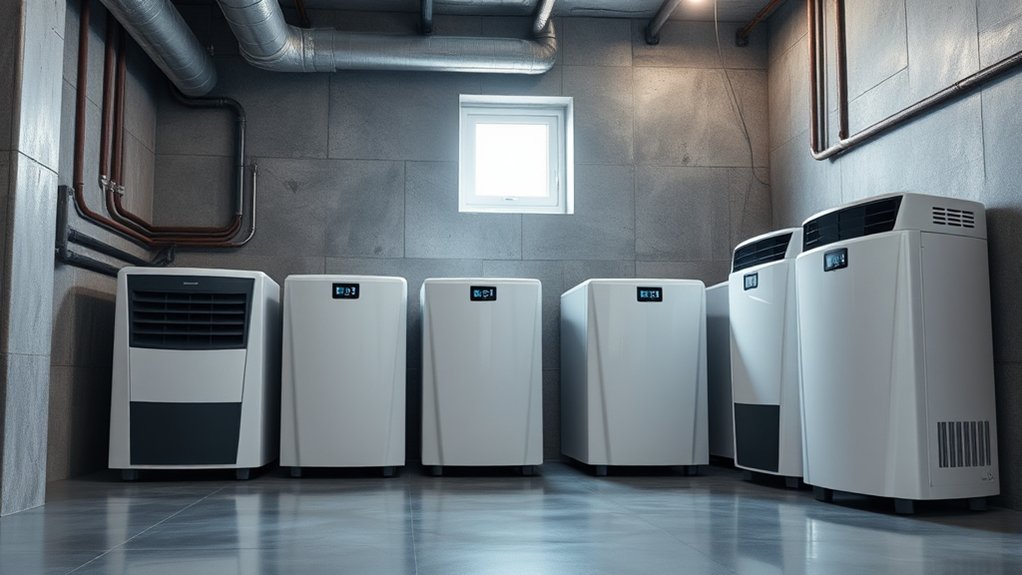
Last updated: August 2026
Choosing a dehumidifier for Kuwait starts with electrical compatibility, not tank size or advertised room coverage. Kuwait’s electrical supply is commonly described as 220–240V at 50Hz, with a UK-style Type G socket. Buy only a unit whose rating label and manual explicitly support 220–240V and 50Hz or 50/60Hz. After confirming that, compare moisture-removal capacity, drainage, humidity control, operating noise, maintenance, warranty, and local service.
Quick verdict:
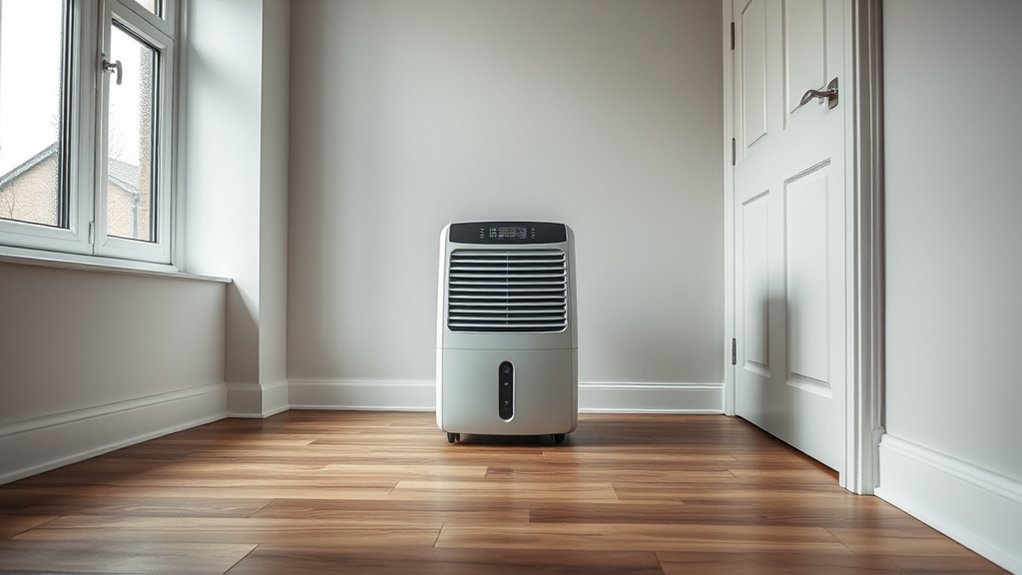
For persistent humidity in a bedroom, office, living area, laundry room, or storage room, choose a regionally supported compressor dehumidifier with an adjustable humidistat, automatic shutoff, removable tank, and continuous-drain option. A small thermoelectric model is better reserved for wardrobes, cabinets, and other limited spaces with light moisture.
Important electrical note
A plug adapter changes only the physical plug connection. It does not change voltage or frequency. Do not buy a 120V-only dehumidifier for normal use in Kuwait, and do not rely on a travel adapter or an unverified step-down transformer to operate a compressor appliance. A native 220–240V, 50Hz or 50/60Hz regional model is the safer and more practical choice.
Humidity target:
Use a separate hygrometer or the unit’s humidity display to measure the room. A practical indoor target is generally 30% to 50% relative humidity, with humidity kept below 60%. Fix leaks, blocked drains, wet materials, or recurring condensation instead of using a dehumidifier to hide the moisture source.
Quick Buying Checklist for Kuwait
| Check | What to Look For | Why It Matters |
|---|---|---|
| Voltage | 220–240V stated on the appliance rating label | Prevents damage and electrical risk from connecting a lower-voltage appliance directly to the local supply. |
| Frequency | 50Hz or 50/60Hz | Compressor motors, fans, timers, and control systems may not operate correctly at an unsupported frequency. |
| Plug and grounding | Grounded Type G plug or a manufacturer-approved regional power cord | Provides a secure connection without depending on a loose travel adapter for permanent use. |
| Extraction rate | Litres or pints removed per 24 hours, with test temperature and humidity stated | Shows moisture-removal capability more clearly than a broad room-coverage claim. |
| Humidity control | Adjustable humidistat, humidity display, and automatic cycling | Allows the unit to maintain a selected humidity level rather than running continuously. |
| Drainage | Removable tank, full-tank shutoff, and continuous gravity drain | Reduces frequent tank emptying during humid periods or laundry drying. |
| Efficiency | Extraction rate compared with wattage or litres removed per kilowatt-hour | A low-wattage appliance is not efficient if it removes very little moisture. |
| Maintenance | Washable filter, accessible tank, and locally available replacement parts | Dust and restricted airflow can reduce performance and increase operating strain. |
| Warranty | Written manufacturer or distributor coverage valid in Kuwait | Imported appliances may not qualify for local repairs, returns, parts, or replacement. |
Which Dehumidifier Type Fits Your Space?
| Use Case | Better Fit | Main Benefit | What to Check |
|---|---|---|---|
| Bedroom or office | Portable compressor dehumidifier | Stronger daily extraction and automatic humidity control | Low-speed noise, display brightness, tank size, and humidistat accuracy |
| Laundry room or open living area | Higher-capacity compressor model | Handles a larger moisture load and longer operating periods | Continuous drainage, airflow, energy efficiency, and room layout |
| Wardrobe, cabinet, or cupboard | Small thermoelectric unit or suitable moisture-control product | Compact size and quiet operation for light moisture | Real daily extraction, available airflow, tank capacity, and automatic shutoff |
| Several rooms or whole property | Professionally sized whole-home system or separate room units | More consistent humidity control across divided spaces | HVAC design, ducting, drainage, installation, and service support |
How to Choose a Dehumidifier for Kuwait
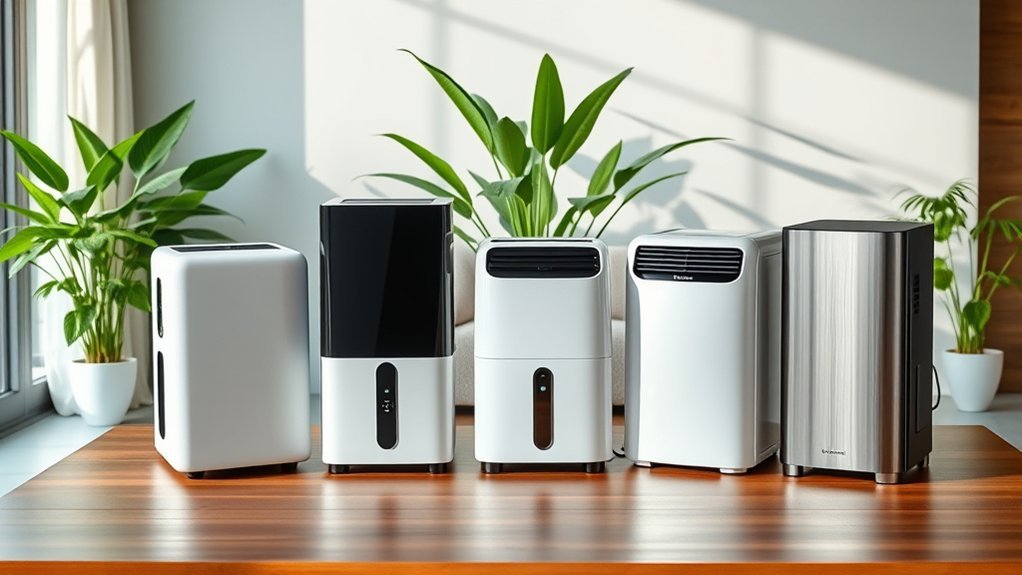
1. Check Voltage, Frequency, Plug, and Grounding
Examine the product’s rating label, manual, power cord, and manufacturer specifications. The appliance should explicitly support 220–240V and 50Hz or 50/60Hz. A listing that says only “US plug,” “standard outlet,” “international model,” or “adapter included” does not confirm electrical compatibility.
Be especially careful with compressor dehumidifiers because they contain a compressor motor, fan, and electronic control system. Do not assume that a plug adapter or basic step-down transformer makes a 120V, 60Hz appliance suitable for permanent use in Kuwait.
Compatibility rule: If the rating label, frequency, grounding arrangement, regional warranty, or manufacturer documentation is unclear, reject the model and choose one sold for a 220–240V, 50Hz market.
2. Measure the Humidity and Find the Moisture Source
Use a hygrometer to measure relative humidity before selecting a machine. A room that occasionally reaches a high reading after showering or cooking may need better ventilation rather than continuous dehumidification. A room that remains humid for long periods may justify a dedicated dehumidifier.
A dehumidifier can help control moisture in the air, but it cannot repair plumbing leaks, rain penetration, blocked air-conditioning drains, wet walls, or damaged waterproofing. Correct those problems first and use the dehumidifier to help return the room to a controlled humidity level.
As a general indoor target, aim for 30% to 50% relative humidity and keep the room below 60%. Avoid setting the target unnecessarily low because that can increase electricity use and operating time without solving the original moisture source.
3. Compare Moisture-Removal Capacity
Moisture-removal capacity is normally expressed in pints or litres collected over 24 hours. It is more useful than a broad square-foot or square-metre coverage claim, but only when the test conditions are clearly stated.
Capacity changes with temperature and relative humidity. A model tested in very warm, highly humid air may advertise a much larger daily figure than a model tested under cooler standardized conditions. Compare models tested at similar temperatures and humidity levels whenever possible.
Buyer tip: Check whether the capacity is based on a recognized standardized test or a maximum-output test. Do not directly rank two models by litres or pints per day when their test conditions are different.
4. Choose Between Compressor and Thermoelectric Technology
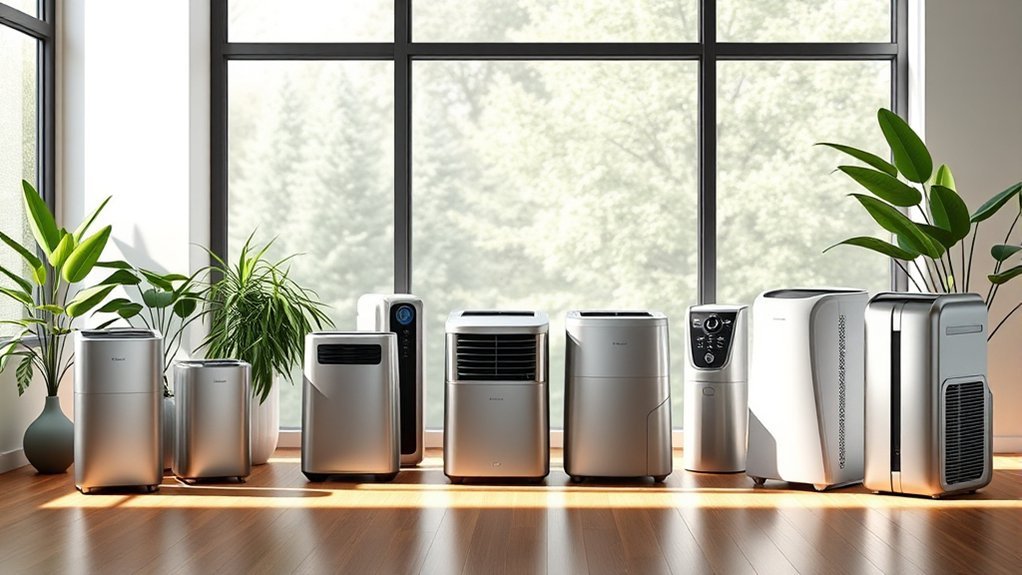
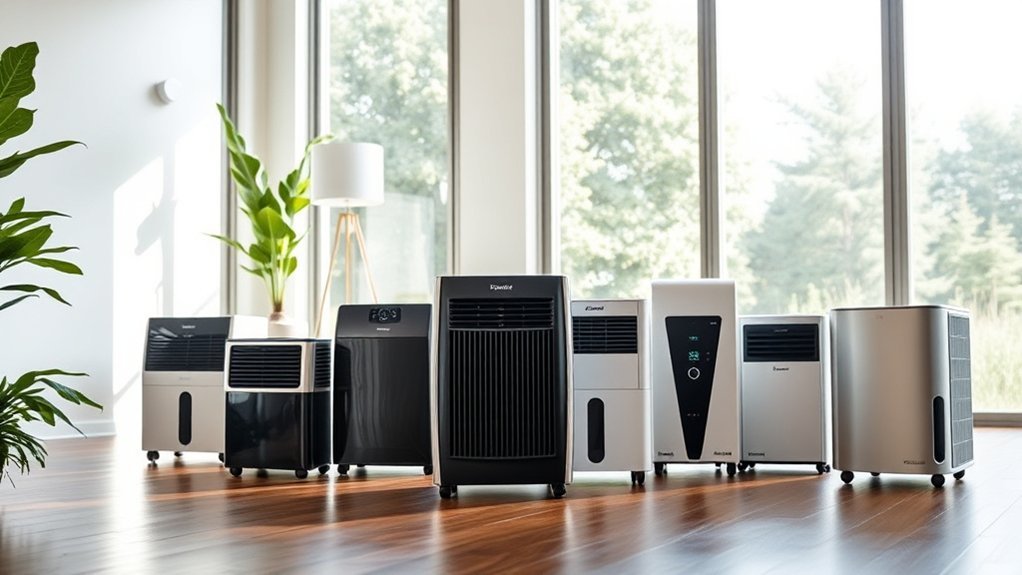
Compressor dehumidifiers are normally the stronger choice for bedrooms, offices, living areas, laundry rooms, storage rooms, and other spaces with persistent humidity. They generally remove more water per day and commonly include a humidistat, multiple fan speeds, automatic cycling, and a drain-hose connection.
Thermoelectric dehumidifiers are compact and may operate quietly, but their moisture-removal rate is usually much lower. They are better suited to wardrobes, cabinets, cupboards, and other small enclosed areas with mild moisture rather than large rooms or heavy laundry loads.
Do not place an ordinary portable dehumidifier in a shower area, beside a bathtub, or where it may be splashed. Bathroom use is appropriate only when the manufacturer explicitly permits the location and all electrical-clearance requirements can be followed.
5. Consider Room Size, Ceiling Height, and Layout
Measure the room and consider ceiling height, doors, furniture, ventilation, air-conditioning operation, and connected spaces. A dehumidifier placed in one closed room may not control humidity effectively in several rooms separated by doors or corridors.
For a large or open-plan area, choose sufficient airflow and extraction capacity. For several closed rooms, one portable machine moved occasionally between spaces may be less effective than separate units or a professionally designed whole-home solution.
Keep doors and windows closed while the unit is operating unless the manufacturer or ventilation plan requires otherwise. Bringing humid outdoor air into the room can increase the moisture load and operating time.
6. Plan the Drainage Setup
A removable tank is convenient for occasional use, but it can fill quickly during humid weather or while drying laundry. Confirm that the unit has automatic full-tank shutoff so it stops safely when the container reaches capacity.
Continuous gravity drainage is useful when the dehumidifier can be positioned above a suitable drain. Check the included hose length, connection diameter, required downward slope, and drain location. A gravity hose cannot move water uphill.
If the drain is higher than the appliance, choose a model with a properly specified built-in pump or use a manufacturer-approved condensate-pump arrangement. Route hoses so they cannot leak onto electrical cords, outlets, flooring, or walking areas.
7. Review Noise and Placement Requirements
Noise is important in bedrooms, offices, and living rooms. Compare the manufacturer’s decibel rating at each fan speed, but remember that compressor cycling, vibration, flooring, and nearby walls can change how loud the appliance seems.
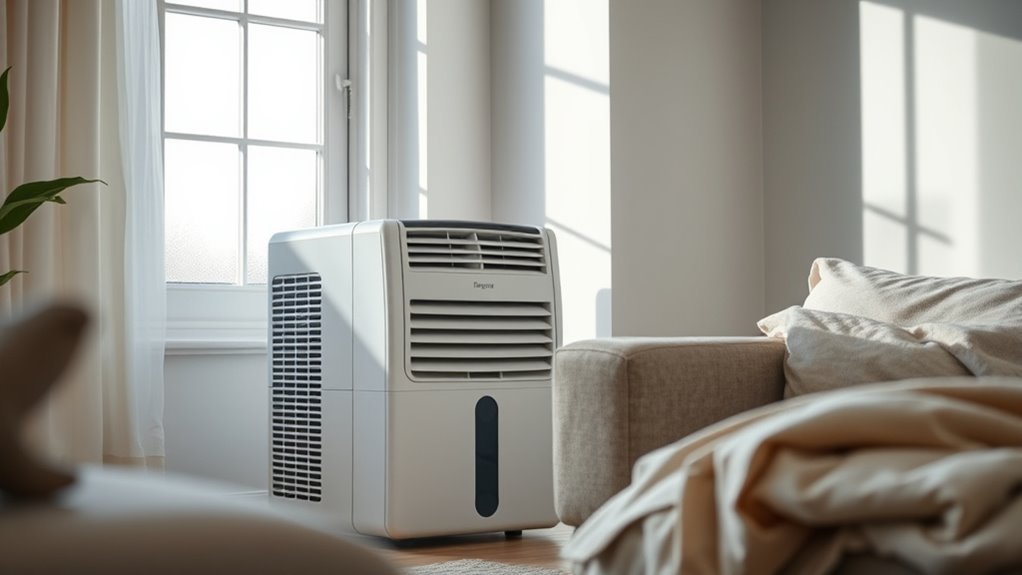
Place the dehumidifier on a stable, level surface with the air inlet and outlet unobstructed. Follow the clearance instructions in the manual rather than pushing the appliance tightly against furniture, curtains, or a wall.
A compressor dehumidifier normally releases slightly warmer air after removing moisture. This is expected operation, but it can make a small closed room feel warmer.
8. Evaluate Energy Efficiency Properly
Compare rated wattage together with verified moisture-removal capacity. A lower-wattage appliance is not automatically more efficient if it takes much longer to remove the same amount of water.
Where comparable data is available, review litres of water removed per kilowatt-hour or the model’s Integrated Energy Factor. A higher efficiency figure generally means more moisture is removed for the electricity consumed.
Helpful operating features include an adjustable humidistat, automatic cycling, multiple fan speeds, timer, washable filter, automatic restart, and automatic defrost. Defrost performance matters most when the unit will operate in a strongly air-conditioned or otherwise cool room.
Certification caution: An efficiency label or certification applies only to the exact certified model. It does not automatically confirm Kuwait voltage compatibility, Type G connection, regional warranty, replacement parts, or local service.
9. Confirm Warranty and Local Support
Before ordering an imported unit, confirm in writing whether the manufacturer or authorized distributor provides warranty service in Kuwait. Check who pays return shipping, where repairs are performed, how long parts are stocked, and whether the compressor and refrigerant system can be serviced locally.
Also distinguish between a seller return promise and a manufacturer warranty. A slightly more expensive regional model may provide better long-term value when it includes a compatible plug, valid warranty, accessible spare parts, and local customer support.
Before You Buy: Six Questions to Answer
- Does the actual rating label state 220–240V and 50Hz or 50/60Hz?
- Is the power connection grounded and suitable for a Type G outlet?
- What are the temperature and humidity conditions behind the advertised extraction rate?
- Is the unit intended for a small enclosed space, one room, an open area, or a whole property?
- Can the tank and drain hose be emptied or routed safely in the intended location?
- Is the warranty valid in Kuwait, and are filters, hoses, tanks, and repair parts available?
A Simple Selection Method
- Measure first: Use a hygrometer and identify whether the moisture comes from indoor humidity, laundry, poor ventilation, condensation, a leak, or another building problem.
- Confirm compatibility: Reject any model without clearly documented support for 220–240V and 50Hz or 50/60Hz.
- Choose the correct technology: Use a compressor model for persistent room humidity and a thermoelectric unit only for light moisture in a small space.
- Compare like with like: Review extraction figures measured under similar temperature and humidity conditions.
- Plan daily ownership: Check drainage, tank access, noise, filter cleaning, electricity use, warranty, returns, and service availability before ordering.
Frequently Asked Questions
What Electrical Rating Should I Look For?
Choose a dehumidifier whose rating label clearly supports 220–240V and 50Hz or 50/60Hz. Also confirm that its plug, power cord, grounding arrangement, and written warranty are appropriate for use in Kuwait.
Can I Use a 120V Dehumidifier With a Plug Adapter?
No. A plug adapter changes only the plug shape. It does not reduce voltage or change frequency. For a compressor appliance, the safest buying decision is to choose a native 220–240V, 50Hz or 50/60Hz model rather than depending on a travel adapter or unverified transformer.
What Humidity Level Should I Set?
A target between 30% and 50% relative humidity is suitable for many indoor spaces, with humidity kept below 60%. Start near the upper part of that range and adjust based on condensation, comfort, moisture conditions, and the manufacturer’s instructions.
What Size Dehumidifier Do I Need?
Base the decision on room volume, measured humidity, moisture source, ventilation, laundry load, connected spaces, and the unit’s verified daily extraction capacity. Large coverage claims alone are not enough to predict performance.
Is a Thermoelectric Dehumidifier Good for a Large Room?
Usually not. Thermoelectric units are best for small enclosed spaces and mild moisture. A compressor dehumidifier is normally more appropriate for a large bedroom, living room, office, laundry area, or persistent humidity problem.
Is Continuous Drainage Worth Having?
Yes, especially when humidity is high or the appliance will run for long periods. It reduces manual tank emptying, provided the hose can maintain the required downward slope to a safe drain. If water must move uphill, a properly specified pump is required.
Can I Use a Dehumidifier in a Bathroom?
Only when the manufacturer explicitly permits that environment and the unit can remain safely outside all wet and splash zones. Do not place an ordinary portable appliance beside a shower, bathtub, wet floor, or sink.
Can a Dehumidifier Replace an Air Conditioner?
No. A dehumidifier removes moisture but normally releases some heat into the room while operating. Air conditioning controls temperature and also removes some moisture during cooling. Some homes may need both systems when indoor humidity remains high.
Can a Dehumidifier Fix Damp Walls, Leaks, or Mold?
No. It can reduce airborne moisture and help damp materials dry after the water source has been corrected. It cannot repair leaking plumbing, rain penetration, failed waterproofing, blocked drains, or existing building damage.
Can a Dehumidifier Replace an Air Purifier?
No. A standard dehumidifier controls moisture. Its washable filter mainly protects the appliance and should not be treated as a substitute for an air purifier designed to capture fine airborne particles.
How Often Should I Clean the Filter?
Follow the schedule in the product manual and inspect the filter regularly. Clean it more frequently in dusty rooms because restricted airflow can reduce extraction performance, increase noise, and place additional strain on the fan and compressor.
Conclusion
The best dehumidifier for Kuwait is not simply the model with the largest room-coverage claim, water tank, or advertised extraction number. It must first be electrically compatible, appropriately sized for the actual moisture load, practical to drain, safe to place, and supported by a usable regional warranty.
Final recommendation:
Choose a regionally supported 220–240V, 50Hz or 50/60Hz compressor dehumidifier for persistent room humidity. Look for a clearly stated extraction rate and test conditions, adjustable humidistat, automatic full-tank shutoff, continuous drainage, washable filter, grounded Type G connection, and warranty coverage valid in Kuwait. Use a small thermoelectric unit only for mild moisture in a limited space.
Sources and Verification
The electrical and humidity guidance in this article was checked against the following public safety and efficiency resources:
- Kuwait Government Online: Electricity in Kuwait
- Electrical Safety First: Kuwait Plug, Voltage, and Frequency Guidance
- ENERGY STAR: Dehumidifier Buying Guidance
- ENERGY STAR: Dehumidifier Testing and Capacity
- US EPA: Mold, Moisture, and Indoor Humidity Guidance