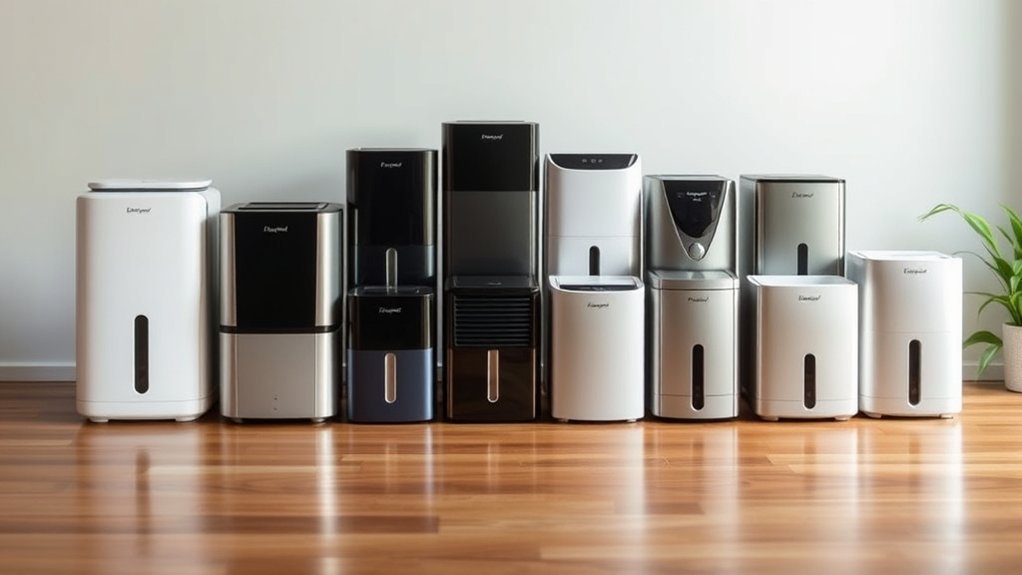
If you’re comparing the best performing dehumidifiers in 2026, start with the moisture-removal capacity, drainage method, and room size—not the largest marketing number. The five models below cover small rooms, damp basements, and very large open areas. For most buyers, the DGUAM 4500 Sq. Ft model offers a practical balance of capacity and controls, while the DECIUU 5000 Sq. Ft model is the more convenient choice when you need a built-in pump.
Quick Verdict
Best overall: DGUAM 4500 Sq. Ft Dehumidifier for buyers who want strong large-room moisture control without paying for a pump.
Best with a pump: DECIUU 5000 Sq. Ft Dehumidifier for basements where water must drain upward or across a longer route.
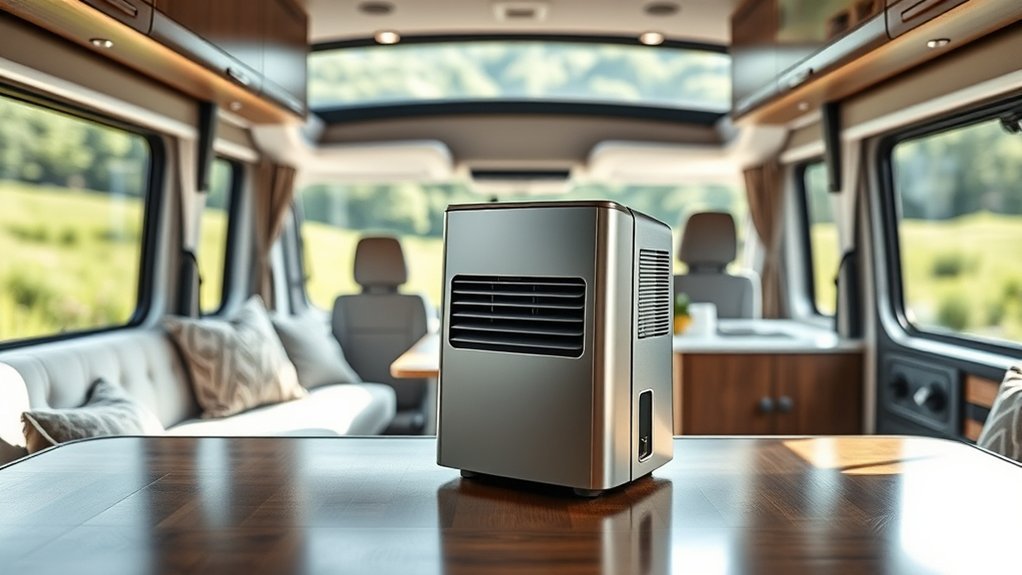
Best for smaller spaces: Aiusevo 1500 Sq. Ft Dehumidifier for bedrooms, RVs, and moderately damp rooms.
Best for very large areas: Vellgoo 140 Pint Dehumidifier for large basements, garages, and open spaces with heavy moisture.
Best balanced alternative: AEOCKY 50 Pint Dehumidifier for buyers who want a manageable tank, drain-hose support, and a mid-to-large coverage claim.
Quick Comparison of the Best Performing Dehumidifiers
| Product | Best For | Listed Coverage | Moisture Removal | Drainage | Check Details |
|---|---|---|---|---|---|
| DGUAM 4500 Sq. Ft | Best overall large-room pick | Up to 4,500 sq. ft. | Up to 80 pints/day under high-temperature, high-humidity conditions | Tank or gravity hose | Check Amazon |
| DECIUU 5000 Sq. Ft with Pump | Basements needing upward drainage | Up to 5,000 sq. ft. | 70 pints/day at stated standard conditions; up to 100 in extreme conditions | Tank, gravity hose, or built-in pump | Check Amazon |
| Aiusevo 1500 Sq. Ft | Bedrooms and smaller living areas | Up to 1,500 sq. ft. | Up to 21 pints/day at stated test conditions | Tank or gravity hose | Check Amazon |
| Vellgoo 140 Pint | Very large or heavily damp spaces | Up to 6,000 sq. ft. | Up to 140 pints/day at 95°F and 95% RH | Tank or included gravity hose | Check Amazon |
| AEOCKY 50 Pint | Mid-to-large rooms and basements | Up to 3,500 sq. ft. | Up to 50 pints/day under stated conditions | 0.8-gallon tank or drain hose | Check Amazon |
Note: Coverage and maximum pint ratings are manufacturer-listed figures. Actual extraction depends on room temperature, starting humidity, airflow, and how open or divided the space is.
How We Compared These Dehumidifiers
We prioritized models that directly match the search intent for high-performing home and basement dehumidifiers. The main comparison points were moisture-removal capacity, listed coverage, drainage convenience, humidity controls, portability, and honest limitations. We did not treat a large square-foot claim as a guarantee, and we separated maximum-condition pint ratings from more typical operating conditions whenever that information was available.
4500 Sq. Ft Dehumidifier with Smart Humidity Control
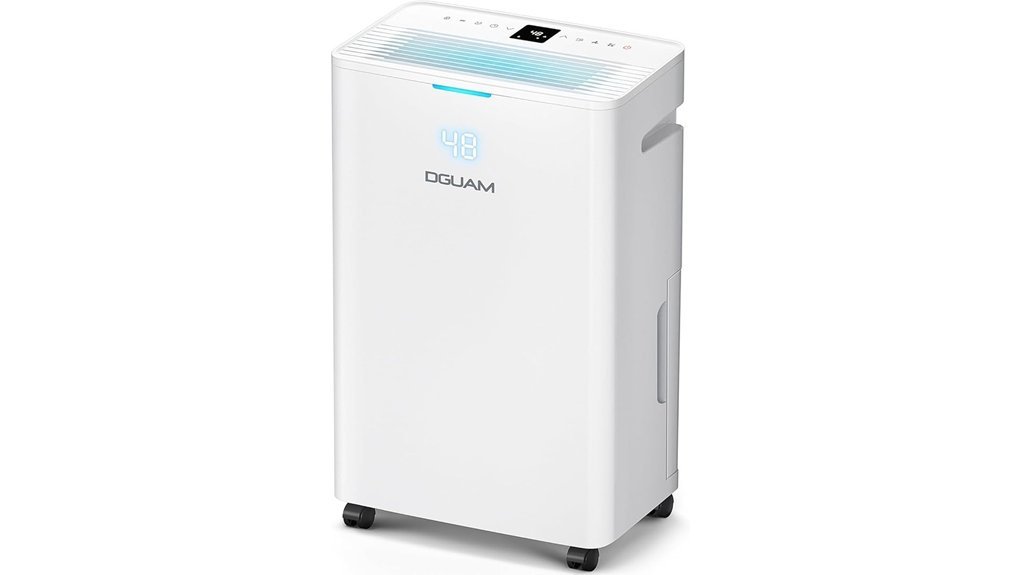
The DGUAM dehumidifier is a strong match for damp basements, garages, and larger living areas. Its listing promotes coverage up to 4,500 sq. ft. and a maximum removal rate of 80 pints per day under hot, very humid conditions. In less extreme rooms, expect the daily extraction rate to be lower.
Why You’ll Like It: Adjustable humidity control, a 24-hour timer, child lock, automatic defrost, power-loss memory, a washable filter, and a drain-hose option make it practical for everyday use. It is especially appealing when you need a full-size compressor dehumidifier but do not need a built-in pump.
Best For: Large basements, garages, open living areas, and buyers who can drain by gravity or empty the tank.
Who Should Avoid It: Buyers who must push water upward to a sink or window should choose a pump-equipped model instead.
Pros:
- Large manufacturer-listed coverage for basements and open rooms.
- Multiple operating modes and adjustable humidity control.
- Continuous gravity drainage can reduce tank-emptying work.
Cons:
- The 80-pint figure is a maximum-condition rating, not a guaranteed everyday rate.
- No built-in pump for draining above the unit.
- A full-size compressor unit takes more floor space than a compact model.
5000 Sq.Ft Energy Star Dehumidifier with Pump
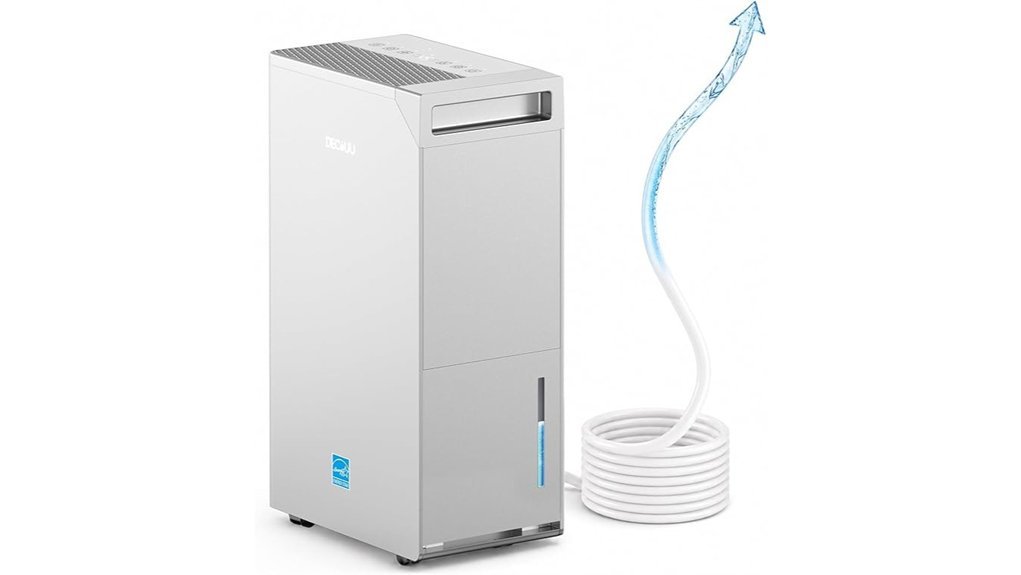
The DECIUU 5000 Sq. Ft model is the most convenient option here for basements without a nearby floor drain. Its listing states 70 pints per day at 86°F and 80% RH, with a maximum of up to 100 pints per day in hotter and more humid conditions. The built-in pump can move collected water upward, which is the key advantage over standard gravity-drain models.
Why You’ll Like It: You can choose tank collection, continuous gravity drainage, or pumped drainage. Smart humidity control, automatic restart, and rolling casters support longer-term basement use.
Best For: Large basements, garages, and utility spaces where the drain point is higher than the dehumidifier.
Who Should Avoid It: Small-room users may be better served by a lighter, lower-capacity unit without the added cost and size of a pump.
Pros:
- Built-in pump offers more flexible drain placement.
- High listed capacity for large and persistently damp areas.
- ENERGY STAR positioning gives buyers a clearer efficiency benchmark than vague “low energy” language.
Cons:
- Heavier and bulkier than small-capacity models.
- Pump models usually cost more than gravity-drain alternatives.
- Maximum extraction depends on demanding test conditions.
1500 Sq. ft Dehumidifier for Home and Basement
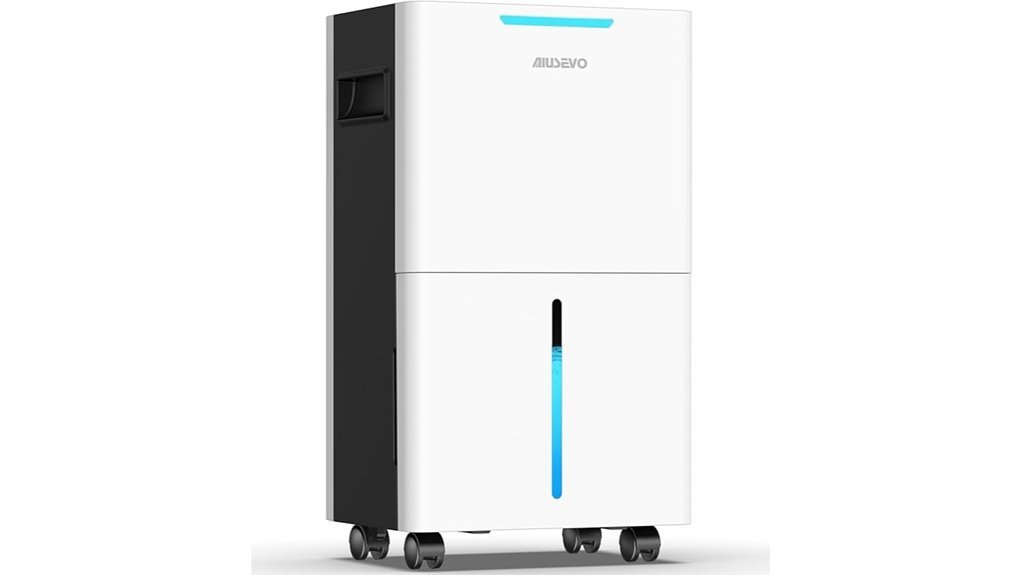
The Aiusevo 1500 Sq. Ft dehumidifier is designed for buyers who do not need a large 50- to 100-pint machine. It is listed to remove up to 21 pints per day at 95°F and 90% RH and includes DEHU, DRY, and continuous modes. That makes it better suited to bedrooms, RVs, laundry areas, and moderately damp rooms than to a severely wet whole basement.
Why You’ll Like It: The adjustable humidistat, timer, wheels, handle, removable tank, and included drain hose give it the core features of a full compressor model in a smaller format.
Best For: Bedrooms, bathrooms, RVs, laundry areas, and smaller basements with moderate moisture.
Who Should Avoid It: Choose a larger model for extensive open floor plans, standing-water problems, or very high daily moisture loads.
Pros:
- Appropriate capacity for smaller spaces without oversizing.
- Three modes support normal humidity control and laundry drying.
- Drain-hose support reduces manual emptying when a low drain is available.
Cons:
- Lower extraction capacity than the large-room models in this guide.
- Not designed to push water upward.
- The listed 1,500-sq.-ft. coverage may be optimistic in divided or very wet spaces.
Vellgoo 140 Pint Energy Star Dehumidifier for Home
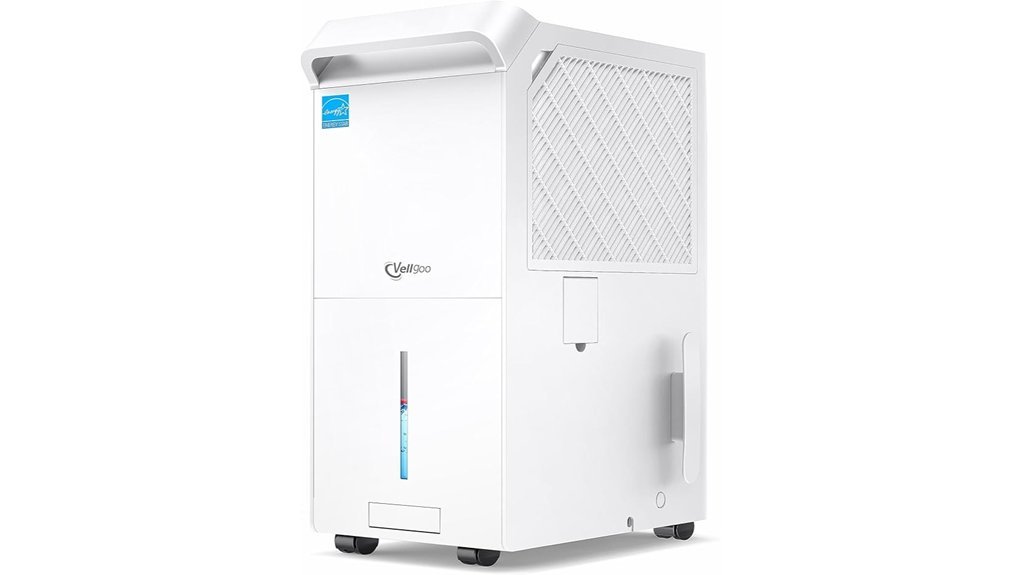
The Vellgoo 140 Pint Dehumidifier is the highest-capacity option in this lineup. The manufacturer lists it for spaces up to 6,000 sq. ft. and up to 140 pints per day at 95°F and 95% RH. Those are extreme-condition figures, but they still indicate that this model is aimed at much heavier moisture loads than a compact bedroom unit.
Why You’ll Like It: Smart humidity settings, multiple modes, a 24-hour timer, casters, and an included 6.56-foot drain hose support continuous operation in large basements, garages, and storage areas.
Best For: Very large basements, garages, workshops, storage areas, and open spaces with persistent high humidity.
Who Should Avoid It: It is likely excessive for a single bedroom, bathroom, or small apartment.
Pros:
- Highest maximum moisture-removal claim in this comparison.
- Large-space design with continuous gravity drainage.
- Smart controls and timer simplify long operating periods.
Cons:
- Large footprint compared with lower-capacity units.
- No built-in pump in this specific listed configuration.
- The 140-pint figure applies to extreme heat and humidity, not typical room conditions.
AEOCKY 50 Pint Dehumidifier for Home and Basement
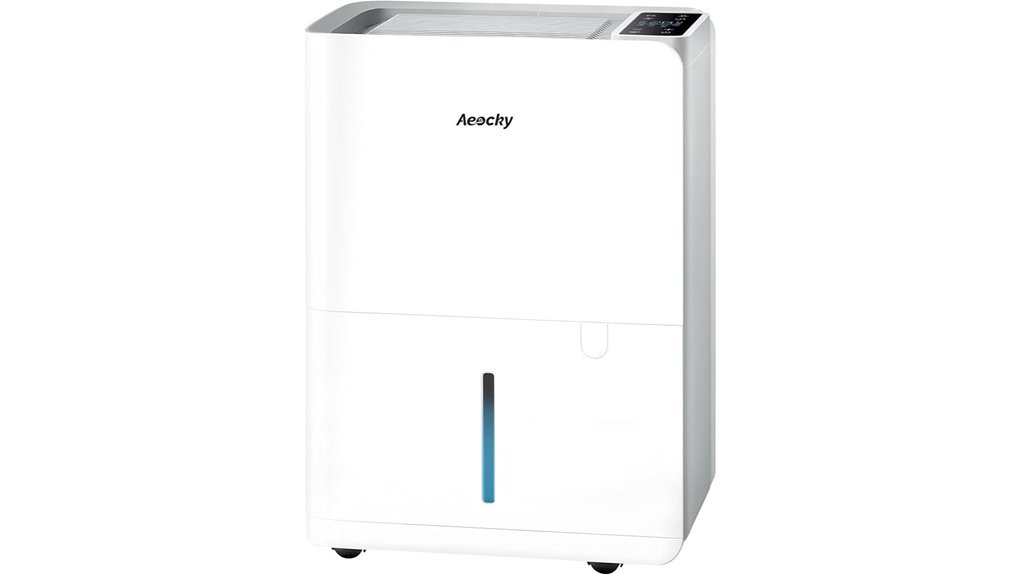
The AEOCKY BOREAS-001 is listed as a 50-pint-per-day compressor dehumidifier for spaces up to 3,500 sq. ft. It sits between the small Aiusevo and the largest basement models, making it a sensible alternative for buyers who want meaningful capacity without jumping to a 5,000- or 6,000-sq.-ft. unit.
Why You’ll Like It: It includes adjustable humidity control, fan-speed settings, a timer, child lock, a 0.8-gallon tank, a drain hose, and a garden-hose adapter. The manufacturer also lists a three-year machine warranty, but buyers should confirm the current registration and coverage terms before purchase.
Best For: Mid-to-large basements, bedrooms, bathrooms, garages, and general home humidity control.
Who Should Avoid It: Buyers with a higher drain point should choose a built-in-pump model.
Pros:
- Useful middle-ground capacity for many homes.
- Tank and continuous-drain options.
- Humidity controls and timer support automatic operation.
Cons:
- No built-in pump.
- The tank can fill quickly in very humid conditions.
- Coverage remains dependent on layout, airflow, and moisture load.
Factors to Consider When Choosing a Performing Dehumidifier
The best-performing model is not always the one with the largest number on the box. Match the unit to your real moisture load, drainage setup, room layout, operating temperature, and tolerance for noise and maintenance.
Compare Capacity at the Same Test Conditions
Dehumidifier capacity is measured in pints collected over 24 hours under specified temperature and humidity conditions. A product advertised as “80 pints” or “140 pints” may reach that number only in unusually hot and humid air. When possible, compare the standardized capacity or look for the exact test conditions beside the maximum claim.
Treat Coverage as a Starting Point
Square-foot ratings are useful for narrowing the list, but they are not a guarantee. A wide-open basement with good airflow is easier to serve than several closed rooms with the same total area. Ceiling height, doors, furniture, airflow restrictions, leaks, and starting humidity all affect real performance.
Choose a Practical Humidity Target
For many homes, a setting around 40% to 50% relative humidity is a practical target. Lower settings can make the unit run longer and use more energy. A separate hygrometer can help confirm the room reading if the built-in sensor is located close to the intake or seems inconsistent.
Check ENERGY STAR and IEF
ENERGY STAR certification is more useful than a vague “energy-efficient” claim. The key efficiency metric is the Integrated Energy Factor (IEF), which shows how much water the unit removes per kilowatt-hour. A higher IEF indicates better moisture removal for the electricity used. Compare models within the same capacity range.
Choose the Right Drainage Method
A tank is simple but needs regular emptying. A gravity hose can run continuously only when the drain is lower than the outlet. A built-in pump is better when water must move upward to a sink, window, or elevated drain. Before buying, measure the route and check the listing for the included hose, pump lift, and compatible fittings.
Check Low-Temperature Operation
Compressor dehumidifiers can collect frost on their coils in cooler spaces. For basements and garages, look for automatic defrost and confirm the minimum operating temperature in the manual. A unit that repeatedly freezes or short-cycles will not remove moisture efficiently.
Consider Portability and Tank Access
Large units can be awkward on stairs even when they have wheels. Check the actual dimensions, weight, handle design, caster quality, and whether the tank can be removed without spilling. If the unit will stay in one basement location, drainage convenience may matter more than portability.
Evaluate Noise Carefully
Noise claims can vary by fan speed and test distance. For a bedroom, look for a documented low-speed or sleep-mode rating and read the operating instructions. For a basement or garage, capacity and drainage may matter more than a few decibels of difference.
Before You Buy Checklist
- Measure the damp area and note whether doors usually stay open or closed.
- Identify a floor drain, sink, sump, or other safe drainage point.
- Decide whether gravity drainage will work or a pump is required.
- Compare standardized pint capacity, not only the maximum marketing figure.
- Confirm tank size, hose length, operating temperature, warranty terms, and return policy.
- Plan enough clearance around the air intake and outlet.
Frequently Asked Questions
How Often Should I Empty the Water Tank?
Empty it whenever the full-tank indicator activates. In a very damp room, that may be daily or more often; in a mildly humid room, it may take several days. Continuous drainage is the better choice when the tank fills too quickly.
What Size Dehumidifier Do I Need?
Start with the room area, then adjust for moisture severity. Choose more capacity for musty basements, visible condensation, laundry areas, open stairways, or spaces with frequent outside-air infiltration. A smaller unit can work well in a closed bedroom but may run continuously in a wet basement.
Do Dehumidifiers Make Noise When Operating?
Yes. Compressor and fan noise are normal. Low fan settings can be easier to tolerate in bedrooms, while higher fan speeds usually move more air and may sound louder. Place the unit on a level surface and keep it from touching furniture or walls that can amplify vibration.
Can I Use a Dehumidifier in Winter?
Yes, provided the room stays within the model’s approved operating-temperature range. In a cold basement or garage, choose a unit with automatic defrost and check the manual before continuous use.
What Maintenance Is Required for Dehumidifiers?
Clean the filter on the schedule in the manual, empty and rinse the tank, inspect the hose for kinks or buildup, keep the intake and outlet clear, and wipe dust from the cabinet. Unplug the unit before cleaning.
Is a Built-In Pump Worth It?
A pump is worth the extra cost when there is no lower floor drain. It allows the unit to move water upward, reducing the need to empty the tank. If a nearby floor drain is below the outlet, a gravity hose is usually simpler.
Are Dehumidifiers Safe for Pets and Children?
They are generally suitable for normal household use when installed according to the manual. Keep cords, hoses, controls, and the water tank out of reach, use the child lock when available, and do not block the air openings.
Final Recommendation
Choose the DGUAM 4500 Sq. Ft Dehumidifier for a strong all-around large-room option with smart controls and gravity drainage. Pick the DECIUU 5000 Sq. Ft model when a built-in pump is essential. The Aiusevo 1500 Sq. Ft model is the better fit for smaller rooms, while the Vellgoo 140 Pint targets the heaviest large-space moisture loads. The AEOCKY 50 Pint is a balanced middle option for buyers who do not need the largest machine.
Before ordering, verify the current product variant, standardized capacity, drain setup, and warranty terms on the Amazon listing.