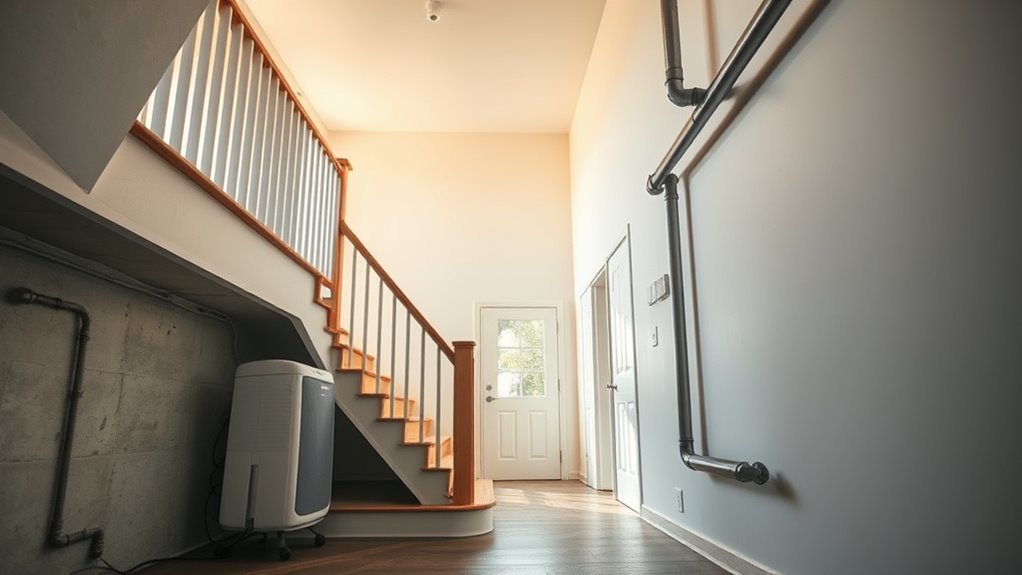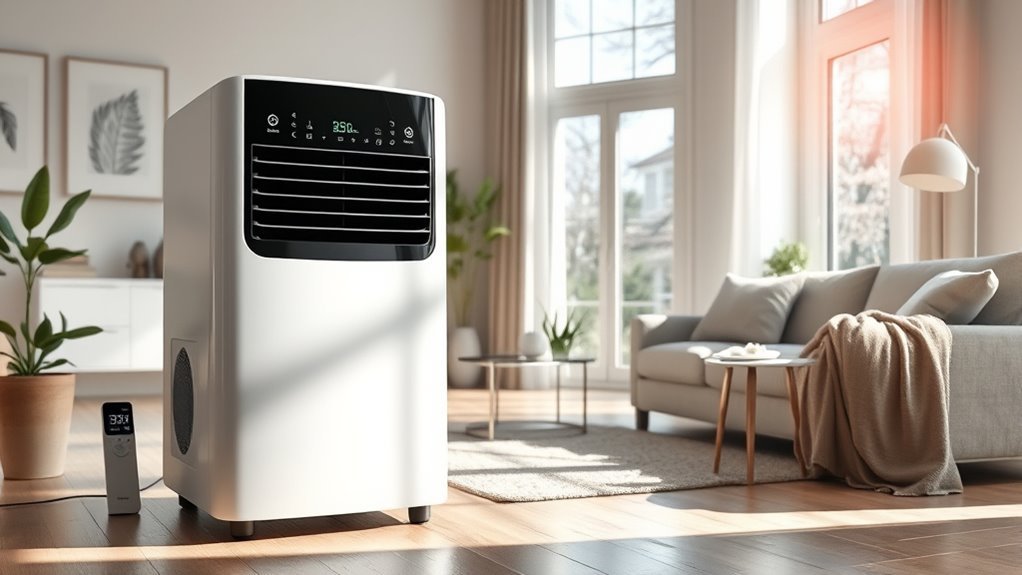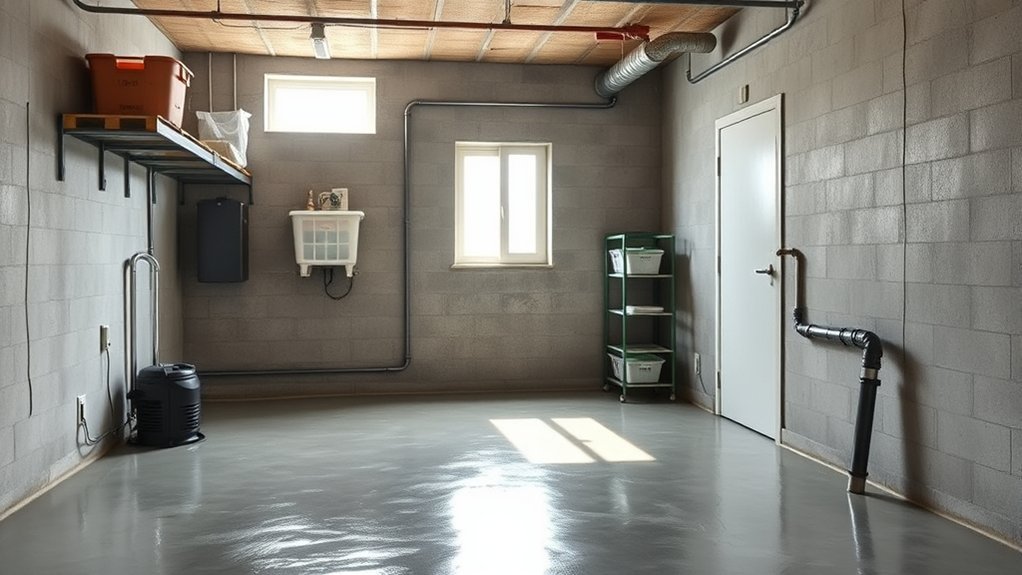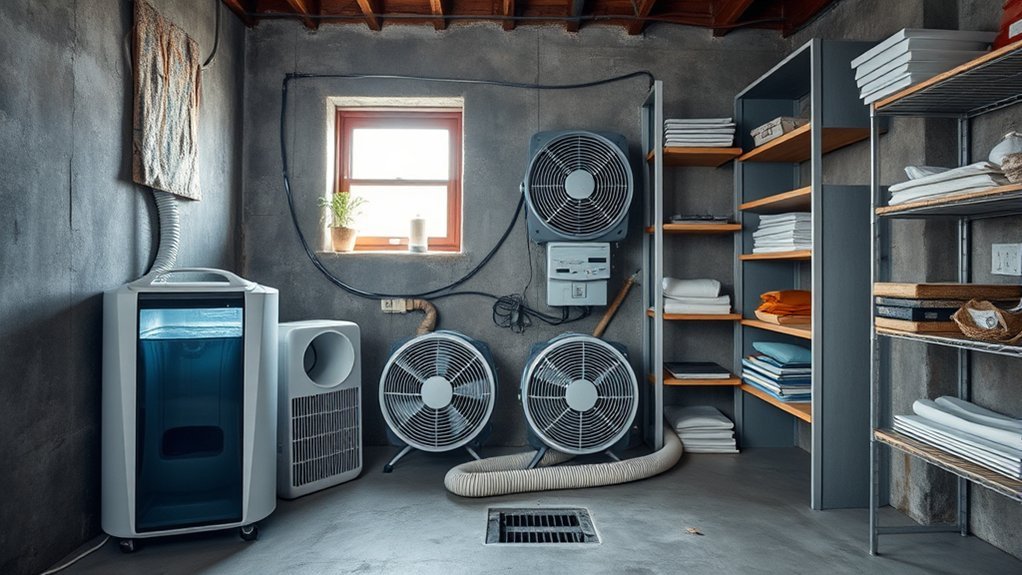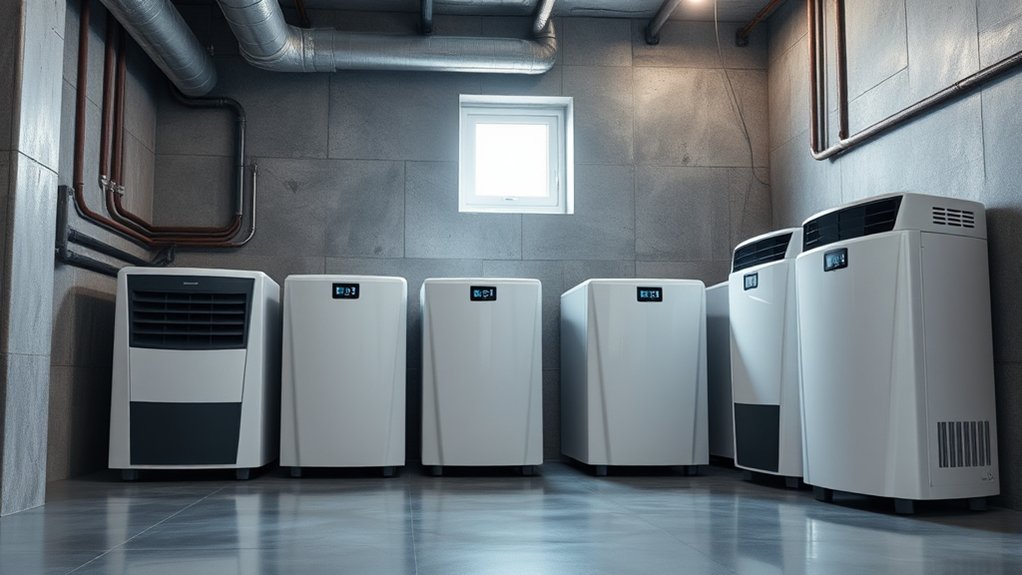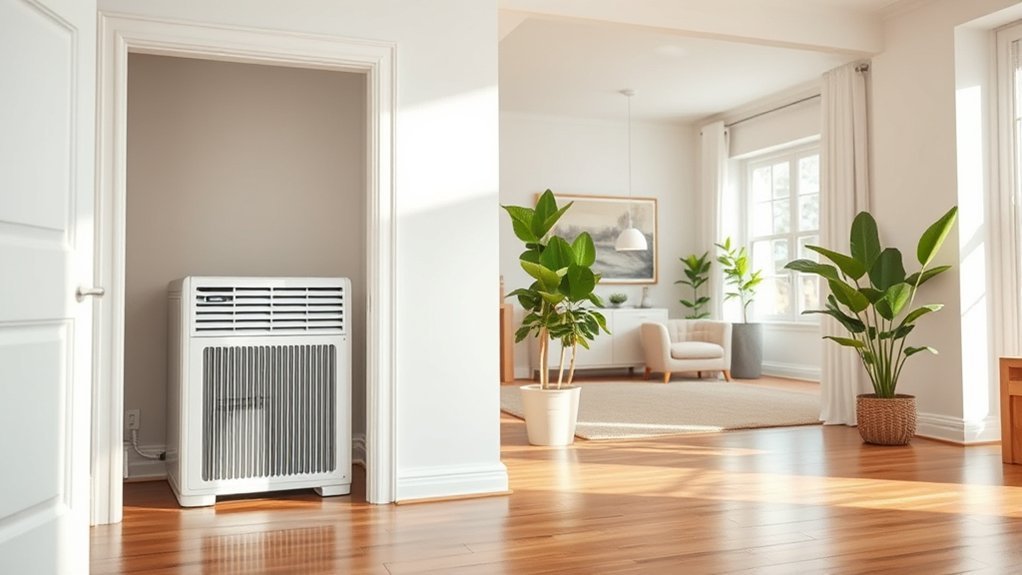
If your home feels sticky even when the air conditioner is running, a whole-house dehumidifier can be a smart upgrade. It connects to your HVAC system or dedicated ductwork to remove excess moisture across the home, not just in one damp room. The key is knowing whether your humidity problem is persistent enough to justify the equipment, installation, and maintenance costs.
Quick Answer
A whole-house dehumidifier is worth it if indoor humidity often stays above 50% to 60%, rooms smell musty, windows sweat, or your AC cools the house without removing enough moisture. It is usually not worth it for one small damp room, occasional humidity spikes, or moisture caused by unfixed leaks.
Key Takeaways
- A whole-house dehumidifier makes the most sense when high humidity affects multiple rooms or returns quickly after portable units run.
- Aim for indoor relative humidity around 30% to 50%; the EPA recommends keeping indoor humidity below 60%, ideally 30% to 50%.
- Many standard installed projects cost roughly $1,500 to $3,500, while complex ductwork, electrical, drainage, or high-capacity jobs can cost more.
- Fix leaks, drainage problems, wet crawl spaces, and poor ventilation before relying on a dehumidifier.
- Professional sizing and installation matter because duct design, airflow, drainage, and controls determine how well the system works.
At a Glance
| Time Required | 20 to 30 minutes to measure humidity and inspect problem areas; longer for contractor quotes. |
| Difficulty | Easy to evaluate; moderate to complex to install because HVAC ducting, drainage, and electrical work may be involved. |
| Tools Needed | Hygrometer, flashlight, recent utility bills, HVAC model information, and installer quotes. |
| Cost | About $10 to $50 for a hygrometer; roughly $1,500 to $3,500 for many standard whole-house installations, with complex jobs costing more. |
Is a Whole House Dehumidifier Worth It?
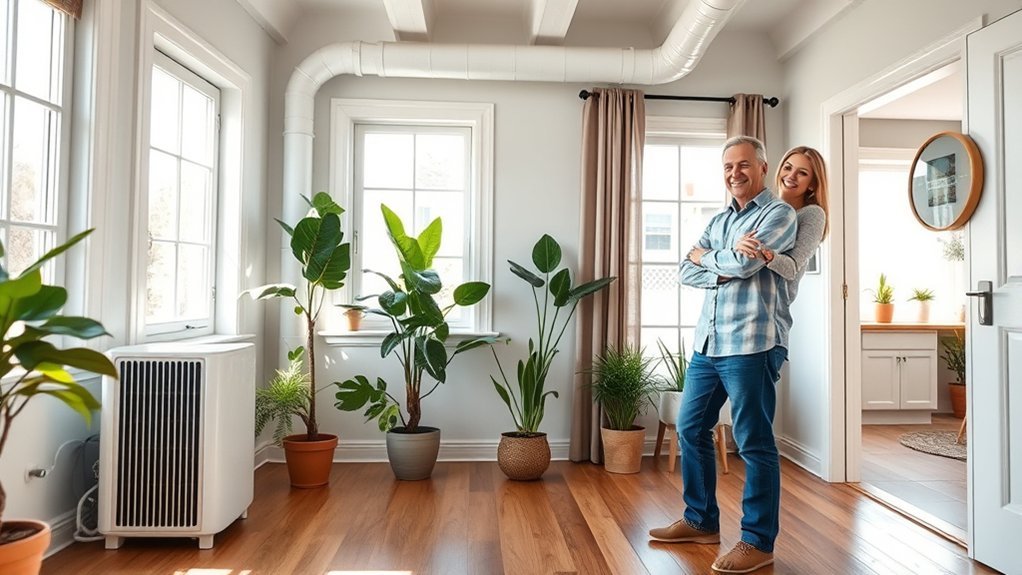
Yes, a whole-house dehumidifier is often worth it if moisture is a whole-home problem, not a one-room inconvenience. It can keep humidity steadier, reduce musty odors, make the house feel more comfortable, and help protect wood, drywall, flooring, furniture, and stored belongings from moisture damage.
The best candidates are homes where indoor relative humidity regularly rises above 50% to 60%, especially in humid climates, tightly sealed homes, basements, crawl spaces, or houses with an oversized air conditioner that cools too quickly to remove enough moisture.
It is less likely to be worth it if your humidity problem happens only a few days per year, stays limited to one bathroom or basement corner, or comes from an active leak. In those cases, a portable dehumidifier, exhaust fan, drainage repair, crawlspace sealing, or plumbing fix may solve the problem for less money.
| Worth Considering | Probably Not Worth It Yet |
|---|---|
| Humidity often stays above 50% to 60% indoors. | Humidity only spikes during unusual weather. |
| Several rooms feel clammy or smell musty. | Only one small room has a moisture issue. |
| Portable units fill quickly or cannot keep up. | One portable unit keeps the problem area dry. |
| The AC cools but leaves the home sticky. | Your AC already keeps humidity in range. |
| You want automatic humidity control through the home. | You are dealing with an unfixed leak or drainage issue. |
The best reason to buy a whole-house dehumidifier is not because the air feels damp once in a while. It is because moisture keeps returning across the home even after normal ventilation and air conditioning are doing their job.
How Does a Whole House Dehumidifier Work?
A whole-house dehumidifier pulls humid air from the HVAC return side or a dedicated return duct, passes that air over cold refrigeration coils, condenses water out of the air, drains the water away, and sends drier air back into the home. Many systems connect to existing ductwork, while some use dedicated ducts when the existing HVAC layout is not practical.
Unlike an air conditioner, the main goal is moisture removal, not cooling. The air leaving the unit may even feel slightly warmer because heat is released during the dehumidification process. Even so, drier air can feel more comfortable, which may let you set the thermostat a little higher without feeling sticky.
Note: A whole-house dehumidifier does not replace your air conditioner. It handles latent moisture load, while the AC handles cooling load. In humid homes, both systems may work together.
A properly installed system usually includes:
- A humidistat or control that turns the unit on only when humidity rises above the set point.
- Ductwork that allows enough airflow without starving the HVAC system.
- A drain line or condensate pump to remove collected water.
- Electrical service that matches the manufacturer’s installation requirements.
- Filter access for routine cleaning or replacement.
Does Your Home Need One?
Your home may need a whole-house dehumidifier if indoor humidity is high for long stretches, especially when the AC is running. The simplest first step is to buy a small hygrometer and check several rooms for a week. Measure in the morning, afternoon, and evening because humidity changes throughout the day.
The CDC recommends keeping home humidity no higher than 50% all day long to help prevent mold growth. The EPA says indoor humidity should be below 60%, ideally 30% to 50%. If your readings repeatedly land above those levels, you have a real moisture-control problem to solve.
Signs a Whole-House Dehumidifier May Help
- Indoor humidity often reads above 50% to 60%.
- The home feels clammy even when the thermostat says it is cool.
- Musty odors return after cleaning.
- Condensation forms on windows, ducts, plumbing, or supply vents.
- Basement, crawlspace, or lower-level rooms stay damp.
- Wood floors cup, doors swell, paint peels, or drywall feels soft.
- Portable units run constantly or fill up quickly.
- Your AC cycles off quickly but the house still feels sticky.
Pro Tip: Do not rely on how the air feels alone. Use a hygrometer in the dampest room, a main living space, and near the HVAC return. If all three stay high, a whole-house solution becomes much easier to justify.
Warning: A dehumidifier is not a fix for active water intrusion. Repair roof leaks, plumbing leaks, poor grading, clogged gutters, wet crawl spaces, and drainage problems first. Otherwise, the unit will keep fighting a moisture source that should have been removed.
Whole House Dehumidifier Costs
Whole-house dehumidifier cost depends on capacity, ductwork, drain access, electrical work, controls, brand, labor rates, and whether the installer can tie into your existing HVAC layout cleanly. Many standard installed projects run roughly $1,500 to $3,500, while more complex jobs can move above that range.
A current HomeGuide cost guide lists whole-house dehumidifier installations around $1,500 to $3,500 and operating costs around $10 to $30 per month. Treat those as planning numbers, not a guaranteed quote, because a difficult attic, crawlspace, or duct retrofit can change the price quickly.
Recommended Products

【The Undisputed Champion — Industry-Leading Dehumidifier Brand】When you choose AEOCKY, you get double market validation. According to data independently verified by Stackline, a leading third-party data analytics company, AEOCKY was an industry‑leading dehumidifier brand on Amazon U.S. in 2025. This means you’re not just choosing a flagship product from a market leader, but a top-performing brand backed by independent market data and trusted by millions of real users, delivering the ultimate combination of performance, quality and trust.

2500 Sq. Ft Dehumidifier - SEMKAP dehumidifier for basement features a quiet, high-performance compressor that removes up to 32 pints of moisture per day (at 95°F, 90% RH). Ideal for basements, offices, bathrooms, bedrooms, kitchens, stockrooms, living rooms, laundry rooms, garages, crawlspaces, or RVs. It helps maintain optimal humidity between 40%–60%RH for healthier, more comfortable living

POWERFUL 2,500 SQ. FT. COVERAGE - Stop letting sticky, heavy air dictate your comfort. The BANABIE dehumidifier utilizes a high-efficiency rotary compressor to deliver heavy-duty moisture removal, extracting 32 pints daily (at 95°F, 90%RH). Engineered with a smart integrated airflow system, this unit effectively covers up to 2,500 Sq. Ft., ensuring that your basement, crawl space, or large open floor plans stay bone-dry
Equipment and Install Costs
| Cost Item | Typical Planning Range | What Changes the Price |
|---|---|---|
| Whole-house unit | About $1,100 to $3,000+ | Capacity, efficiency, controls, brand, filtration, fresh-air options. |
| Standard installation | About $500 to $1,500+ | Duct connection, labor, drain line, condensate pump, access. |
| Typical installed project | About $1,500 to $3,500 | Home size, ductwork complexity, local rates, add-ons. |
| Complex install | $4,000+ is possible | New duct runs, electrical upgrades, tight access, large homes, multiple zones. |
To compare quotes fairly, ask each contractor for the unit capacity in pints per day, installation configuration, drain method, electrical requirements, control strategy, warranty, and whether duct modifications are included.
Operating Costs and Savings
Monthly operating cost often lands around $10 to $30, but the real number depends on local electricity rates, runtime, humidity load, unit efficiency, and how tightly the home is sealed. A damp crawlspace, open basement, or leaky building envelope can make the unit run more often.
An ENERGY STAR certified dehumidifier uses about 20% less energy than a similarly sized conventional model, and ENERGY STAR certified models are available for both portable and whole-home applications. That does not make the unit free to run, but it does make efficiency worth comparing when you choose a model.
Possible savings come from comfort and damage prevention rather than a guaranteed utility-bill payback. By lowering humidity, you may feel comfortable at a slightly higher thermostat setting, reduce AC runtime in mild humid weather, and lower the chance of moisture-related repairs.
Maintenance Costs and Tasks
Maintenance is usually simple, but it is not optional. Check the owner’s manual for the exact schedule. Many systems need the filter and drain checked or cleaned at least every six months, and the condensate line should stay clear so water cannot back up into the unit or HVAC area.
- Clean or replace the filter as directed.
- Inspect and flush the drain line.
- Check the condensate pump if one is installed.
- Keep access panels clear for service.
- Confirm the humidistat is reading accurately.
- Have the system inspected during routine HVAC service if performance drops.
Whole-House vs. Portable Dehumidifiers
The biggest difference is coverage. A whole-house dehumidifier is designed for broad, automatic humidity control. A portable dehumidifier treats one area at a time and usually needs manual emptying unless it has a drain hose or pump.
| Feature | Whole-House Dehumidifier | Portable Dehumidifier |
|---|---|---|
| Coverage | Multiple rooms or the whole home when sized and ducted correctly. | One room, basement area, bathroom, laundry room, or small zone. |
| Upfront cost | Higher because equipment and professional installation are usually needed. | Lower; many units cost a few hundred dollars. |
| Convenience | Hands-off once installed and set correctly. | May need bucket emptying, cleaning, moving, and noise management. |
| Best use | Persistent humidity across the home. | Localized dampness or a lower-cost trial before a larger upgrade. |
| Limitations | Requires sizing, ducting, drainage, and service access. | Uneven control and limited capacity for whole-home problems. |
If you are unsure, start with humidity readings and a portable unit in the worst area. If that unit runs constantly, fills quickly, and the rest of the house still feels damp, a whole-house system becomes a stronger investment.
Recommended Products

【Reduce humidity - Enhance comfort】:Massive Capacity + Wide Coverage. This dehumidifier has dehumidification capacity ranging 45- 80 pints—outperforming standard units while covering 4,500 sq. ft. of living space. Great dehumidifier for basements, large house, garages, bedroom, bathroom and gyms where excess humidity triggers cause unpleasant odors and discomfort. The result? A noticeably drier, fresher, and more comfortable environment for your entire family.
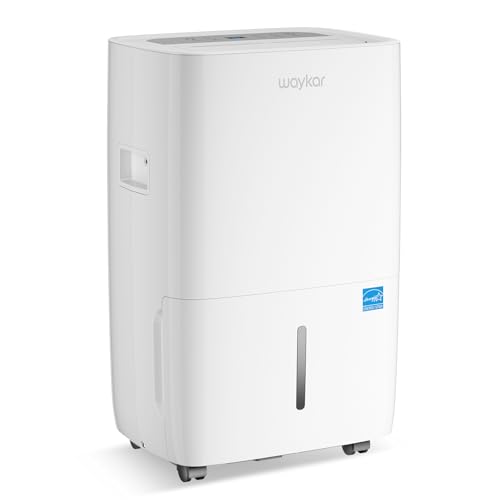
【80 Pint Capacity for Up to 5,000 Sq.Ft Spaces】Quickly removes excess moisture from basements, bathrooms, bedrooms, RVs, and other large living areas, delivering 80 pints per day (95°F, 90% RH).conditions. Designed as a powerful dehumidifier for basement, home, and large spaces, it helps eliminate damp air, condensation—and pet-related odors caused by excess humidity. Even during humid seasons, it works continuously to maintain a dry, comfortable, and healthier indoor environment.
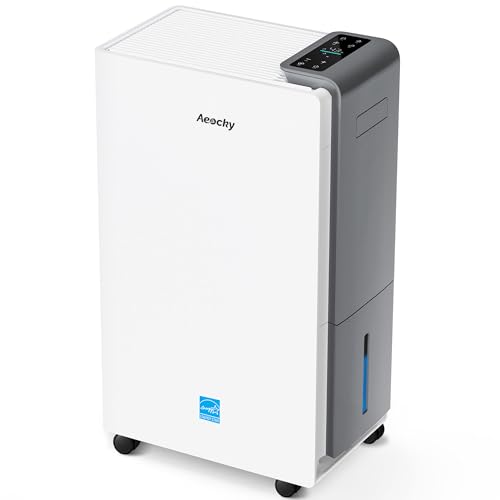
【ENERGY STAR 25 ≠ ENERGY STAR Most Efficient 2025】Don't fall for competitors' word games. With only 2.6% of ENERGY STAR models earning "Most Efficient 2025" title, these options are exceptionally rare on the market. RHEA-001 is one of the few to truly hold this top-tier certification. Many brands use misleading phrases like "Energy Star Efficient 25" or "Energy Star 25" to imply a standard they haven't met. Choosing them is a risk.With AEOCKY, you get verified performance and the peace of mind of authentic, top-tier efficiency.
When a Whole House Dehumidifier Isn’t Worth It
A whole-house dehumidifier is not automatically the best fix for every damp home. It may be the wrong purchase if the moisture source is structural, local, or occasional.
It may not be worth it when:
- The problem is limited to one room that a portable unit can handle.
- Humidity is only high during rare weather events.
- Your AC already keeps humidity in the 30% to 50% range.
- A bathroom fan, kitchen exhaust fan, or dryer vent needs repair.
- Water is entering through a roof, wall, foundation, plumbing line, or crawlspace.
- You rent and cannot modify the HVAC system.
- The home is small enough that a portable or crawlspace unit is more practical.
Warning: If you already see widespread mold, wet drywall, standing water, or sewage-contaminated moisture, do not treat the dehumidifier as the solution. Stop the water source, dry the materials properly, and use qualified remediation help when the affected area is beyond safe DIY cleanup.
How to Size and Install It
Sizing a whole-house dehumidifier is not just a square-footage calculation. The right capacity depends on moisture load, climate, insulation, air sealing, basement or crawlspace conditions, duct layout, and how the home is used. Cooking, showers, laundry, indoor plants, aquariums, and ventless appliances can all add moisture.
Recommended Products

Energy- Efficient Performance: avylo dehumidifier Certified ENERGY STAR Most Efficient 2025 with an EER of 2.05 L/kWh; Powered by a high-efficiency compressor and optimized airflow design, with a maximum daily dehumidification capacity of 90 pints(90°F,90% RH); Ideal for basements, home, living rooms, garages, and large areas up to 5000 sq. ft., keeping your home dry, comfortable

160 Pints/Day Upgraded Energy-Efficient Dehumidification: Built with an upgraded high-efficiency system, the Moiswell WD160 removes up to 160 pints of moisture per day (65 PPD @DOE) with lower energy consumption(2.25 L/wKh). It maintains optimal humidity levels across large living spaces, helping prevent structural damage such as wood rot and musty odors, while promoting a healthier indoor environment.

158 Pint Crawl Space Dehumidifier – Designed for crawl spaces, basements, and large areas up to 6,500 sq. ft., this unit removes up to 158 pints of moisture per day (95°F, 90% RH). A 206 CFM airflow and brushless motor help dry spaces faster with 10%–90% RH adjustable humidity
Capacity Based on Moisture
Whole-house units are commonly rated in pints per day. Many residential systems fall somewhere around 70 to 120 pints per day, while larger or wetter homes may need more. The right number should come from actual humidity readings and a contractor’s evaluation, not a guess.
Before you choose capacity, gather:
- Square footage and ceiling height.
- Humidity readings from several rooms.
- Basement or crawlspace conditions.
- AC size and runtime behavior.
- Known moisture sources.
- Whether the home is tightly sealed or drafty.
- Preferred humidity set point.
A common target is around 45% to 50% during humid weather. In cold climates, you may need a lower winter setting if window condensation appears.
Ductwork and Return Placement
Proper ductwork and return placement can make or break performance. Manufacturer instructions should guide the final configuration. For example, whole-home units may connect to the HVAC return, discharge through the HVAC system, or use dedicated ducts when existing ductwork is unavailable or impractical.
| Setup | Best For | Watch Out For |
|---|---|---|
| HVAC return connection | Homes with accessible return ductwork. | Static pressure, blower control, and backdrafting details. |
| Dedicated return duct | Stronger moisture capture from a damp area. | Extra ductwork cost and placement. |
| Dedicated supply and return | Homes where HVAC ductwork is unavailable or not ideal. | More labor, more materials, and visible registers. |
Poor duct design can leave humid pockets, create noise, reduce airflow, or make the unit short-cycle. This is why a good installer will evaluate the whole HVAC system instead of simply attaching the dehumidifier wherever it fits.
Professional Installation and Drainage
Most homeowners should treat a whole-house dehumidifier as a professional HVAC installation. The installer must confirm safe electrical service, correct duct sizing, proper airflow, service access, code compliance, and reliable drainage.
Manufacturer manuals such as the AprilAire E080/E100 installation and owner’s manual and Santa Fe Ultra70 installation instructions show why details like duct routing, drain setup, electrical safety, and service clearance matter.
Warning: Do not cut into HVAC ductwork, wire controls, or work around line voltage unless you are qualified to do so. A bad installation can reduce HVAC performance, cause water damage, or create electrical hazards.
Drainage options usually include a gravity drain to a floor drain or a condensate pump when gravity drainage is not possible. The drain line should be accessible for cleaning because clogs are one of the most common maintenance problems.
Best Humidistat Setting
For many homes, a setting around 45% to 50% is a practical starting point during humid weather. If the home still feels damp, lower the setting slightly. If the home feels too dry, raise it. In winter, lower settings may be needed in cold climates to reduce window condensation.
Avoid setting the unit much lower than necessary. Over-drying can waste energy and may make wood, skin, and respiratory passages feel dry.
Maintenance After Installation
Once the system is installed, check it at the start of each humid season. Confirm the filter is clean, the drain flows freely, the humidistat reads close to a separate hygrometer, and the unit cycles off after the home reaches the set point.
Call for service if the unit runs constantly without lowering humidity, leaks water, produces unusual noise, trips a breaker, or shows frost on the coil.
Frequently Asked Questions
What are the cons of a whole-house dehumidifier?
The main drawbacks are higher upfront cost, professional installation, added electrical use, ductwork requirements, drain maintenance, and less flexibility than a portable unit. It also will not fix active leaks, poor drainage, or major mold contamination by itself.
Should you use a dehumidifier if you have COPD?
A dehumidifier may help if your indoor air is too humid, especially because dampness, mold, and dust mites can irritate the lungs. It is not a COPD treatment, though. Keep humidity in a healthy range, avoid over-drying the air, and follow your clinician’s advice for managing symptoms and indoor triggers.
How much does it cost to have a whole-house dehumidifier installed?
Many standard whole-house dehumidifier installations cost about $1,500 to $3,500. Larger homes, difficult ductwork, electrical upgrades, condensate pumps, premium controls, and tight attic or crawlspace access can push the quote higher.
Is one dehumidifier enough for a whole house?
One properly sized whole-house dehumidifier can often serve the whole home when it is ducted and controlled correctly. One portable dehumidifier usually cannot cover an entire house because it only treats the nearby air.
What humidity should I set a whole-house dehumidifier to?
A good starting point is 45% to 50% relative humidity during humid weather. The EPA recommends staying below 60%, ideally 30% to 50%. In cold weather, you may need a lower setting if condensation forms on windows.
Does a whole-house dehumidifier replace air conditioning?
No. A dehumidifier removes moisture; an air conditioner removes heat and some moisture. In humid homes, a whole-house dehumidifier can help the AC work more comfortably because dry air feels cooler than sticky air at the same temperature.
Conclusion
A whole-house dehumidifier is worth it when damp air is a recurring whole-home problem. If humidity stays high, rooms smell musty, portable units cannot keep up, or the AC cools without drying the air, a properly sized system can improve comfort and help protect the house.
It is not the first fix for every moisture problem. Measure humidity first, repair leaks and drainage issues, check ventilation, and compare the cost of portable units versus a ducted system. If readings stay high across the home after those basics are handled, a whole-house dehumidifier becomes a practical long-term solution.
Sources
- U.S. EPA Mold Course, Chapter 2 — supports indoor humidity guidance below 60%, ideally 30% to 50%.
- CDC Mold Prevention Guidance — supports keeping humidity no higher than 50% and fixing leaks to prevent mold growth.
- ENERGY STAR Dehumidifiers — supports energy-efficiency guidance for certified portable and whole-home dehumidifiers.
- HomeGuide Whole-House Dehumidifier Cost Guide — supports installed cost and operating cost planning ranges.
- AprilAire E080/E100 Installation and Owner’s Manual — supports ducting, drainage, operation, and maintenance considerations.
- Santa Fe Ultra70 Installation Instructions — supports professional installation, electrical safety, ducting, and drainage considerations.