Affiliate disclosure: As an Amazon Associate, we may earn from qualifying purchases at no extra cost to you.
Updated: August 2026
The best dehumidifier for new construction depends on what you are drying. For an enclosed crawl space, basement, garage, utility area, or recently completed building, a compact commercial or crawl-space dehumidifier with automatic defrost and continuous drainage can provide practical ongoing moisture control. For soaked drywall, wet framing, flooding, or a large active jobsite, use a professional structural-drying plan with properly sized commercial equipment, air movement, moisture readings, and qualified restoration help.
Quick verdict: The ALORAIR 70-Pint Helios MP35 is the strongest all-around choice here when you need a built-in pump and flexible drainage. The ALORAIR Sentinel HD55 is the better high-capacity option when gravity drainage is available. The BaseAire AirWerx 35P is a compact pump-equipped alternative, while the CADPXS Remois XP70 offers a useful mix of pump drainage, automatic defrost, and a small footprint.
Important: Do not compare headline pint ratings without checking test conditions. Some commercial listings show a higher rating at saturation and a lower rating under AHAM or DOE conditions.
Quick Comparison
| Product | Best For | Published Capacity | Drainage | Main Limitation | Amazon |
|---|---|---|---|---|---|
| ALORAIR Helios MP35 | Best overall with pump | 70 PPD at saturation; 35 PPD under AHAM conditions | Built-in pump or gravity drain | Not a substitute for a large restoration-class drying system | Check Price |
| ALORAIR Sentinel HD55 | Best higher-capacity gravity-drain option | 113 PPD at saturation; 53 PPD under AHAM conditions | Continuous gravity drain | No built-in condensate pump in this listing | Check Price |
| BaseAire AirWerx 35P | Best compact pump alternative | Seller-listed 70 PPD rating | Built-in pump | Confirm current warranty and included drain accessories | Check Price |
| CADPXS Remois XP70 | Best compact value option with pump | 80 PPD at saturation; 38 PPD under AHAM conditions; 24 PPD under DOE conditions | Built-in pump or gravity drain | Lesser-known brand; verify service and replacement-filter support | Check Price |
- Confirm that the building area is enclosed enough for dehumidification to work.
- Measure temperature and relative humidity instead of relying only on advertised square footage.
- Check whether the pint rating is measured at saturation, AHAM conditions, or DOE conditions.
- Plan a safe drain route and confirm whether you need a pump or can use gravity drainage.
- Use a moisture meter when drying framing, subfloors, drywall, or other building materials.
ALORAIR 70 Pints Crawl Space Dehumidifier with Pump
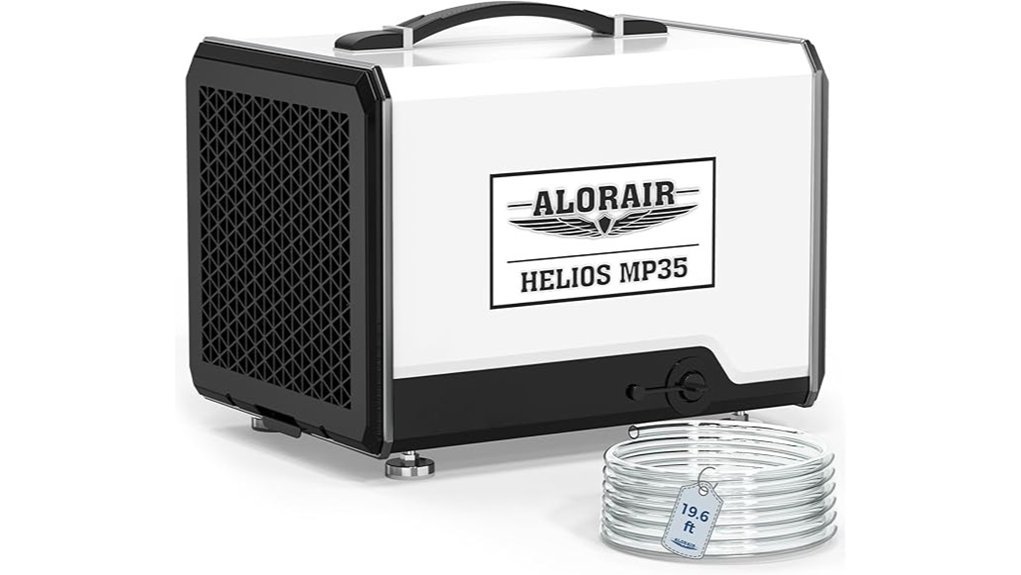
The ALORAIR Helios MP35 is the most balanced option in this group for enclosed new-construction areas that need reliable continuous drainage. The listing identifies a 70-pint saturation rating and a 35-pint AHAM rating, covers up to 1,000 square feet, and includes a built-in pump that can lift condensate vertically when a floor drain is not nearby.
Why you’ll like it: It combines automatic defrost, restart memory, a corrosion-resistant casing, gravity drainage, and pump drainage in a compact body. That makes it easier to install in a crawl space, basement, utility room, or enclosed garage than a standard bucket-style residential machine.
Who should buy this: Builders or homeowners who need ongoing humidity control in a confined area and cannot rely only on a downward-sloping drain hose.
Who should avoid this: Anyone trying to dry a large open jobsite, widespread water damage, or heavily saturated materials without additional air movers and moisture monitoring.
Pros:
- Built-in pump can discharge water vertically up to the seller-listed 19.6-foot height.
- Automatic defrost and restart memory support unattended operation.
- Compact metal-cased design fits low-clearance areas.
Cons:
- The 70-pint headline figure is a saturation rating; the AHAM figure is lower.
- Optional accessories such as remote controls or hanging kits may be sold separately.
- Replacement-filter availability should be confirmed before purchase.
ALORAIR 113 Pint Commercial Dehumidifier (Sentinel HD55)
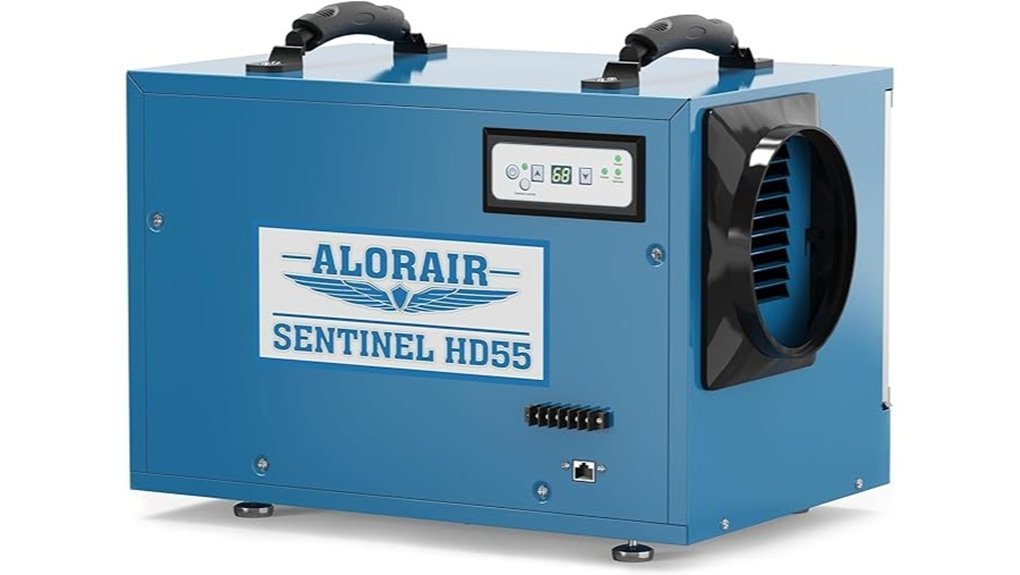
The ALORAIR Sentinel HD55 is the stronger choice when you want more moisture-removal capacity and can route water to a suitable gravity drain. Its listing distinguishes between 113 pints per day at saturation and 53 pints per day under AHAM conditions, which is a more useful comparison than the headline number alone.
Why you’ll like it: The compact metal casing, automatic defrost, continuous drainage, and power-outage memory suit crawl spaces, basements, warehouses, and enclosed construction areas. Its higher AHAM-rated output gives it an advantage over the smaller pump-equipped units when drainage height is not a problem.
Who should buy this: Buyers with a larger enclosed damp area, a nearby low drain, and a need for stronger continuous moisture removal.
Who should avoid this: Buyers who need the machine to pump water upward or across a route where gravity drainage is impossible.
Pros:
- Highest verified AHAM-rated capacity among the retained models.
- Automatic defrost supports operation in cooler enclosed areas.
- Metal housing and continuous drainage suit longer-term installations.
Cons:
- No built-in condensate pump is identified in this product listing.
- The 113-pint headline capacity is measured at saturation, not AHAM conditions.
- The basic MERV-1 filter is intended mainly for equipment protection, not fine-particle air cleaning.
BaseAire Crawlspace Dehumidifier with Pump, 70 PPD
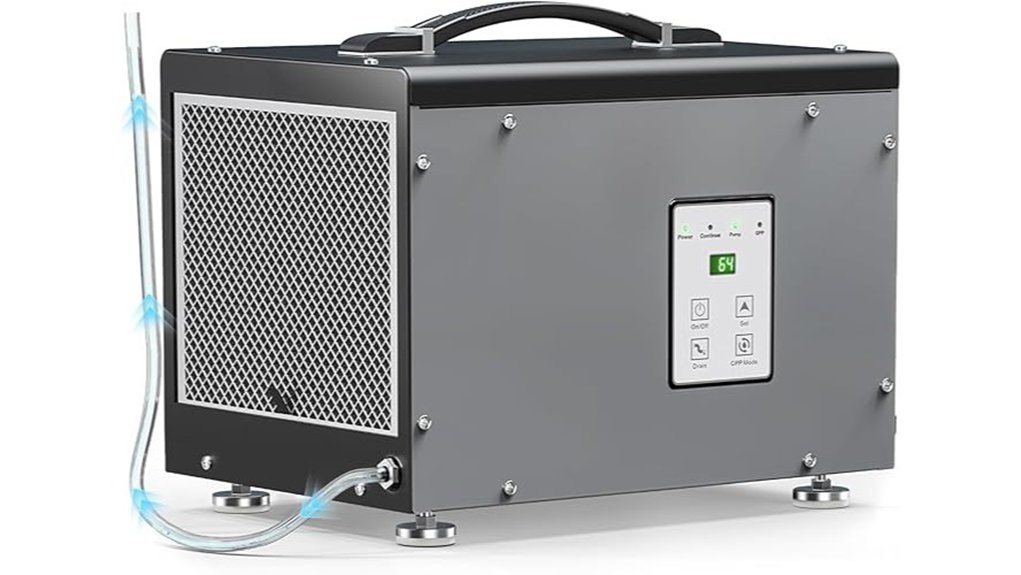
The BaseAire AirWerx 35P is a compact crawl-space dehumidifier with a built-in pump and a seller-listed 70-pint-per-day rating. Its product details list a 1,000-square-foot coverage claim, a 38.2-pound weight, and dimensions of about 15.2 by 11.2 by 11.4 inches.
Why you’ll like it: The small footprint and pump make it easier to place where a full-size portable unit would be awkward. Automatic defrost and a humidity sensor also make it better suited to crawl spaces and enclosed utility areas than a decorative home dehumidifier.
Who should buy this: Buyers prioritizing a compact pump-equipped machine for a crawl space, basement, or small enclosed construction zone.
Who should avoid this: Buyers who need a clearly documented AHAM rating, extensive included accessories, or a fully verified warranty term before ordering.
Pros:
- Built-in pump reduces dependence on a nearby floor drain.
- Compact dimensions suit low-clearance installation areas.
- Automatic defrost helps manage cooler operating conditions.
Cons:
- The listing emphasizes a headline 70 PPD figure without a clearly displayed AHAM figure.
- Warranty details should be checked on the current listing or manufacturer documentation.
- Confirm which drain hoses and accessories are included with the exact ASIN.
CADPXS 80 Pint Crawl Space Dehumidifier with Pump
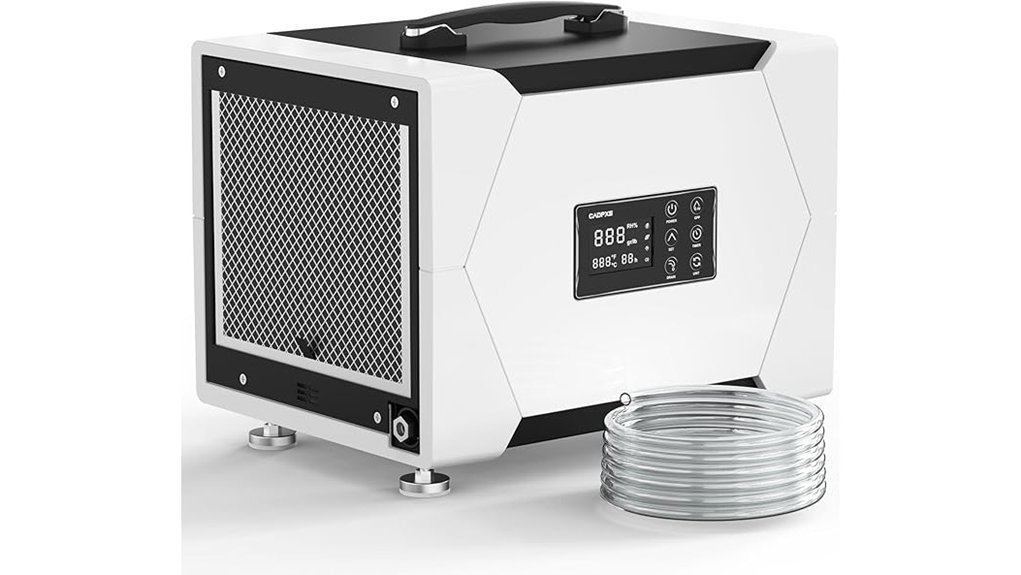
The CADPXS Remois XP70 is another compact commercial-style option for crawl spaces, basements, and enclosed construction areas. The current listing states 80 pints per day at saturation, 38 pints under AHAM conditions, and 24 pints under DOE conditions, which makes its performance easier to compare than listings that provide only one headline number.
Why you’ll like it: It includes pump and gravity-drain options, automatic defrost, restart memory, a washable filter, and a compact metal-and-plastic enclosure. The pump is listed for vertical discharge up to 19.6 feet.
Who should buy this: Buyers who want compact dimensions, upward drainage, and clearly separated capacity ratings for different test conditions.
Who should avoid this: Buyers who prefer a more established brand, a broad service network, or readily available replacement parts from multiple sellers.
Pros:
- Publishes saturation, AHAM, and DOE capacity figures.
- Offers both pump and gravity drainage.
- Automatic defrost and memory restart support continuous use.
Cons:
- Brand support and replacement-filter availability should be checked before purchase.
- The 80-pint number should not be compared directly with DOE-rated residential capacities.
- Its 1,000-square-foot claim is only a starting point; actual moisture load may require more capacity.
Factors to Consider When Choosing a Dehumidifier for New Construction
Construction Drying or Long-Term Humidity Control
First decide whether you are drying wet building materials or controlling humidity after the structure is enclosed. A crawl-space dehumidifier can be useful for ongoing moisture control in a finished or nearly finished area. It should not automatically be treated as a complete structural-drying system for wet framing, soaked subfloors, flooding, or large volumes of moisture.
Compare Capacity Under the Same Test Conditions
Dehumidifier capacity is measured in pints removed over 24 hours, but the test temperature and humidity matter. Saturation ratings can look much larger than AHAM or DOE ratings. Compare models using the same test standard whenever possible, and treat advertised square-foot coverage as a rough starting point rather than a sizing guarantee. ENERGY STAR explains how test conditions affect capacity ratings.
Temperature and Automatic Defrost
Newly built crawl spaces and basements can be cooler than finished living areas. Choose a model with automatic defrost and check the manufacturer’s operating-temperature range. Defrost helps protect the coil from frost buildup, but it does not mean every compressor dehumidifier will perform equally well in very cold conditions.
Drainage Route
Continuous drainage is essential when the unit will run for long periods. Gravity drainage is simple and reliable when a lower drain is nearby. A built-in pump is more useful when condensate must travel upward to a sink, window, sump, or elevated discharge point. Keep the hose protected from kinks, freezing, and jobsite damage.
Air Movement and Enclosure
A dehumidifier works best when the area is reasonably enclosed. Open windows, missing doors, active water entry, or uncontrolled outdoor air can overwhelm the machine. For active material drying, air movers may also be needed to move dry air across wet surfaces and prevent stagnant pockets.
Measure Moisture, Not Just Relative Humidity
A room hygrometer shows air conditions, but it does not confirm that wood, drywall, insulation, or subfloor materials are dry. Use an appropriate moisture meter and compare readings with known dry materials or the target required for the next construction step. Do not cover, paint, or seal materials that are still wet. The EPA recommends drying wet or damp materials promptly and correcting the moisture source.
Power and Jobsite Safety
Confirm voltage, circuit capacity, grounding, cord condition, and manufacturer instructions before installation. Keep electrical connections away from standing water and do not use an extension cord unless the manufacturer specifically allows it. On an active construction site, protect the unit and drain hose from debris, impacts, and blocked airflow.
Frequently Asked Questions
Is a Household Dehumidifier Enough for New Construction?
A household unit may help with mild humidity in a finished, enclosed room, but it is usually a poor match for wet framing, soaked drywall, open jobsites, or rapid structural drying. Commercial-style equipment, air movement, moisture readings, and professional sizing may be needed for heavier moisture loads.
What Size Dehumidifier Do I Need?
Size the equipment using the enclosed area, temperature, starting humidity, moisture source, material wetness, airflow, and the unit’s capacity under a comparable test standard. Large or time-sensitive drying projects may require multiple machines.
What Relative Humidity Should I Target?
For a finished indoor environment, keeping relative humidity below 60% and ideally around 30% to 50% is a common moisture-control target under EPA indoor-air guidance. During active construction drying, use humidity readings together with material moisture readings rather than stopping only because the air reaches a certain percentage.
Do I Need Air Movers With a Dehumidifier?
Often, yes, when drying wet materials. A dehumidifier removes water vapor from the air, while air movers help evaporation by circulating dry air across damp surfaces. The correct number and placement depend on the size and severity of the job.
How Long Should a Dehumidifier Run?
There is no reliable fixed time. Run it until the moisture source is corrected and material readings reach an acceptable dry target. Check progress regularly, keep filters clean, and verify that condensate is draining properly.
What Maintenance Is Required?
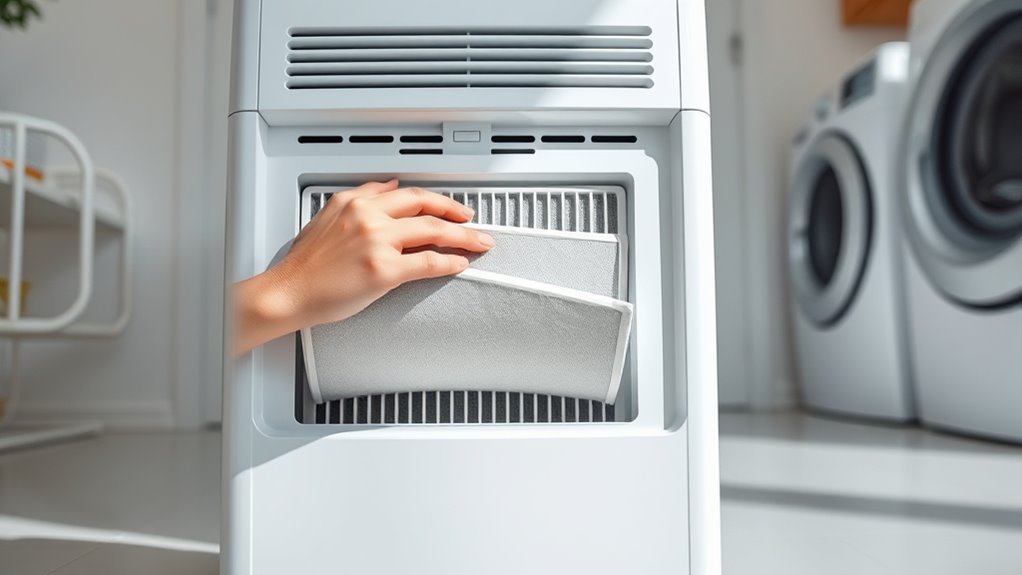
Inspect and clean the filter, keep the intake and exhaust clear, check the drain hose and pump, remove jobsite dust, and confirm that the coil can defrost normally. Follow the exact maintenance and filter-replacement instructions for the selected model.
Conclusion
Final recommendation: Choose the ALORAIR Helios MP35 when a built-in pump and flexible placement matter most. Choose the ALORAIR Sentinel HD55 when you have gravity drainage and want the highest verified AHAM-rated capacity among these four models.
For any job involving soaked building materials, flooding, visible mold, or a large open construction area, treat these products as components of a broader drying plan—not as substitutes for professional assessment, source control, air movement, and moisture-meter verification.