Disclosure: As an Amazon Associate, we earn from qualifying purchases. If you click a link on this page and make a purchase, we may receive a small commission at no extra cost to you.
Looking for the best dehumidifier systems for 2026? The right choice depends on the space you need to dry, how much moisture you deal with, and whether you want manual emptying, gravity drainage, or a built-in pump. Large spaces and damp basements usually need a higher-capacity compressor dehumidifier, while bedrooms, bathrooms, closets, and RVs may only need a compact portable unit.
This guide compares large-room, crawl-space, and small-space dehumidifiers so you can match the unit to your real humidity problem. You will find options like the AEOCKY 4500 Sq.Ft model for large areas, the HBN Crawl Space Dehumidifier for under-home moisture control, the Waykar and Vellgoo units for bigger rooms, and compact picks like the BREEZOME 60 OZ and TABYIK 35 OZ for small spaces.
Quick Verdict
Choose a high-capacity compressor dehumidifier for basements, garages, and open living areas. Choose a crawl-space model if you need continuous drainage and pump support under the house. Choose a compact semiconductor-style unit only for small rooms, closets, bathrooms, RVs, or light moisture control.
Quick Comparison: Best Dehumidifier Systems
| Best For | Product | Listed Capacity / Coverage | Drainage Style | Check Details |
|---|---|---|---|---|
| Best Overall Large-Room Pick | AEOCKY 4500 Sq.Ft Energy Star Dehumidifier | Up to 80 pints/day; up to 4,500 sq. ft. | Pump drainage | Check Product Details |
| Best Crawl Space Pick | HBN Crawl Space Dehumidifier with Pump and Timer | Up to 125 pints/day max; 60 pints/day AHAM; up to 5,900 sq. ft. | Gravity drain or pump | Check Product Details |
| Best High-Capacity Pick | AEOCKY 5500 Sq.Ft Energy Star Dehumidifier | Up to 105 pints/day max; up to 5,500 sq. ft. | Large-room drainage setup | Check Product Details |
| Best Quiet Large-Room Pick | Waykar 80 Pints Energy Star Dehumidifier | Up to 80 pints/day max; up to 5,000 sq. ft. | Manual or continuous drainage | Check Product Details |
| Best Energy-Conscious Home Pick | Vellgoo 64 Pint Energy Star Dehumidifier | Up to 64 pints/day max; up to 4,000 sq. ft. | Manual or hose drainage | Check Product Details |
| Best Value for 2,500 Sq. Ft. | KNKA 2500 Sq.Ft Dehumidifier with Drain Hose | Up to 34 pints/day max; up to 2,500 sq. ft. | Drain hose or tank | Check Product Details |
| Best Large-Tank Compact Pick | Natrogix 106 OZ Dehumidifier | Up to 40 oz/day max; seller-listed up to 1,000 sq. ft. | Tank only | Check Product Details |
| Best Quiet Compact Pick | BREEZOME 60 OZ Quiet Portable Dehumidifier | Up to 700 ml/day max; small rooms | Tank only | Check Product Details |
| Best Bedroom and Closet Pick | TABYIK 35 OZ Small Dehumidifier | Up to 450 ml/day max; seller-listed up to 280 sq. ft. | Tank only | Check Product Details |
How We Chose These Dehumidifier Systems
We focused on practical buying factors that matter in real homes: listed moisture-removal capacity, coverage area, drainage options, noise level, portability, control settings, and use-case fit. We also separated large compressor dehumidifiers from compact small-room units so you do not overpay for a small space or underbuy for a damp basement.
Capacity note: Maximum pints-per-day or ounces-per-day claims can be measured under very warm, humid conditions. Compare test conditions when possible, and treat large coverage numbers as seller guidance rather than a guarantee for every basement or room.
Product specs can change over time, especially warranty terms, ENERGY STAR labeling, included drain hose length, and listed coverage area. Before buying, confirm the current product details on Amazon and check the manufacturer’s latest information if a rebate, certification, or exact installation requirement matters to you.
AEOCKY 4500 Sq.Ft Energy Star Dehumidifier
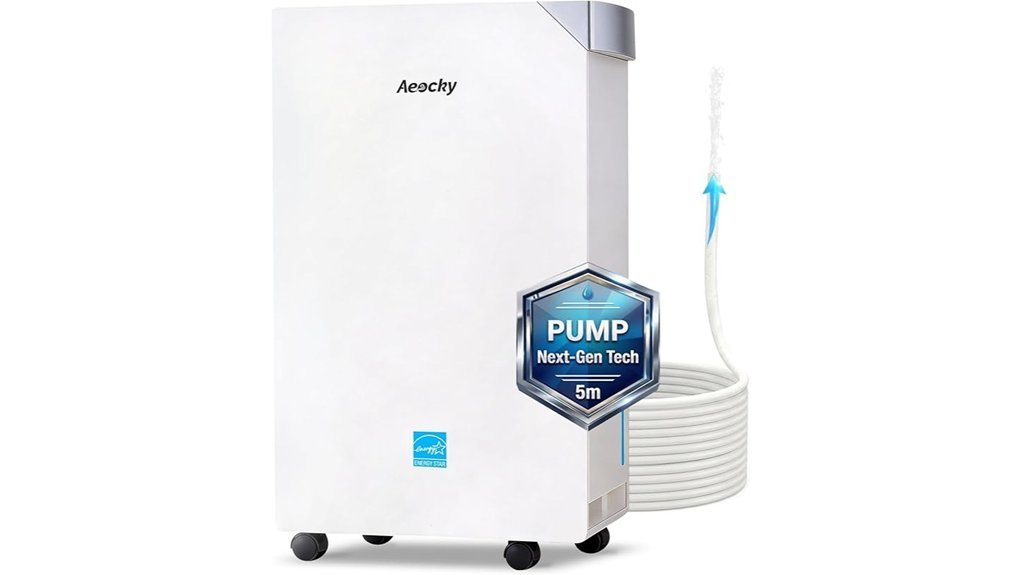
If you need one dehumidifier for a large basement, open living area, garage, or RV setup, the AEOCKY 4500 Sq.Ft Energy Star Dehumidifier is one of the strongest fits in this list. The product listing positions it for spaces up to 4,500 sq. ft. and moisture removal up to 80 pints per day, which makes it better suited to persistent humidity than a small tank-style unit.
The biggest advantage is convenience. Its pump drainage setup can reduce the need for frequent manual emptying, especially when you can route water to a sink, drain, or utility area. The intelligent humidistat also helps you set a target humidity level instead of guessing when to turn the unit on or off.
Best For: Homeowners who want a higher-capacity dehumidifier for basements, large rooms, RVs, or damp areas where manual tank emptying becomes annoying.
Why You’ll Like It: It combines large-area coverage, automatic humidity control, and easier drainage in one practical home unit.
Skip It If: You only need light moisture control in a closet, tiny bathroom, or bedroom. A compact unit will be easier to place and likely use less space.
Pros:
- Listed for large spaces up to 4,500 sq. ft.
- Pump drainage can reduce manual emptying.
- Humidistat control helps maintain a more consistent humidity target.
Cons:
- May be more unit than you need for small rooms.
- Advanced drainage parts can require more setup and maintenance.
- ENERGY STAR and rebate details should be checked before purchase if that is important to you.
HBN Crawl Space Dehumidifier with Pump and Timer
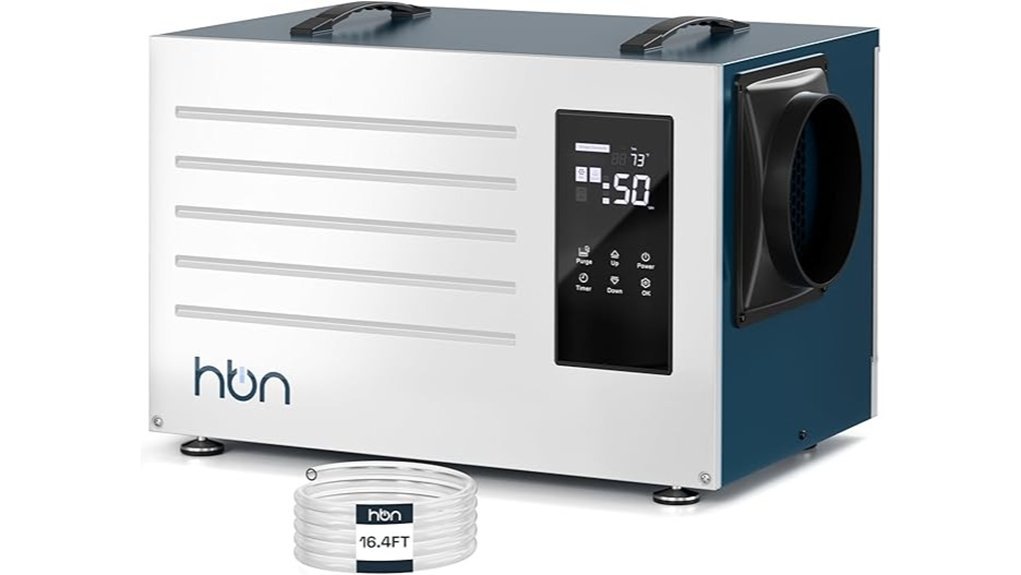
The HBN Crawl Space Dehumidifier with Pump and Timer is built for spaces where ordinary room dehumidifiers may not be convenient enough. Crawl spaces, under-home areas, and large utility zones often need continuous drainage, stronger moisture removal, and controls that are easy to adjust without constant tank emptying.
The listing describes up to 125 pints per day at 95°F and 90% RH, plus a 60-pint-per-day AHAM rating, with seller-listed coverage up to 5,900 sq. ft. It also offers gravity drainage and a built-in pump. That makes it a better fit for installations where the drain point is not directly below the unit.
Best For: Homeowners who need a crawl-space or utility-area dehumidifier with flexible drainage and higher listed moisture-removal capacity.
Why You’ll Like It: It is designed around drainage convenience, which matters more in crawl spaces than decorative design or night-light features.
Skip It If: You need a lightweight unit for a bedroom, office, or small bathroom. This is more of a serious moisture-control option than a casual room appliance.
Pros:
- High listed moisture-removal capacity for large damp areas.
- Gravity and pump drainage options give more installation flexibility.
- Timer and control features help manage longer run times.
Cons:
- Likely less portable than compact home models.
- Higher power draw than small semiconductor-style units.
- Installation space, hose routing, and drainage height should be checked before buying.
AEOCKY 5500 Sq.Ft Energy Star Dehumidifier
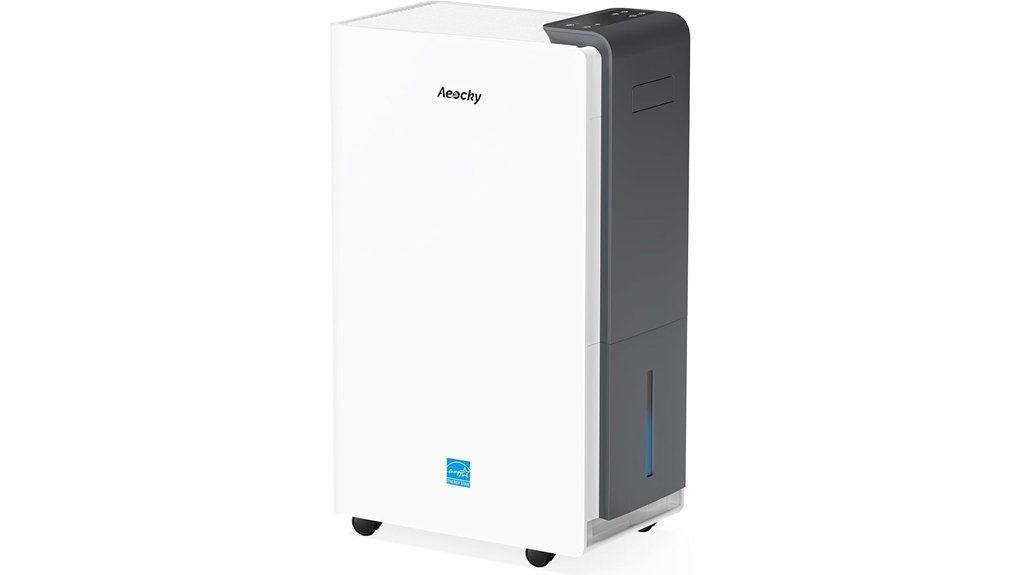
For very damp basements, large open areas, or bigger homes, the AEOCKY 5500 Sq.Ft Energy Star Dehumidifier offers the highest listed coverage among the AEOCKY models in this article. The product listing advertises up to 105 pints per day under hot, very humid conditions and coverage up to 5,500 sq. ft.; actual daily removal will vary with temperature and relative humidity.
This model is positioned as an energy-conscious high-capacity option with smart humidity control, auto-defrost support, and quiet operation for its size class. Instead of relying on broad savings claims, focus on whether its coverage, tank/drainage setup, and physical size match the room you need to dry.
Best For: Large basements, bigger living spaces, or homes with recurring humidity that smaller units struggle to control.
Why You’ll Like It: It gives you more headroom than a mid-size unit, which can matter when humidity spikes during rainy seasons.
Skip It If: Your space is small or only mildly humid. A high-capacity unit can take up more room and cost more upfront than you need.
Pros:
- Highest listed AEOCKY coverage in this roundup.
- Designed for stronger moisture removal in damp areas.
- Smart humidity and defrost features can improve day-to-day convenience.
Cons:
- May be oversized for bedrooms, closets, or small apartments.
- Physical size and setup requirements should be checked before purchase.
- Energy-efficiency and certification wording should be verified against the current listing.
Waykar 80 Pints Energy Star Dehumidifier for Home
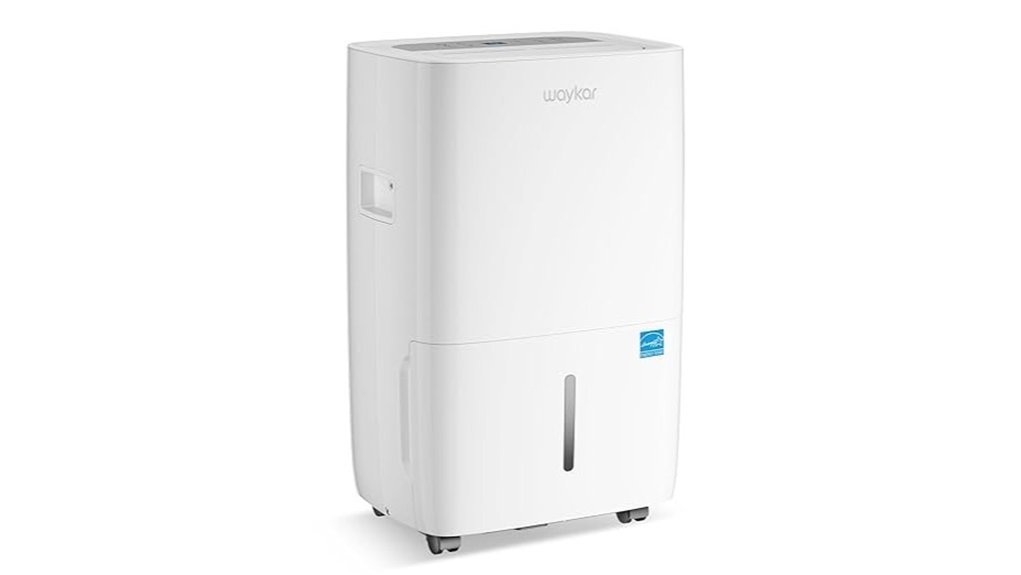
The Waykar 80 Pints Energy Star Dehumidifier is a good match if you want large-room performance with simple day-to-day controls. The listing describes coverage up to 5,000 sq. ft., up to 80 pints per day at 95°F and 90% RH, adjustable humidity from 30% to 80%, and operation around 42 dB.
Its 90° auto-swing feature helps move air across the room, which can be useful in larger basements, bathrooms, garages, or RV areas where stagnant air makes dampness feel worse. Flexible drainage options also make it easier to choose between manual tank emptying and a more hands-off setup.
Best For: Large rooms where you want a quieter compressor-style dehumidifier with adjustable humidity settings.
Why You’ll Like It: It balances capacity, noise control, and flexible drainage better than many basic large-room units.
Skip It If: You need a dedicated crawl-space unit with higher pump-lift requirements or a tiny unit for a small bedroom.
Pros:
- Large listed coverage area for basements and open spaces.
- Quiet listed operation for a higher-capacity unit.
- Manual and continuous drainage options add convenience.
Cons:
- May still be bulky for compact apartments.
- Drain hose setup may be needed for best convenience in very damp spaces.
- Current ENERGY STAR details should be checked before relying on rebate eligibility.
Vellgoo 64 Pint Energy Star Dehumidifier for Home
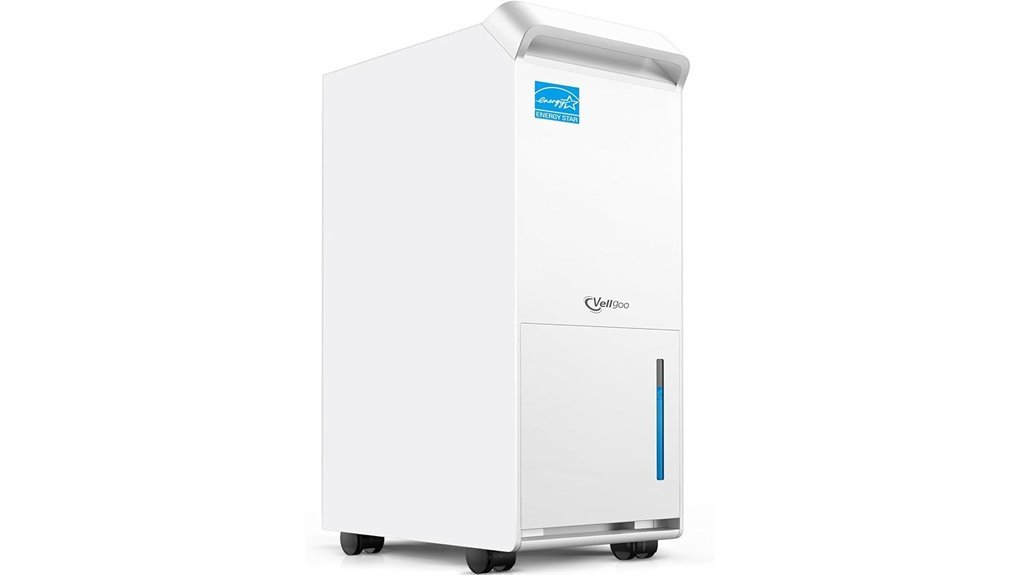
The Vellgoo 64 Pint Energy Star Dehumidifier is a strong fit if you want moisture control for larger home spaces but do not need the highest-capacity model in this guide. The listing describes coverage up to 4,000 sq. ft. and up to 64 pints per day under peak warm, humid conditions. Real-world removal will be lower when the room is cooler or less humid.
Its appeal comes from a practical mix of compressor performance, operating modes, and drainage flexibility. You can use manual emptying when placement is temporary or connect a hose for continuous drainage when the unit stays in one location.
Best For: Homeowners who want a large-room dehumidifier with energy-conscious positioning and straightforward controls.
Why You’ll Like It: It gives you more capacity than compact units without jumping to the largest high-capacity picks.
Skip It If: Your space is a crawl space that needs pump drainage or a tiny bathroom where a smaller tank unit is easier to use.
Pros:
- Listed for large spaces up to 4,000 sq. ft.
- Manual and continuous drainage options support different setups.
- Multiple operating modes help match moisture levels and comfort needs.
Cons:
- The tank may need frequent emptying in very damp conditions.
- Less compact than small bedroom dehumidifiers.
- Current energy-label details should be confirmed before purchase.
KNKA 2500 Sq.Ft Dehumidifier with Drain Hose
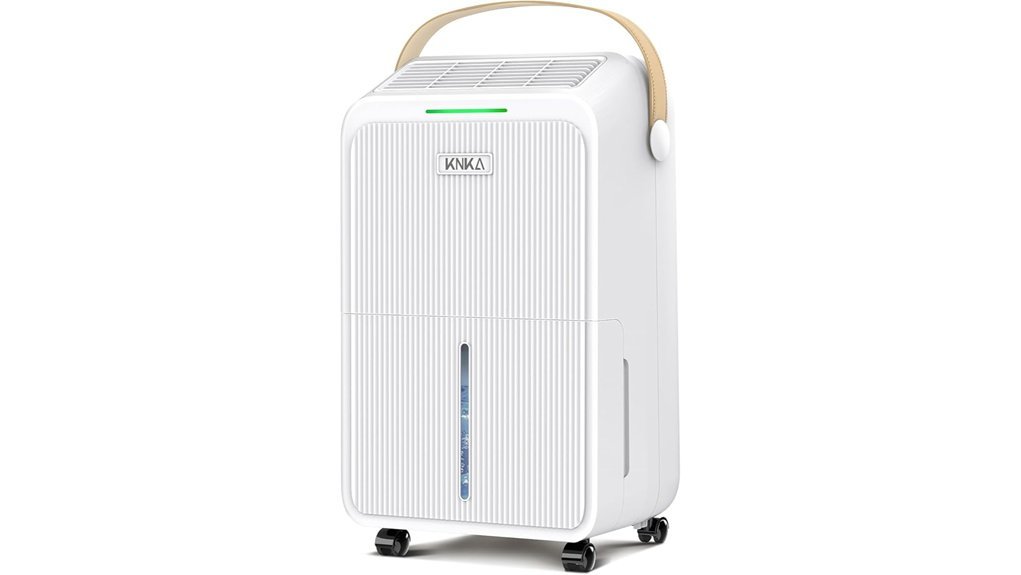
The KNKA 2500 Sq.Ft Dehumidifier with Drain Hose is best for buyers who need stronger moisture control than a mini dehumidifier can provide but do not need a large basement model. The listing describes coverage up to 2,500 sq. ft. and up to 34 pints per day at 95°F and 90% RH.
It includes several operating modes, including dehumidifying, drying, and continuous operation. The lightweight design and 360° wheels make it easier to move between rooms, while the included drain hose supports longer unattended use when the layout allows it.
Best For: Basements, offices, laundry rooms, bedrooms, and living areas where moderate moisture control is enough.
Why You’ll Like It: It gives you useful capacity and drain-hose convenience without stepping into the largest model class.
Skip It If: You need to dry a very wet crawl space, large basement, or area above the listed coverage range.
Pros:
- Good listed coverage for medium-size areas.
- Multiple modes support drying, continuous use, and humidity adjustment.
- Wheels and lighter design improve portability.
Cons:
- Not ideal for very large or extremely damp spaces.
- The tank may need frequent emptying without hose drainage.
- Noise may still be noticeable in very quiet rooms.
Natrogix 106 OZ Dehumidifier for Home Use
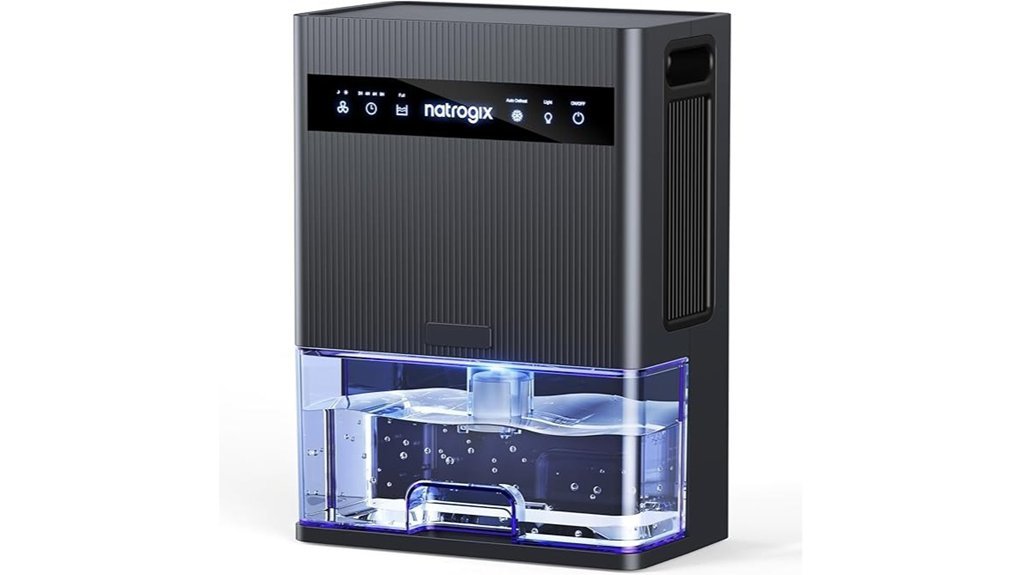
The Natrogix 106 OZ Dehumidifier is built for lighter home moisture control. It is not meant to compete with large compressor dehumidifiers, but it can make sense for bedrooms, bathrooms, laundry corners, closets, or RV spaces where you want a portable tank-style unit.
The listing describes dual-semiconductor technology and up to 40 oz of moisture removal per day in a sealed 86°F, 80% RH test environment. It also lists coverage up to 1,000 sq. ft., but that coverage figure should be treated as seller guidance because compact thermoelectric units are best suited to light moisture loads. Power and sleep modes, auto shut-off, timer settings, and ambient lighting add convenience.
Best For: Small rooms and light-moisture areas where you want a compact unit with a larger tank than many mini dehumidifiers.
Why You’ll Like It: It is easy to move, simple to use, and better suited to light daily humidity than heavy basement moisture.
Skip It If: You need continuous drainage or serious moisture removal for a large basement.
Pros:
- 106 oz tank offers more holding capacity than many mini units.
- Sleep mode and timer settings improve bedroom usability.
- Auto shut-off helps prevent overflow when the tank fills.
Cons:
- Best for light moisture control, not severe dampness.
- No continuous drain option means you must empty the tank manually.
- Coverage claims should be matched carefully to your room size and humidity level.
BREEZOME 60 OZ Quiet Portable Dehumidifier with Timer
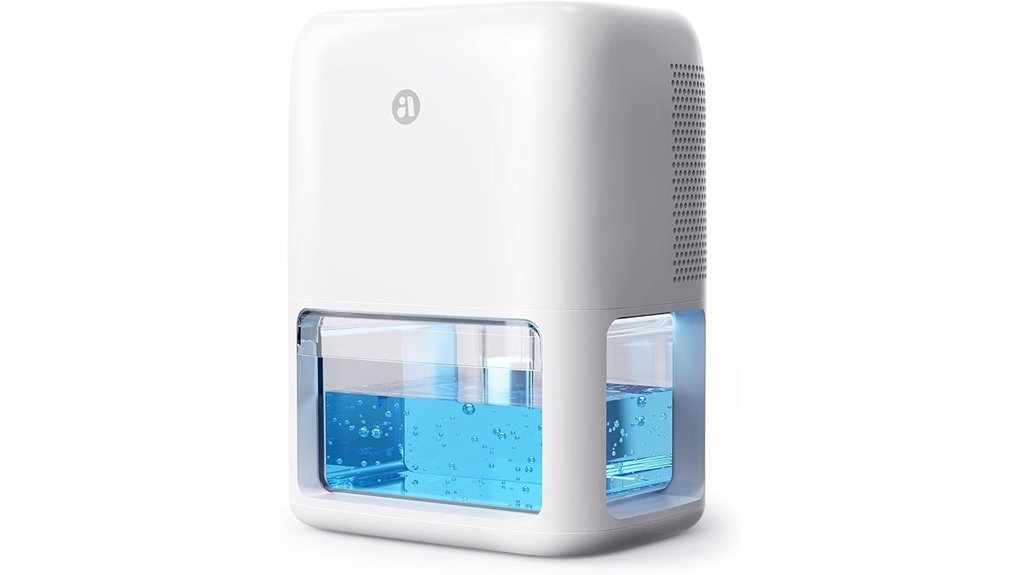
The BREEZOME 60 OZ Quiet Portable Dehumidifier with Timer is a compact option for small spaces where noise and portability matter. The listing advertises up to 700 ml of moisture removal per day at 86°F and 80% RH, making it better suited to bathrooms, kitchens, RVs, closets, and bedrooms than to large basements.
Its built-in handle, dual modes, sleep mode, timer settings, and adjustable night light make it easy to use in shared spaces. The main limitation is capacity: small tank units work best when humidity is mild to moderate and the room is not too large.
Best For: Small rooms, RVs, bathrooms, and quiet nighttime use.
Why You’ll Like It: It focuses on convenience, quiet operation, and easy placement rather than heavy-duty drying.
Skip It If: You need a unit for a basement, crawl space, or large open-plan area.
Pros:
- Compact size fits tight spaces.
- Sleep mode is useful for bedrooms and nighttime operation.
- Timer function helps avoid unnecessary runtime.
Cons:
- Not suitable for large rooms or severe dampness.
- Tank-only drainage means manual emptying is required.
- Basic controls may feel limited compared with larger smart units.
TABYIK 35 OZ Small Dehumidifier
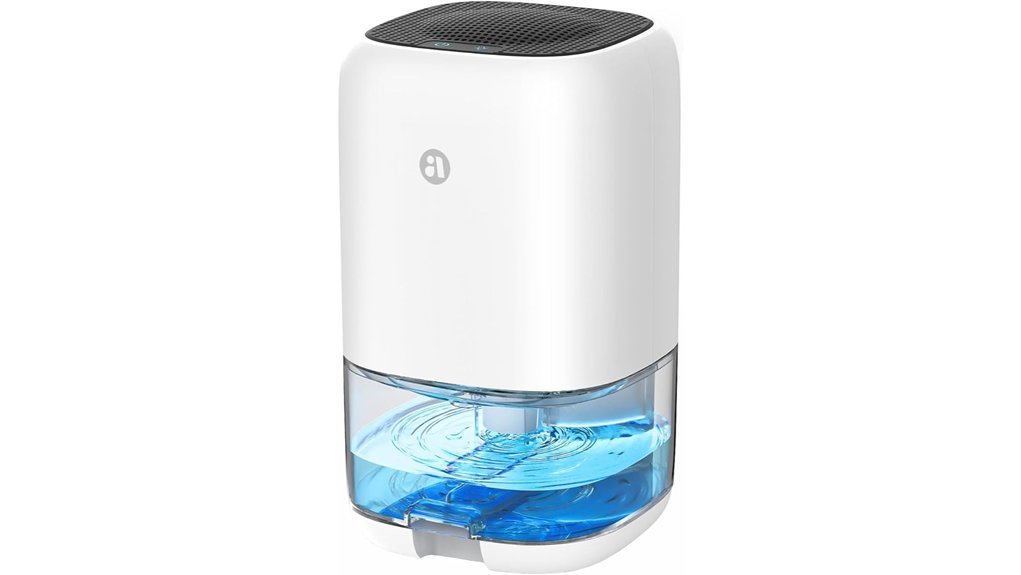
The TABYIK 35 OZ Dehumidifier is the smallest and simplest option in this guide. It is designed for small spaces such as bedrooms, bathrooms, closets, RVs, wardrobes, and other compact areas where a full-size compressor dehumidifier would be too large.
The listing describes up to 450 ml of moisture removal per day at 86°F and 80% RH, seller-listed coverage up to 280 sq. ft., quiet operation around 28 dB, and auto shut-off when the tank nears full. It also includes 7-color lighting, which is more of a comfort feature than a drying-performance feature.
Best For: Small bedrooms, bathrooms, closets, dorm rooms, and RV corners with light humidity.
Why You’ll Like It: It is lightweight, quiet, and easy to place almost anywhere.
Skip It If: You have condensation, damp walls, standing moisture, or a basement humidity problem. You need a larger compressor dehumidifier for those situations.
Pros:
- Very compact and easy to move.
- Quiet listed operation suits bedrooms and closets.
- Auto shut-off helps reduce overflow risk.
Cons:
- Limited daily moisture removal.
- Small tank requires more frequent emptying.
- Performance can vary based on room temperature and humidity level.
Factors to Consider When Choosing a Dehumidifier System
When choosing a dehumidifier system, do not start with the biggest number on the box. Start with your room size, moisture level, drainage access, noise tolerance, and how often you want to empty a tank. The best dehumidifier for a crawl space is not the same as the best dehumidifier for a bedroom closet.
Before You Buy
- Measure the room or crawl space before choosing coverage.
- Check whether you need tank emptying, gravity drainage, or pump drainage.
- Confirm hose length, drain height, and outlet placement.
- Use a hygrometer if you are unsure how humid the space really is.
- Check current product specs, warranty terms, and certification details before buying.
Coverage Area Requirements
Choosing the right dehumidifier starts with matching capacity to both room size and moisture severity. Small tank-style dehumidifiers may work for closets, bathrooms, RVs, and bedrooms, while larger compressor models are better for basements, garages, laundry rooms, and open living areas. Do not rely on square-foot coverage alone: compare pint-per-day capacity and test conditions when available. An undersized unit may run constantly without controlling moisture, while an oversized unit may cost more and take up unnecessary space.
Dehumidification Capacity Needed
Dehumidification capacity is usually listed in pints, ounces, or milliliters removed per 24 hours. Higher-capacity compressor units are better for damp basements and large rooms. Compact thermoelectric or semiconductor-style units are better for light moisture in small spaces. Because maximum output can be measured under hot, humid test conditions, compare the stated test conditions when possible. If you see condensation, musty odors, damp walls, or recurring mold concerns, choose capacity carefully and address the moisture source too.
Energy Efficiency Ratings
Energy efficiency matters because dehumidifiers can run for long periods during humid seasons. ENERGY STAR-labeled models are designed to meet energy-efficiency standards, but you should confirm the current model details if certification, rebates, or utility savings are important to your purchase. Also compare capacity, runtime, and drainage convenience, not just the label.
Drainage Options Available
Drainage can decide whether you love or hate a dehumidifier. Tank-only units are simple, but you must empty them by hand. Continuous hose drainage is better when the unit sits near a floor drain, utility sink, or shower. Pump drainage is useful when water must move upward or across a longer route. Check hose routing before you buy, especially for crawl spaces and basements.
Noise Level Considerations
Noise matters most in bedrooms, offices, nurseries, and shared living spaces. Compact units often run quietly, but they remove less moisture. Larger compressor units can be more effective, but fan speed and compressor noise may be more noticeable. Look for sleep modes, adjustable fan settings, and realistic placement options if you are sensitive to sound.
Smart Features Integration
Smart features can make a dehumidifier easier to live with. A humidistat helps maintain a target humidity level, timers reduce unnecessary runtime, power-off memory restores settings after an outage, and auto-defrost protects performance in cooler spaces. These features are useful, but they do not replace proper sizing and drainage setup.
Maintenance and Durability
Every dehumidifier needs basic maintenance. Clean or replace filters as directed, keep air vents clear, empty and rinse tanks, check hoses for kinks, and keep the unit level. Crawl-space and pump models may need extra attention because blocked hoses or dirty filters can reduce performance and cause drainage problems.
Safe Humidity Targets
A practical indoor humidity target is often around 30% to 50%, depending on season, climate, and comfort. Try to keep humidity below 60% because high humidity can support mold, dust mites, musty odors, and moisture damage. A dehumidifier helps manage the air, but it should not replace leak repairs, ventilation fixes, or cleanup after water damage.
Frequently Asked Questions
How Do I Maintain My Dehumidifier for Optimal Performance?
Clean the filter regularly, keep the intake and exhaust areas clear, empty and rinse the tank, and inspect the drain hose if you use continuous drainage. If the unit has a pump, check that water moves properly and the hose is not blocked or kinked.
What Are the Signs That My Home Needs a Dehumidifier?
Common signs include musty odors, condensation on windows, damp walls, sticky indoor air, mildew spots, and moisture in basements, bathrooms, or crawl spaces. A hygrometer can help confirm whether indoor humidity is staying too high.
Can Dehumidifiers Help With Allergies and Asthma?
A dehumidifier may help reduce conditions that support mold and dust mites, which can bother some people with allergies or asthma. It is not a medical treatment, so speak with a healthcare professional if symptoms persist or worsen.
How Much Energy Do Dehumidifiers Typically Consume?
Energy use depends on the unit type, capacity, fan speed, runtime, and room humidity. Small compact units usually use less power but remove less moisture. Larger compressor and pump models use more power but handle bigger, wetter spaces. Check the current wattage and energy information on the product listing before buying.
Are There Any Health Risks Associated With Using a Dehumidifier?
A poorly maintained dehumidifier can create problems if the tank, filter, or hose becomes dirty. Running a space too dry may also irritate skin, eyes, or airways for some people. Keep the unit clean, monitor humidity, and avoid drying the room more than needed.
Is a Small Dehumidifier Enough for a Basement?
Usually, no. Small tank-style dehumidifiers are best for closets, bathrooms, bedrooms, and RVs. A damp basement usually needs a compressor dehumidifier with higher pint-per-day capacity and a practical drainage setup.
Do I Need a Pump Drainage Dehumidifier?
You need pump drainage if water must move upward to a sink, window, or higher drain point. If your drain is lower than the unit and nearby, gravity drainage may be enough. If you cannot use a hose, choose a tank model and plan to empty it regularly.
Final Recommendation
Best Overall Choice
For most buyers who need strong home moisture control, the AEOCKY 4500 Sq.Ft Energy Star Dehumidifier is the best starting point because it balances high seller-listed capacity, large-room coverage, pump drainage, and smart humidity control.
Best for Crawl Spaces
Choose the HBN Crawl Space Dehumidifier with Pump and Timer if your main problem is under-home humidity, crawl-space dampness, or a utility area that needs serious drainage flexibility.
Best for Small Spaces
Choose the TABYIK 35 OZ or BREEZOME 60 OZ Quiet Portable Dehumidifier if you only need light moisture control in a small bedroom, bathroom, closet, or RV.
Conclusion
The best dehumidifier system is the one that fits your actual moisture problem. Large basements and damp open spaces need higher-capacity compressor models. Crawl spaces benefit from pump or gravity drainage. Bedrooms, closets, bathrooms, and RVs often do better with compact portable units that are easier to place and empty.
If you want the best all-around option, start with the AEOCKY 4500 Sq.Ft model. If you need crawl-space moisture control, look at the HBN unit. If your space is small, choose a compact model and avoid paying for capacity you will not use. Match the dehumidifier to your room size, drainage setup, and humidity level, and you will have a much easier time keeping your space dry and comfortable.