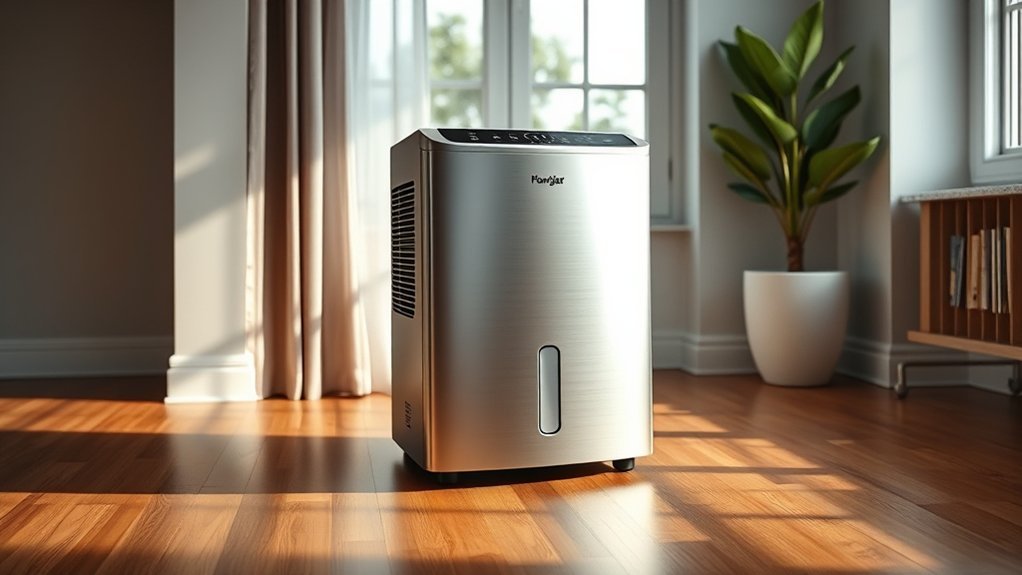
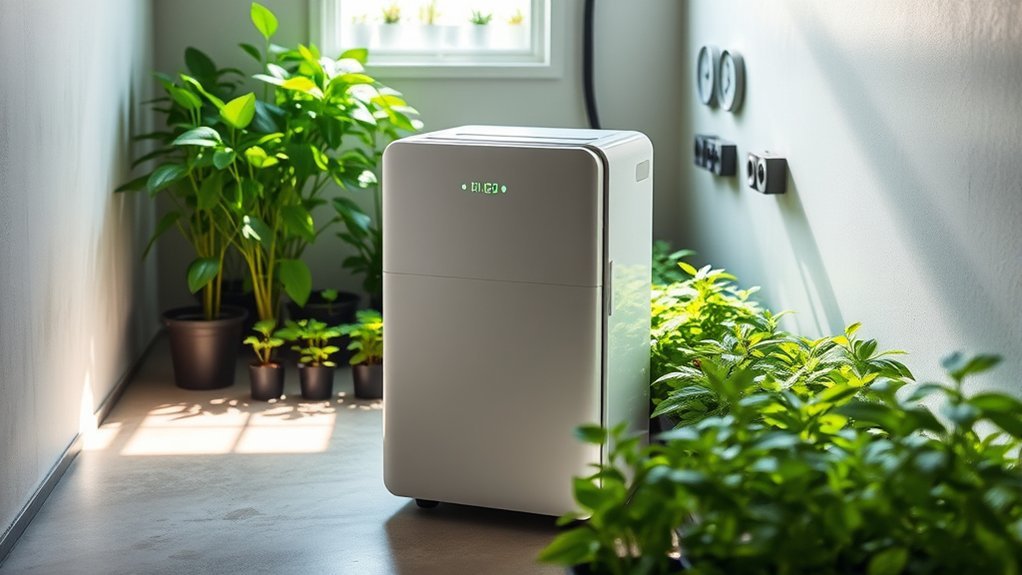
If you are comparing the best dehumidifiers and moisture absorbers for home use in 2026, start with the moisture load, not the largest coverage number on the box. Compressor dehumidifiers such as the Waykar Max 80 Pint, PLUSCENT 32 Pint, VEAGASO 34 Pint, and ZAFRO 21 Pint are designed for ongoing room humidity. The Pure Enrichment PureDry Deluxe is a compact electric option for lighter moisture, while Eva-Dry, Vacplus, and DampRid products are passive choices for closets, safes, cabinets, stored RVs, and other enclosed areas. This guide keeps those categories separate so you can choose the right level of moisture control without expecting a passive absorber to dry a wet room.
Quick verdict
Best for large damp spaces: Waykar Max 80 Pint. Best balanced home option: PLUSCENT 32 Pint. Best quiet mid-size option: VEAGASO 34 Pint. Best bedroom controls: ZAFRO 21 Pint. Best compact electric option: Pure Enrichment PureDry Deluxe. Best cord-free reusable option: Eva-Dry E-500. Best fragrance-free passive absorber: Vacplus 6-Pack. Best refillable scented option: DampRid 6-Pack.
Key takeaways
- Choose an active compressor model for a humid room, basement, or laundry area.
- Choose a passive absorber only for mild dampness in a small enclosed space.
- Plan drainage before buying; gravity hoses must run continuously downhill.
- Use a hygrometer and aim for a practical indoor humidity target rather than running the unit nonstop.
How these picks were compared
The products were grouped by operating type, advertised moisture-removal capacity, room-use case, drainage method, noise-focused features, portability, maintenance, and safety limitations. Editorial labels such as “best for” describe fit within this lineup, not laboratory testing. Advertised coverage and “up to” capacity figures are treated as comparison points because real collection changes with temperature, starting humidity, airflow, and test conditions.
Quick Comparison
| Product | Type | Advertised Capacity / Use Scale | Best For | Key Advantage | Amazon |
|---|---|---|---|---|---|
| Waykar Max 80 Pint | Compressor | Up to 80 pints/day at 95°F, 90% RH; manufacturer states up to 5,000 sq. ft. | Large basements and open areas | High advertised extraction and hose drainage | Check Price on Amazon |
| PLUSCENT 32 Pint | Compressor | Listing claims up to 32 pints/day and up to 2,500 sq. ft. | Medium to large rooms | Three modes and continuous drainage | Check Price on Amazon |
| VEAGASO 34 Pint | Compressor | Up to 34 pints/day and up to 2,500 sq. ft. | Bedrooms, laundry rooms, basements | Quiet-focused operation and flexible drainage | Check Price on Amazon |
| ZAFRO 21 Pint | Compressor | Listing claims up to 21 pints/day and up to 1,600 sq. ft. | Bedrooms and smaller basements | Sleep mode and drain hose | Check Price on Amazon |
| Pure Enrichment PureDry Deluxe | Compact electric | Up to 20 oz/day; 1.5-liter tank | Small rooms and enclosed spaces | Lightweight with timer and auto shutoff | Check Price on Amazon |
| Eva-Dry E-500 2-Pack | Renewable desiccant | Up to 500 cubic feet per unit | Closets, safes, boats, and RV storage | Cord-free and reusable | Check Price on Amazon |
| Vacplus Moisture Absorber 6-Pack | Disposable calcium chloride | 10.5 oz per box; small-space passive use | Closets, cabinets, cars, and bathrooms | Fragrance-free and easy to monitor | Check Price on Amazon |
| DampRid Refillable 6-Pack | Refillable calcium chloride | 11 oz per tub; label states up to 250 sq. ft. | Small indoor areas with musty odors | Refillable containers with fresh scent | Check Price on Amazon |
Waykar Max 80 Pint Dehumidifier for Large Spaces
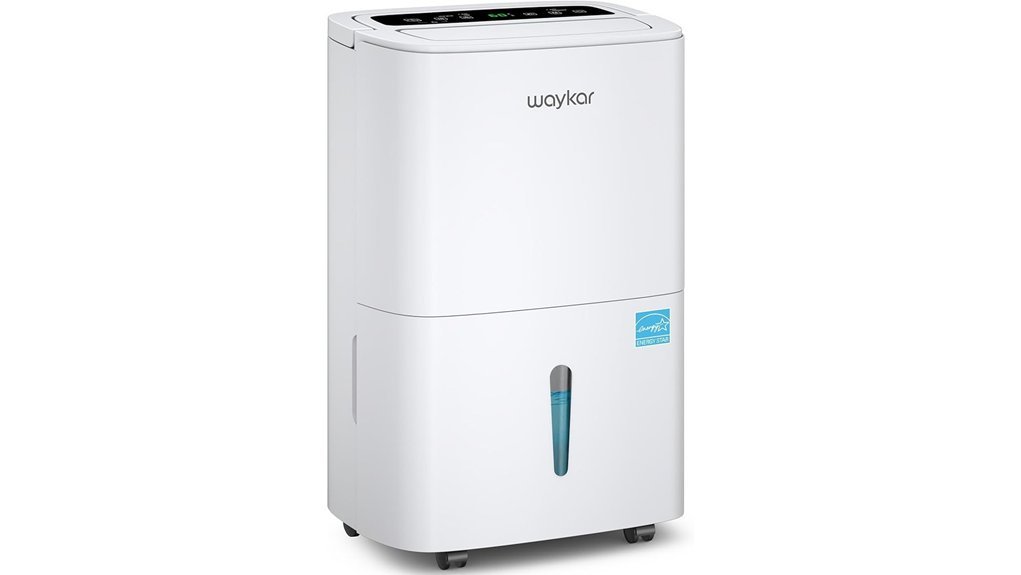
Best for large damp spaces. The Waykar YDZ-80 is the highest-capacity active model in this lineup. Waykar advertises up to 80 pints per day at 95°F and 90% relative humidity and about 62 pints per day at 86°F and 80% relative humidity. It is marketed for spaces up to 5,000 square feet, but actual sizing should still reflect temperature, starting humidity, and how wet the room is.
You can set a target humidity level, use the 24-hour timer, and choose between the removable tank and continuous gravity drainage. Auto defrost, auto restart, a self-drying function, casters, a handle, and a washable filter support longer-term basement or large-room use. Waykar lists a 1.06-gallon tank for the YDZ-80, while current Amazon product data may display a different tank figure for the selected listing or variation. Confirm the exact variant before ordering; in persistently damp areas, hose drainage is usually more convenient than relying on the bucket.
Why You’ll Like It: It combines the strongest advertised extraction in this guide with continuous drainage and automatic humidity control.
Who Should Buy This: Homeowners managing a large basement, open living area, storage room, or other space with ongoing humidity.
Who Should Avoid It: Buyers with a small bedroom, closet, or lightly humid area where the footprint and capacity would be excessive.
Pros:
- Highest advertised moisture-removal capacity in this guide
- Target-humidity control with tank or continuous hose drainage
- Includes auto defrost, auto restart, self-drying, casters, and washable filter
Cons:
- “Up to 80 pints” applies to hot, very humid test conditions
- The tank may still need frequent emptying without a drain hose
- Larger footprint and higher output than small rooms usually need
PLUSCENT 32 Pint Dehumidifier for Large Rooms
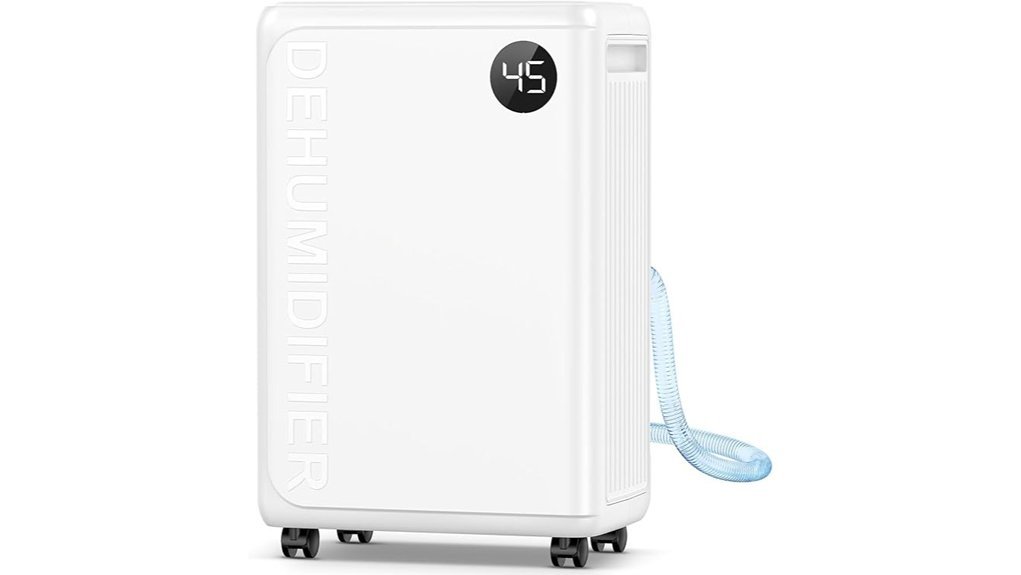
Best balanced home option. The PLUSCENT PD10 is positioned between the larger Waykar and the smaller ZAFRO. The current Amazon-linked listing advertises up to 32 pints of daily moisture removal and coverage up to 2,500 square feet. Because a manufacturer-owned specification page was not located during verification, treat those figures as listing claims and confirm the model details before ordering.
DEHU mode lets you select a target humidity, CONT mode supports ongoing operation, and DRY mode is intended for laundry areas. You can use the 2-liter tank or connect the included gravity hose. The listing also states a 24-hour timer, auto restart, auto defrost, child lock, washable filter, two fan speeds, and a claimed 39 to 42 dB operating range.
Why You’ll Like It: It offers three useful modes, compact mobility, and hands-free drainage without moving to the largest machine in the guide.
Who Should Buy This: Buyers who want a flexible compressor dehumidifier for a medium-size basement, living area, bedroom, or laundry room.
Who Should Avoid It: Buyers who cannot create a safe downhill drain route and do not want to empty a 2-liter tank during humid periods.
Pros:
- Balanced advertised capacity for many home-use situations
- DEHU, CONT, and DRY operating modes
- Includes hose drainage, timer, auto restart, child lock, and washable filter
Cons:
- Key specifications rely mainly on the current retail listing
- The 2-liter tank may fill quickly in wet conditions
- Gravity drainage requires a suitable downhill route
VEAGASO 34-Pint Dehumidifier for Basement and Home
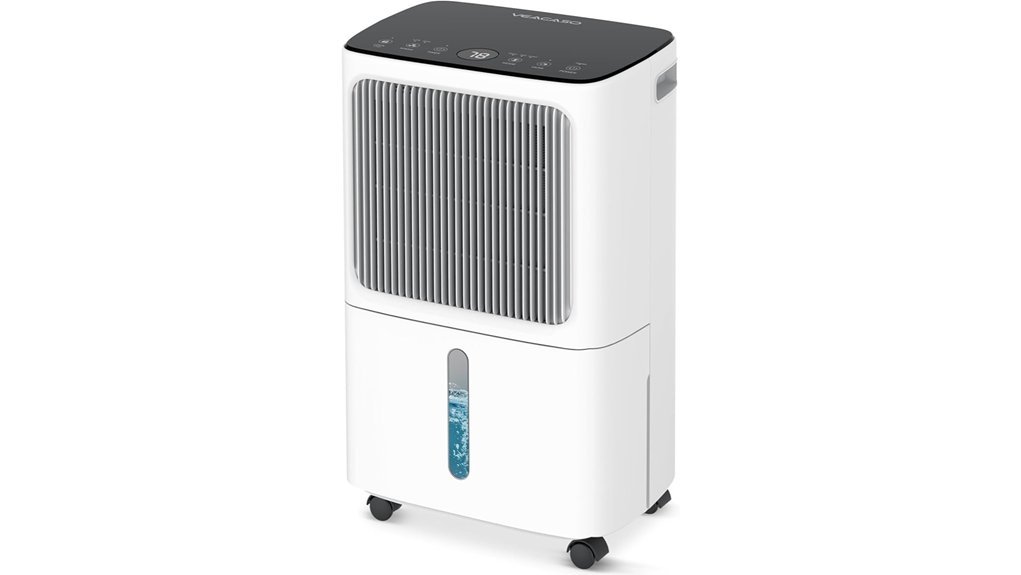
Best quiet-focused mid-size option. The linked ASIN corresponds to the VEAGASO VG380, a 34-pint class model suited to bedrooms, laundry rooms, living areas, and medium-size basements where straightforward controls and lower stated noise matter. VEAGASO advertises up to 34 pints per day, coverage up to 2,500 square feet, and operation at 40 dB or less.
DEHU, DRY, and CONT modes cover normal humidity control, indoor laundry drying, and continuous operation. The 0.53-gallon tank supports portable use, while the included hose allows continuous gravity drainage. Auto shutoff helps prevent tank overflow, and the LED touch panel controls humidity, fan speed, and timer settings. Power-failure memory restores the previous setup after an outage.
Why You’ll Like It: It balances quiet-focused operation, simple mode selection, two drainage choices, and easy movement on swivel casters.
Who Should Buy This: Buyers who need a mid-size room dehumidifier for sleeping areas, laundry rooms, or moderately damp basements.
Who Should Avoid It: Buyers who need app control, a built-in condensate pump, or a ducted whole-home system.
Pros:
- Three practical operating modes
- Tank and continuous gravity-hose drainage
- Quiet-focused design with touch controls and power-failure memory
Cons:
- The 2-liter tank may fill quickly in very damp rooms
- No built-in pump or app control is stated
- Maximum capacity depends on temperature and humidity
ZAFRO 21-Pint Dehumidifier with Drain Hose
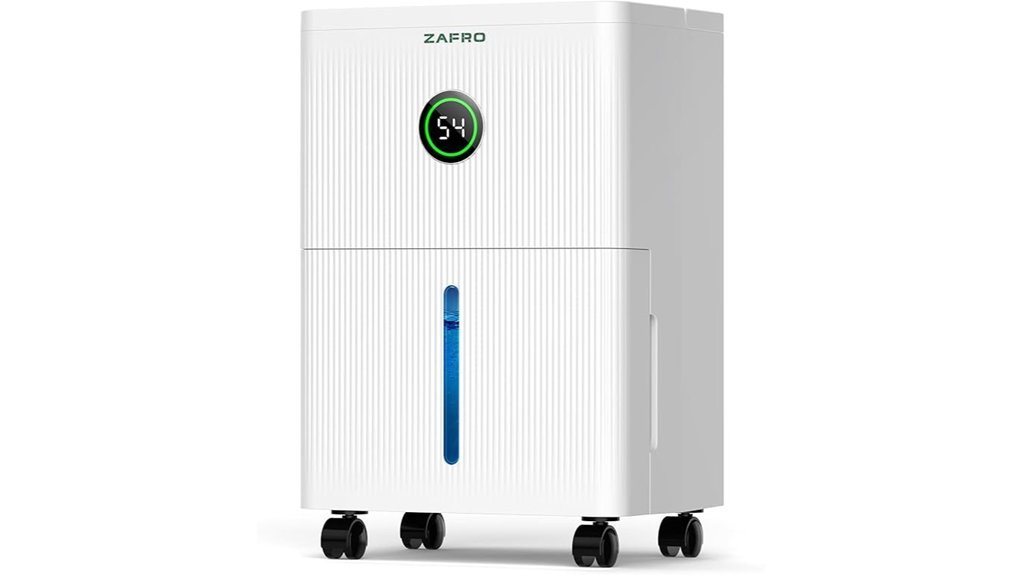
Best bedroom controls. The ZAFRO 21-Pint Dehumidifier is a lower-capacity compressor model for buyers who want active humidity control without the size of the largest units. The current Amazon listing advertises up to 21 pints per day, coverage up to 1,600 square feet, and noise as low as 41 dB, so treat those as listing claims rather than guaranteed in-room performance.
Auto, Sleep, and Dry Clothes modes make it easier to match operation to the room. Sleep Mode lowers fan speed and reduces display distraction for nighttime use. Dual displays, a three-color humidity indicator, a 24-hour timer, adjustable humidity from 30% to 80%, auto defrost, auto restart, child lock, a 0.45-gallon tank, and an included drain hose add useful day-to-day control.
Why You’ll Like It: It provides clear humidity feedback, bedroom-friendly settings, and both manual and continuous drainage.
Who Should Buy This: Buyers managing a bedroom, home office, bathroom, or smaller basement with regular but not extreme humidity.
Who Should Avoid It: Buyers dealing with a large wet basement, seepage, or a moisture load that calls for higher extraction.
Pros:
- Sleep Mode and quiet-focused operation
- Digital humidity feedback with adjustable settings
- Includes auto defrost, auto restart, tank shutoff, child lock, and drain hose
Cons:
- Lower extraction capacity than the larger compressor models
- The 0.45-gallon tank may need frequent emptying
- Advertised coverage should not replace moisture-load sizing
Pure Enrichment PureDry Deluxe Dehumidifier, 1.5L Tank
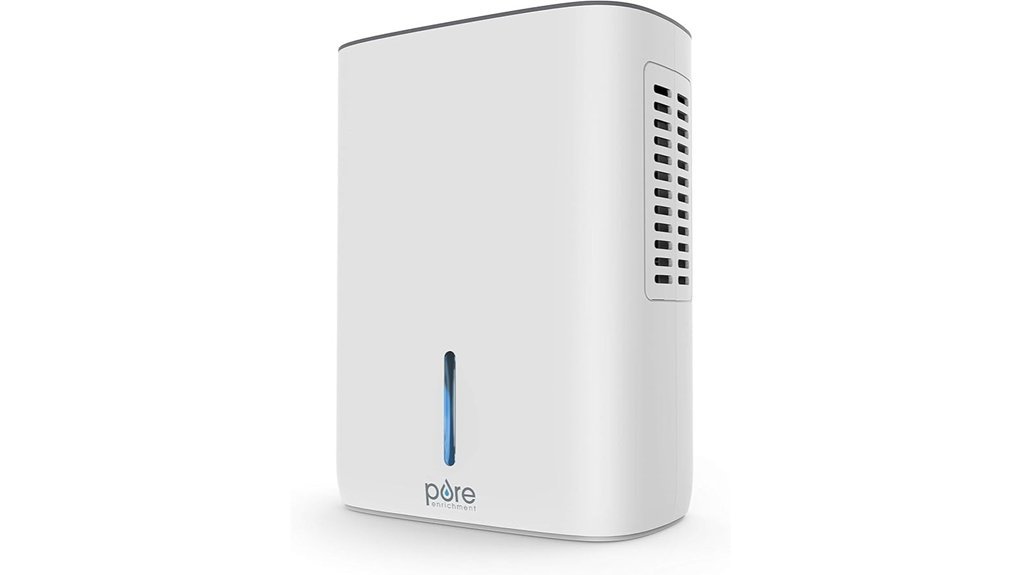
Best compact electric option. The Pure Enrichment PureDry Deluxe is designed for light moisture control where a full-size compressor model would be excessive. The manufacturer currently advertises a 1.5-liter tank, two speed settings, and collection of up to 20 ounces per day under suitable conditions. It is better viewed as a small-space appliance than a basement dehumidifier.
You get high and low fan speeds, optional 4-hour and 8-hour timers, continuous operation, automatic tank-full shutoff, and a lightweight body that is easier to move between a bathroom, bedroom, closet, RV, safe, or laundry area. The product is currently listed with a 1.5-liter tank and up to 20 ounces of collection per day under suitable conditions. Warranty, seller, and availability terms can change, so confirm the current offer before ordering.
Why You’ll Like It: Simple controls, a compact footprint, useful timer settings, and low lifting weight make it convenient for light-duty use.
Who Should Buy This: Buyers who need gradual moisture collection in a small room or enclosed area and want an electric unit with a tank.
Who Should Avoid It: Buyers with a large basement, active water intrusion, or severe humidity. This compact unit is not a substitute for a properly sized compressor dehumidifier.
Pros:
- Compact and easy to move
- Two speed settings, timer options, continuous mode, and automatic shutoff
- Long advertised warranty for a compact appliance
Cons:
- Much lower extraction capacity than compressor models
- No continuous drain connection is stated
- Availability may vary by seller
Eva-Dry E-500 Renewable Dehumidifier 2-Pack
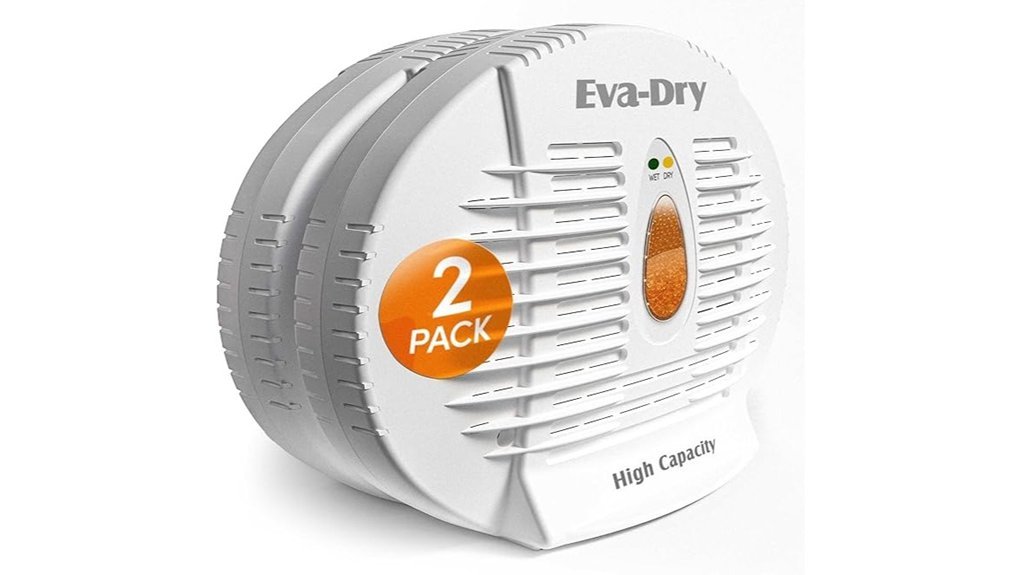
Best cord-free reusable option. The Eva-Dry E-500 2-Pack is made for small enclosed spaces such as closets, safes, cabinets, boats, and stored RVs. Each unit uses renewable silica-gel desiccant and works silently without a power cord during normal moisture absorption.
The color-changing beads indicate when renewal is needed. You then plug the unit in to dry the desiccant before returning it to the space. Current Eva-Dry pages and retail data are not fully consistent on the exact ounce capacity or recharge time, so this guide does not rely on a precise moisture-volume claim. The consistent use case is passive moisture control in enclosed areas up to the stated 500 cubic feet per unit, not active room dehumidification.
Why You’ll Like It: Silent, cord-free placement and repeated use without disposable refill crystals.
Who Should Buy This: Owners protecting stored clothing, documents, tools, electronics, or valuables in a closet, safe, cabinet, boat, or RV.
Who Should Avoid It: Buyers who need fast humidity reduction, a target-humidity setting, or active airflow in an occupied room.
Pros:
- No cord or batteries needed while absorbing moisture
- Silent operation with no moving parts
- Renewable design reduces disposable waste
Cons:
- Suitable only for small enclosed spaces
- Requires periodic plug-in renewal
- Does not provide active airflow or automatic humidity control
Vacplus Moisture Absorber Boxes, 6 Pack
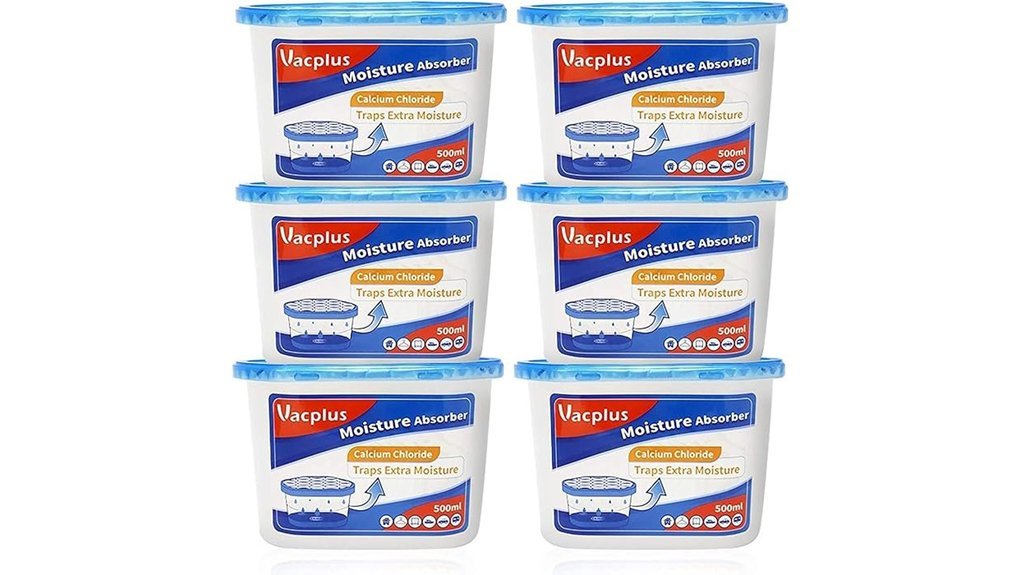
Best fragrance-free disposable absorber. The Vacplus 6-Pack is a simple passive option for closets, cabinets, bathrooms, laundry areas, and parked vehicles. Each 10.5-ounce box uses calcium chloride to collect moisture in a separate lower chamber, allowing you to see when the material is dissolving and the container is filling.
The boxes need no electricity and add no fragrance. Their compact shape makes them easy to place where a powered dehumidifier would be awkward. They work gradually and passively, so they are best for mild dampness in small spaces rather than ongoing room-scale humidity.
Why You’ll Like It: Easy setup, visible water collection, no cord, and no added scent.
Who Should Buy This: Buyers who want inexpensive moisture control across several closets, cabinets, bathrooms, or storage areas.
Who Should Avoid It: Buyers with children or pets who may tip or access the containers, or anyone trying to dry a large wet room.
Pros:
- Fragrance-free calcium chloride design
- Visible collection chamber
- Six containers for several small locations
Cons:
- Spent material must be replaced
- Not suitable for large or severely damp rooms
- Must remain upright and away from children and pets
DampRid Refillable Moisture Absorber, 6-Pack Fresh Scent
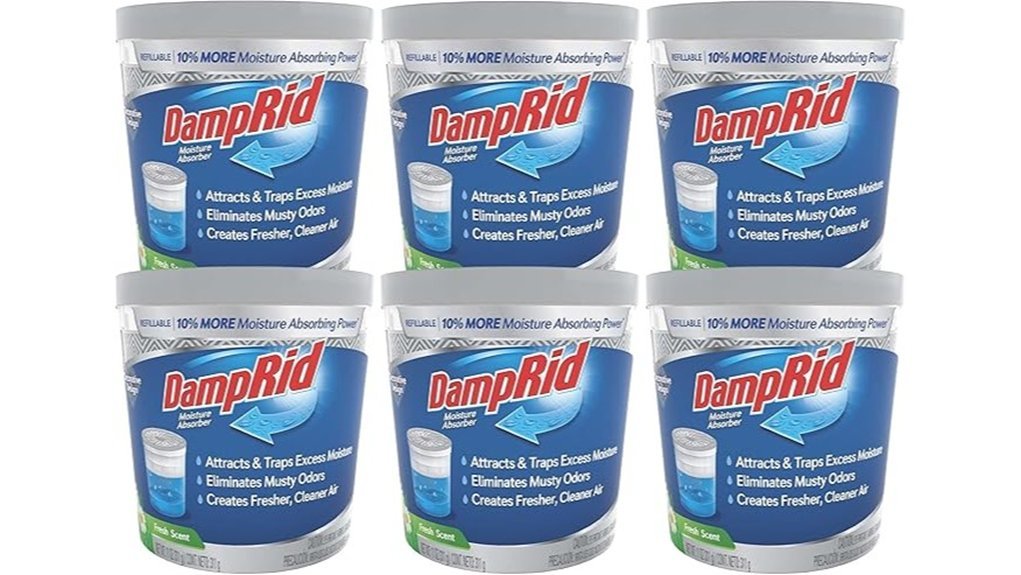
Best refillable option for musty small spaces. DampRid’s 11-ounce Fresh Scent tubs are designed for closets, bathrooms, laundry rooms, pantries, kitchens, and under-sink areas. Calcium chloride crystals collect moisture in the lower container, while the added fragrance helps control musty odor.
The manufacturer states that each fill can last up to 45 days and labels the tub for areas up to 250 square feet, but actual life and effectiveness depend on humidity, temperature, airflow, and room conditions. When the crystals are gone, empty the collected liquid according to the label and add a compatible refill. Keep each container upright, away from children and pets, and do not use it in a moving vehicle.
Why You’ll Like It: Refillable containers, simple setup, and odor control for small indoor areas.
Who Should Buy This: Buyers who prefer a refillable passive absorber and do not mind a fresh scent.
Who Should Avoid It: Fragrance-sensitive users, households that cannot place the tubs securely, or anyone who needs room-scale moisture extraction.
Pros:
- Refillable calcium chloride design
- Helps manage mild dampness and musty odor in small areas
- No electricity required
Cons:
- Fresh scent may not suit fragrance-sensitive users
- Collected liquid requires careful handling
- Not intended for large rooms or moving vehicles
Factors to Consider When Choosing a Dehumidifier or Moisture Absorber
The right choice depends on whether you need active room humidity control or slow moisture absorption in a small enclosed space. Compare moisture load, extraction capacity, drainage, noise, energy efficiency, operating temperature, and maintenance before buying.
Active Dehumidifier vs. Passive Absorber
A compressor or compact electric dehumidifier moves air and collects water actively. It is the better choice when a room stays humid for hours or days. A passive calcium chloride or renewable desiccant unit works without active airflow. It is better for closets, safes, cabinets, and stored vehicles where the moisture load is lower. Do not expect a passive box or renewable desiccant unit to control a large basement.
Moisture Removal Capacity and Test Conditions
Electric dehumidifier capacity is listed in pints or liters collected over 24 hours under specified test conditions. Compare the conditions behind the number whenever they are available. A “maximum” rating measured in hot, very humid air can be much higher than a rating measured under cooler conditions. Current U.S. efficiency testing for portable dehumidifiers uses cooler conditions than many high-humidity marketing maximums, so do not compare two pint numbers without checking the test basis. Treat “up to” figures as comparison points, not guaranteed daily collection.
Room Size, Moisture Severity, and Humidity
Square-foot coverage is only a starting point. A cool, wet basement may need more capacity than a warm bedroom of the same size. Use a separate hygrometer to measure relative humidity. For many homes, a practical target is roughly 30% to 50%, but the best setting depends on climate, comfort, room temperature, and building conditions.
Drainage Options
A tank is convenient when you need to move the unit, but it must be emptied whenever it fills. Continuous gravity drainage is better for long runtimes, provided the hose slopes downward without kinks. A gravity hose cannot push water uphill. If the drain is above the unit, choose a model with a built-in pump or use a separate compatible condensate pump; no built-in pump is stated for the products in this guide.
Noise Level
For bedrooms and offices, compare the stated decibel level and look for Sleep Mode, low fan speed, and dimmable displays. Sound claims are measured under specific conditions, and vibration from an uneven floor can make a unit seem louder. Passive absorbers and renewable desiccant units are silent because they have no fan or compressor.
Energy Efficiency
Do not judge efficiency by wattage alone. A low-wattage mini unit may remove far less water than a larger compressor model. For portable compressor dehumidifiers, check the current ENERGY STAR product listing when certification matters and compare the integrated energy factor (IEF) when available; a higher IEF means more liters of water removed per kilowatt-hour. A humidistat, clean filter, correct sizing, and sensible drainage setup can also help avoid unnecessary runtime.
Temperature and Defrost
Compressor dehumidifiers can lose performance in cooler rooms because frost may form on the coil. Auto defrost helps manage this, but every model still has a minimum operating-temperature range. Check the current manual before using a unit in an unheated basement, garage, crawl space, or other cold area.
Portability and Maintenance
Check the filled-tank weight, handle design, caster quality, filter access, hose length, and cleaning instructions. A washable filter still needs regular cleaning and complete drying before reinstallation. Passive tubs require replacement or refilling, while renewable desiccant units need periodic plug-in drying.
Safety, Leaks, and Mold
Keep powered units on a level surface near a suitable outlet and leave air inlets and outlets clear. Keep calcium chloride products upright and away from children, pets, metal, leather, and materials that could be damaged by spills. A dehumidifier can reduce humidity, but it does not remove existing mold or repair a leak, seepage problem, drainage failure, or water intrusion source.
Frequently Asked Questions
What Size Dehumidifier Do I Need?
Match the unit to both room size and moisture severity. A lightly humid bedroom may need a lower-capacity model, while a wet basement needs a stronger compressor unit. Coverage claims alone are not enough, so compare daily extraction capacity, test conditions, drainage needs, and the room’s actual humidity.
What Humidity Level Should I Set?
A practical indoor target is often around 30% to 50% relative humidity. Start near the middle of that range, then adjust for comfort, climate, room temperature, and condensation. Avoid setting the unit so low that it runs constantly without a clear moisture-control benefit.
How Do I Compare Dehumidifier Pint Ratings?
Check the temperature and relative-humidity conditions behind each rating. A model advertised at a high-temperature, high-humidity maximum may collect less water in a cool basement. Use pints per day as a comparison tool, not a promise of what the bucket will collect every day.
Can a Dehumidifier Remove Mold?
No. A dehumidifier can reduce the moisture that supports mold growth, but existing mold still needs proper cleanup and the leak or moisture source must be fixed. Large, hidden, or recurring mold problems may require professional assessment.
Can I Use a Dehumidifier in a Cold Basement?
Yes, if the model is rated for the basement’s temperature. Look for auto defrost and check the minimum operating temperature in the current manual. A compressor model may collect less water as the room gets colder.
Is Continuous Drainage Better Than a Tank?
Continuous drainage is more convenient for long runtimes, but only when you have a safe downhill route to a floor drain, sump, or sink. A tank gives you more placement freedom but requires regular emptying. Secure the hose and test the setup for leaks before leaving it unattended.
Are Moisture Absorber Boxes the Same as Electric Dehumidifiers?
No. Moisture absorber boxes work slowly without a fan or compressor. They are useful for closets, cabinets, safes, and other small enclosed areas, but they cannot match the speed or room-scale control of an electric dehumidifier.
Should I Run a Dehumidifier All the Time?
Not necessarily. Use the humidistat to maintain a target range and let the unit cycle when possible. Continuous mode is useful for unusual moisture loads or hose-drained operation, but a machine that never reaches the target may be undersized or may be fighting an unresolved leak or ventilation problem.
Final Recommendation
Choose by moisture load, drainage, and room conditions—not the biggest coverage number.
For a large basement or open damp area, the Waykar Max 80 Pint offers the highest advertised capacity in this lineup. For a balanced medium-to-large room option, compare the PLUSCENT 32 Pint with the quiet-focused VEAGASO 34 Pint. The ZAFRO 21 Pint is a better fit when bedroom controls and lower capacity make more sense.
The Pure Enrichment PureDry Deluxe is a compact electric choice for light moisture, subject to current seller availability. For closets, safes, cabinets, and stored RVs, the Eva-Dry E-500, Vacplus 6-Pack, or DampRid 6-Pack is more practical than a full-size machine.
Before ordering, confirm the current model and seller, measure the room with a hygrometer, plan the drainage route, and fix leaks or water intrusion rather than relying on a moisture-control product alone.