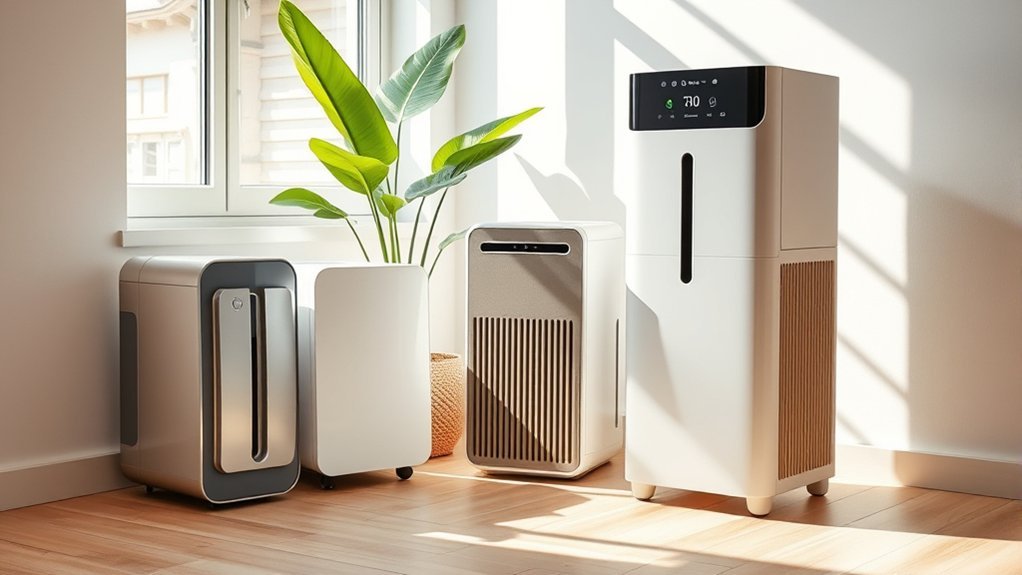
Excess humidity in a music room, home studio, rehearsal space, or instrument storage room can make the space uncomfortable and may expose wooden instruments and audio equipment to unnecessary moisture. The best dehumidifier for acoustics is not a device that changes sound directly; it is a room-sized unit that can hold relative humidity steady without adding excessive noise. The three models below are true compressor dehumidifiers with different strengths for smaller rooms, energy-conscious buyers, and large spaces.
Affiliate disclosure: As an Amazon Associate, we may earn from qualifying purchases at no extra cost to you.
Last updated: August 2026
Quick Verdict
Best overall: AEOCKY 4500 Sq.Ft Dehumidifier for its efficiency-focused design and strong room capacity. Best for quieter small-to-medium music rooms: BANABIE 2500 Sq.Ft Dehumidifier. Best for large studios or open spaces: Waykar 80 Pints Energy Star Dehumidifier. Use a separate hygrometer and aim for a stable range that suits your instruments; a dehumidifier can only remove moisture, not add it.
Quick Comparison
| Product | Best For | Listed Capacity | Important Consideration | Amazon |
|---|---|---|---|---|
| BANABIE 2500 Sq.Ft | Small-to-medium music rooms | Up to 32 pints/day under listing test conditions | The 32 dB figure is a listing claim and may apply only at a low fan setting. | Check Price |
| AEOCKY 4500 Sq.Ft | Efficiency and balanced performance | Max 80 pints/day at hot, very humid test conditions | Its real-world removal rate will be lower in cooler or less humid rooms. | Check Price |
| Waykar 80 Pints | Large studios and open rooms | Up to 80 pints/day at 95°F and 90% RH | Tank size, vent style, and noise specifications can vary by listing option. | Check Price |
Humidity note: Martin Guitar recommends approximately 45%–55% RH for guitars, while ENERGY STAR describes 30%–50% RH as a general target for buildings. For a room containing wooden instruments, a stable setting around 45%–50% is often a practical overlap. Monitor the room with a separate hygrometer and follow the instrument maker’s guidance. See the Martin Guitar care guidance and ENERGY STAR dehumidifier guidance.
BANABIE 2500 Sq.Ft Dehumidifier with Smart Humidity Control
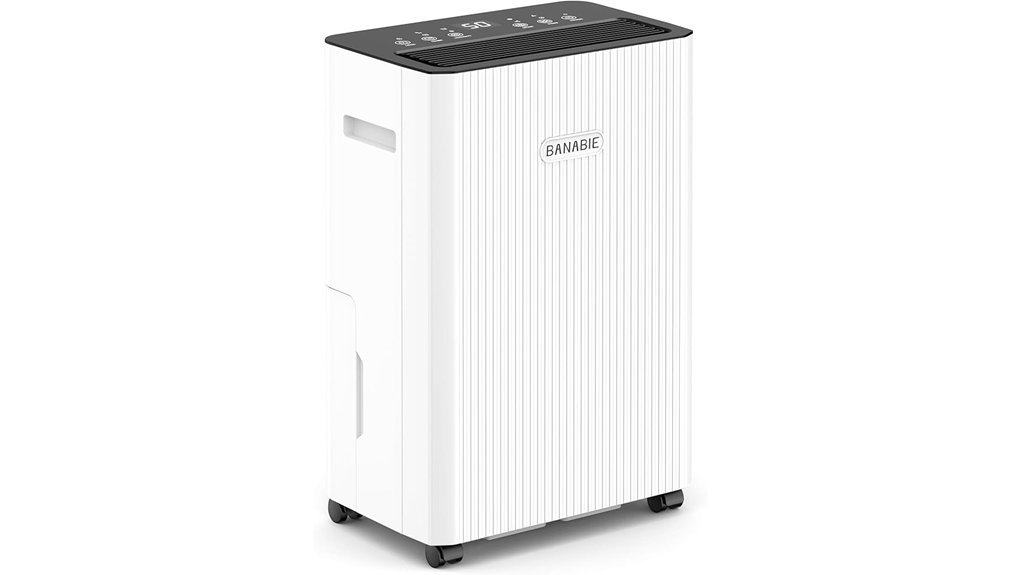
The BANABIE model is the most approachable option here for a bedroom-sized studio, practice room, or smaller instrument room. Its current listing describes coverage up to 2,500 sq. ft., moisture removal up to 32 pints per day, a 2.5-liter tank, drain-hose support, smart humidity control, a 24-hour timer, and wheels for easier movement.
Why You’ll Like It: The listing advertises operation as low as 32 dB, which is attractive when background noise matters. Treat that number as a best-case operating claim rather than a guarantee for every fan mode or room. For critical recording, it is still better to lower the room humidity before a session and pause the compressor while microphones are live.
Best For: Smaller music rooms where portability, a compact footprint, and lower advertised noise matter more than maximum extraction capacity.
Who Should Avoid It: Owners of very wet basements, large open studios, or spaces that need continuous heavy-duty moisture removal.
Pros:
- Useful room capacity: A practical fit for many small and medium indoor spaces.
- Flexible drainage: Supports tank collection and a drain hose.
- Studio-friendly controls: Includes automatic humidity management and a timer.
Cons:
- Small tank: The 2.5-liter reservoir may fill quickly in damp conditions.
- Unverified long-term performance: Detailed specifications were found mainly through marketplace listings rather than a strong official manufacturer support page.
- Noise varies: Compressor cycling and higher fan settings may be more noticeable than the lowest advertised figure.
AEOCKY 4500 Sq.Ft Dehumidifier with Smart Compressor
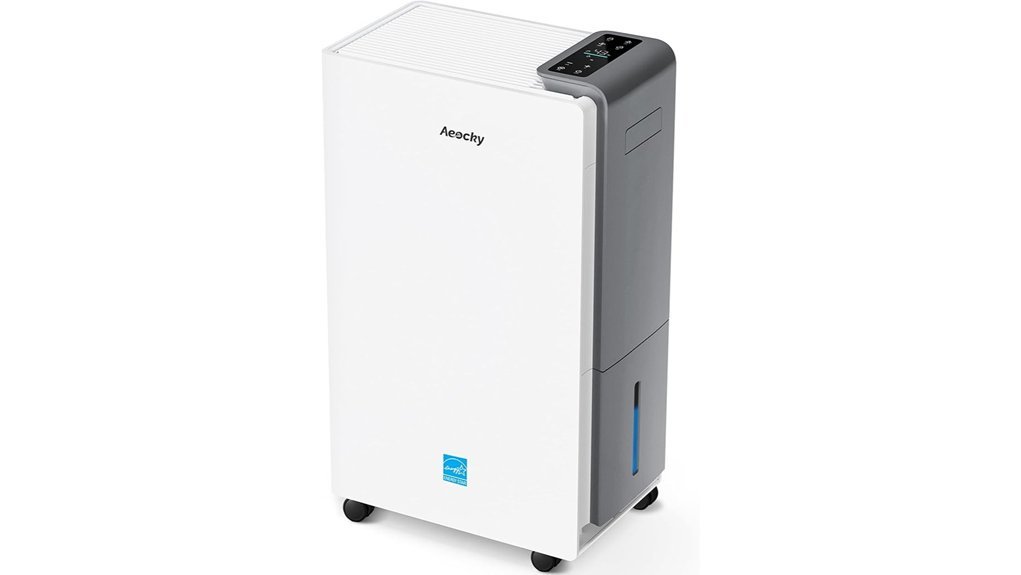
The AEOCKY RHEA-001 is the strongest all-around choice for buyers who want substantial moisture removal with an efficiency-focused design. The manufacturer lists coverage up to 4,500 sq. ft. and a maximum removal rate of 80 pints per day at 95°F and 95% RH. It also lists about 56 pints per day at 86°F and 80% RH, which better shows how capacity changes with room conditions.
Why You’ll Like It: This model is listed as ENERGY STAR Most Efficient 2025, includes automatic humidity sensing, power-outage memory, drain-hose support, and a lowest-fan noise claim of about 44 dB. Its combination of capacity, efficiency, and control makes it a sensible fit for a music room that must remain stable throughout humid weather.
Best For: Medium-to-large studios, rehearsal rooms, and instrument storage areas where efficiency and consistent humidity control are priorities.
Who Should Avoid It: Buyers who need an ultra-light unit, have very limited floor space, or expect silent operation while recording.
Pros:
- Strong performance range: Suitable for larger rooms and heavier moisture loads.
- Efficiency certification: Carries the manufacturer’s ENERGY STAR Most Efficient 2025 designation.
- Useful operating features: Humidistat control, auto restart, low-temperature defrost support, and continuous drainage.
Cons:
- Heavy design: The manufacturer lists a weight of about 31 pounds.
- Maximum rating needs context: The 80-pint figure comes from hot, extremely humid test conditions and will not represent every room.
- Promotional savings claims vary: Actual electricity savings depend on climate, runtime, set point, and local energy rates.
Waykar 80 Pints Energy Star Dehumidifier
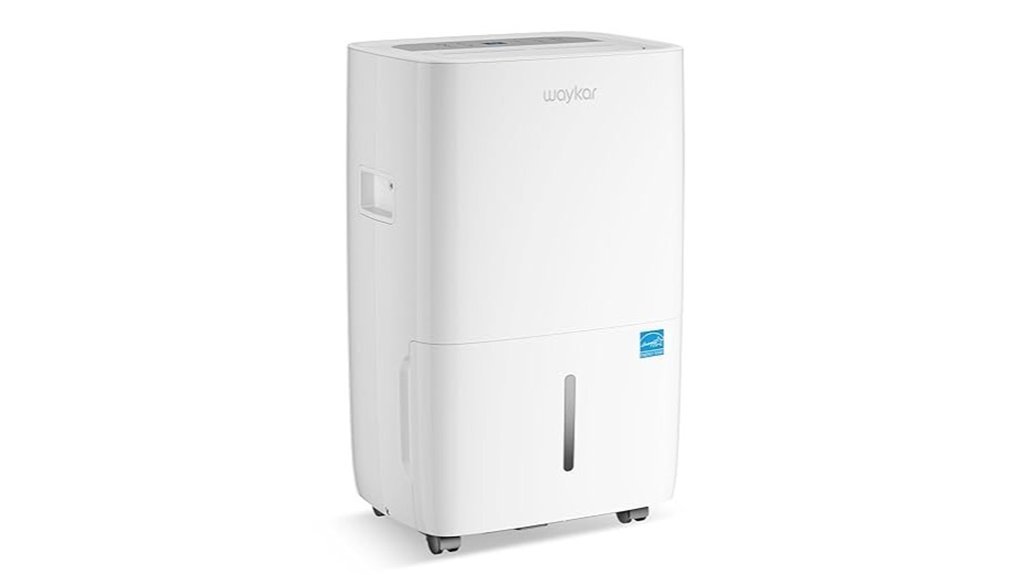
The Waykar 80 Pints Energy Star Dehumidifier is aimed at large rooms and open areas. Waykar lists the JD025CE-80 for spaces up to 5,000 sq. ft. and moisture removal up to 80 pints per day at 95°F and 90% RH. It also includes adjustable humidity control, automatic defrost, timer functions, a drain hose, and wheels for moving the unit between rooms.
Why You’ll Like It: The high listed capacity and continuous-drain option make it more convenient for a large rehearsal room, basement studio, or combined storage and practice area. It is also ENERGY STAR certified, which is valuable for a unit that may run for long periods during humid seasons.
Best For: Large music rooms, basement studios, and open-plan spaces with a floor drain or another suitable gravity-drain location.
Who Should Avoid It: Buyers with a small room, limited storage space, or no practical drainage route. Confirm the exact Amazon variant because tank size, vent style, and noise specifications may differ between current configurations.
Pros:
- Large-space capacity: Designed for substantial rooms and higher humidity loads.
- Continuous drainage: Reduces the need to empty the tank manually.
- Automatic operation: Includes a humidistat, timer, auto defrost, and restart-related features.
Cons:
- Bulky and heavy: Current manufacturer information places comparable configurations around 31–33 pounds.
- Coverage is not guaranteed: Open doors, poor airflow, cool temperatures, and moisture intrusion can reduce effective coverage.
- Variant confusion: Buyers should verify the selected tank, airflow, and sound specifications before ordering.
Factors to Consider When Choosing a Dehumidifier for Acoustics
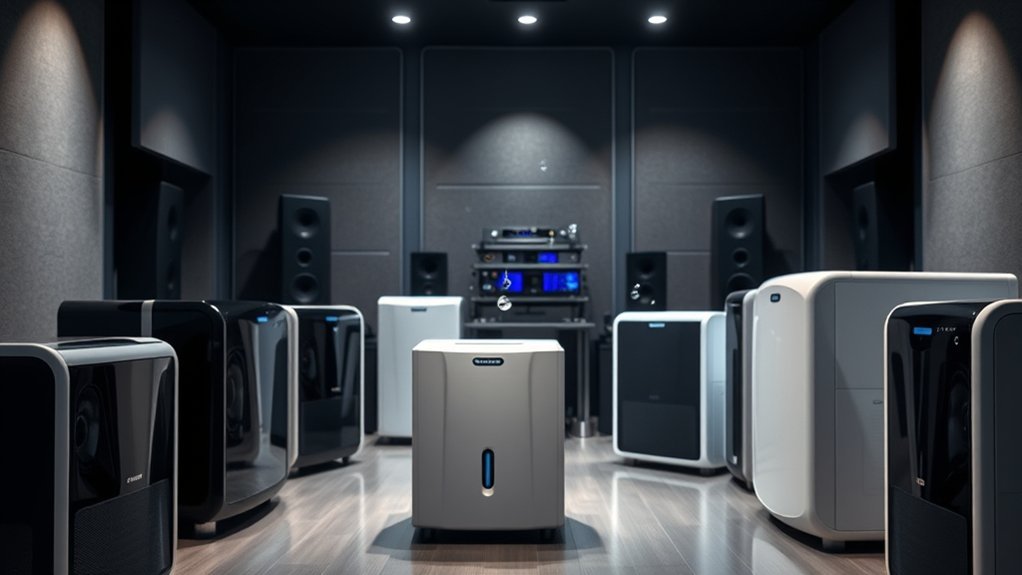
A music room needs more than a large coverage claim. The right unit should match the actual moisture load, maintain a stable set point, drain safely, and create as little disruption as practical. Use the factors below to compare the three remaining products.
Target Humidity Range
Many wooden instrument makers recommend roughly 45%–55% RH. A room with guitars, violins, or other wooden instruments may benefit from a set point near 45%–50%, but the correct target depends on the instrument maker, local climate, and room temperature. A dehumidifier only removes moisture. If the room drops below the safe range, turn the unit off and use appropriate humidification instead.
Capacity and Real-World Coverage
Pints per day are measured under specific temperature and humidity conditions. Higher-capacity numbers are often recorded in very warm, very humid air, so real-world removal may be lower in a cool basement or moderately humid studio. Room layout, doors, ceiling height, air leaks, and ongoing water intrusion also affect performance. Choose enough capacity for the moisture load rather than relying only on the square-foot number.
Noise During Recording
Even a “quiet” compressor dehumidifier produces fan noise, compressor vibration, and occasional cycling sounds. For recording, reduce the room to the desired humidity before the session, close doors and windows, then switch the unit off temporarily if the room remains stable. Place it on a level floor away from microphone stands, instrument bodies, and resonant furniture.
Drainage and Tank Size
A small tank is manageable in a mildly humid room but inconvenient in a wet basement. Continuous gravity drainage is the better choice for long runtimes, provided the hose slopes downward without kinks and drains into an approved location. A built-in pump is needed when water must travel upward; none of the three reviewed models should be assumed to include one unless the selected listing says so.
Humidistat and Hygrometer Accuracy
Built-in humidistats are convenient, but their reading can differ from the humidity near an instrument rack or case. Place a separate digital hygrometer at instrument height and compare it with the dehumidifier’s display. Avoid positioning the hygrometer directly in the dry air stream, where it may show a misleadingly low reading.
Portability and Placement
Large compressor units commonly weigh around 17–33 pounds, so wheels and handles matter more than a vague “portable” label. Leave the clearance required by the manual, keep the intake and exhaust unobstructed, and do not aim warm exhaust directly at instruments, microphones, amplifiers, or walls that can trap heat.
Before You Buy
- Measure the room and note whether doors remain open.
- Check current RH with a separate hygrometer for several days.
- Confirm the product’s test conditions, tank size, drain method, weight, and lowest operating temperature.
- Plan where compressor noise will be least disruptive.
- Check the exact Amazon variant and warranty terms before ordering.
Frequently Asked Questions
What Humidity Level Is Ideal for Acoustic Instruments?
Many guitar makers recommend approximately 45%–55% RH. Use the instrument manufacturer’s guidance and monitor the room with a separate hygrometer. Stability is usually more important than chasing one exact number.
Can a Dehumidifier Improve Studio Recording Quality?
Not directly. A dehumidifier does not improve microphone, speaker, or room-acoustic performance by itself. It can make a damp room more comfortable and help reduce harmful humidity swings around wooden instruments and equipment. Its own fan and compressor noise can interfere with recording, so precondition the room and pause the unit during critical takes when practical.
Should a Dehumidifier Run While Recording?
Usually not when using sensitive microphones. Run it before the session, confirm the room has reached the target RH, and turn it off temporarily. Resume operation after recording or whenever humidity starts rising outside the desired range.
Are These Dehumidifiers Portable?
They are movable rather than truly lightweight. Wheels and handles help, but the larger AEOCKY and Waykar units weigh roughly 31–33 pounds. Check stairs, door thresholds, and storage space before choosing a model.
How Often Should I Clean the Filter?
Follow the product manual and filter-clean indicator. Most portable compressor dehumidifiers use a washable filter that should be cleaned when dusty rather than automatically replaced every three to six months. Unplug the unit before maintenance and let the filter dry fully before reinstalling it.
Is a Room Dehumidifier the Same as a Guitar-Case Humidity Pack?
No. A compressor dehumidifier controls an entire room by removing water from the air. A case pack manages a small, mostly closed instrument case and may add or absorb moisture. Use each product only for its intended environment.
Conclusion
For most medium-to-large music rooms, the AEOCKY 4500 Sq.Ft Dehumidifier offers the best balance of capacity, efficiency, and control. The BANABIE 2500 Sq.Ft model is a better match for a smaller room where lower advertised noise and easier movement matter, while the Waykar 80 Pints Dehumidifier suits a large studio or basement with a practical drain route. Whichever model you choose, use a separate hygrometer, target a stable instrument-safe humidity range, and remember that room moisture control protects the environment—it does not replace proper acoustic treatment or instrument-case care.