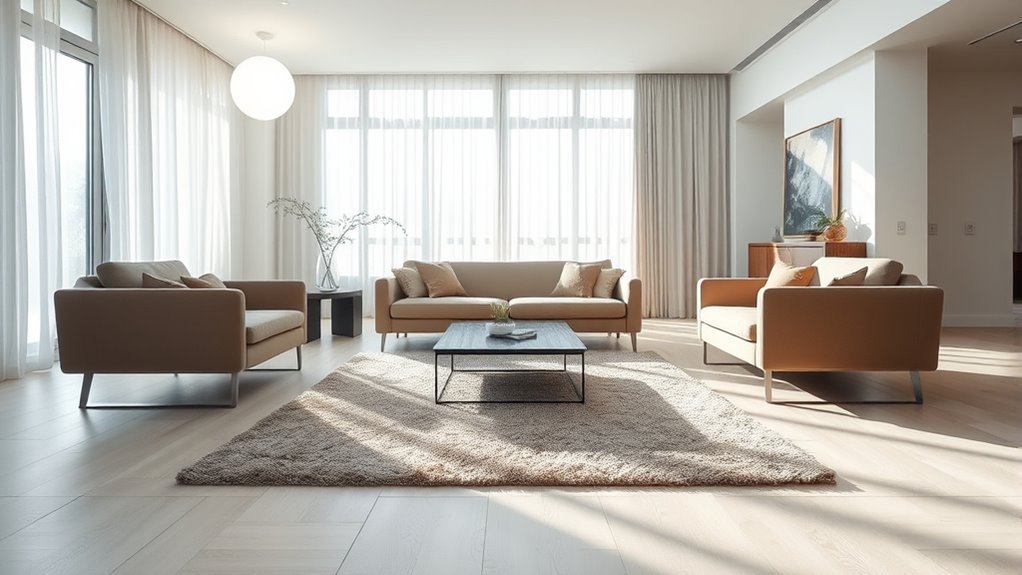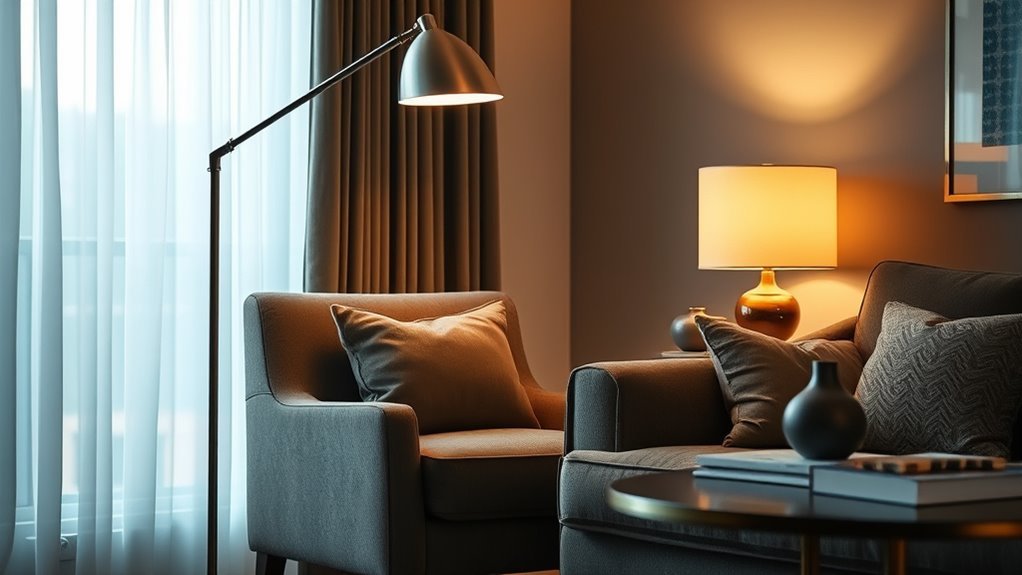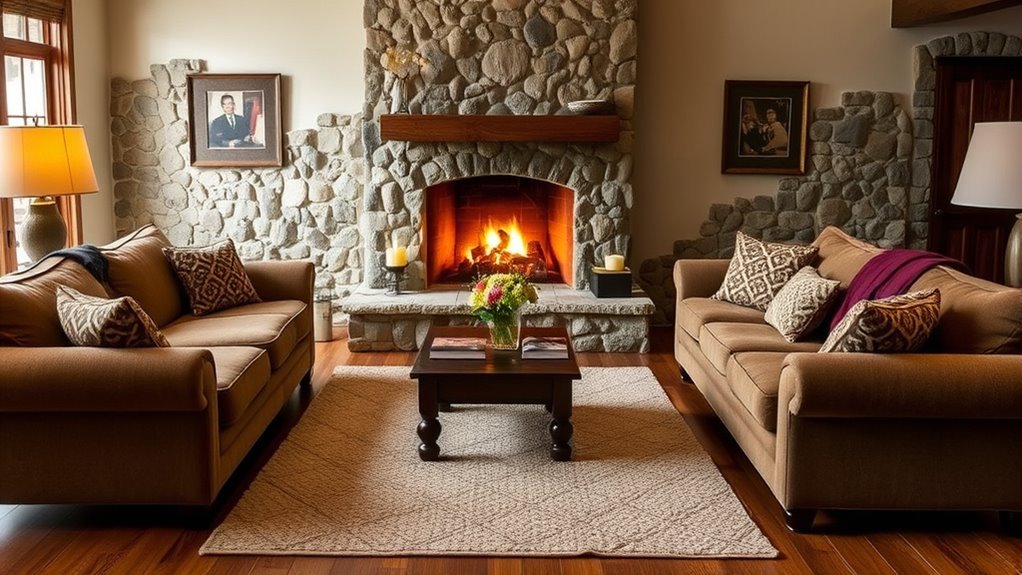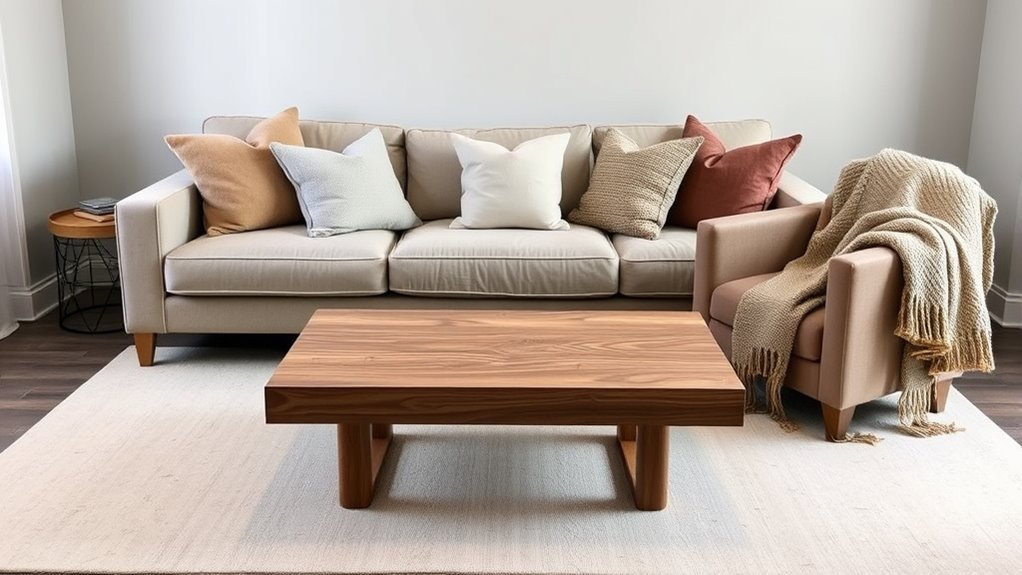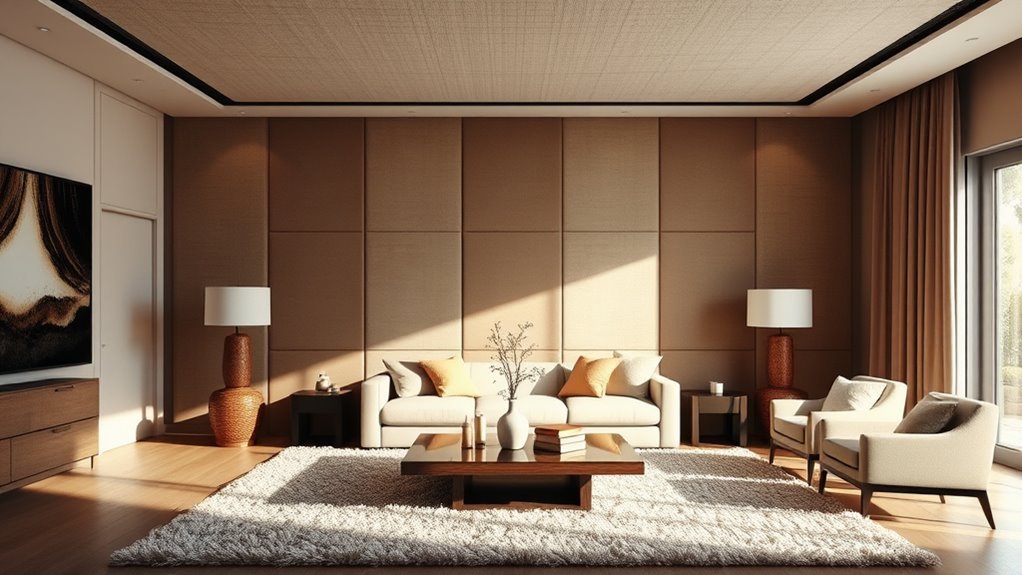
Echo can make your living room feel loud, harsh, and hard to relax in. Hard floors, bare walls, large windows, and high ceilings all bounce sound back into the room. To reduce echo in your living room, add soft, porous, and uneven surfaces that absorb and scatter sound.
Quick Answer
You can make a living room less echoey by adding thick rugs, heavy curtains, upholstered furniture, acoustic panels, and full bookshelves. Start with the largest hard surfaces first: floors, windows, and bare walls. For the best result, mix sound absorption with sound diffusion so the room feels calm but still natural.
Key Takeaways
- Cover hard floors with thick rugs and dense rug pads to reduce reflected sound.
- Add curtains, fabric shades, and upholstered furniture to absorb echo from bare surfaces.
- Use acoustic panels on large blank walls when soft decor does not control enough echo.
- Place bookshelves, plants, and uneven decor around the room to scatter sound waves.
- Treat the room in layers instead of relying on one product or material.
What Causes Echo in a Living Room?
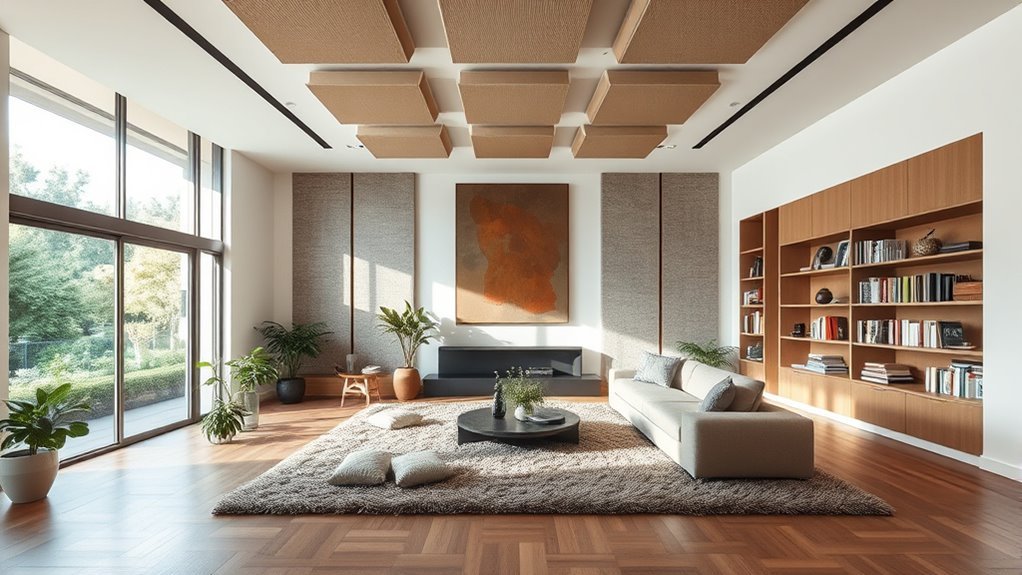
Echo happens when sound waves hit hard surfaces and bounce back toward you. In living rooms, common problem surfaces include hardwood floors, glass windows, drywall, tile, and large bare walls.
Open layouts can make echo worse because sound travels farther before it meets anything soft. High ceilings can also add more sound reflection, especially in rooms with little fabric or furniture.
Echo differs from reverberation. Echo sounds like a clear repeat, while reverberation creates a blurred, lingering sound that makes speech harder to understand.
Best Acoustic Materials to Reduce Living Room Echo
The best acoustic materials for a living room absorb sound without making the space look like a studio. Use a mix of soft decor, dense fabrics, and purpose-built acoustic products.
| Material | Key Features |
|---|---|
| Acoustic Panels | Absorb mid and high frequencies on bare walls |
| Acoustic Foam | Budget-friendly option for small problem areas |
| Thick Rugs | Reduce floor reflections and soften foot noise |
| Bass Traps | Help control low-frequency buildup in corners |
| Heavy Curtains | Absorb sound near windows and glass doors |
Focus first on large surfaces that reflect the most sound. A rug, curtains, and a few wall panels often make a bigger difference than small decorative items alone.
Recommended Products

High-Quality Wall Panels: Our acoustic panel set is crafted with high-density polyester fiber, premium medium-density fiberboard, and a solid wood veneer. This combination provides an elegant look, superior sound damping, and excellent sound deadening, significantly improving room acoustics

High-Quality Wall Panels: Our acoustic panel set is crafted with high-density polyester fiber, premium medium-density fiberboard, and a solid wood veneer. This combination provides an elegant look, superior sound damping, and excellent sound deadening, significantly improving room acoustics

High-Quality Wall Panels: Our acoustic panel set is crafted with high-density polyester fiber, premium medium-density fiberboard, and a solid wood veneer. This combination provides an elegant look, superior sound damping, and excellent sound deadening, significantly improving room acoustics
How Soft Furnishings Help Absorb Sound
Soft furnishings absorb sound because their fibers trap some sound energy instead of reflecting it back into the room. Sofas, armchairs, curtains, pillows, blankets, and fabric wall hangings all help.
Thick, textured fabrics usually work better than thin, smooth fabrics. Velvet curtains, wool rugs, boucle chairs, and layered textiles can all reduce harsh reflections.
You don’t need to fill every surface with fabric. Aim for balance so the room sounds warmer but still feels open and comfortable.
Recommended Products
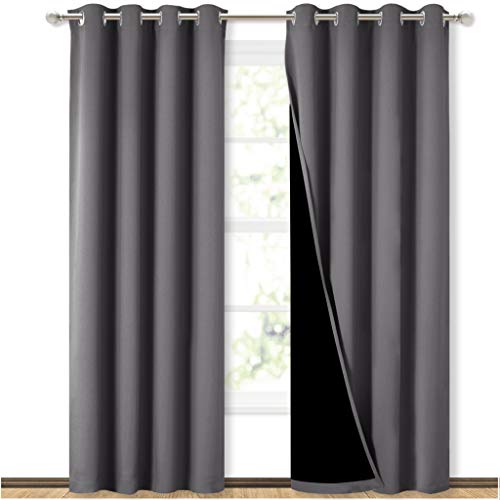
Complete blackout curtains block light and reduce noise for better sleep - 2 layer construction with blackout lining

Sound Absorption & Noise Reduction: Made with a polyester woven surface and recycled cotton filling, this 3-layer physical barrier effectively absorbs indoor echoes, reduces sound reflections, and blocks part of the external noise. Note: 1. This product provides limited sound insulation and is mainly used as a protective barrier only. 2. Keep the product in a dry environment. If it gets wet, please air dry it promptly. Prolonged dampness may cause unpleasant odors and material damage
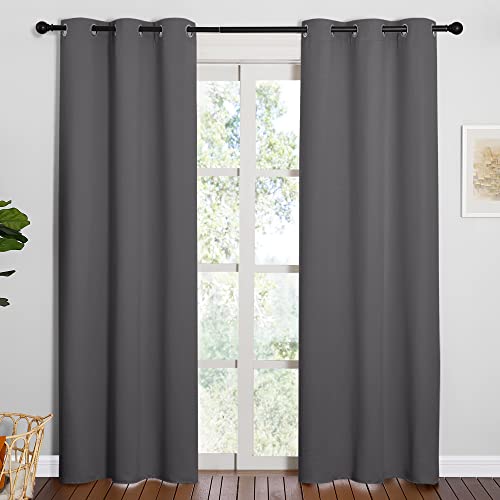
READY MADE: Set includes 2 BLACKOUT PANELS of 42" wide x 84" length with 6 grommets top each. Quality fabric without liner feels soft and heavy.
How to Use Acoustic Panels and Foam for Better Sound
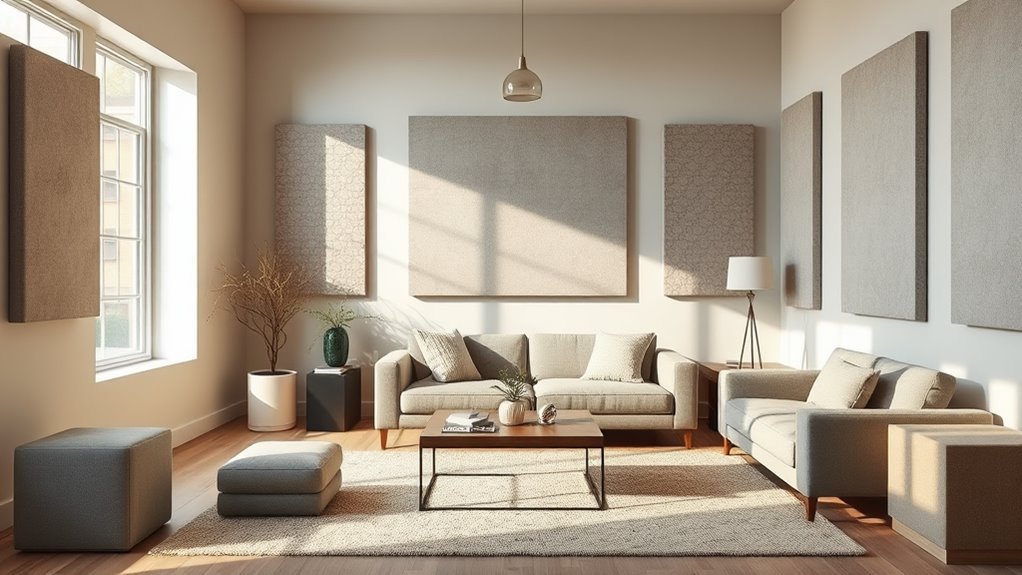
Acoustic panels work best on large blank walls where sound reflects strongly. Place them at ear height near seating areas, TV walls, or opposite hard surfaces.
Panels with a higher Noise Reduction Coefficient (NRC) absorb more sound than panels with a lower rating. The NRC scale helps you compare products, but room layout and panel placement also matter.
Acoustic foam can help in small areas, but it may not suit every living room design. Fabric-wrapped panels often blend better with home decor.
Pro tip: Before buying panels, clap once in different parts of the room and listen for the strongest reflections.
Recommended Products
![Ekkogo Acoustic Panels 12-Pack Soundproof Wall Panels 12"X10.4"X0.4" Sound Panels High Density Sound Dampening Panels - [Light Turquoise Hexagon]](https://m.media-amazon.com/images/I/51fcGFHNliL._SL500_.jpg)
【HIGH DENSITY ACOUSTIC PANELS】: Improve sound quality and reduce echoes & reverb at your home, office, podcast studio, conference room and more. Give your space what it's been asking for, with our beautiful sound absorbing panels and keep unwanted noises down to a minimum.

Exceptional Sound Absorption:These pyramid acoustic panels are engineered to effectively absorb sound waves, reducing echo and reverberation. With a high NRC (Noise Reduction Coefficient), they create a quieter, more acoustically balanced environment, ideal for recording studios, home theaters, and offices.
Where Should You Place Sound-Absorbing Items?
Start with the surfaces closest to where you sit and talk. A rug under the main seating area, curtains over large windows, and panels on blank side walls can cut echo fast.
Room corners often collect low-frequency sound, especially in larger spaces or rooms with speakers. Bass traps can help if the room sounds boomy rather than just bright or sharp.
Use bookshelves, plants, woven baskets, and uneven decor to scatter sound. These items help break up reflections without making the room feel overly treated.
Tips for Creating a Balanced Acoustic Environment in Your Living Room
A balanced living room uses both absorption and diffusion. Absorption reduces echo, while diffusion spreads sound so the room still feels natural.
- Add a thick area rug over hardwood, tile, or concrete floors.
- Use lined curtains or heavy fabric panels over large windows.
- Choose upholstered seating instead of all-wood or all-leather furniture.
- Place acoustic panels on bare walls near the main seating area.
- Fill shelves with books and decor of varied heights and depths.
Make one change at a time and listen before adding more. Too much absorption can make a living room feel dull or closed in.
Note: A quieter room does not always need full soundproofing, since echo control and sound blocking solve different problems.
Frequently Asked Questions
How do you make a living room less echoey?
Start by covering hard surfaces with soft materials. Add a thick rug, heavy curtains, upholstered seating, pillows, and acoustic panels if the room still sounds harsh.
What is the 38% rule in room acoustics?
The 38% rule usually refers to speaker or listening-position setup in audio rooms, not general living room echo control. For echo reduction, focus more on treating large reflective surfaces and balancing soft and hard materials.
How can you improve acoustics in a living room?
Improve acoustics by adding sound-absorbing surfaces and breaking up large blank areas. Rugs, curtains, wall panels, bookshelves, plants, and upholstered furniture can all help the room sound clearer.
How do you make a room with hardwood sound less echoey?
Use a thick area rug with a dense rug pad to reduce floor reflections. Add fabric curtains, upholstered furniture, and wall decor to control sound that still bounces around the room.
Do acoustic panels work in living rooms?
Yes, acoustic panels can work well in living rooms when you place them on the right surfaces. They help most on bare walls near seating areas, media walls, and other reflection points.
Conclusion
The best way to reduce living room echo is to treat the surfaces that bounce the most sound. Start with a rug, curtains, and soft seating before adding acoustic panels or bass traps.
Listen to the room after each change so you don’t overdo it. With the right mix of texture, fabric, and placement, your living room can feel calmer, clearer, and more comfortable.