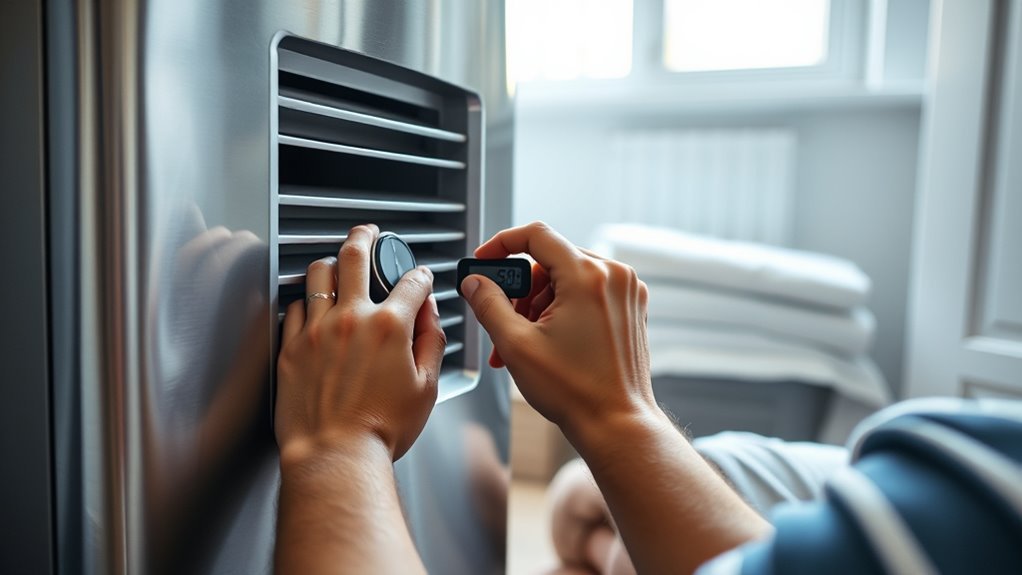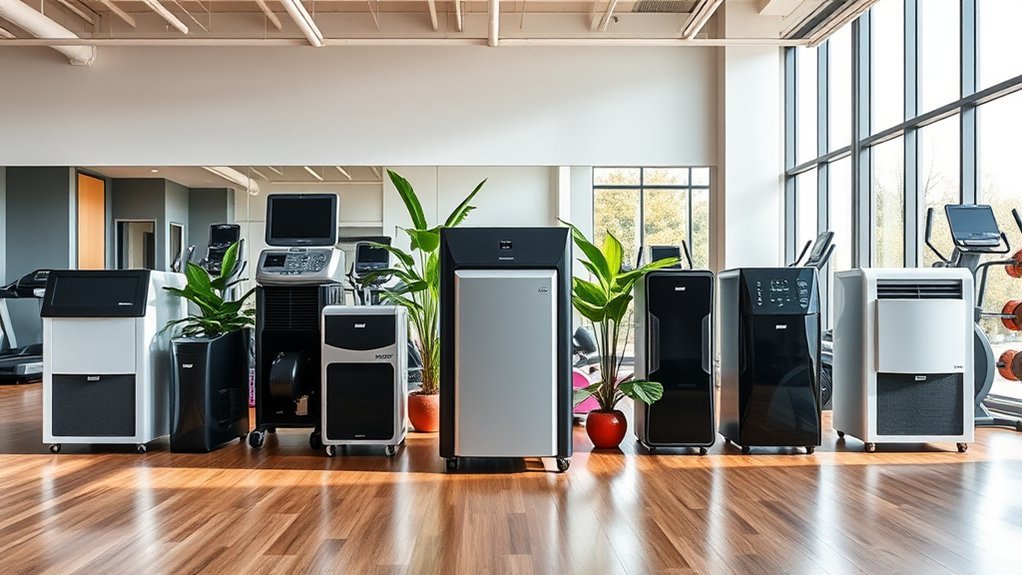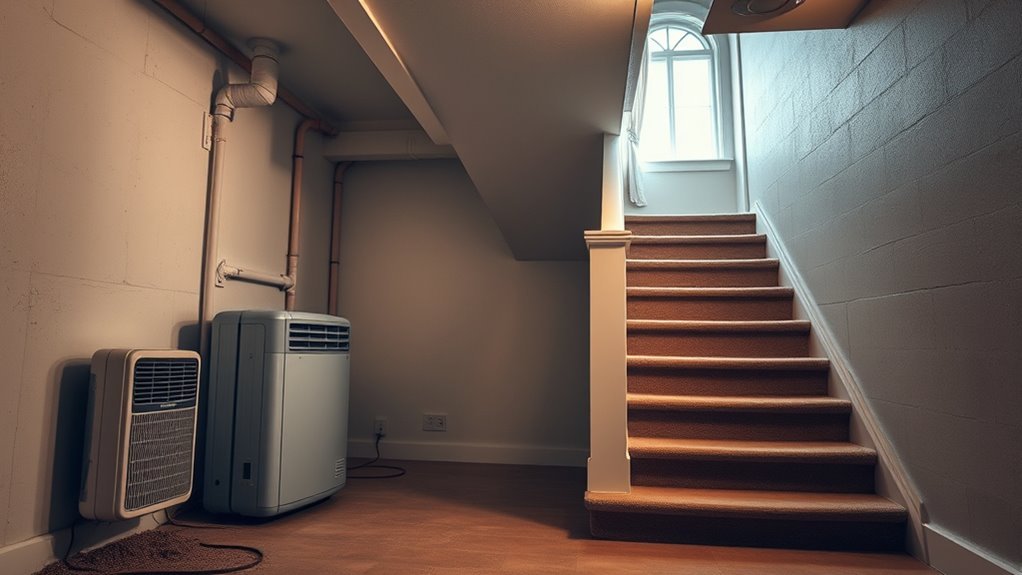
Yes, a basement dehumidifier can help dry the whole house when the basement is a main moisture source and basement air can mix with upper floors. It works best when you size the unit for the basement’s dampness level, place it in open airflow, use continuous drainage, and track indoor humidity on every level with hygrometers. It will not fix leaks, flooding, poor drainage, or active mold by itself, but it can lower the moisture load that makes the rest of the home feel damp.
Quick Answer
A basement dehumidifier can help the whole house if damp basement air is moving upstairs through stairways, floor gaps, duct chases, or other leakage paths. Aim for about 30% to 50% relative humidity, fix water sources first, and use a hygrometer on every level to confirm the results.
In This Guide
Key Takeaways
- A basement unit helps most when the basement is damp and connected to the rest of the home by airflow paths.
- Keep indoor humidity below 60% and ideally around 30% to 50%, based on EPA moisture guidance.
- Use ENERGY STAR dehumidifier sizing guidance instead of guessing by square footage alone.
- Continuous drainage, open airflow, and clean filters make a bigger difference than running the unit in a blocked corner.
- If upstairs humidity stays high after the basement is controlled, you may need air sealing, better ventilation, a second unit, or a whole-home dehumidifier.
At a Glance
| Time Required | Initial basement change may show within 24 to 48 hours; whole-house readings may take several days or longer depending on moisture load. |
| Difficulty | Easy to moderate for a portable unit; professional help is best for ducted whole-home systems. |
| Tools Needed | Hygrometers, properly sized dehumidifier, drain hose or condensate pump, grounded outlet, tape measure, and clean filter access. |
| Cost | Depends on unit size, runtime, and local electricity rate. Estimate with: watts ÷ 1,000 × hours × cost per kWh. |
Quick Decision Test: Is the Basement the Source?
Use a simple one-week test before buying a second unit or paying for a whole-home system. Place one hygrometer in the basement, one on the first floor, and one upstairs if you have a second story. Record readings at the same two times each day, then compare how each floor responds after the basement dehumidifier runs continuously.
| What You See After Several Days | What It Usually Means | Next Step |
|---|---|---|
| Basement drops into the 30% to 50% range, and upstairs follows. | Basement moisture was likely feeding the rest of the house. | Keep the setup, maintain drainage, and keep checking readings during wet weather. |
| Basement improves, but upstairs stays above 50% to 55% RH. | Another moisture source or airflow problem is likely active upstairs. | Check bath fans, kitchen ventilation, duct leakage, crawl spaces, and exterior air leaks. |
| Basement never reaches the set point. | The unit may be undersized, blocked, too cold, full, dirty, or fighting active water entry. | Fix water sources first, clean the filter, improve drainage, and reassess capacity. |
Will a Basement Dehumidifier Help the Whole House?
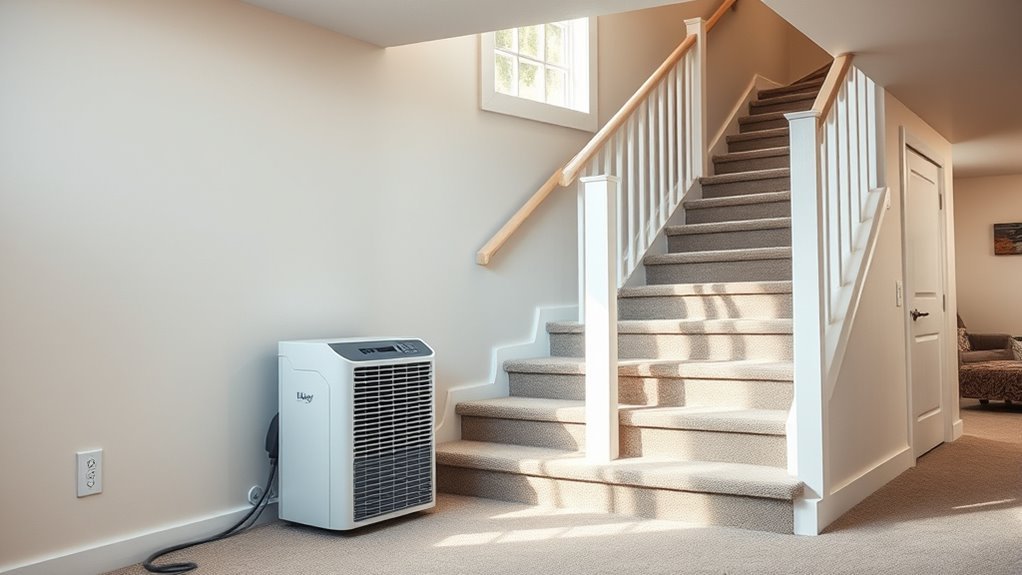
Yes, it can help, but only when the basement is part of the home’s moisture path. If the basement is damp, musty, or regularly above 50% to 60% relative humidity, drying that lower level can reduce the water vapor that spreads upward through connected air paths.
The EPA says moisture control is the key to mold control and recommends keeping indoor humidity below 60%, ideally between 30% and 50%. The CDC recommends keeping home humidity no higher than 50% all day to help prevent mold growth. A basement dehumidifier supports that goal by removing moisture before it moves farther through the home.
Still, a basement dehumidifier is not a whole-house cure in every home. It helps most when basement moisture is the source. If upstairs humidity comes from cooking, showers, oversized air conditioning, poor ventilation, roof leaks, crawl-space moisture, or outdoor air leaks, you need to fix those problems too.
Warning: Do not use a dehumidifier as a substitute for repairing bulk water problems. Standing water, seepage, leaking pipes, wet drywall, and visible mold need source repair and cleanup, not just drier air.
How Moisture Moves From Basement to Upstairs
Moisture moves through a house in two main ways: air movement and direct water problems. A dehumidifier only handles moisture that is already in the air. That is why you get the best results when you combine dehumidification with leak repair, air sealing, drainage fixes, and good ventilation.
Stack Effect
The stack effect happens when temperature differences create pressure differences inside a building. In cold weather, warmer indoor air tends to rise and escape through upper leaks. That can pull lower-level air upward through stairwells, floor gaps, wall cavities, utility chases, and other openings. The National Research Council Canada’s stack-effect digest explains that even one- and two-story houses can have enough stack pressure to affect air leakage.
If the basement air is damp, that moving air can carry moisture, musty odors, and allergens upward. Lowering basement humidity helps because you are drying one of the air sources before it mixes with the rest of the house.
Air Leakage Paths
Air does not need a large opening to move moisture. Small gaps can matter, especially when pressure differences, duct leakage, or exhaust fans are pulling air through the building. Building Science Corporation notes that airflow control is important for moisture control, energy use, comfort, and health.
| Leakage Path | How It Spreads Moisture | What Helps |
|---|---|---|
| Rim joists and sill plates | Let outdoor or basement air leak into floor framing | Air sealing and insulation |
| Stairways and open doors | Allow basement air to mix with the first floor | Controlled airflow and humidity monitoring |
| Utility openings | Create hidden paths around pipes, wires, and ducts | Seal penetrations with suitable materials |
| Duct chases and returns | Can pull basement air into the HVAC path if leaky | Duct sealing and HVAC inspection |
| Foundation cracks | Let water vapor or bulk water enter the basement | Drainage repair and crack repair |
What Indoor Humidity Should You Target?
For most homes, a practical target is 30% to 50% relative humidity. That range is dry enough to discourage mold and dust mites, but not so dry that the air becomes uncomfortable for many people. ENERGY STAR also describes 30% to 50% as the generally optimum RH range for a building and warns that levels above that range may promote mold growth.
Use at least two hygrometers: one in the basement and one on the first floor. In larger homes, add one upstairs. Do not judge by feel alone. A basement can feel cool and dry while still reading above 60% RH.
Note: In cold weather, you may need to keep humidity toward the lower end of the range to prevent window condensation. If the air feels too dry or someone in the home has a lung condition, follow medical guidance and measure before changing settings.
What Size Basement Dehumidifier Do You Need?
The right size depends on the size of the basement and how damp it is before dehumidification. Do not use the rule “one pint per square foot.” Dehumidifier capacity is normally measured in pints removed per 24 hours, and the needed capacity rises as the space becomes damper.
Use this simplified version of ENERGY STAR’s portable dehumidifier guidance as a starting point:
| Basement Condition Before Dehumidification | Under 2,000 sq ft | Over 2,000 sq ft |
|---|---|---|
| Slightly to moderately damp, musty at times, about 50% to 75% RH | 20 to 30 pints/day | 30+ pints/day |
| Very damp, consistent musty smell, damp spots, about 75% to 90% RH | 25 to 40 pints/day | 40+ pints/day |
| Wet, sweating walls or floor, seepage, about 90% to 100% RH | 30 to 50 pints/day | 50+ pints/day |
If your humidity problem affects the entire house, a portable unit may not be enough. A ducted whole-home dehumidifier should be sized and installed by an HVAC professional, especially if the home is well sealed, has central air conditioning, and stays above 55% RH across multiple rooms.
Pro Tip: Buy for the moisture load, not just the square footage. A small but wet basement may need more capacity than a large but only slightly damp basement.
Recommended Products

4,500 SQ. FT. DEHUMIDIFIER – Removes up to 50 pints of moisture per day with an adjustable humidity setting from 35% to 85%. Perfect for use in basement, bathroom, bedroom, office, kitchen, cellar, or crawlspace. Maintain a healthy 45%-55% humidity range

This dehumidifier delivers powerful performance — removing up to 80 pints of moisture per day and covering up to 5000 sq.ft, perfect for whole homes, basements, large living rooms, and garages. It effectively eliminates dampness and musty odors, keeping your entire large space dry and comfortable all day long, even in highly humid environments (90-100% relative humidity).

2500 Sq.Ft High Capacity Dehumidifier- The GoGuess basement dehumidifier is equipped with a quiet yet powerful compressor that efficiently extracts up to 34 pints of moisture per day (tested at 95°F and 90% RH). Perfect for use in basements, offices, bathrooms, bedrooms, kitchens, storage areas, living rooms, laundry spaces, garages, crawl spaces, and RVs. It helps maintain a healthy humidity level between 30% and 70%, promoting a more comfortable and healthier indoor environment.
Where Should You Place a Basement Dehumidifier?
Place the basement dehumidifier in a central, open area where air can move freely around the intake and exhaust. Keep it away from boxes, walls, curtains, stored furniture, and dusty equipment. If the unit does not have top-mounted discharge, leave clear space around it so air can circulate well.
For low-maintenance operation, place it near a floor drain, sump, or condensate pump so you can use continuous drainage. A bucket-style unit stops when the bucket is full, which means humidity can rise again while you are not watching it.
| Placement Choice | Best For | Avoid |
|---|---|---|
| Central open floor area | Balanced basement airflow | Tight corners and blocked vents |
| Near a floor drain or sump | Continuous drainage | Long drain hoses that create trip hazards |
| Away from dust and woodworking tools | Cleaner coils and better efficiency | Sawdust, lint, and dirty filter conditions |
| With interior airflow paths open | Whole-house humidity testing | Open exterior windows while the unit runs |
Warning: Follow the manufacturer’s electrical instructions. Use a properly grounded outlet, keep drain hoses away from cords and electrical devices, and do not create a tripping hazard with a long hose.
How Long Before a Basement Dehumidifier Works?
A correctly sized basement dehumidifier may begin lowering the basement RH within the first day or two. The rest of the house can take longer because moisture stored in concrete, wood, carpet, furniture, and wall materials releases slowly.
Check readings at the same times each day. Morning and evening readings are useful because outdoor weather, air conditioning, showers, and cooking can change indoor humidity. If the basement drops into the target range but upper floors stay high, the basement is probably not the only source.
If you see little or no improvement after 48 to 72 hours, check these issues:
- The unit may be too small for the moisture load.
- The bucket may be filling and shutting the unit off.
- The filter or coils may be dirty.
- The basement may be below the unit’s operating temperature range.
- Exterior windows or doors may be open.
- Water may still be entering through leaks, cracks, poor grading, or clogged gutters.
- Air may not be moving between the basement and the rest of the home.
When Do You Need More Than One Dehumidifier?
You may need more than one dehumidifier when one unit can control the basement but cannot control the rest of the house. This is common in larger homes, split-level layouts, finished basements with closed rooms, humid climates, or houses with poor air circulation.
Use a second unit or consider a whole-home system when:
- The basement stays near 45% to 50% RH, but upstairs remains above 50% to 55% RH.
- One room or floor feels clammy while the basement is already dry.
- The home has several moisture sources, such as bathrooms, laundry drying, crawl-space moisture, or poor kitchen ventilation.
- The basement door stays closed and there is no ducted return or transfer path.
- The unit runs constantly but never reaches the set point.
- You have a large home where one portable unit cannot move enough air through all zones.
Recommended Products

POWERFUL 2,500 SQ. FT. COVERAGE - Stop letting sticky, heavy air dictate your comfort. The BANABIE dehumidifier utilizes a high-efficiency rotary compressor to deliver heavy-duty moisture removal, extracting 32 pints daily (at 95°F, 90%RH). Engineered with a smart integrated airflow system, this unit effectively covers up to 2,500 Sq. Ft., ensuring that your basement, crawl space, or large open floor plans stay bone-dry

【The Undisputed Champion — Industry-Leading Dehumidifier Brand】When you choose AEOCKY, you get double market validation. According to data independently verified by Stackline, a leading third-party data analytics company, AEOCKY was an industry‑leading dehumidifier brand on Amazon U.S. in 2025. This means you’re not just choosing a flagship product from a market leader, but a top-performing brand backed by independent market data and trusted by millions of real users, delivering the ultimate combination of performance, quality and trust.

2500 Sq. Ft Dehumidifier - SEMKAP dehumidifier for basement features a quiet, high-performance compressor that removes up to 32 pints of moisture per day (at 95°F, 90% RH). Ideal for basements, offices, bathrooms, bedrooms, kitchens, stockrooms, living rooms, laundry rooms, garages, crawlspaces, or RVs. It helps maintain optimal humidity between 40%–60%RH for healthier, more comfortable living
Whole-House vs Portable Dehumidifiers
A portable basement dehumidifier is usually the simplest first step. It targets the damp zone and costs less to install. A whole-house dehumidifier connects to the HVAC system and is designed to manage humidity across one or more rooms through ducts.
| Option | Best When | Main Limitation |
|---|---|---|
| Portable basement dehumidifier | The basement is the dampest zone and you want a lower-cost first step. | It may not control closed-off rooms or upper floors. |
| Multiple portable units | Different floors or rooms have separate humidity problems. | More maintenance, more noise, and more cords or drains. |
| Whole-home dehumidifier | Humidity is high across the house, especially in a well-sealed home with central air. | Higher installation cost and professional sizing needed. |
If your whole house consistently stays above 55% RH, ENERGY STAR says a properly sized and installed whole-home dehumidifier may be a good choice, especially in humid climates with central air conditioning. If only the basement is damp, start with source repair and a properly sized basement unit.
Recommended Products
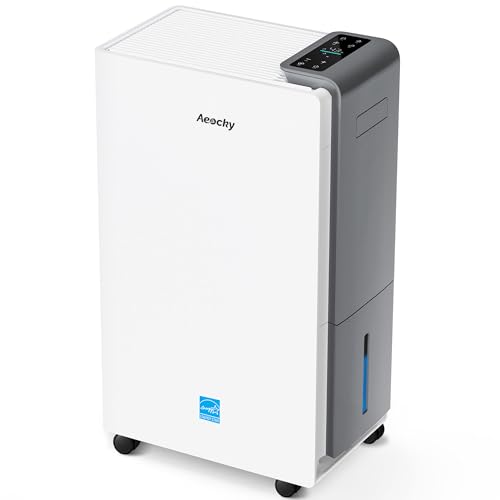
【ENERGY STAR 25 ≠ ENERGY STAR Most Efficient 2025】Don't fall for competitors' word games. With only 2.6% of ENERGY STAR models earning "Most Efficient 2025" title, these options are exceptionally rare on the market. RHEA-001 is one of the few to truly hold this top-tier certification. Many brands use misleading phrases like "Energy Star Efficient 25" or "Energy Star 25" to imply a standard they haven't met. Choosing them is a risk.With AEOCKY, you get verified performance and the peace of mind of authentic, top-tier efficiency.

Energy Efficient Whole House Dehumidifier: 90 pints per day at AHAM condition, 70 Pint at DOE, up to 2300 sq. ft, widely used in short buildings, crawlspace, Basement, multi-bedroom, commercial ,storage area, home, garage, large room, large-area housing, etc. quickly and effectively removes moisture with less energy than conventional dehumidifiers without racking up the energy bill, saving money, It will be the best crawl space dehumidifiers you will ever use

【Reduce humidity - Enhance comfort】:Massive Capacity + Wide Coverage. This dehumidifier has dehumidification capacity ranging 45- 80 pints—outperforming standard units while covering 4,500 sq. ft. of living space. Great dehumidifier for basements, large house, garages, bedroom, bathroom and gyms where excess humidity triggers cause unpleasant odors and discomfort. The result? A noticeably drier, fresher, and more comfortable environment for your entire family.
What a Basement Dehumidifier Cannot Fix
A basement dehumidifier removes water vapor from the air. It does not stop water from entering the building. If the basement has active water problems, fix those first or the unit will run constantly and still struggle.
A dehumidifier cannot fix:
- Foundation seepage or standing water
- Leaking plumbing, water heaters, or appliances
- Clogged gutters or downspouts dumping water near the foundation
- Negative grading that sends rain toward the house
- Wet carpet, wet insulation, or water-damaged drywall
- Visible mold that needs safe cleanup
- Bathroom or kitchen fans that do not vent outdoors
- HVAC systems that are poorly sized or not removing moisture well
Think of the dehumidifier as one part of moisture control, not the first repair. It works best after you reduce the water entering the basement and keep outdoor humid air from leaking in unchecked.
Safety and Maintenance Checklist
Use this checklist to keep the unit working safely and efficiently:
- Set the humidistat around 45% to 50% RH to start, then adjust based on floor-by-floor readings.
- Clean or replace the filter as the manufacturer recommends.
- Keep the intake and exhaust clear.
- Use continuous drainage when possible.
- Check drain hoses for clogs, kinks, and leaks.
- Keep the unit away from dust-heavy work areas.
- Use a model rated for lower temperatures if the basement often drops below 65°F.
- Do not ignore condensation, musty odor, or visible mold.
- Record humidity readings for at least one week before deciding whether you need another unit.
Frequently Asked Questions
Will a dehumidifier in the basement help the entire house?
Yes, it can help if basement air is moving into the rest of the house and the basement is a major moisture source. It works best with proper sizing, open airflow, continuous drainage, and hygrometers on each floor.
Should you use a dehumidifier if you have COPD?
A dehumidifier may help if your home is too humid, because dampness and mold can irritate the airways. It is not a COPD treatment, and overly dry air can also bother some people. If you have COPD or another chronic lung condition, ask your clinician what humidity range is best for you.
Can a dehumidifier help with dust mites?
Yes. Dust mites thrive in humid conditions, so keeping indoor humidity near 30% to 50% can make the home less friendly to them. For best results, combine humidity control with washing bedding, reducing dust, and removing damp carpet where possible.
How much does it cost to run a dehumidifier for 4 hours?
Use this formula: watts ÷ 1,000 × hours × your electricity rate. For example, a 500-watt dehumidifier running 4 hours uses 2 kWh. At $0.18 per kWh, that costs about $0.36. Your actual cost depends on wattage, runtime, and local rates.
What should I set my basement dehumidifier to?
Start around 45% to 50% RH. If you still see condensation or musty odors, check for water sources and consider a slightly lower setting. Avoid drying the house below 30% RH unless a qualified professional recommends it.
Does a dehumidifier remove mold?
No. A dehumidifier helps prevent mold growth by lowering moisture, but it does not remove existing mold. If you see or smell mold, clean it safely, fix the moisture source, and get professional help for large or hidden mold problems.
Should the basement door be open when using a dehumidifier?
Keep interior doors open when your goal is to test whole-house humidity control. Close exterior windows and doors so the unit is not pulling in humid outdoor air. If the basement door must stay closed, monitor upstairs readings because airflow may be too limited for one basement unit to help much.
Can one dehumidifier control two floors?
One dehumidifier can help two floors only if air can move between them and the moisture load is not too high. If readings stay high in bedrooms, bathrooms, or closed rooms while the basement is already dry, you likely need better airflow, source repair, a second unit, or a ducted system.
Conclusion
A basement dehumidifier can help your whole house when basement moisture is feeding damp air into the rooms above. Start by measuring humidity on each floor, fixing water sources, and choosing a unit sized for the basement’s actual dampness level. Place it in an open area, use continuous drainage, and keep indoor RH near 30% to 50%. If the basement improves but the rest of the house stays humid, look for other moisture sources or consider a second unit or a professionally installed whole-home dehumidifier.
Sources
Sources reviewed July 7, 2026.
- U.S. EPA: A Brief Guide to Mold, Moisture and Your Home: backs up moisture control, mold prevention, and the 30% to 50% ideal RH range.
- CDC: Mold: backs up mold health cautions, chronic lung disease caution, and keeping home humidity no higher than 50% for mold prevention.
- ENERGY STAR: Dehumidifiers: backs up dehumidifier sizing, efficiency, placement, drainage, humidistat, and whole-home guidance.
- National Research Council Canada: Stack Effect in Buildings: backs up stack-effect pressure and air movement explanation.
- Building Science Corporation: Air Flow Control in Buildings: backs up airflow control for moisture, comfort, health, and energy performance.
- U.S. Energy Information Administration: Average Price of Electricity: backs up the electricity-cost formula example.