
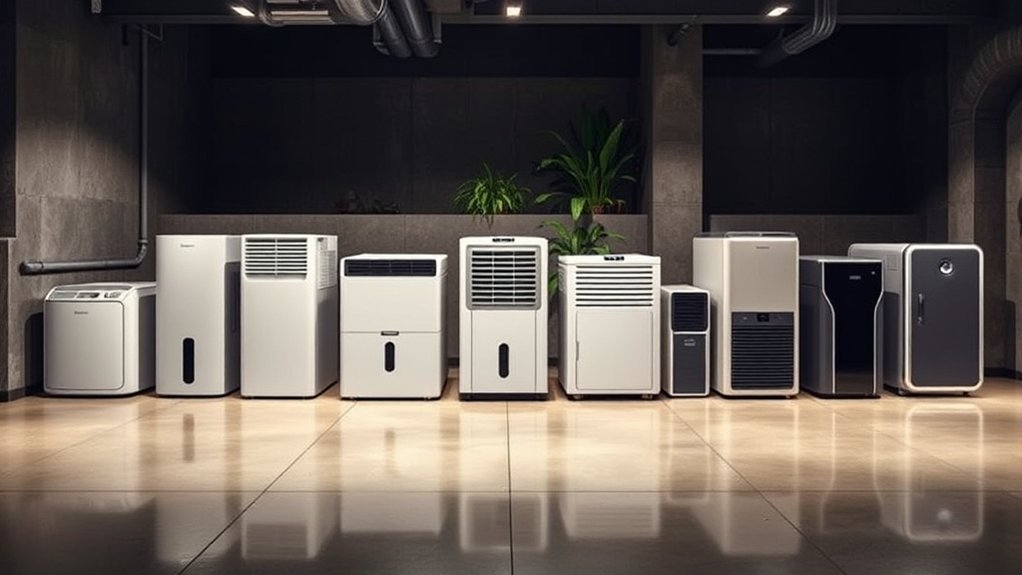
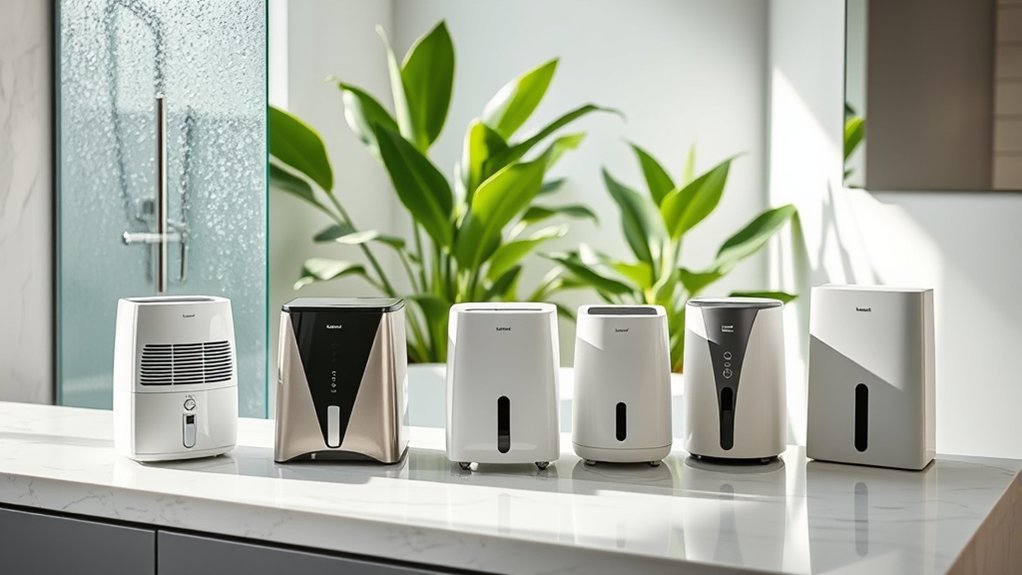
The best dehumidifier for a small basement should have enough moisture-removal capacity for a damp enclosed space—not just a large water tank, colorful lights, or an inflated coverage claim. For most small basements, a compressor dehumidifier rated between 20 and 50 pints per day is a more practical choice than a miniature semiconductor unit.
Among the five suitable models reviewed below, the Midea 22 Pint Energy Star Dehumidifier is the best overall choice for a moderately damp small basement. The VEAGASO 34 Pint offers strong value with an included drain hose, while the AEOCKY 50 Pint is better suited to a basement that stays very damp. Compare capacity, drainage, temperature, noise, and basement conditions before deciding.
Quick Verdict
Best overall: Choose the Midea 22 Pint Energy Star Dehumidifier for a small basement that is slightly or moderately damp.
Best value with a drain hose: The VEAGASO 34 Pint Dehumidifier provides more advertised capacity and includes continuous-drain hardware.
Best for very damp conditions: The AEOCKY 50 Pint Compressor Dehumidifier offers more moisture-removal headroom for persistent basement humidity.
High-capacity option: The AEOCKY 4500 Sq.Ft model may make sense for an open, very wet, or laundry-equipped basement, but it is oversized for many small spaces.
Quick Comparison
| Product | Best For | Advertised Capacity | Drainage | Main Limitation | Amazon |
|---|---|---|---|---|---|
| Midea 22 Pint Energy Star | Moderately damp small basements | 22 pints per day | Bucket or gravity drain; hose may be separate | Small bucket | Check Price |
| VEAGASO 34 Pint | Value and continuous drainage | Up to 34 pints per day | Bucket or included drain hose | Capacity depends on test conditions | Check Price |
| KNKA 34 Pint | Easy controls and multiple modes | Up to 34 pints per day | Bucket or included drain hose | Displayed RH may differ from a separate meter | Check Price |
| AEOCKY 50 Pint | Very damp small basements | Up to 50 pints per day | Bucket or continuous drain | Larger than a basic 20–22 pint unit | Check Price |
| AEOCKY 4500 Sq.Ft | Open, wet, or high-load basements | Up to 80 pints in maximum-condition testing | Bucket or drain hose | Oversized for many small basements | Check Price |
Capacity note: Advertised maximum capacities may be measured in warmer and more humid conditions than a typical basement. Compare models using the same testing standard whenever possible.
Midea 22 Pint Energy Star Dehumidifier (White)
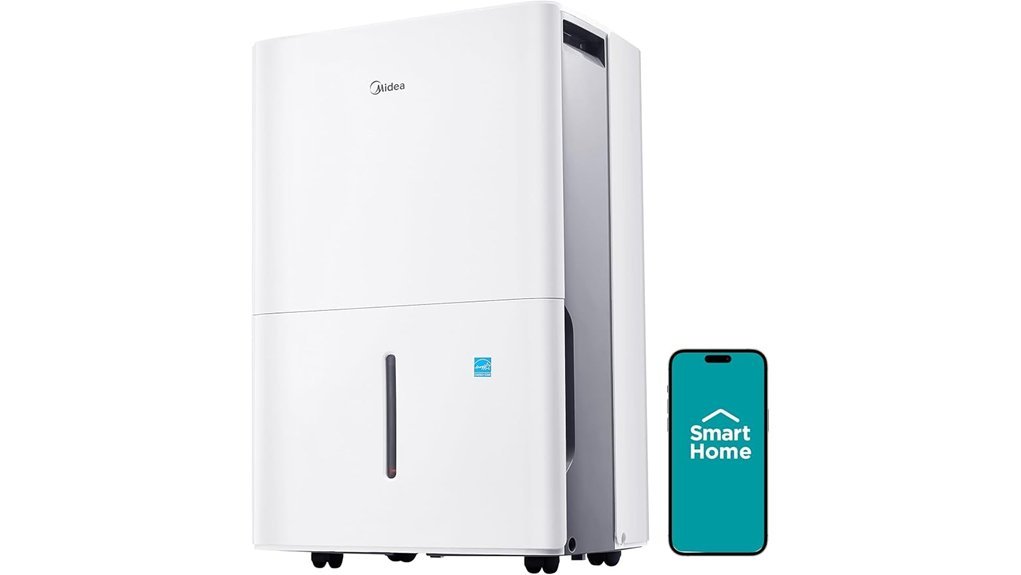
The Midea 22 Pint Energy Star Dehumidifier is the most balanced option for a small basement with moderate humidity. Its 22-pint daily rating sits within the normal range for a small-to-medium space that feels damp or develops an intermittent musty smell.
The unit can collect water in its approximately 0.8-gallon bucket or discharge through a gravity-drain connection. Continuous drainage is the more convenient setup when you have a nearby floor drain, utility sink, or sump area below the outlet height.
Why You’ll Like It
- Appropriate capacity: It is less likely to be excessive for a small basement than a 50-pint or larger unit.
- Automatic controls: Adjustable humidity, automatic shutoff, auto defrost, and auto restart reduce day-to-day attention.
- Portable design: Wheels and carrying handles make repositioning easier.
- Reusable filter: The washable filter avoids frequent replacement-filter purchases.
Who Should Buy This: Homeowners with a small basement that is moderately damp but does not have active water seepage.
Who Should Avoid This: Anyone dealing with consistently wet walls, laundry-related moisture, repeated flooding, or a large open basement may need more capacity.
Pros:
- Useful 22-pint capacity for a small basement.
- Advertised operation around 47 dBA.
- Automatic defrost and restart functions.
- Supports gravity-fed continuous drainage.
Cons:
- The small bucket may need frequent emptying when a hose is not connected.
- A drain hose may need to be purchased separately.
- Gravity drainage requires the hose outlet to remain below the drain connection.
VEAGASO 2500 Sq.Ft Dehumidifier with Drain Hose
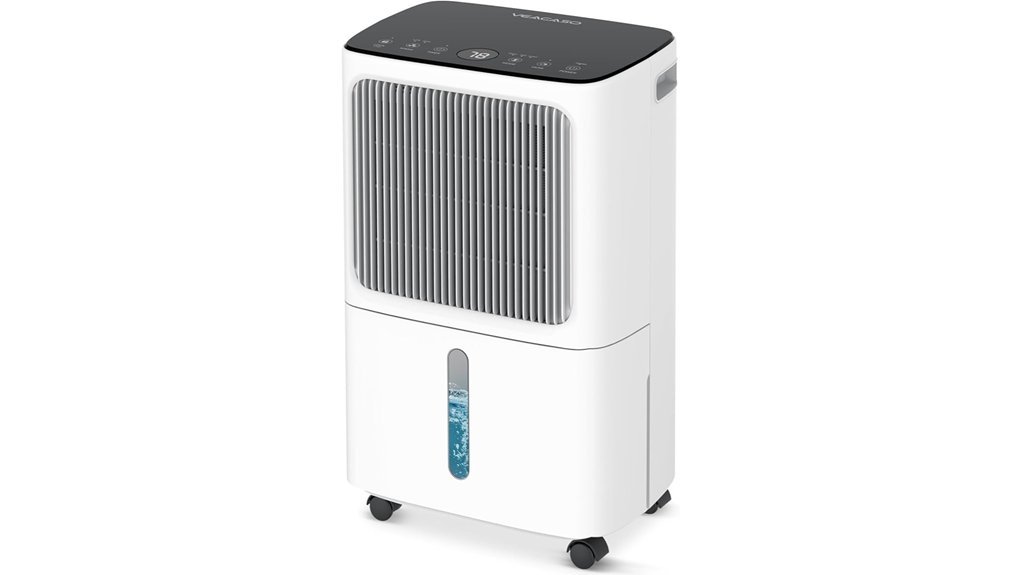
The VEAGASO model is a practical step up when a 22-pint machine may not provide enough moisture-removal headroom. It is advertised to remove up to 34 pints per day under the manufacturer’s stated conditions and includes a drain hose for continuous operation.
Its DEHU, DRY, and CONT modes make it easier to switch between normal humidity management, laundry drying, and uninterrupted operation. The touch controls also let you set a target humidity instead of leaving the compressor running without adjustment.
Why You’ll Like It
- Drain hose included: This reduces the additional setup cost for continuous gravity drainage.
- Three operating modes: Useful when the basement also contains a laundry area.
- Portable: Casters help when you need to clean behind the unit or move it closer to a drain.
- Washable filter: Routine maintenance is straightforward.
Who Should Buy This: Buyers who want more capacity than a basic 22-pint unit and prefer an included drain hose.
Who Should Avoid This: Buyers who need a built-in condensate pump. The included hose supports gravity drainage and cannot push water upward.
Pros:
- Advertised maximum capacity of 34 pints per day.
- Includes a continuous-drain hose.
- Multiple operating modes and a 24-hour timer.
- Automatic shutoff helps prevent bucket overflow.
Cons:
- Real basement extraction may be lower than the maximum-condition rating.
- The bucket still requires emptying when continuous drainage is not used.
- The filter needs periodic cleaning to maintain airflow.
KNKA 2500 Sq.Ft Dehumidifier with Drain Hose
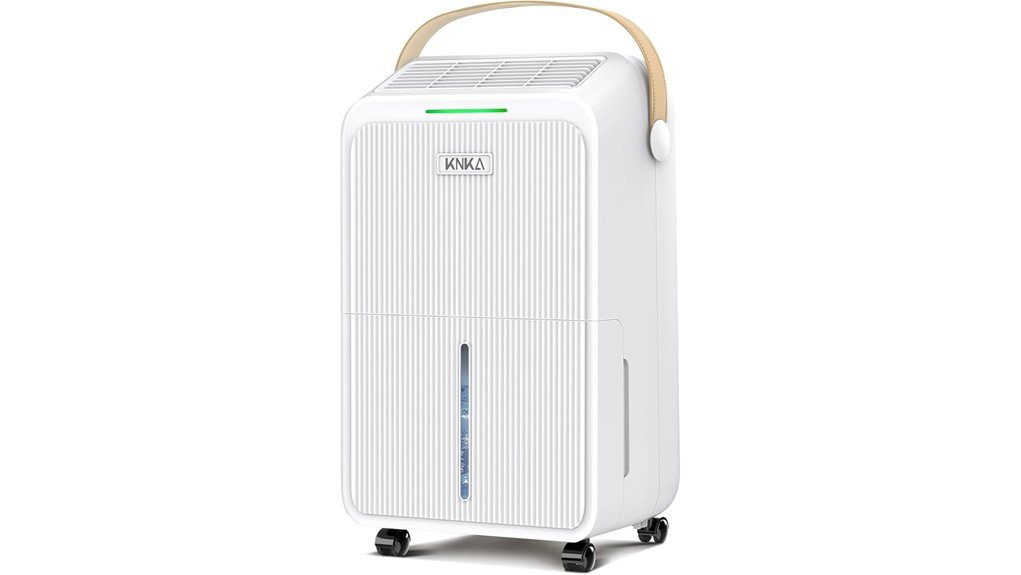
The KNKA 2500 Sq.Ft Dehumidifier is another suitable 34-pint-class option for a small basement that remains noticeably damp. Its control panel offers DEHU, DRY, and CONT modes, along with an adjustable humidistat, timer, automatic defrost, and a color-changing humidity indicator.
Both bucket collection and continuous gravity drainage are supported. The included hose is convenient, although you still need a suitable drain below the height of the outlet.
Why You’ll Like It
- Clear humidity indicator: The display makes changing conditions easier to notice at a glance.
- Automatic defrost: Helpful in a cool basement where frost could otherwise reduce compressor performance.
- Child lock: Useful when the basement is also a playroom or family area.
- Continuous mode: Provides uninterrupted operation during high-humidity periods.
Who Should Buy This: Homeowners who value adjustable controls, an included drain hose, and visible humidity feedback.
Who Should Avoid This: Buyers who require laboratory-level humidity accuracy should use a separate hygrometer to confirm the displayed reading.
Pros:
- Advertised maximum extraction of 34 pints per day.
- Includes a drain hose and removable water tank.
- Automatic defrost, shutoff, timer, and restart-related convenience features.
- Washable filter and rolling casters.
Cons:
- Advertised coverage should not replace capacity-based sizing.
- Humidity readings may differ slightly from a separate meter.
- Continuous drainage depends on a correctly sloped hose.
AEOCKY 50 Pint Compressor Dehumidifier for Home
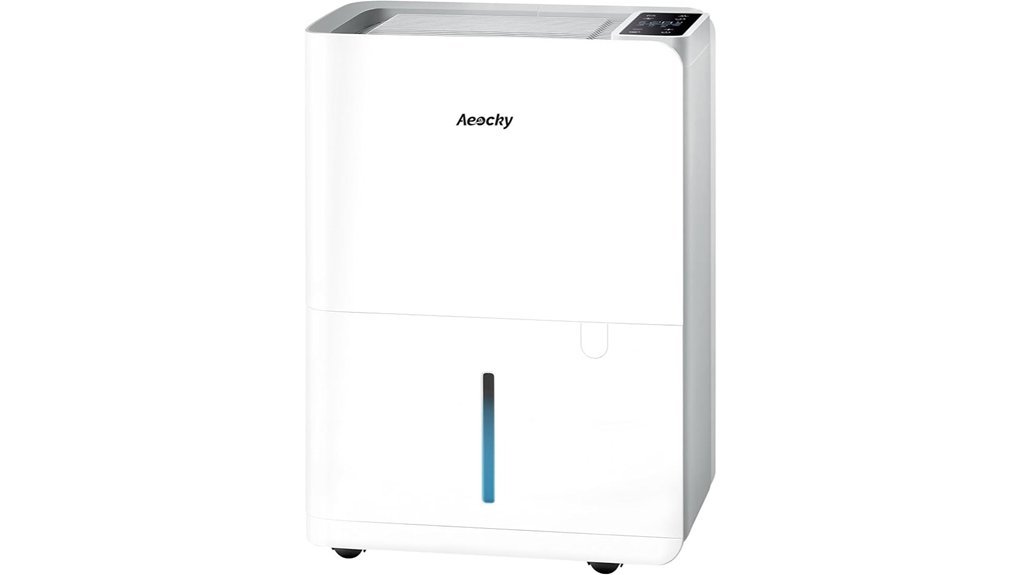
The AEOCKY 50 Pint Compressor Dehumidifier is better suited to a very damp small basement, a basement laundry area, or a space that needs faster humidity recovery after doors or windows have been opened.
It is marketed to remove up to 50 pints per day in hot, highly humid conditions, with a lower extraction figure under milder manufacturer-stated conditions. That distinction matters because a cool basement normally contains less removable water than hot summer air.
Why You’ll Like It
- Extra capacity: Provides more moisture-removal headroom than a 20- or 22-pint model.
- Humidistat control: Allows the unit to cycle instead of operating continuously after the target is reached.
- Flexible drainage: Supports tank collection and continuous drainage.
- Suitable for demanding conditions: A stronger match for persistent dampness or laundry moisture.
Who Should Buy This: Homeowners whose small basement consistently feels damp, smells musty, or returns quickly to high humidity after a smaller unit cycles off.
Who Should Avoid This: It may be unnecessary for a dry, finished basement with only occasional seasonal humidity.
Pros:
- Marketed maximum capacity of 50 pints per day.
- More suitable for very damp conditions than miniature or 20-pint-class models.
- Adjustable humidity control and drainage choices.
- Transparent tank design helps with water-level monitoring.
Cons:
- Larger footprint than a basic small-basement model.
- Maximum-condition performance should not be treated as guaranteed basement output.
- Continuous drainage requires correct hose placement.
AEOCKY 4500 Sq.Ft Energy Star Dehumidifier
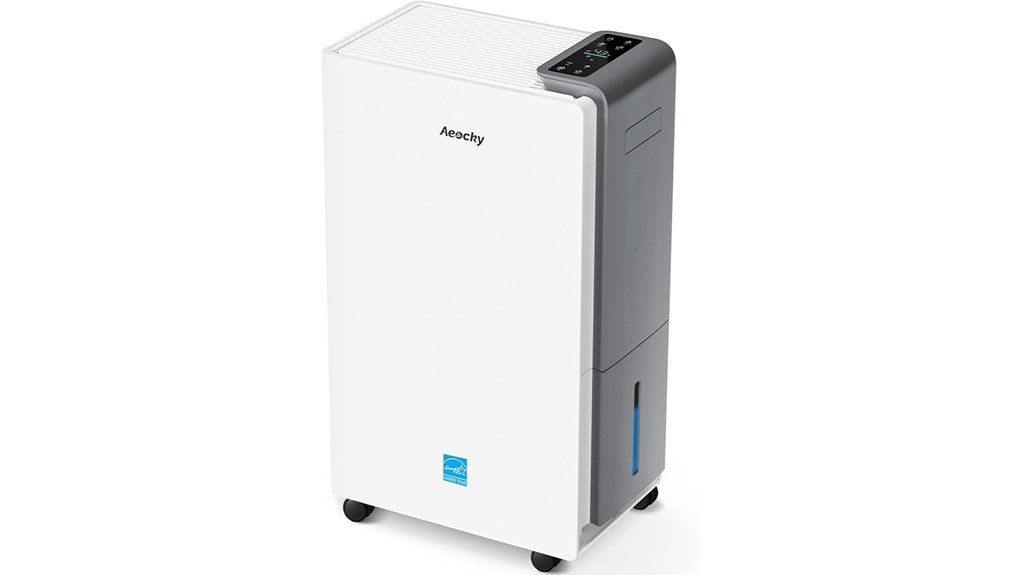
The AEOCKY 4500 Sq.Ft model is the highest-capacity option in this guide. It is marketed for large spaces and for extraction of up to 80 pints per day under maximum hot-and-humid conditions. Its standard-condition capacity may be lower, so buyers should compare the current listing’s test figures carefully.
This model is not the automatic best choice simply because it has the largest number. It makes the most sense when a small basement is exceptionally wet, contains an active laundry area, opens into connected rooms, or needs rapid moisture recovery. A less powerful model will usually be easier to justify in a mildly damp basement.
Why You’ll Like It
- High moisture-removal headroom: Useful for challenging basement conditions.
- Automatic humidity control: Helps prevent unnecessary continuous operation after reaching the selected level.
- Drainage flexibility: Supports hands-free draining when connected correctly.
- Low-temperature design features: Intended to maintain operation in cooler environments with automatic frost management.
Who Should Buy This: Buyers with a wet, open-plan, high-load, or laundry-equipped basement who need more capacity than a standard small-space unit.
Who Should Avoid This: It is likely oversized for a mildly damp, finished basement where a 20- to 34-pint unit can maintain the target humidity.
Pros:
- Highest advertised moisture-removal capacity in this guide.
- Designed for basement and large-room use.
- Smart humidistat and automatic defrost features.
- Continuous-drain capability.
Cons:
- May use more space and power than necessary in a mildly damp small basement.
- The maximum 80-pint figure reflects demanding test conditions rather than every basement environment.
- Higher initial cost than smaller-capacity models.
How to Choose a Dehumidifier for a Small Basement
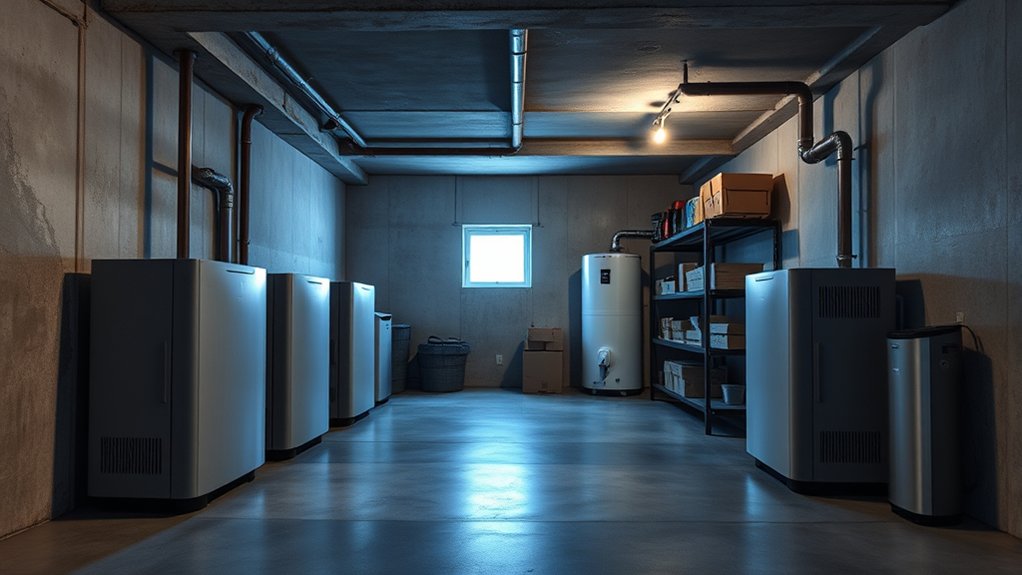
Square footage is only one part of proper sizing. A 500-square-foot basement with wet walls can need more capacity than a 1,000-square-foot finished basement that is only slightly humid. Start with the actual moisture condition, then consider temperature, drainage, noise, and available floor space.
Match Capacity to the Basement’s Dampness
| Basement Condition | Common Signs | General Capacity Range for a Space Under 2,000 Sq.Ft. |
|---|---|---|
| Slightly to moderately damp | Occasional musty smell or humidity around 50%–75% | About 20–30 pints per day |
| Very damp | Persistent odor or damp spots on walls and floors | About 25–40 pints per day |
| Wet or high-load | Sweating surfaces, seepage, or indoor laundry drying | About 30–50 pints per day |
It is usually safer to choose slightly more capacity than too little, especially when humidity rises quickly after the compressor stops. However, an extremely oversized unit can cost more, occupy more room, and provide little practical benefit in a mildly damp space.
Understand Capacity Test Conditions
A pint-per-day rating represents moisture removed during a defined 24-hour test. Some listings emphasize a maximum result measured in very warm, humid air, while other ratings use cooler conditions that more closely resemble a basement. Do not assume that a model advertised at 50 or 80 pints will collect that amount every day in your home.
Choose the Right Drainage Method
Manual bucket drainage works when you can check the basement every day. The machine should stop automatically when the bucket is full, but dehumidification will remain paused until the bucket is emptied.
Continuous gravity drainage is usually better for a basement. The hose must slope downward without loops, kinks, or an uphill section. A gravity-drain model cannot push water up into a sink or through a window.
Pump drainage is needed when the water must travel upward or across a long distance. None of the retained products should be assumed to include an internal pump unless the current listing explicitly says so.
Consider Basement Temperature
Compressor dehumidifiers can lose efficiency as the room gets colder. Automatic defrost helps protect the coils, but it does not make every unit equally effective near freezing. Check the manufacturer’s operating-temperature range when your basement regularly falls below about 65°F.
Set a Sensible Humidity Target
A practical starting target is around 45%–50% relative humidity. Keeping indoor humidity below 60% helps reduce the conditions that support mold growth, but lowering it excessively can waste electricity and may make the space uncomfortable.
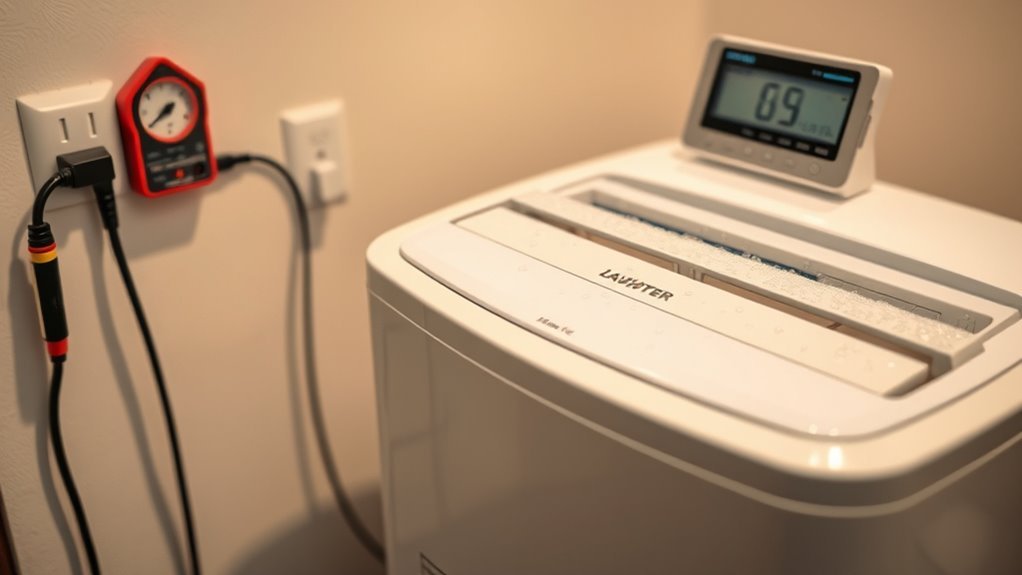
Use a separate hygrometer several feet from the machine to confirm the room reading. The sensor inside a dehumidifier can read differently because it is close to the unit’s intake and dry exhaust air.
Check Noise and Placement
Place the dehumidifier on a stable, level surface with the airflow clear. Follow the manufacturer’s clearance instructions rather than pushing it tightly against a wall. Compressor models will be more audible than tiny semiconductor units, but the extra capacity is normally necessary for meaningful basement humidity control.
Compare Energy Efficiency
Look for current ENERGY STAR certification and compare the Integrated Energy Factor when available. A more efficient unit removes more water for each unit of electricity consumed. Avoid assuming that a large square-footage claim automatically means better efficiency.
Before You Buy Checklist
- Measure the basement’s finished and connected open area.
- Check the current relative humidity with a separate hygrometer.
- Classify the basement as moderately damp, very damp, or wet.
- Confirm whether the listed pint rating uses current standard conditions or maximum conditions.
- Decide whether you will empty a bucket or use continuous drainage.
- Verify whether a drain hose is included.
- Check whether the drain is lower than the unit’s hose outlet.
- Confirm the operating-temperature range for a cool basement.
- Look for automatic defrost, automatic shutoff, and power-loss restart.
- Make sure the filter and water bucket are easy to remove and clean.
Frequently Asked Questions
How Do I Determine the Right Size Dehumidifier for My Basement?
Measure the area, check the current relative humidity, and evaluate whether the space is slightly damp, very damp, or wet. A small basement that is moderately damp may need roughly 20–30 pints per day, while a wet basement or laundry area may need 30–50 pints. Choose based on moisture load rather than square footage alone.
Is a Mini Dehumidifier Enough for a Small Basement?
Usually not. Many miniature semiconductor dehumidifiers remove only a few ounces or a few pints per day under ideal conditions. They may help in a closet, cabinet, RV, or tiny bathroom, but a damp basement normally needs a compressor model with a recognized pint-per-day capacity.
Should I Use Continuous Drainage in a Basement?
Continuous drainage is useful when a suitable floor drain, utility sink, or sump area is available below the dehumidifier’s drain outlet. Keep the hose sloping downward and check it periodically for clogs, kinks, or algae buildup.
What Maintenance Is Required for a Dehumidifier?
Clean the air filter according to the manual, inspect the intake and exhaust for dust, rinse and dry the bucket, and check the drain hose for blockage. Unplug the unit before cleaning and do not spray water into the electrical or compressor area.
Can a Dehumidifier Help With Mold Prevention?
It can help by lowering the humidity that supports mold growth. It does not remove established mold or fix the leak, seepage, or condensation problem that created the moisture. Correct water sources and dry wet materials promptly.
What Humidity Should I Use in a Basement?
A setting around 45%–50% RH is a practical starting point for many basements. Try to keep humidity below 60%, then adjust the setting based on comfort, condensation, weather, and how often the compressor runs.
Why Does My Dehumidifier Collect Less Water Than Advertised?
Extraction changes with room temperature, humidity, airflow, filter condition, and test standard. Warm, very humid air contains more removable moisture than cool basement air, so real collection can be lower than a listing’s maximum figure.
Does a Gravity Drain Hose Pump Water Upward?
No. A standard gravity connection needs a continuous downward slope. Choose a model with an internal pump or add a compatible condensate pump when the discharge point is higher than the dehumidifier.
Final Recommendation
Choose the Midea 22 Pint for the best balance of capacity, portability, and efficiency in a moderately damp small basement.
Choose the VEAGASO 34 Pint when you want more extraction capacity and an included gravity-drain hose.
Choose the KNKA 34 Pint when adjustable modes, visible humidity feedback, and control features matter most.
Choose the AEOCKY 50 Pint for a very damp small basement, frequent laundry moisture, or faster recovery.
Choose the AEOCKY 4500 Sq.Ft model only when the basement has an unusually high moisture load or connects to a much larger open area. For many small basements, the Midea 22 Pint or one of the 34-pint models will be the more proportionate purchase.

[…] basement use, plug directly into a grounded outlet, avoid extension cords, and aim for indoor humidity near 30% […]