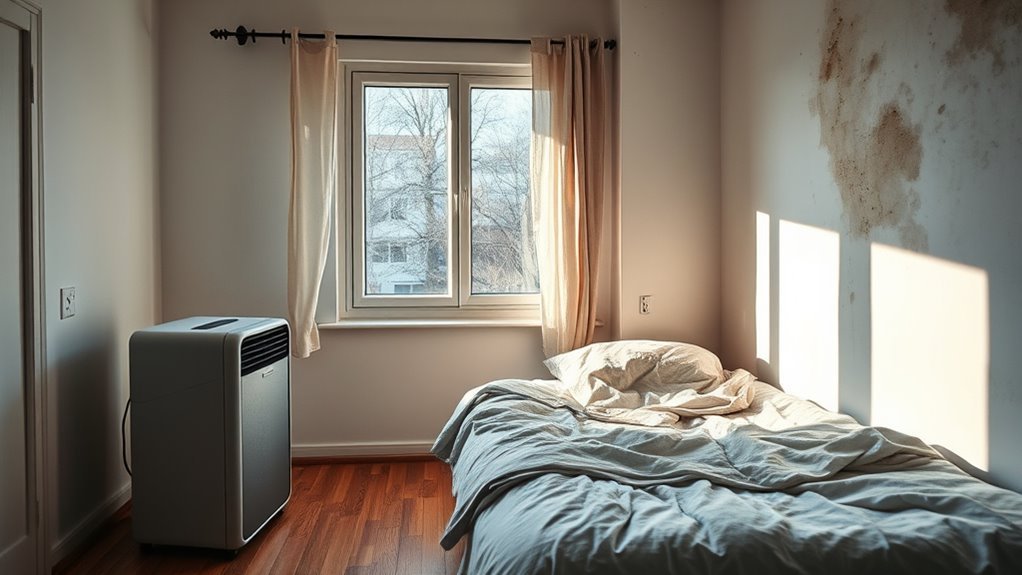
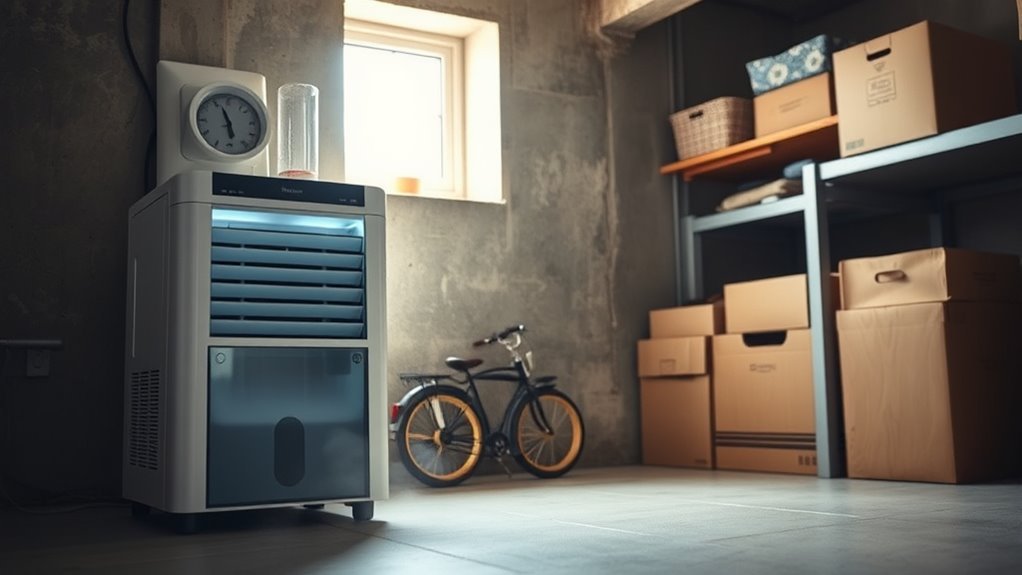
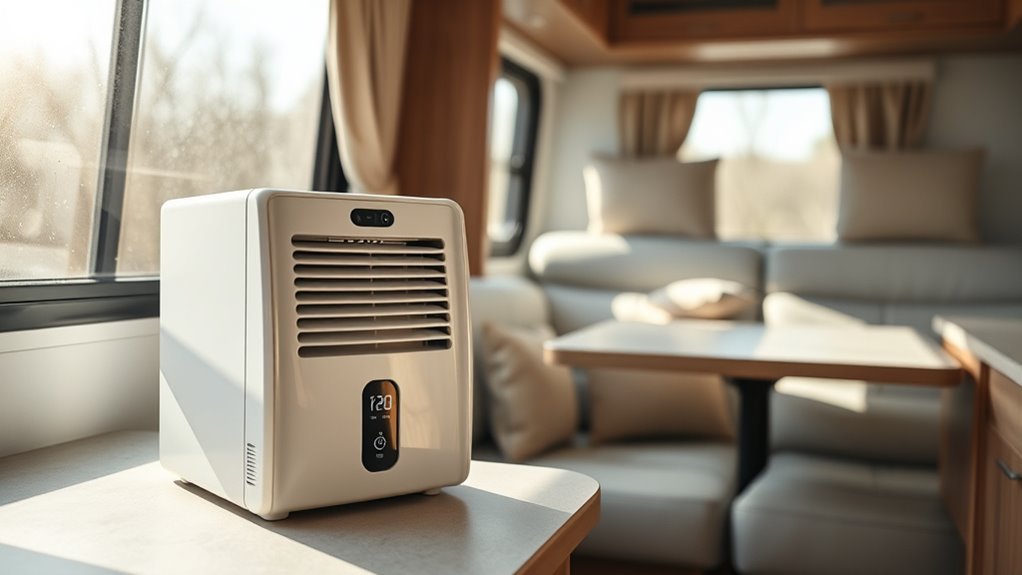
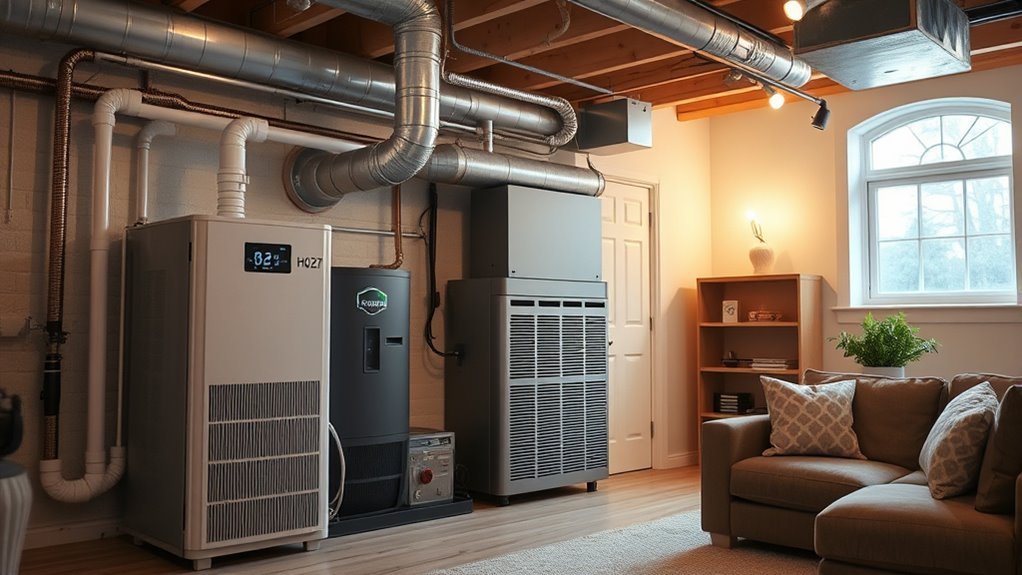
The best dehumidifier for a grow tent depends on the amount of water your plants release, the tent or grow-room size, temperature, ventilation, and drainage access. For dedicated grow-tent control, the VIVOSUN AeroDrain D12 stands out for its smart monitoring, external probe, and flexible drainage. The MARS HYDRO 18L/Day is a stronger ducted option for faster humidity buildup, while the AEOCKY 50 Pint is better suited to a larger grow room, lung room, or outside-tent setup.
Quick verdict: Choose a compressor dehumidifier when humidity climbs after watering, during lights-off periods, or as the canopy becomes denser. Give more weight to tested moisture-removal conditions, drainage, heat output, and sensor placement than to a broad square-foot claim.
Selection note: These picks are compared by grow-tent relevance, stated extraction capacity, humidity controls, drainage, placement options, heat management, maintenance, and portability. Actual performance will change with temperature, relative humidity, airflow, and plant transpiration.
Key takeaways:
- Best overall: VIVOSUN AeroDrain D12 for smart grow-tent monitoring and flexible setup.
- Best ducted high-capacity option: MARS HYDRO 18L/Day for faster moisture buildup and outside-tent placement.
- Best for a grow room or lung room: AEOCKY 50 Pint for conditioning the larger room that supplies air to one or more tents.
- Plan continuous drainage whenever the unit may run overnight or while you are away.
Quick Comparison of Grow Tent Dehumidifiers
| Product | Best For | Stated Maximum Removal | Drainage | Amazon |
|---|---|---|---|---|
| VIVOSUN AeroDrain D12 Best Overall |
Smart grow-tent control, canopy-level sensing, and flexible placement | Up to 12L/day at stated test conditions | Tank or continuous drain | Check Price on Amazon |
| MARS HYDRO 18L/Day Best Ducted High-Capacity Pick |
Faster humidity buildup and outside-tent ducted placement | Up to 18L/day at stated test conditions | Tank or drain hose | Check Current Amazon Availability |
| AEOCKY 50 Pint Best for Large Grow Rooms |
Room-scale control, lung rooms, or outside-tent operation | Up to 50 pints/day in very warm, humid test conditions | Tank or continuous drain | Check Product Details on Amazon |
Capacity note: A maximum liters-per-day or pints-per-day number is not the same as tank size, and it is not a guaranteed result in every grow space. Cooler or less-humid air can reduce daily extraction substantially.
VIVOSUN AeroDrain D12 Smart Dehumidifier for Grow Tents
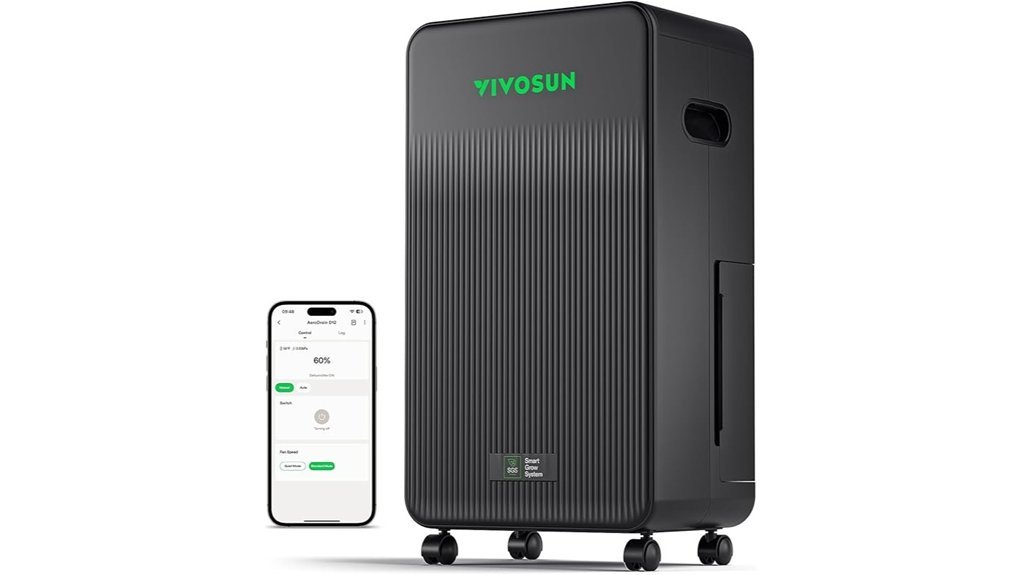
Best Overall: The VIVOSUN AeroDrain D12 is the most complete grow-tent-focused option in this list. Its compressor system is rated to remove up to 12 liters of moisture per day under warm, humid test conditions. The external temperature and humidity probe helps you measure conditions closer to the plant canopy instead of relying only on a sensor near the floor.
Why You’ll Like It: App integration supports remote monitoring and automation with compatible VIVOSUN equipment. The unit also supports tank collection and continuous drainage, while its grow-focused duct accessories give you more freedom to manage placement and warm exhaust air.
Who Should Buy This: Growers who want smart controls, canopy-level sensing, flexible placement, and a unit built around small to medium grow spaces.
Who Should Avoid This: Buyers who do not need connected features, cannot maintain clear airflow around the unit, or have no reliable way to manage collected water during long run times.
Pros:
- Smart app control and grow-system integration.
- External probe helps measure temperature, humidity, and vapor pressure deficit near the canopy.
- Tank, continuous-drain, and ducted setup options support different layouts.
- Automatic restart can help restore operation after a power interruption.
Cons:
- The roughly 2-liter tank can fill quickly under a heavy moisture load.
- Full smart functionality depends on a stable Wi-Fi connection.
- Maximum extraction falls as temperature and relative humidity decrease.
- The compressor and refrigerant system require proper clearance and careful handling.
MARS HYDRO 18L/Day Compressor Dehumidifier
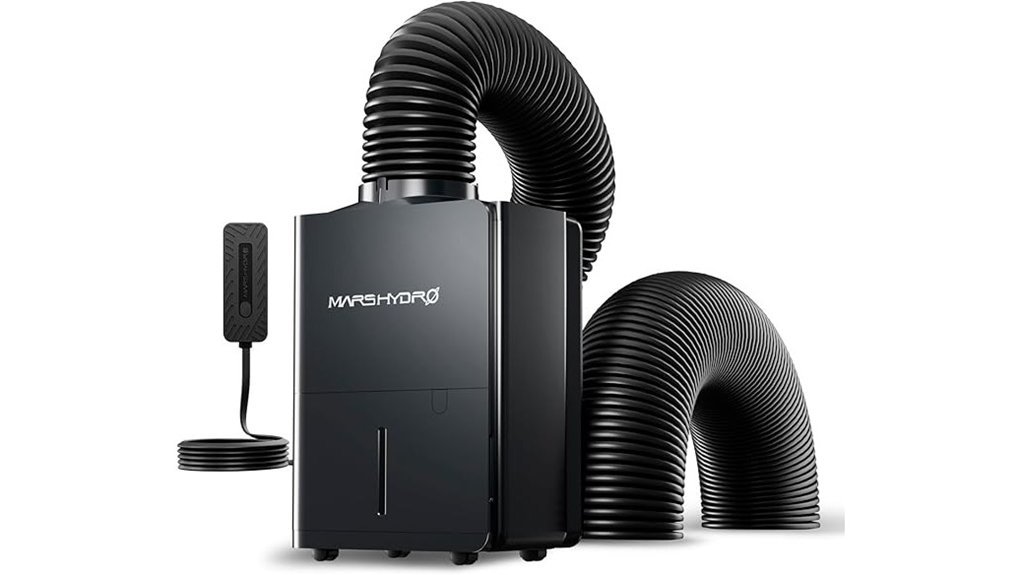
Best Ducted High-Capacity Grow-Tent Pick: The MARS HYDRO 18L/Day Compressor Dehumidifier is presented as a grow-tent-oriented model. Its air-duct setup can let the main unit sit outside the tent while air is routed through the enclosure, helping preserve floor space and giving you more control over compressor heat.
Why You’ll Like It: The listing describes a digital humidity display, adjustable target humidity, drain hose, washable filter, and a stated maximum removal rate of up to 18 liters or about 38 pints per day under favorable test conditions.
Who Should Buy This: Growers with fast humidity buildup who need more extraction than a light-duty unit and have a practical path for both ducting and drainage.
Who Should Avoid This: Buyers with a very small moisture load, little room around the tent, or no safe route for the duct and drain hose.
Pros:
- Grow-tent-oriented ducting supports outside-tent placement.
- Higher stated extraction capacity for demanding conditions.
- Adjustable humidity control can reduce unnecessary continuous running.
- Washable filter and continuous drainage can reduce routine upkeep.
Cons:
- The 2.1-liter tank may require frequent emptying without a drain hose.
- At about 29 pounds, it is less convenient to move than a compact unit.
- A compressor dehumidifier adds heat and needs unobstructed airflow.
- The maximum rating should be treated as a test-condition figure, not an everyday guarantee.
AEOCKY 50 Pint Compressor Dehumidifier for Grow Rooms
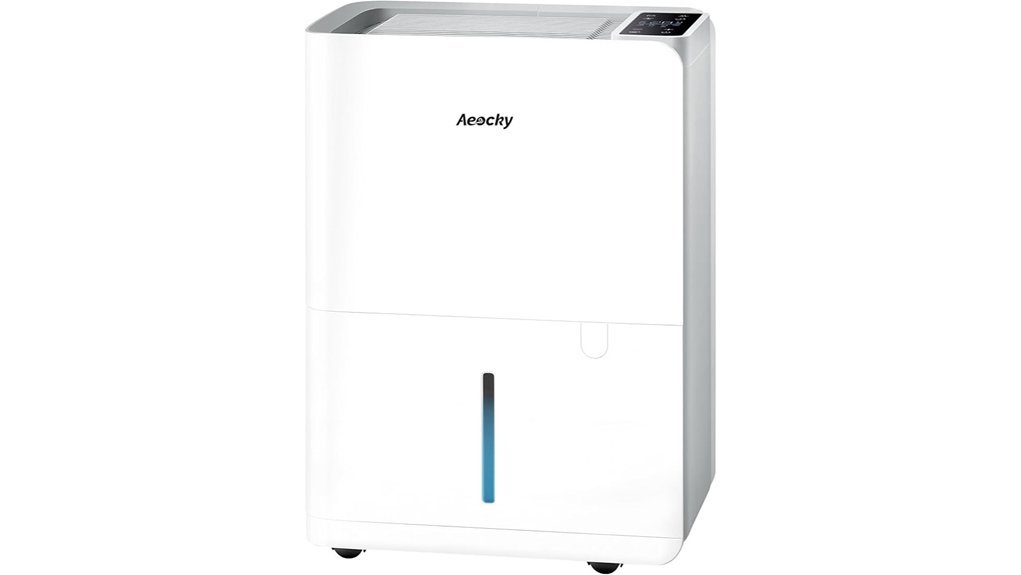
Best for Large Grow Rooms: The AEOCKY 50 Pint is a room-scale compressor dehumidifier rather than a tent-specific model. It is a better fit for a larger indoor garden, lung room, or outside-tent setup where the room air is exchanged with one or more tents.
Why You’ll Like It: It offers adjustable humidity control, automatic defrost, caster wheels, tank collection, and continuous gravity drainage. The manufacturer states a maximum of 50 pints per day at very warm, highly humid conditions and a lower output under more typical warm-humid test conditions, which is a useful reminder to size the unit for the real environment.
Who Should Buy This: Growers controlling humidity across a larger room or several tents that share the same conditioned air.
Who Should Avoid This: Growers who need a compact in-tent appliance, have weak air exchange between the tent and room, or may oversize the system for a very small enclosure.
Pros:
- High-capacity compressor design for room-scale humidity control.
- Continuous drainage supports longer unattended operation.
- Adjustable humidistat and automatic cycling help maintain a set range.
- Casters make room-to-room movement easier.
Cons:
- Not specifically designed around grow-tent ducting or canopy sensors.
- Compressor noise and heat may be noticeable in a small room.
- The tank can still fill quickly if continuous drainage is not used.
- It requires filter, tank, and drain-path maintenance for reliable operation.
Factors to Consider When Choosing a Dehumidifier for a Grow Tent
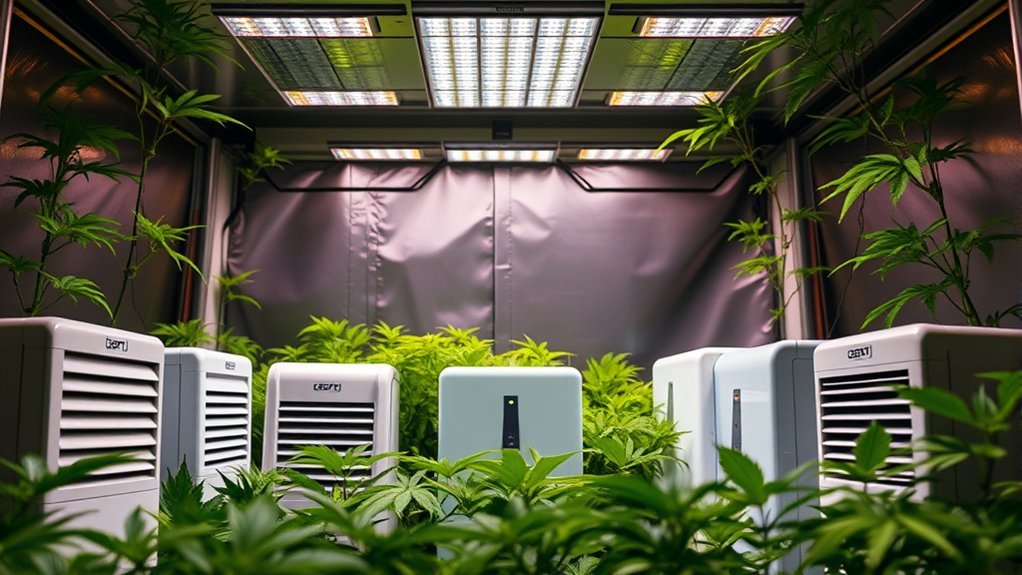
A grow tent creates a small but active climate. Plant count, watering volume, canopy size, lights-off temperature, ventilation, and room humidity can matter more than floor area. Use the points below to choose a unit that can hold a stable target without running nonstop.
1. Match Capacity to the Moisture Load
Do not choose only by an advertised square-foot number. Compare the stated liters or pints removed per day and check the temperature and humidity used for that rating. A dense canopy, frequent watering, recirculating hydroponic system, or limited exhaust can create much more moisture than a lightly planted tent of the same size.
2. Choose the Right Dehumidifier Type
Compressor dehumidifiers usually provide the extraction needed for flowering tents, drying spaces, larger rooms, and quick humidity spikes. Small semiconductor models can be quieter and easier to place, but they are generally better for mild moisture rather than a heavily planted enclosure.
3. Check the Humidistat and Sensor Location
Look for an adjustable humidistat, automatic cycling, and a clear display. A remote probe is useful because humidity near the canopy may differ from the reading at floor level or outside the tent. Keep the sensor away from direct mist, wet leaves, and the dehumidifier outlet.
4. Plan for Heat and Placement
Dehumidifiers release heat while they run. In a small tent, that heat can raise the temperature and make the ventilation or air-conditioning system work harder. A ducted model or outside-tent setup may be easier to manage, but only when air can move freely between the tent and conditioned room.
5. Plan Continuous Drainage
A built-in tank is simple, but it may fill during the night or while you are away. Continuous drainage is more dependable for a high moisture load. Check that the hose can slope toward a drain without kinks. When gravity drainage is impossible, use only a compatible condensate pump installed according to its instructions.
6. Check Size, Clearance, Noise, and Mobility
Measure the actual unit and leave the clearance required by the manufacturer. Check the handle, caster wheels, duct connections, drain outlet, and whether you can remove the tank and filter without moving other grow equipment.
7. Compare Capacity With Power Use
Do not select the lowest-watt unit automatically. A small machine that runs continuously may use energy without controlling humidity well. A correctly sized compressor model may reach the target sooner and cycle off, but real energy use depends on the environment and control settings.
8. Maintain the Unit and Protect Electrical Equipment
Clean the filter and air openings, wash the tank, inspect the drain hose, and keep the unit upright on a level surface. Do not block the inlet or outlet, aim warm dry air directly at leaves, or place plugs and electrical connections where irrigation water can reach them. Follow the manufacturer’s refrigerant, clearance, storage, and service warnings.
Before you buy:
- Record the highest humidity after watering and during lights-off periods.
- Measure the available floor space and required airflow clearance.
- Decide whether the dehumidifier will sit inside the tent, outside it, or in a shared lung room.
- Plan where collected water will drain and how the hose will maintain a downward slope.
- Confirm the unit’s voltage, operating temperature range, and restart behavior.
- Plan for the extra heat a compressor model may add.
Frequently Asked Questions
How Do I Maintain My Dehumidifier for Optimal Performance?
Clean the filter and vents regularly, wash and dry the reservoir, inspect the drain hose for clogs, and keep the unit level with clear airflow around it. The correct schedule depends on dust, plant debris, mineral buildup, and how often the machine runs.
Can a Dehumidifier Affect Plant Growth?
Yes. Good humidity control can reduce condensation and excess moisture, but over-drying can stress plants and increase water demand. Avoid directing the outlet at the canopy, and use a separate hygrometer or probe to confirm conditions where the plants are growing.
What Is the Ideal Humidity Level for a Grow Tent?
There is no single target for every crop, cultivar, or growth stage. Young plants may tolerate more humidity, while dense mature canopies often need drier air and stronger circulation. Follow crop-specific guidance and measure relative humidity near the canopy instead of relying only on the dehumidifier display.
Should the Dehumidifier Go Inside or Outside the Grow Tent?
Inside placement provides direct control but uses valuable space and adds heat. Outside placement can work well when the tent exchanges enough air with the room. Ducted models provide more flexibility, but the duct layout must avoid sharp bends and restricted airflow.
How Large a Dehumidifier Do I Need?
Choose by the actual moisture load, not just tent dimensions. Track humidity after watering and when the lights turn off. If humidity rises sharply or stays above the target for long periods, choose a compressor unit with enough reserve to cycle rather than run nonstop.
Can a Small Semiconductor Dehumidifier Handle a Grow Tent?
It may help with a lightly planted enclosure and a small humidity problem, but it is usually not the best choice for a dense canopy, rapid lights-off spikes, or a drying space. Compare its real extraction rate with your moisture load instead of relying on the advertised room-coverage number.
How Often Should I Empty the Water Reservoir?
Check it daily when first setting up the system. The tank may fill faster during humid weather or later growth. For unattended use, a correctly installed continuous drain is more reliable than depending on the tank and automatic shutoff.
Conclusion
For buyers who want dedicated grow-tent controls, the VIVOSUN AeroDrain D12 is the best overall fit because it combines smart monitoring, an external probe, duct flexibility, and two drainage methods. The MARS HYDRO 18L/Day is the stronger option when humidity rises quickly and outside-tent ducted placement is useful. Choose the AEOCKY 50 Pint when you need to condition a larger grow room, lung room, or shared space around several tents.
Final recommendation: Start with the smallest compressor unit that can hold the target humidity without running continuously. Give extra weight to drainage, heat management, airflow, and canopy-level sensing because these details usually matter more than a broad room-size claim.