Affiliate disclosure: As an Amazon Associate, this site may earn from qualifying purchases. Product details can change, so always confirm size, capacity, drainage options, and compatibility on Amazon before buying.
Quick Verdict: If you’re dialing in a grow tent in 2026, the best AC dehumidifiers are the ones that match your tent size, remove moisture steadily, and make drainage easy. The AC Infinity HYDRONE 7 is a strong smart pick for tent-focused control, while the VIVOSUN AeroDrain D12, Spider Farmer 38-Pint, MARS HYDRO 18L/Day, and VIVOSUN 10L/D stand out for growers who want automation, app control, or tent-friendly setup. Larger models like the AEOCKY 4500 Sq Ft, Vellgoo Max 64 Pint, Frigidaire 50 Pint WiFi, and Waykar 34 Pints are better when your grow room, lung room, basement, or surrounding space needs stronger moisture control.
The key is simple: choose enough capacity to control humidity without over-drying your plants, then look for quiet operation, accurate humidity control, continuous drainage, and smart automation if you want less daily checking.
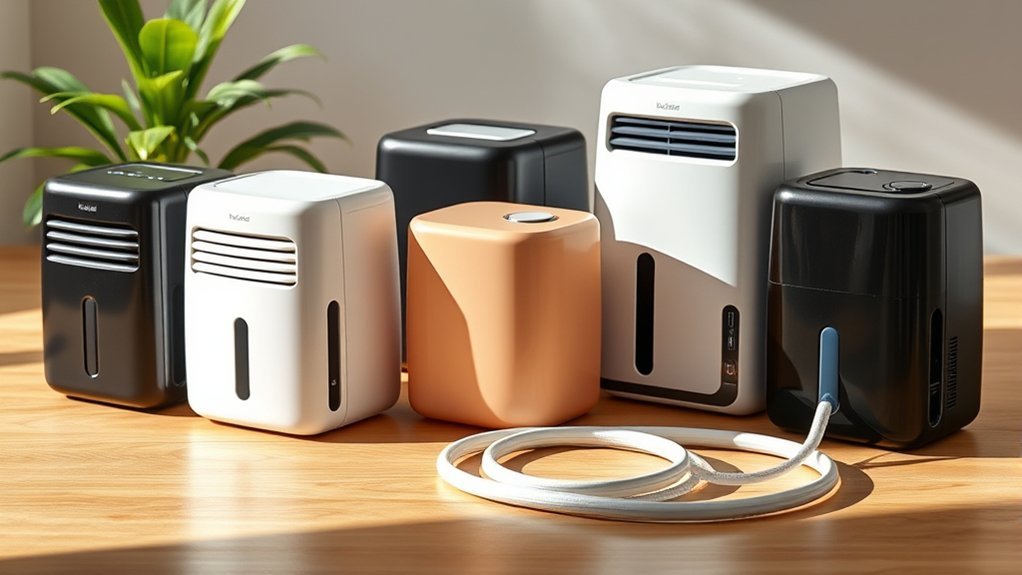
If you’re dialing in a grow tent in 2026, the best AC dehumidifiers for grow tents include the AC Infinity HYDRONE 7, Stropum Automatic Mini, PLUSCENT 32 Pint, Frigidaire 50 Pint WiFi, VIVOSUN 10L/D, VIVOSUN AeroDrain D12, Spider Farmer 38-Pint, and MARS HYDRO 18L/Day units. You’ll want quiet operation, accurate humidity control, easy drainage, and enough capacity for your tent, lung room, or surrounding grow space. Match capacity to your real moisture load so you don’t over-dry seedlings, stress flowering plants, or create mold-friendly spikes. Keep going, and you’ll see which model fits your setup best.
| Product | Best For | Key Strength | Amazon |
|---|---|---|---|
| AC Infinity HYDRONE 7 | Smart grow tents up to 8×8 ft | AI humidity and VPD control | Check Price |
| Automatic Mini Dehumidifier | Small tents, closets, cabinets | Compact set-point control | Check Price |
| PLUSCENT 32 Pint | Medium grow areas and basements | Quiet 32-pint moisture removal | Check Price |
| Frigidaire 50 Pint WiFi | Large humid rooms | Remote humidity control | Check Price |
| VIVOSUN Dual-Stage Controller | Automating humidifier and dehumidifier | Dual-stage humidity switching | Check Price |
| Vellgoo Max 64 Pint | Large rooms and lung rooms | High capacity with drainage choices | Check Price |
| Midea 22 Pint | Quiet medium spaces | Smart app and voice control | Check Price |
| LAVTAIOA HSCS-380 | Small targeted control | Temp and humidity display | Check Price |
| VIVOSUN AeroDrain D12 | Tent setups up to 5×5 ft | App automation and 12L/day removal | Check Price |
| Spider Farmer 38-Pint | Low-heat tent moisture control | Sensor probe and duct placement | Check Price |
| AEOCKY 4500 Sq Ft with Pump | Large spaces with auto drainage | Built-in pump and high capacity | Check Price |
| Waykar 34 Pints | Larger tents and humid rooms | Adjustable RH and steady drainage | Check Price |
| 4500 Sq. Ft Dehumidifier with Drain Hose | Large moisture-heavy spaces | Quiet operation and drain hose | Check Price |
| VIVOSUN 10L/D WiFi | Quiet smart control | Tuya WiFi and low noise | Check Price |
| MARS HYDRO 18L/Day | 3×3, 2×4, and 4×4 tents | Digital control and drain hose | Check Price |
AC Infinity HYDRONE 7 Smart Plant Dehumidifier
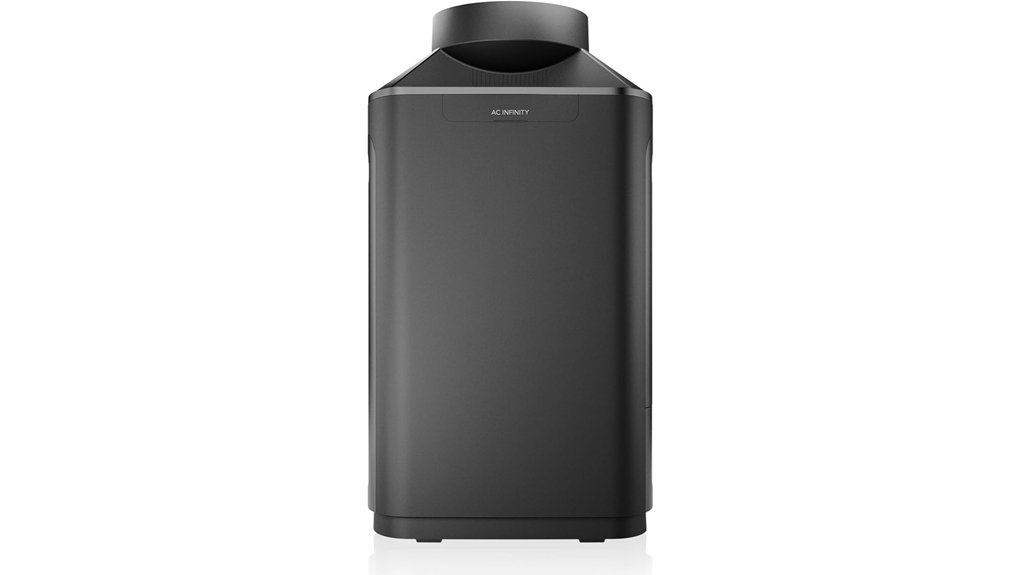
Best Overall Smart Tent Pick: If you’re running a grow tent up to 8×8 feet, the AC Infinity HYDRONE 7 Smart Plant Dehumidifier is a strong pick because it gives you precise humidity control in a compact 2-liter unit. You get 10 drying levels, a PWM-controlled rotary motor, and intermittent operation that reacts quickly to changing conditions. Its AI-driven humidity and VPD controls help you dial in stable climate settings in both hot and cold rooms. You can duct dry air through the exhaust port and build a closed-loop setup with the intake port. It also includes a drain hose for easier continuous use.
Why You’ll Like It: This model is useful when you want a tent-focused unit instead of a basic room dehumidifier. The ducting options help you manage moisture without forcing the whole unit into an awkward tent position, and the smart controls make it easier to keep RH steady through day and night swings.
Best For: Grow tent users up to 8×8 feet who want compact, AI-assisted humidity control with flexible ducting and closed-loop setup options.
Who Should Avoid It: Skip it if you need heavy-duty moisture removal for a full basement, large lung room, or very wet space. Its 2-liter design is better for focused grow-tent control than whole-room drying.
Pros:
- Precise humidity and VPD control with AI-driven adjustments
- Compact 2-liter design with 10 drying levels and instant-response intermittent operation
- Exhaust and intake ports support ducting and closed-loop airflow
Cons:
- 2-liter capacity may be small for larger or more demanding spaces
- Best suited to grow tents, so it may be less versatile for general-room use
- Smart controls and setup may be more complex than a basic dehumidifier
Automatic Mini Dehumidifier for Grow Tents and Closets
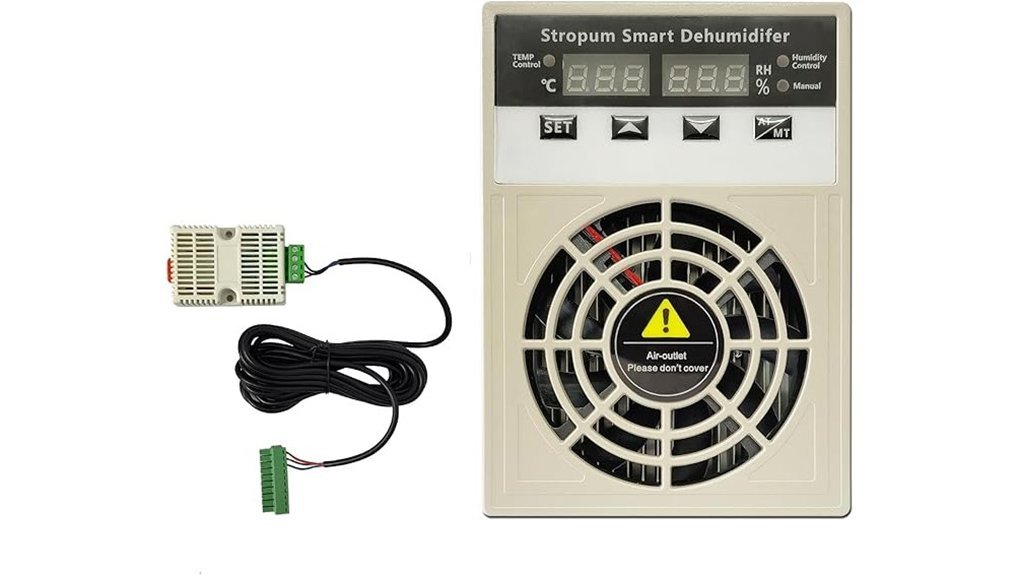
Best for Small Enclosed Spaces: The Stropum Automatic Small Dehumidifier is ideal for tight grow spaces and closets. You can use it in electric boxes, cabinets, and other compact setups where excess moisture causes trouble. Its 800 ml tank, 45-watt draw, and 110V/240V compatibility make it practical for residential use. You get MT continuous or AT set-point modes, adjustable humidity control, automatic shutoff, and a digital display. In a sealed 9-cubic-foot cabinet, it can drop humidity from 80% to 45% in about 50 minutes. Sensors also help you pair it with fans or heaters for better climate control.
Why You’ll Like It: This is a good option when a full-size dehumidifier feels excessive. It solves small-space moisture problems in cabinets, mini tents, and closets where a large compressor unit would take too much room or remove too much humidity too fast.
Best For: Home growers, hobbyists, and anyone needing automatic humidity control in small enclosed spaces like grow tents, closets, cabinets, or electric boxes.
Who Should Avoid It: Avoid it for medium or large grow rooms, high-transpiration plant loads, or spaces where you need pints of daily moisture removal instead of small-volume control.
Pros:
- Compact design fits tight spaces and small enclosures
- Automatic humidity control with MT continuous and AT set-point modes
- Includes digital display, shutoff safety, and sensor-based climate control support
Cons:
- Small 800 ml tank may require frequent emptying in humid environments
- Best suited for very small areas, not larger rooms
- Installation may require basic wiring and a small screwdriver
PLUSCENT 32 Pint Dehumidifier for Home Basement
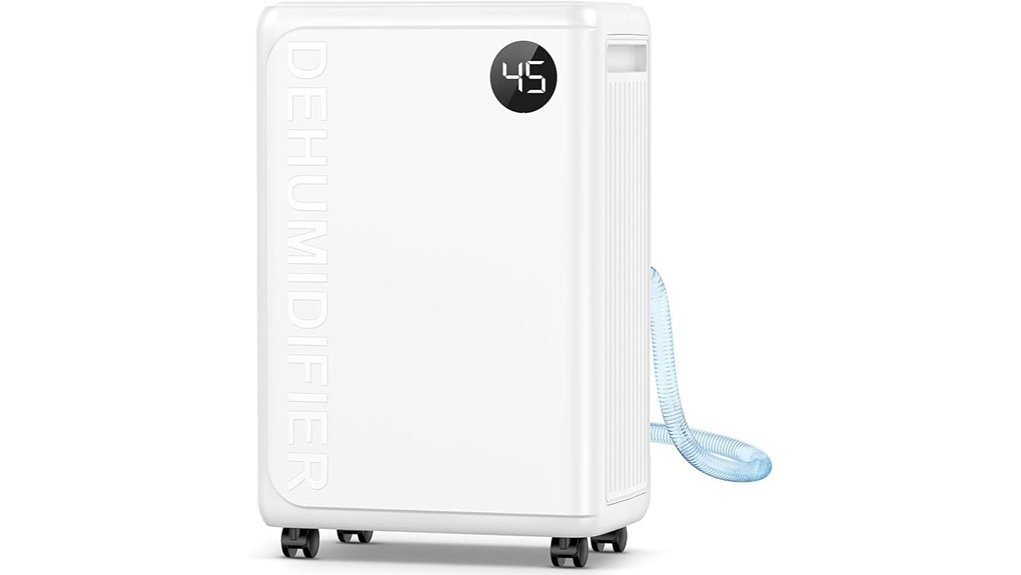
Best Mid-Capacity Room Pick: PLUSCENT’s 32-pint capacity makes it a smart pick for medium-to-large grow tents, basement rooms, and lung rooms where moisture can build up quickly. You can pull up to 32 pints of moisture a day, covering as much as 2,500 square feet. Choose DEHU, CONT, or DRY mode to match your humidity needs, and set the 24-hour timer for hands-off control. Use the 39.4-inch hose for continuous drainage or the 2L tank with auto-stop protection. It runs quietly at 39–42 dB, includes auto-restart and auto-defrost, and its washable filter, wheels, and child lock make everyday use easy.
Why You’ll Like It: This model gives you more moisture removal than mini units without jumping straight into oversized whole-house territory. It is especially useful if your tent sits in a damp basement or if the room around the tent needs humidity control too.
Best For: Homeowners, renters, and growers who need a quiet, compact dehumidifier for basements, large rooms, or medium-to-large grow tents with flexible drainage options.
Who Should Avoid It: Skip it for tiny sealed tents unless you can control run time carefully, because extra capacity can dry the space faster than expected.
Pros:
- Removes up to 32 pints of moisture per day and covers up to 2,500 sq. ft.
- Offers three useful modes plus a 24-hour timer for customized humidity control
- Quiet operation, auto-restart, auto-defrost, and easy mobility features make it convenient to use
Cons:
- The 2L tank may require frequent emptying in very damp conditions if not using the drain hose
- Best suited for medium-to-large spaces, so it may be more than needed for small rooms
- The unit’s compact size can mean a smaller water tank compared with larger-capacity dehumidifiers
Frigidaire 50 Pint Dehumidifier w/Wifi
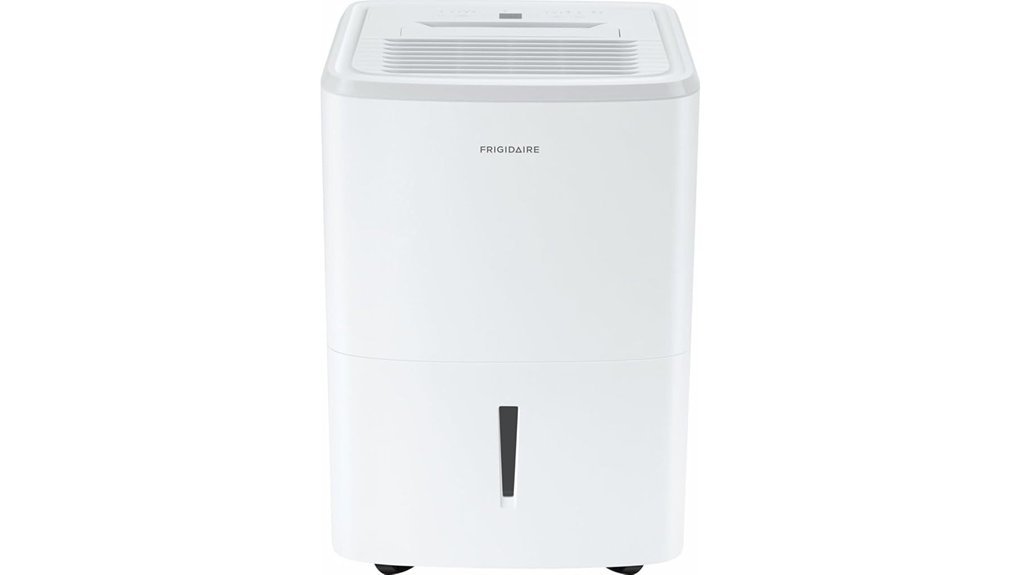
Best Smart Large-Room Pick: Frigidaire’s 50-pint WiFi dehumidifier suits growers who want remote humidity control. You can check conditions and adjust settings from your phone, so you don’t need to enter the room or open the tent as often. Its custom humidity control helps you dial in the right environment for healthy growth, while the 50-pint capacity pulls plenty of moisture from the air. That makes it useful in larger or more humid spaces. You’ll also like the washable filter, since it simplifies upkeep and helps trap dust. Overall, it gives you convenient control, solid moisture removal, and steady comfort.
Why You’ll Like It: Opening a tent too often can disturb temperature and humidity. A WiFi model helps you check and adjust your room’s moisture level from a distance, which is useful during flowering, drying, or humid weather.
Best For: Growers and homeowners who want remote humidity control, strong moisture removal, and easy maintenance in larger or more humid spaces.
Who Should Avoid It: Avoid it if you only need a simple manual unit for a small tent or if WiFi features are not important to your setup.
Pros:
- WiFi connectivity lets you monitor and adjust humidity from your phone
- Custom humidity control helps maintain an optimal environment
- Washable filter makes upkeep simple and helps trap dust
Cons:
- WiFi features may be unnecessary for users who prefer manual controls
- 50-pint capacity may be more than needed for small spaces
- Requires regular cleaning and maintenance to stay efficient
VIVOSUN Dual-Stage Humidity Controller with LED Displays
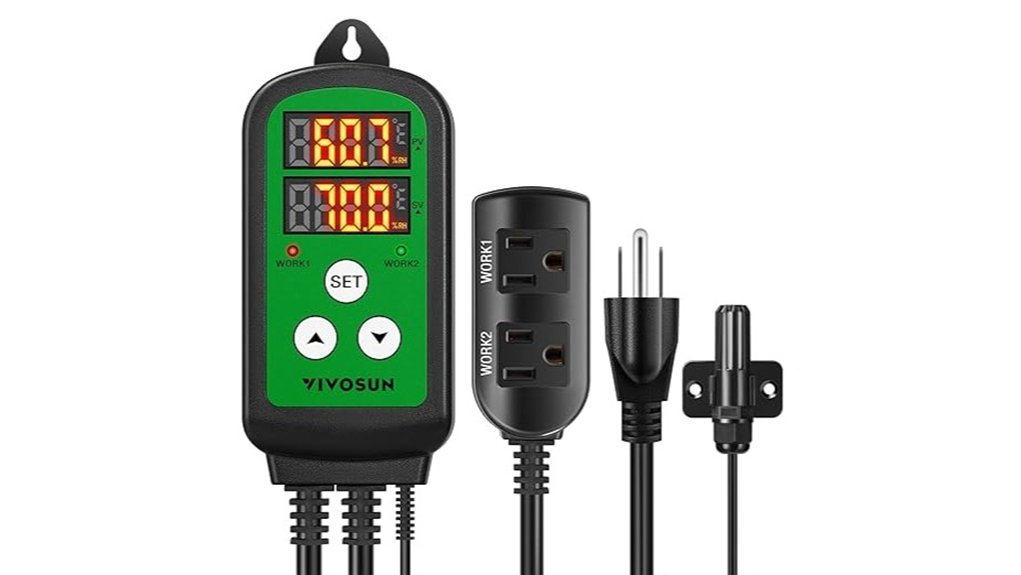
Best Automation Add-On: VIVOSUN’s dual-stage controller suits growers who want automated humidity control in compact tents. You can wire it to both a humidifier and a dehumidifier, and it’ll switch between them to hold your target RH from 5% to 99% with ±3% accuracy. The large dual LED screens show both measured and set humidity, so you can check settings fast. You also get high and low humidity alarms, sensor fault alerts, and compressor delay protection. Its 1200W, 20A design, 16AWG cord, and hanging tab make setup simple and safer.
Why You’ll Like It: This is not a standalone dehumidifier, but it can make a compatible dehumidifier much smarter. It helps reduce manual adjustments by turning equipment on and off based on your target humidity range.
Best For: Growers, hobbyists, and small-scale cultivators who want automated, dual-stage humidity control for tents, greenhouses, incubation setups, or terrariums.
Who Should Avoid It: Skip it if you need a moisture-removing machine by itself. You still need a compatible dehumidifier and, if needed, a humidifier to use the dual-stage function fully.
Pros:
- Automatically switches between humidifier and dehumidifier to maintain your target humidity
- Dual LED displays make it easy to view current and set humidity at a glance
- Built-in alarms and compressor delay protection add safety and peace of mind
Cons:
- Limited to humidity control only, so it won’t manage temperature or other environmental factors
- Best suited to compact setups and may be more than needed for very simple applications
- Requires compatible humidifier and dehumidifier equipment to use all functions
Vellgoo Max 64 Pint Energy Star Dehumidifier
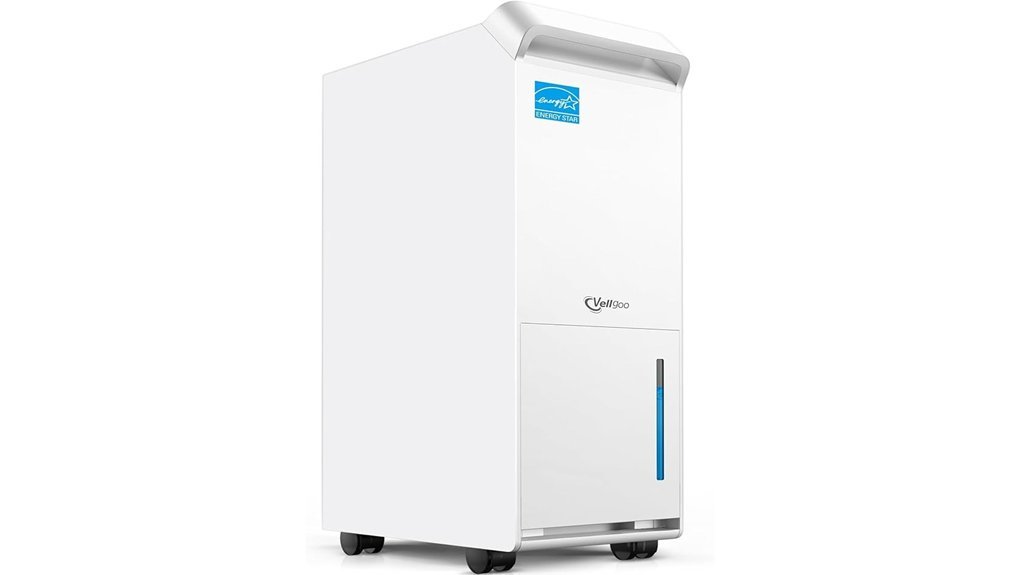
Best High-Capacity Energy Pick: If you need efficient, high-capacity humidity control, the Vellgoo Max 64 Pint fits the bill. You can dry large grow spaces, lung rooms, basements, or connected areas up to 4,000 sq. ft. and pull up to 64 pints of moisture a day in demanding humidity. It’s Energy Star Most Efficient for 2024, so you’ll keep power use lower than many standard high-capacity options. The rotary compressor, copper coils, and hydrophilic fins support durability and drying speed. You can drain it three ways: tank, hose, or garden hose adapter. That flexibility makes maintenance easy and keeps your setup running smoothly.
Why You’ll Like It: This unit is a better fit when moisture is not only inside the tent but also in the room around it. The drainage flexibility is helpful if you want a low-maintenance setup during long light cycles or humid seasons.
Best For: People who need a high-capacity, energy-efficient dehumidifier for large spaces up to 4,000 sq. ft. and want flexible drainage options with low operating costs.
Who Should Avoid It: Avoid it for a small sealed tent unless your room humidity is also high. A large-capacity unit can be too aggressive if the space does not need it.
Pros:
- Energy Star Most Efficient for 2024, helping reduce electricity use and utility bills
- Removes up to 64 pints of moisture per day and covers spaces up to 4,000 sq. ft.
- Multiple drainage options, including tank, hose, and garden hose adapter, make maintenance easier
Cons:
- Large capacity may be more than needed for smaller rooms or light humidity issues
- Requires access to a drainage setup for the most convenient continuous operation
- Higher-performance units can be bulkier and less portable than compact dehumidifiers
Midea 22 Pint Energy Star Dehumidifier with Filter
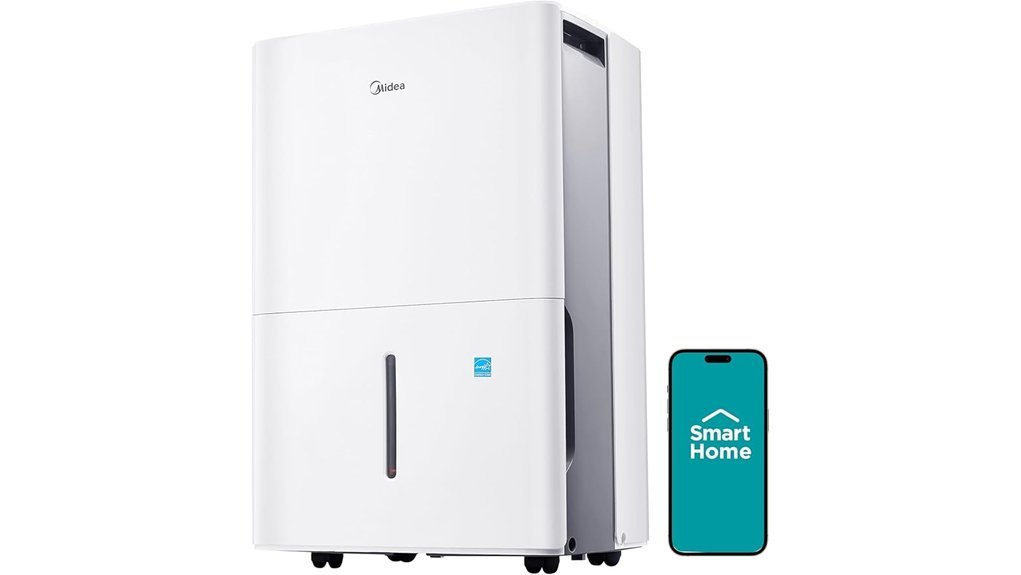
Best Quiet Smart Pick: Midea’s 22-pint dehumidifier suits growers who want quiet, efficient humidity control. You can pull up to 22 pints of moisture daily, which helps you keep a 45%–55% humidity range in spaces up to 1,500 sq. ft. It runs at just 47 dBA, so it won’t disrupt your grow room routine. ENERGY STAR certification means you’ll use 31% less energy than standard models. You can control it with the SmartHome app, Alexa, or Google Assistant, and use turbo mode, a timer, manual draining, or continuous drainage. Wheels, handles, auto defrost, and auto restart make setup easy.
Why You’ll Like It: It balances smart features, moderate capacity, and quieter operation. That makes it useful for bedrooms, offices, small grow rooms, or shared spaces where noise matters.
Best For: Growers and homeowners who want a quiet, energy-efficient dehumidifier with smart controls for medium-sized spaces up to 1,500 sq. ft.
Who Should Avoid It: Avoid it if you need very heavy moisture removal or if your grow setup requires a pump-based drain instead of gravity drainage.
Pros:
- Removes up to 22 pints of moisture per day and helps maintain ideal 45%–55% humidity
- Quiet operation at 47 dBA makes it suitable for bedrooms, offices, and grow rooms
- Wi-Fi, app, and voice assistant compatibility add convenient remote control options
Cons:
- Continuous drainage requires a hose, which is not included
- Best suited for medium spaces, so it may not be enough for larger areas
- Smart features may be unnecessary for users who just want a basic dehumidifier
Grow Tent Dehumidifier with Smart Temp/Humidity Controller
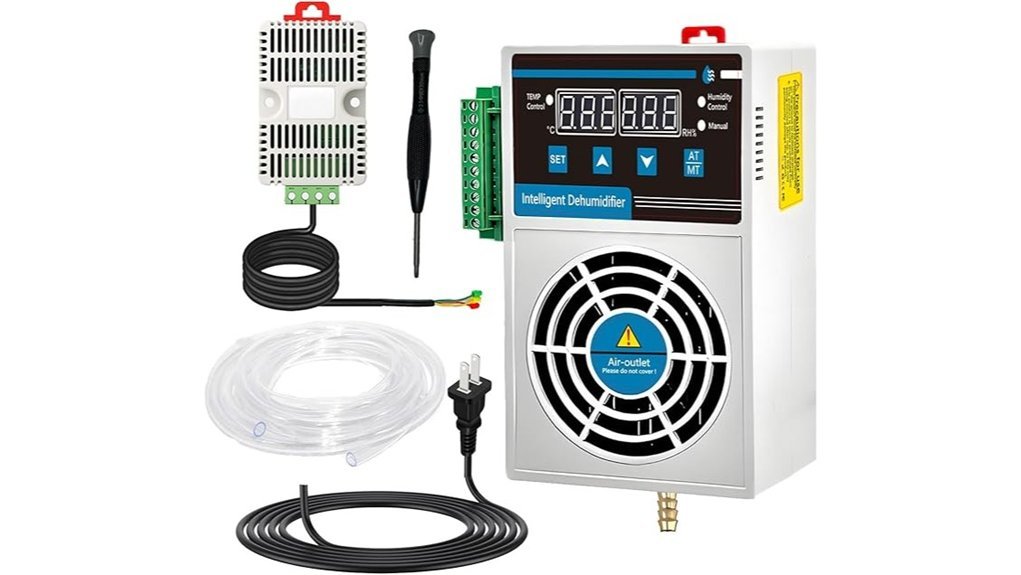
Best for Precise Small-Space Control: The LAVTAIOA HSCS-380 is ideal when you need precise humidity control in small grow spaces. You get real-time temperature and humidity readings on the LED display, so you can adjust conditions fast. Its automatic and manual modes let you fine-tune drying or maintenance, and it actively condenses airborne moisture instead of relying on passive methods. You can also connect it to external heating or cooling modules for colder rooms. With 85-265V AC/DC compatibility, easy setup, smart home integration, and 0.32 L/day capacity, it keeps your tent efficient, eco-friendly, and low-maintenance.
Why You’ll Like It: This is made for targeted moisture control, not brute-force drying. It is useful when you need a compact unit that also helps you watch temperature and humidity from one display.
Best For: Growers, hobbyists, and small-space users who need precise, low-maintenance humidity control in grow tents, incubation areas, closets, or similar compact environments.
Who Should Avoid It: Avoid it for high-humidity rooms or larger grow spaces. Its 0.32 L/day capacity is too limited for heavy moisture loads.
Pros:
- Real-time temperature and humidity monitoring with an LED display
- Automatic and manual control modes for flexible humidity management
- Energy-efficient, eco-friendly design with 0.32 L/day capacity and no consumables
Cons:
- Low daily dehumidification capacity, so it’s only suitable for small spaces
- May require external heating or cooling modules in colder environments
- Best for targeted control rather than heavy-duty dehumidifying needs
VIVOSUN AeroDrain D12 Smart Environmental Dehumidifier
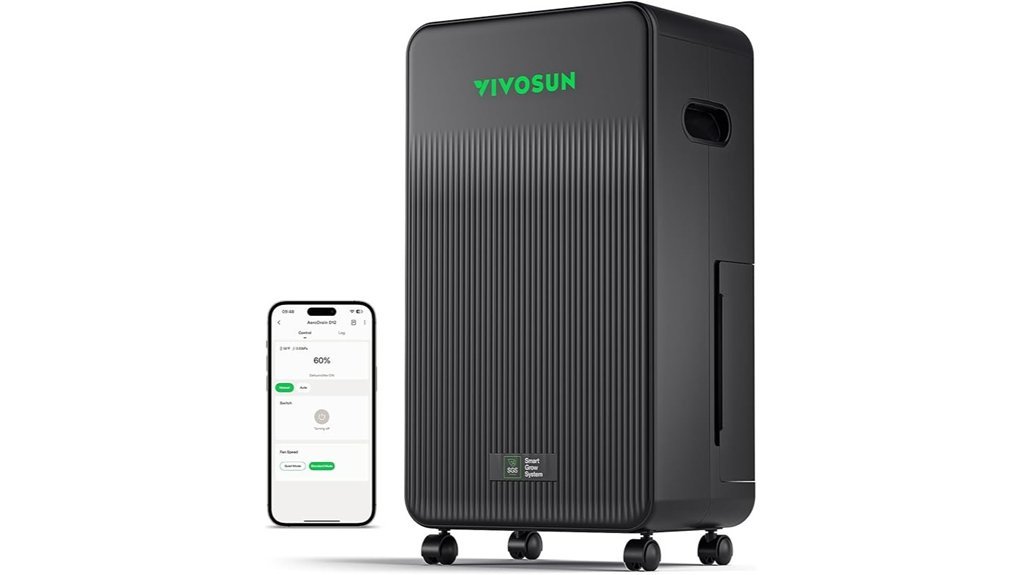
Best VIVOSUN Tent Pick: VIVOSUN’s AeroDrain D12 suits growers who want smart humidity control in a compact tent-friendly unit. You can pull up to 12L of moisture a day while its 2L tank, automatic shut-off, and restart-after-outage protection keep downtime low. High-precision sensors help you maintain stable temperature and humidity for stronger growth and cleaner drying. You can check settings in the VIVOSUN app, or sync it with the Smart Grow System for automation. Tool-free setup, handles, and caster wheels make it easy to move. It fits tents up to 5×5 ft, depending on conditions.
Why You’ll Like It: This model is built around the grow-tent workflow. App control, sensor-based readings, and easy movement help you handle humidity changes without constantly opening the tent or disturbing airflow.
Best For: Growers who want a compact, smart dehumidifier for tent setups up to 5×5 ft, with app control and automated humidity management.
Who Should Avoid It: Skip it if your grow room is much larger than a compact tent or if you need a larger water tank for very humid environments.
Pros:
- Removes up to 12L of moisture per day for effective humidity control
- Smart app compatibility and Smart Grow System integration for automation
- Easy to move and install with tool-free setup, handles, and caster wheels
Cons:
- 2L water tank may require frequent emptying in humid conditions
- Best performance depends on ambient conditions and tent size
- Primarily designed for grow tents, so it may be less versatile for larger spaces
Spider Farmer 38-Pint Plant Dehumidifier with Sensor Probe
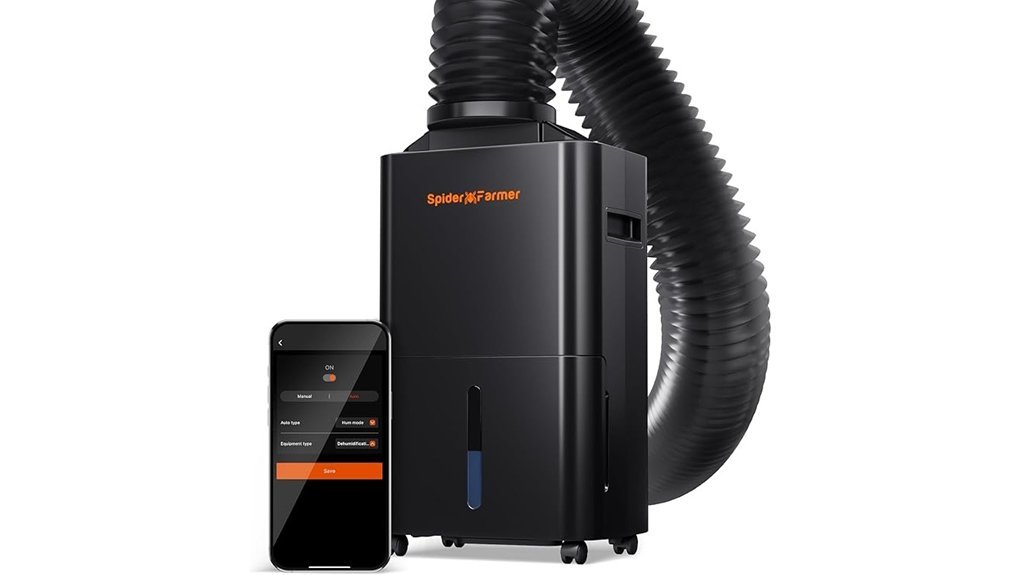
Best Low-Heat Tent Setup: Spider Farmer’s 38-pint dehumidifier suits growers who want precise humidity control with minimal tent heat. You can place its duct outside your tent, so it pulls moisture without warming your plants as much as a fully internal setup might. The sensor probe shows real-time humidity, and you can set targets from 30% to 80% for automatic shutoff. Three modes and a 24-hour timer help you save energy. It removes up to 32 pints daily and covers spaces up to 2,000 square feet. Use the tank or continuous drain, watch the full-water alarm, and move it easily on 360° wheels.
Why You’ll Like It: Heat is a real concern in grow tents. This model’s external duct placement can help you manage moisture while reducing the chance that the dehumidifier itself becomes a major heat source inside the tent.
Best For: Growers and homeowners who want precise, low-heat humidity control in medium to large spaces, especially grow tents.
Who Should Avoid It: Avoid it if you do not want to manage duct placement or if your setup is so small that a 32-pint daily removal class is too aggressive.
Pros:
- External duct placement helps reduce heat buildup inside the grow tent
- Sensor probe and adjustable 30% to 80% humidity settings provide accurate, automatic control
- Two drainage options plus 360° wheels make it convenient to use and move
Cons:
- Best performance may depend on proper setup of the duct and drain options
- The unit may be more than needed for small spaces
- Like most dehumidifiers, it requires periodic tank emptying or drain maintenance
AEOCKY 4500 Sq Ft Energy Star Dehumidifier with Pump
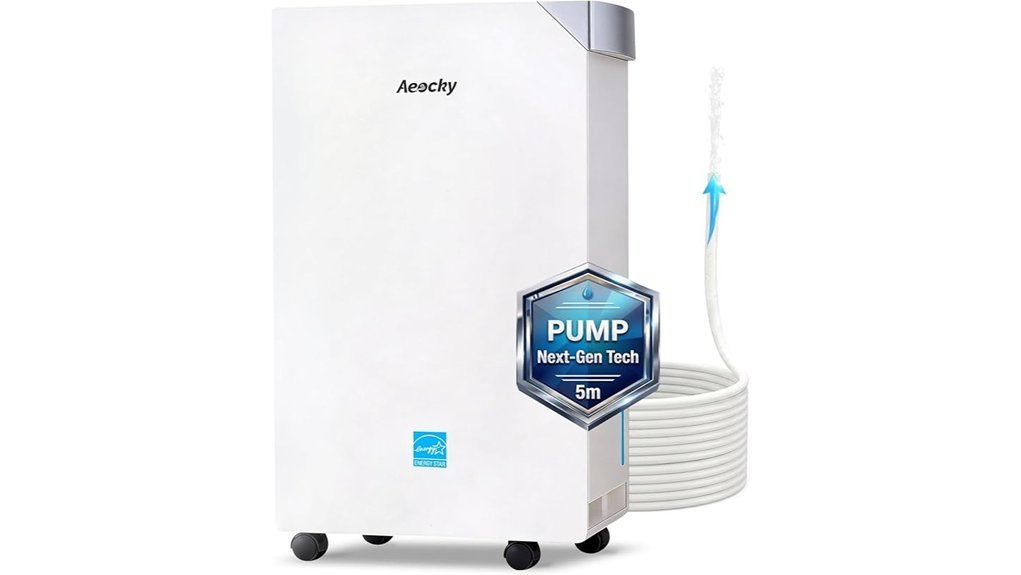
Best With Pump: If you need powerful, low-maintenance moisture control, AEOCKY’s 4500 Sq Ft Energy Star dehumidifier fits the job. You get ENERGY STAR Most Efficient 2025 certification, so you know it’s built around efficiency. It can pull up to 80 pints a day in extreme humidity and 56 pints in warmer conditions, making it strong enough for large grow spaces, basements, and lung rooms. Its pump handles 360° auto-drainage through the included 5m hose, so you won’t keep emptying tanks. Quiet operation, smart humidity sensing, smart-home compatibility, and a 3-year warranty add confidence and convenience.
Why You’ll Like It: The pump is the main advantage. If your drain point is not below the unit, pump drainage can be much easier than relying on gravity alone.
Best For: This dehumidifier is best for homeowners, growers, and large-space users who want powerful, energy-efficient moisture control with automatic drainage and minimal maintenance.
Who Should Avoid It: Avoid it if you only need humidity correction inside a small tent. This type of high-capacity unit makes more sense for the larger room around the tent.
Pros:
- ENERGY STAR Most Efficient 2025 certification signals top-tier efficiency and verified performance
- Strong dehumidification capacity for large spaces, with up to 80 pints/day in very humid conditions
- Pump with 5m hose enables 360° auto-drainage, reducing the need for manual tank emptying
Cons:
- Higher upfront cost than basic dehumidifiers
- Best suited for larger spaces, so it may be overkill for smaller rooms
- Smart features and pump functionality may add complexity for users who want a very simple unit
Waykar 34 Pints Energy Star Dehumidifier, 2000 Sq. Ft
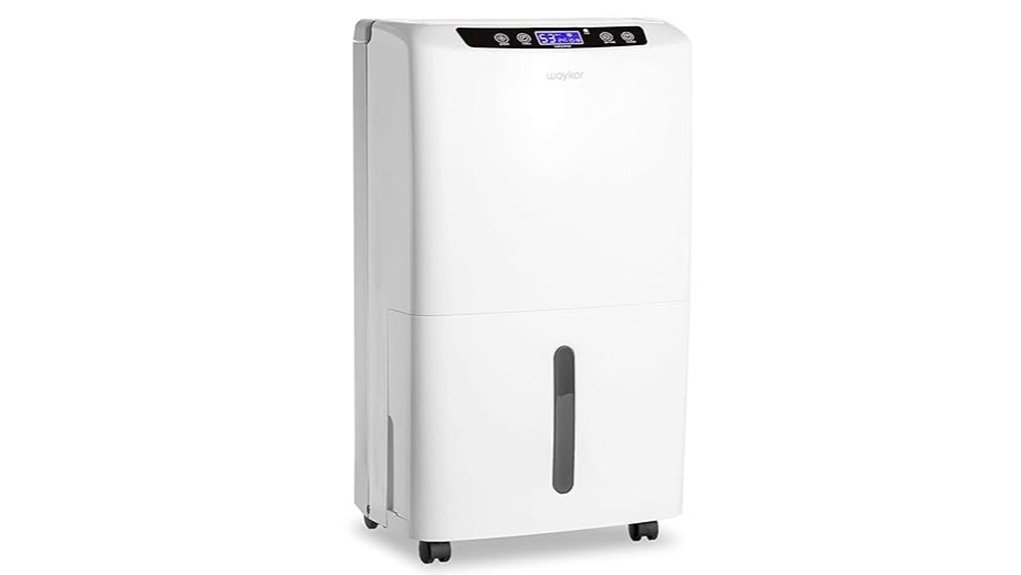
Best Adjustable RH Pick: With 2,000-square-foot coverage, the Waykar 34 Pints suits growers managing larger tents or humid spaces. You can pull up to 34 pints of moisture daily, set humidity from 30% to 80%, and lock in a target like 45% or 55%. Its 90° swing, two fan speeds, and 24-hour timer help you direct airflow where you need it. You can drain it through the 0.66-gallon tank or the included hose. Energy Star efficiency, quiet operation, auto shutoff, and restart protection make it practical for steady grow-room control.
Why You’ll Like It: It gives you a useful mix of capacity, RH targeting, and drainage choices. That makes it a practical pick for growers who need more than a mini unit but do not want the largest whole-house machine.
Best For: Growers, homeowners, and facility managers who need an Energy Star dehumidifier for larger spaces up to 2,000 sq. ft. with flexible humidity control and steady moisture removal.
Who Should Avoid It: Avoid it if you need pump drainage or if your space is very small and needs only light humidity correction.
Pros:
- Covers up to 2,000 sq. ft. and removes up to 34 pints of moisture per day
- Adjustable humidity range from 30% to 80%, with target settings and a 24-hour timer
- Offers both tank and continuous drain options, plus quiet operation and auto-restart protection
Cons:
- The 0.66-gallon tank may need frequent emptying in very humid conditions
- At 28.7 pounds, it may be a bit bulky to move around often
- Manual 90° swing and two fan speeds provide useful control, but not fully automated airflow management
4500 Sq. Ft Dehumidifier with Drain Hose
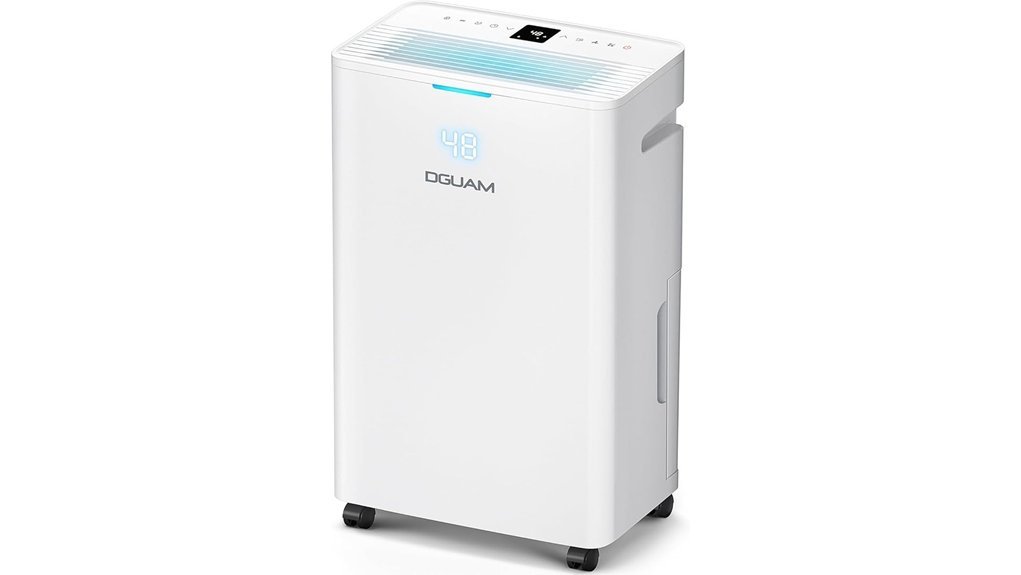
Best Large-Space Drain Hose Pick: The 4500 sq. ft. dehumidifier with drain hose suits growers managing large, moisture-heavy tents, basements, garages, or lung rooms. You get up to 80 pints of removal per day, with everyday operation around 18 to 45 pints, so you can keep humidity in check fast. Set your target between 30% and 80% for precise control, and let the smart system adjust automatically. The drain hose supports continuous use, while the tank shuts off when full. At 40 dB, it won’t overwhelm your space. Its auto defrost, energy-saving design, and easy mobility make it a practical pick.
Why You’ll Like It: This model is built for users who want strong moisture removal without complicated setup. The included drain hose helps you run longer sessions with less tank emptying.
Best For: Growers and users managing large, moisture-heavy spaces like basements, tents, garages, or whole houses who want strong, quiet, and continuous dehumidification.
Who Should Avoid It: Avoid it for small, lightly humid tents where a compact or lower-capacity dehumidifier would be easier to control.
Pros:
- Removes up to 80 pints of moisture per day, with adjustable humidity control from 30% to 80%
- Includes a drain hose for continuous operation plus a tank with auto shutoff for convenience
- Quiet 40 dB operation, auto defrost, and energy-efficient design make it practical for everyday use
Cons:
- May be larger and more powerful than needed for small rooms or light-duty use
- Continuous drain setup may require a suitable drainage location
- Performance varies in daily operation, typically running below its maximum 80-pint capacity
VIVOSUN 10L/D Dehumidifier with Smart WiFi App
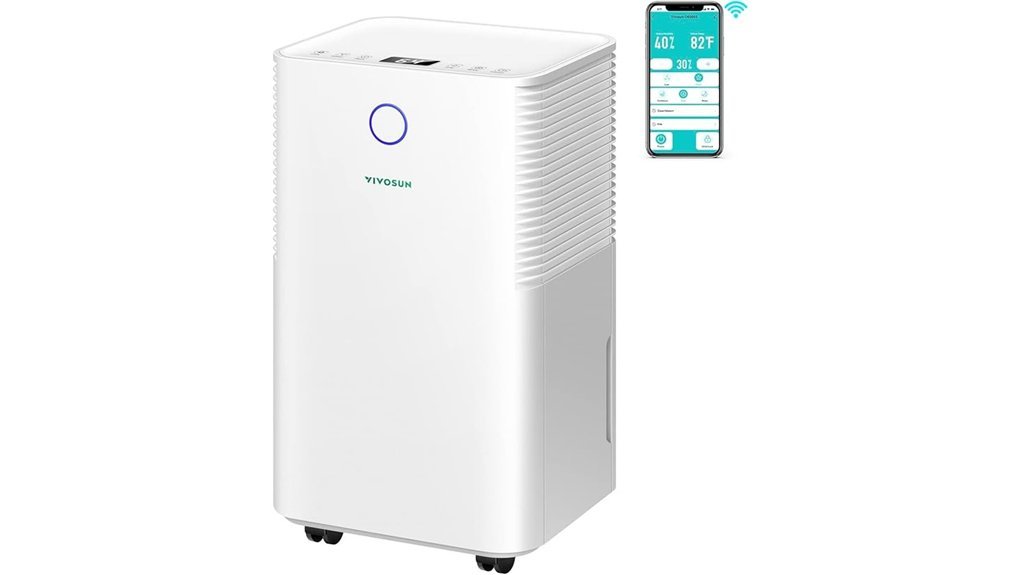
Best Quiet WiFi Pick: VIVOSUN’s Smart WiFi dehumidifier suits growers who want quiet, remote humidity control. You can cover up to 2,000 sq. ft. while pulling 23 pints, or 10 liters, of moisture daily. The color LED display shows your RH at a glance, and you can choose from two speeds, three dehumidification modes, and a 24-hour timer. With Tuya WiFi, you can adjust settings from your phone. It shuts off when the 2-liter tank fills, sounds an alert, and keeps operating noise at ≤38 dB. Wheels, a rear handle, and child lock make it easy and safe to use.
Why You’ll Like It: Quiet operation and app control make this helpful for growers who check humidity often but do not want to disturb the grow environment. It also works well when you want a cleaner display instead of guessing from a basic dial.
Best For: Growers or homeowners who want a quiet, WiFi-enabled dehumidifier for medium to large spaces with easy remote humidity control.
Who Should Avoid It: Skip it if you need a pump, a much larger tank, or maximum moisture removal for extreme humidity.
Pros:
- Covers up to 2,000 sq. ft. and removes up to 23 pints (10L) of moisture per day
- Tuya WiFi app control, color-coded LED humidity display, and multiple modes/timer for convenience
- Quiet operation at ≤38 dB with mobility features like wheels and a rear handle
Cons:
- 2-liter tank may require frequent emptying in very humid conditions
- 140W unit may be less powerful than larger-capacity dehumidifiers for heavy-duty use
- Smart features depend on WiFi/app setup, which may not suit users wanting a simple plug-and-play device
MARS HYDRO 18L/Day Compressor Dehumidifier with Digital Control
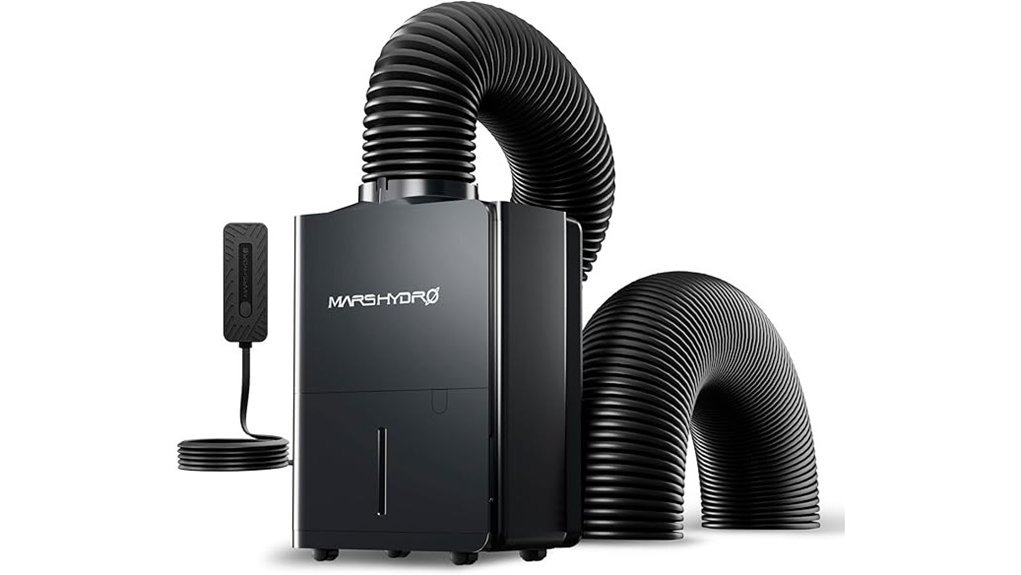
Best for Compact Grow Tents: Mars Hydro’s 18L/day dehumidifier suits growers who need precise humidity control in compact tents. You can use it in 3×3, 2×4, and 4×4 spaces, where its compressor removes up to 38 pints of moisture daily. The digital display and high-precision sensors help you maintain 30% to 90% humidity with less guesswork. Auto mode keeps levels steady, while the drain hose, washable filter, and full-tank shutoff simplify upkeep. You can move it easily with the handles and caster wheels, and tool-free setup lets you get started fast in your grow area.
Why You’ll Like It: This model is aimed directly at smaller grow-tent sizes, which makes the buying decision easier if you have a 3×3, 2×4, or 4×4 setup. Digital controls and included drainage support also reduce daily maintenance.
Best For: Growers using compact tents like 3×3, 2×4, or 4×4 spaces who want precise, easy humidity control with low-maintenance operation.
Who Should Avoid It: Avoid it for large rooms or whole-basement moisture control. It is better positioned for compact tent environments.
Pros:
- Removes up to 38 pints of moisture per day for effective dehumidification
- Digital control, high-precision sensors, and auto mode make humidity management simple and accurate
- Includes a drain hose, washable filter, handles, and caster wheels for convenient use and mobility
Cons:
- Best suited for smaller grow tents, so it may be less ideal for larger spaces
- Compressor dehumidifiers can be heavier and bulkier than simpler alternatives
- Requires periodic filter cleaning and water tank management if not using continuous drainage
Before You Buy Checklist
- Measure your tent and lung room: A small tent may need targeted control, while a damp room around the tent may need a larger dehumidifier.
- Check daily capacity: Higher pint or liter ratings remove moisture faster, but too much capacity can over-dry small spaces.
- Plan drainage first: Continuous drainage, a pump, or a large tank can save you from constant emptying.
- Watch heat output: Compressor dehumidifiers can add heat, so monitor temperature after setup.
- Look for accurate controls: Digital RH settings, sensor probes, app control, and timers help keep the environment stable.
- Confirm product details: Always check the current Amazon listing for exact capacity, hose details, warranty, and included accessories.
Factors to Consider When Choosing an AC Dehumidifier for Grow Tent
When you choose an AC dehumidifier for your grow tent, make sure its capacity fits your tent size so it can control moisture effectively. You’ll also want precise humidity control, flexible drainage options, and a unit that won’t add too much noise or heat to your space. If you value convenience, look for smart automation features that help you maintain stable conditions with less effort.
Tent Size Match
Matching a dehumidifier to your tent size is key: too much capacity can over-dry the space, while too little won’t control humidity effectively. Start by measuring your tent’s square footage and also consider the room around the tent. A 64 sq. ft. tent, for example, usually needs less capacity than a damp basement lung room feeding that same tent. Check the manufacturer’s coverage rating too; if it’s built for a 5×5 or 8×8 ft space, it should match your setup more closely. Don’t ignore tent height, since taller tents need stronger airflow to move moisture through the whole space. For larger tents, continuous drainage can save you from constant tank emptying and keep the unit working without interruption.
Humidity Control Precision
Humidity control precision is a must in a grow tent, where plants do best in a fairly tight range, usually around 45% to 65% RH, depending on plant type and growth stage. You’ll want a dehumidifier with accurate sensors that track changes in real time and adjust automatically before moisture spikes invite mold or mildew. Look for adjustable settings that let you target anywhere from 30% to 80% RH, so you can match each growth stage and your room’s conditions. Smart humidity control can also work with other climate devices, keeping readings steady through automated responses. If your unit offers dual-stage control, you can switch between dehumidifying and humidifying as conditions change, giving you tighter command over your tent’s environment and helping plants stay in their ideal zone.
Drainage Setup Options
Once you’ve got humidity levels dialed in, drainage setup becomes the next big factor because it determines how hands-off your dehumidifier can be. If you want the easiest routine, choose continuous drainage with a hose so water leaves the unit automatically and you don’t keep emptying a tank. A built-in pump adds 360° auto-drainage, which helps when your setup sits below or beside the drain point and lowers spill risk. If you prefer a simpler unit, a removable tank works, but you’ll need to empty it regularly, even if auto-shutoff protects against overflow. Check the hose length and flexibility too, since they affect placement and routing moisture away from the tent. Some models offer both methods, giving you more control when space is tight.
Noise And Heat
Noise and heat matter just as much as moisture removal when you’re choosing an AC dehumidifier for a grow tent. You’ll want a quiet unit, ideally in the 39–47 dB range, so constant operation doesn’t disturb your living area or grow-room routine. Heat output matters too, because a dehumidifier that runs hot can raise tent temperatures and stress sensitive crops. Pick an energy-efficient model that removes moisture fast, so it doesn’t need to run longer than necessary. High-wattage units usually create more heat and can also inflate your power bill during extended use. If you can, choose a design with external air ducting; it helps move warm air out of the tent and keeps humidity under control without building up extra heat inside.
Smart Automation Features
Smart automation features can make a grow tent dehumidifier much easier to manage, especially if you’re balancing humidity, VPD, and temperature at the same time. Wi-Fi connectivity lets you check and adjust settings from your phone, so you don’t need to open the tent often. Look for models with high-precision sensors, because accurate readings help you hold stable conditions. Advanced units may use AI to fine-tune humidity and VPD in real time, which can save you effort during quick environmental swings. Automated shutoff is another must-have, since it stops overflow when the tank fills. Programmable timers and multiple modes also help you set targets, schedule run times, and match dehumidification to your grow’s needs.
Energy Use And Running Cost
Grow tents often need long climate-control cycles, so energy use matters. An efficient dehumidifier can reduce wasted power while still keeping RH in range. Look for ENERGY STAR language when available, compare wattage, and avoid buying far more capacity than your setup needs. A larger unit may remove moisture quickly, but it can also cycle more aggressively and add more heat. For long-term use, the best choice is usually the smallest reliable unit that can maintain your target humidity without running nonstop.
Tank Size Vs Continuous Drainage
Tank size affects convenience more than many buyers expect. A 2L tank can fill quickly in humid conditions, especially during late vegetative growth, flowering, or rainy weather. If your tent produces a lot of moisture, continuous drainage is usually worth it. For basements, garages, and grow rooms with floor drains, a drain hose can turn a high-maintenance machine into a set-and-check device. If the drain point is above the unit, consider a pump model instead of gravity drainage.
Pro Tips for Better Grow Tent Humidity Control
Pro Tip: Don’t size your dehumidifier only by the tent footprint. Also consider plant count, watering volume, room humidity, exhaust rate, and whether your tent pulls air from a damp basement or garage.
- Use a separate hygrometer to compare readings against the dehumidifier’s built-in sensor.
- Place the unit where airflow can move moisture toward it, not where leaves block intake or exhaust.
- Clean the filter regularly so airflow and moisture removal stay consistent.
- Use continuous drainage for flowering or drying stages if humidity rises quickly.
- Watch temperature after adding a compressor unit, because dehumidifiers can warm the room.
Safety and Setup Notes
Safety Note: Grow rooms often combine water, electricity, heat, and high humidity. Keep cords off wet floors, avoid overloading outlets, follow the manufacturer’s setup instructions, and use a grounded outlet where required.
Do not block the intake or exhaust vents. Leave clearance around the unit, route drain hoses securely, and check for leaks after setup. If you use a controller, confirm the dehumidifier restarts correctly after power cycling before relying on automated operation.
Frequently Asked Questions
How Often Should I Empty a Grow Tent Dehumidifier?
You should empty it whenever the tank fills, which can be daily or every few days. Check it often, especially in humid conditions, so you don’t risk overflow or reduced dehumidifying performance. If your tent is moisture-heavy, choose continuous drainage so the unit can run with less manual attention.
Can a Dehumidifier Run Continuously in a Sealed Grow Tent?
Yes, you can run one continuously if it has proper drainage and enough capacity. You’ll need to monitor humidity, temperature, and airflow, because a sealed tent can over-dry plants or create heat buildup. A controller, timer, or target RH setting can help prevent the unit from running longer than needed.
What Humidity Level Is Best for Seedlings Versus Flowering?
You’ll usually do best keeping seedlings at higher humidity, often around 65–75%, while many flowering setups need lower humidity, often around 40–50%. The exact range depends on plant type, temperature, airflow, and growth stage. Testing the idea that more moisture always helps, you’ll see excess humidity can fuel mold, mildew, and weak growth.
Where Should I Place a Dehumidifier Inside a Grow Tent?
You should place it just outside the tent, in the lung room, or inside near the exhaust path when space and heat allow. Avoid pointing hot exhaust directly at plants. You’ll get better airflow, avoid hot spots, and keep moisture removal more even throughout the tent.
Do Smart Controllers Improve Dehumidifier Performance in Grow Tents?
Yes, smart controllers can improve your dehumidifier’s performance because you’ll maintain steadier humidity, reduce cycling, and coordinate fan and AC timing. You’ll save energy, protect plants, and keep conditions more consistent inside your grow tent. Just make sure your dehumidifier can restart properly when controlled by an external device.
Is a Large Room Dehumidifier Too Big for a Grow Tent?
It can be too big if you place it inside a small sealed tent and run it without control. Large room dehumidifiers work best when they manage the lung room or basement around the tent. If you use one for a smaller space, set a target RH, use a timer or controller, and monitor plant response closely.
Should I Choose a Drain Hose or Pump Dehumidifier?
Choose a drain hose if gravity can move water from the unit to a lower drain. Choose a pump model if the water needs to move upward, across the room, or into a sink or higher drain point. For high-humidity grow rooms, either option is better than relying only on a small tank.
Final Recommendation
For most grow-tent users, start with the tent-focused models first. The AC Infinity HYDRONE 7 is a strong smart choice for VPD-focused growers, the VIVOSUN AeroDrain D12 is a good app-friendly tent option, and the MARS HYDRO 18L/Day makes sense for compact tents like 3×3, 2×4, and 4×4 spaces.
If your tent sits in a damp room, step up to a larger room dehumidifier. The Spider Farmer 38-Pint, PLUSCENT 32 Pint, Waykar 34 Pints, and Midea 22 Pint are useful middle-ground picks, while the AEOCKY 4500 Sq Ft, Vellgoo Max 64 Pint, Frigidaire 50 Pint WiFi, and 4500 Sq. Ft Dehumidifier with Drain Hose are better for larger moisture-heavy rooms.
If you already own a compatible dehumidifier and only need better automation, the VIVOSUN Dual-Stage Humidity Controller can help you maintain a tighter RH range without buying a full smart dehumidifier.
Conclusion
When you pick the right AC dehumidifier for your grow tent, you protect your plants from mold, mildew, and stress while keeping conditions steady. Remember, ideal relative humidity often sits around 40% to 60%, depending on growth stage, plant type, and temperature, so even a small shift can make a big difference. Choose a unit that matches your tent size, drainage needs, heat tolerance, and automation goals, and you’ll create a healthier, more productive setup with less daily hassle.