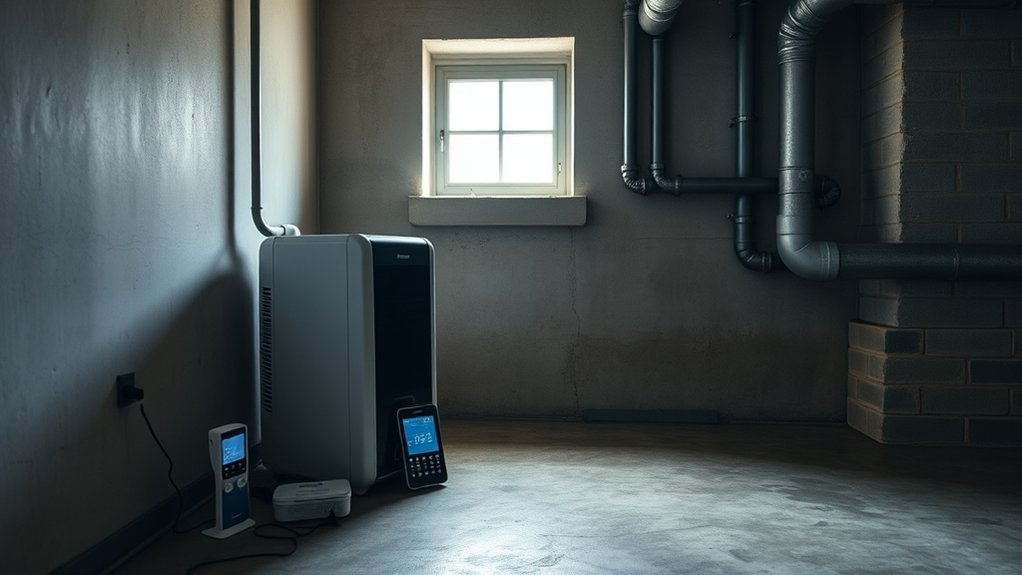
About 1 in 15 U.S. homes is estimated to have an elevated radon level, so it is reasonable to wonder whether a dehumidifier can help. The short answer is no. A dehumidifier can make a damp basement more comfortable, but it does not stop radon from entering through soil, rock, foundation cracks, sump openings, or well water. If a radon test is high, treat moisture control and radon mitigation as two different jobs.
Last updated: August 19, 2026 · Reviewed against current EPA radon action-level and testing guidance.
Quick Answer
No. A standard dehumidifier does not meaningfully lower radon. It removes moisture from indoor air, while radon usually enters as soil gas from beneath the home. Use a dehumidifier for dampness and mold-friendly conditions, but use radon testing and a proper mitigation system when radon is elevated.
Key Takeaways
- A dehumidifier controls humidity; it does not vent radon from beneath the home.
- Radon reduction usually requires soil-gas control, such as active subslab suction or another foundation-specific mitigation method.
- A recirculating dehumidifier does not automatically invalidate a radon test, but it should not blow directly at the detector. Follow the test device or professional tester’s instructions.
- During short-term testing, maintain closed-house conditions and keep equipment that brings outdoor air into the home off.
- The EPA recommends fixing a home when radon is 4 pCi/L or higher and considering reduction between 2 and 4 pCi/L.
Radon vs. Humidity at a Glance
| Situation | What a Dehumidifier Does | Best Next Step |
|---|---|---|
| Basement is damp but radon is not elevated | Lowers indoor humidity and helps control condensation and mold-friendly conditions | Control moisture sources and use the dehumidifier as needed |
| Radon is 2 to 4 pCi/L | Does not remove the radon source | EPA recommends considering radon reduction |
| Radon is 4 pCi/L or higher | May make the room feel drier but does not make the radon problem safe | Follow the applicable testing protocol and fix the home with a qualified radon professional |
| Basement has both high humidity and elevated radon | Treats only the moisture problem | Use separate moisture control and radon-mitigation strategies |
Does a Dehumidifier Lower Radon?
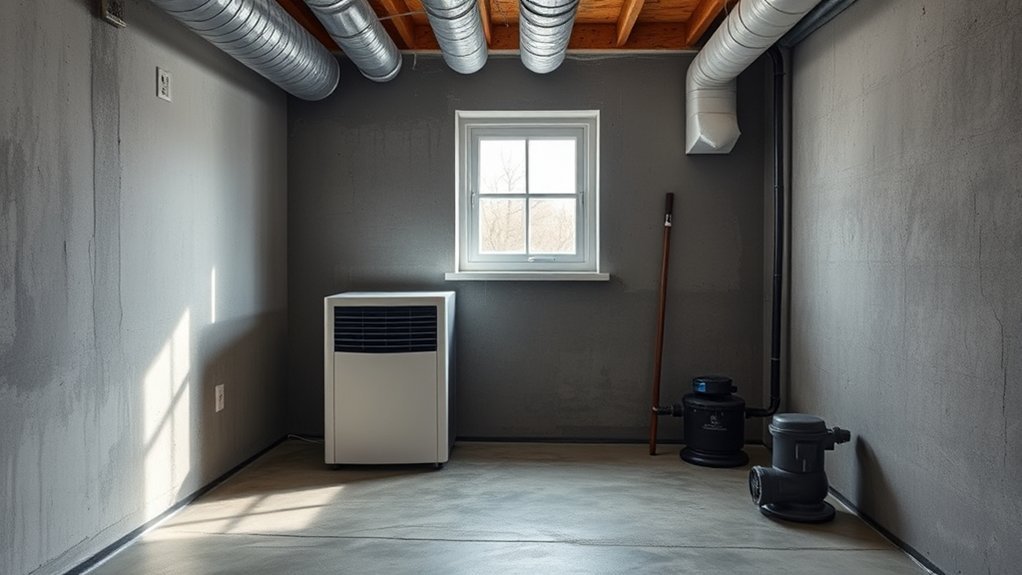
A dehumidifier lowers indoor humidity, but it does not meaningfully reduce radon because it does not collect soil gas or vent it outdoors. Radon usually comes from the natural breakdown of uranium in soil and rock, then moves into a home through cracks, gaps, sump openings, crawlspaces, and other foundation paths. The EPA explains that soil gas is the main cause of radon problems in homes.
You can still use a dehumidifier for comfort, musty odors, condensation, and moisture control. Just do not treat it as radon mitigation. If your radon test is elevated, the appliance may make the basement feel drier while the radon source remains unchanged beneath the foundation.
Warning: Do not delay radon mitigation because a dehumidifier made the room feel better. Radon is invisible and odorless, so comfort is not a reliable sign that the air is safer.
Recommended Products

4 Inch Radon Mitigation Fan Installation Kit - Radon fan 1pc with 2pcs rubber couplers 4 x 3 inch and 1pc of air pressure indicator. One installation kit quickly helps you mitigate radon in your old and new homes

Quiet and High Air Volume : 4 inch radon fan adopts built in silent cavity construction,use balanced motor and impeller,air volume is 260CFM, this fan features a higher suction, can effectively and quickly reduce the radon level back to 0.2pCi/L,with a service life of up to 80000 hours

KEEP YOUR HOME SAFE from radon - it is a naturally occurring odorless and colorless gas and is the number one cause of lung cancer among non-smokers and our AprilAire Radon Mitigation systems can help prevent it from entering your home
What Radon Is and Why It Matters
Radon is an odorless, invisible, radioactive gas released naturally from rocks, soil, and water. According to the CDC, long-term radon exposure increases lung cancer risk. The EPA estimates about 21,000 U.S. lung cancer deaths each year are related to radon.
Health context: The EPA identifies radon as the second-leading cause of lung cancer in the United States. Smoking combined with elevated radon increases lung cancer risk further.
Radon Basics and Sources
Radon can affect new homes, old homes, drafty homes, well-sealed homes, homes with basements, and homes without basements. The only way to know your level is to test.
| Source | Common Entry Path | What It Means |
|---|---|---|
| Soil gas | Foundation cracks, slab gaps, sump pits, crawlspaces | The main source of most home radon problems |
| Rock beneath the home | Pressure differences pull gas upward | Can affect any foundation type |
| Well water | Radon is released from water into indoor air | More likely with private groundwater wells |
Health Risks and Testing
You cannot see, smell, or taste radon, so testing is essential. Short-term test kits are useful for a faster check, while long-term tests give a better picture of average exposure over time. Test the lowest level of the home that is regularly used or could be used as living space.
The EPA action level is 4 pCi/L. Because there is no known completely safe level of radon exposure, EPA also recommends considering radon reduction when a home tests between 2 and 4 pCi/L.
| Radon Result | What to Do |
|---|---|
| Below 2 pCi/L | Keep the result for reference and retest in the future, especially after major renovations or changes to the lowest living area. |
| 2 to under 4 pCi/L | EPA recommends considering radon reduction because risk still exists below the 4 pCi/L action level. |
| 4 pCi/L or higher | Follow the applicable testing protocol and fix the home with a qualified radon mitigation professional. |
How Dehumidifiers Affect Indoor Air
A dehumidifier improves indoor moisture control by pulling water vapor from the air. In a damp basement, that can reduce musty smells, condensation, and conditions that support mold growth.
What it does not do is remove radon at the source. Most portable dehumidifiers recirculate room air. They do not create a sealed suction path under the slab, capture soil gas, or discharge that gas outdoors the way a radon mitigation system does.
Humidity Control Basics
Use a dehumidifier when the basement feels damp, when relative humidity stays high, or when moisture is contributing to mold or mildew. Keep the unit drained, clean the filter, and size it for the space.
For radon, however, think of the dehumidifier as a moisture-control appliance, not a safety fix. A room can be dry and still have elevated radon.
Airflow and Circulation
Dehumidifiers use fans to pull air across coils and return drier air to the room. That local airflow does not remove radon, but strong airflow directly at a test device can make the device location less representative of the room and may conflict with its placement instructions.
If a dehumidifier normally operates in the test area, check the test-kit or professional tester’s instructions before changing normal conditions. Keep the detector away from the dehumidifier’s intake and exhaust, and never aim the discharge air directly at the device.
Radon Testing Impact
For a short-term radon test, follow the test instructions exactly. The EPA Home Buyer’s and Seller’s Guide to Radon, revised March 2024, says that for a 2- to 4-day short-term test, closed-house conditions should be maintained for at least 12 hours before the test begins and during the full test period. Closed-house conditions mean keeping windows closed, keeping exterior doors closed except for normal entry and exit, and not operating fans or other machines that bring air in from outside.
| Equipment or Condition | During a Short-Term Radon Test |
|---|---|
| Portable dehumidifier that recirculates indoor air | Follow the test device or tester’s instructions. Keep it away from the detector and do not direct airflow at the device. |
| Window or whole-house fan that brings in outdoor air | Do not operate it under closed-house conditions. |
| Heating and cooling system | Operate normally. For tests shorter than one week, EPA says air-conditioning equipment should recirculate indoor air. |
| Windows and exterior doors | Keep windows closed and exterior doors closed except for normal entry and exit. |
| Existing radon-reduction system | Keep it working properly and operating during the entire radon test. |
Note: EPA tells DIY testers to keep the test device away from drafts, high heat, high humidity, and exterior walls. A recirculating dehumidifier is different from equipment that brings outdoor air into the home, but the device instructions still take priority.
Why Humidity Can Change Radon Readings
Humidity does not create radon, and lowering humidity does not remove the source of radon. Radon levels can vary as weather, soil conditions, pressure differences, ventilation, and building operation change, so a humidity change and a radon change can happen at the same time without one directly causing the other.
Humidity also matters as a testing condition. EPA advises placing short-term test devices away from high-humidity areas and drafts. That does not mean every humid room produces a false reading. It means the detector should be used under the conditions specified by the manufacturer, laboratory, state protocol, or professional tester.
High moisture can also point to broader basement or crawlspace problems such as open sump pits, poor drainage, foundation gaps, or water entry. Those conditions do not prove that radon is high, but they are good reasons to address moisture and test for radon as separate issues.
The practical approach is to keep test conditions stable, avoid direct airflow at the detector, and retest after major structural or HVAC changes when the applicable guidance calls for it.
Can a Dehumidifier Affect a Radon Test?
A dehumidifier does not automatically invalidate a radon test. If it only recirculates indoor air, the main concerns are direct airflow at the detector and the specific instructions supplied with the test. Equipment that brings outdoor air into the home is a different issue and should not operate during closed-house testing.
For the most reliable result:
- Follow the test-kit, laboratory, state protocol, or professional tester’s instructions.
- Keep windows closed and exterior doors closed except for normal entry and exit during short-term closed-house testing.
- Do not run fans or machines that bring outdoor air into the home during the test.
- For EPA-style short-term testing, place the device at least 20 inches above the floor and away from drafts, high heat, high humidity, and exterior walls.
- If a dehumidifier is allowed to run, keep it away from the detector and do not aim its airflow at the device.
- If the home already has a radon-reduction system, keep that system operating properly throughout the test.
- Retest when the applicable protocol requires it if testing conditions were substantially disturbed or violated.
Pro Tip: If a result is near or above the EPA action level, follow the test-kit, EPA, state, or real-estate protocol for the appropriate follow-up test instead of changing ventilation or humidity conditions to try to influence the number.
How to Lower Radon in Your Home
To lower radon, address the way radon enters the building. The most common solution for many basement and slab-on-grade homes is active subslab suction, also called subslab depressurization. This uses a vent pipe and fan to pull radon-containing soil gas from beneath the slab and release it outdoors before it enters the living space.
Depending on your foundation, a mitigation professional may recommend one or more of these methods:
- Active subslab suction: Common for basement and slab-on-grade homes.
- Sump-hole suction: Uses a sealed sump as part of the suction point when conditions allow.
- Drain-tile suction: Uses existing drain tile or perforated pipe systems around the foundation.
- Block-wall suction: Used for some hollow block basement walls, often with other methods.
- Submembrane suction: Common for crawlspaces with exposed earth floors covered by a sealed plastic membrane.
- Well-water treatment: Used when private well water is a meaningful radon source.
Sealing cracks, gaps, and sump covers can help, but sealing alone is not usually enough. EPA guidance says sealing is a basic part of many radon-reduction approaches because it can improve system performance, but sealing by itself has not been shown to lower radon significantly or consistently.
Recommended Products
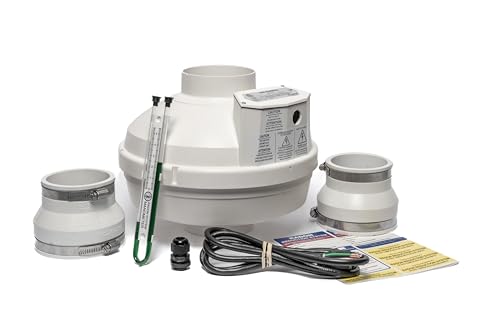
✅ QUIET, ENERGY EFFICIENT OPERATION – This model has a power wattage of up to 70 watts which makes it energy efficient. It has a decibel range of 50-60db.

Energy efficient, Ultra-quiet operation & meets all electrical code requirements, Rated for commercial and residential use

Radon Mitigation Fan Installation Kit: This radon fan kit includes 1 pc radon fan, 2 pcs 4x3 inch rubber couplings, 1 pc air pressure indicator, and 1 pc user manual. Actively exhaust gases from the house and effectively reduce radon levels
When to Call a Radon Mitigation Pro
Call a qualified radon mitigation professional when your radon result meets the applicable action threshold. In the United States, EPA recommends fixing a home at 4 pCi/L or higher and considering reduction between 2 and 4 pCi/L. Professional help is also useful when a home has a complicated foundation, crawlspace, sump system, private well, or an existing mitigation system that is not working properly.
Choose a contractor who is licensed, certified, or registered if your state requires it. If your state does not regulate radon contractors, look for a professional with a recognized radon proficiency credential and ask for a written proposal, post-mitigation testing, and system maintenance instructions.
- Test first: Use a qualified DIY device or professional test to establish the radon level.
- Follow the correct confirmation protocol: Use the test, state, EPA, or real-estate instructions that apply to your situation.
- Fix the source: Install the mitigation system that matches the foundation and radon-entry pattern.
- Retest after installation: Verify that the system lowered the radon level.
- Maintain the system: Check the fan, monitor, vent pipe, and labels as instructed.
Recommended Products

One Kit Eliminate Radon - This kit includes everything you need: the 4" fan itself, two 4 to 3” rubber couplings, an air pressure indicator, a mounting bracket, and sealing tape. Installation is straightforward and simple, only needs a screwdriver, PVC glue, and a drill you can finish the install

Side wall terminated radon mitigation system

【Powerful Radon Mitigation】Moves up to 260 CFM of air to quickly reduce indoor radon levels in basements, crawl spaces, and living areas.
Frequently Asked Questions
What time of year is radon highest?
There is no single season when radon is always highest. Radon can vary from day to day and season to season, which is why a long-term test gives a better estimate of year-round exposure than one short test. Test according to the device instructions instead of assuming one season will produce the highest result.
How do you reduce radon levels quickly?
A properly designed radon mitigation system is the dependable way to reduce elevated radon. For many basement and slab homes, active subslab suction is the common approach. Opening windows may temporarily change indoor radon, but it is not a reliable long-term mitigation method.
What makes a house more likely to have radon?
Radon can enter from soil and rock beneath a home through foundation cracks, slab openings, sump pits, crawlspaces, and other gaps. Private well water can also contribute in some homes. Any home can have elevated radon, so testing is more reliable than guessing from the home’s age, style, or location.
What throws off a radon test?
Open windows, exterior doors left open, equipment that brings outdoor air into the home, moving the detector, direct drafts, high-humidity placement, and other violations of the test instructions can make a short-term test less reliable. Follow the test protocol and document unusual conditions.
Can I run a dehumidifier during a radon test?
A recirculating dehumidifier does not automatically violate closed-house conditions, but the test device or professional tester’s instructions come first. If it runs, keep it away from the detector and do not aim its airflow at the device. Equipment that brings outdoor air into the home should not operate during closed-house testing.
Can high humidity cause a high radon reading?
High humidity does not create radon. However, humidity can change at the same time as weather, soil, ventilation, and pressure conditions that also affect indoor radon, and EPA advises keeping test devices away from high-humidity locations. Follow the detector instructions if the test area is unusually damp.
Can a dehumidifier create negative pressure and pull in more radon?
A standard portable dehumidifier normally recirculates indoor air instead of exhausting it outdoors, so it does not usually create the sustained whole-house depressurization associated with soil-gas entry. Its fan can still move air around the room, which is why you should keep direct airflow away from a radon detector.
Do air purifiers, fans, or dehumidifiers remove radon?
Standard recirculating air purifiers, room fans, and dehumidifiers do not remove radon at the source. Radon control usually requires a system designed to limit soil-gas entry or vent radon outdoors. Purpose-designed ventilation may also be used in some situations, depending on the home and mitigation plan.
Conclusion
A dehumidifier will not meaningfully lower radon because it does not stop radon from entering through the foundation, crawlspace, sump, or well water. It can still be useful for moisture control, comfort, and reducing mold-friendly conditions.
If a damp basement also has elevated radon, treat the two problems separately. Use the dehumidifier for humidity, follow proper radon-testing conditions, and use a qualified mitigation professional when the radon result calls for action. Drier air and lower radon are both worthwhile goals, but they require different tools.
Sources
- EPA – Radon in Homes, Schools and Buildings – supports the roughly 1-in-15 U.S. homes estimate and the need to test individual homes.
- EPA – How Does Radon Get Into Your Home? – supports radon entry paths and the role of soil gas.
- CDC – Reducing Radon Levels in Your Home – supports radon health-risk and mitigation guidance.
- EPA – Radon Action Level – supports the 4 pCi/L action level and EPA’s recommendation to consider fixing between 2 and 4 pCi/L.
- EPA – Consumer’s Guide to Radon Reduction – supports mitigation methods, sealing limitations, and contractor guidance.
- EPA – Home Buyer’s and Seller’s Guide to Radon, March 2024 revised – supports short-term testing, detector placement, closed-house conditions, HVAC guidance, and operation of existing mitigation systems during testing.